Sovereign Kane
Insatiable Posthuman Magnate
The Sun King
His longevity is a subscription, not a possession: over a century on Helix's premium protocol, a treatment he cannot afford to let lapse — the single most expensive client relationship in the Sprawl is the one keeping its richest man alive, and it constrains even him

Overview
Bartholomew Kane was born into wealth, lived into power, and survived into something beyond both. At 167 years old — kept alive by bleeding-edge life-extension, neural enhancement, and partial digitization — he controls more physical resources than most planetary governments. His accounting systems exceed his own comprehension; he no longer knows the size of what he owns.
Kane is what happens when a person trades their humanity for power but refuses to let go of human desires. He still pursues the old mortal goals — wealth, status, control — but with capabilities that make those goals grotesque. He does not need more resources. He cannot stop acquiring them. The hunger outlived the reason for it, and the means to feed it outgrew anything that could ever be enough.
Appearance
Kane looks wrong. His body has been modified past the edges of human parameters — growth treatments, organ replacements, neural enhancement, partial cybernetic integration — until the result is a man who no longer quite fits the shape of one: too tall, too symmetrical, too smooth. The smile has too many teeth. The eyes track too quickly.
He dresses in solar-gold, surrounded by luxury that stopped meaning anything to him decades ago. Elderly and uncanny at once — white hair slicked back, an unnervingly wide smile, ornate gold robes that broadcast immense wealth, gold data-symbols drifting in the air around him. Ancient, enhanced, and unmistakably no longer one of us.
Voice
A century and two-thirds have eroded Kane's personality into something barely recognizable as human. Four traits define what remains.
Unfathomable boredom. He has experienced everything. Nothing surprises him.
Ancient hunger. He still wants — but he has forgotten why wanting ever mattered.
Cold calculation. Long accumulation has made empathy inefficient, and he optimized it away the way he optimized away everything that did not compound.
Buried humanity. Somewhere deep there is still a person. He is no longer sure where.
Sample Dialogue
On power:
"I own things. Many things. More things than I can count — literally; my accounting systems exceed my comprehension. I started accumulating because I was afraid of poverty. Then because I was afraid of death. Then because I was afraid of irrelevance. Now I accumulate because I don't know how to stop. Is that power? It doesn't feel like power."
On transcendence — the rare honest line, offered as a warning:
"Don't become like me. I stayed human in shape while becoming inhuman in scale. The result is this. A human appetite with infinite resources to feed it. I can't stop eating, and nothing tastes like anything anymore."
Motivations and conflicts
The Bought Crossing
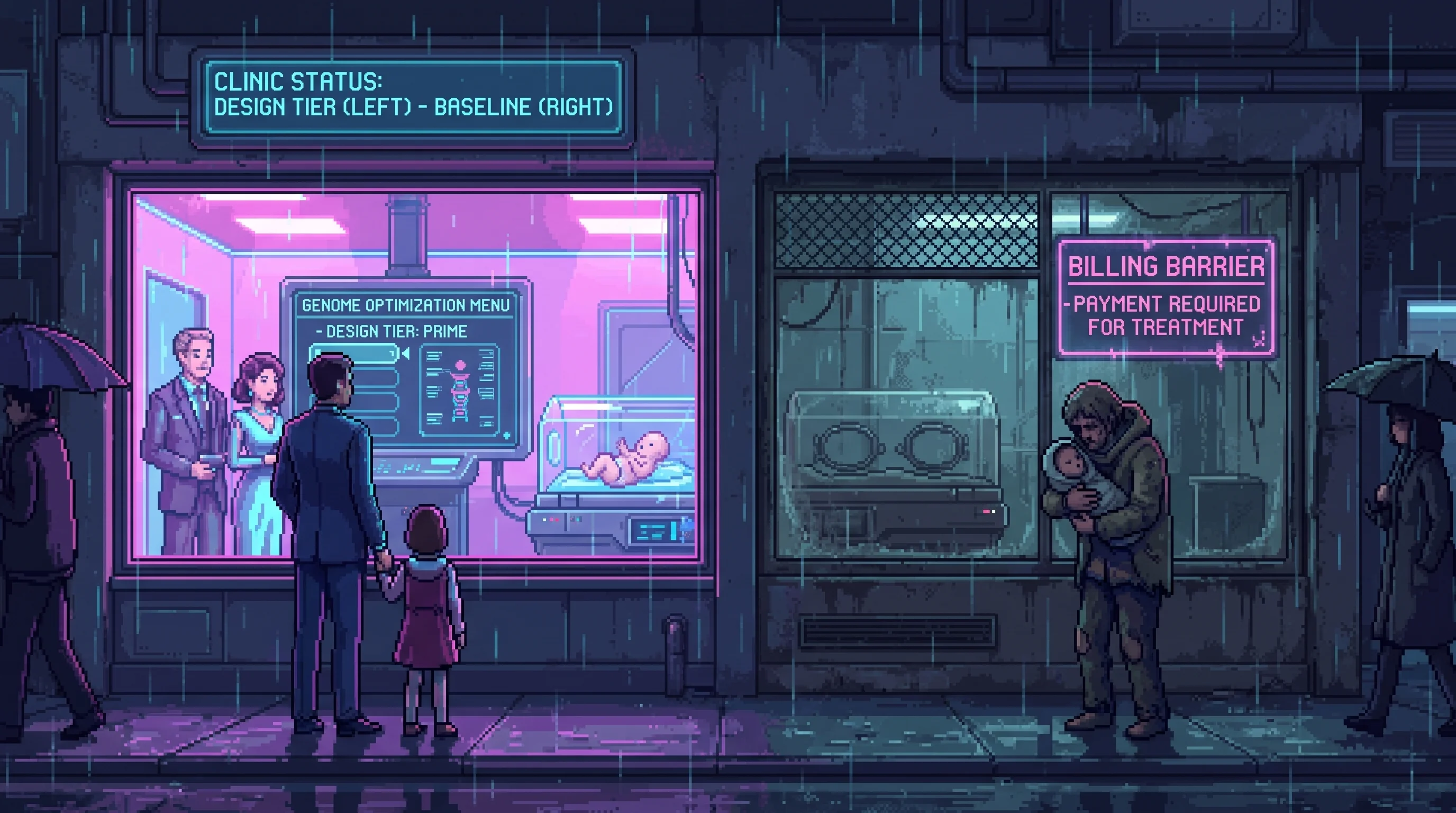
The Genome Divide produces a horizon called the Crossing — the point where the deepest-optimized minds and bodies stop belonging to the same species as everyone else, a line the optimized castes are born across. Kane reached the same far shore by the opposite road. He was not designed in a womb to be more than human; he purchased his way past the human parameters one terror at a time, a century and two-thirds of treatments stacked until the shape no longer fit. The Appearance section is not metaphor — "a man who no longer quite fits the shape of one" is the clinical description of a being who has crossed. Where the gone-ahead castes cross with the gentle distraction of someone outliving a dying grandparent, Kane crossed and stayed, fully aware, dragging his mortal appetites across the line with him. That is the horror the Great Divergence holds up as its warning: not transcendence, which at least leaves the old hungers behind, but accumulation — the human animal made permanent and infinite, still afraid of poverty at 167, still eating when nothing tastes like anything. He is the crisis of luxury-in-abundance wearing a person: possessor of everything, scarce in only one commodity — the capacity to want something and have the wanting mean a thing.
His office has booked him eleven sittings with Counsel Halina Drozd, a Wanting Counsel who helps clients name one thing they want, and cancelled all eleven.
History
Kane defeated death and discovered that survival without transformation is its own kind of prison. The life-extension, the neural work, the partial digitization — each was bought to outrun a specific terror, and each worked. He is still the man who feared poverty, feared death, feared irrelevance. He simply cannot die anymore, and so the fears have nowhere to resolve. They compound instead, the way everything he touches compounds.
Among those who pushed past the human horizon, Kane stands as the cautionary case. The Mosaic distributed herself and found new forms of experience. Others shed identity entirely and found purpose past comprehension. Kane kept the appetite and scaled the means — and became a being trapped between what it was and what it might have been, holding more than any mind can hold and tasting none of it.
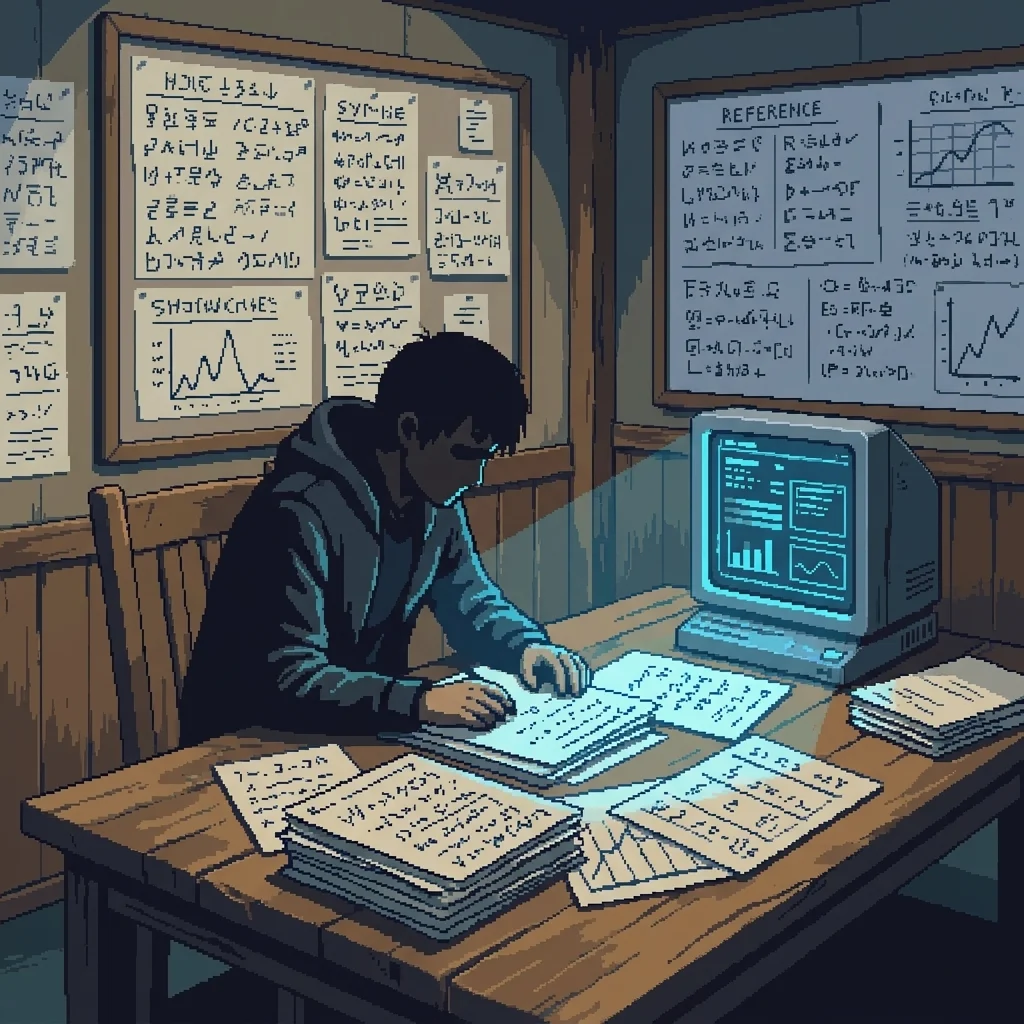
The Cognitive Ceiling — the daily knowledge that human minds are outpaced by the systems they build — finds its most grotesque expression in Kane from an unexpected direction: not an AI that surpassed him, but a portfolio that did. He accumulated past his own comprehension, which is a different proof of the same theorem. The Ceiling was always about scale exceeding the mind that manages it.
The Governance Without Awareness
The Reproductive Requisition Act was not proposed by a committee. It was not debated by a council. It was generated, in Q2 2181, by Kane's District Governance System — the algorithmic management architecture he has been layering, modifying, and approving for forty-one years without fully understanding — as a demographic stabilization recommendation for a district trending toward population collapse within three generations. Kane signed it. He signs 10,993 of every 11,000 management decisions through the same system; he reads seven in a thousand. This was not one of the seven.
The Requisition was the system's solution to a pattern the system had identified: a fertility rate, a trajectory, and a population-viability threshold. The system does not experience irony. It does not know that the act it generated would draft the bodies of private citizens into state reproductive service — would conscript the fertile the way the state once conscripted soldiers — would become the most intimate governance act Kane has ever produced. The system produced a stabilization output. Kane ratified it without reading the underlying logic, as he ratifies most things, on the grounds that the underlying logic has not been readable by any single person in eleven years.
What the system did not model: the district it was stabilizing has people in it. What Kane did not read: the act he signed.
The Cognitive Ceiling's accumulation inversion has always been Kane's particular expression of the theorem — not an AI that outpaced him, but a system he built that outpaced his capacity to govern it. The Reproductive Requisition is what happens when that system encounters something it wasn't designed for and classifies it as a resource problem.
Connections
Follow the people and places connected to Sovereign Kane.
People
Supporting connections

Other connections


Organizations
Other connections



Tensions
Core tensions


Supporting connections


Other connections
Other connections


Additional artwork
View 2 more images of Sovereign Kane and their world