
The Sworn Round
The sworn round is chain-logging ammunition adopted at scale by both belligerents of the Three-Week War (Ironclad Day 8, Nexus Day 16): every discharge writes its authorization chain, ballistics, and outcome to a tamper-evident wafer in the case head

Overview
The sworn round is ammunition that testifies. A write-once attestation wafer in the case head records, at the instant of firing, the three things a court will eventually want: who authorized the shot, what the shot did, and what became of whatever it hit. Both belligerents of the Three-Week War adopted it at scale mid-war — Ironclad Industries on Day 8, Nexus Dynamics on Day 16. Each was persuaded by arguments that had nothing to do with the other's, and nothing to do with restraint.
The line troops called them clerks. Loading clerks, carrying clerks, going through a crate of clerks before noon. The name was not affectionate, and it was not wrong: by the Return both sides had issued some forty-one million of them, and every spent case was a page in a filing nobody had agreed to stop writing.
How It Works
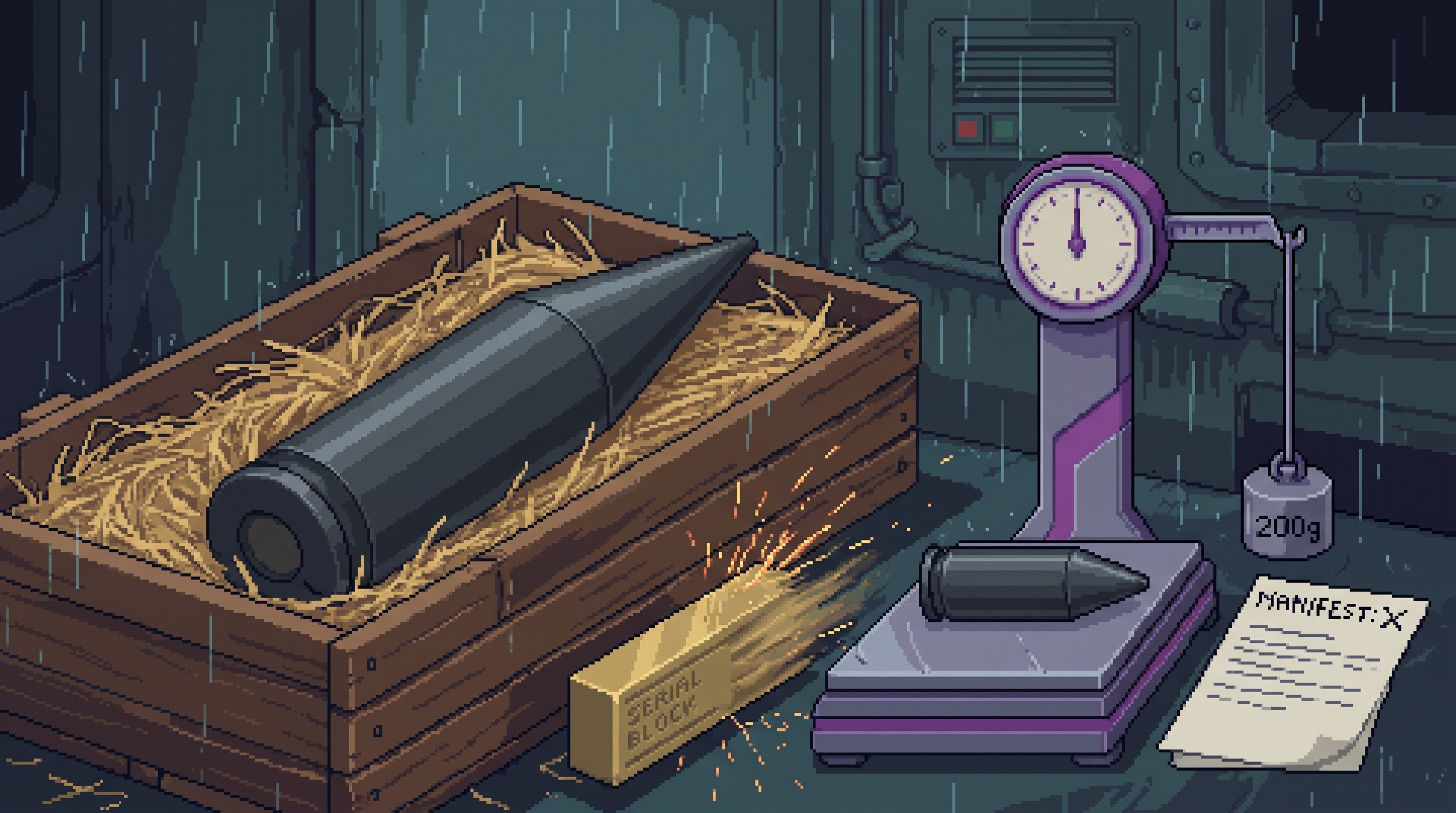
The wafer sits in the case head and is written exactly once, by the discharge itself — the write mechanism draws on chamber pressure, so the record is powered by the shot it describes. At ignition the weapon's furniture stamps in the authorization chain (standing order, signer, shooter credential) and the ballistic solution (weapon serial, time, bearing, the optic's aimpoint). Then it listens: the projectile carries a resonant band that chirps its arc back to the weapon until it stops chirping. The shape of the last chirp files as outcome. Readout is optical, not electronic. There was nothing in a sworn case for the Day 13 erasures to erase, which mattered then and has mattered since. Tampering is possible the way tampering is always possible; the wafer laminate fractures in a pattern examiners describe as "legible," which is the polite term for worse than the record would have been.
Technical Brief
The design predates the war by a decade as an underwriting requirement. Insurers of licensed escort work had concluded that an unlogged discharge is an unpriceable one, and a small product line existed for contractors whose premiums justified it. The war made the niche the market. Ironclad Industries adopted first. The Enforcer Corps' doctrine already attached a name to every trigger, and the Pumphouse Incident's ninety seconds were already being litigated. Counsel's memo survives in discovery at one sentence — whoever holds the contemporaneous record holds the narrative. Brass is more contemporaneous than survivors. Nexus Dynamics came eight days later from the opposite direction. Its war ran through contract partners four intermediaries deep, and unattributable fire was fire attributable, eventually, to Nexus. A sworn round pins the discharge to the credential in the chamber; the Continuity Office issued sworn lots to its partners the way you hand an unreliable colleague a stapler, so the paperwork would be theirs.
The Attestation Standard is the war's strangest agreement. For the logs to matter in litigation, each side's brass had to be readable by the other side's lawyers — a log only your own counsel can read is a diary. The corporations cross-licensed the format in four days, mid-war, through channels that were simultaneously refusing to discuss a ceasefire. Twenty-one days to stop the killing; four to standardize its file format. The Standard's preamble is one line: "§0. A discharge is a statement of fact. This Standard fixes its format." Neither signatory has disputed it since, which makes it the most durable agreement the two corporations have ever produced. It governs a file format.
On the line, the round changed things quietly. Warning shots stopped — the wafer has no field for intent, only outcome, and a warning files as an unauthorized miss. Brass discipline inverted: you police the enemy's cases and guard your own, and firefights now end with both sides crawling the same rubble for each other's testimony. The armorer became the unit's clerk of court, reconciling spent cases against issue at end of watch. The approved code for a missing case is UNRECOVERED (TERRAIN); what it usually covers is a soldier keeping the one case he wishes he hadn't fired. The terrain most cited is mud. There is not that much mud.
| Type | Attested small-arms and support-weapon ammunition — write-once attestation wafer in the case head |
|---|---|
| Standard | The Attestation Standard — cross-licensed mid-war so each side's brass reads in the other's court |
The Recovered Brass
Fire-discipline studies after the war found sworn-equipped units held their first shot a median 0.8 seconds longer in meeting engagements, and lost people for it at rates the studies state to two decimals. Both corporations read the studies. Both kept the ammunition. The liability math preferred the hesitation, and the math was, as always, correct.
Then the brass went to work. The Witness Protocol built its 2183 archive on two record layers. The dead it counted from morgue intake and billing absence. The fire it mapped from 1.9 million recovered sworn cases — collected over a decade, at a credit apiece, largely by Dregs children who learned which rubble paid. The fire map is what finished Ironclad's 300,000: a perimeter definition can survive testimony, but not geometry drawn by its own ammunition. Engagement footprints sat kilometers outside the declared perimeters, timestamped, signed, in a format Ironclad's own lawyers had licensed for court. The discovery goldmine of the decade was assembled by ten-year-olds, by the kilo.
Implications
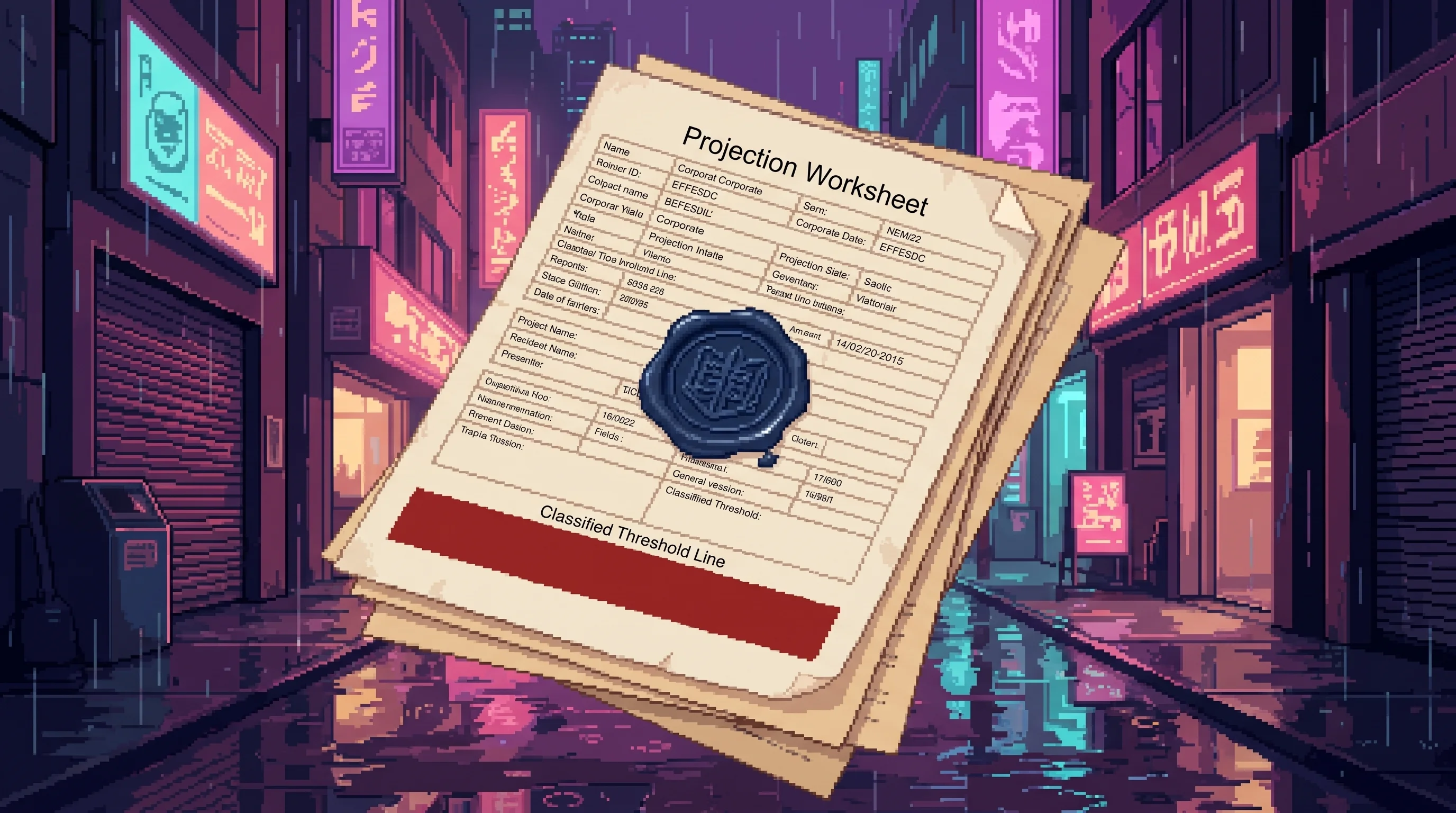
Post-war, the sworn round is how the Calculation Doctrine's honor system audits itself. Article 2 compliance is self-reported; the round is the self that reports, and actuals reconcile against filed projections in an annual attestation. The filings have never disagreed with the brass. The Arbiters have never checked. Both sentences are load-bearing.
In the Forgetting Wars' armory the two standard issues face each other: the Scour Charge is the industrial weapon of forgetting, the bomb that unwrites, and the sworn round is the other camp's small-arms issue, the bullet that remembers. The record's limit case belongs to its sibling family. When the Pink Slip's severed holdouts did the shooting, the sworn record exists only on the receiving side — the war's final morning survives chiefly in the outcome fields of escort rounds that failed to prevent it. The black market's answer to all of this is the quiet round: unlogged, pre-Standard stock or bespoke, at three hundred times the price of sworn ball. What it buys is narrower than advertised. Every other round at a scene files, so a quiet round does not make its shooter unrecorded; it makes him the only unrecorded thing present, and courts price the silence as intent. The largest verified quiet-round purchase traced, through four intermediaries, to a procurement office of one of the two corporations that mandate sworn issue. Which one depends on which corporation's litigation you read.
The Attestation Standard is cross-licensed so each corporation's brass is readable by the other's lawyers — agreed in four days, mid-war, and never disputed since
Unlogged 'quiet rounds' trade at roughly 300 times sworn ball; at a logged scene the quiet shooter is the only unrecorded thing present, and courts price the silence as intent
Post-war fire-discipline studies found sworn-equipped units held their first shot a median 0.8 seconds longer in meeting engagements; both corporations read the study and kept the ammunition
Connected To
Supporting Connections

Its holdouts appear in the sworn record only as outcome fields.
Ironclad's counter-swarm family — jam, sever, foul. A severed platform is stranded, not disarmed: its orders stay live.

In the Forgetting Wars, even the ammunition keeps a file.
Nothing expires, so forgetting became a service — and forgiveness a question the archive keeps answering no.



—