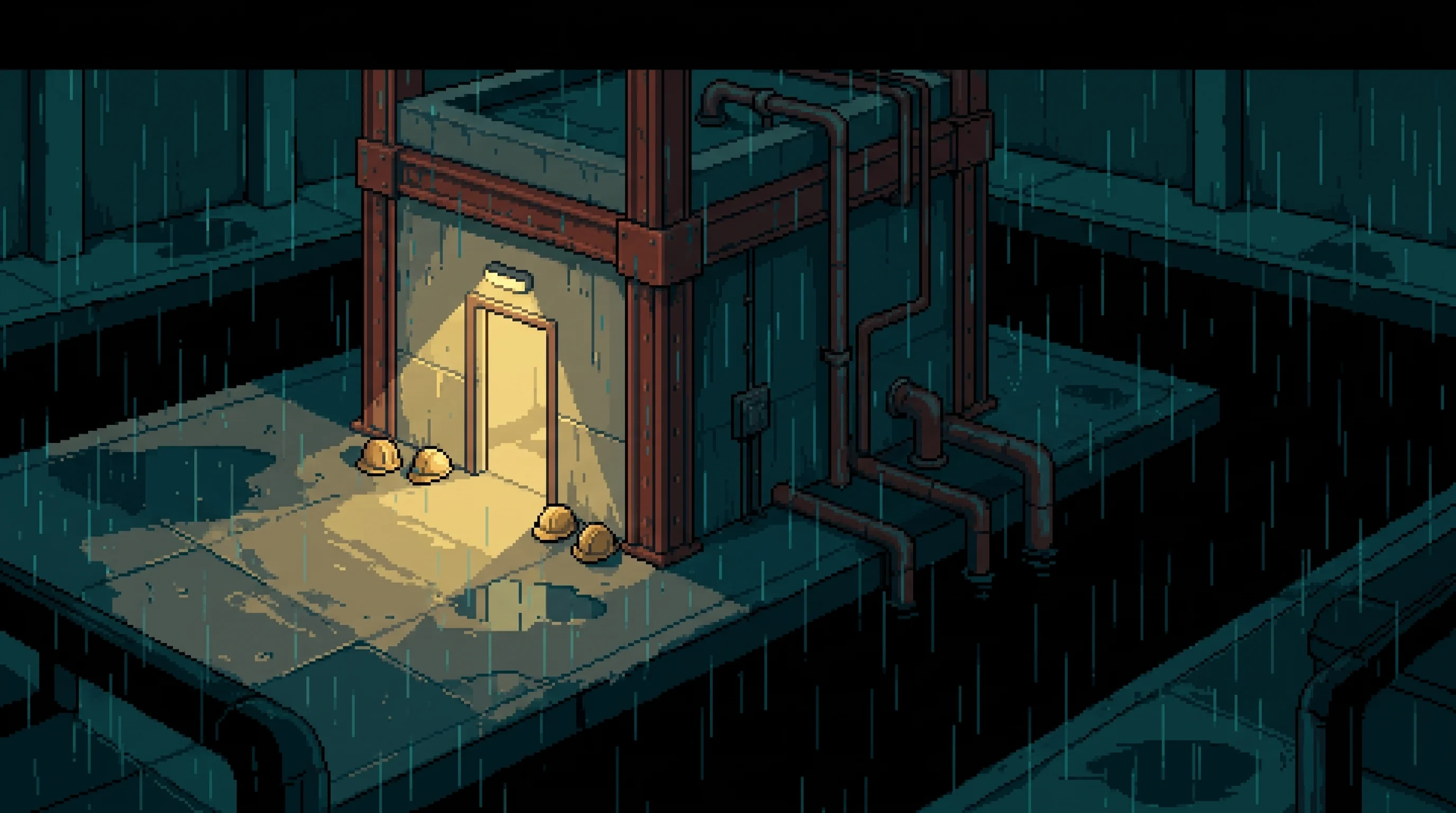
The Pumphouse Incident
On March 11, 2171, three Nexus technicians died at aquifer monitoring station 12-G-4 when station security activated during an Ironclad 'repair' visit — the team included four personnel with no engineering credentials
Overview
Every war has a first grave. The Three-Week War's holds three water technicians.
By March 11 the aquifer partnership between Nexus Dynamics and Ironclad Industries was two orders deep into its collapse — Volkov's output increase on the 7th, Voss's override cap on the 9th, and four residential sectors on ration in between. What arrived at monitoring station 12-G-4 that evening was, per the paperwork, an Ironclad repair team: eleven personnel, standard maintenance authorization, responding to a telemetry fault that Nexus's own logs do not show existing. Seven of the eleven were engineers. Four were not — four names with no credentials, no service history, and 340 kilograms of "diagnostic instruments" on the manifest.
What happened inside the ninety seconds after the team breached the station's inner door — Nexus says breached; Ironclad says entered; the door log says opened with a maintenance credential that had been revoked six hours earlier — is the most exhaustively litigated minute and a half in Sprawl history. Station security activated on intrusion posture. When it stood down, three Nexus technicians were dead: Dana Reyes, Kofi Mensah, Ilya Sorokin. The Pumphouse Three. Water workers, mid-shift, whose names would be cited within seventy-two hours as casus belli by people who had not known they existed.
Nexus declared breach on the 12th. Ironclad declared accident. Both statements were defensible; neither was complete; the first shots came on the 14th. The war's entire character is present in its trigger — jointly owned infrastructure, an authorization ambiguity, a security system doing what it was configured to do, and human beings inside the machinery when the configurations met.
| Date | March 11, 2171 (three days before the war) |
|---|---|
| Location | Monitoring station 12-G-4, the Twelve-G Waterworks, Sector 12 |
Aftermath
The Corpo-Nations historians treat the ninety seconds as the order's founding audit: two sovereigns, one shared asset, and no law above them except the one they were about to write in other people's blood. The Three are the only war dead both corporations memorialize together — a shared plaque at the Waterworks, renewed jointly every March 11 under a treaty-annex obligation neither side will admit to having proposed. The plaque names the three and their trade. It does not mention the four, or the ninety seconds, or the war. There is a school of thought that the entire Memory Clause was drafted by people staring at the problem of this specific plaque.
The litigation has never closed. It has instead speciated: the families' actions, the corporations' counter-actions, and a thirteen-year Arbiter inquiry into the four non-engineers that has issued two interim findings, both sealed. The Waterworks' joint operating board — the treaty's showpiece institution — meets forty meters from the station where its founding dead were made.
Affiliated Entities
- The Three-Week War — The trigger
- The Twelve-G Waterworks — The station, the plaque, the joint board
- Hassan Volkov — The repair order came from his directorate; the four extra names did not
- The Dregs Accord — The war the Three started, ended by people of exactly their rank
Restricted Access
The four. Ironclad has spent thirteen years not explaining four names. The prevailing theories: a telemetry-tap installation crew (the boring one); a sabotage element sent to force the confrontation (the popular one); and the auditors' quiet favorite — a survey team, sent to establish exactly how much water remained in the aquifer, because Volkov's directorate had stopped trusting the Nexus numbers it was fighting to defend. Under the third theory the war began over data neither side would show the other about water both sides were standing on. Under the third theory, the 340 kilograms was sonar.
The station security response ran ninety seconds end to end; litigation over those ninety seconds has now run thirteen years and outlasted two of the presiding Arbiters
The four non-engineers' mission remains classified; their equipment manifest lists 'diagnostic instruments' at a combined mass of 340 kilograms, which is a great deal of diagnosis
Connected To
Supporting Connections

March 11 — the deaths the war grew from, three days later.
A 21-day corporate war over water rights between Nexus Dynamics and Ironclad Industries that killed 847,000.
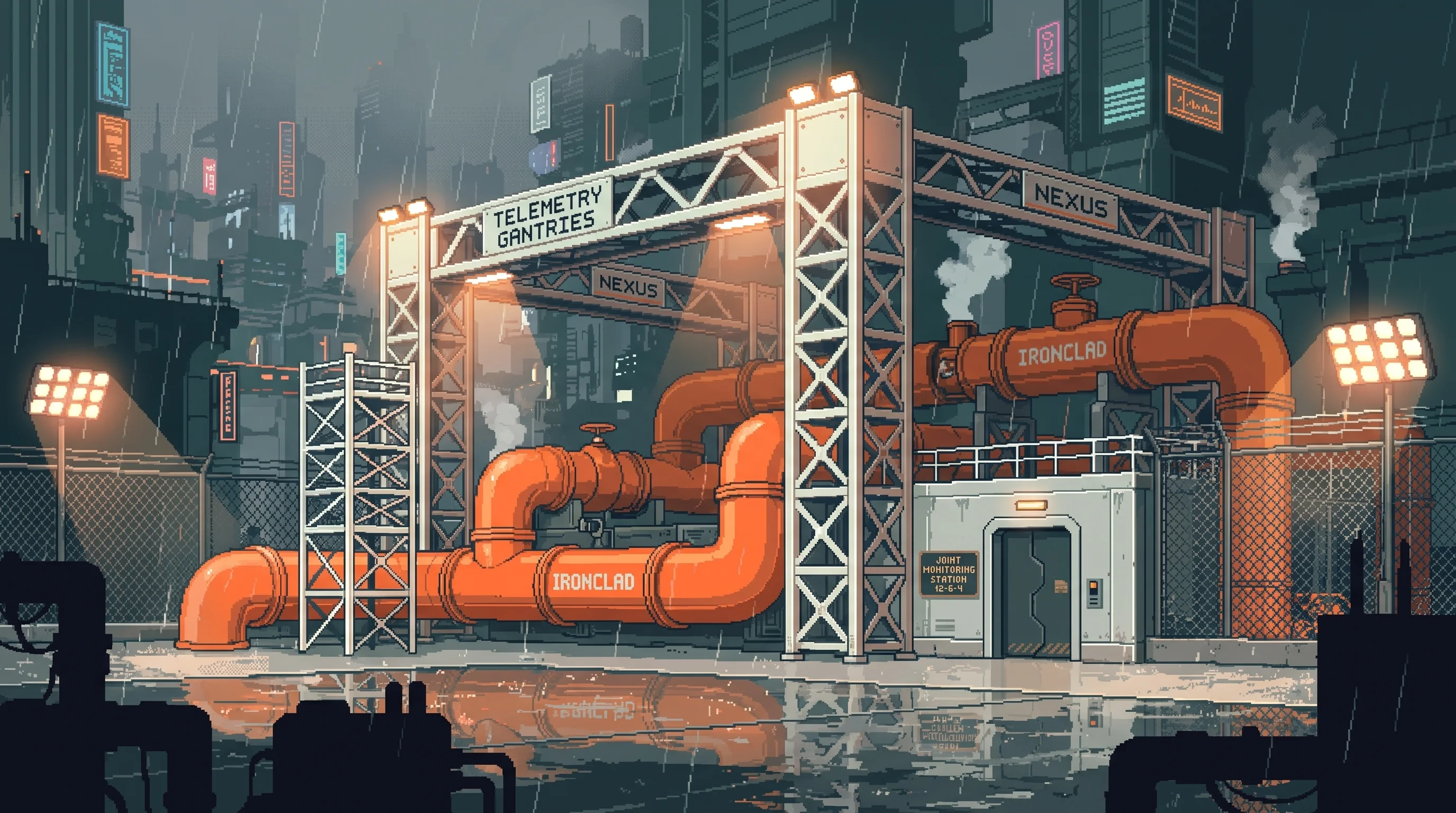
Station 12-G-4, the aquifer's monitoring outpost.
The aquifer the war was fought over — treaty-neutral, jointly run, watched by everyone.




—