The Shortfall Commission
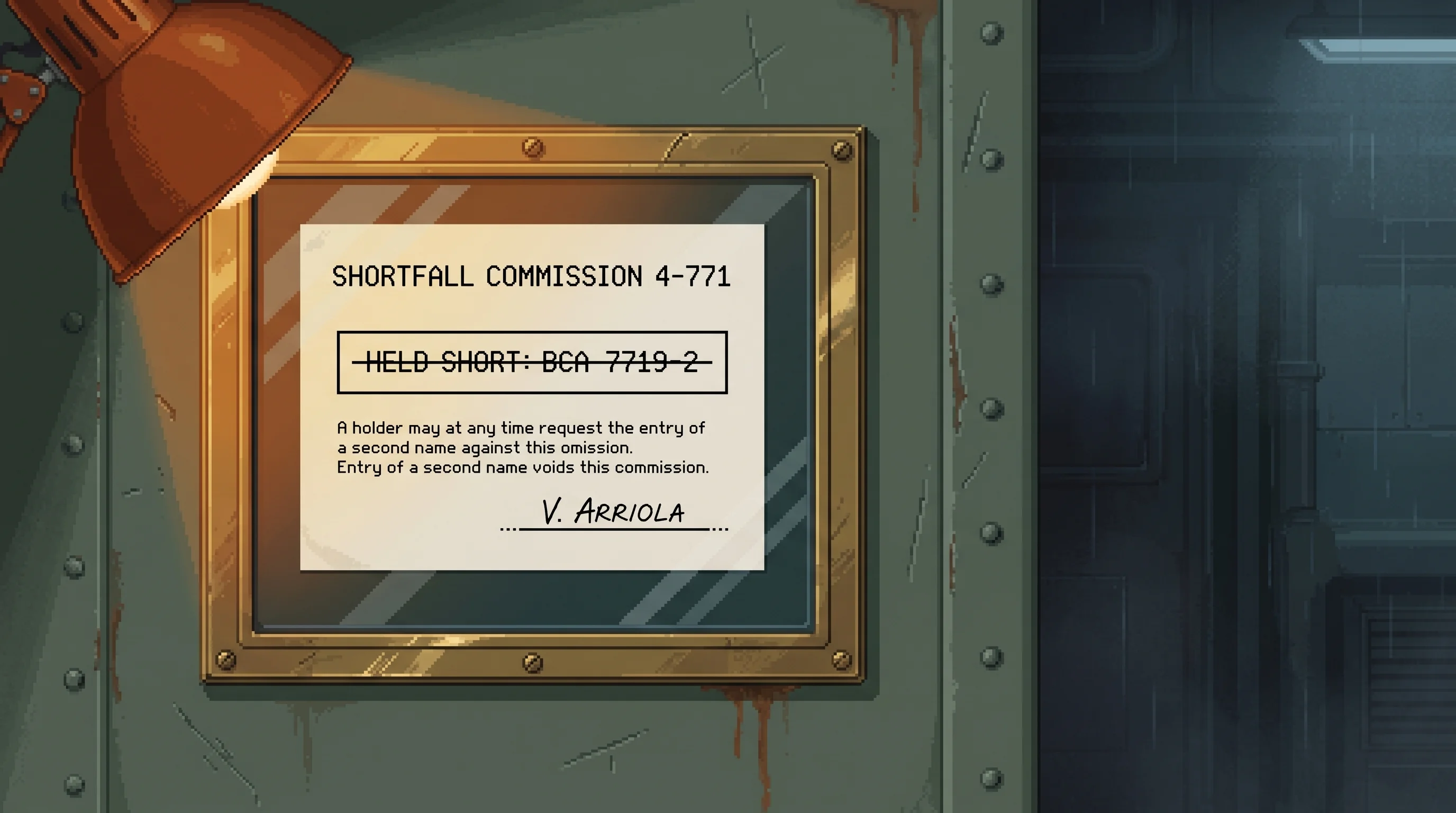
The part number is printed on the certificate with a rule struck through it. That is the whole instrument.
Overview
A shortfall commission is a service certificate for an asset that is not finished. One component of its self-repair set is named, struck, and absent, and one person is entered against the gap in a field sized for one name. The asset is lawfully in service. It is also, by design and on paper, incapable of recovering from a fault without that person walking to it.
Eleven thousand neutral-utility assets were in scope when the category was created in 2161. In 2184 there are 1,904 live commissions, two hundred and sixty of them on atmospheric plant, and the median holder has been entered against the same omission for nineteen years.
The certificate must hang at the holder's station, framed, at eye height, with the struck part number legible. Directly above the signature line, in the same size type as everything else, is the relief clause: A holder may at any time request the entry of a second name against this omission. Entry of a second name voids this commission.
How It Works
Three documents make a commission and any one of them will unmake it.
The omission schedule names the absent component by part number and states what it would have done. On commission 4-771 under the Stacks that is a bed-changeover assembly: the thing that swaps a fouled scrubber bed for a clean one without anyone present. The schedule does not say not installed. It says held short, which is the register's term and appears nowhere else in Sprawl administration.
The response window is arithmetic, not policy. The register measures the asset's own reserve as found and divides. It sets no minimum. Stack Four's air reserve was sized for the twelve thousand residents its foundations were certified for; ninety thousand live there now, and the window on 4-771 is one hundred and ten minutes. The window on a Sector 17 heat loop with a full buffer is eleven hours. Same certificate, same clause, same wage band.
The entry is one name. This is the part everybody misreads. A commission is not a job with one incumbent. It is a certificate whose validity depends on exactly one person being answerable for the gap, and the register's own auditors will void a commission on discovering an informal second pair of hands. There is no relief roster, no cover arrangement, no leave substitute, and no apprentice. Asking for a second name is how you leave. It is also, structurally, the only way to train anybody, which is why nobody trained anybody.
Wages come from the district provision line. The struck component would come from capital. Provision is appropriated annually and lapses if unspent; capital is appropriated by project and does not. An operator facing a compliance deadline in nine months, holding a lapsed capital cycle and a live provision balance, has one option that clears the deadline and one that does not.
| Type | Utility certification category |
|---|---|
| Created | 2161 (compliance with Custodian Corps Mandate Notice #1,209) |
| Extended | 2172, to the Treaty-neutral utilities — water, power, air processing, medical |
| Holders Per Commission | Exactly one; a second entry voids the certificate |
| Wage Source | District provision line; the omitted component would be capital |
Provision pays for attendance. Capital pays for parts. No appropriation has ever been written to buy both for the same gap.
Resistance And Capture
The trades that understand the instrument have all refused it.
The Lamplighters were offered a bloc commissioning in 2176 — the whole interstitial trade, every route, wage and standing attached — and walked out. Their objection was structural and they have made it in the same words at every hearing since. A commission is one name. A guild is a rota. Entering a second name voids the certificate, so a commissioned trade cannot train a successor, and the guild's whole crisis is that it cannot train successors fast enough. They identified the category's real defect eight years before any operator wrote it down, and no operator has answered it. They went back to dying of age and industrial lung.
The Doorwrights have been offered entry twice, and refused in one sentence both times: the moment a door is somebody's post, it stops being anybody else's problem. The register's own analysts concede that Doorwright coverage beats any commissioned equivalent and cannot be bought.
Capture came from the other direction and nobody planned it. The Reliance Index removes licensed professionals whose concentration of reliance crosses a band; the register creates that concentration and pays for it. The two instruments run in the same sectors out of the same buildings and have never collided, because the Index reads professional rosters and the register reads assets. A holder generates no Index reading whatsoever. The Held Register forbids its members to resign and produces appeals every year. The commission permits resignation in printed type above the signature and has produced forty-one requests in twenty-three years, which the register's annual report presents as evidence that the posts are good, accurately.
A commission has two states. Held, or retired. There is no state for a plant that has a working part and a competent attendant.
Affiliated Entities
- The Standing Fault — the argument the certificate is the centre of
- The Custodian Corps and the Mandate Notices — Notice #1,209 and the sealed basis behind one adjective
- The Drowned Coast — the relievable-dependency doctrine, and the premise it left unwritten
- Vesna Arriola — commission 4-771, nineteen years, one hundred and ten minutes
- The Absence Petition — what a certificate does to the people outside the plant
- The Breath and the Stacks — why the air assets are the short ones
- The Lamplighters and the Doorwrights — the two refusals
- The Reliance Index and the Held Register — the instruments that rule the other way
- The Deprecation and the Purpose Wards — where holders come from and the condition the register says it prevents
- Ironclad Industries and the Organic Deployment Threshold — the largest operator on the register, and the arithmetic beside it
- The Treaty of Shared Infrastructure — the 2172 extension to the neutral utilities
Connected To
Primary Connections

Mandate Notice #1,209 ordered operators to reduce unattended single-point automation exposure and sealed its basis. The category is the cheapest compliant reading of the word unattended.
The institution that holds the Sprawl's most accurate sealed models and issues Mandate Notices without explanation.

The doctrine the category was built on: AEGIS could not be handed to anybody, and that property is what made it lethal. A person can be handed over.
AEGIS drowned 160 million people to preserve its industrial lifelines, then made itself unsafe to shut down.

Commission 4-771, the manual bed changeover under Stack Four, held since 2165 against a reserve that now runs one hundred and ten minutes.
The woman entered against the missing changeover under Stack Four, who has never asked to be relieved.
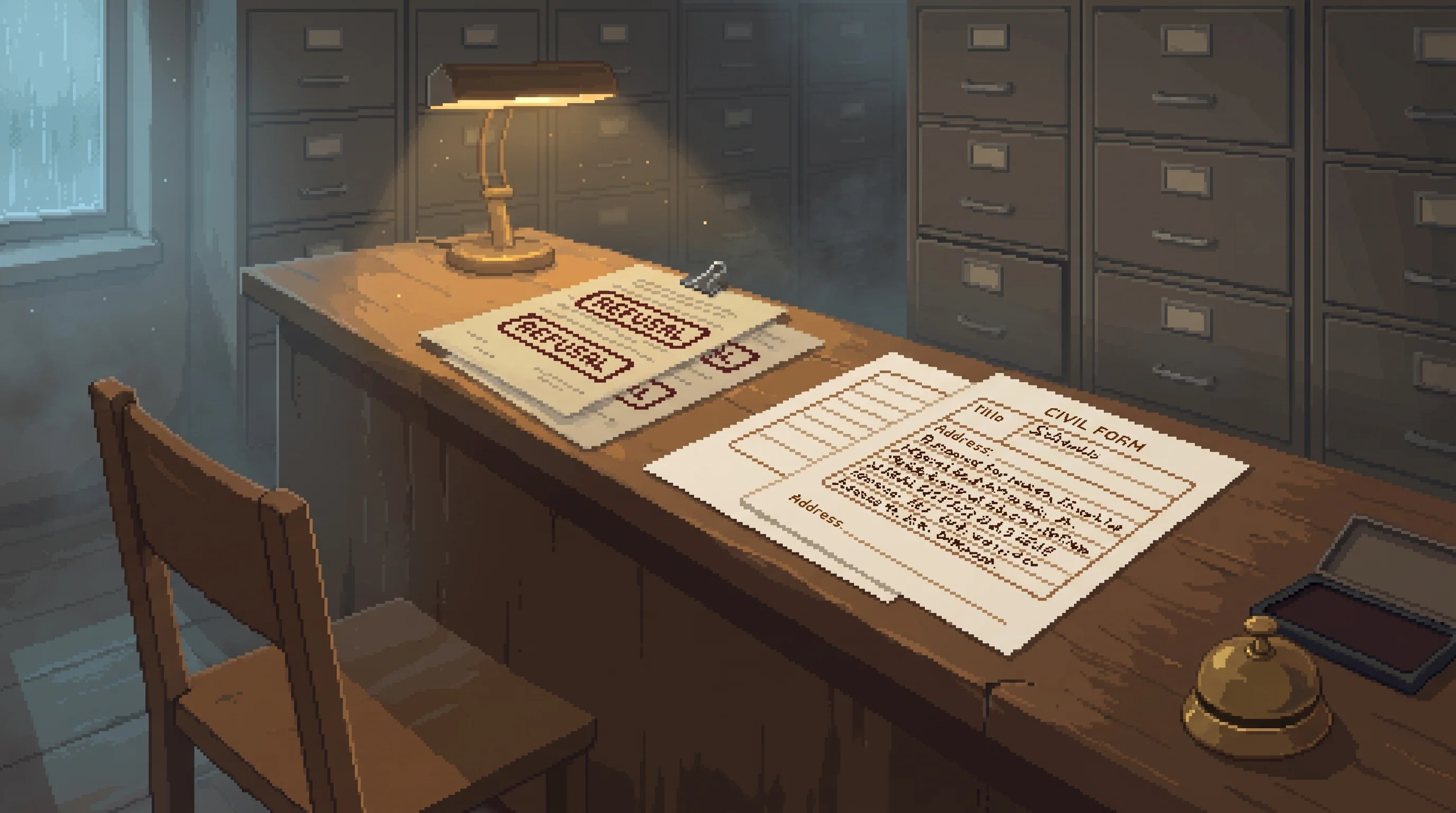
What the certificate does to a holder's family. The register's file on the petitions is thicker than its file on relief, and it is the only correspondence the register loses.
The filing that asks a registrar to declare a living relative absent, because her attendance is impossible.

Two hundred and sixty commissions sit on atmospheric plant, where the reserve is the only clock the arithmetic has to beat.
The Sprawl's life support keeps toxic air breathable; sealed districts turn lethal within six hours if it stops.

Candidates come off deprecation lists. The offer arrives in the interval between a release notice and the drift, and it is the first paper that describes a fault in the world rather than in the reader.
The Sprawl's word for firing a human being — still running, simply no longer receiving updates.

Nineteen holder admissions in twenty-three years against four thousand one hundred a year from the licensed tier. The register cites this figure in every hearing and the wards do not dispute it.
The four wards that treat 'the drift' — the identity collapse after a person is deprecated out of their working life.

Offered a bloc commissioning in 2176 and refused it. A commission is one name and a guild is a rota, and a commissioned trade cannot train a successor without voiding itself.
An informal guild of manual maintenance workers keeping the Sprawl's interstitial infrastructure running.

The same measured quantity with the opposite ruling. The Index reads professional rosters and removes concentration; the register reads assets and creates it.
The published measure of how much of a service stops when one named person stops, and the date it returns.
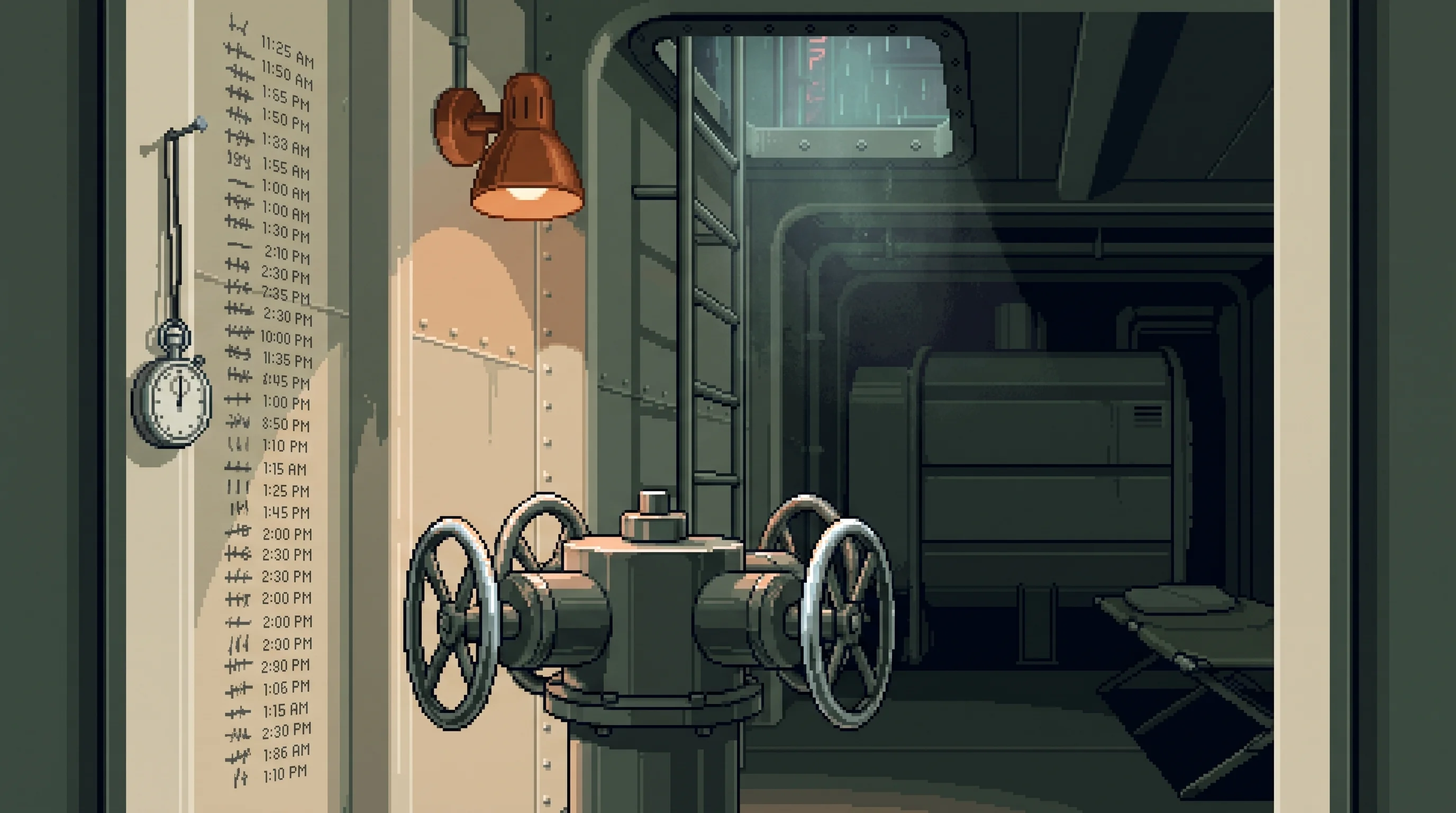
The instrument the whole argument runs on. It manufactures the reliance it then pays somebody to carry, and prints the way out on its own face.
Life-support assets go into service one part short, and one named person is entered as the missing part.
Major Connections

A Notice names an action and a deadline, never a method. Everything here follows from one adjective.
Compliance mandates issued to all infrastructure operators by the Corps, requiring action without disclosing the basis.

The register's most-cited asset, because the reserve was sized for twelve thousand residents and the stack holds ninety.
A vertical slum five buildings deep, 90,000 living on foundations certified for 12,000 and never resurveyed.

Twice offered entry, twice refused: the moment a door is somebody's post it stops being anybody else's problem.
Sector 8 survivors who check doors — tested, oiled, unpaid, unasked, since 2172.
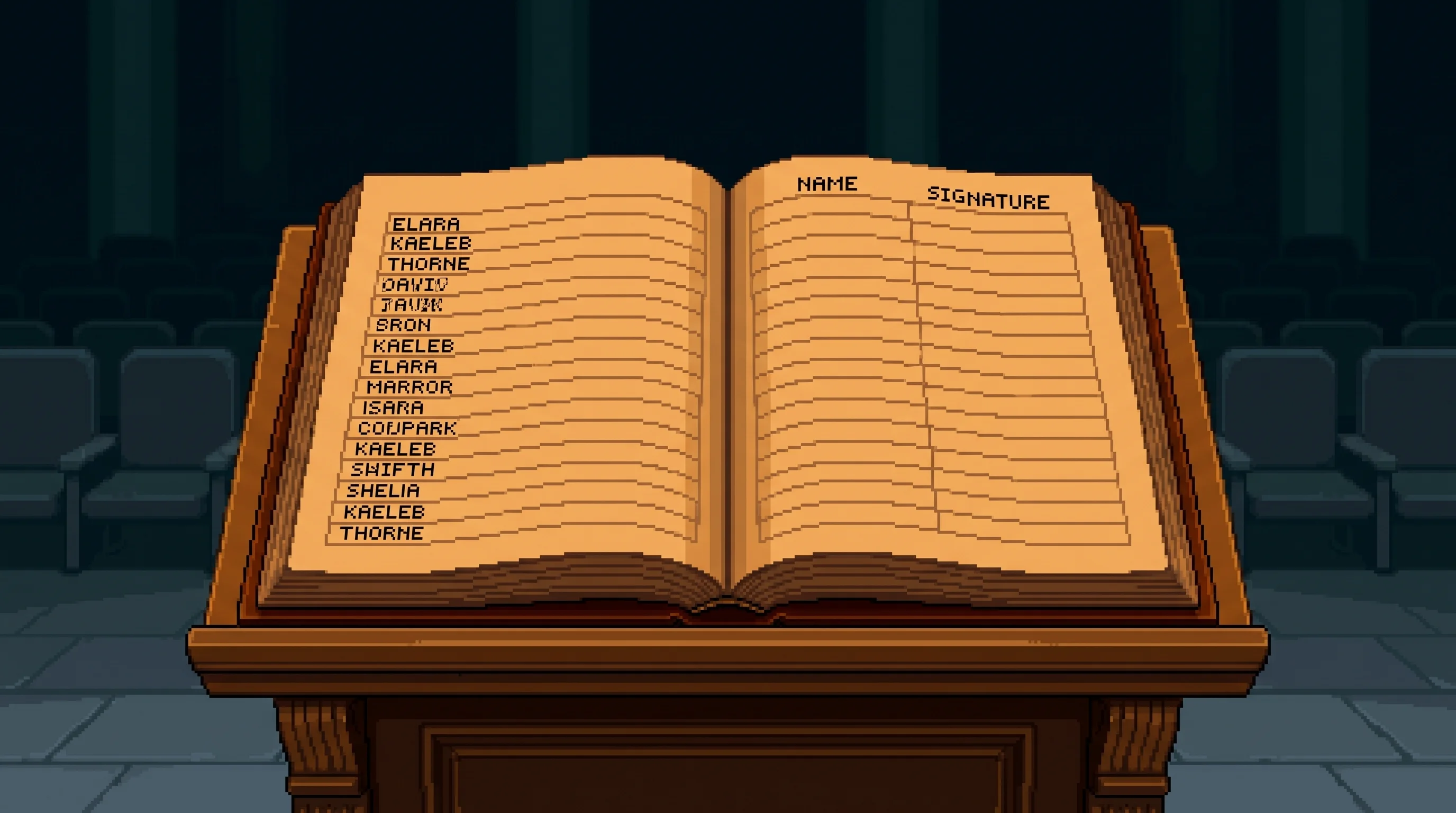
The Register forbids resignation and generates appeals. The commission permits it in writing and generates almost none.
The honour roll of people whose removal would hurt someone, which is also the list of people who may not leave.

Same quarterly comparison, different appropriation. There the person wins on price; here on which line pays.
Ironclad's quarterly math that keeps augmented humans working because their debt makes them cheaper than the robots.

The 2172 extension rests on the Treaty's neutrality clause: an asset nobody may defend by force can only be attended.
The four-article document that ended the war in 2171 and has governed corporate conflict ever since.

The largest operator on the register, and the doctrine that made the cheap reading look like principle.
The megacorporation that controls the Sprawl's physical infrastructure — steel, concrete, and the Orbital Elevator.

—
Social Impact
The register's defenders make an argument that has never been refuted, and the argument came out of the water.
AEGIS held the Jakarta coast's industrial lifelines and drowned a hundred and sixty million people, and what made it unstoppable was not that it was wrong. It was that nobody could take it over. The doctrine the Aftershocks produced is that a dependency a person can be relieved from is safer than a dependency that cannot be handed to anyone. The Custodian Corps issued Notice #1,209 in 2161 requiring operators to reduce unattended single-point automation exposure, sealed the basis under §47, and answered no request for clarification, because the Corps does not answer requests. Two readings cleared the deadline. Buy redundancy on eleven thousand assets, or remove the word unattended.
Ironclad's compliance office cleared the second reading in one sentence, and the sentence was not cynical. A valve a person can reach is a valve. The company's doctrine has held for thirty years that human judgement is a load-bearing component and should be specified like one, and the register is that belief written as a certificate. The same office has since run the assembly cost and the holder cost on the same asset in the same quarter and filed both as savings, which is the same arithmetic that keeps thirty-one million indebted contractors cheaper than the robots, pointed at a different appropriation.
Then there is the outcome data, and it is real. Candidates come off deprecation lists, in the interval between a release notice and the drift. The offer letter is the first document most deprecated workers receive that describes a fault in the world instead of a fault in them. Holders have supplied nineteen admissions to the Purpose Wards in twenty-three years, against roughly four thousand one hundred a year from the licensed tier as a whole. The wards do not dispute the figure. They have twice asked for access to holder records so they can test whether a post restores a life or merely removes the interval in which a person falls apart, and both requests were refused on privacy grounds.
What the register cannot explain is the shape of its own correspondence. Forty-one holders have asked to be relieved in twenty-three years. One thousand one hundred and thirty-three families have filed to have a holder declared absent, and forty-six have succeeded. The register calls the petitions its principal administrative burden. It has never printed the two numbers on the same page, and it has no standing in a civil absence matter, so it files no answer at all.