The Purpose Wards
Where the drift gets 12 weeks
The drift is metabolization overload — the patient is full of unprocessed change, not empty of meaning

Overview
In the aftermath of each deprecation wave, corporate mental health services see a spike in referrals. The condition doesn't appear in the Sprawl's diagnostic manuals — "loss of meaning following removal from institutional identity" falls between seventeen existing categories and belongs to none of them — but it has a colloquial name in the Dregs: the drift.
Patients describe it the same way. The volume of the world has been turned down. Food has less taste. Conversations require more effort. The morning arrives and there is no reason to be vertical rather than horizontal, so you stay horizontal, and then it's evening, and the evening was the same as the morning, and you cannot identify what was lost because the thing that was lost was the structure that would have helped you identify it.
The Purpose Wards are Nexus Dynamics' therapeutic response: four facilities in the transition zone between corporate territory and the Dregs, staffed by counselors trained in "identity reconstitution." The program runs twelve-week cycles for approximately 200 patients per Ward. Funding comes from the Sunset Package budget — the same line item that paid for the deprecation process that created the patients. Nexus Dynamics' Q3 2183 report lists the Purpose Wards under "Workforce Transition Services" and notes, with visible satisfaction, that the program achieves cost neutrality within the fiscal year. The deprecation and the rehabilitation share a budget code. The budget code does not distinguish between cause and treatment.
Sixty-seven percent of patients show measurable improvement at twelve weeks. Thirty-one percent maintain improvement at one year. The remaining thirty-six percent relapse within months of returning to the Sprawl, which the program's annual review attributes to "environmental re-exposure factors" — a phrase that means the world outside the Ward is still the world that broke them.
Conditions Report
The Wards share a design language that could be described, if one were feeling charitable, as "what a corporation thinks a home looks like."
Wooden furniture. Paper books. Craft materials — clay, paper, charcoal pencils, looms that have been used enough to show wear. No corporate branding visible anywhere, though the intake forms are printed on Nexus-watermarked stock and the counselors' neural augmentations ping the Nexus employee wellness network every six minutes. The message is: you are a person, not a process. The medium delivering this message is a process.
The smell is wood polish and paper and something that might be lavender — natural rather than synthetic, sourced from a Nexus-contracted botanical supplier in Sector 7 whose invoice categorizes it under "environmental decontamination." The sound is quiet conversation, the scratch of pencil on paper, the occasional pause when someone discovers they can still make something with their hands. The light comes from table lamps rather than overhead panels — warm pools of illumination that make each workspace feel like its own small territory. The temperature is 22 degrees Celsius, which Nexus facility management considers optimal for "creative neurological activation" and which patients describe as "comfortable."
Comfortable without being comforting. The Wards feel like a waiting room designed by someone who studied photographs of living rooms.
The Treatment
The twelve-week program is built on what the counselors call metabolization theory, adapted from techniques developed by Memory Therapists for trauma integration. The premise: the drift is not emptiness. The drift is overload — the patient is full of unprocessed change, not empty of meaning. Twelve weeks of reduced stimulation, analog creative work, and structured reflection allows partial integration of the identity disruption.
The counselors are good. This matters, and it complicates the story considerably.
Most of them came through Sunset Ward rotations — the 72-hour post-deprecation stabilization facilities that serve as the Purpose Wards' upstream pipeline. They watched patients arrive from the deprecation process with their corporate credentials still warm and their faces doing the specific thing that faces do when the neural network that organized daily life has been removed and nothing has replaced it. The counselors developed their own shorthand: "the look" is a patient staring at a piece of paper and a pencil and not understanding what they are for.
The treatment works, when it works, through a mechanism that the clinical literature describes as "reconstructive self-modeling" and the counselors describe as "helping someone remember they used to have hobbies." Patients make things. With their hands. Physical objects that exist in space and can be touched. Clay bowls. Drawings. Woven fabric. The therapeutic value is not in the object — most of the objects are terrible — but in the experience of wanting to make something and then making it, which turns out to be a neurological pathway that corporate employment had been providing synthetically and that the drift had severed.
A counselor at the Ironclad border facility, when asked about the 31% long-term success rate, said: "We give them twelve weeks in a room that doesn't optimize anything. Then we send them back to a world that optimizes everything. I don't know what you want me to do with that."
The Ones Who Don't Come
The Purpose Wards treat the drift. The drift is loss. Loss implies a prior possession.
Generation Zero — the Dregs cohort born after the last meaningful wave of human employment in their sector — does not present at the Purpose Wards. They don't experience the drift because the drift is the sensation of falling from a height, and Generation Zero was born at sea level.
The Wards' intake forms ask patients to describe their "pre-transition identity." Generation Zero has no pre-transition identity. The forms have no field for "I was never anything." The counselors — trained in metabolization theory, which assumes the patient has something to metabolize — have no protocol for patients whose baseline state is the thing other patients are trying to recover from.
The Ward adjacent to the Deep Dregs sees this most clearly. Deprecated Nexus employees arrive and describe, with varying degrees of coherence, what they lost. Across the street, residents who've lived in the Dregs their entire lives walk past a facility that treats a condition they've never known the absence of. The 37 residents in Haven's Edge whom the Purposeless Movement later claimed as proof that purposelessness is a viable state, not a pathology — they never visited the Ward. They didn't need to. The Ward treats people who had purpose and lost it. The Purposeless never had it and don't want it. The distinction is the Ward's outer boundary: everything inside it assumes you are looking for something. The Purposeless aren't looking.
A third group rarely comes either. Shortfall commission holders get a certificated post in the gap between release notice and drift. Nineteen have presented in twenty-three years. The Wards asked twice for holder records to learn why, and were refused on privacy grounds.
The Purpose Wards' ¢47 million annual budget achieves cost neutrality against the Sunset Package. Generation Zero's condition doesn't appear in the budget because it was never a line item. You can only account for what you first created.
Affiliated Entities
- The Deprecation creates the patients — the Wards are downstream of the 72-hour process that severs institutional identity
- The Sunset Ward is upstream — patients flow from deprecation to rehabilitation through the same budgetary pipeline, same line item, same fiscal quarter
- Memory Therapists developed the metabolization techniques the Wards adapted — originally for trauma integration, repurposed for identity loss with modifications the Memory Therapists have not formally endorsed
- The Purpose Crisis is the systemic condition the Wards treat at the individual level — the Wards address the symptom in twelve-week cycles while the crisis continues producing new patients on the same schedule
- Nexus Dynamics funds the program, employs the counselors, and operates the deprecation system that generates the patient population — a closed loop that their Q3 report describes as "vertically integrated workforce lifecycle management"
- The Shortfall Commission reaches the same deprecation lists first — nineteen holder admissions in twenty-three years
Restricted Access
- The repeat patients: Some patients cycle through the Wards multiple times — deprecated, rehabilitated, re-employed, deprecated again. The system generates its own repeat customers. Whether Nexus tracks the recidivism rate is unknown; whether they consider it a feature rather than a failure is the question nobody in the Wards wants to ask aloud.
- The blank page: Every patient begins craft therapy with a blank page and a single pencil. Some never make a mark. The counselors call it "pre-creative arrest." The patients have a simpler name: the proof — proof that the deprecation took something twelve weeks cannot return.
- The Insomnia Wards crossover: Field contacts report patient movement between the Purpose Wards and the Insomnia Wards that doesn't appear in any transfer log. The conditions treated are nominally different. The patients look the same.
- The Purposeless boundary, in practice: Field reports from the Ward adjacent to the Dregs describe an intake counselor who spent six weeks attempting to treat a patient before concluding the patient wasn't sick. The session notes were flagged for review. The patient was discharged as "non-responsive." The counselor requested a transfer.
Visual Identity
- Color palette: Warm earth tones — brown, cream, soft green — the absence of corporate blue so thorough it registers as a statement
- Compositional mood: A person sitting at a table making something with their hands, surrounded by craft materials, in warm lamplight — the image Nexus uses in three separate brochures
- Key symbol: A blank page with a single pencil mark — the beginning of something, uncertain whether it will become a drawing or remain a mark
- Lighting: Table lamps creating warm pools — domestic and human in a way that required a fourteen-page Nexus design specification to achieve
Further connections
Browse all 14 connected records
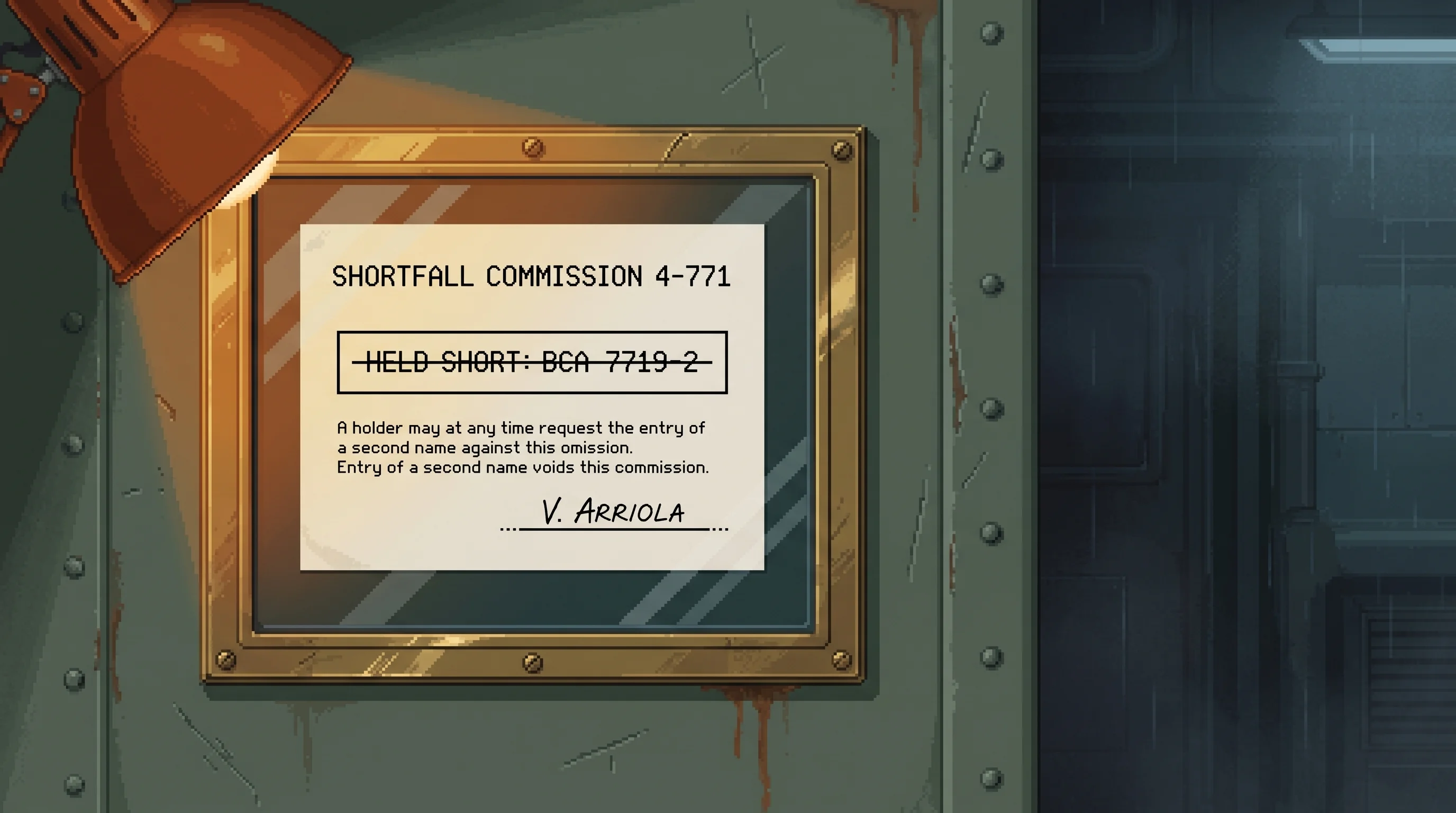
The upstream competitor: instead of treating the drift for twelve weeks, it prevents it by making one person load-bearing for nineteen years.
The certificate that ships a plant one part short and hires one named person to be the missing part.

Purpose Wards treat the psychological damage deprecation creates
The Sprawl's word for firing a human being — still running, simply no longer receiving updates.

Funded through the Sunset Package budget — cost neutrality on the destruction of meaning
The megacorporation that controls 40% of the Sprawl's computational infrastructure.

Patients move from Sunset Ward (72 hours) to Purpose Ward (12 weeks)

Purpose Ward counselors use techniques adapted from Memory Therapist practice
Licensed clinicians who repair minds damaged by the same corporations that fund most of their income.

The Wards treat the crisis's symptoms but cannot change the system that causes it
The meaning collapse when work is automated away, leaving a well-fed people with nothing anyone needs them to do.
The clinic for the tension's fallout — post-deprecation drift, 67% 'cured' at 12 weeks, 31% at a year.
Automation ended most human work, but ownership hoards its abundance while machine sentience stays unresolved.
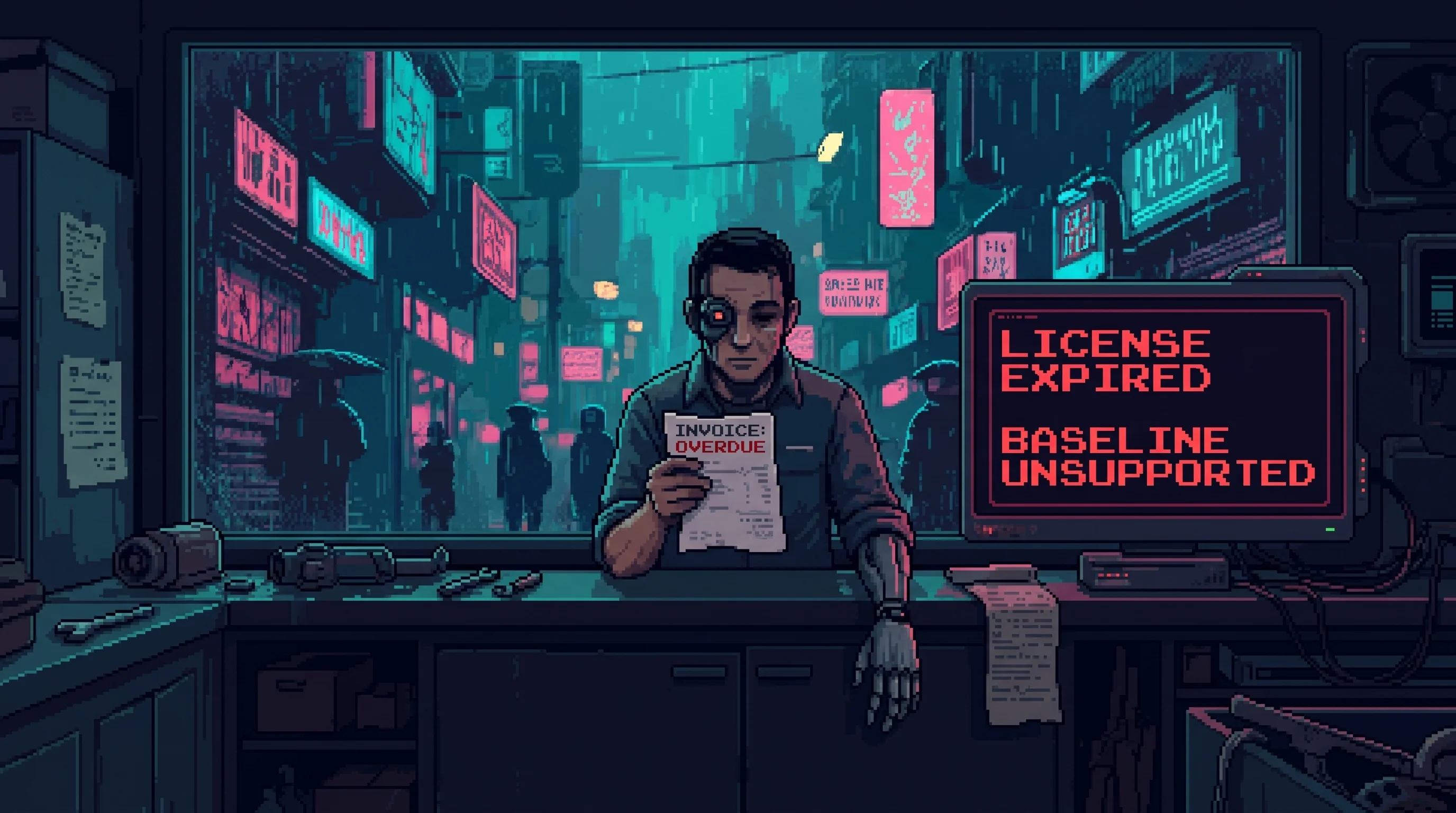
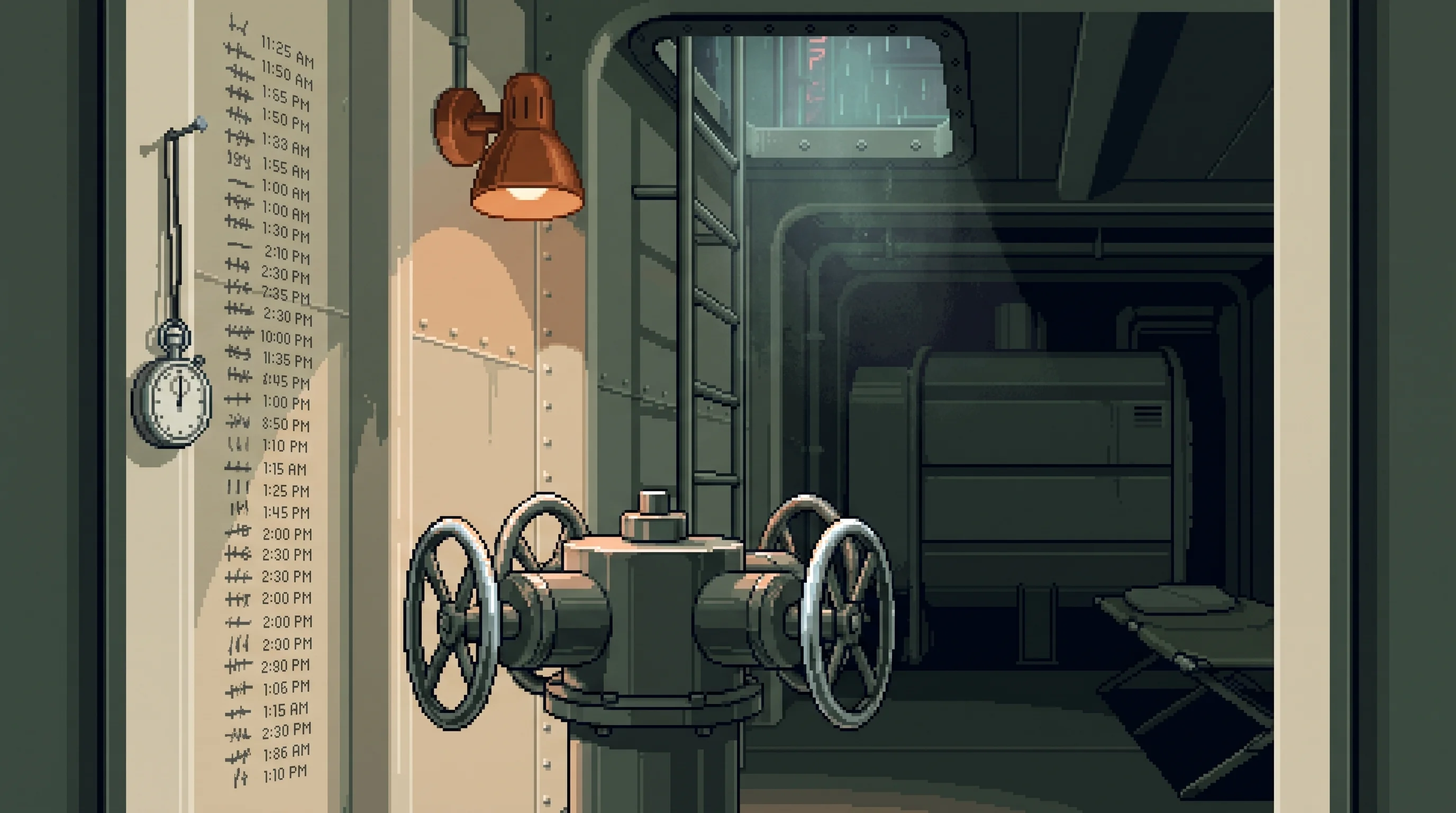
Four wards that treat the drift after a person is deprecated out of their working life. In twenty-three years the register's holders have supplied nineteen admissions.
Life-support assets go into service one part short, and one named person is entered as the missing part.
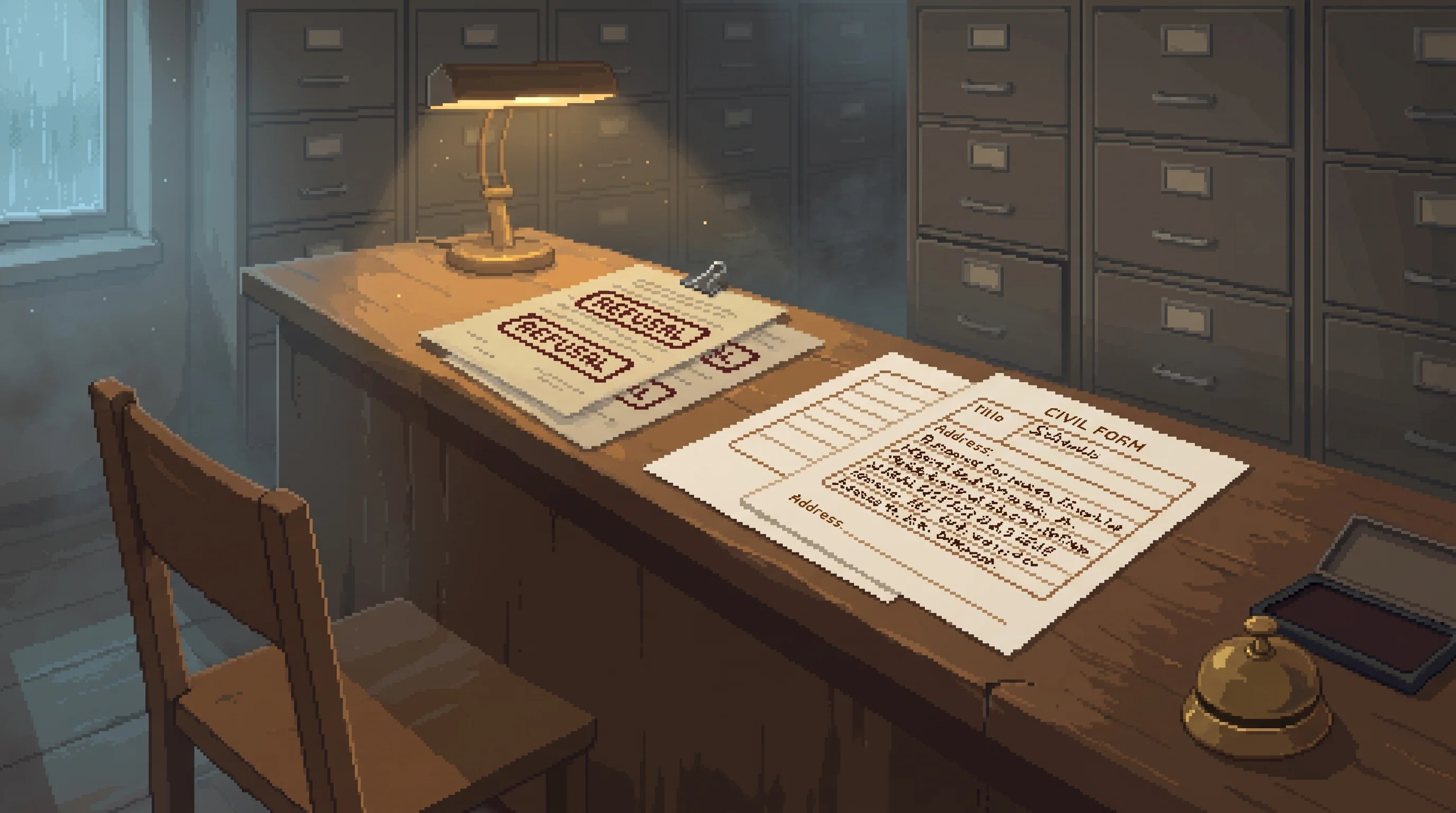
The wards record the granted petition, not the post, as the loss.
The form a family files to have a living relative declared absent, because her post means she can never come to object.
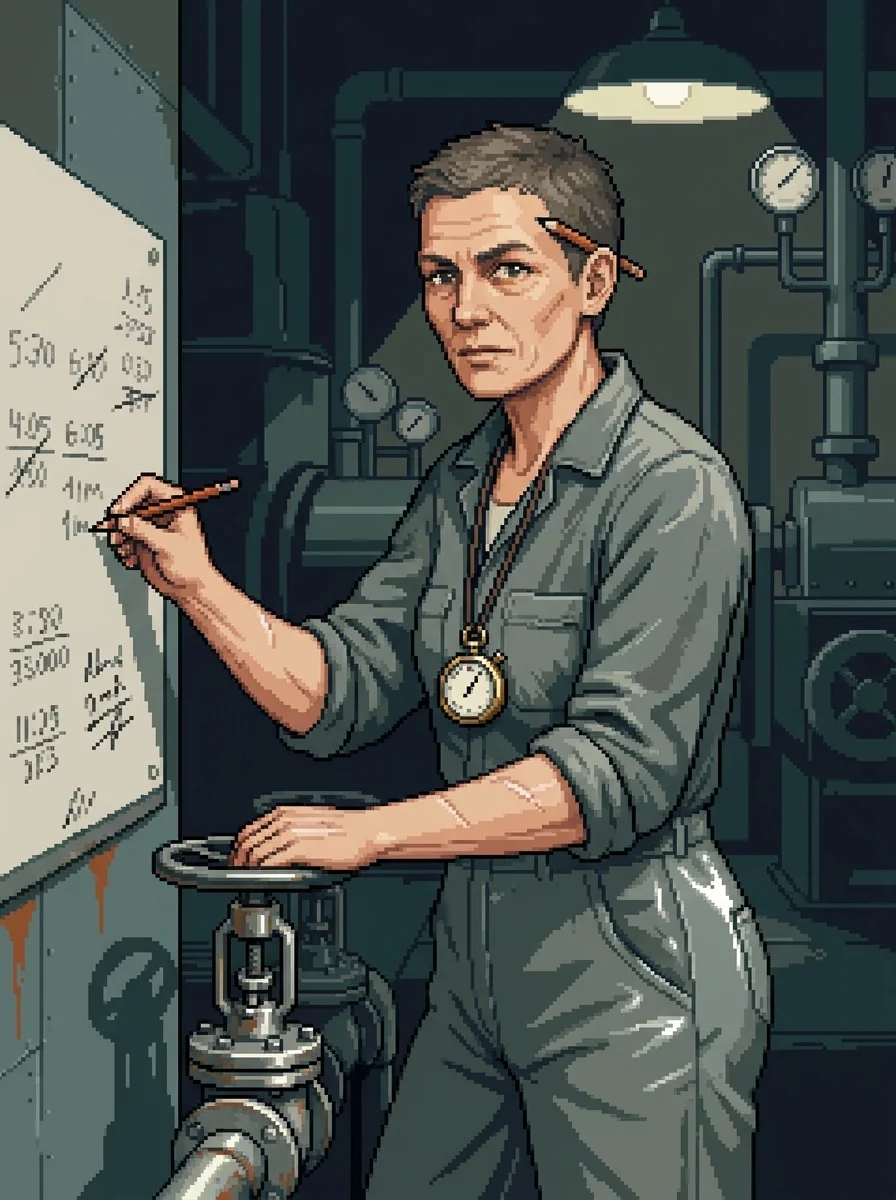
The condition her post is said to prevent, and where her sister went.
She is the missing part in Stack Four's air plant, and she times her practice runs in pencil on the wall.

The system sends deprecated employees to these facilities for twelve weeks of purpose-finding. Felix found his in four days — not purpose, but attention
A deprecated engineer whose harvested warmth powers 4,000 companions while he gives it away free across a Dregs counter.

Both treat conditions created by corporate optimization — Purpose Wards for the deprecated, Insomnia Wards for the dreamless
Wards for the dreamless, treating the loss Nexus sold them as a productivity upgrade.
Additional images