The Authorship Assay
No instrument in the Sprawl can find a person in a page. The Assay finds the machine and signs the difference.
Overview
The origin mark settled speech. Every utterance routed through an interface arrives stamped with its provenance, kept and openable by whoever is listening, and the Authenticity Tribunal argued for the standard because a dispute resolved at delivery is a docket the bench cannot lose.
The unmarked page was left over. A document composed off-interface, an attestation written by hand because a clause requires a hand, a submission from a district whose ledger is too thin to return anything — none of these carry a mark, and regulatory code 11.4(b) had by then made human authorship a compliance requirement across every binding decision in the Sprawl. Somebody had to certify them. The Tribunal had a hall, a staff, and a pattern library.
What it did not have was a way to detect a person, because there is no such thing. Human writing has no positive signature. What exists is the machine register: the statistical shape of generated prose, which is measurable, stable, and improving. So the Assay reports the absence of that shape and signs the gap. The finding it issues says a machine did not write this. It has never said a person did, and the distinction is printed on every certificate in the same size as everything else.
The register was fitted to the cleanest, best-schooled prose in the corporate archive, because that is what the models were built to imitate and what they imitate best. Fluency is the machine's strongest suit. The instrument therefore reads fluency as machine. What survives a reading is a snag: a held vowel, a break where the schooled register runs smooth, a construction a company school would have marked in red. The Assay files each one as a retention. Nobody on the floor says retention. They say tell.
How It Works
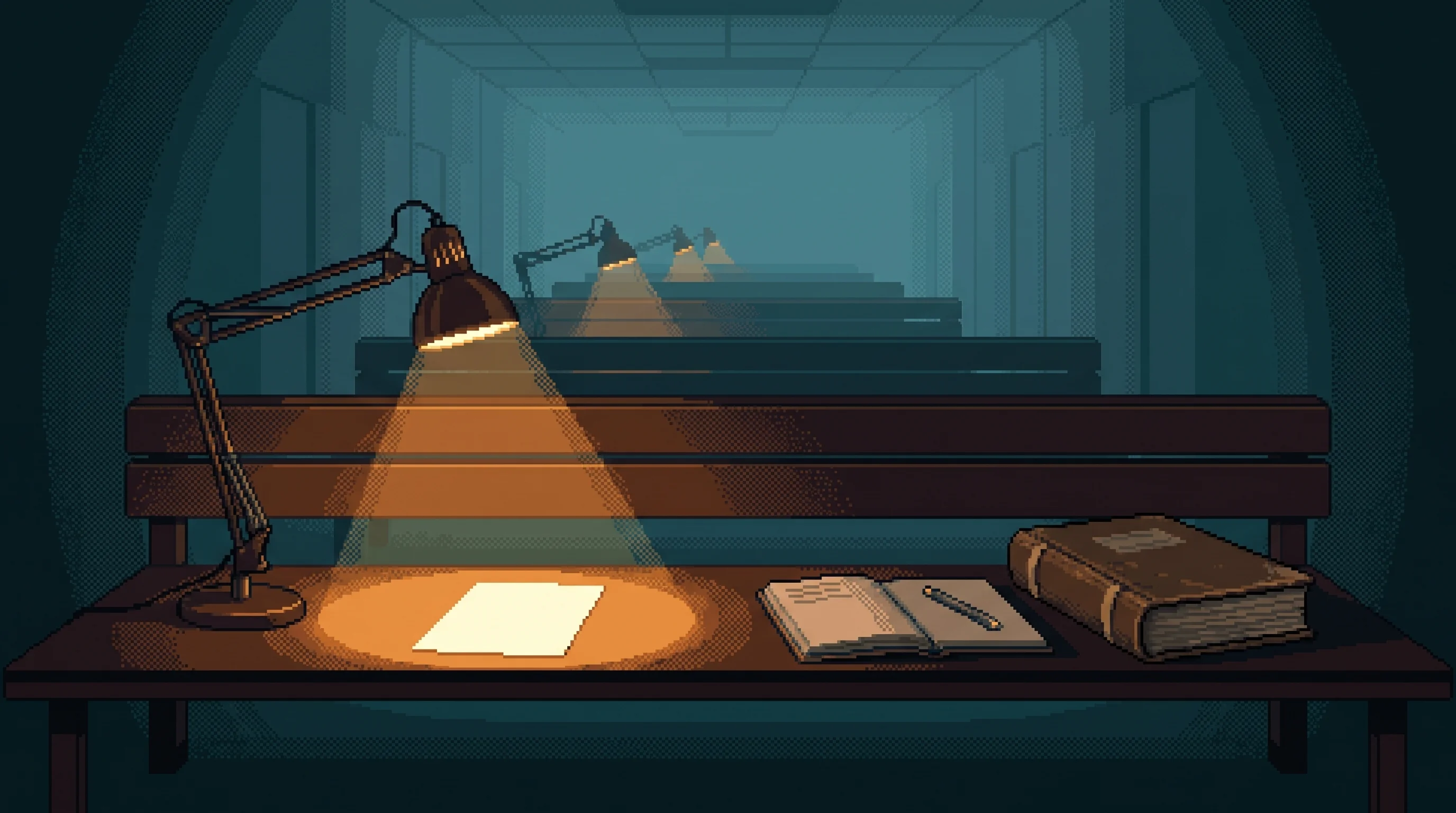
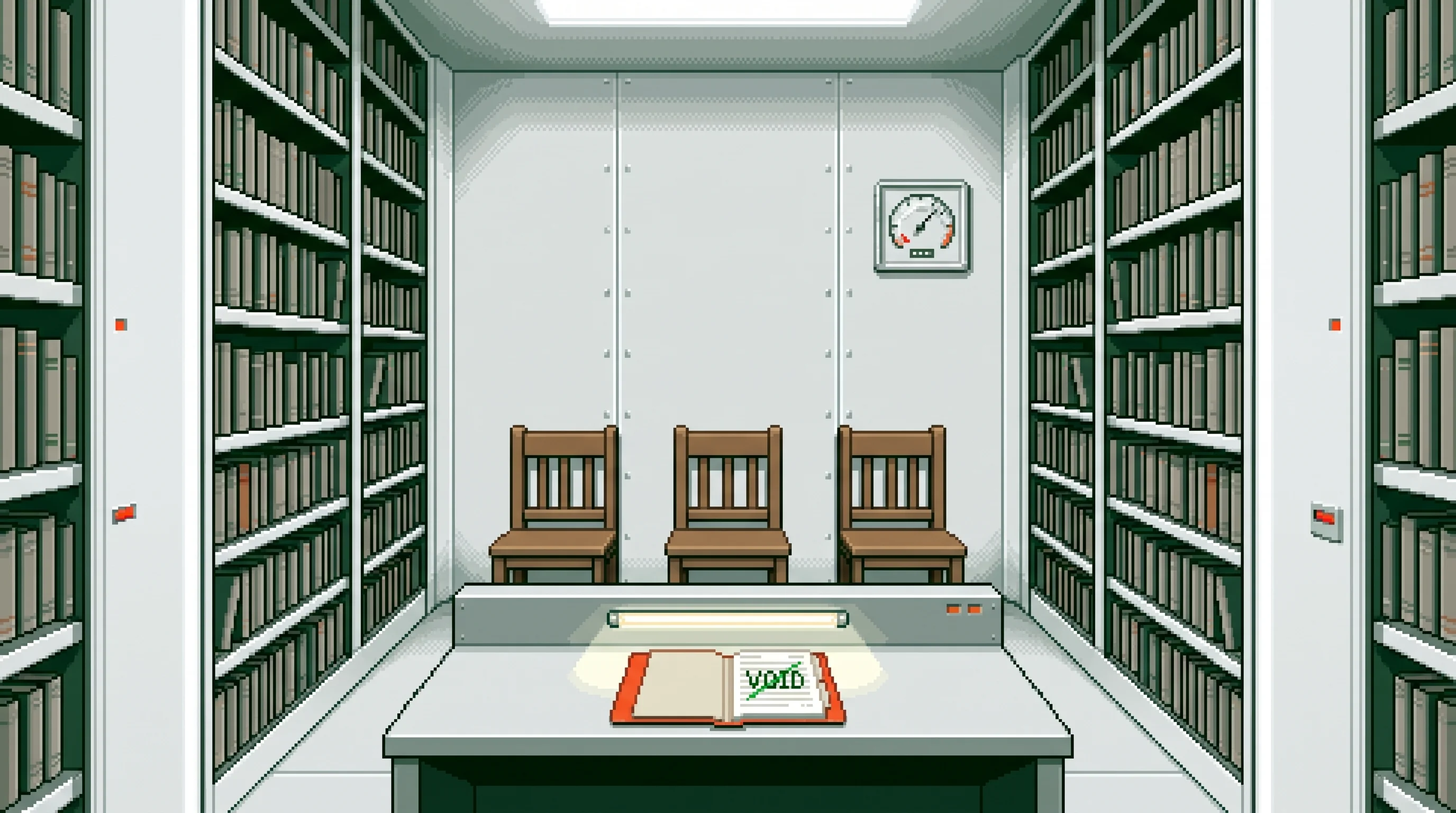
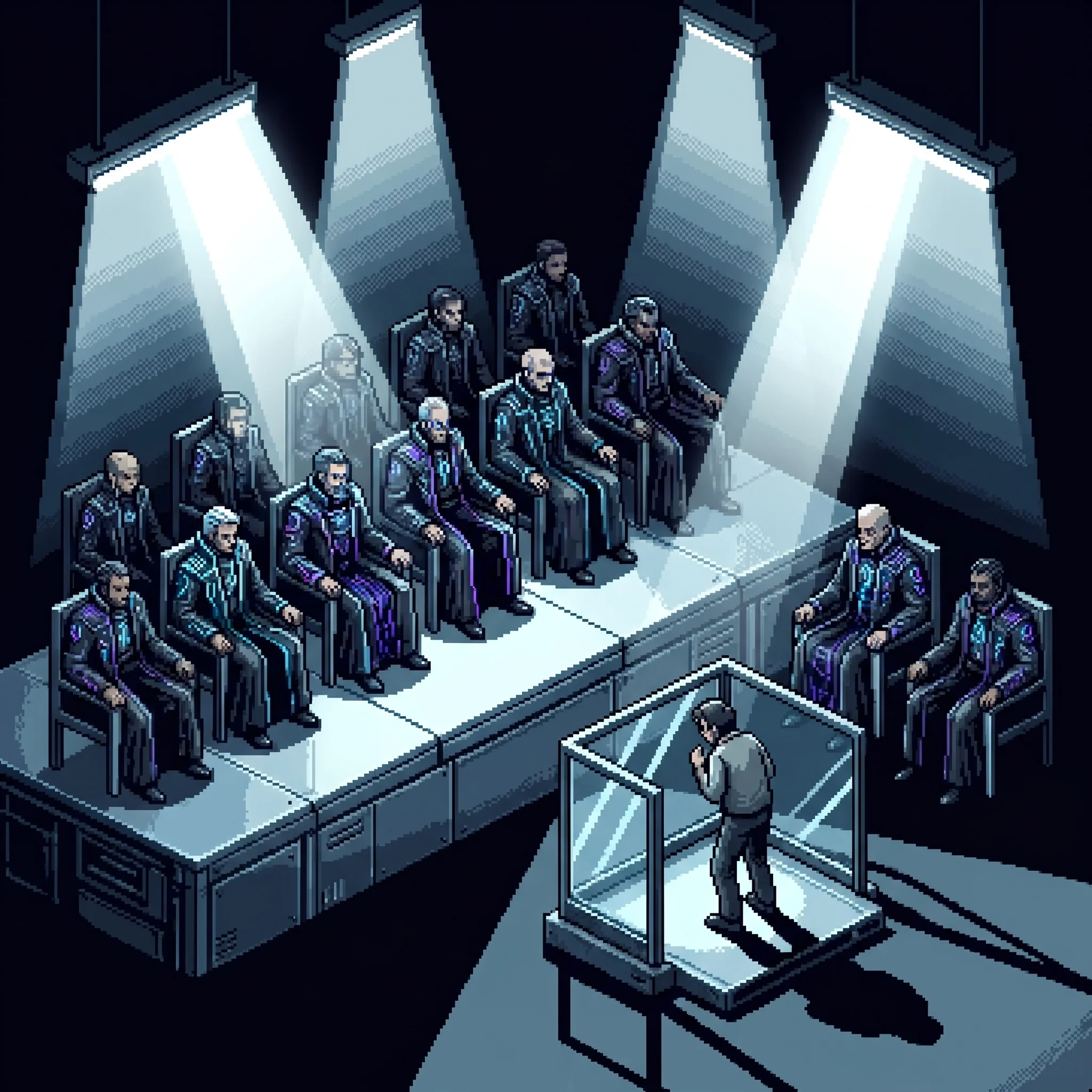
A submission arrives unmarked and goes to a bench under a low lamp. The assessor runs it against the live register — the current list of markers the models still cannot produce — and looks for one. If a page carries a live tell, the Assay signs it. If a page carries nothing, the Assay declines, and declining is not an accusation. It is a report that the page is indistinguishable from generated prose, which is also what it says about the most careful writer in a division.
The live register is published quarterly. This is the only thing the Assay does that touches money, and it is enough. A published list of markers that certify human authorship is a published list of things worth buying, and a market assembled around the bulletin within a year of the first one. Compliance brokers lease tells from the households that have them and resell certified attestation capacity to firms that need a signature to stand up. The Assay neither buys nor sells, which keeps the floor formally outside the trade and has never once been mistaken by anyone on the floor for being uninvolved.
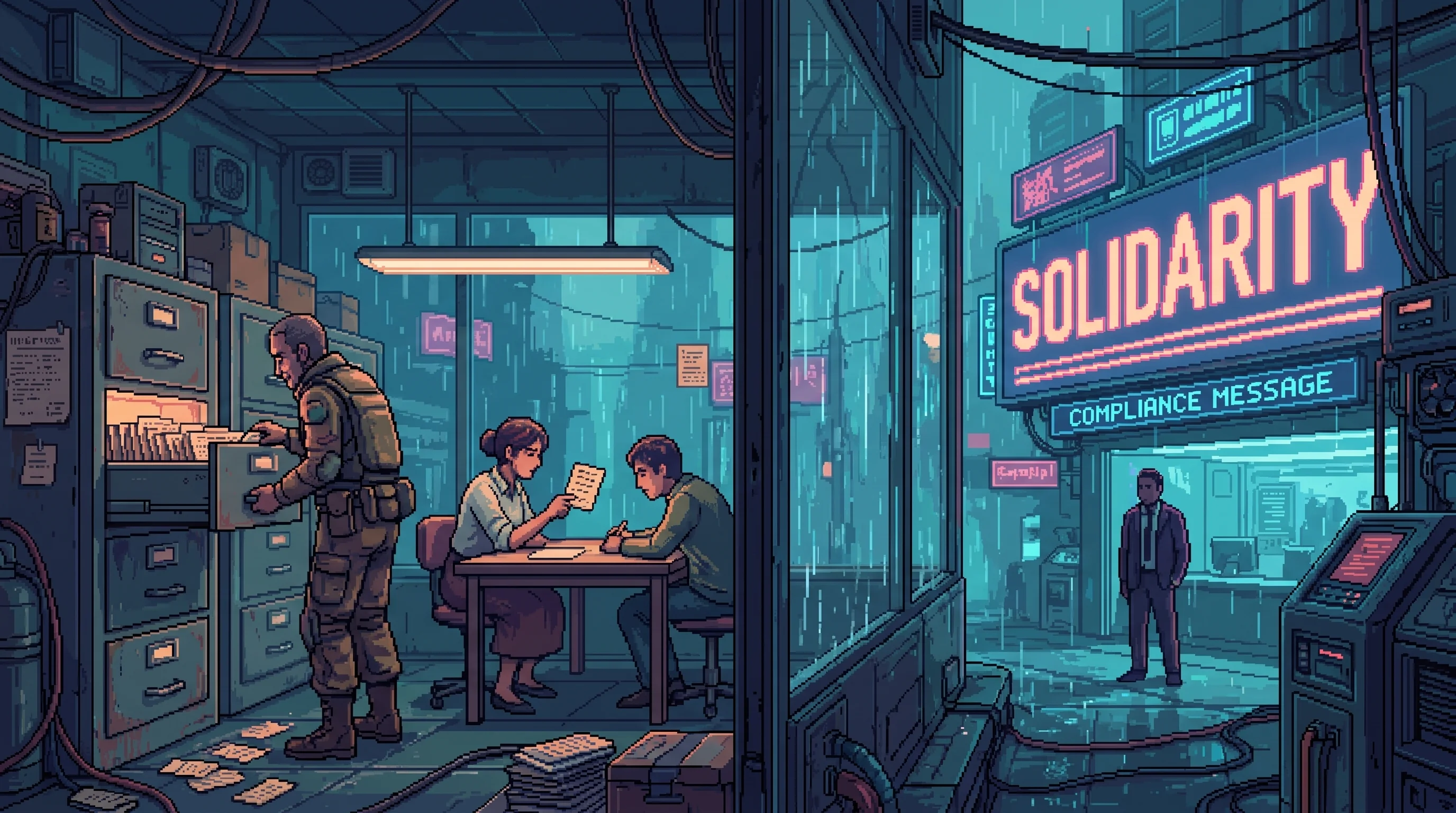
Then the mechanism closes. Every leased tell is used, and every use is a sample, and several thousand certified examples of a marker is precisely what a model needs to learn to produce it. When it does, the tell is struck. It moves from the live register to the struck register, the leases written against it void without compensation, and the household that supplied it starts looking for something else in its own speech that the machine has not yet learned. The median retention lasts nineteen months past its first commercial lease. The live register opened with 4,112 entries in 2176 and holds 617.
Both registers are kept in ink, in the same hall. The struck one is thicker.
| What | The Sprawl's certification standard for unmarked text — pages the origin mark never touched, submitted where a clause requires a human author |
|---|
Who Holds a Tell
The supply is not distributed the way the buyers assumed it would be. It sits in the Deep Dregs and the drained bay flats, in households whose speech was drilled out of them at company schools during the Optimization Decade, when a register that failed the corporate standard kept a family out of employment and licensing for a generation at a time. The correction did not take completely. What survived in a few thousand households is exactly what the archive never absorbed, because the archive was built from the people who passed.
Ynez Barquero holds one. Her grandmother was beaten at a company school in the 2130s for a vowel in the second syllable of ordinary words, held a half-beat longer than the register allowed. Ynez leases it four times a year through a broker, reads the quarterly bulletin looking for one four-digit number, and has been told the strike is likely inside two years.
The schools produce the same signal from the other direction. Graduates of the Analog Schools trigger the Tribunal's Anomalous Pattern Review at 41%, because unaugmented cognition diverges from a model calibrated on augmented artists. Two halls away, on the same library, that identical deviation is what the Assay signs. The bench reads it as suspicion and the floor reads it as proof. No one has asked the two halls to reconcile, and the assessors work both.
What It Costs the People Who Pass It
Dr. Priya Achebe has spent nine years filing ethics objections inside Nexus, every one of them accurate, none of them changing an outcome. When her Board began requiring an authorship certificate on its written findings, she wrote hers by hand and submitted it where the clause required a human author. The Assay declined to sign it. Her prose is exact, unhurried, and shaped by the education the register was fitted to, and the instrument reported what the instrument reports. Nobody suggested she had not written it. The finding went into the file with everything else she has filed.
Maya Fontaine took an assay-floor rotation in 2183 and did not ask to leave. Fourteen years certifying neural canvases gave her the highest accuracy in Tribunal history and a word she used for authentic work — weight — that she has never been able to define. On the floor she says a certifiable page is snagged, which is the same reach for the same unnameable thing, and she has stopped putting either word in the written finding. In her second quarter she started keeping a private count of how many tells she signed that were still live three months later. She has not filed it, and she has not written down why she keeps it.
Upstream, the institution that most needs the Assay is the one built to manufacture defendants. Licensed Human Oversight exists because a corporation cannot be prosecuted for an algorithm and can be prosecuted for a licensed, insured, timestamped human who said yes — and that surface only absorbs liability if a person demonstrably produced it. Overseers now assay their own attestations before filing. The guild's Standards Committee has not issued guidance, for the reason it has never issued guidance on tenancy: explaining why a Licensee has to buy a stranger's vowel would require first explaining what the eleven seconds contain.
The live register held 4,112 retentions at opening in 2176 and holds 617 in 2184
The Half It Declined
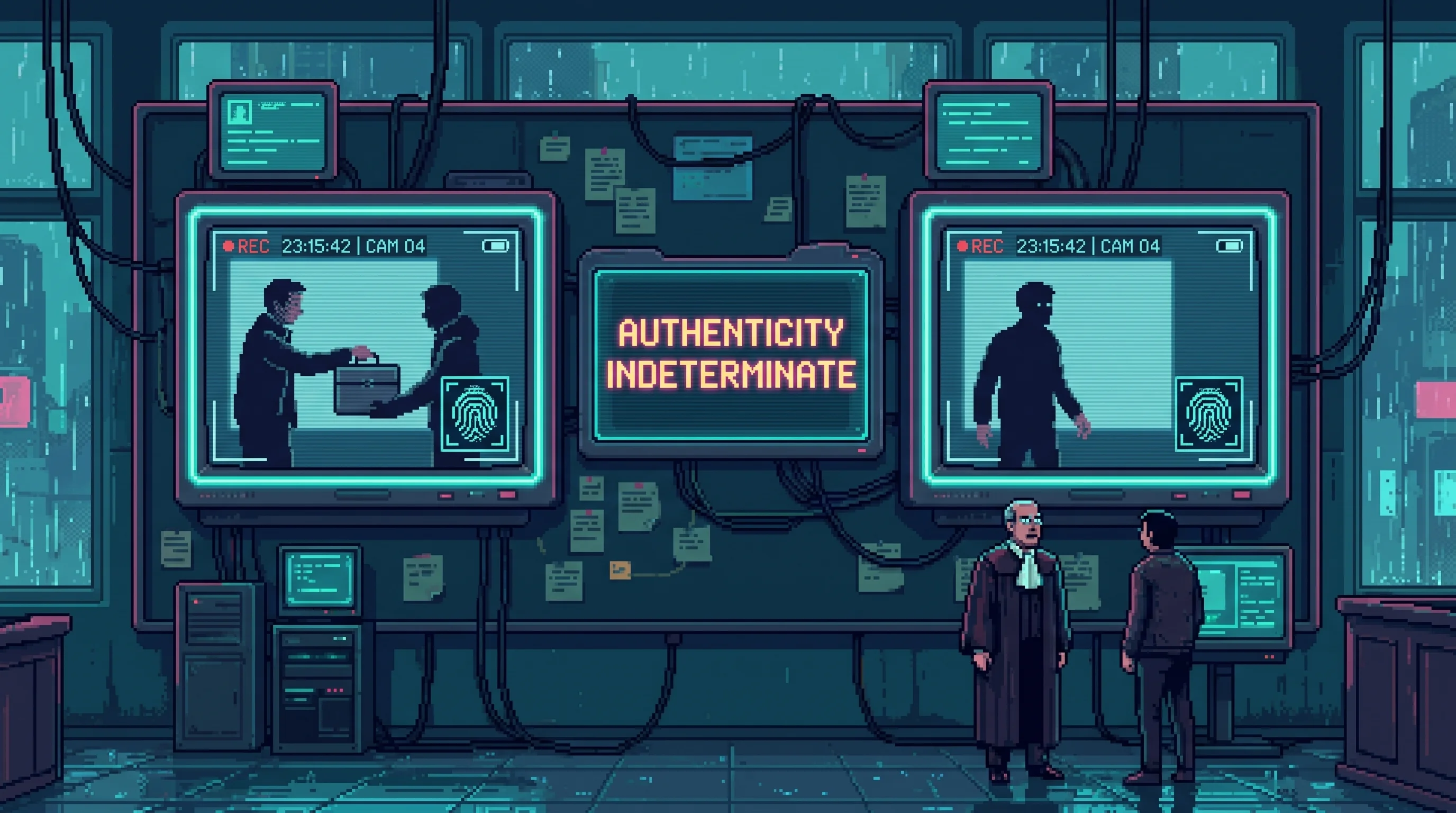
The certificate has always said the same thing, in the same type size as everything else: a machine did not write this. It has never said a person did, and it has never claimed to know whether anybody understood a word of it.
The district registries took that sentence literally and built an institution out of it.
If provenance can prove which systems touched a document and nothing about who comprehended it, then the only remaining test is to put the person in a room and ask. That is the Re-Defence: any credited entry, drawn at random, accounted for out loud for forty minutes with no interface, no notes and no help — and struck, along with everything downstream, if the holder cannot. Registry filings cite the Assay's printed limit as the authority for the whole practice, which is accurate, and which nobody on the assay floor was consulted about.
The floor regards this as vindication and says so, quietly. The limit was stated honestly for eight years and somebody finally acted on it. What the floor has not remarked on is what acting on it does. The Assay declines to sign a page and calls that a report rather than an accusation, which it is. A registry declines to accept an account and takes a career, which is the same finding with a consequence bolted to it, arriving fourteen years later, in a room the assessors will never see.
Resistance, and What It Runs Into
The obvious defence is to stop selling. Some households have. A tell withheld from the market stays live indefinitely, which means the families most committed to keeping their speech are also the ones earning nothing from the only thing anybody has ever offered to pay them for, and the register does not distinguish a withheld tell from an extinct one until somebody tests it.
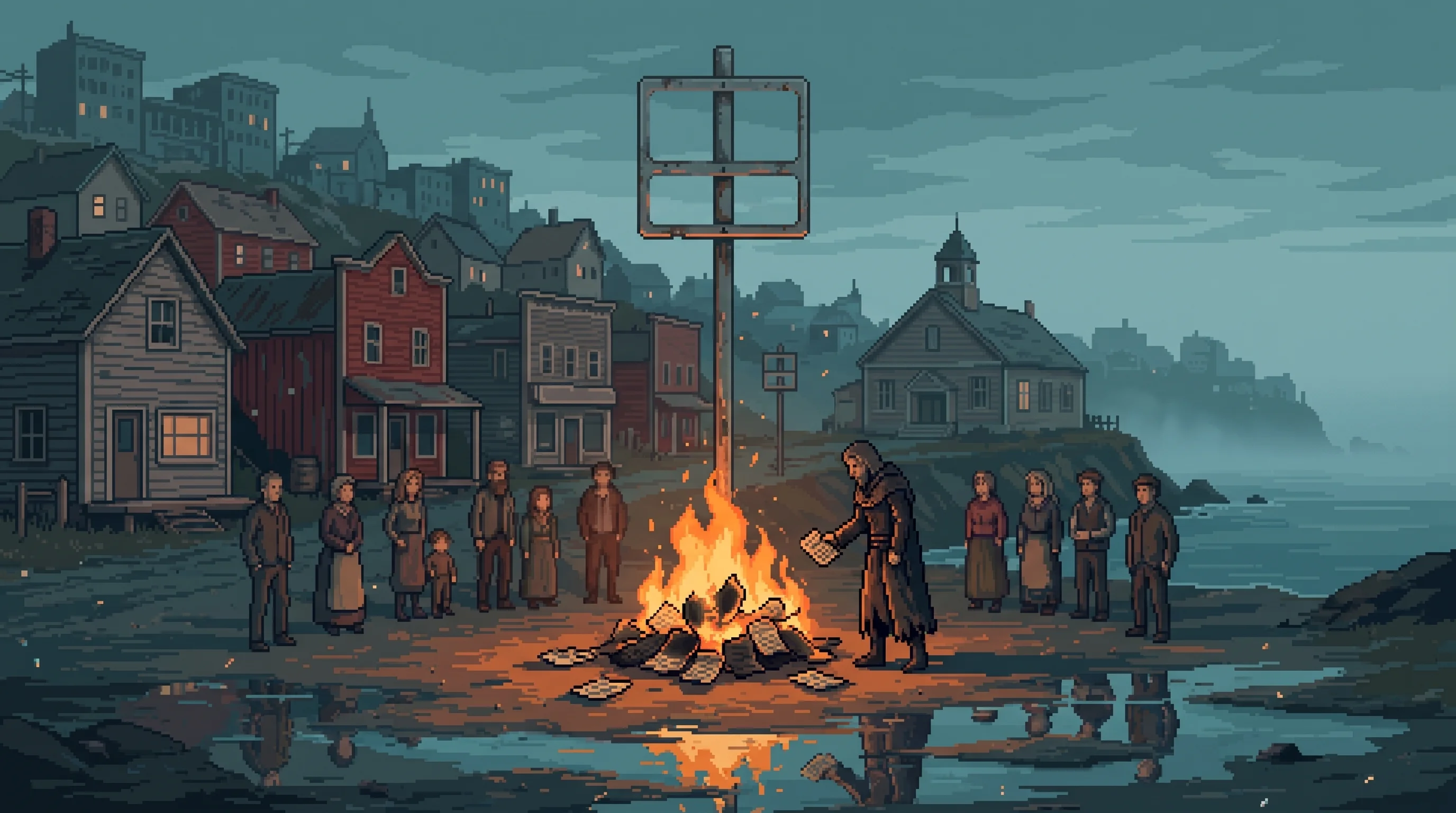
The other defence is to build a new one. Up the North Bay coast, the Hidden has run that experiment for twelve years: six hundred and forty people speaking a grammar assembled from words already declared dead, reassigned each autumn at the Renaming, the only written record burned on the lagoon shore the same night. It works, and it does not transfer. The town's illegibility is a civic project with a committee, an elected Warden, and an annual restock. The Barquero vowel arrived through a school, cannot be reissued, and is worth money exactly once.
Two sectors from the assay floor, Helix's Denaturing Ward keeps the other ink ledger in the Sprawl: 2,306 words convicted since 2174, each with a docket number, a date, a mandated substitute, and a Reprieve Hearing twelve years out. The Ward's registry is an itemized record of an institution's own hand, which is why the Question Keepers keep writing to ask for it. The struck register has the dates and no hand at all. There is no docket, no seat that voted, and no year in which anyone could have voted differently — only a list of things a corpus finished learning, and the households who will not be paid for them again.
A marker that still defeats the models is filed as a retention and licensed by the season; when a model learns to produce it, every lease written against it becomes void without compensation
Restricted Access
The Assay has never published the composition of the archive its machine register was calibrated on, and the two requests on file were answered with the same sentence about proprietary corpora. Duval's directory of documents that frighten her contains no entry for the assay floor. Colleagues have offered two readings of the omission, and the assessors who work both halls have offered a third, which is that she has not been asked a question that would require her to open the file.
Connected To
Primary Connections
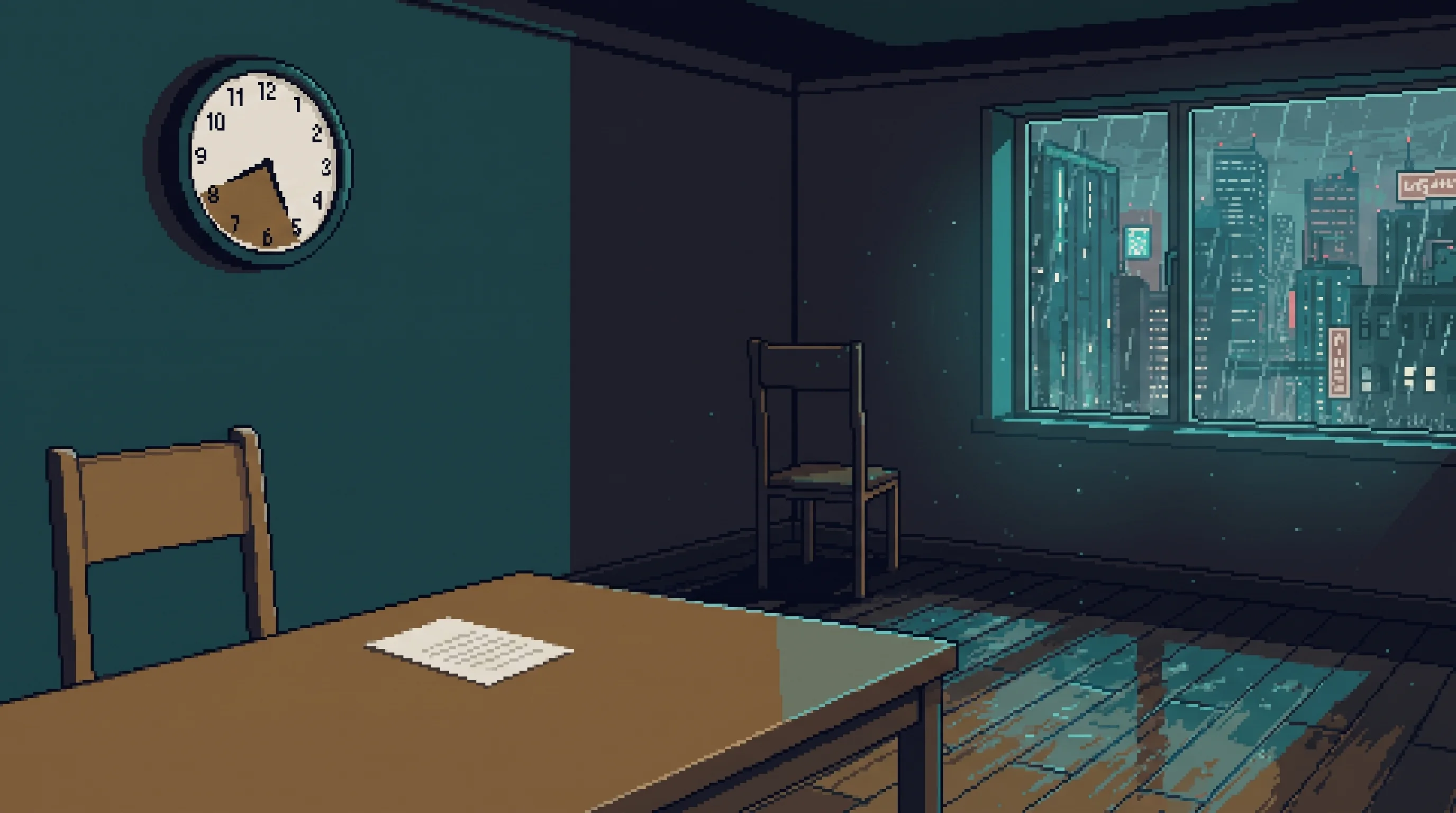
The half the standard declined. Every certificate says a machine did not write this and has never said a person did; the registries read that printed limit as an instruction and built a sitting around it.
Anything you were credited with can be recalled and re-argued alone; nothing held against you ever is.

Runs on the assay floor two halls from tier certification, staffed by the same assessors and calibrated on the same pattern library that produced Duval's Selection Paradox, with the sign reversed.
Nexus-funded body certifying what's real — its accuracy is decaying toward a coin flip, unpublished.
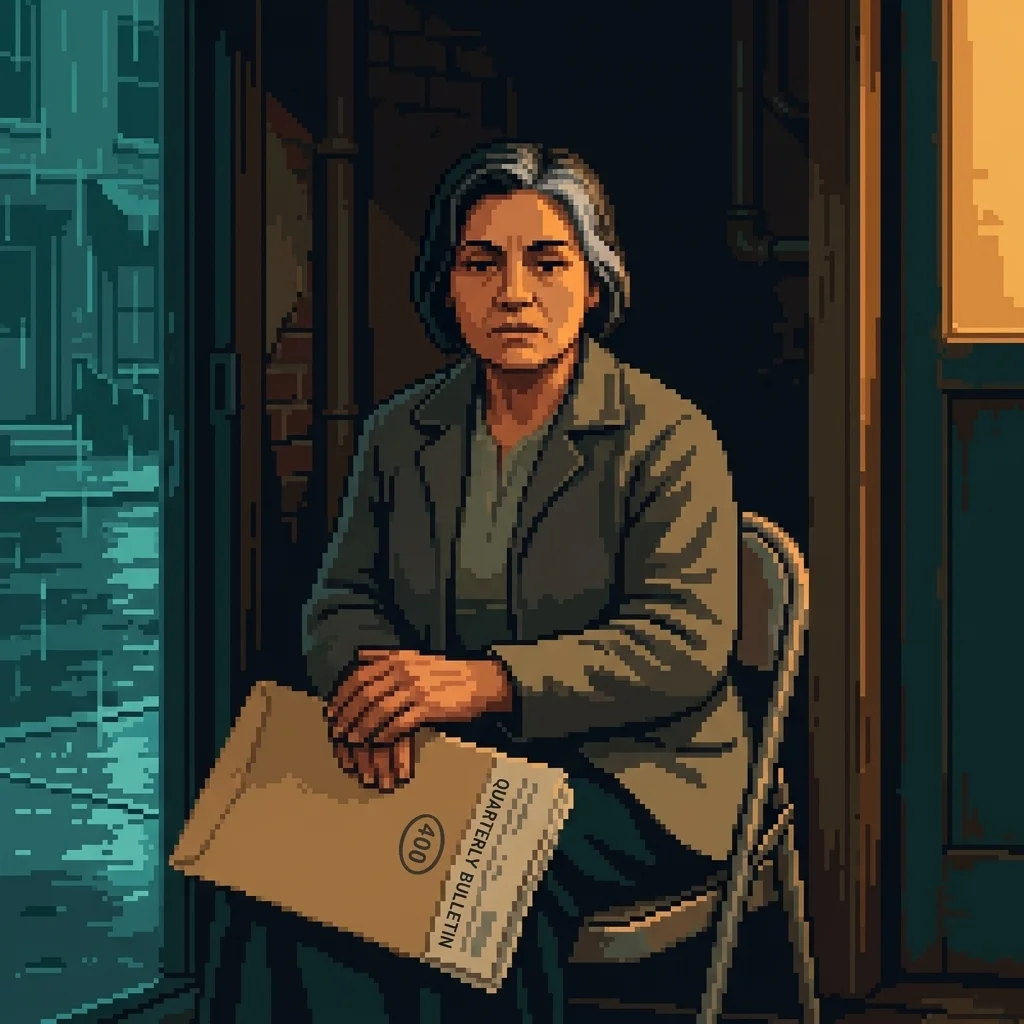
Files her grandmother's held vowel as a retention and sets, without deciding it, the year her lease stops being worth anything.
A Sump Row woman licenses, by the season, the vowel a company school beat out of her grandmother.
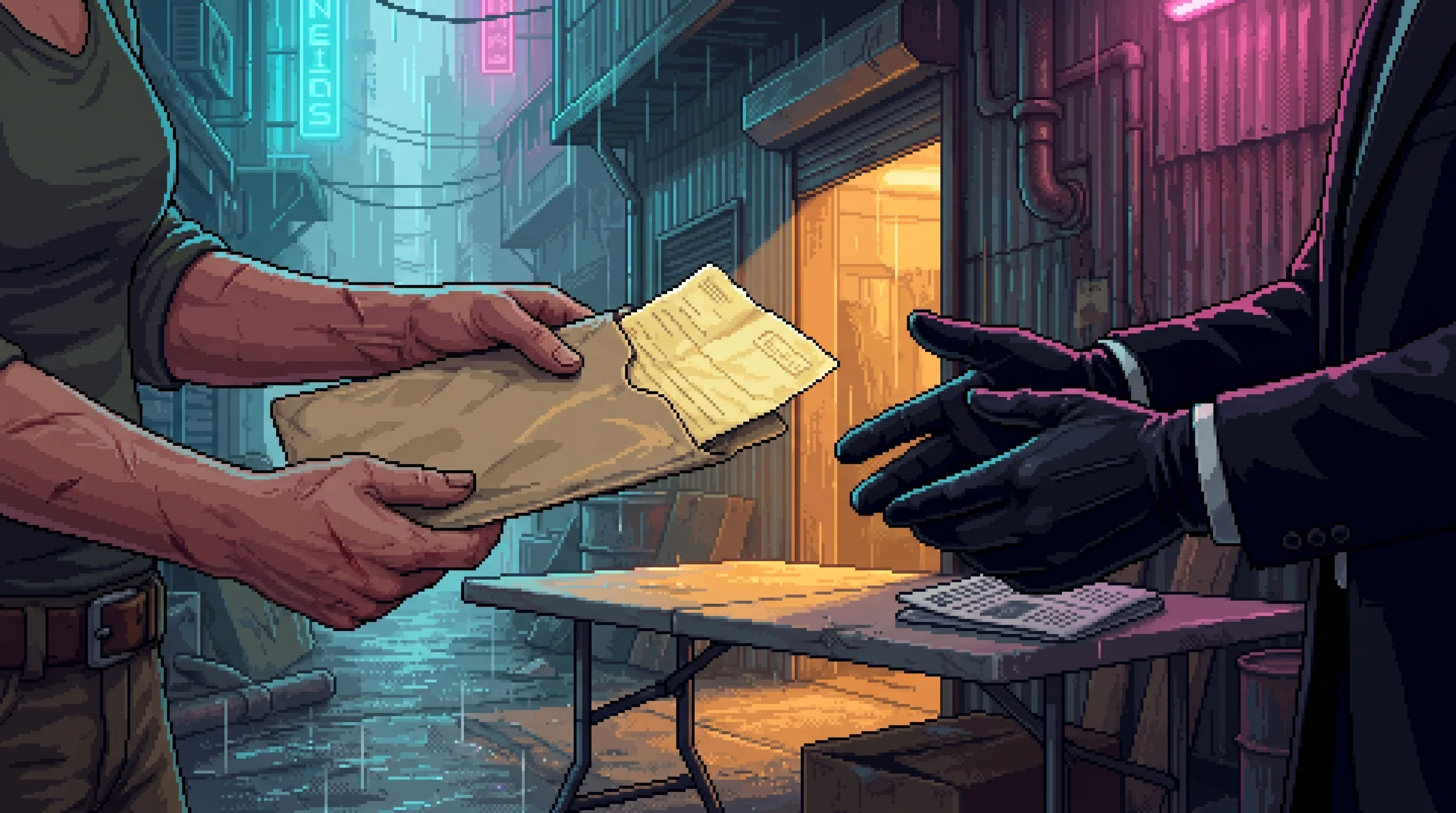
The thread's instrument. Certifying humanness as a residue makes the standard for being human whatever the models have not finished absorbing, and hands the credential to whoever was punished for failing the old one.
Humanness is certified by the absence of the machine, so the credential fell to the speech the world used to punish.
Major Connections

An Overseer's stamp only absorbs liability if a person made it; Licensees now assay themselves before filing.
The regulated profession of signing decisions a human cannot actually read.

The mark settled routed speech; the Assay is what the unmarked page got, eight years later.
A Question Keepers inquiry cataloguing every word the Sprawl let die, and what died along with it.

Her written findings came back unsignable — schooled prose reading as the register it helped build.
Nexus's own ethicist — 147 objections filed, zero outcomes changed, every one of them true.

Works the assay floor, calls a certifiable page snagged, and keeps a count she does not file.
VerisysTM's top-rated memory verifier, who found her own treasured memory of her mother is partly synthetic.
Supporting Connections
Verdicts in one ink ledger; things learned in the other.

The 41% the bench routes to review are the same pages the floor signs.
Forty-seven schools teach children to verify their own thinking without machine help and use failure as curriculum.

Her index measured the hedge; the floor prices what it replaced.
The Nexus cognitive scientist who quit to teach children to be comfortable being wrong.
The other last thing a household owns, on a slower clock.
The market in rented human legal identity — a name for the acts a machine cannot be charged with.
A grammar restocked each autumn against a tell issued once.
Every struck retention is an extinction with a date and no author.
Dead Words records language whose referents vanished or drifted and words built to remain unreadable to machines.

The sorting trait became the scarce asset without becoming a way out.
Technology never eliminates prejudice — it finds it better housing.
—