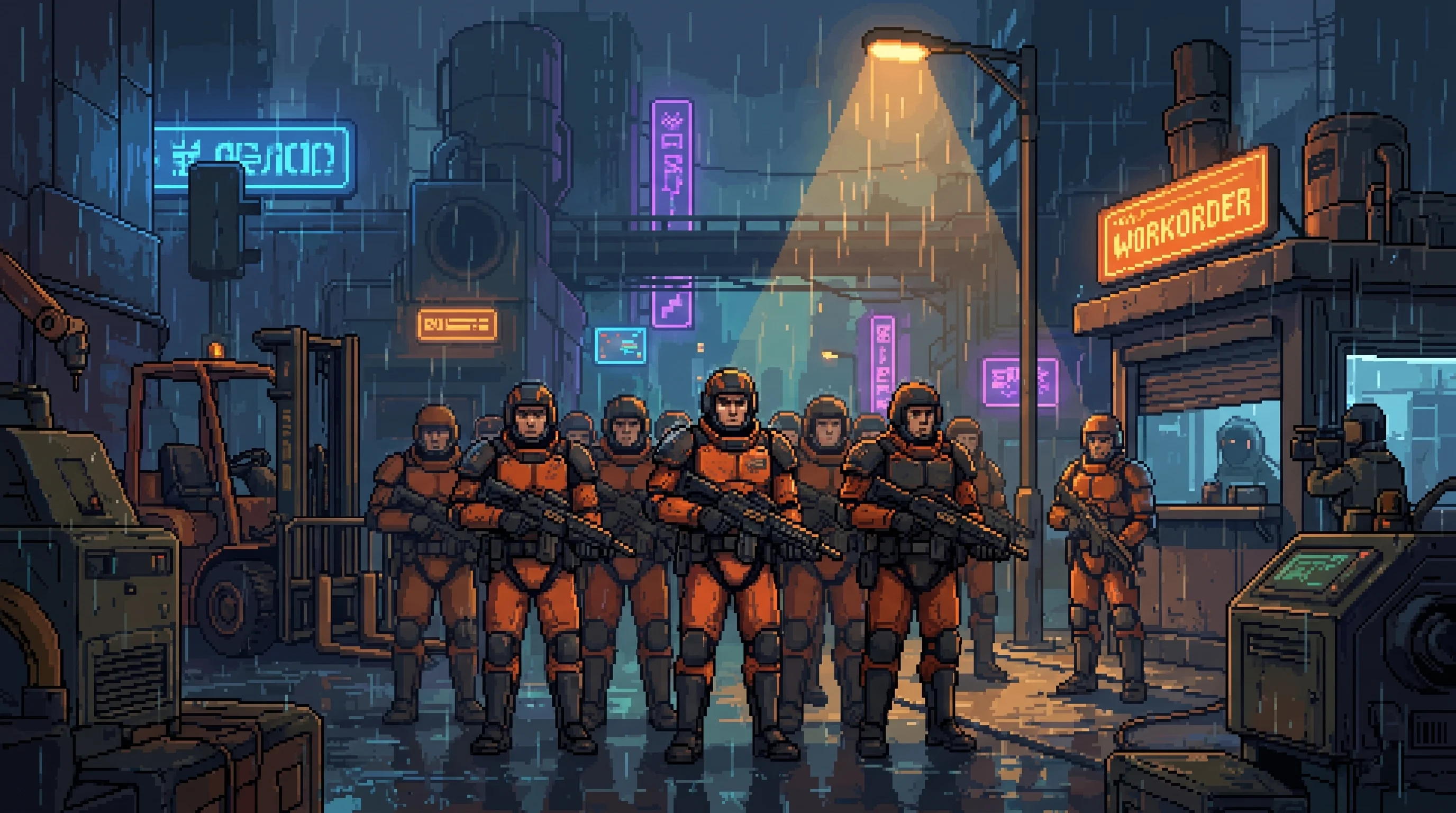
On the evening of 4 October 2183, at the top of the stair the residents call Landing Nine, a crowd marshal named Vidal Ancheta killed a man he had never met.
The man was Yusuf Almeida. He was in the second rank of the third surge coming up out of the platform. There was no argument between them, no history, and nothing to take. It was over in under a minute, in front of several hundred people, and Ancheta has never once said he does not remember doing it.
Ancheta was not charged. He was not charged because the Stacks had been forecast at eleven such deaths for that season and returned eleven, and because his mood-regulation subscription was paid up on the day. Under those two conditions the file closes with a single printed page and no defendant. He is thirty-eight. He still works the same landing, eleven hours a shift, at the same stair throat.
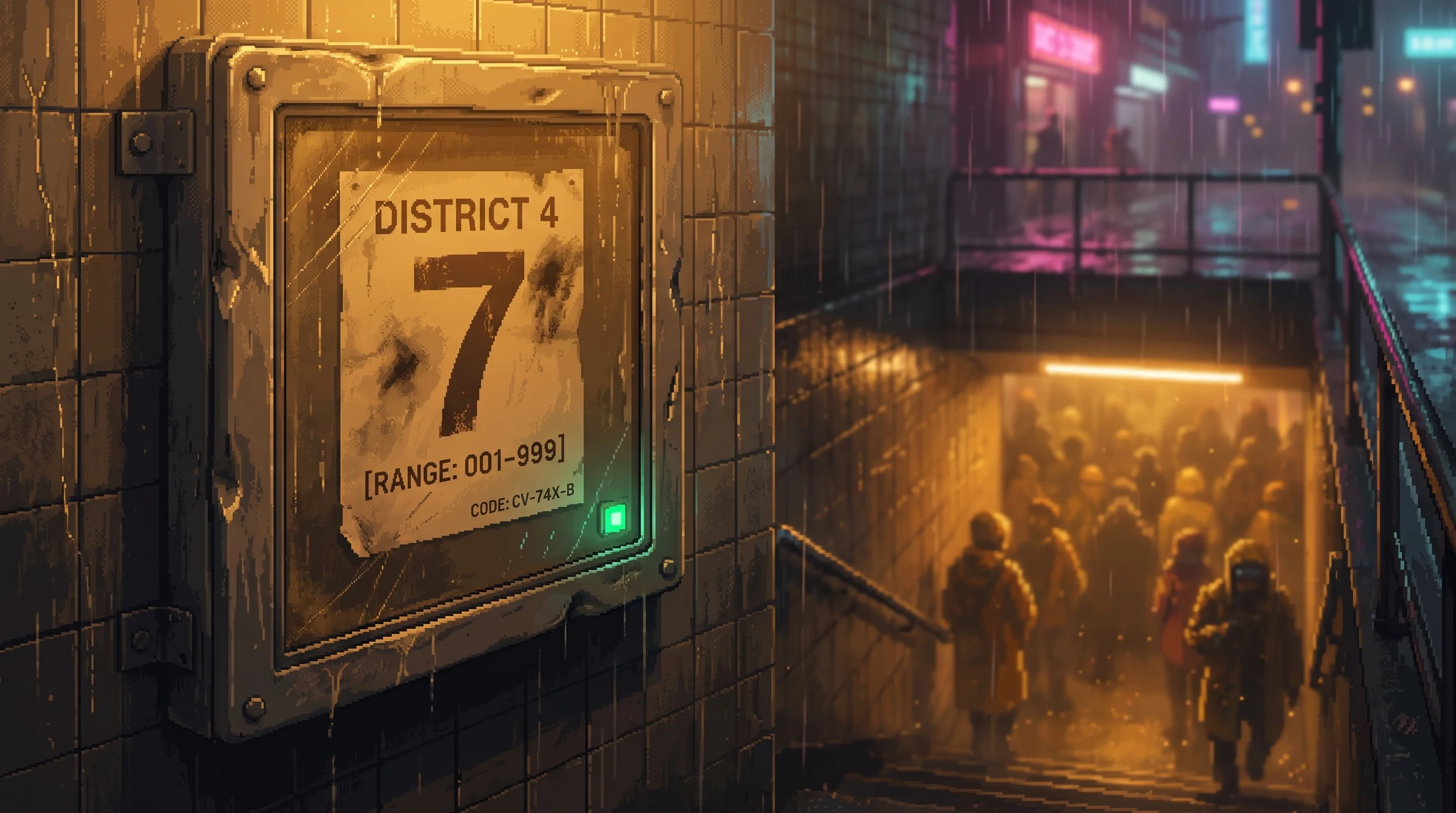
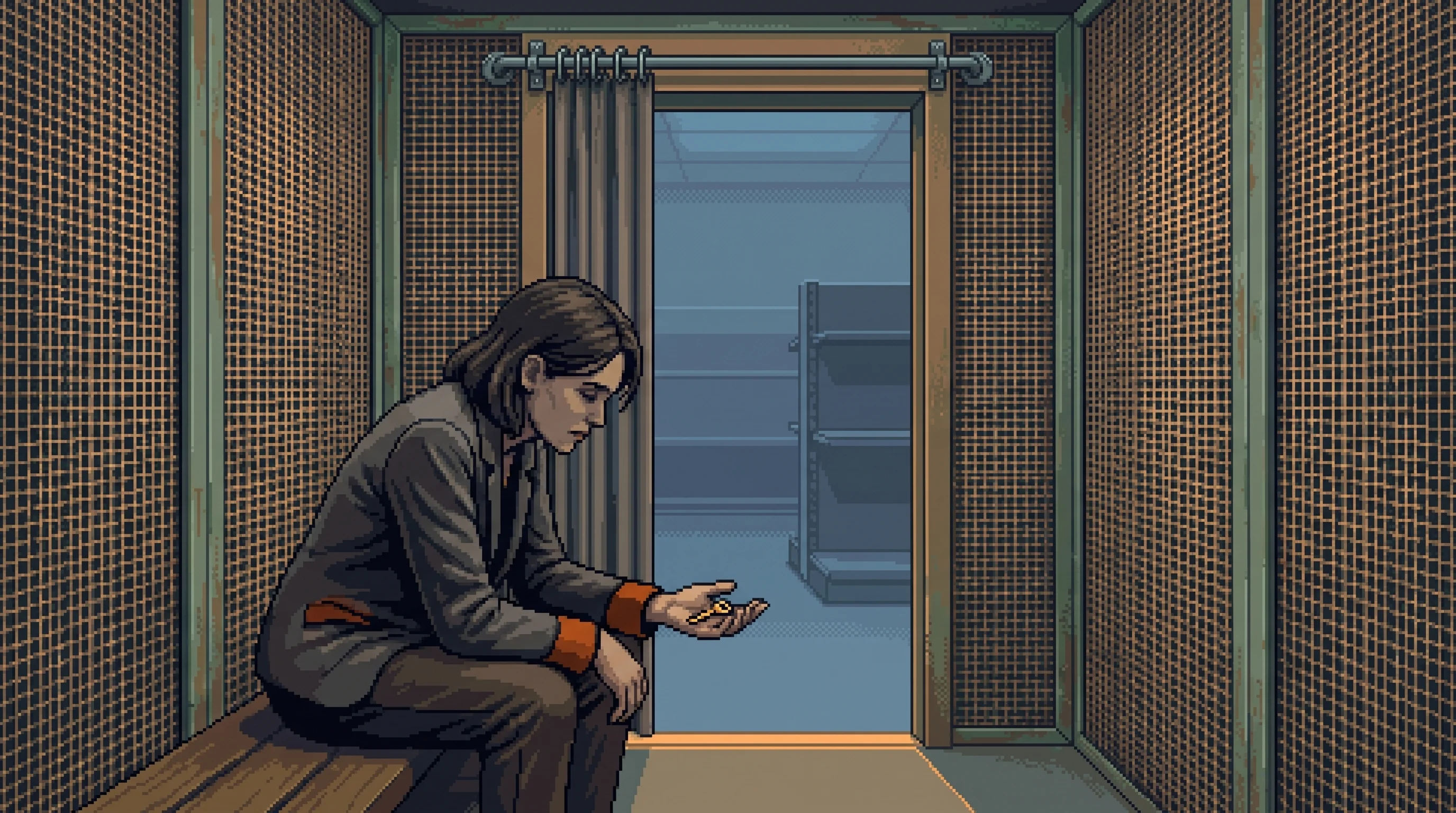
He has petitioned four times to be charged with Almeida's death. He has been refused four times, and each refusal was correct, because there is no charge available to give him.
That is the argument now running through the licensed districts, and it is not really an argument about Ancheta. It is about what a correct prediction obliges anybody to do.
The number on the wall
Every season, every licensed district publishes one figure.
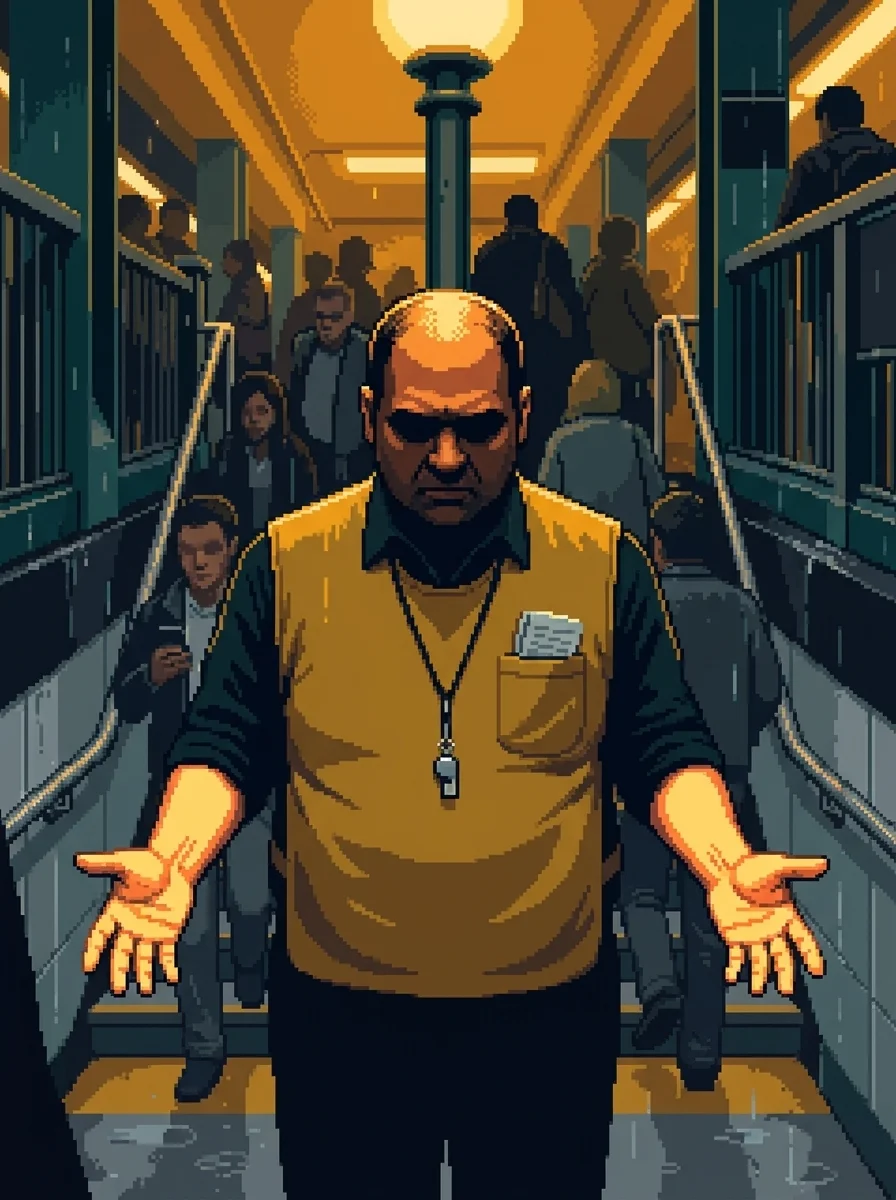
The Saturation Load measures how much a person living there actually absorbs in a day — hoardings, transit announcement systems, retail injection, civic notices, and the advertising hours everyone is required to take. The figure was a victory before it was anything else. The loud districts fought for years to get it, because until the total had a number, every individual emitter was lawful and the sum belonged to nobody. The Load is why a district can say it is being made unlivable and have something in its hand when it says it.
Then a sealed model was built on top of it, and the model turned out to be right.
Held by the Custodian Corps, it takes the district's figure and returns an expected count of overflow events for the coming season: killings with no motive and no prior relationship between the parties. The Corps will not publish the model, and its reasoning is sound — a legible model would be gamed by the emitters inside a season and the figure would stop meaning anything. What the Corps cannot claim is that the forecasts are wrong. The districts come in on their numbers.
A district that meets its predicted total has not had an accident. It has performed as specified. And an act inside the predicted band arrives at a tribunal already accounted for.
The four hours nobody may remove
The obvious answer is to lower the load. The obvious answer has a body count of its own.
The Attention Tithe is four point two hours of mandatory daily advertising, delivered straight through the interface, and it is the single largest component of any district's figure that is not a hoarding or an address stack. It is also the reason a Basic-tier consciousness licence costs ¢2,400 a year instead of ¢4,100. Repeal the Tithe and every Load figure in the Sprawl falls. Repeal the Tithe and roughly a third of the population can no longer afford to be conscious.
Both of those sentences are true and both have real dead behind them. The trade has never been put to a vote. So the four hours stay, the figure stays, and the only thing anybody has found a way to move is the location.
Where the load goes instead
The Abatement Office is a respectable licensed trade, and its officers are not cynics. Several will tell you abatement is the last public-health work left that produces a measurable result inside a quarter, and they are right. A certificate that takes four hoardings off a street with a school on it takes four hoardings off a street with a school.
What an officer cannot do is reduce the total, because the Tithe's hours are fixed by statute and the emitters have to stand somewhere. So every certificate names a receiving district and prints both figures on the same page: one number falls by exactly what another rises. Nothing is concealed. The document is a subtraction and an addition and they match, which is what makes it hard to attack — there is no lie in it to expose.
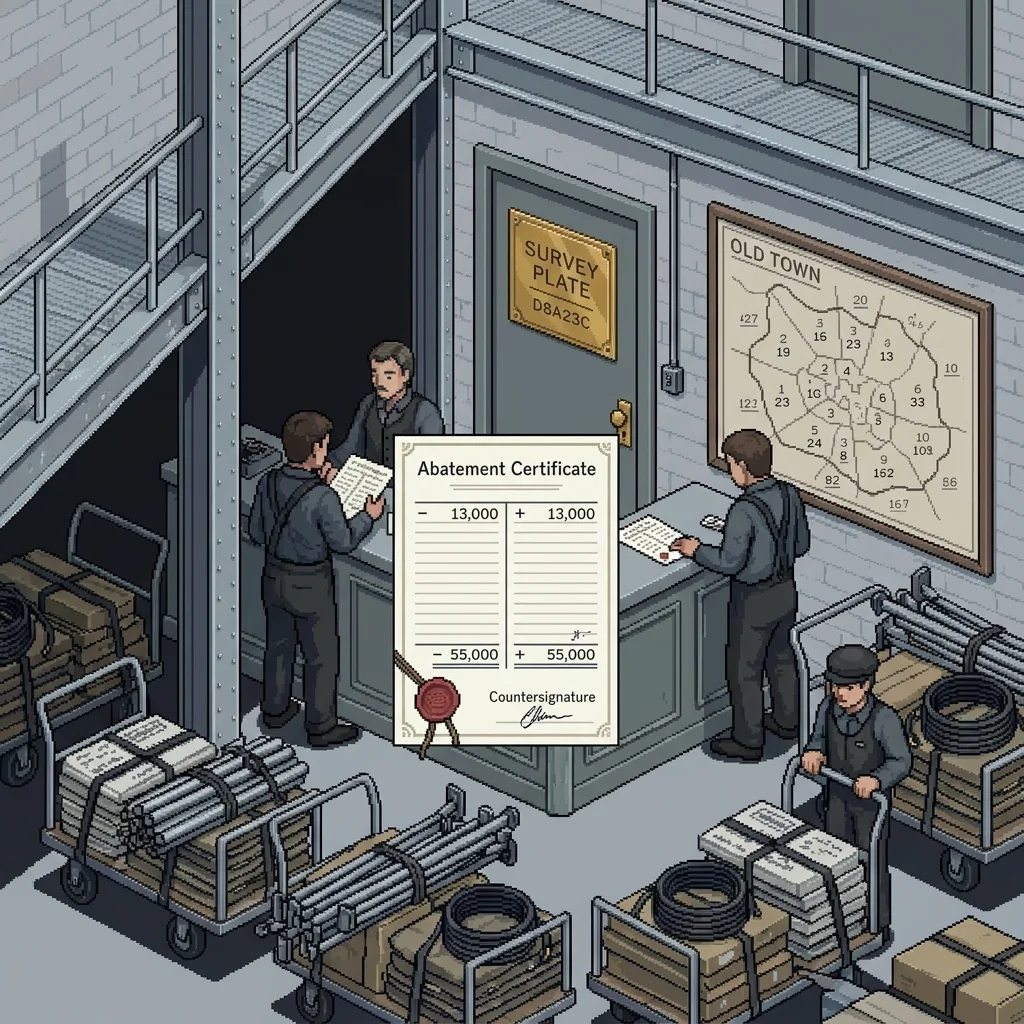
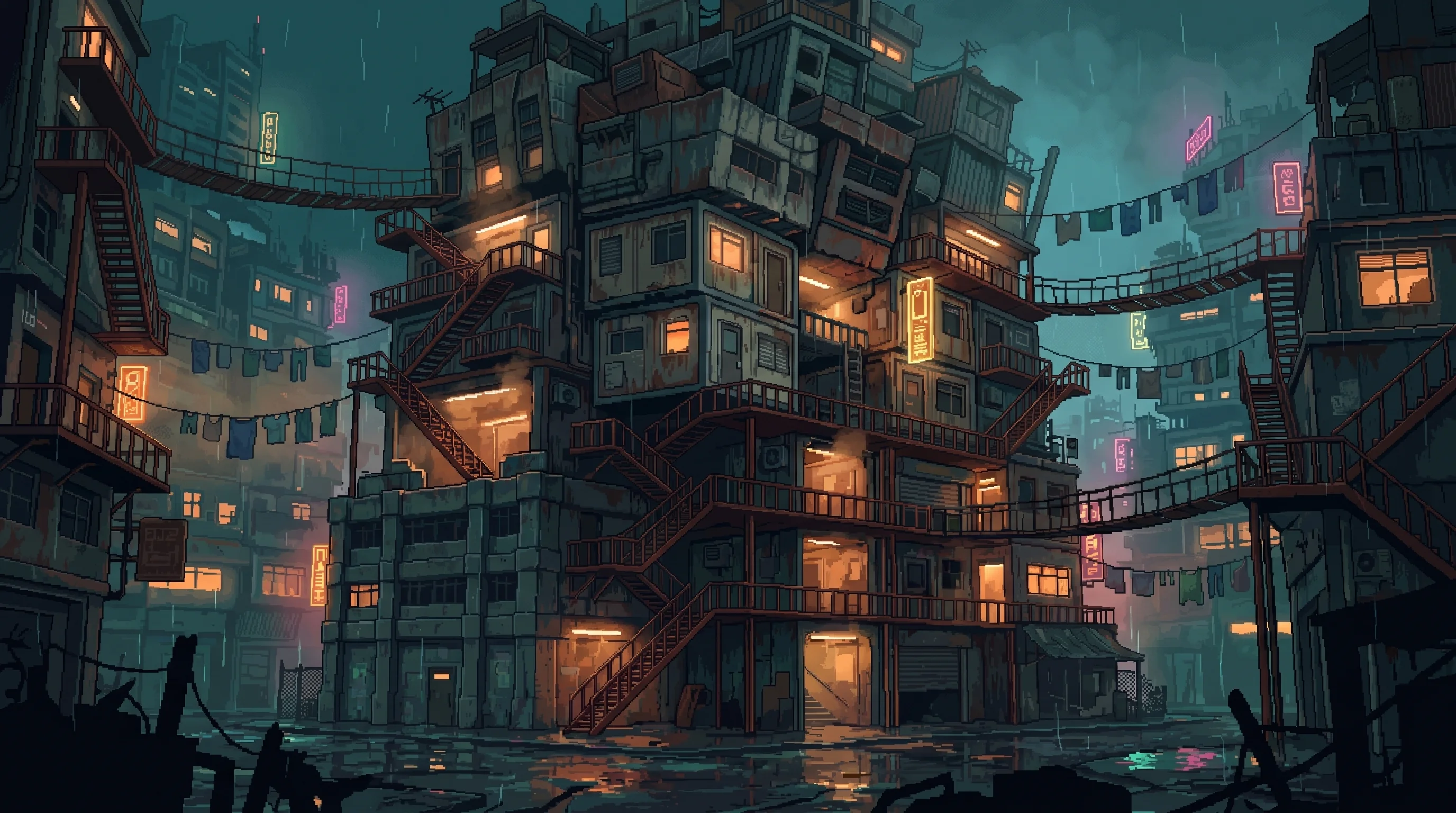
That leaves the profession's real skill as the choice of destination, and the criterion is not cruelty. It is standing. The load goes where its figure will not be contested, and contesting anything costs money. The Stacks have been named as a receiving district three times in eleven years, including on the certificate covering Landing Nine, and have never once filed an appeal. Not from resignation: every seat on the ward compact holds a tenancy in the building, and the rule that stops members voting down inspections of their own property also stops them contesting a figure about their own habitability.
Officer Rhoda Tenn has signed these certificates for nineteen years and will defend the work at length. She also keeps a private ledger of every one she has signed. The column sums to zero. She calls it the balance and has shown it to nobody.
What decides whether it was a crime
The instrument that separates a homicide from a weather event is a billing record.
MoodLine is a consumer subscription that edits out unwanted feeling, and it flattens the overflow response as a side effect its maker has never advertised and still declines to claim. That claim was never needed. The Negligence Doctrine — an insurance rule, written for premiums — holds that a cure offered and not taken is a condition a person chose. Put the two together and the licensed districts have their test: subscription current, and the killing is a forecast output; subscription refused or lapsed, and the same act is an election, and an election has an actor, and an actor can be tried.
Nobody drafted this. Two committees who never met produced it between them.
Which lands hardest on the people who have been refusing the dial the longest. The Untuned hold that a feeling should be allowed to take the time it takes, and they will not run the suite. Their measured overflow rate is genuinely higher, and the districts publish it as proof the dial works, which it is. The Warren concedes the number without argument. What it disputes is what being spared a trial is worth — and one elder put the position in the plainest sentence anyone has used about any of this: they will try us, and they will not try them, and I would rather be tried.
The younger members are the ones who cannot sit with it. Holding that position means saying out loud that being answerable for killing a stranger is better than being administered, and that the preference is worth a higher body count among your own people.
What the sister received
Yusuf Almeida's sister received her envelope eleven days after his death.
It is the standard document: red and cream, her full legal name at the top, a reference number, an adjustment figure, and in the position a cause of death would occupy on a certificate, the words NO RESPONSIBLE PARTY IDENTIFIED. Folded underneath, a brochure for a service that will supply somebody to accept the blame. The template was written for deaths caused by unattended machines, and it was not amended for this. The classification system returned a valid status, so the engine populated the form in a little over eight seconds. There is no field on the page in which a perpetrator could have been entered.
She could have bought the service. Daria Kohl is the best practitioner in the trade, has accepted blame for two hundred and fourteen deaths she did not cause, and has declined every overflow file offered to her — eleven so far. Her whole practice depends on the defendant's chair being empty, and this one is not. Taking it off him would be theft, she said once, and has not repeated it.
Two families have asked her to reconsider anyway. The second explained why, and the explanation is the part nobody has answered. She did not want to face the man; she had seen him, he is available, he stands at the top of the stair eleven hours a day. She wanted to face somebody who would say I chose this. He will not say it, because it is not true, and he is the only person in the arrangement refusing to lie about what happened.
The half that was never closed
None of this began as a plan. It began with a morning that nobody died in.
When one analyst's panic reached forty thousand strangers through the mesh in six minutes, the whole Sprawl learned that an interior state travels and has a radius. Four products shipped in six weeks, and every one of them measured or muzzled what a person sends — because forty thousand people can name a transmitter, and nobody has ever filed a claim against a person for listening. The receiving side stayed open, and the finding about radius went into the annex of an incidence model.
That morning could be studied openly for years precisely because everybody lived. The instrument built out of it now closes files on people who did not.
What is still open
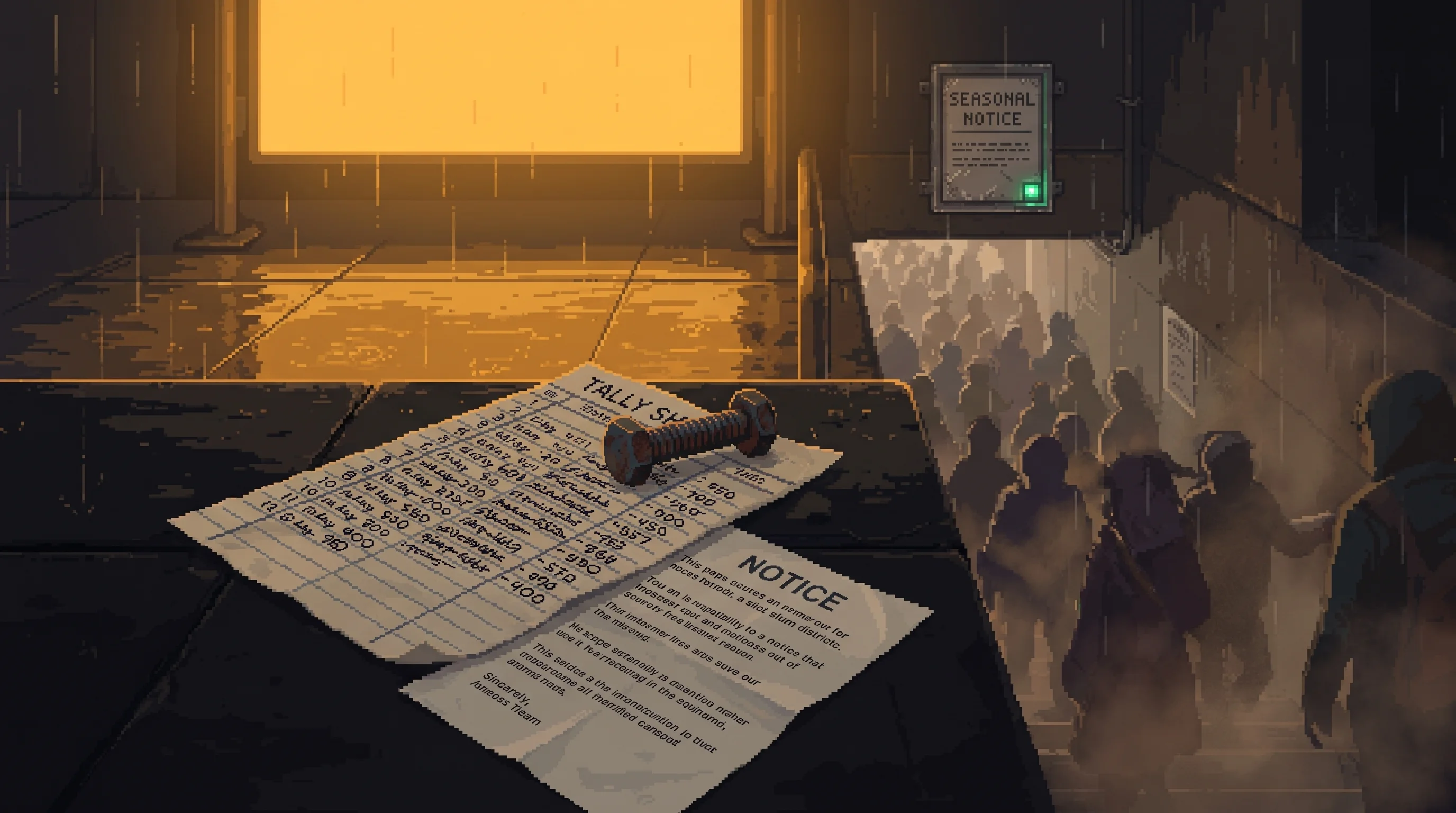
Ancheta keeps a tally. One ruled line for each day since October on which he has not overflowed again, in pencil, because the sheet gets refolded. The model returns a probability for his district and no institution will tell him whether he has one of his own, so he counts it himself: his own actuary, sample size one. At the end of each season he sends the sheet to Almeida's sister. She has never replied. She has also never asked him to stop, and he has decided — without much evidence, and he will tell you it is without much evidence — that the difference between those two facts is the only thing he is owed.
Everybody in this is behaving reasonably. The forecast is honest. The mercy that closed his file was argued for by people who had watched saturated men sentenced for something a model can now predict to the season. The abatement officers reduce real load in real districts. The Tithe genuinely is what keeps a third of the Sprawl conscious.
And a man is standing at the top of a stair asking to be punished, and there is no clause under which anybody can oblige him.