Overview
Nobody took the hearing away. The hearing is free, and the paper keeps moving.
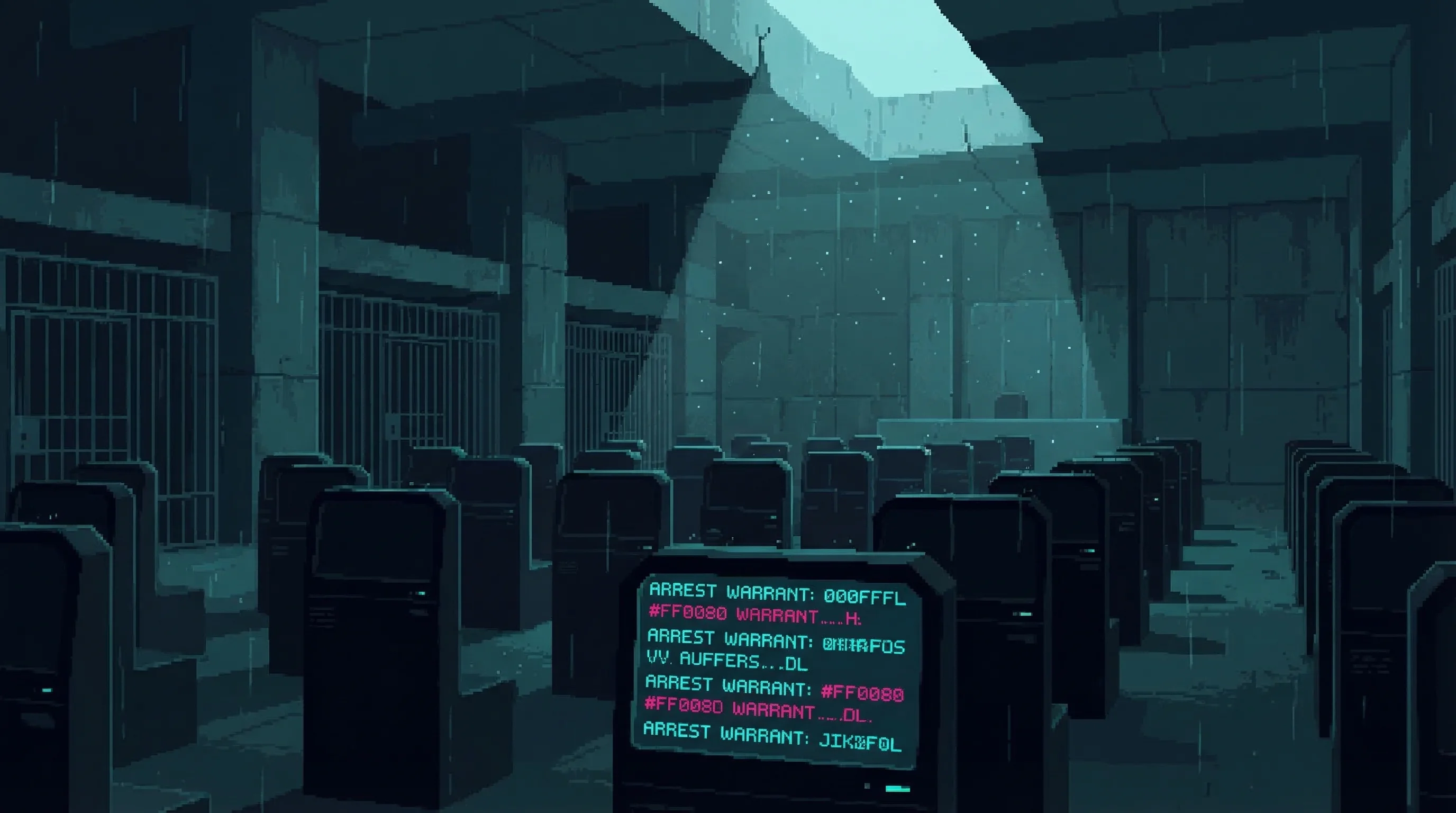
The Speaking-Pace Docket sits in every chartered court in the Sprawl because Article 6 of the founding charters says it must. You file without a fee. You are not screened for merit, means, representation or standing. You are heard at the speed you can speak, for as long as you need, by a registrar required to let you finish. Then the ruling issues on the instrument as it stood when you stopped talking.

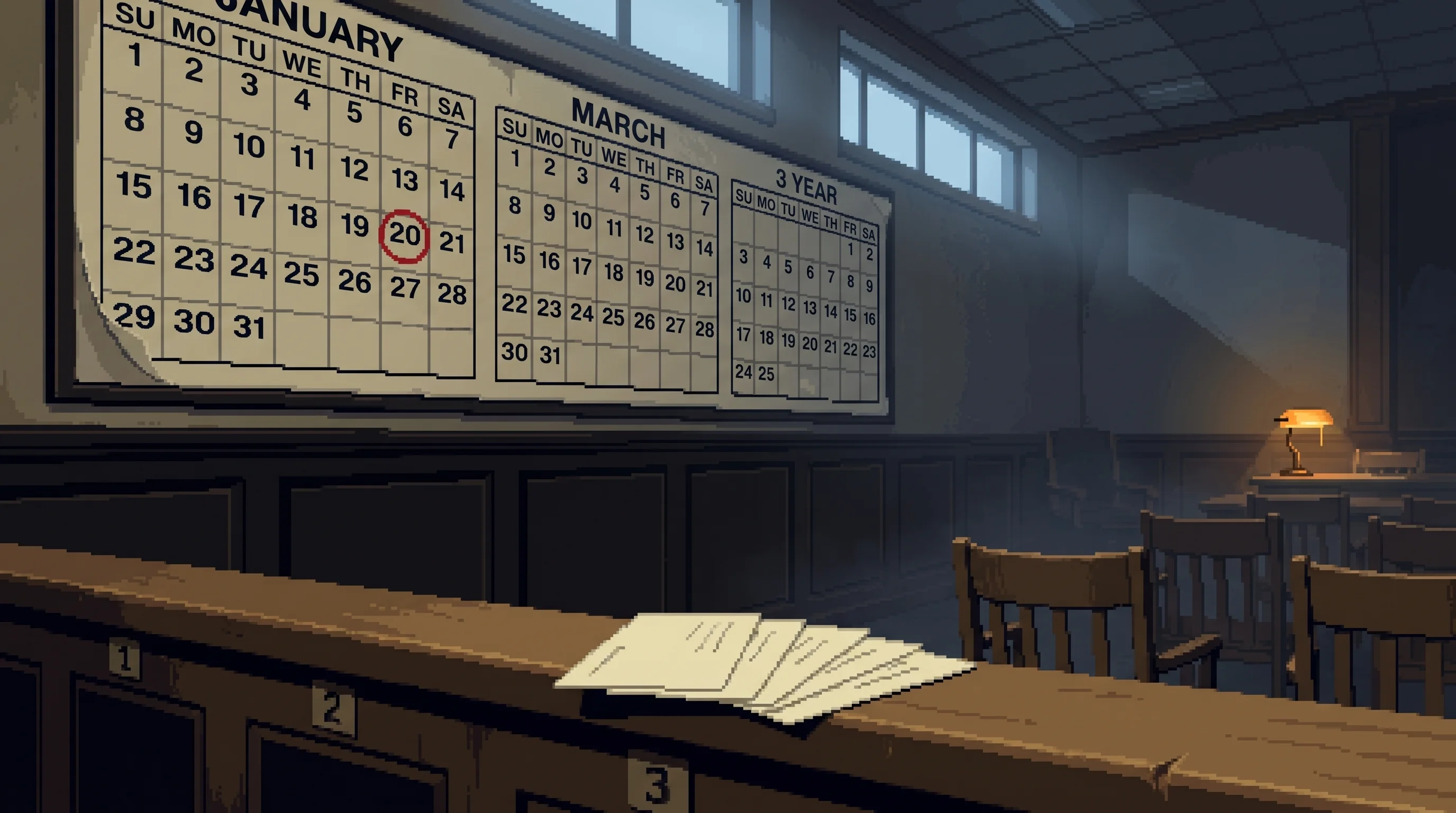
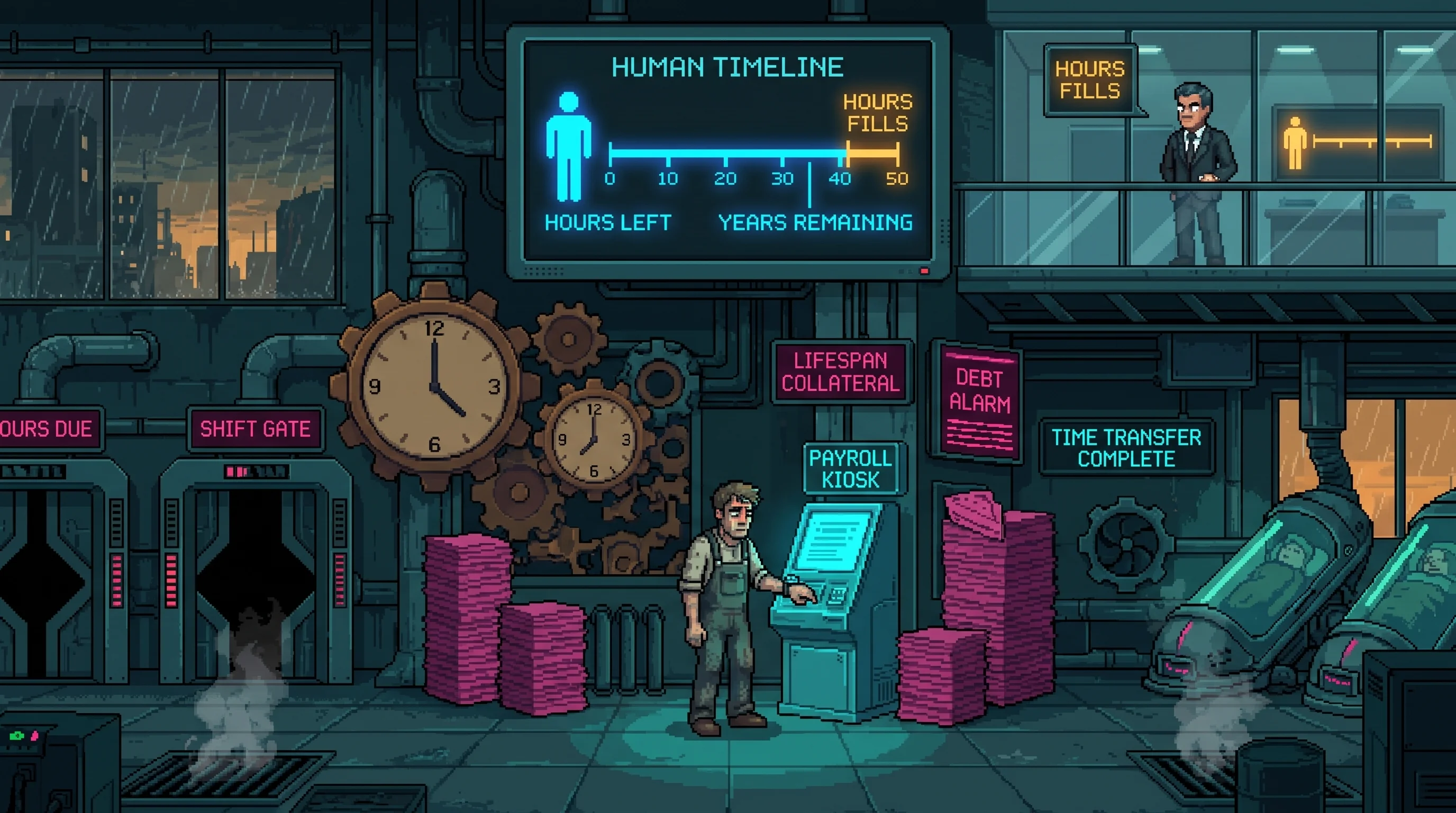
The median licensed-district instrument is reissued every nineteen hours. The median Speaking-Pace hearing runs eleven days.
That is the whole argument, and both sides use the same two numbers. The districts read them as proof the Docket is generous: nothing rationed, nothing rushed, nobody turned away. The Boalt Docket reads them as arithmetic, which is harder to argue with than a policy. The last Speaking-Pace ruling to attach to a live instrument issued in 2166. The appropriation has not been cut in twenty-eight years.
The Clause Nobody Amended
The guarantee is older than the corporations that honour it, and it did not start out useless.
It was an ordinary court practice before the Cascade, back when a lease held still for the length of an argument about it. What ended that was not the collapse but the decade before it: ORACLE ran the better part of world trade and re-cut its terms continuously, and by 2144 the registrars had quietly stopped telling petitioners their odds. Nobody announced the change. There was no longer a number to give.
Then ORACLE died and the tempo did not. The corporate successors inherited the infrastructure, the reissue cycles and the habit, and in 2156 they wrote Article 6 into their founding charters deliberately, in plain language, as a concession. They had just watched the Black Bench apply entirely valid law to the London Corridor at machine speed and without mercy, and the promise they made in answer was that a person would always be able to be heard by something that heard at the speed a person talks.
They drafted it against the machine that ruled too fast. Not one of them wrote down that the paper had also started moving.
The regulatory office governing the licensed districts has since answered the same absence four separate times: a mandate to disclose reasons, a licence for a human to sign, an enumerated list of permitted acts, a sworn proxy complainant. It has never cited Article 6 in any of them. The oldest remedy in the Sprawl, and the only one that hands a petitioner a hearing rather than a document, sits one floor below all four, fully funded, unexamined for twenty-eight years.
Eleven Days, Nineteen Hours
Ilse Okonjo lives four levels up in the Stacks and filed over a rent term in the spring of 2184.
She got what Article 6 promises. Four sessions across eleven days in a warm hall with a full gallery, and she was allowed to finish every sentence she started, including the long one about the water, which ran six minutes without interruption. Chief Registrar Solveig Nwaneri ruled for her in writing on the fourth day of argument. The term was unenforceable. The reasoning ran five pages and nobody has disputed a line of it.
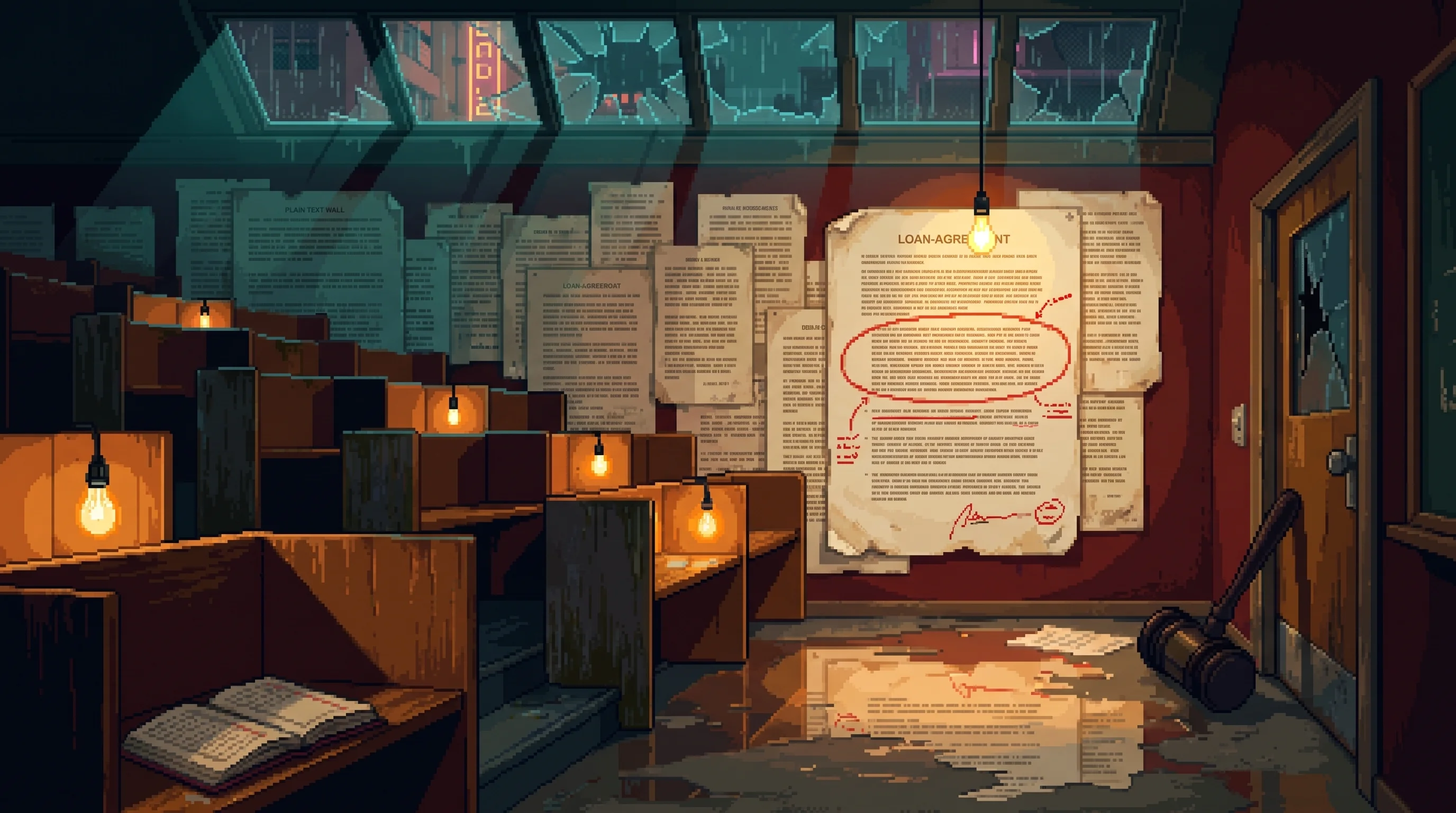
The lease was reissued between her second session and her third. Same building, same landlord, same clause, new instrument number, part of an ordinary Tuesday batch that moved four thousand agreements onto a revised schedule. The ruling names the old number. It is correct about the old number. It is the only thing Okonjo has ever won, and it is why she now owes arrears for the eleven days she spent winning it.
Nwaneri gave her the form to file again. Okonjo asked how often people file again. That is the question the registrars stopped answering forty years ago, and Nwaneri did not answer it either.
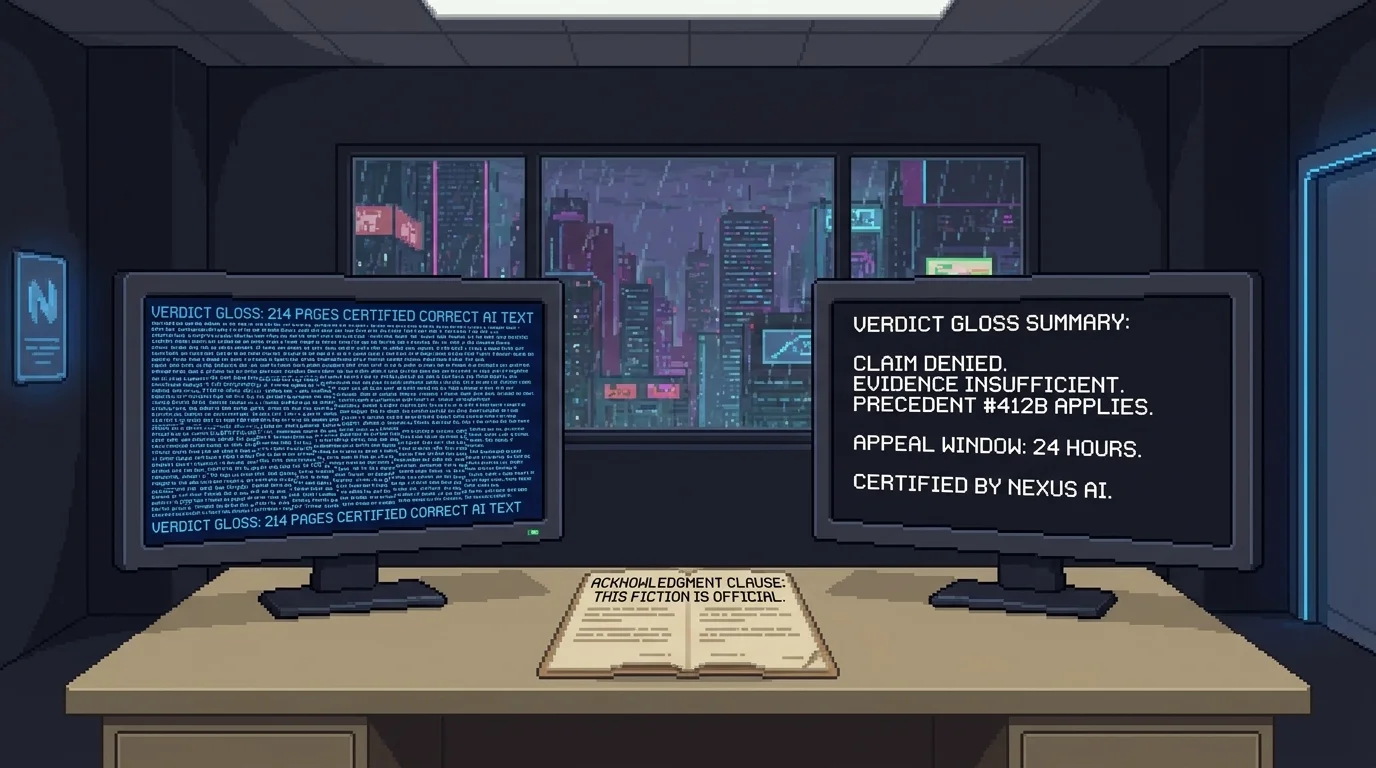
The returns do not record what happened to her. A chartered court reports how many Speaking-Pace filings it received and stops there, in the same way that the deposition cancelled on its ninth day went into the register with the duration field left blank. Four sectors east, the Verdict Glossers sell a readable account of a verdict nobody can follow, at eight hundred credits a reading, and their service agreement admits in its first line that the account is a fiction. Okonjo's ruling is not a fiction. It is five pages of correct reasoning about a lease that stopped existing on a Tuesday, and there is no licensed trade in explaining that, because there is nothing in it a person would need explained.
What Slowing Down Costs
The people who will not freeze an instrument for eleven days are not defending a cruelty. They are defending the one lesson the Sprawl agrees on.
Article 6 is a promise about tempo, and a promise about tempo is a demand that something else hold still. Hold a tariff still for a hearing and the supply behind it queues. Hold a treatment schedule still and the ward waits. The Sprawl has run this experiment. The Cascade killed two point one billion people through nothing more exotic than logistics that stopped moving, and in the years after it a water system in the Lagos basin held every source it had against a future it was still modelling until a hundred and ninety million people died of thirst under full reservoirs. Every operator who refuses to pause an instrument for a bench can point at those numbers. They are the right numbers.
So the failure boundary is exact, and it is not moral. Above the line, where a document sits still longer than it takes to argue about it, the Docket binds, and did for a century. Below it, the same bench, the same registrar and the same correct reasoning produce a ruling with nothing underneath it. Nobody crossed the line on purpose. Two entirely sensible commitments, a guaranteed hearing and a responsive supply chain, met in a corridor, and one of them stopped working.
The Registrar Who Will Not Say
Nwaneri holds the lever that would end it, and files for the full amount every year.
An appropriation returned unused is a finding that the office is not needed, and a chartered court that cannot show a functioning Speaking-Pace bench is a court whose charter is open to challenge. She knows both of those things precisely. Nineteen years in the Sector 2 hall, no money ever returned, and part of it spent on the radiator, the floor runner and the tea, because the hall is full and the people in it have generally come a long way.
She also will not quote odds. Petitioners ask; she gives them the process and not the outcome, which is exactly what her predecessors settled on in 2144 and exactly what nobody has revisited since. Pressed on it in front of the gallery, she has said the same sentence more than once: that she is not licensed to tell a person their case is worthless, and that if she were she would still have to be sure it was the case that was worthless and not the calendar.
The people she hears split on this, and they do not split evenly. Some write to thank her. A smaller number tell her to her face that the warm room and the full hearing are the most expensive lie in the district, because a person turned away at the door goes and does something else with the eleven days. She keeps both kinds of letter in the same drawer and has never told anybody which stack is thicker.
Where the Pace Still Holds
The bench is not the problem, which is the part that makes it hard to argue about.
Judge Dreg hears the Deep Dregs at the speed a person talks, charges nothing, and his verdicts stick, because he enforces them himself and because his cases are about what one person did to another. People do not get reissued on a Tuesday batch. He was asked once whether he would sit an Article 6 bench. He wanted to know who was going to make the ruling stick, and nobody in the hall had an answer for him.
The Open Hours in the Free Quarter went further and removed the last promise. Anyone may speak, everyone waits their turn, nobody pays, and no ruling issues at the end of it, so there is nothing for an interval to void. Regulars who use both rooms will tell you the Free Quarter one is the honest room. A good number of them still file at the Docket, and none of them can say why with a straight face.
And Dr. Lena Farris is what the thread looks like when somebody wins. She was the last expert licensed to testify that a clanker was conscious. She carried the point, and the licence category was abolished the same year, being right and being in time turning out to be two separate achievements that happen to share a word. She has filed at the Docket twice since, on questions nobody is licensed to answer any more. Both rulings were correct. Both arrived after the register they applied to had closed.
Start Here
First door. The Speaking-Pace Docket is Article 6, the nineteen-hour interval and the eleven-day hearing. Then read Solveig Nwaneri, who could close it with a signature and files for the full amount instead.
Key People. Dr. Lena Farris won and was voided the same year. Tavo Reyna was sanctioned over a machine already lawfully scrapped. Judge Dreg hears at the same pace, makes it stick, and has said plainly what that requires.
Key Places. The Boalt Docket loses upstairs on the merits and files downstairs where nothing is ever refused. The Open Hours is the same room with the ruling removed.
Key Institutions. The Tiered Adjudication System is the layer that decides in time and cannot be read. Licenses Without Borders files in both directions and publishes the comparison. The Dead Channel is the other thing the Sprawl keeps running because stopping it costs more than letting it run.
What To Read Next. The Frozen Ethics asks who has authority to update a rule the dead wrote. This is its hardest case, because the rule is harmless, beloved, and the only price of unfreezing it is saying out loud which right the tempo was worth. The Reason Given is the other bench nobody appeals, for the opposite reason. Then the three neighbours that fail differently: The Ratification Forecast, where a refusal is filed as the month you are predicted to withdraw it; Post-Truth Justice, where the proof cannot be trusted rather than the calendar; and Time Debt, which prices a person's own hours instead of spending an institution's.