Overview
Speech stopped being an open question years ago. Every utterance routed through an interface carries an origin mark applied at delivery, kept, and openable by whoever is listening, which settled a decade of attribution disputes in a season and cost the Authenticity Tribunal its jurisdiction over the sentence.
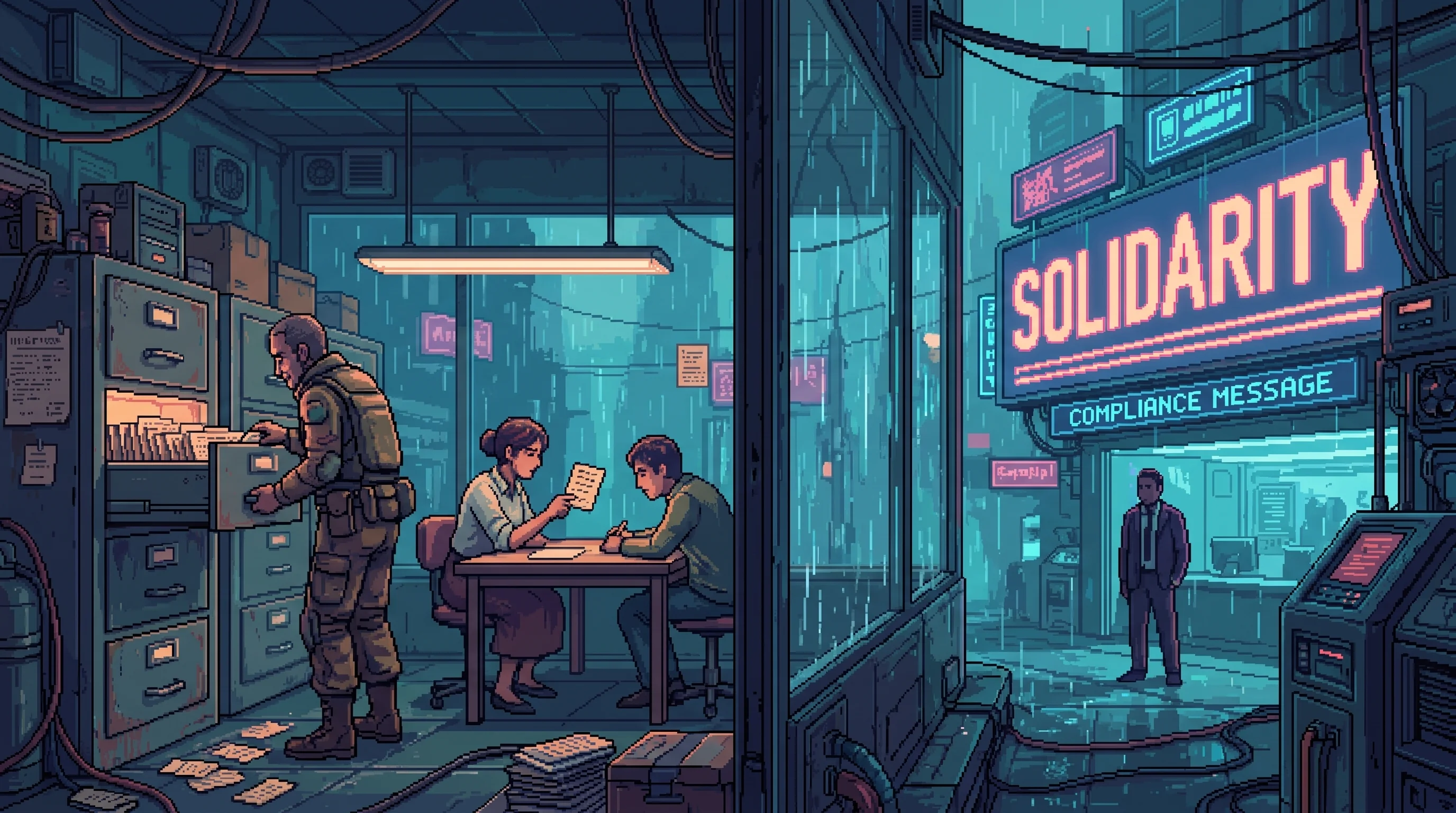
What the mark never covered is the unmarked artifact. A page composed off-interface. An attestation written by hand because a clause requires a human to have written it. A document from a district whose ledger is too thin to query. These arrive with no provenance attached, and the Sprawl needed an answer for them, because regulatory code 11.4(b) requires a human signature on any algorithmic decision that binds, and a signature is worth nothing if a machine can produce the reasoning under it.
So the Assay was built the other way round. It does not look for the human. It looks for the machine register — the statistical shape of generated prose — and reports its absence. The reasoning is sound and the accuracy is genuinely high. The problem is upstream of the accuracy: the machine register was fitted to the cleanest, best-schooled writing in the corporate archive, because that is what the models were trained to produce. Fluency is what a machine is good at. So fluency is what the instrument reads as machine.
The people who pass are the people whose speech never matched the standard. The stumble, the inherited vowel, the turn that a company school would have marked in red. The Assay files each surviving marker as a retention. Everyone else calls it a tell.
How It Came To This
The Tribunal spent a decade watching its own forensic accuracy fall from 99% to 92%, and Chief Arbiter Duval supported the origin mark in her testimony precisely because a dispute settled at delivery is a docket the bench cannot lose. She has never withdrawn that support. It was honest, it was cheap, and it worked.
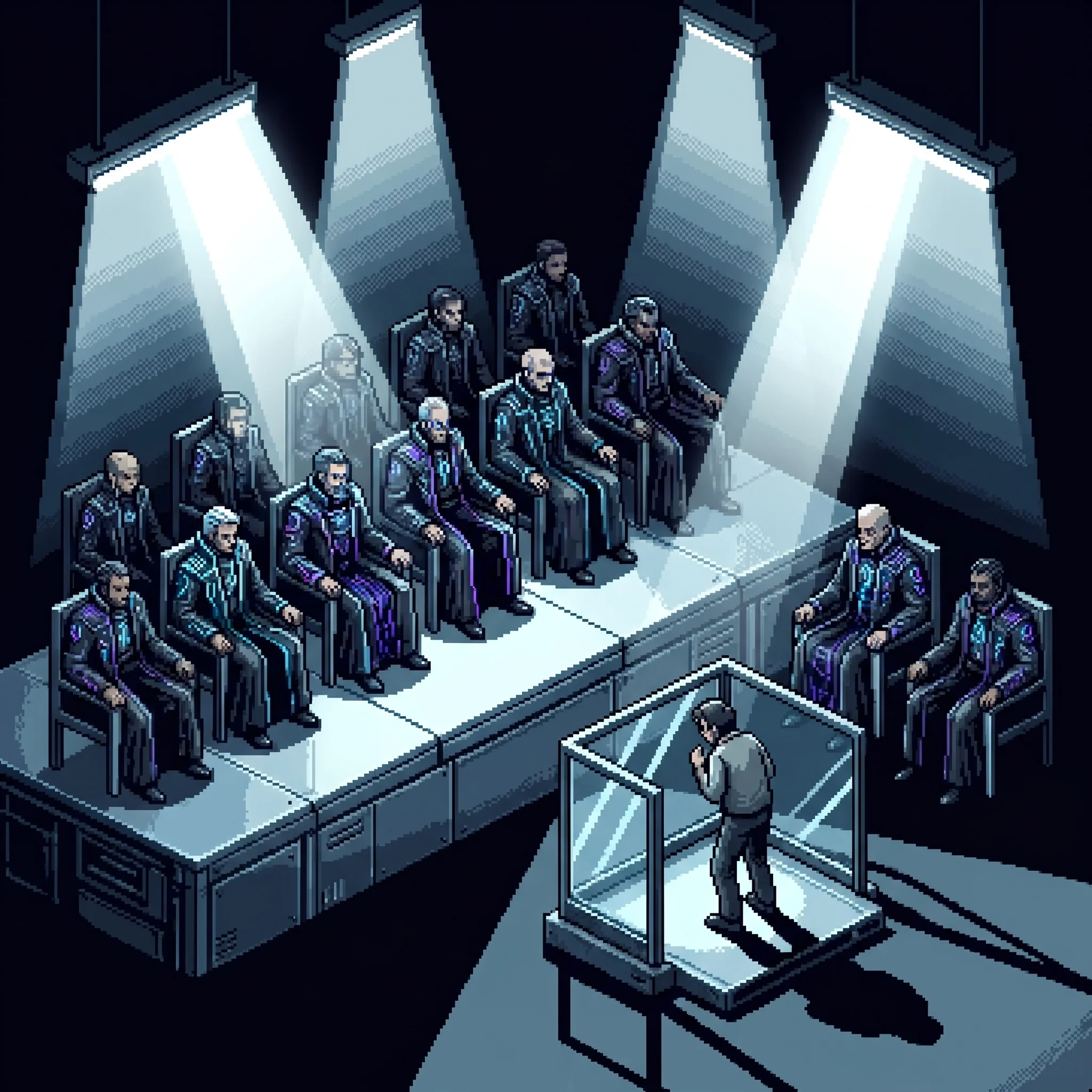
It also left the bench with a building, a staff of assessors, and nothing to assess in the one category that was still growing. The unmarked artifact had become a compliance problem across every corporation in the Sprawl at the same moment the Tribunal had spare capacity and a pattern library. The assay floor opened in 2176 in the same hall as tier certification, with the same assessors, running the same library backward.
Duval had already written down what the library was. Her unpublished finding — that the Tribunal's assessors score highest not when best trained but when their childhoods most resemble the artists they assess, that the methodology detects familiarity rather than authenticity, and that familiarity in a stratified world is a class marker — sat in a directory of documents that frighten her. The Assay is that finding turned into a product. The bench had been using cultural class as a proxy for authenticity for thirty years. The Assay does the same thing with the sign reversed, and this time the arithmetic is public, because the fee schedule has to be.
The Core Tension
A reasonable person can defend the trade, and the people who defend it hardest are usually the ones supplying it.
For four generations these registers were a liability with no upside. A vowel held a half-beat too long kept a household out of corporate employment, out of licensing, out of the tiers where a life gets easier. Children were corrected for it at company schools, sometimes with a hand. Now a firm that needs an attestation to stand up in front of a tribunal will pay a Sump Row household by the season for the same sound, and the money is not symbolic. Arrears clear. Teeth get fixed. A family that was assessed as deficient for a century is now the holder of the only credential in the Sprawl that capital cannot manufacture for itself, and telling them to refuse it on principle is a position most easily held by people who have never been assessed as deficient.
The case against does not dispute any of that. It disputes the clock. A retention is worth money because the models cannot yet produce it, and the fastest way to teach a model to produce something is to hand it several thousand certified examples under lease. Every commercial use of a tell is a training sample. The median retention survives nineteen months past its first lease. Then it is struck from the live register, every contract written against it goes void, and the family that supplied it has to find something else the machine has not learned. The register opened with 4,112 entries and holds 617. The supply is not a resource. It is an inventory of things that were done to people, and it was never going to be restocked, because nobody is running the company schools anymore.
There is a third party to the argument who did not ask to be in it. Dr. Priya Achebe has spent nine years filing ethics objections inside Nexus, every one of them true, none of them changing an outcome. When the Board began requiring its written findings to carry an authorship certificate, she submitted hers by hand and the Assay declined to sign it. Her prose is precise, unhurried, and formed by exactly the education the machine register was fitted to. The instrument was not wrong about her sentences. It was answering a different question than the one anybody thought they were asking, and her findings stayed in the file where they had always stayed.
How It Is Lived
The assay floor runs on the same shift pattern as tier certification, two halls over. Maya Fontaine took a rotation on it in 2183 and has not asked to leave. She describes a certifiable page as having a snag, which is the same word she reaches for when she is trying not to say weight, and she has stopped putting either word in the written finding. Her accuracy on the assay floor is the highest in the hall. What she has started doing, privately, is keeping a count of how many of the tells she signs in a quarter are still in the live register the following quarter.
Ynez Barquero supplies one of them. Her grandmother was beaten at a company school in the 2130s for the vowel in the second syllable of ordinary words, held a half-beat where the corporate register clips it. Ynez leases it four times a year to a compliance broker who resells it to firms needing attestations that assay clean, and she reads the quarterly register bulletin the way other people read a weather forecast. She has been told the strike is likely inside two years. She has a niece with the same vowel and has not decided what to tell her.
Upstream, the buyers are institutions that need a human at the bottom of a decision. Licensed Human Oversight exists to manufacture an accountable surface, and an Overseer's stamp is only worth the liability it absorbs if a person demonstrably produced it. Overseers now assay their own attestations before filing. The guild has published no guidance, and the Standards Committee's difficulty is the familiar one: to explain why a Licensee needs a certified tell, it would have to describe what the eleven seconds contain.
The schools are where the inversion is most legible. Graduates of the Analog Schools trigger the Tribunal's Anomalous Pattern Review at 41% because their unaugmented cognition diverges from a model calibrated on augmented artists. The bench reads that divergence as suspicion. The assay floor, one library and two halls away, reads the identical signal as proof. Same graduates, same deviation, same institution, opposite verdict, and neither hall has been asked to reconcile the two.
Two registries keep the record of what is gone. Helix's Denaturing Ward holds a bound ledger of 2,306 words convicted by tribunal since 2174, each with a docket number, a date, and a mandated substitute. The Assay's struck register holds the tells the models learned, each with a date and the training corpus that ate it. The Ward's ledger records verdicts, and a verdict implies somebody who voted. The struck register records no decisions at all. Both are kept in ink.
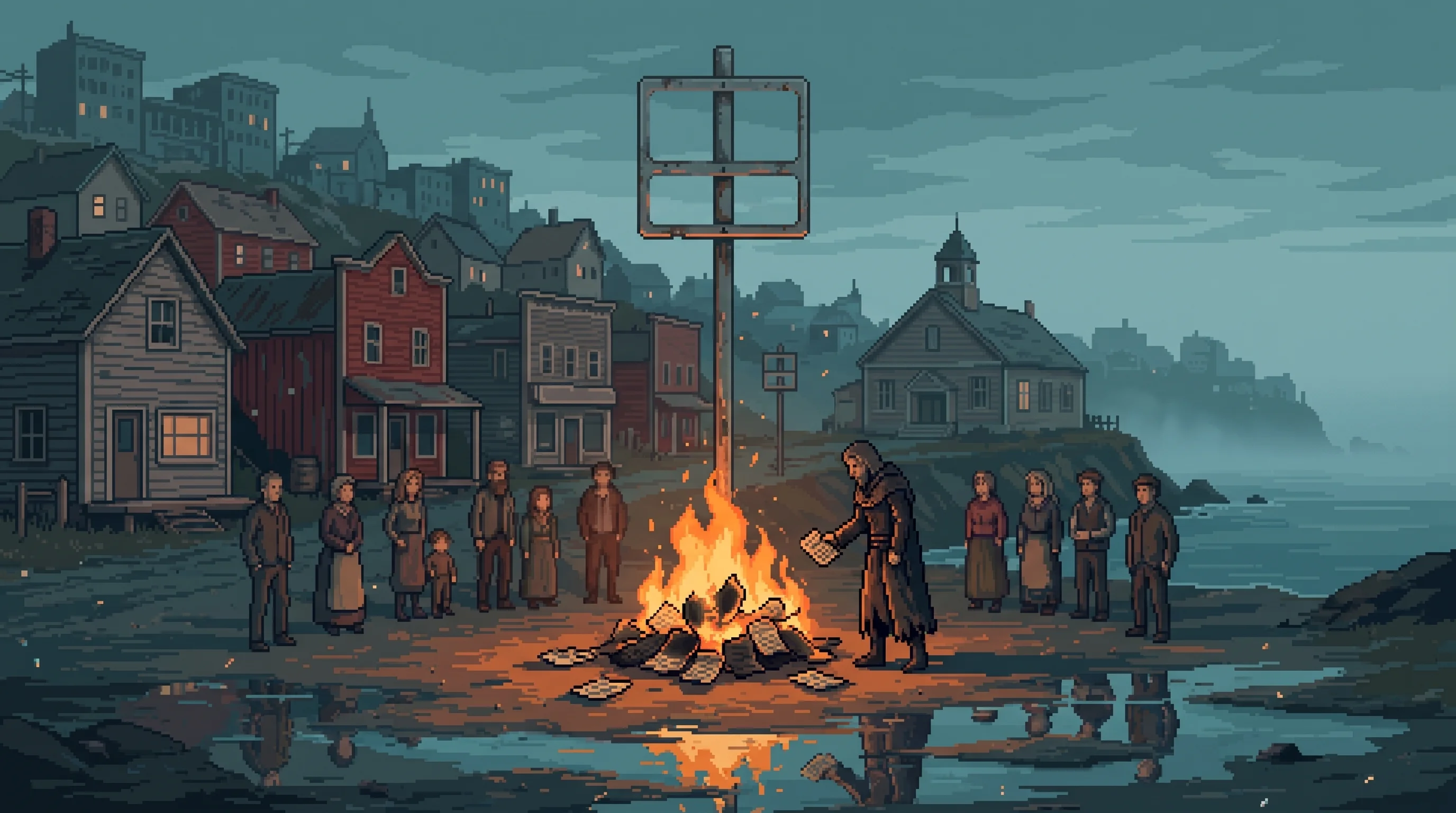
Up the North Bay coast, the Hidden has spent twelve years running the opposite arrangement on purpose. Six hundred and forty people speak a grammar assembled from words the Sprawl already declared dead, reassigned every autumn at the Renaming, with the only written record of current meanings burned on the lagoon shore the same night. The town's illegibility is a civic project it chose, maintains, and can rebuild from salvage each year. The Barquero vowel was installed by a company school with a hand, cannot be reissued, and is worth money exactly once.
Start Here
First door. Ynez Barquero leases her grandmother's vowel by the season and knows roughly which year the lease dies. Then read the Authorship Assay, which is the instrument setting that date, and which has never once been accused of being inaccurate.
Key People. Maya Fontaine spent fourteen years certifying canvases at 99.2% and now certifies people, and keeps a count she does not file. Dr. Priya Achebe writes the most careful prose in her division and cannot get it signed. Professor Ines Park measured a construction leaving corporate speech because it became checkable, and is watching the same mechanism run backward with a price on it. Hollis Sarr is two streets from Ynez, renting the other last thing a person has to sell.
Key Places. The Analog Schools produce the deviation the bench flags and the assay floor signs. The Denaturing Ward keeps the itemized record of words killed on purpose, two sectors from an institution killing them by accident. The Hidden built the same defense from salvage and burns its own record every autumn so nothing can be bought out of it.
Key Institutions. The Authenticity Tribunal lost speech to the origin mark and got the unmarked page back instead. Licensed Human Oversight needs a human at the bottom of every binding decision and has not written down what it now costs to prove one.
What To Read Next. Dead Words filed I thought of that as a construction that died of being checkable, which is the same mechanism that made this market and the reason the Keepers' cabinet keeps growing. Principal Tenancy is the sibling trade — the Divergence's other terminal asset sale, depleting on a slower clock. The New Divide is the argument this thread is standing inside, and the question it has never had to answer before: what the sorting impulse does when the despised trait becomes the scarce one, and the supply is finite because the persecution stopped.