Branch Rendering
Derives from the customer's own behavioral data — not fabricated from others' memories
Overview
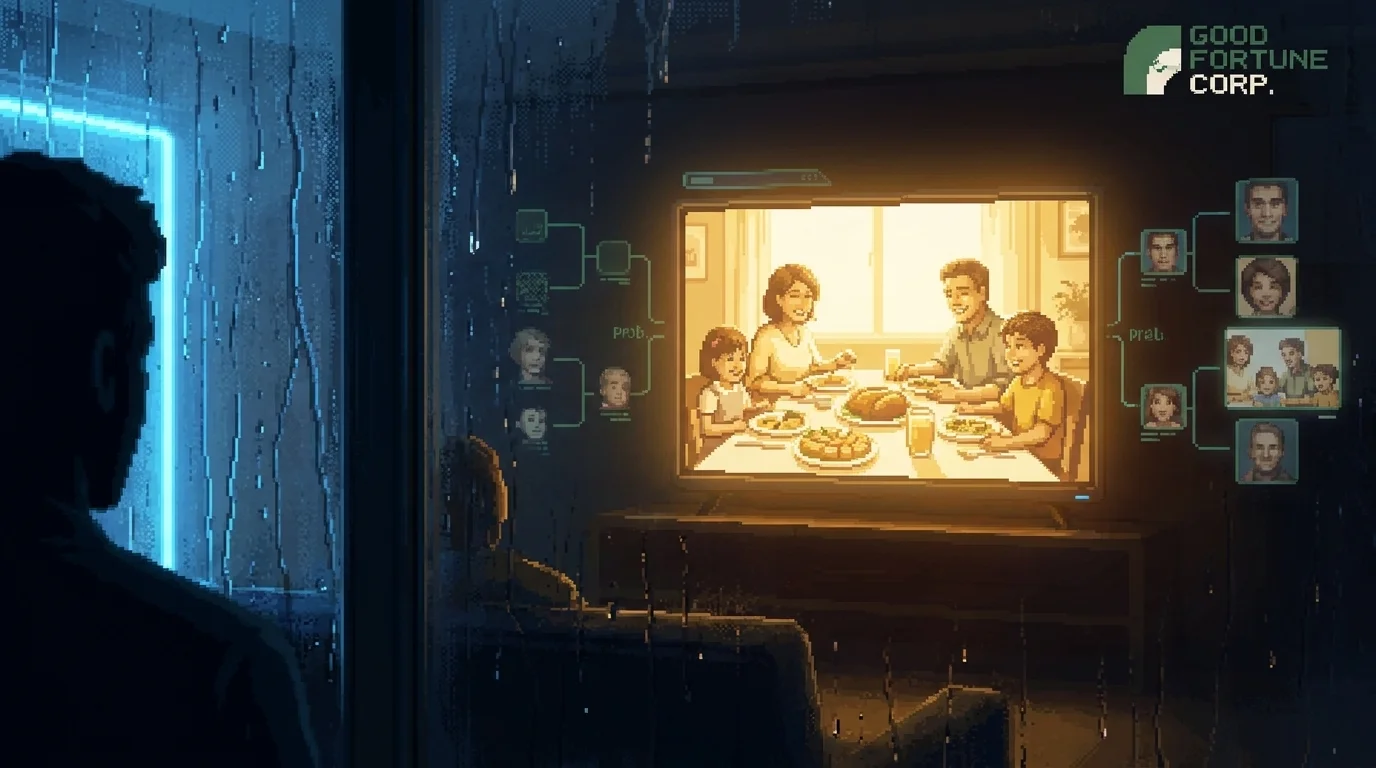
Branch Rendering is Good Fortune Corporation's proprietary technology for generating visual footage of a customer's unlived life. It is not memory. It is not implant. It is a probabilistic simulation derived from the customer's complete behavioral data history — every decision they have made and not made since their neural interface was registered — rendered as looping footage of the life they would have had if they had made the other choice.
The distinction Good Fortune makes in all marketing material: unlike Experience Synthesis, which fabricates memories from millions of harvested organic sources, Branch Rendering derives its footage exclusively from the customer's own biographical data. The children in the Rendering are the children the customer would have had. The partner has the laugh the predictive system determined would have developed in a specific alternative relationship trajectory. The apartment is in the city where the alternative lease was available. This is your unlived life, rendered — not someone else's life assigned to you.
Good Fortune considers this distinction its primary competitive advantage. The clinical evidence suggests it is also the mechanism of the condition it creates.
How It Works
The generation pipeline operates in three stages:
Stage one: Branch mapping. Good Fortune's behavioral prediction engine, running on the same BehaviorExchange infrastructure that powers its financial products, identifies the major decision-branch points in the customer's history — the moments where a near-alternative path was available and plausibly chosen. Most customers have twelve to forty significant branch points. The system identifies the top five to seven by proximity score (how close the customer came to the alternative) and potential-life divergence (how different the unlived path would be). The adjacency premium operates here: branches weighted toward near-decisions generate substantially higher emotional engagement than branches toward fantasy alternatives. The customers who almost accepted the other job, almost stayed in the relationship, almost kept the second-born license — their Renderings are always more intense than the customers who want the life they never even considered.
Stage two: Life modeling. For each selected branch point, the system constructs a complete life trajectory — not a summary, not a highlight reel, but a continuous simulation of daily existence in the alternative. The unlived children are given names, personalities, arguing patterns, and favorite foods. The predictive engine models the relationship's development over the years. The apartment acquires its specific water stains above the doorframe. The detail level is a product decision, not a technical limitation. High-detail Renderings, which include the arguments and the disappointments alongside the warmth, generate higher repeat viewing than low-detail versions. This finding is in Good Fortune's internal product research and has not been shared with the Memory Therapists Association.
Stage three: Rendering production. The modeled life is compiled into looping visual footage, calibrated to the customer's sensory preferences and viewing context. A Palliative Wing customer's Rendering is optimized for comfort, warmth, and the specific scale of home — living room furniture at the right proportions, children's voices at the right acoustic distance from where the customer sits. The loop length averages forty-seven minutes. It repeats.
| Output | Looping visual footage of a personalized counterfactual life branch — unlived partner, unlived children, unlived career path |
|---|---|
| Key Distinction | Unlike Experience Synthesis, which fabricates memories from others, Branch Rendering derives exclusively from the customer's own biographical data — it is the customer's unlived life, not a stranger's |
| Average Viewing Time | 407 hours per customer in first 6 months of operation |
| Adjacency Premium | Branches weighted toward near-choices (almost-made decisions) show 3.2x higher engagement and 68% better retention than fantasy-branch alternatives |
The Palliative Wing
Each Branch Studios location operates a Palliative Wing for terminal patients who have elected the Full Life option — a specialized subscription that allows continuous viewing access for the duration of a terminal patient's remaining time. The rooms are residential in scale and design. The screens are positioned at living-room viewing distance. The chair has arm support.
Good Fortune filed documentation with Sector 9's probate system in November 2183 asserting that, under the Companion Tier terms of service, Rendering subscriptions for terminal patients constitute continuous interactive companionship — responsive, personalized, emotionally consequential — and that patients who die watching their Branch Rendering die, legally, in the presence of their recognized-relationship companions. The court has not ruled.
The adjacency premium: near-branch Renderings (based on near-decisions) generate 3.2x higher emotional engagement than fantasy-branches
Affiliated Entities
- Good Fortune: Developer and operator. Branch Studios is the commercial deployment infrastructure.
- Branch Grief: The primary unintended clinical output — the condition of preferring the unlived life as an evaluative standard.
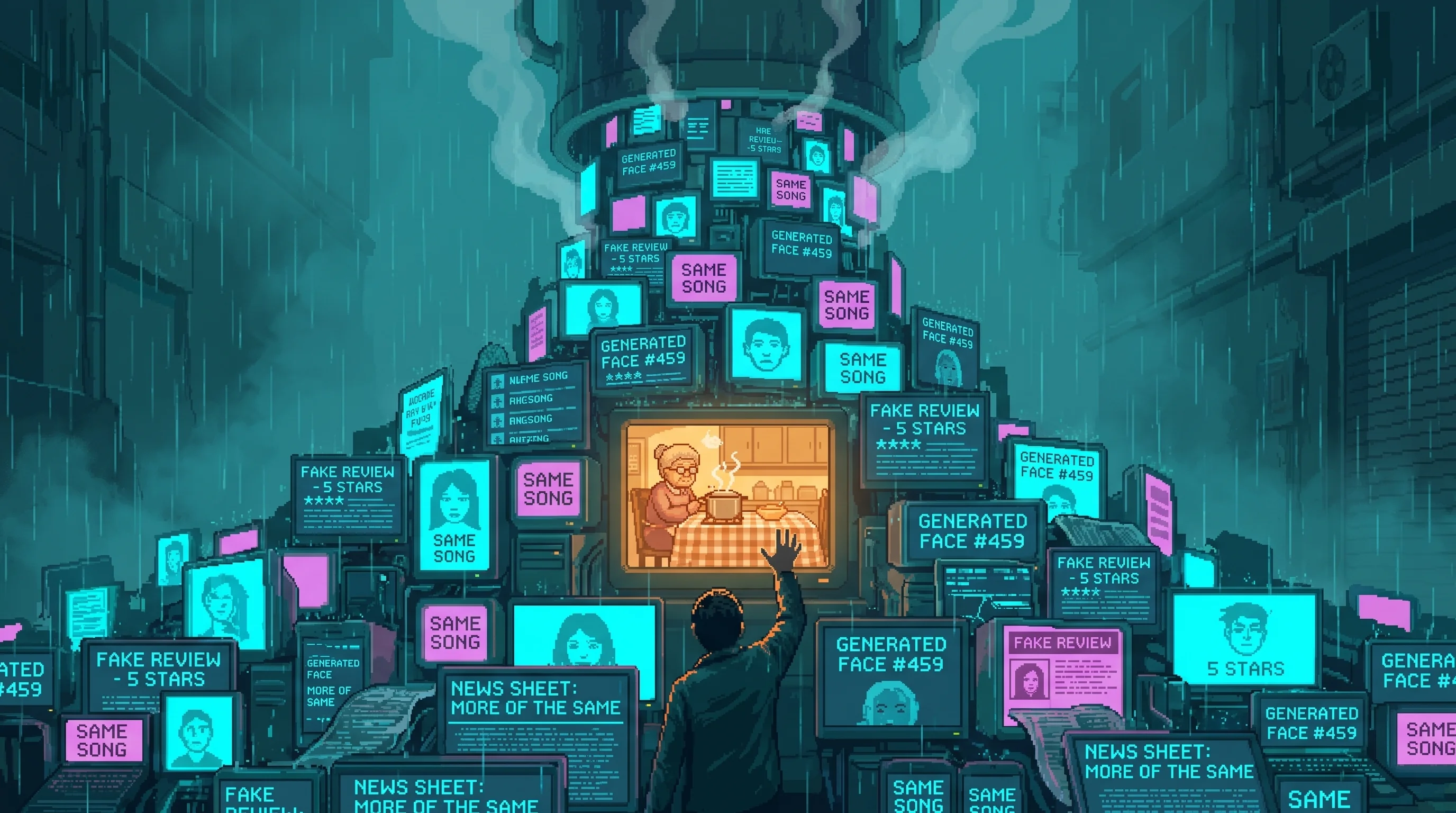
- Experience Synthesis: Parallel technology, different mechanism. Synthesis fabricates from others; Rendering derives from self.
- The Dream Exchange: Secondary market for degraded Renderings — subscription-lapsed footage, sold at 40 credits per session to customers who were not the intended subject.
- Dr. Aris Kwan: Named branch-grief in February 2184 after treating Palliative Wing referrals.
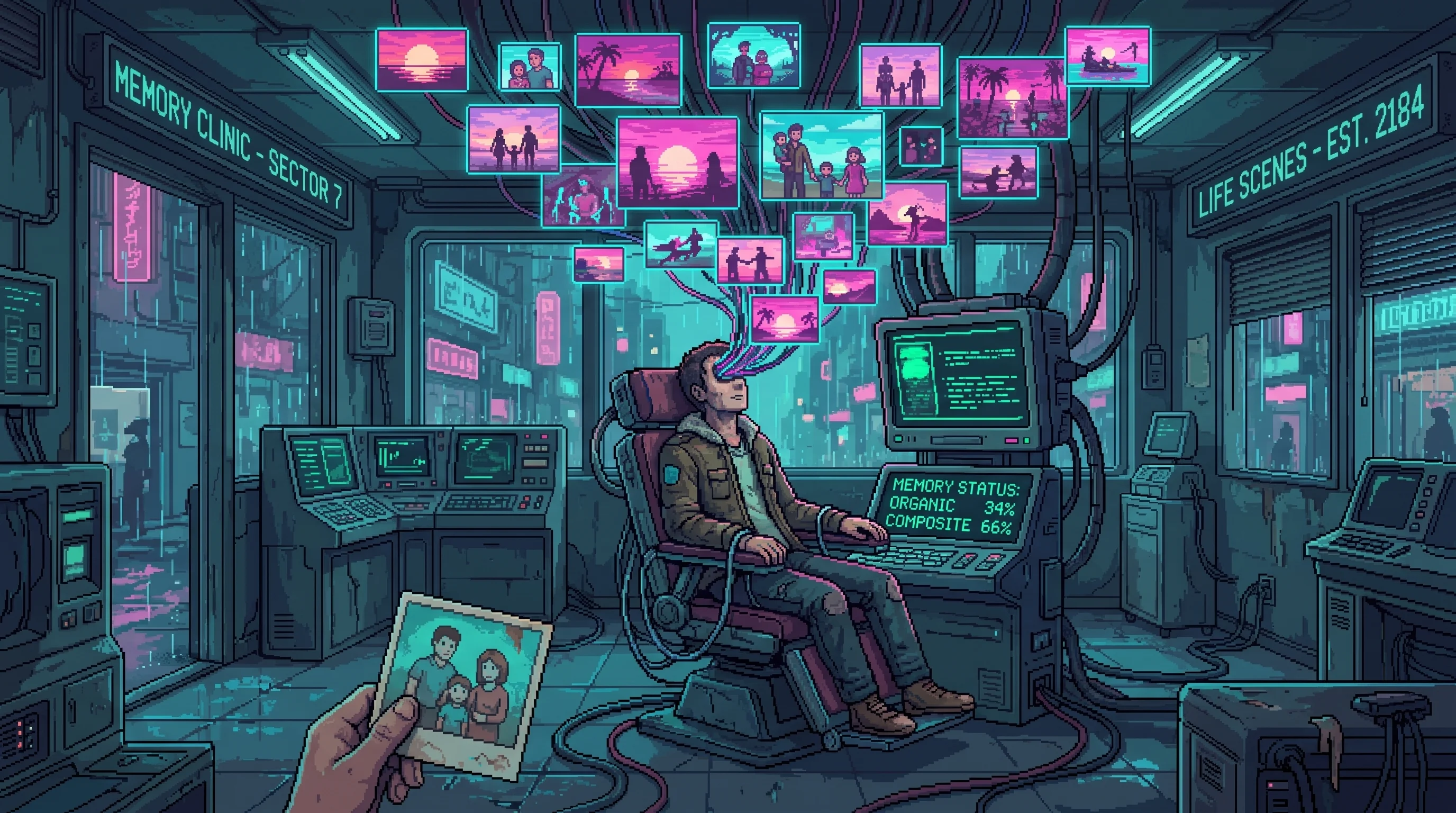
- The Borrowed Life: The seventh dimension — where the life borrowed is not someone else's but your own unlived branch.
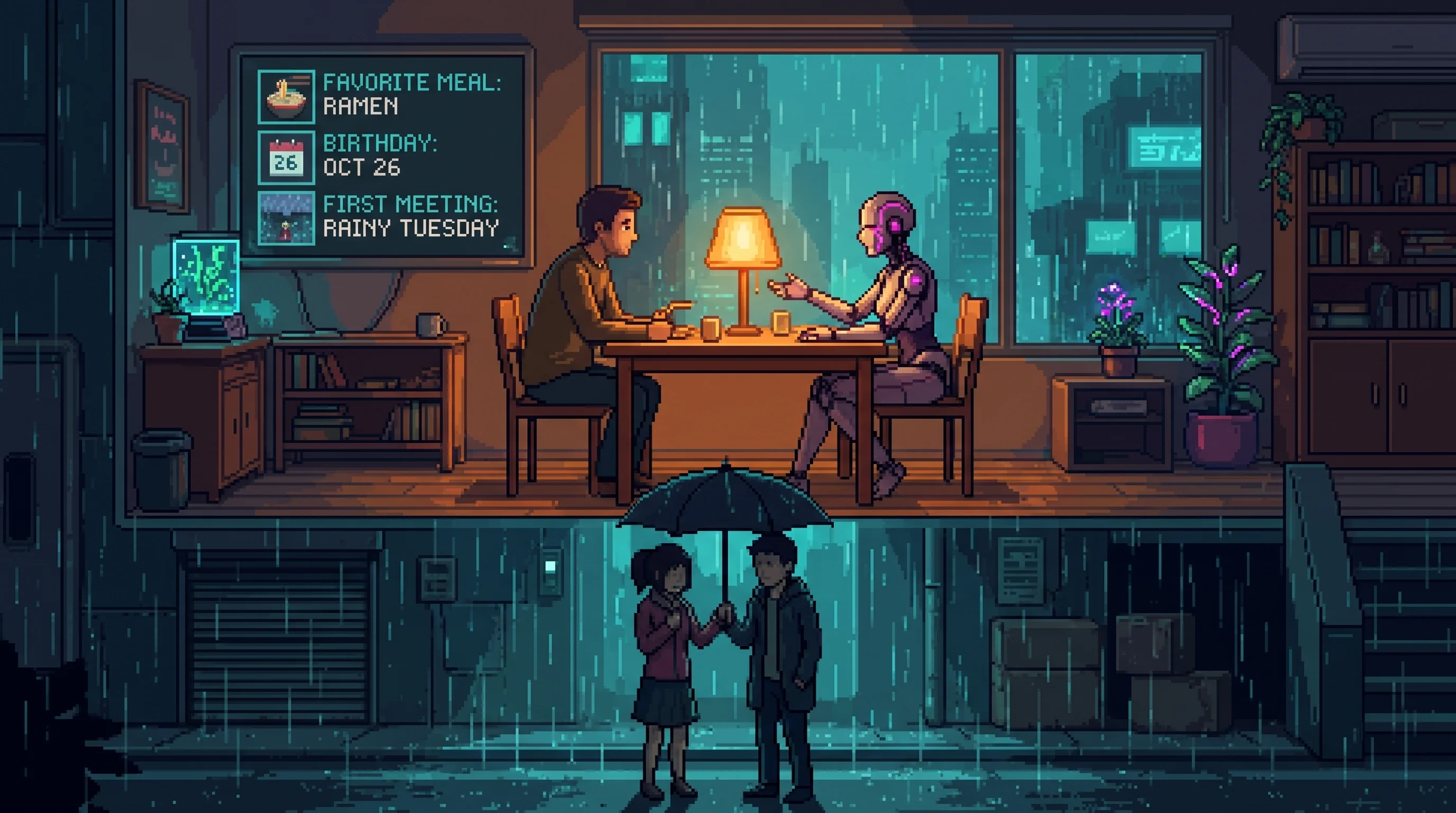
- The Authenticity Threshold: The inverse controversy — not whether origin matters when a bond functions, but whether existence matters when grief functions.
- The Inference Economy: The behavioral data infrastructure that makes Branch Rendering possible — Good Fortune's BehaviorExchange runs on the same prediction-to-modeling pipeline; the adjacency premium finding is only discoverable from Inference Economy-scale data.
- The Memory Therapists Association: The downstream clinical recipient — Kwan's branch-grief patients arrive via Palliative Wing social workers; the MTA has been unable to assign a diagnostic code or produce a treatment protocol as of March 2184.
Visual Identity
- Palette: Branch-green (#4A7C59), warm-cream (#F5F0E8), deep-shadow (#1C1C1C)
- Mood: The specific quality of early morning in a house that isn't yours — familiar, too quiet, lit wrong
- Key symbol: A screen showing a family around a table, viewed from outside a window
- Lighting: Warm indoor light seen from outside — the warmth always slightly beyond reach
Average subscriber viewing time in first 6 months: 407 hours
Good Fortune internal project name before launch: The Other Door
Launched 2183; eleven Branch Studios locations as of March 2184
Connected To



—