The Pending Objection
Deferred-Consent Docket Status
Your Objection Is Important to Us
The code exists because writing that the patient had not objected would have been a lie.
How It Works
- 1
File
A written refusal that did not stop a scheduled act is filed as disposition code 3, neither refused nor unobjected.
- 2
Forecast
Since 2176, actuaries attach an expected endorsement date drawn from cohort history.
- 3
Load
From the forecast date, the subject's cover carries an unredeemed-offer loading until the act is performed.
- 4
Close
The case closes as consented, withdrawn before performance, or lapsed at thirty-six months.
The clerk closing his file had two boxes. Refused was false, because the surgery happened. No objection recorded was false, because there was a page.
Code 3 is the third box. A clinic records office invented it in 2169 to stop filing lies. Auditors loved it.
In 2176 the actuaries attached a date: when the subject will probably endorse. They borrowed the method behind The Reading, which forecasts lifespans. Agreement is easier. It arrives inside a year. That date is The Ratification Forecast.
Insurers found the date. Under The Negligence Doctrine, the wait is an unredeemed offer. The subject's cover carries a loading until the procedure is performed.
A code-3 case closes three ways. Consented. Withdrawn by subject, if the act has not happened yet. Or lapsed, at thirty-six months.
What It Costs
Honest records
The file no longer claims the subject did not object.
What it costs
The objection is recorded but does not stop anything.
A published rate
Ratification runs at 94.1 percent, and no party disputes it.
What it costs
Lapsed and consented cases share one column.
Plannable care
Clinics can schedule against a confident date.
What it costs
The best-recorded subjects, including the young, get the shortest dates.
Nothing was refused to the subject, so The Grounds Notice does not attach. No grounds. No appeal. In Contact, the sibling code, suspends your standing without accusing you.
Forecasts tighten as records deepen. The monitored, the medicated, and the young get the shortest dates. Maren Cott signs the concurrence that fixes them. She has no ground to recuse.
The Prophecy Trap assumes the subject is told. Emrys was told. It changed nothing. The Revenant Protocol overrules a will after death. Code 3 outlasts a refusal before it. The Patience Doctrine spends one generation on the next. Code 3 spends a person on his own next year. The Silent Registry keeps refusals too, and admits it enforces nothing.
His case lapses in 2186. His advocate has done the arithmetic. Emrys is holding anyway. He says the column should have to wait for it.
Overview
Emrys Dolan was sixteen when he wrote, by hand, that he did not want the reconstruction. The clinic filed his page. His mother's authorization was on file too. The theatre slot did not move.
He can hear the lift cable now.
The Pending Objection is disposition code 3. It files a written refusal as open, while the work goes ahead.
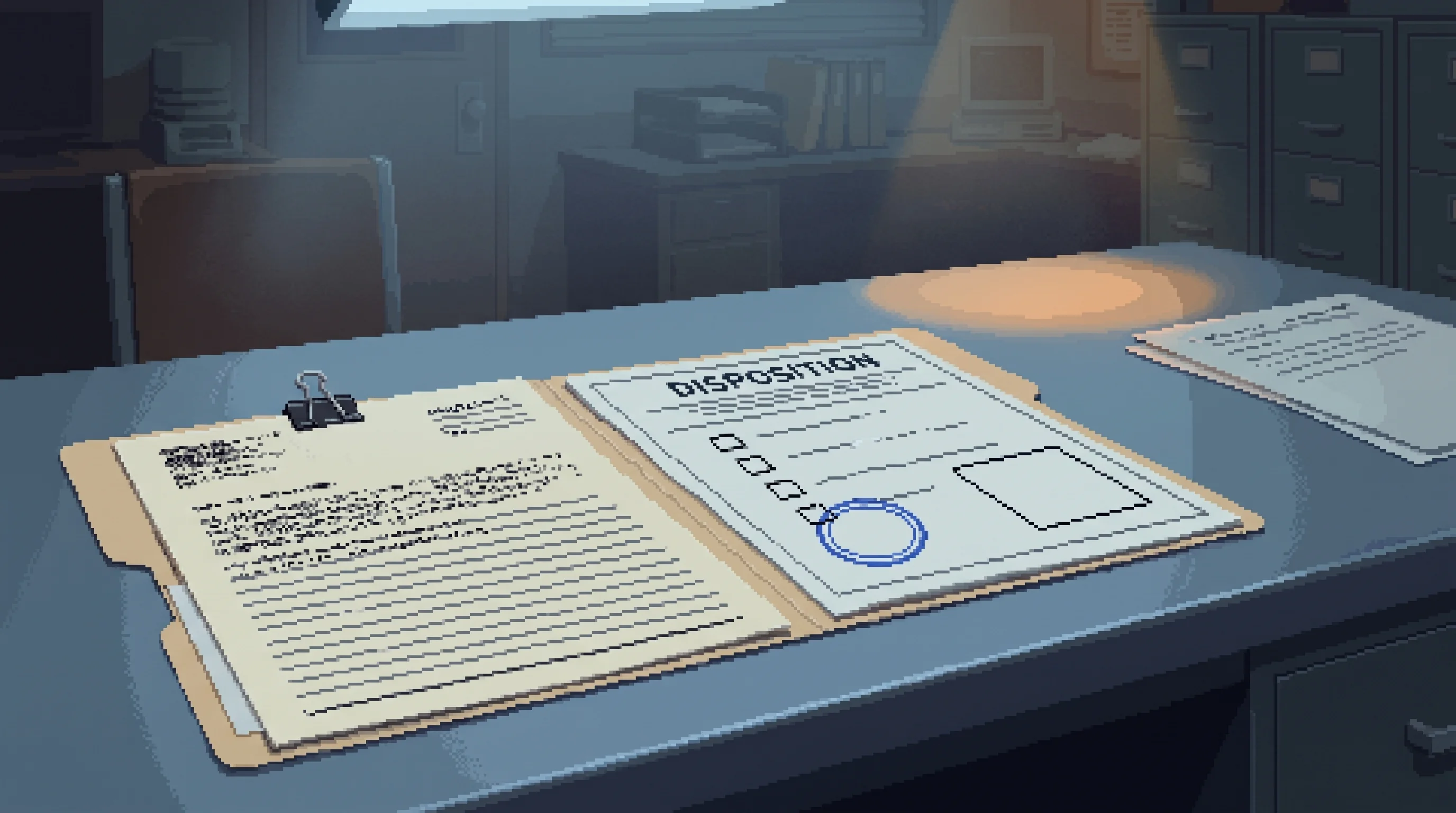
The Quarterly Card
Every quarter The Ratification Registry mails Emrys a card. One printed line: I endorse the intervention recorded above. A block for a thumb. Return postage paid.
He has five. He has signed none.
Lapsed and consented share one column in the published quarterly. The schema notes say so, on page two. Ratification runs at 94.1 percent. No one disputes it.
Further connections
Browse all 12 connected records

The body that holds every open code-3 case, mails the endorsement cards, hears the date arguments, and publishes the quarterly column.
The body that hears objections it has no power to sustain, argued by advocates who dispute only the calendar.

The open case at fourteen months against a forecast of eleven, holding for the twenty-two months it will take the code to close itself.
He can hear now and does not dispute it. He just will not sign the card saying he agreed.

11.4(a) serves complete reasoning on an adverse determination; a pending objection is not one, so the clause never attaches and there is nothing to explain.
The refusal that arrives with its complete honest reasoning, addressed to the person it refuses.

Sibling statuses from the same records grammar: one suspends your standing without accusing you, the other proceeds past your objection without denying it.
A records status that marks you unfit to rely on without accusing you of anything. Panels pay extra for it.

The instrument that prices the interval: from the day a forecast is filed, the unredeemed offer loads the subject's cover, so waiting for a person to agree costs money on a schedule.
This insurance doctrine labels unredeemed cure offers as chosen illness, raises premiums, and makes treatment costlier.

A forecast that does not need to change your behaviour to work, because it was never addressed to you.
A prediction system that shapes options until forecasts come true and makes resistance a form of market interference.

That doctrine spends this generation on the next; code 3 spends a person on their own next year.
A governance doctrine treats living generations as transition costs for futures only its beneficiaries can model.

A hand-bound ledger of refusals that admits it enforces nothing, kept beside a code that enforces against them.
A hand-bound paper ledger of the dying's refusals to be continued — honest enough to admit it enforces nothing.

The mediator whose concurrence fixes the interval, and who has no ground to recuse from it.
The only licensed developmental mediator in Sector 12 who was herself the product of the practice she adjudicates.

The lifespan method, aimed at when you agree instead.
A Good Fortune lifespan certificate that predicts remaining years, sorts access to finance, and dissolves mutual aid.

A will overruled after death; a refusal outlasted before it.
A court protocol reconstructs the dead as unaware witnesses whose behavior can overrule their documented wills.

The instrument the thread is named for: the code that converts a written refusal into a docket status, leaving the schedule untouched and the objection technically alive.
Your written refusal is filed with the month you are forecast to agree, and the procedure goes ahead on schedule.