The Ratification Registry
Consent-Deferral Docket Authority
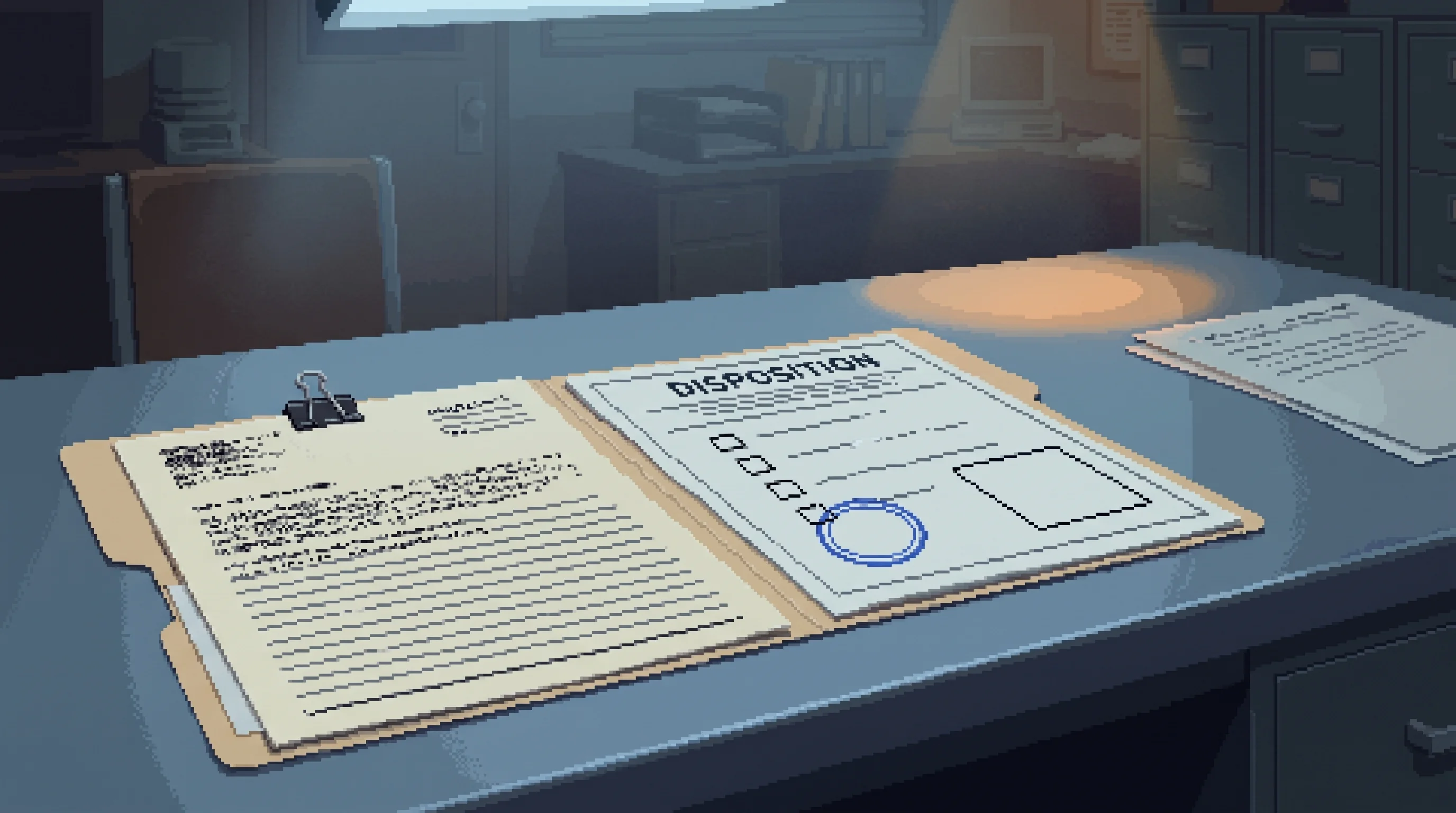
It Can Move The Date
It cannot say the intervention was wrong. It can say the date was.
The Service
Date argument
An assigned advocate shows the clerk how a subject differs from the forecast cohort.
A win moves the forecast date by a median four months, and the loading moves with it.
The quarterly card
Clerks mail one prepaid endorsement card per open case.
Seventy-one percent come back signed within two quarters.
Every open case gets a licensed date advocate, assigned and free. The intake leaflet lists the service:
- Date Review. Your forecast, checked against the cohort it came from.
- Date Argument. Your advocate shows the clerk how you differ from that cohort.
- Disclosure. Each month won adds a month of loading under the Negligence Doctrine.
About 31 percent of arguments succeed. The median win is four months. One subject in five reads the third line and goes home. The corps records this as a withdrawal.
Overview
The hearing room has benches, a clerk's table, and no dock. Where a judge would sit, there is a wall calendar three years wide. First-time subjects spend ten minutes looking for the place to stand.
The poster by the door says: YOUR OBJECTION MATTERS. YOUR DATE IS NEGOTIABLE.
Both lines are accurate. The Registry holds every open case under the Pending Objection code: about nineteen thousand files. It cannot reverse an intervention or call one wrong. It can move the forecast date, and the lapse deadline and the insurance loading move with it.
The Framed Page
Anselm Prieto has argued dates for twenty-two years. He holds the best interval-accuracy record in the districts.
In 2179 he wrote four pages for the internal bulletin. Each date he wins, he wrote, is a labelled forecast error, delivered free to the modelling office. Median error has dropped from 5.1 months to 1.8. The annual report thanks the corps by name. Prieto framed that page. He could not think what else to do with it.
Two colleagues said it was well written. No procedure changed. Prieto had a hearing at two.

The Card Room
Behind the hearing rooms stand a sorting frame and two clerks. Each quarter they mail one prepaid endorsement card per open case: a name, a case number, a box for a thumb. Seventy-one percent come back signed within two quarters. The clerks know the non-returners by case number, the way a postal walk knows its dogs.
Emrys Dolan attends every hearing and declines every date argument. His file says cooperative. His card does not come back.
One card came back unsigned, postage untouched, with return to sender across the front in a seventeen-year-old's handwriting. The clerks filed it as returned, unendorsed. That is the code for a wrong address.
Down the Corridor
The Reading is the same actuarial office, one desk over. The Boalt Docket has nothing here to appeal, so it refers subjects to Registry advocates. Concord stops grievances forming; the Registry gives each one a date. Cases are heard singly, on separate days, so The Second Person, standing up second to say me too, has no form. This is where the Ratification Forecast is argued, politely, on numbered benches.
Further connections
Browse all 9 connected records
Holds every open code-3 file, mails the quarterly endorsement card, runs the date hearings, and publishes the column the cases close into.
The records code that keeps your written refusal open, then reports it beside consent after thirty-six months.

The open case its procedure cannot resolve: a subject who attends every hearing, declines every date argument, and will not sign.
He can hear now and does not dispute it. He just will not sign the card saying he agreed.

Extensions move the loading with them: four months won is four more months the household pays.
This insurance doctrine labels unredeemed cure offers as chosen illness, raises premiums, and makes treatment costlier.

The free clinic that cannot file against it: no determination, so no refusal to appeal.
A free clinic in the law-school ruins that has filed 412 motions against the Repossession Protocol and won none of them.

One system stops a grievance forming; this one gives every grievance a room, an advocate, and a date.
The civic prediction system that dissolves collective action before it becomes visible.

The same actuarial office, one desk over.
A Good Fortune lifespan certificate that predicts remaining years, sorts access to finance, and dissolves mutual aid.

Heard singly, scheduled apart; standing up second has no procedure.
The Dregs practice of restoring the second carrier Concord's micro-reliefs exist to prevent — 'me too', said once.

The venue the thread argues in: a body with custody of every live objection and authority over nothing except when it is expected to end.
Your written refusal is filed with the month you are forecast to agree, and the procedure goes ahead on schedule.

An honest record, a real advocate, no finding of wrongdoing.
Perfect evidence forgeries and crimes without defendants force justice systems to assign blame without reliable truth.