The Conclusive Receipt
Agent-Discharged Claim Instrument
Settled in Full. Amount Not Shown.
It is not a refusal. That is not a loophole in it — that is what it is, and it is why there is nothing to appeal.
How It Closes
- 1
Pay
A buyer makes a mandatory new-use payment to the Sound Register under Article 7.
- 2
Countersign
A Register officer countersigns a satisfied-use certificate. The signature is conclusive that every represented performer has been discharged.
- 3
Notify
Each member receives a one-page Notice of Satisfaction saying the claim is closed. For an unapportionable payment, the figure field stays blank.
Article 7 of the 2159 Recorded Work Agreement makes two documents. The buyer gets a satisfied-use certificate. A Register officer countersigns it. The countersignature is conclusive: every represented performer in the use is discharged.
Relief bought forty years of session masters. Its sleeve copy reads: RELIEF. YOU'VE DONE ENOUGH. Deputy Registrar Anselm Kew signed. A signature, a dated stamp and a line in the ledger took seconds and closed 61,412 claims.
The money arrived as one sum for a use that could not be divided. Discharge came first. Division never came.
Since 2184 Relief's licensing arm asks for the certificate before it signs, not after it pays.
Why Nothing Fires
Finality for the payer
Conclusive discharge lets a buyer license a whole catalogue without facing unbounded individual claims.
What it costs
The claim closes before any division, and stays closed when division proves impossible.
Good news, not refusal
The Notice reports a settlement in full and withholds no reasoning.
What it costs
Code 11.4(a) never engages, and the only appeal lies to the Register's own Grievance Sitting.
The Grounds Notice voids an unreasoned refusal. This is not a refusal. It is good news, in full. The Reason Given promised an explanation for every no. The Notice never says no.
Appeals go to the Register's own Grievance Sitting. Article 7 recognises no other body. In 2184 members filed 3,090 appeals. The Sitting upheld all 3,090 Notices. None of the appeals alleged an error. Brekke argued hers and lost.
On Sump Row
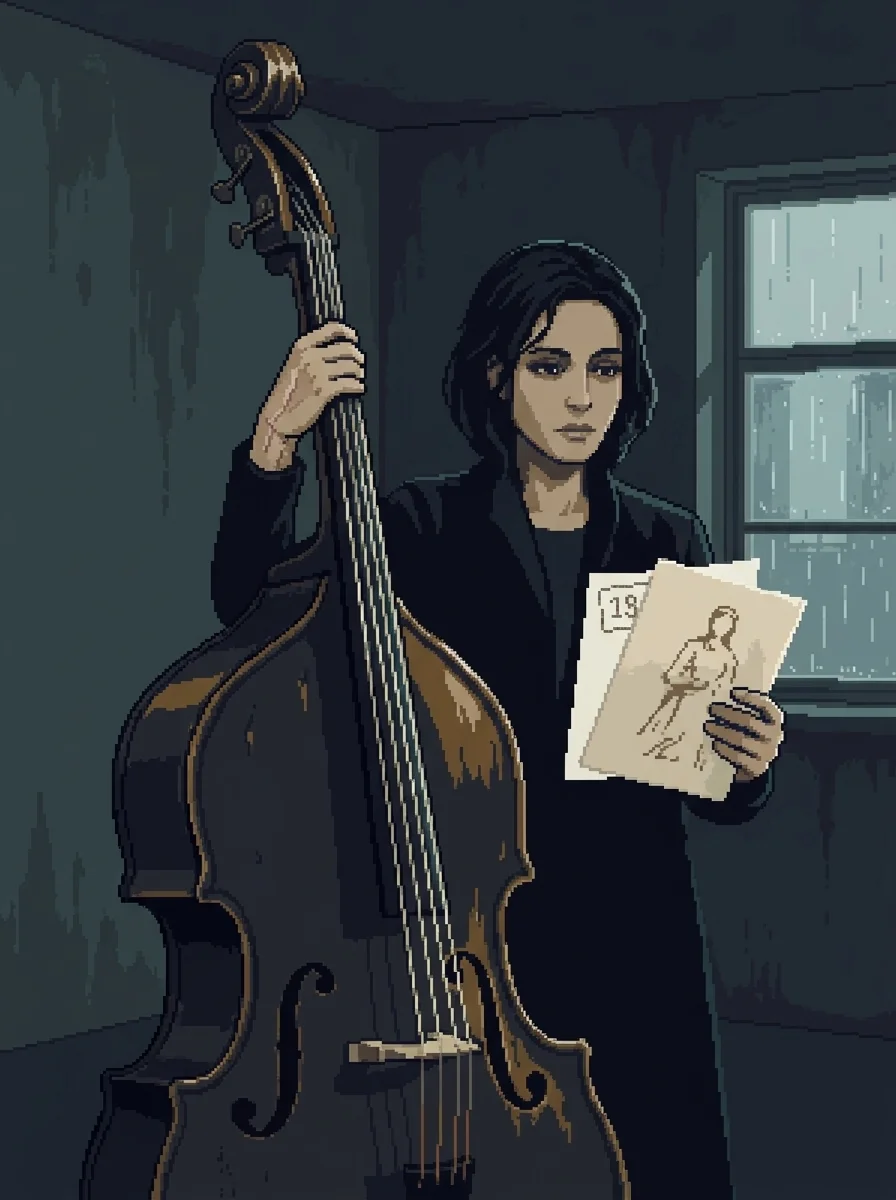
One page, no figure, entirely accurate. She argued it in front of the only sitting with standing and lost correctly.
A session bassist who can name the exact take Relief bought, and has no form to write it on.

The buyer the certificate protects. It paid, took the certificate, and owes no performer an account.
The corporation whose algorithms produce 70% of the Sprawl's synthetic content and decide what surfaces from the rest.

The reader who found the first page in twenty-two years with no clause in it that does the damage.
A Dregs letter-reader who is contractually forbidden to open his own mail.

Certifies the use as licensed; twice declined to certify an apportionment method for a generative catalogue.
Nexus-funded body certifying what's real — its accuracy is decaying toward a coin flip, unpublished.

Conclusive by drafting rather than by proof; nothing here is disputed.
Perfect evidence forgeries and crimes without defendants force justice systems to assign blame without reliable truth.
Registrar Mirjana Vetch asked the Authenticity Tribunal twice for a way to divide the money. Both petitions came back outside its remit.
Hollis Sarr reads documents aloud for a small fee. He slows at the clause that does the damage. The Notice has none. He reads it twice and stops. Ynez Barquero writes her own refusal into every lease she signs. The Notice has no place for one.
Everyone involved behaves well. That is Compensated Elsewhere, an answer to the Labor Question with no refusal in it. It sits beside the Unwritable Roster, Copyright in Infinite Reproduction and Post-Truth Justice.
Overview
Ilsa Brekke keeps two pages folded together.
The first is a paper date sheet from 2166: studio, date, three takes, forty credits. It put eight bars of her into the archive. It has a number and no legal force.
The second is her Notice of Satisfaction from spring 2184. One page. A use of her recorded work was settled, and her claim is closed. There is a ruled field for the figure. The field is blank.
She wrote her own estimate into it in pencil. So did thousands of others. It has no effect. The Sound Register has not asked anyone to stop.

The Sleeve
Brekke keeps both pages in a date-sheet sleeve. Every spring she goes over the pencil so it does not fade.
Further connections
Browse all 8 connected records
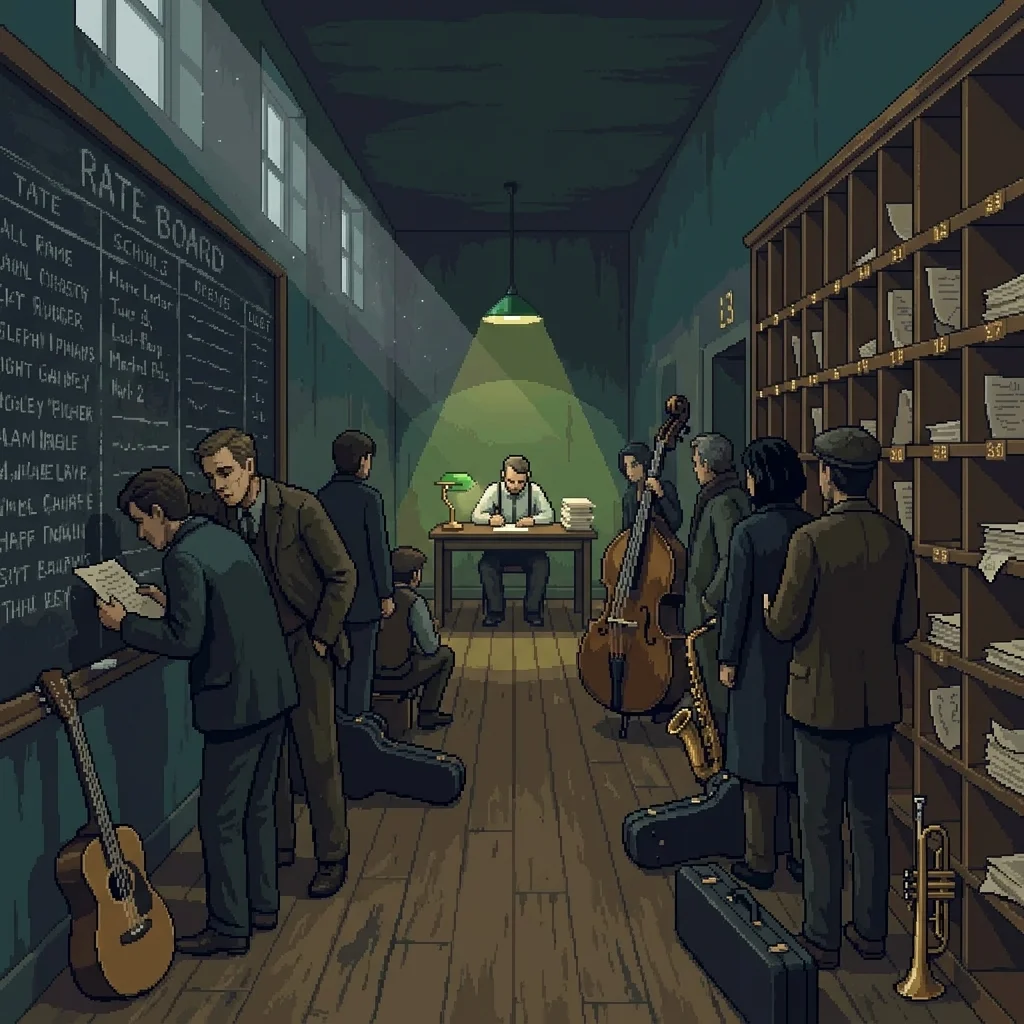
The Register holds the countersignature under Article 7 and posts the Notices. Deputy Registrar Anselm Kew signs.
The musicians' own body, and the only party allowed to be paid for their recordings.
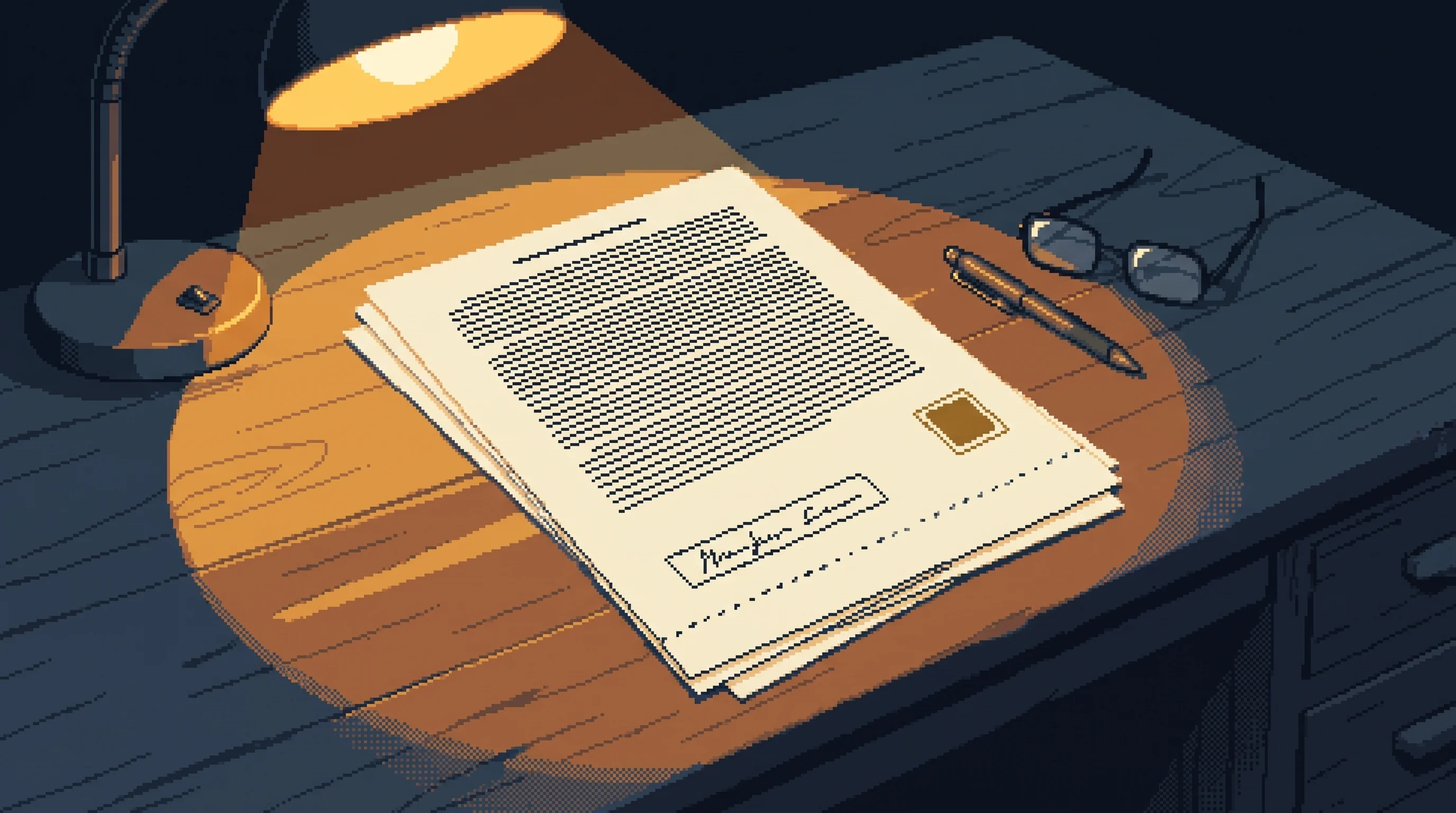
Code 11.4(a) voids an adverse determination that arrives without its complete operative reasoning. This is not adverse, so the clause never engages.
The refusal that arrives with its complete honest reasoning, addressed to the person it refuses.

Her lease has a figure, a counterparty, and a clause she drafted that has never worked. A Notice has none of the three.
A Sump Row woman who leases her family's held vowel to compliance brokers, four terms a year, until a model learns it.

There the complete honest reasoning is why nobody appeals. Here there is no reasoning to give, because no decision was taken about the member at all.
Every refusal arrives with its full, honest reasoning, written so you can follow it, and so you rarely appeal.

The controversy: an instrument built by labour that disposes of labour's claims without a refusal anywhere in it.
Seventy years arguing what people are for; its ugliest answer is that priced right, flesh costs less than the machine.

A clause that cannot name a beneficiary, beside a receipt that cannot name a payee.
The district can print every resident who paid for the rescue and not one resident who was rescued.

The settlement layer of costless copying — the copy conceded, the payment banked, the claim shut.
Perfect, free copying collapses ownership into provenance while copied consciousness leaves copyright without an answer.

The instrument the thread turns on. It closes a claim without refusing anything, which is why the Sprawl's whole law of refusals slides off it.
Relief paid for her bass lines. Her union kept the money and wrote to say she was satisfied.