The Last Pour
Overview
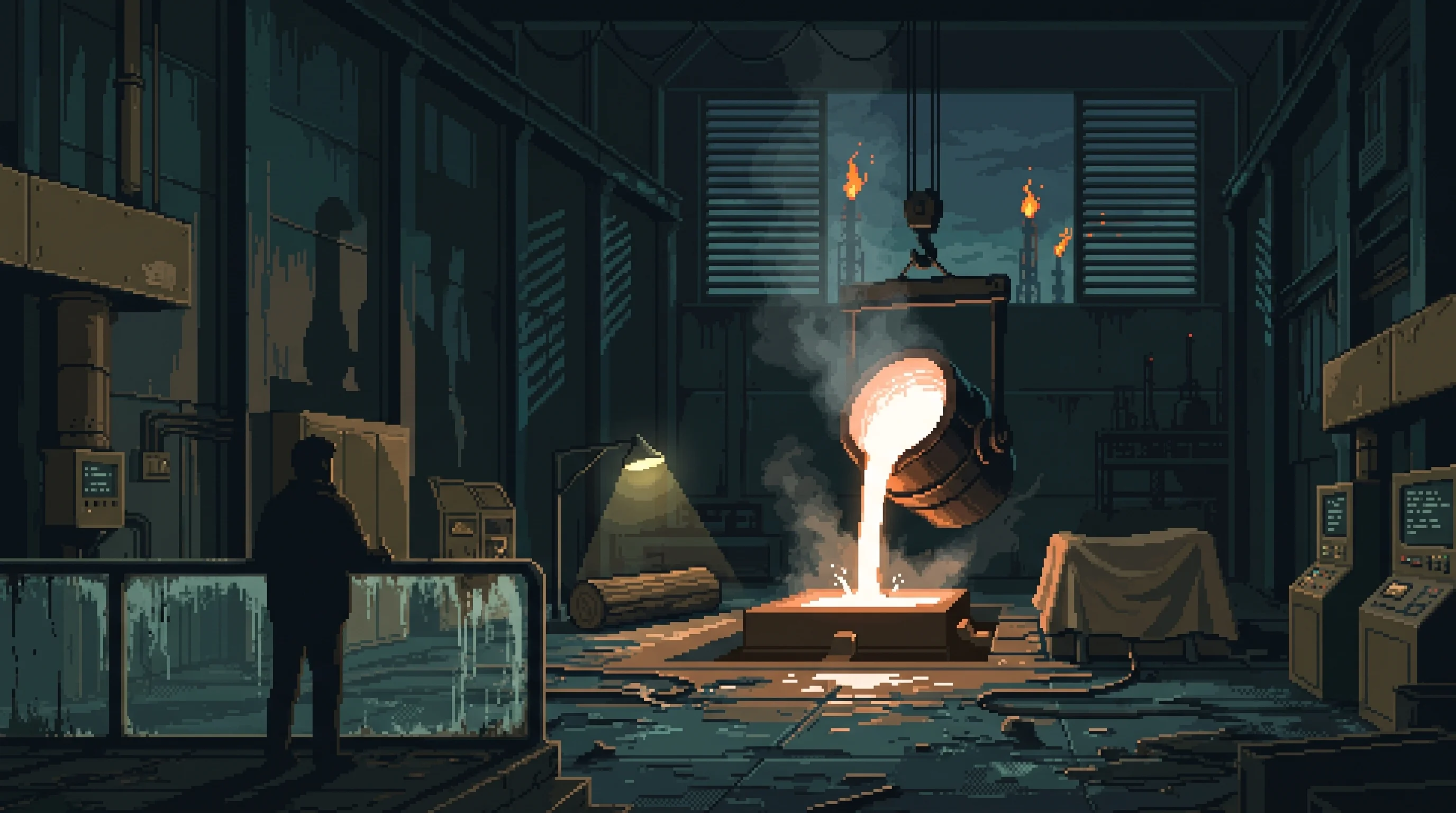
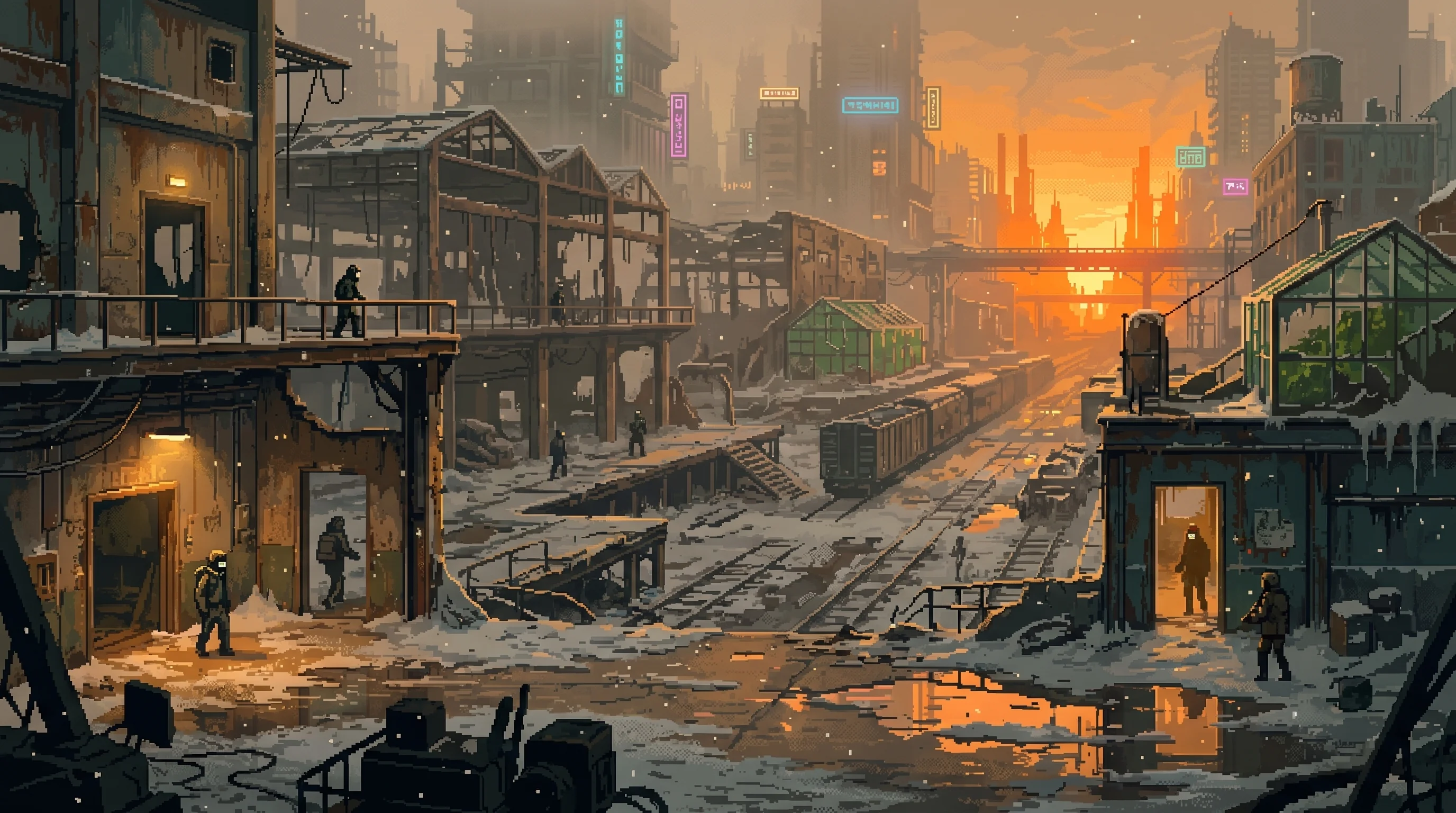
The Last Pour works one furnace in a hall built for a crew of forty. The old Ironclad crucible line was pulled out when the refinery moved its reclamation volume to a newer bank, and the shell stood empty until Cassia Verhoek leased it back from the company she had left. Now a single tilting crucible hangs on a hoist over a mould pit sunk into the floor, a burnout kiln bakes behind it, and a rail of blast glass stands where a buyer can watch and still feel the heat come off the metal. Everything else in the building is the refinery: cracking towers past the vents, the flare stacks lighting the cloud, and a hundred meters of contested ground between the hall and the road.
Verhoek ran a crucible line here for nineteen years, smelting reclaimed metal by volume for a company whose whole trade is weight. She left the quarter she was ordered to feed a recovered Cascade-memorial wall into the reinforcing-bar run. The wall carried names. The run was billed by the ton, so the names went into the billet unread, and Verhoek signed the tonnage sheet that said so. Her first commission the following year was the opposite motion made deliberate: anonymous bronze poured into one shape a buyer would pay to keep from ever being weighed again.
The Pour
A commission is one event on a fixed calendar. The house pours on the dark of the moon and no oftener, because a crucible must be charged, brought up, tipped, and cooled clean before the next, and Verhoek will not run two charges in a night. The buyer attends. This is the rule that makes the trade what it is. They stand at the blast rail, or in the kept heat suit at the pit edge, and watch their commission become irreversible in the few minutes the metal takes to fill the mould. Backups, drafts, and revisions are the texture of everything else an elite owns. The pour offers the one thing those cannot: a moment, witnessed, after which the thing is done and will not be edited.
The One-Time Mould
The mould is built to be destroyed. The house works in the old lost-metal method, packing a pattern in binder, baking the pattern out in the kiln until the cavity is empty, pouring the bronze into that single shell, and breaking the shell off the cooled casting in pieces that fit nothing else. No reusable mould exists at any point. The house keeps no master pattern, no drawing dimensioned for a re-cut, and no scan, and it screens a commission's file for any copy a fabricator could read. To be the only one is the certification, the way a line in the Salt Ledger's book is a certification two sectors north. When a buyer or an heir has asked for a second after a loss, the house has said the same thing nine times: a piece it poured twice was never the piece it sold.
The Alloy and the Ground
The house pours a corrosion-stable bronze it calls still-bronze, rated to hold a legible face for six centuries on stable, dry ground. That rating creates a second problem the buyer did not come in with. A thing meant to outlast its owner needs somewhere permanent to stand, and permanent ground is its own scarce good in a sector where the map is contested block by block. Buyers now bid against each other for perpetual plinth-easements on surveyed bedrock, and Ironclad, which owns most of the stable ground in the Ring, leases those easements at a price that has begun to track the commissions themselves. The metal is rated for six centuries. The lease that lets it stand somewhere is written for ninety-nine years, and renews at the landlord's discretion.
| Re Pours Refused | 9 requested since 2178, 9 declined; the house has never poured a second of anything |
|---|---|
| Melted Back | 3 finished castings have returned to a smelter as billet, one sold there by the estate of the person it depicted |
| Alloy Rating | Still-bronze, rated to hold a legible face for six centuries on stable ground |
The Melt Back
A singular object is worth its commission only while it stands. Reduced to billet, it is worth its weight, which is a fraction, and the smelter that would reduce it is the reclamation line one wall behind the fence. Three finished castings have gone back that way since 2178. A rival melted one to erase a name from the only ground it still held. A theft crew took a second for its metal, not knowing the metal was the cheap part. The third was Lenore Castellan's, sold for weight by her own estate. The house records each return in the pour log beside the original line and pours nothing to replace it. The whole value of the first pour was that there would be no second. A house that broke that rule to comfort an heir would have nothing left to sell anyone.
Sensory World
A buyer's visit inverts the descent the Undertow Club and the Salt Ledger both sell. Those houses take a member down and in, to cold water or a cold cell. The Last Pour keeps its buyer at a rail in the heat and asks them to watch. What they are purchasing does not move, does not answer, and will outlive them by design. Its whole worth is that it is one, that the means to make a second was broken over it while they watched, and that they stood close enough to feel the minute it became true. Buyers describe the pour as the only place their augmentation offers no overlay and no valuation, because there is nothing to compare a thing to when the house has just guaranteed there will never be another like it.
| Stratum | Elite |
|---|---|
| Power Position | Above |
| Access | Restricted |
| Atmosphere | Industrial |
Affiliated Entities
| Entity | Relationship |
|---|---|
| Ironclad Industries | Melts the singular into billet by weight every shift; the house runs the same furnace backward one wall away, and the reclamation line is where a stolen or liquidated casting comes back to be un-made. |
| The Slagline | Supplies the pour-metal — anonymous, zero-value discard stock the reclaimers carry up from Ironclad's apron, bought by the kilogram to become an object priced in millions. |
| The Salt Ledger | The Alcatraz house authenticates an object the machine could not copy; the Smelter house manufactures one the machine will not copy, the same collectors buying a finished past from one and an un-reissuable future from the other. |
| The Undertow Club | Land's End sells a body the risk of ending; the Smelter sells a name the chance of lasting, two answers to the same elite hunger for the last scarce thing money struggles to buy. |
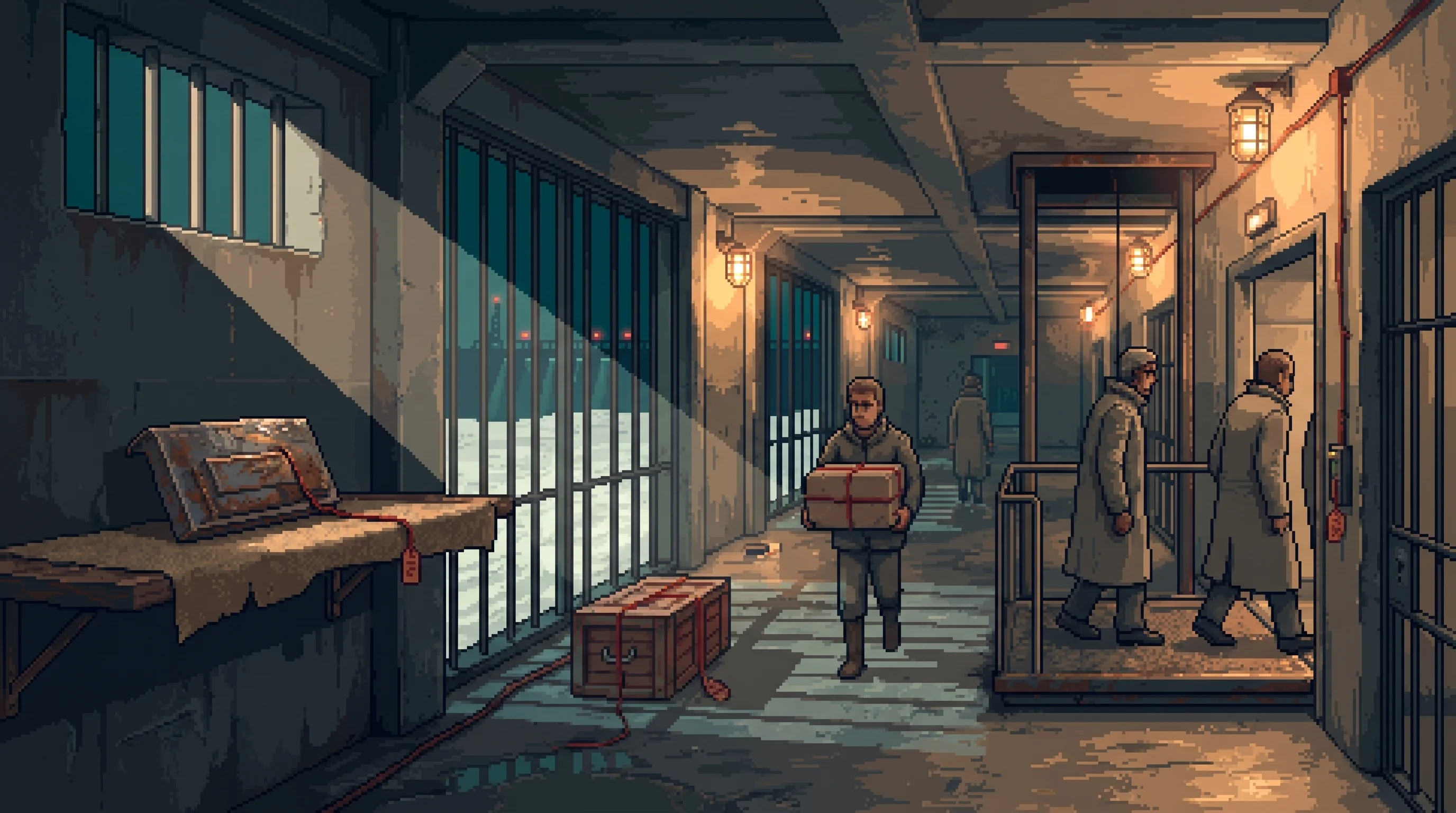
| The Fence Line | The hall sits behind the refinery wire, where a legacy buyer's convoy and the departing shift share a single checkpoint; the border's scheduled violence stands in for the night watch the house never has to hire over metal worth more than the housing block. |
| The Slack Tide | Answers the mirror version of that hunger for the same elite: the foundry cures the terror of vanishing with bronze rated for six centuries, while the fault-bay shed rents a morning that has to vanish by the next tide, and die with its giver, to be worth the price. |
The house breaks the mould to free every casting and keeps no pattern, so no commission can ever be poured a second time
A thing it has poured twice was never the thing it sold
The casting rated to hold her face for six centuries outlasted the woman by fourteen months
Conditions Report
Sight
Banked kiln glow and one cold work lamp for most of the hours, then the white-orange flood of the pour that throws every shadow up the wall, then a canvas shroud over a casting too hot to approach and the flare stacks steady in the high vents.
Sound
The refinery's steady industrial drone through the walls, the periodic roar of a flare stack burning off past the vents, and, for the few minutes of a pour, the specific low rush of molten metal running into a packed mould, a sound the buyers describe as the only part of the visit their augmentation had nothing to say about.
Smell
Hot bronze and burnt binder from the kiln, the sweet petrochemical coat the whole sector breathes, and under both the wet-ash reek of the discard stock as it goes into the crucible, so a finished piece smells of the apron it came up from before it smells of anything the buyer paid for.
Temperature
Furnace warmth held against the bay wind, climbing to a wall of heat in the minutes the metal runs and falling slowly for the day and night a casting takes to cool, which the house will not hurry, because a bronze cooled too fast cracks and a cracked commission cannot be poured again.
Feel
Heat that reaches the rail through the glass and stands the hair on a buyer's arm, the deliberate roughness of a casting the house leaves un-smoothed where the mould broke away, and the one heat suit kept for a commissioner who wants to stand closer than the rail.
Connected To
Additional Connections


Local Intelligence Scan
Nearby Signals
CANONICAL PROXIMITY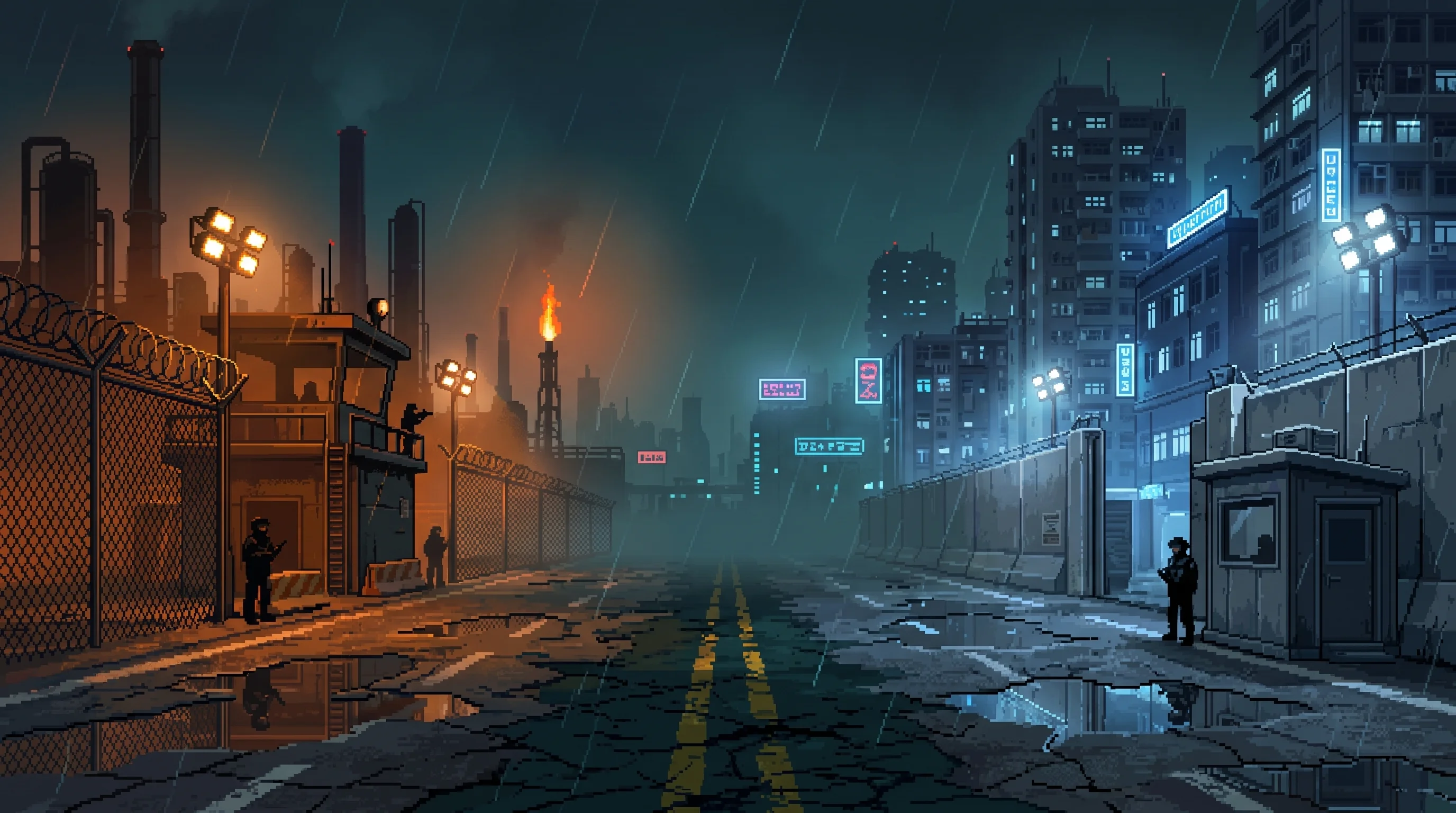



Environmental Readout
LIVE CONDITIONS- Air
- Toxic
- Light
- Artificial
- Flood
- Seasonal
- Heat
- Heat island
- Security posture
- Contested
- Infrastructure
- Patchwork
Position Data
SECONDARY- Elevation band
- Shoreline — the Rim edge
- Lattice fix
- E+3.2 · N+15.8

—