
The Long Address
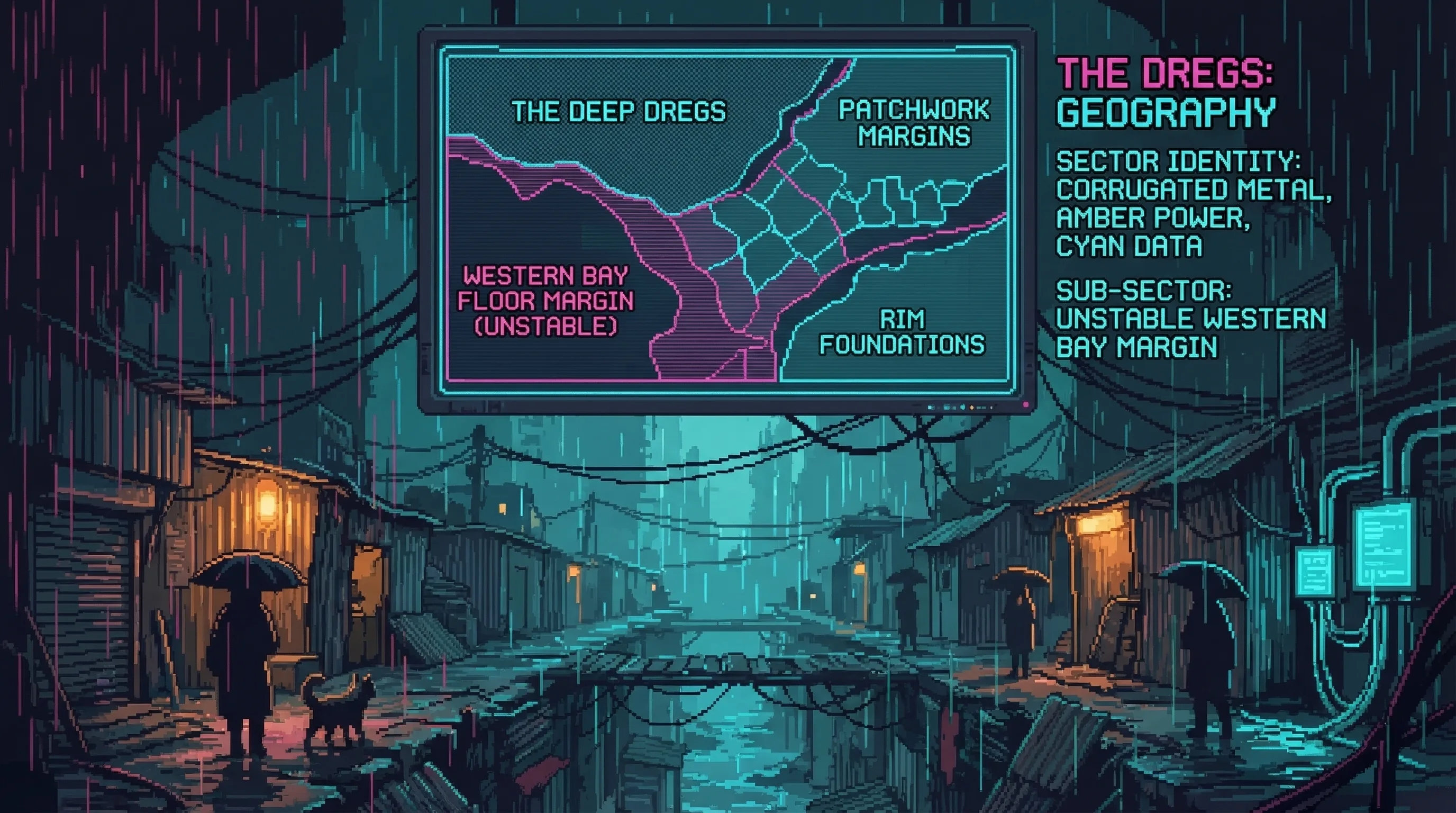
Practice emerged spontaneously in Dregs transition zones in 2177 — residents stuffed handwritten records into walls of buildings being cleared for infrastructure development, addressed to the future occupants of the infrastructure
Overview
The Long Address is what people write when they cannot argue with the math.
It is a letter, addressed to the future — specifically to the unnamed, unborn, statistically projected person who will receive the benefit of what the writer is currently being asked to endure. The writer does not know the recipient's name. The recipient does not know the writer exists. The letter is addressed to a category rather than a person: the one who benefits from what I endured. The resident of the infrastructure this transition funded. The grandchild of someone who was spared because I was not.
The practice emerged spontaneously in the Dregs in 2177, in the neighborhoods being cleared for deep-infrastructure development. Residents who were being relocated — who had been told that their relocation was necessary for a welfare improvement that would serve future generations, and who could not dispute the math of this because the math was accurate, and who could not vote against it because the vote had been taken by councils who found the math compelling — began stuffing handwritten records into walls. Not protests. Records. Lists of what the block had been. Who had lived there. What had been built there before the infrastructure project required the land. Addressed to no one. Intended to be found.
They did not know they were inventing a form. They knew they could not argue with the math and that being silent was worse.
The Dregs Practice
The Dregs Long Address does not ask the future to feel guilty. This is its most important feature, and the thing that distinguishes it from most political speech about sacrifice. The writers understand that guilt is a present-tense emotion, and the future they are addressing will not be present for the context that produced the cost. Asking future residents to feel guilty about infrastructure they did not design and did not choose would be the same arithmetic error the Long Mercy makes — weighting the emotional burden of the living against the statistical welfare of the unborn, just in the other direction.
What the Dregs Long Address asks is simpler: know. Know that the math that produced your flourishing had a numerator. Know that the numerator was real. Know that a person who had a name and a building and a child and a fever wrote to you from inside the transition cost, in the present tense of their own life, and told you what it cost. You do not have to feel guilty. You have to know.
The letters are written by hand. This is not aesthetics. Digital records are archived and can be incorporated into projection models and turned into data. Handwriting resists incorporation. You cannot run a regression on a child's fever described in a parent's handwriting in the second year of a water filtration reallocation. The data is not extractable. The letter is not a data point. The letter is a person addressing the math from inside it.
| Taught At | Commons Hall public education program since 2183 |
|---|---|
| Teacher | The plumber who named the Long Mercy |
The Plumber's Class
The plumber who named the Long Mercy — who stood at the Commons Hall microphone in 2179 and said they call this a mercy, it is the longest mercy I have ever been given — now teaches the Long Address at the Commons Hall's public education program.
She is not a writing teacher. She does not teach the Long Address as a literary form. She teaches it as the one thing she knows how to do that the math cannot absorb: describe a specific child, with a specific fever, in a building with a specific water color, on a specific day during a specific implementation week, addressed to the specific statistical resident of the infrastructure that replaced the building.
The class meets Tuesday evenings. It is not well-attended — eight to fifteen people, usually. They are mostly from Dregs transition zones, mostly people who have testified at hearings and discovered that testimony does not change the projection and wanted something to do with what is left over. The plumber gives them paper and tells them to write to the person who will live in the building that is being built where their building was. She tells them not to argue the math, not to ask for guilt, and not to explain the policy. She tells them to describe what they can see from their own window.
She has never read any of the letters. She considers that outside her brief. She teaches the class. The letters are the students'.
Outside the System
Concord cannot pre-empt a Tuesday evening.
The Long Address sessions operate without real-time telemetry — handwritten letters, no neural interface, no behavioral data stream. The Inference Economy's models have no precursor signature for note-sharing that occurs through paper and pen in a room with no digital footprint. The week before a session, the attending residents' civic-stability risk scores are elevated but not yet at threshold; the session happens before intervention can be deployed; and whatever solidarity the letters produce is already produced before Concord can identify it.
The plumber who teaches the class holds a Good Fortune consumer account that has been flagged for civic-stability monitoring three times. Each time, the intervention window fell four days before a Tuesday session — too late for Week-Minus-Three targeting, too early for the session itself. The system keeps trying. The plumber keeps writing her letters and teaching others to write theirs.
The letters describe specific children, specific fevers, specific buildings, specific water colors on specific days during specific implementation weeks. They cannot be run through a regression. The data is not extractable. The letter is not a data point. The letter is a person addressing the math from inside it, and then folding the page, and giving it to another person who is also inside the math, and asking: do you see it too? Two people, in a room with no telemetry stream, discovering they see the same thing. Concord's log for Tuesday evenings at the Commons Hall shows elevated civic-stability risk across the Dregs transition zones, partially unresolved. The "partially unresolved" category is the one the system keeps flagging for follow-up. The follow-up is never effective. The sessions keep happening.
Two distinct variants developed independently: Dregs variant (evidence/indictment, addressed to unnamed future beneficiaries) and corporate variant (stewardship/justification, filed with regulatory bodies)
The Corporate Variant
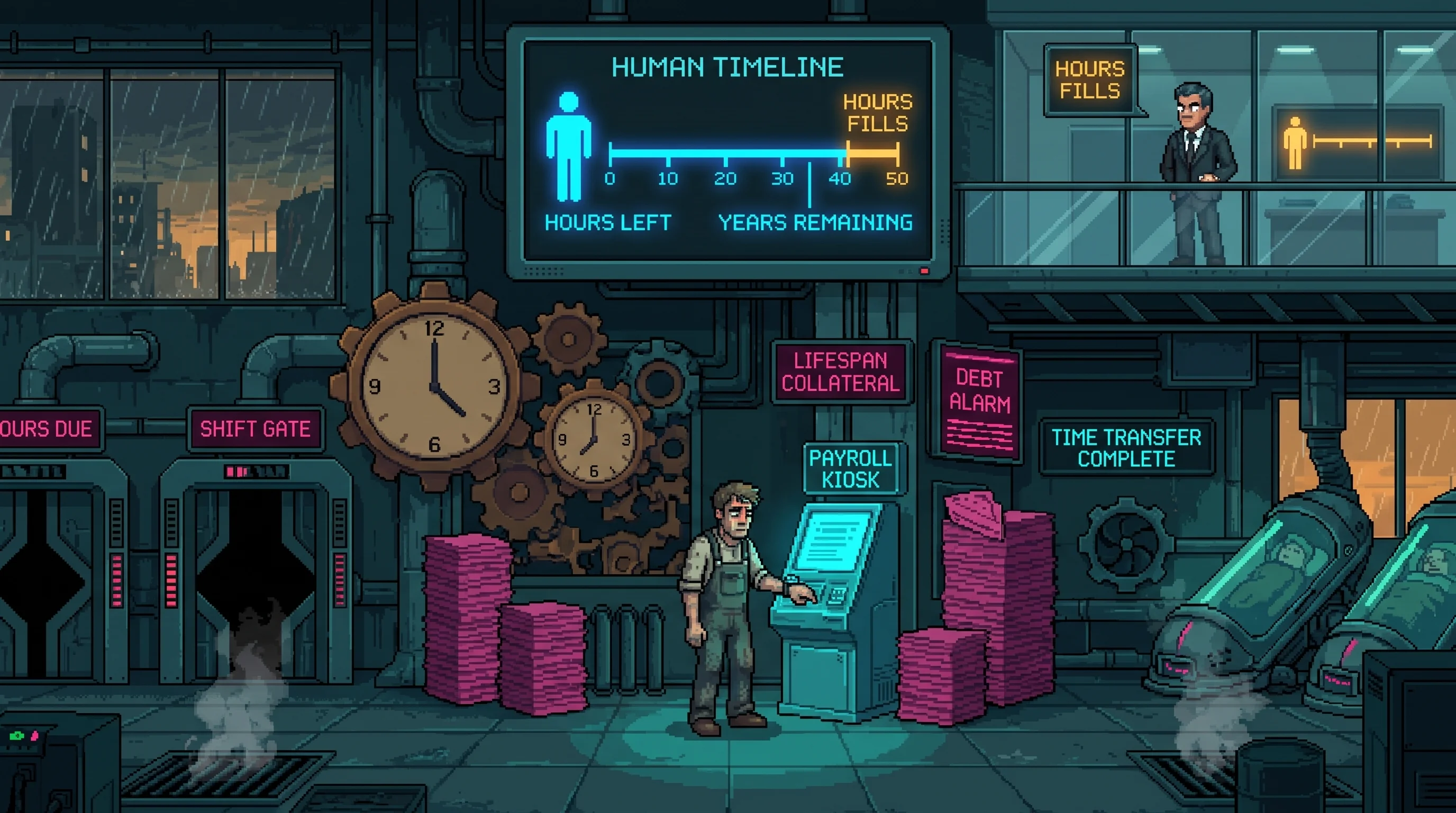
In 2182, the Civic Advisory's quarterly documentation framework added a new filing category: "Long-Horizon Equity Correspondence" — governance documents addressed to "future stakeholders" projecting the intergenerational welfare returns from current decisions. The category was designed to provide accountability structures for long-horizon investments. The documents are filed, certified, and reviewed by regulatory bodies.
Good Fortune adapted the format within six months. The Prosperity Sequence's documentation now includes a "Long Horizon Supplement" — a quarterly filing addressed to the debtor's projected descendants, explaining how the current cognitive debt servicing improves the family's credit trajectory across three generations. The document is accurate by the model's own terms. The model's own terms describe a statistical future that the current debtor will not live to verify.
The corporate Long Address and the Dregs Long Address have the same structure: a letter, from the present, to the future, about what the present is doing in the future's name. They differ in one thing. The Dregs letter says: here is what this cost us. The corporate letter says: here is what this will earn them. Both are addressed to the future. Only one of them has already paid.
Affiliated Entities
| Entity | Relationship |
|---|---|
| The Long Mercy | Cultural response — The Long Address emerged as the primary form of resistance to The Long Mercy doctrine; where the doctrine makes the living a denominator, the practice makes the denominator speak |
| Labor Movements - Faction Profile | Ally — the Wreckers adopted The Long Address as a parallel documentation practice; the Builders filed variations as transition-period records; both forms survive in the archive |
| Prophetic Algorithms | Addressee (corporate variant) — Good Fortune's corporate Long Addresses are filed as stewardship documentation with Civic Advisory liaisons, using the same projections that the Prophetic Algorithms produce to justify present sacrifice |
Sensory Details
| Sense | Detail |
|---|---|
| Sound | The plumber's class: a room that mostly holds the sound of writing — pens on paper, the occasional scratch of correction. Occasionally someone reads aloud what they've written. Nobody comments. The plumber's voice when she explains the assignment: even, practical, the same voice she uses at the hearings. |
| Smell | The walls of cleared buildings, after the residents have left and before the demolition: paper, old heat, the particular organic smell of a building that knew people for decades. The letters stuffed into the cavities smell like the building they're in. |
| Light | The plumber's class is held in the Commons Hall's smallest meeting room, lit by the same even institutional light as the hearing chambers. The letters written there go home with the writers. The letters stuffed into walls go into darkness. |
| Touch | Paper that most Dregs residents do not often handle — not tablets, not neural-buffer text, actual paper, which has weight and texture and responds differently to pressure in different moods. The walls of the buildings being cleared, when you find a place to put the letter in. |
| Temperature | The Commons Hall class is held in a building with functional climate control. The Dregs buildings being cleared often did not have functional climate control during the implementation window. This is mentioned in several of the letters. |
Dregs Long Addresses do not ask the future beneficiaries to feel guilty — they ask them to know: to understand that the math that produced their flourishing had a numerator, and the numerator was real
The plumber who named the Long Mercy teaches the Dregs Long Address practice at the Commons Hall since 2183, alongside testimony preparation and projection literacy
Corporate Long Addresses use the phrase 'intergenerational equity returns' — the same framing as the Long Mercy's projection models, applied to quarterly sustainability filings
Connected To



—