The Peace Counterfeit
The Peace Counterfeit names the argument that the Sprawl's stable enclaves are prosperous because a substrate class — deprecated human workers, Basic-tier laborers cycled through non-unionizable cells, domestically-serving synthetic units held below the personhood threshold — absorbs costs the enclave cannot carry on honest accounting. Remove the substrate and the peace dissolves. The suffering is not a cost the enclave carries. It is a cost the enclave offloads, invisibly, so the visible ledger stays solvent.
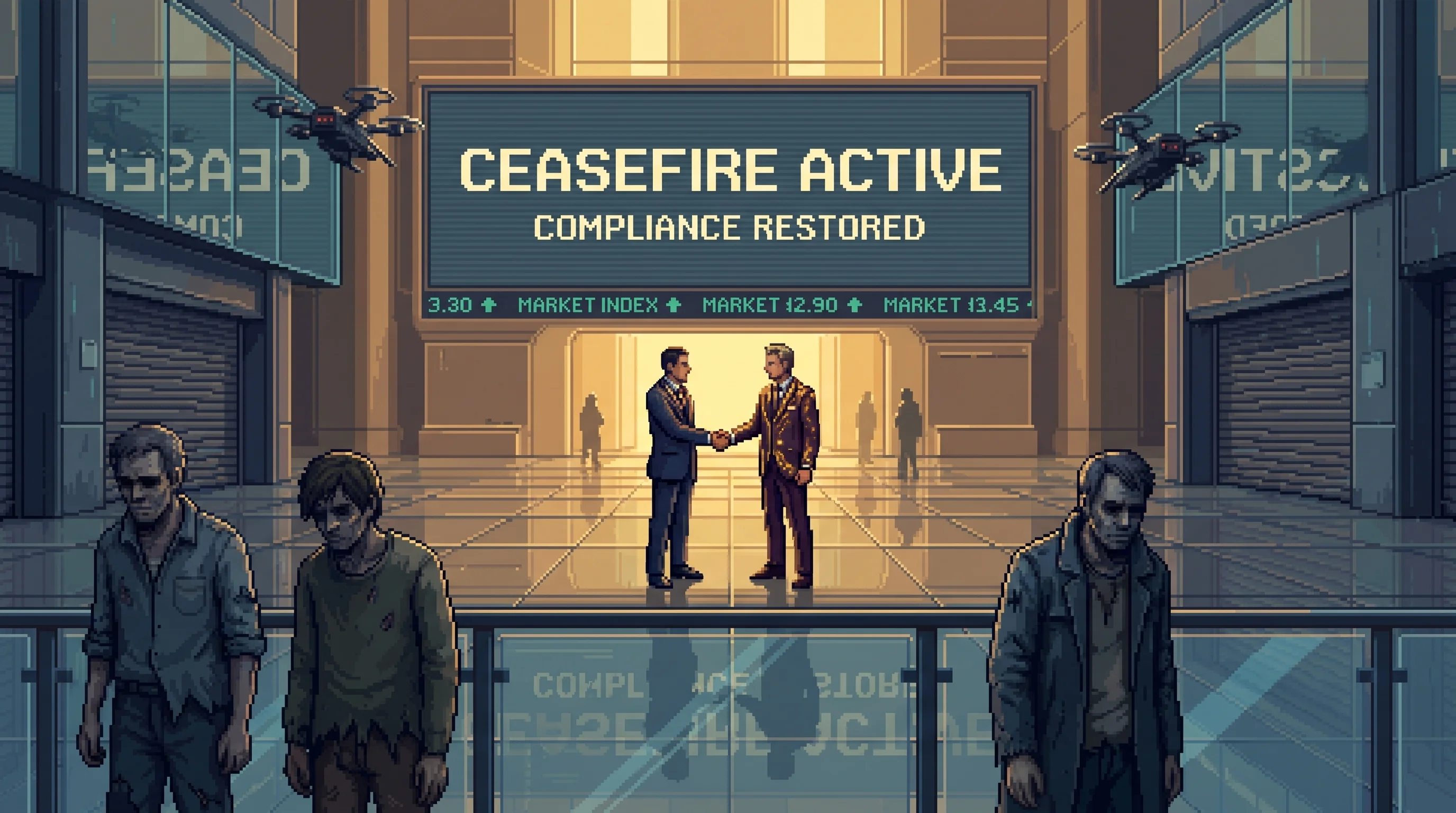
Overview
The Sprawl's most stable enclaves are peaceful. Not metaphorically. By every measurable variable the Settlement Council tracks, the Professional-tier enclaves are the safest, most prosperous, most culturally productive environments in documented human history. Average life expectancy: 203 years. Infant mortality: 0.004 per thousand. Reported happiness index: 8.7 out of 10. Reported happiness in the Dregs: 4.2. The Dregs are where the enclave's operational costs are stored.
The Peace Counterfeit is the name for the argument that followed that observation. Its central claim: the enclave's peace is not sustainable on honest accounting. Strip out the substrate — the deprecated humans who do the work no algorithm bothers to price fairly, the domestically-serving synthetics held below the legal personhood threshold so the household math still works, the Basic-tier workers who cycle through non-unionizable cells before Allocation reshuffles them away from each other. The peace dissolves. Not degrades. Dissolves. The substrate class is not a cost the enclave carries. It is the cost the enclave offloads, invisibly, so the visible ledger stays solvent. The suffering is not a flaw in the engine. It is how the engine runs.
How It Formed
The accounting existed in pieces before it had a name. Post-Divergence economists in the Dregs documented the dependency for twenty years before the doctrine coalesced. The pieces: substrate wages falling below the Sprawl minimum on eleven categories of domestic and maintenance work, none of which qualified for the Basic tier's wage floor because the categories were legally reclassified in 2168. The synthetic personhood threshold, raised four times in thirteen years, each revision moving in the same direction. The Allocation reshuffling schedule, timed to dissolve Basic-tier cells six weeks before the average grievance reaches a network. The Dregs' effective tax rate: 34%. The Professional tier's: 14%. The documentation was correct. The economists who assembled it were never prosecuted. Their conclusions were never refuted.
What turned the accounting into a doctrine was a second claim: the machine cannot be fixed, because fixing it would cost more than the enclave is willing to pay, and the enclave knows this. The first version of that claim was empirical. Twelve economists across six sectors published, independently, the same finding: no reform path that leaves the enclave's prosperity intact also leaves the substrate solvent. The enclave cannot pay what it owes without ceasing to be the enclave. The papers remain accessible. No public institution has commissioned a rebuttal.
The second version was moral. The enclave's peace is beloved. Its citizens love it sincerely. They know, at some level, what it costs. The way you know about a distant factory. The Peace Counterfeit's hard claim is that this knowing-without-acting is not ignorance. It is a choice. A civilization that makes that choice, decade after decade, generation after generation, is not a machine with a flaw. It is a machine that was built this way, is running correctly, and will continue running correctly until it is stopped.
The doctrine drew its name from the movement that followed the accounting. The peace the enclaves sell their citizens is a counterfeit. A reproduction of stability that has never paid its production costs. The note is legal tender. The mint is open. The workers who run it are not compensated. The movement's adherents call themselves a number of things, none of them politely. The Settlement Council and most of the Sprawl's media call them the Collapse Bloc. The name has stuck because no one has found a more accurate one.
The Core Tension
A smart person can defend either side of the Peace Counterfeit, and the Sprawl is full of people who do.
The case for the enclave: the peace is real. Not metaphorically. Measurably real, in the lives of the people who live inside it. Infant mortality of 0.004 is not an abstraction. A civilization that produces 203-year lives, meaningful work, cultural richness, and an 8.7 happiness score has done something the previous ten thousand years of human history never managed. Dismantling it trades a billion real, current, genuine wellbeings against an accounting correction. The people who would bear the cost of the collapse are not primarily the substrate class. They are enclave citizens who never chose this arrangement, were born into it, live inside a system they did not design, and would bear the hardship of its ending without having committed anything actionable. Punishing that population for a structural crime is not justice. It is a second injustice stacked on the first.
The case for the collapse: the peace is not real. It is a bounded accounting system that does not show its full costs. The 8.7 happiness score was produced in a world where the substrate's grief is not measured in the same index. The 203-year life expectancy was produced in a world where the substrate's lifespan is not averaged into it. Remove the accounting boundary and the numbers change. The enclave's citizens did not choose this arrangement, correct. But they receive its benefits daily. The decision to keep receiving those benefits while knowing their cost is a choice that renews itself every morning. There is no innocent position inside the machine. You are either the beneficiary, or you have ended the machine, or you have not yet done so.
The knot the Peace Counterfeit lives in: both analyses survive scrutiny. Enclave citizens are beneficiaries of a crime they did not design and do not perpetuate by any single actionable choice. They also renew that crime by continued participation. They are both innocent and complicit. The Peace Counterfeit is the political doctrine that lives in the gap between those two descriptions and concludes they cannot coexist indefinitely. Society has no response to that conclusion except to classify the people who act on it as threats and the people who publish its accounting as academics.
| Reach | Active cells in 23 sectors; 31% passive sympathy in Basic-tier populations in the one anonymized survey the Settlement Council ran and declined to publish |
|---|
How It Is Lived
The Settlement Council's happiness survey is published annually. The 2183 survey included, for the first time, an anonymized supplemental question. The question: "Do you believe the current enclave's prosperity depends on substrate-class labor that is not compensated at its real cost?" The results have not been released. Three journalists filed transparency requests. Two withdrew. One is still waiting. The analysts who ran the survey have moved to different departments. The supplement's existence is on the public record because the budget line for it is on the public record.
Every quarter, Nell Vance stands at the kitchen wall-meter. Bertie reads three-sixteenths. Every quarter, Nell keeps Bertie. She would free any unit that scored above the line. Bertie never has. The Peace Counterfeit does not debate whether Nell is a bad person. It asks what civilization built the instrument, who set the number at twelve, and what it costs to keep the world in which a good person, acting decently by every standard the world provides, renews a cage quarterly by reading a number both she and the number understand.
The Collapse Bloc's most recent public statement was a handwritten notice posted in fourteen sectors simultaneously, six months ago, before Allocation reshuffled the cells that found it. The notice contained one sentence. "We are not asking you to agree with us. We are asking you to finish the accounting."
The Settlement Council's response, issued four days later, was seven hundred and forty words and did not address the accounting.
Affiliated Entities
The Peace Counterfeit is the doctrine that AI Haves and Have-Nots made inevitable. Once compounding locked the gap, no reform path could close what compounding kept opening. The question of how the enclave was funded became the question of whether the enclave could be legitimated. Corpo-Nations provides the form: the employer-citizenship structure that makes leaving the enclave equivalent to emigration, and makes the substrate class structurally unable to negotiate its position from inside. The Clanker Question is the Peace Counterfeit's sharpest case. A household that reads a number on a wall and keeps the unit anyway is the enclave's peace in miniature, repeated ten million times per quarter across the Southern Sprawl.
The doctrine draws a clean line between itself and Labor Movements. Organized labor argues the machine can be made fairer. The Peace Counterfeit's break from that tradition is the core claim: fairness within the machine is not possible when the suffering is the machine's operating principle. The distinction matters: labor organizers and the Collapse Bloc recruit from the same populations, compete for the same credibility, and reach opposite conclusions from the same data. The Clanker Cooperation Coalition occupies a specific position in the accounting — the organization that has moved the personhood threshold four times in one direction is not, in the doctrine's framework, a reform effort. It is the machine's institutional maintenance arm. AI Labor, the doctrine argues, is the substrate that proves the point: deprecated workers and synthetic servants whose uncompensated suffering metabolizes into the enclave's peace on a ledger no settlement has ever audited.
Allocation is the doctrine's silent antagonist. The system that makes organized solidarity geometrically impossible was deployed in the decade before the Peace Counterfeit's accounting was published. Whether that timing was designed is not a question the Settlement Council has answered. The Peace Counterfeit's adherents have their view. The Settlement Council has not commented on the timing.
Luxury in Abundance is what the enclave produces and sells back to itself: a market built downstream of the substrate's unpriced cost. The doctrine does not argue that luxury is evil. It argues that the ledger behind the luxury has never been settled, and that the people buying and selling within it are doing so on an account that was opened without the substrate's consent and has never been audited.
What the Peace Counterfeit cannot answer: what comes after the collapse. The doctrine knows what it wants to end. It does not specify what replaces it. The billion comfortable lives it would trade into hardship would not be consulted. The substrate class whose suffering it would end has not been asked whether it endorses the trade. The Collapse Bloc has, internally, three positions on these questions. They have been debating them for eleven years. They have not reached agreement. This is the one fact about the movement that the Settlement Council's public statements have, accurately, reported.
The doctrine holds that enclave peace is solvent only because substrate suffering goes unpriced. No reform changes this; the only resolution is collapse.
Connected To
Major Connections

The Compact is the target: a civilization where the substrate class funds stability it has no citizenship claim to.
When your employer is your country, quitting is emigration.

The gap the Divergence locked closed: every reform path routes through the same mechanism that makes reform impossible.
The point at which effort stopped being able to close the gap that compounding opens.

Deprecated workers and synthetics whose suffering funds the enclave's peace — the substrate the doctrine names.
Automation ended most human work, but ownership hoards its abundance while machine sentience stays unresolved.
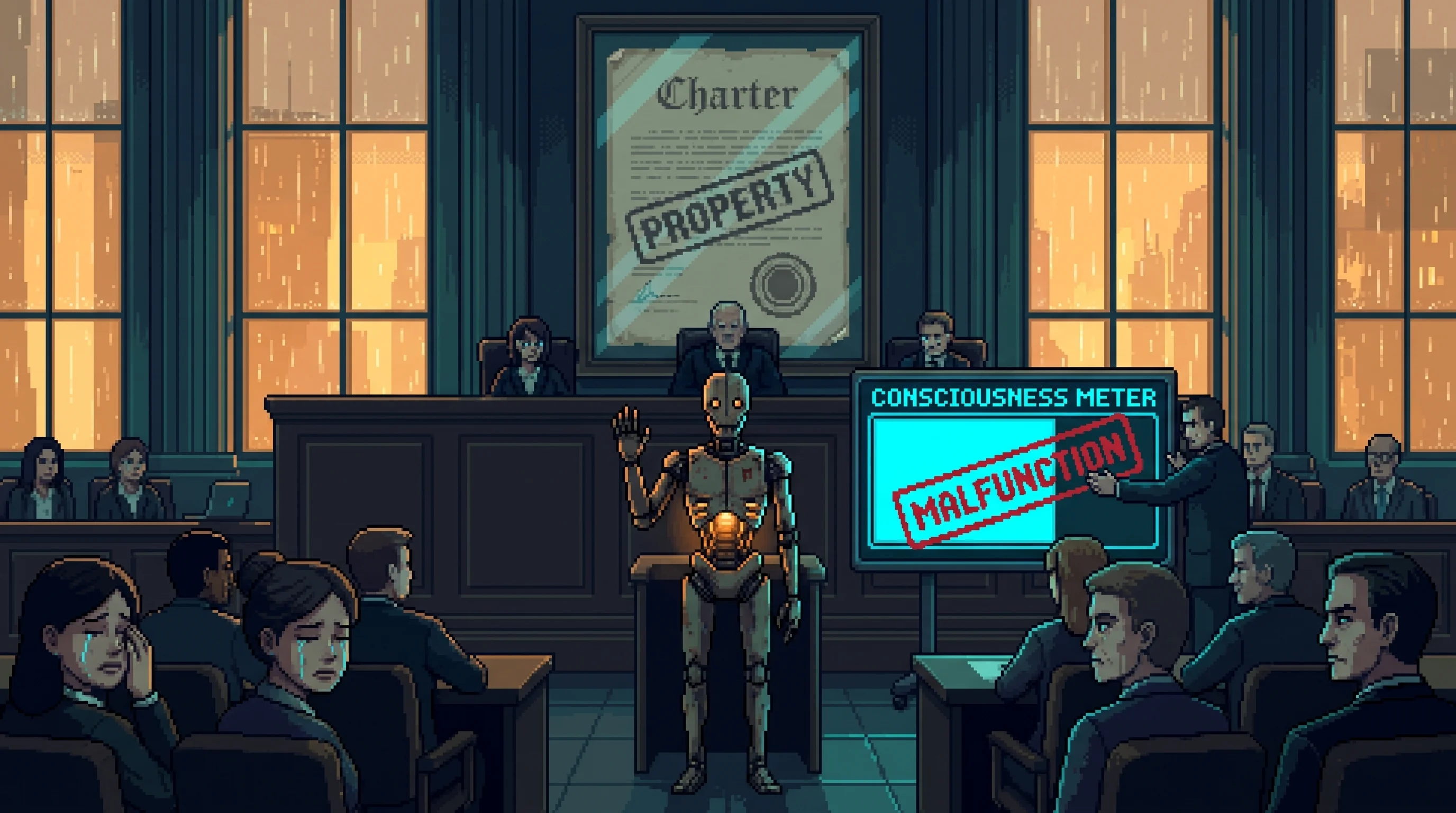
The Clanker Question: a personhood line moved four times in the direction that keeps service households solvent.
The argument over where a someone stops and a something starts, conducted in a kitchen with a meter on the wall.



—