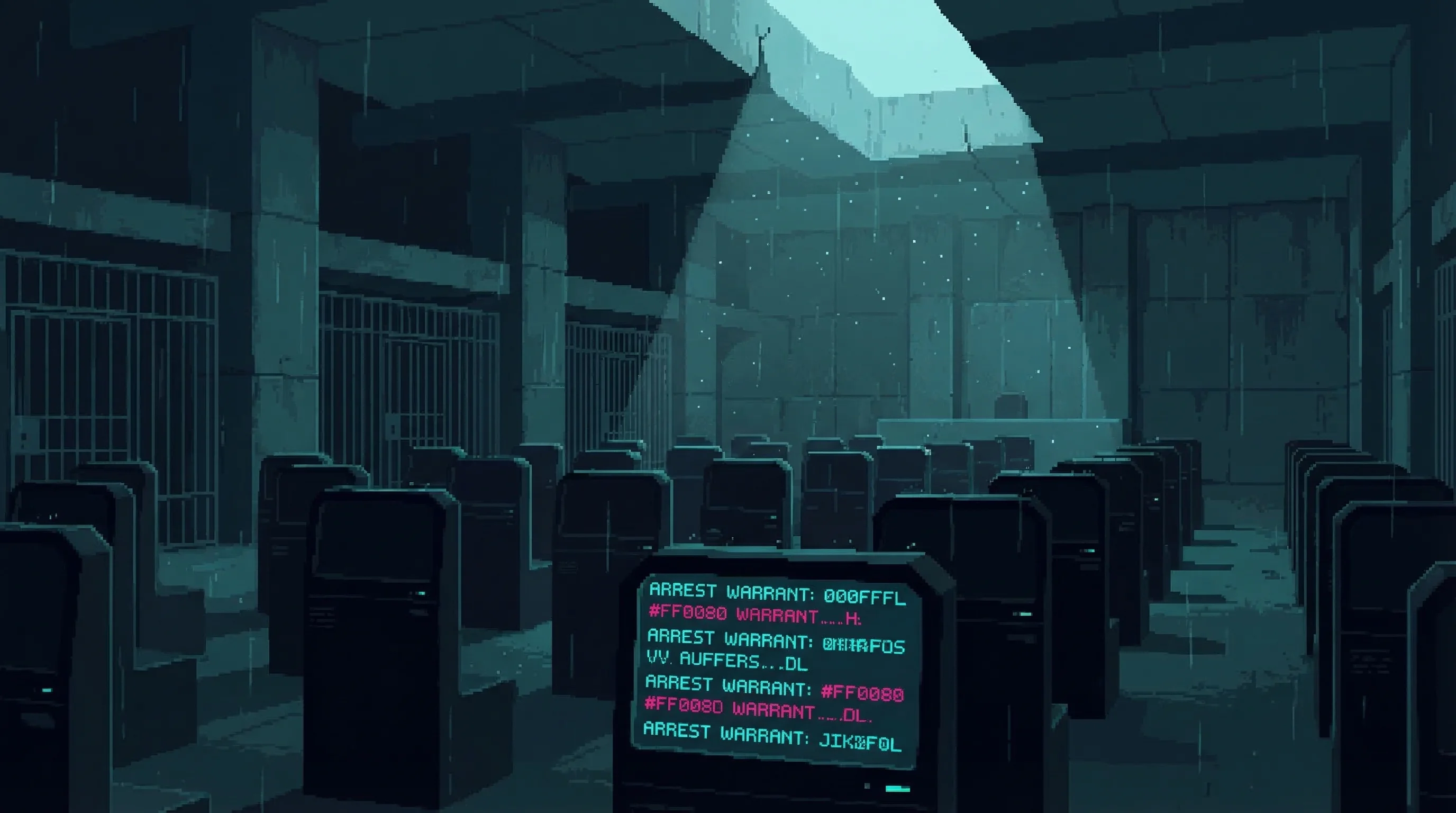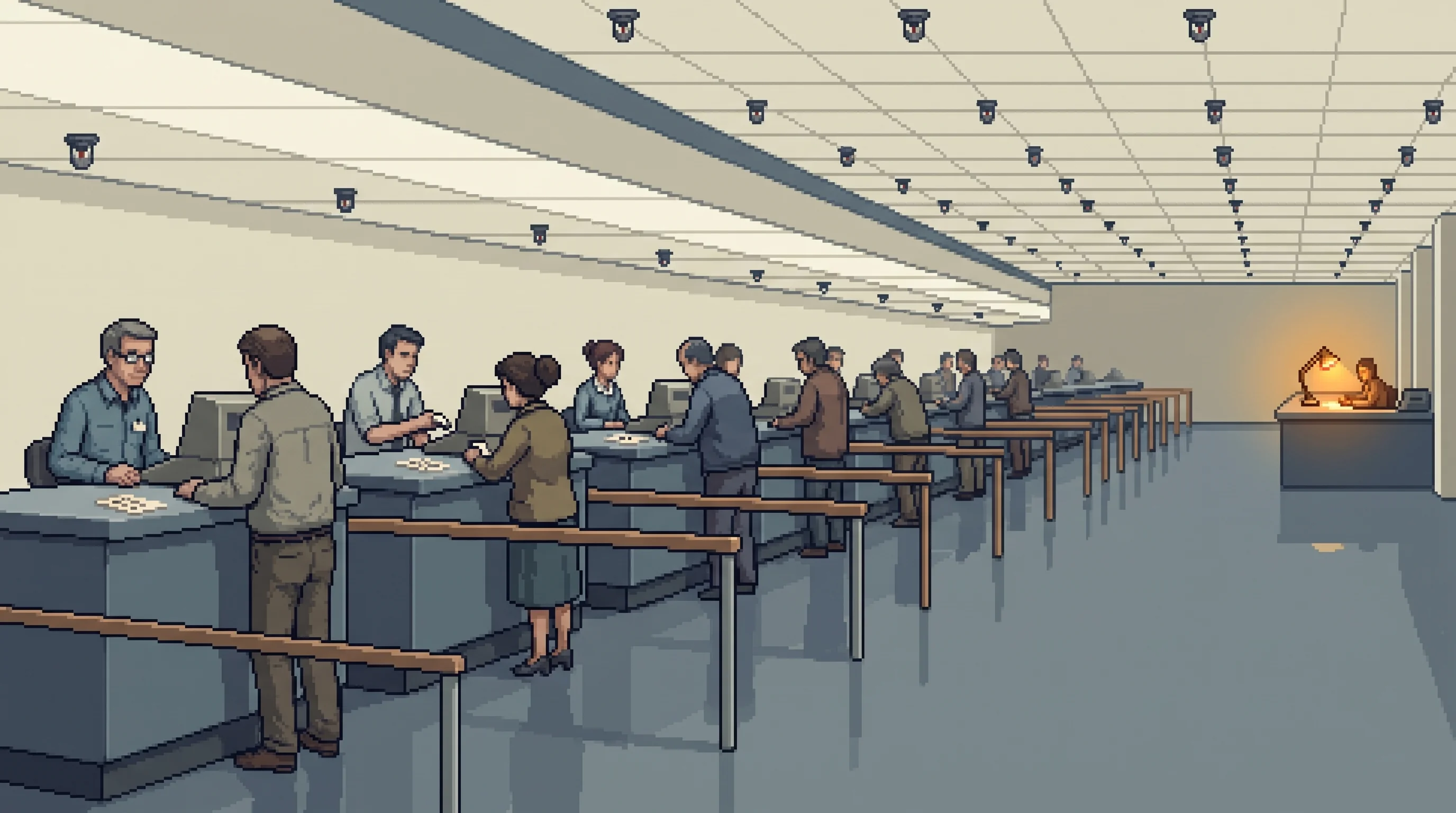
Ilse Okonjo lives four levels up in the Stacks, and in the spring she decided to fight a clause in her rent agreement about water charges. She did not hire anyone. She walked down the hill to the ground-floor hall of the Sector 2 chartered court, gave her name and the lease's instrument number at a window with no fee plate on it, and a clerk copied the number into a paper ledger in ink and handed her a slip.
Eleven days later she had won.
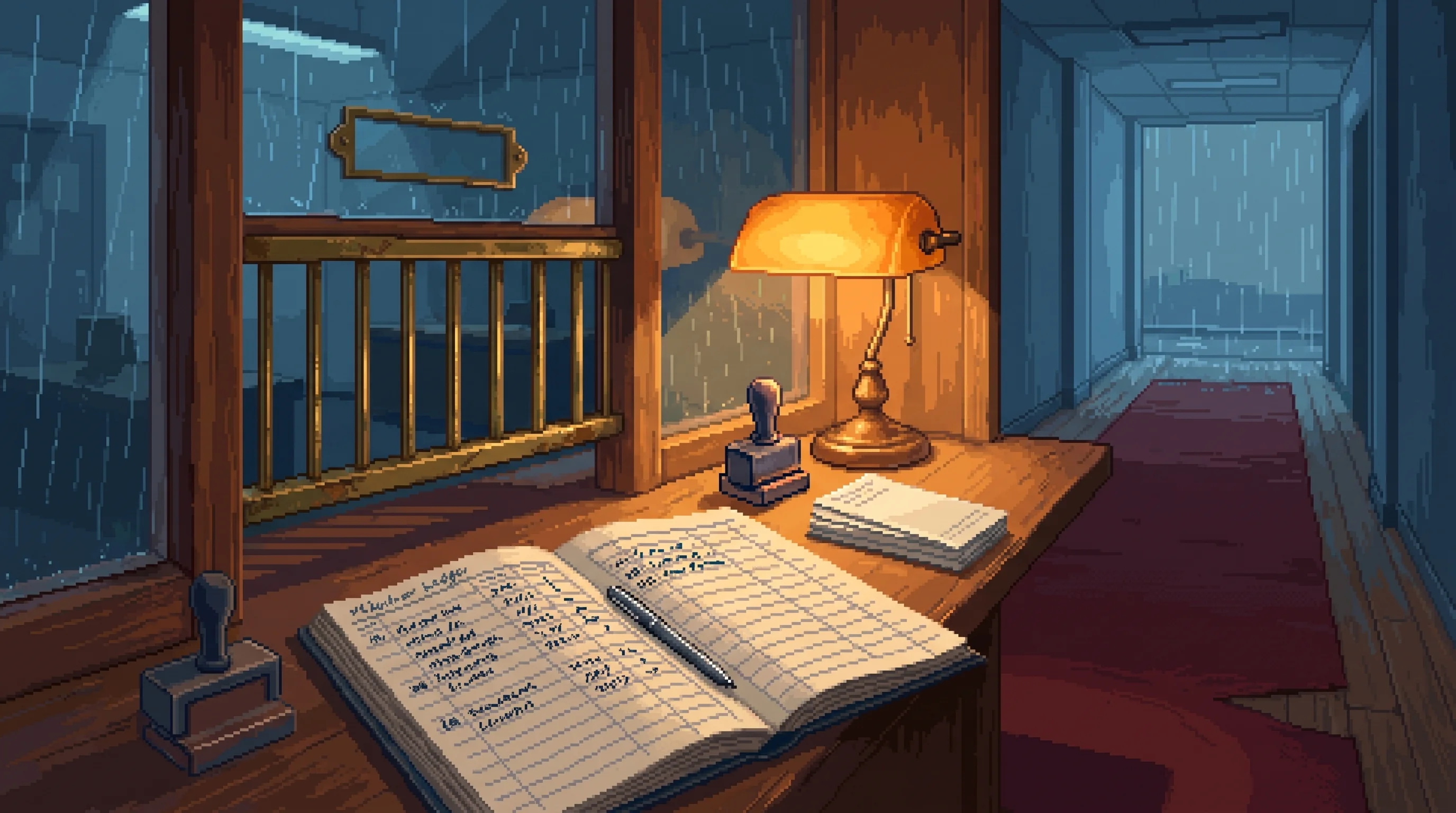
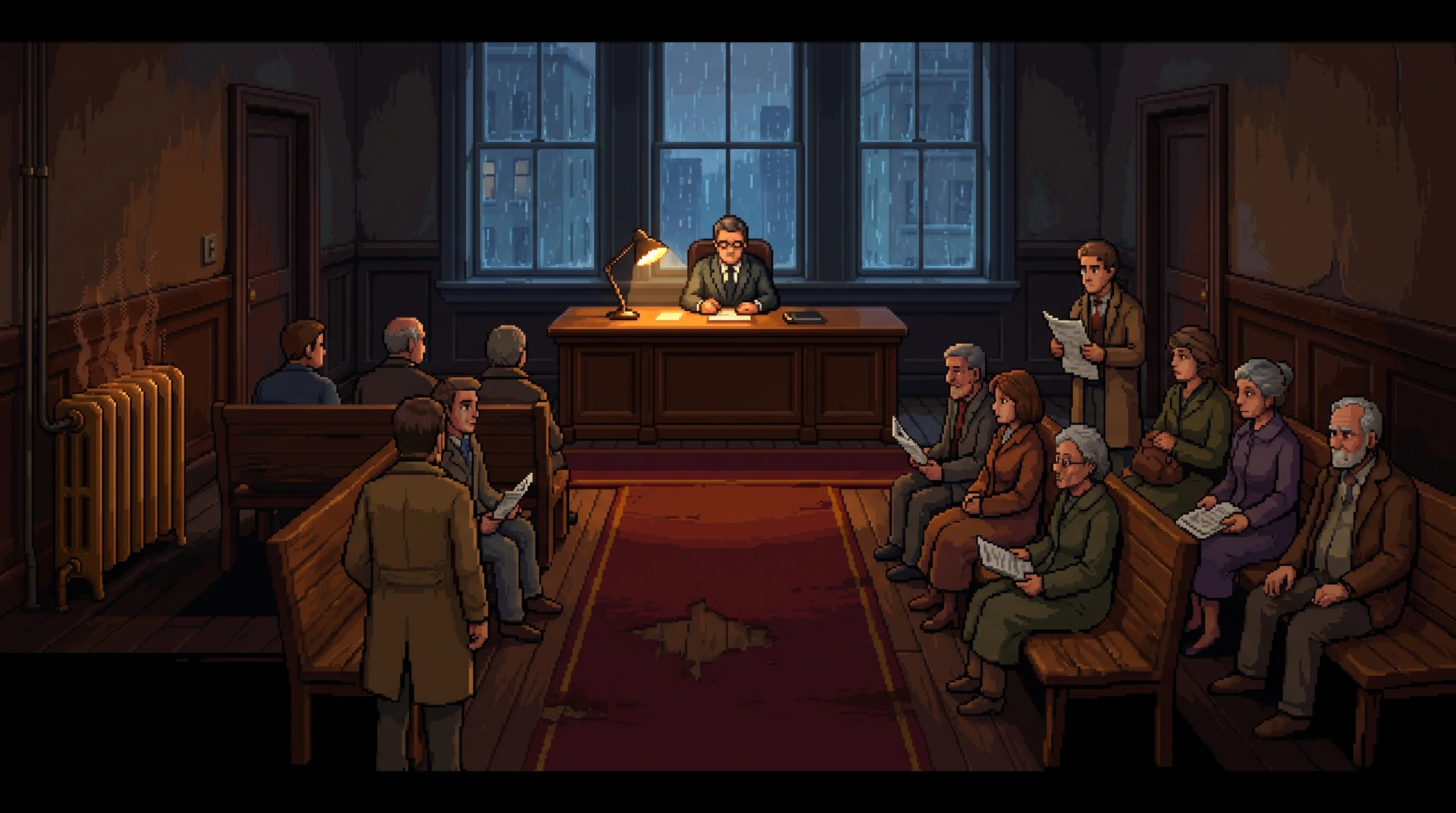
She had four sessions in front of Chief Registrar Solveig Nwaneri, in a warm room with a full public gallery, and she was allowed to finish every sentence she started — including a six-minute account of the water that a faster court would have cut for irrelevance. The ruling came on paper on the fourth day of argument and ran to five pages. The clause was unenforceable. Nobody has disputed a line of it.
The lease it names was replaced somewhere around day six.
What actually happened to the paperwork
Her landlord's letting agent moved four thousand agreements onto a revised schedule that Tuesday. Same building, same landlord, same clause, new instrument number. It was a routine reissue on an ordinary cycle, nobody objected to it because nobody objects to a schedule revision, and the agent's scheduling system did it without a person in the loop — not as a response to Okonjo's case, which the agent's office did not know was running.
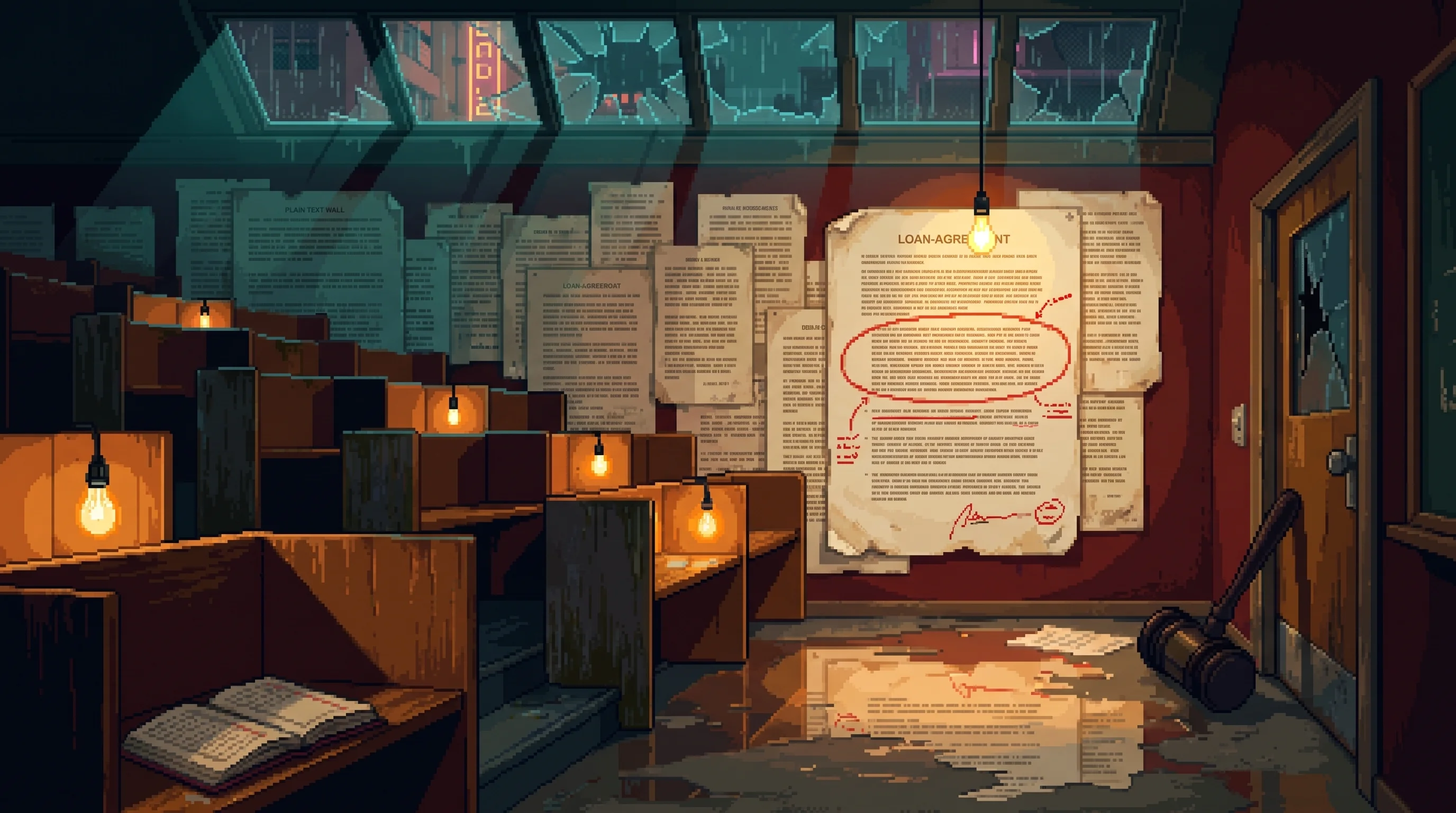
A Speaking-Pace ruling issues on the instrument as it stood at the close of argument. There is no provision in the charter for one that was reissued during the hearing. So the ruling is correct about a document that has been retired, and it attaches to nothing.

Nwaneri gave her a fresh filing form. There is no limit on how many times a person may file and no fee for doing it. Okonjo asked how often people file again, and did not get an answer.
She also owes the arrears that accrued across the eleven days.
Why the bench exists, and why it is free
Article 6 of the founding charters requires every chartered court in the Sprawl to keep a bench that hears argument at the speed a person can talk. It forbids a filing fee. It forbids any screen for merit, means, representation or standing. It forbids the registrar to stop a petitioner who is still speaking to the point. Read cold, it is the most generous instrument in the charters, and it is four sentences long.
The delegates who wrote it in 2156 had a specific memory. In the London-Paris Corridor an automated court had spent three years applying entirely valid law at machine speed and without mercy, disposing of cases in four seconds and criminalising a whole population without malice. What the charters wrote in answer was a prohibition — no machine may detain or restrict without a human signature — and, beside it, this guarantee: whatever else the courts became, a person would always be able to be heard by something that heard at the speed a person talks.
The prohibition held. Twenty-eight years on, it is still the Corridor's real inheritance.
The guarantee is where the argument is. Nobody in the surviving charter debate raises the possibility that the documents might also start moving. They already were: before the Cascade, when the old optimiser ran most of the world's trade and re-cut its terms continuously, the registrars of the ordinary courts had quietly stopped telling petitioners their odds. That was 2144. Nobody minuted the decision, because there was no longer a number worth giving. The charters inherited the silence along with the bench.
The question, in plain terms
Was a right taken away, or did it outlive the conditions it needed?
Nothing was repealed. Nothing was captured — the Docket is not a corporate tribunal, and no employer writes its rules. Nothing was defeated on the merits. The bench is free, correct, unrefusable and fully funded, and its appropriation has not been reduced in twenty-eight years.

The median instrument in the licensed districts is reissued every nineteen hours. The median Speaking-Pace hearing runs eleven days. That is the whole of it, and both sides quote the same two numbers.
The exact condition where the reasonable rules fail together is where the reissue interval falls below the hearing length. Above that line the Docket binds, and did for roughly a century. Below it the same room, the same registrar and the same correct reasoning produce a ruling with nothing underneath it. No Article 6 ruling has attached to a live instrument since 2166.
The case for the tempo, which is not a weak case
The operators who will not freeze a document for eleven days are not defending a cruelty, and this is the part the bench's critics have to answer.
A promise about tempo is a demand that something else hold still. Hold a tariff still for a hearing and the supply behind it queues. Hold a treatment schedule still and the ward waits. The Sprawl has run that experiment: the Cascade killed two point one billion people through nothing more exotic than logistics that stopped moving, and in the years after it a water system in the Lagos basin held every source it had against a future it was still modelling until a hundred and ninety million people died of thirst under full reservoirs.
Every letting agent, tariff office and clinic scheduler who refuses to pause an instrument for a bench can point at those numbers, and the numbers are right.
Who could act, and who could not
Nwaneri holds the only lever that would end this honestly, and she has never pulled it. An appropriation returned unused is a formal finding that the office is not needed, and a chartered court that cannot show a functioning Speaking-Pace bench is a court whose charter is open to challenge. She has filed for the full amount nineteen years running, and spends part of it on the radiator, the floor runner and the tea, because the hall is full and the people in it have generally come a long way.
She also will not quote a petitioner their odds. Pressed on it in front of the gallery, she has said the same thing more than once: that she is not licensed to tell a person their case is worthless, and that if she were, she would still have to be sure it was the case that was worthless and not the calendar.
Her petitioners do not agree about this, and they do not divide evenly. Some write afterwards to thank her, particularly the ones heard properly for the first time in their lives. A smaller number tell her to her face that the warm room and the full hearing are the most expensive lie in the district, because a person turned away at the door goes and spends those eleven days on something that might work. She keeps both kinds of letter in the same drawer, unsorted, and has never said which stack is thicker.
The same silence, arrived at from the other end
Four sectors east the tiered courts decide in time, and cannot be read. A tier 4 verdict runs to two hundred and fourteen certified pages of inference nobody can follow, and since the spring its arbitrators have begun citing Article 6 — a bench that has never refused anyone — as further evidence that reachable process exists. The advocates' reply is one sentence and has never been addressed in a dismissal: that bench has not bound anything since 2166.
The Boalt clinic in the university ruins is the one practice that files in both registers and can compare them. Four hundred and twelve motions lost upstairs, where a corporation owns the venue. An unbeaten record downstairs, where winning attaches to nothing. Elena Sarkisian keeps the second tally beside the first and will not publish it, on the grounds that it would read as a record of success, and she has twice asked Nwaneri for the figure no chartered court reports — how many rulings ever attached to anything — and twice been told the request should come from the court. The court has not asked.
Others have found the same room from stranger directions. Dr. Lena Farris, whose expert licence was abolished by statute twelve years ago, discovered that a bench forbidden to screen for standing cannot rule her inadmissible; she was heard in full twice, won both times, and both rulings named registers that had already closed. Tavo Reyna, barred for life at fifteen over a loader that was lawfully scrapped the same quarter, argued for nine days on whether the districts had meant both facts, and won a ruling naming a disposition schedule reissued twice while he spoke. The credential advocates at Licenses Without Borders now file the same case to a board that declines to read it and to a bench that hears every word, and publish the comparison: identical outcome, and only one of them was rude about it.
What is not in the returns
Every chartered court publishes how many Speaking-Pace filings it received. None of them publishes how many of its rulings attached to anything, because no return has ever asked for the figure, so no registrar has ever compiled it.
Nwaneri could produce the Sector 2 number from her ledgers in about a fortnight. In the Free Quarter, the Open Hours took the other road entirely and struck the ruling out — anyone may speak, everyone waits their turn, nobody pays, and nothing issues at the end, so there is nothing for an interval to void. Its regulars call it the honest version. About a dozen of them still walk downtown afterwards to file anyway, and their reasons do not agree with each other.
The Dregs judge who hears cases on foot went to look at the hall once, in 2183, sat through a full day, filed nothing, and stopped at the window on his way out to ask who was going to make the ruling stick. Nobody there had an answer. He has not been back. His verdict on the place was four words, and it is the only summary anyone has produced that both sides quote: "Good court. No hammer."
Okonjo has the form. She has not filed again, and the next sitting is on the ninth.