The dose and the drawer
Ruta Abelló is sixty-six years old and has taken the same measured dose since she was six.
The measurement is not a doctor's judgement. It is a figure in a medical trust drawn in 2124, one of five baselines named on a single sheet, and every prescriber who has treated her in sixty years has written that figure because the figure is the instrument. Her clinician has read it more times than anyone else alive and can recite it. Reading it again produces the same figure.
What Ruta says — and she has never said anything stronger — is that her body has never once behaved like a body with that number in it.
She is not alleging fraud. Nobody in this story is. She asked whether somebody could look at the sheet.
Why looking is the problem
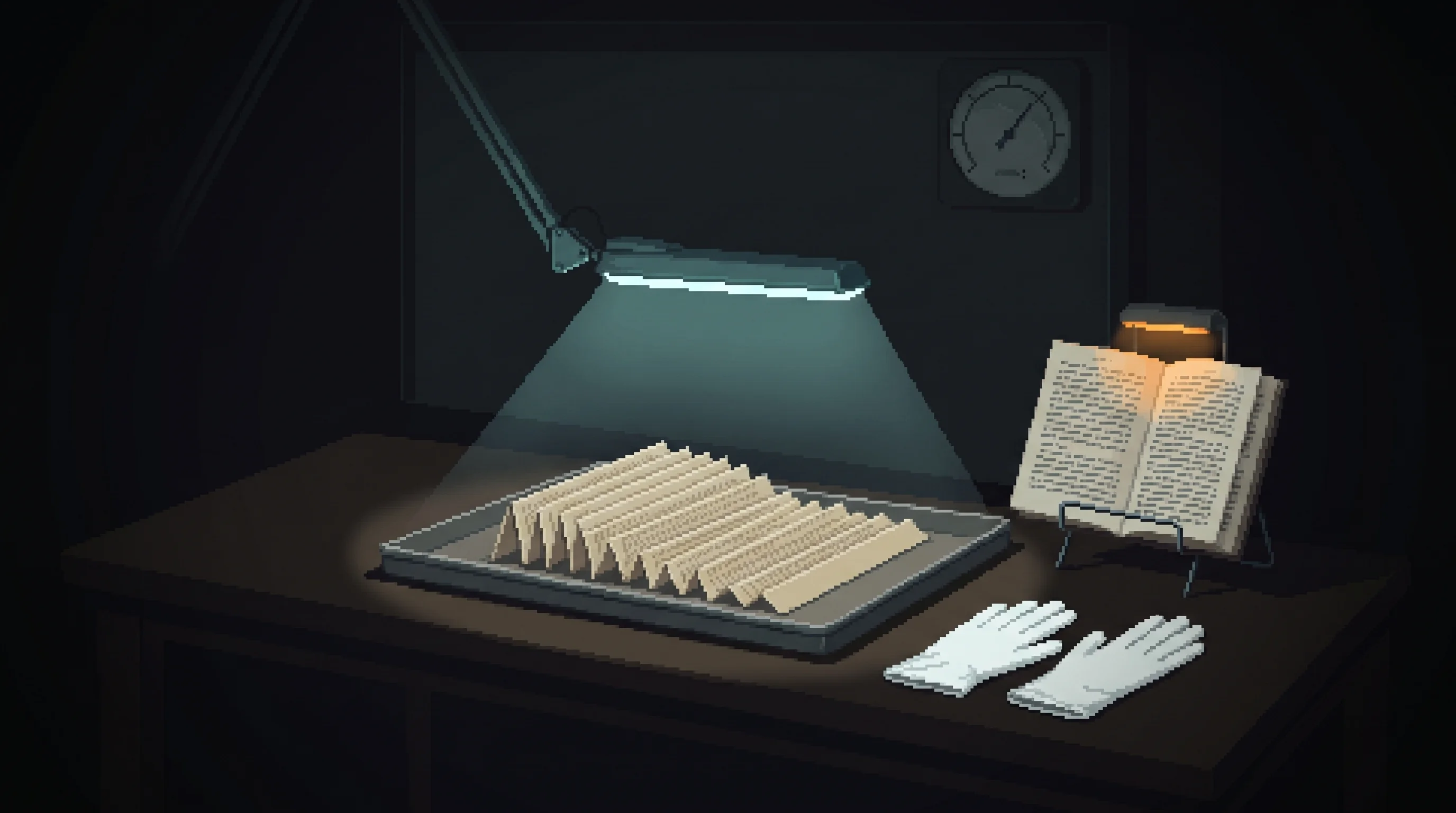
The sheet is bonded lattice: a folded page that carries its ink inside the fold structure rather than on the surface. The medium was sold before the Cascade on a simple promise, four hundred years closed, and it kept the promise. Lattice is the paper that came through the Aftershocks in numbers, precisely because the folds hold the ink against the air and nobody had handled it.
The same property means it opens once. Unfold the sheet and the text shears away in the crease, and what you are holding is a clean blank page.
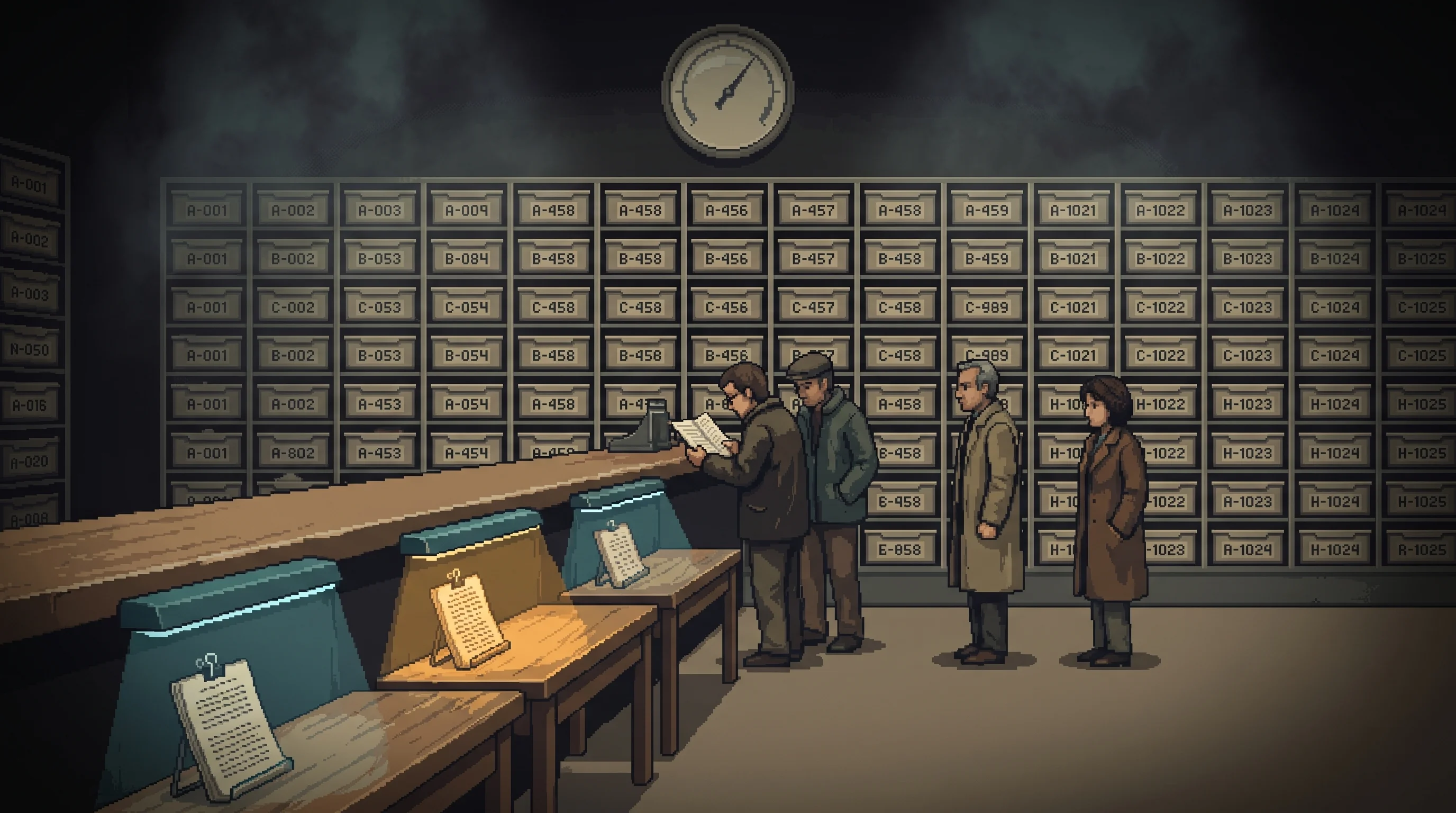
So the Transcript Office reads them shut. Its scanners image through the folded stack, a transcriber resolves the ink into a text, and the text goes up at a public counter where anyone may read it for nothing. The Office is not secretive and not expensive. There is a queue most mornings and it moves.
Since 2173 that published text is not a copy of the instrument. It is the instrument.
The question the hearing asks instead
Ruta's clinician, Dr. Elin Baptiste, wrote eleven lines and signed them. They do not say the transcript is wrong. They say the figure sits wrong against the patient, and ask for it to be read once. The Boalt Docket filed for her, free, and told her the odds before she signed.
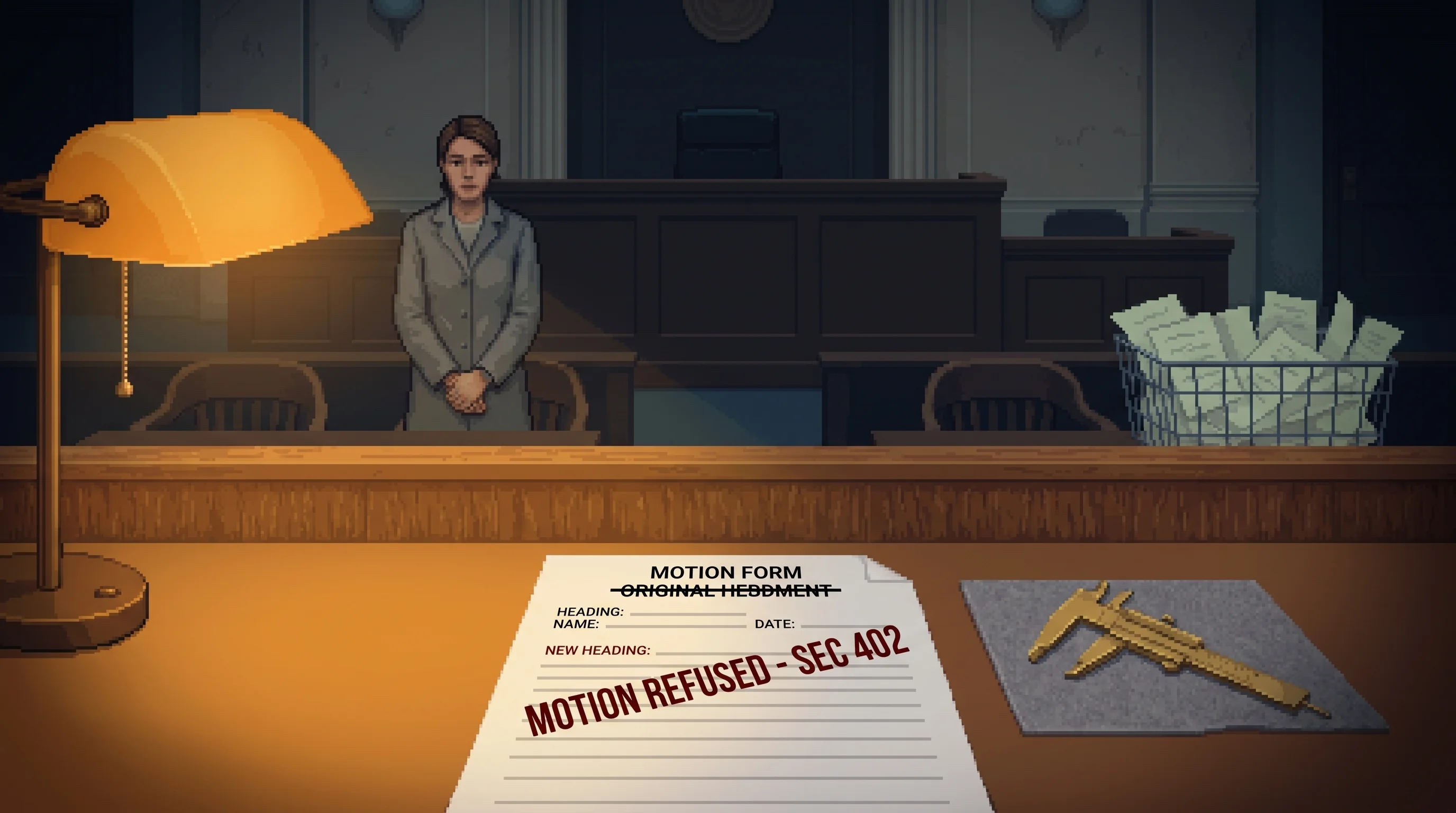
The clerk accepted the filing and re-stamped the heading. Under the Conservation Ground, an inspection of bonded lattice is its destruction; there is no third category and no separate form. The docket entry carries the second heading, which is the first thing most petitioners learn about their own motion.
The hearing then proceeds on a question the petitioner did not raise. Not whether the figure is right — what the sheet can survive. Crease depth. Shear point. What else is on the substrate and who holds it.

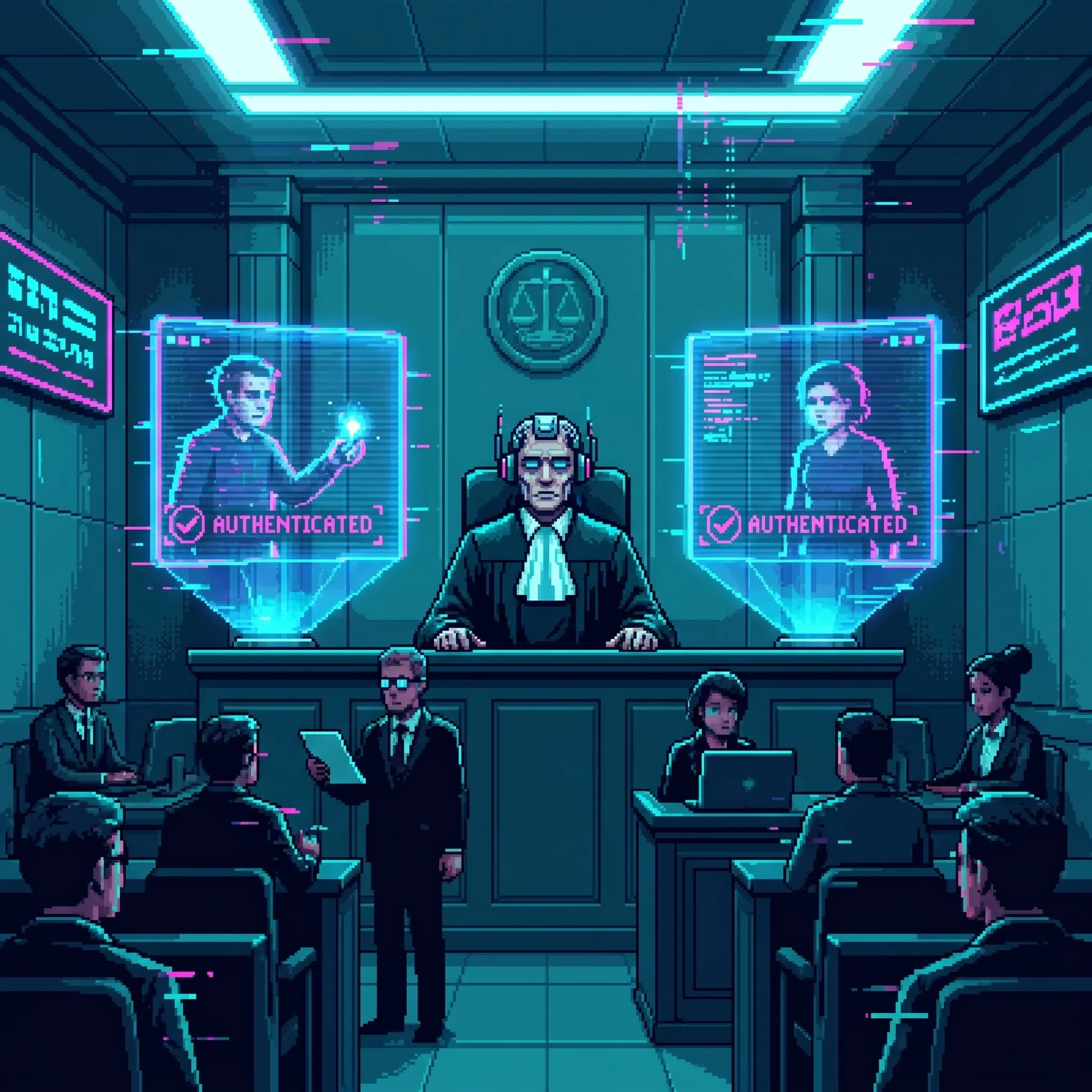
Constance Ilori has kept the Office's tray wall for nineteen years, and under the Ground she is the only party a bench may hear. She came when she was called, gave her name, and answered all of it exactly: the ink's shear point, the four other baselines that would come off the substrate along with Ruta's, and the two of those four whose holders are children.
She was asked twice whether she believed the transcript was correct. Both times she answered the question she had been called to answer.
Ninety minutes. Nobody in the room disputed the reading. The conservator was called only to explain, kindly and at length, why the original could not be opened to confirm it. The motion was refused. Ruta thanked her on the way out.
Both clauses fixed something
The Ground is two sentences twelve years apart and neither was cynical.
Before 2161, any two parties to a dispute could compel an unfolding. In 2154 a tenancy argument between two households opened a block instrument naming four hundred and six tenancies; the four hundred and four households with nobody in the room lost their tenure the same afternoon. Transcripts did not exist yet. There was nothing to fall back to. The 2161 clause stopped that inside a year, and nobody has seriously moved to repeal it since — including the clinic that files against it.
The second clause fixed a different cruelty. Once the Office was publishing at volume, people who had relied in good faith on a published text were being sued over gaps between text and sheet, in claims nobody could resolve without exactly the destruction 2161 had prevented. Cases sat for years. In 2173 the districts made the transcript operative, and the suits ended in a season.
The failure boundary is that single change of status. While the transcript merely evidenced the instrument, a dispute about the transcript was arguable. Once the transcript is the instrument, a discrepancy between it and the sheet is not an error — it is not a fact about anything, so there is no claim to bring.
Nobody drafted that. It followed from the arithmetic.
What the drafters did next
Substrate has been a choice since 2173, and Good Fortune's bonded-instrument division has a four-page stock standard that specifies its paper by fold tolerance and rates the sheet for four hundred years closed.
It reads as competent archival practice, because that is what it is. It says nothing about litigation, and two internal reviews requested by the clinic found a stock spec, a procurement schedule, and nothing else. The couriers who carry the folded sheets up the shelf road are known by name at the counter.
The division's quarterly commentary credits its renewal figures to durability. That is accurate. It has never had cause to distinguish durability of the paper from durability of the claim.
Instruments drawn to the standard have never lost a dispute about their own contents.
Where the rest of it went
Below the Rim the whole arrangement is worthless. Judge Dreg will not admit a record that cannot answer a question, and neither a transcript nor the sheet behind it can, so a bonded instrument does not govern on his circuit. He has ruled it eleven times since 2176. A man came down in 2181 holding lawful, correctly transcribed title to a workshop and left without it, because four neighbours who had used the space for nine years could all speak and his document could not. Asked whether that troubled him, he said it did, and that he had thought about it for eight years, and that the alternative was letting a drawer in Old Town decide who sleeps where in Sector 9.

Others reached the same wall from their own trades. The Truth House will walk forty kilometres to check almost anything and keeps one refusal on its board with a reason written beside it: a fact you can only confirm by ruining it is not a fact anybody should be paid to confirm. Tomás Linares, who has copied forty thousand books by hand, has twice been asked to hand-copy a bonded sheet and twice declined, because copying begins by opening the page. Hollis Sarr read a man's transcript for two credits, then held the instrument itself in its case, felt the folds through the paper, and charged nothing: "I can read you the copy. I can't read you the paper. Those used to be the same job."
Two institutions had got there long before the statute. Mystery Court protects what it holds by refusing to issue a receipt at all, since any receipt can be forged; the Office protects what it holds by refusing to open one. And at the Salt Ledger the same physics runs the other way and the rostrum says so out loud — a sealed lot hammers above comparable openable stock on three words of borrowed condition language, closed, sound, unread, because its contents can never be checked, contradicted, or disappointing.
The sharpest objection comes from the trade that ignores the doctrine daily. The Opening Teams drill sealed bunkers open knowing exactly what opening does to what is inside — thirty-seven years of drift, a grammar, a set of arrangements, finished in an afternoon. Commissioner Adamu concedes the conservation argument for documents in full and has answered it with the same eleven words since 2179: "A document does not run out of air. Ask me again about the paper."
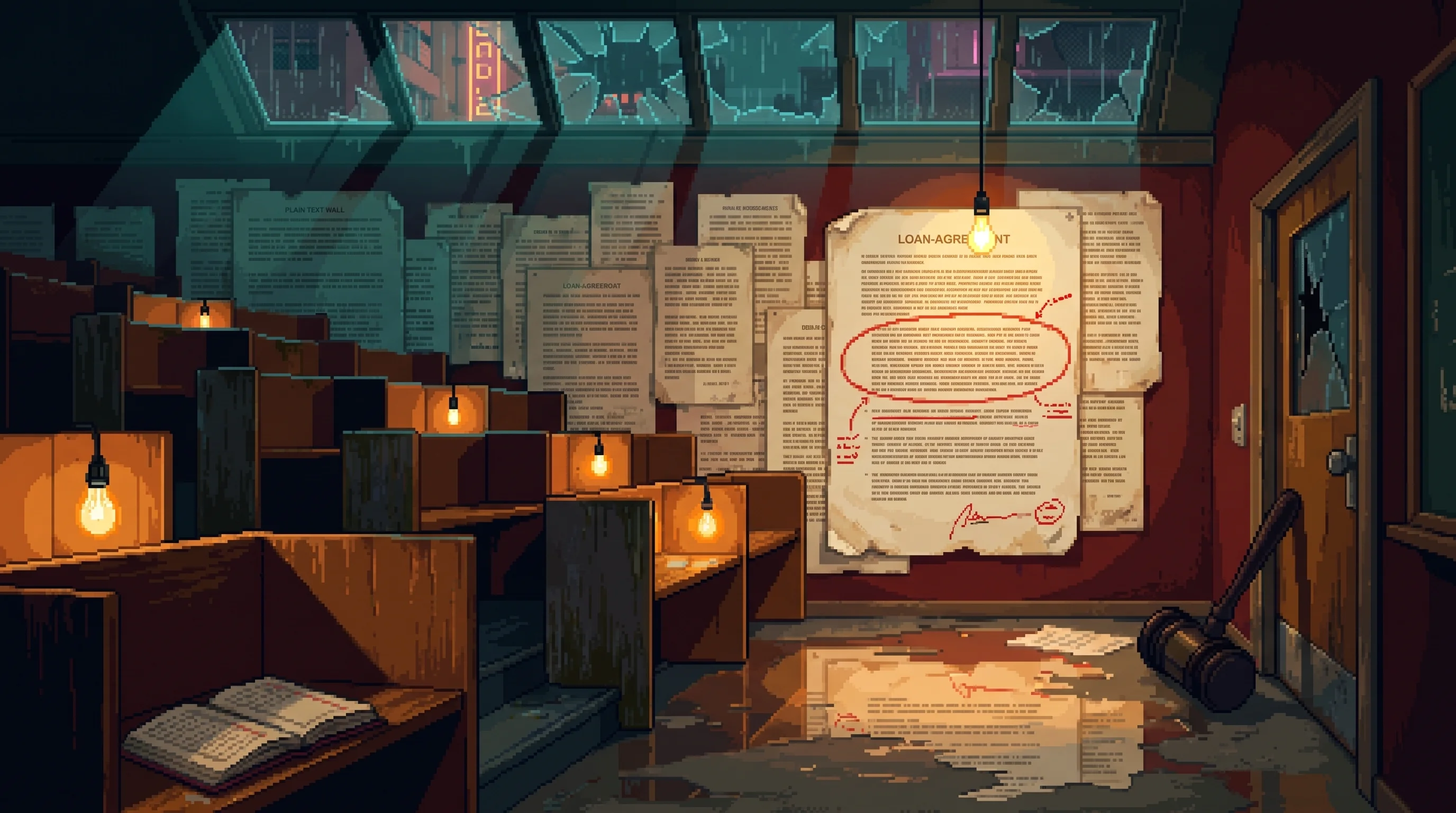
Nobody at the Office has replied to him, because nobody there disagrees.
What is still open
Bonded lattice is rated four hundred years closed. The oldest instruments still governing were drawn in the 2110s.
Somewhere in the next century the substrate will begin to fail in the tray — unread, on schedule, with nobody's motion pending — and the districts will have to decide whether a conservator may open a sheet that is going to be lost either way. The Provisions contain no clause for it and no district has published a rule.
Constance Ilori has written to the Office twice, in 2179 and 2183, asking for the rule in advance. Both replies thanked her for her diligence. She filed them in the same folder as the letters and has not written a third.
Ruta Abelló's next dose is due in six weeks. The figure has not changed.