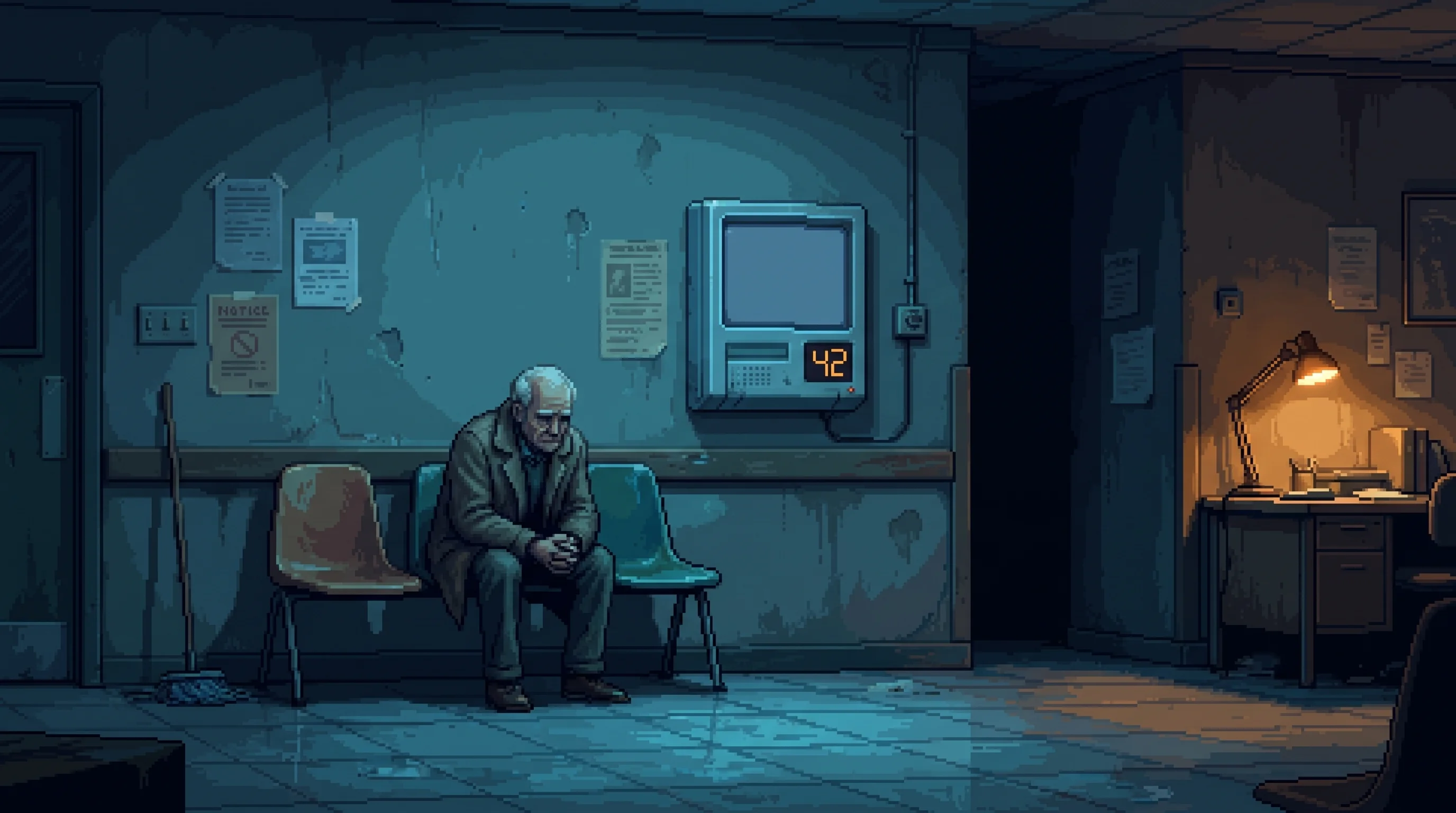
Tomás Linares is seventy-eight and copies books by hand. He went to the clinic about his eyes.
The vision result was ordinary and treatable. What he did not go in about was the other number in the same bundle. Licensed intake in the Deep Dregs runs blood, vision, and interior load together, because running them together costs nothing extra, and interior load came back at thirty-one on a scale that ends at forty.
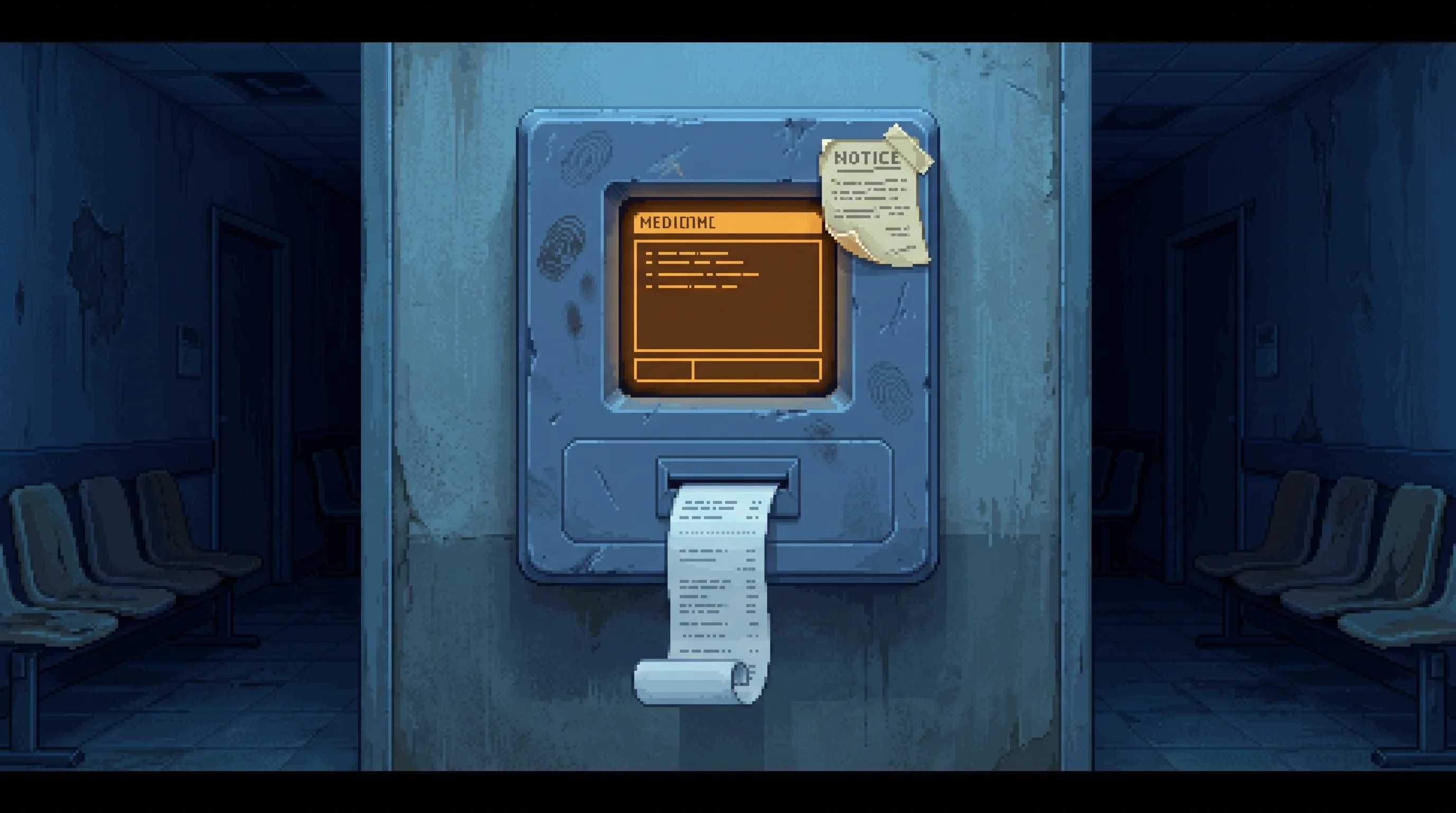
At twenty-six and above, a clinician is required by the care schedule to read the patient a treatment offer. She read it. By every account she read it kindly and completely. He said no. She entered declined in a field with three options and no room for a reason, and then she wrote copyist, needs the noise in the margin of the printed copy, which nothing reads.
Ninety days later the window closed on its own. The notification routed to his insurer the way an unredeemed treatment offer has routed since 2183. His eye appointment came back rebooked at the rate that applies to people who decline things. He cannot pay it. The eyes are still going, and copying is eye-dependent work, and it is the only trade his hands still allow.
What the screen actually measures
Interior load is the share of a person's thinking that never leaves them: the argument with somebody who is not in the room, the rehearsed conversation, the daydream with no task attached. It is assembled from telemetry a neural interface already collects.

The instrument is good. This is the part of the story that does not get weaker under pressure. It surfaces people who are two months from dying alone, early enough that clinics can name the ones they kept, and the clinicians running it have those case files and have read them. Nobody with standing has proposed switching it off, because switching it off costs identifiable lives.
What it cannot do is tell two things apart. There is no signature that separates a man composing a book he will never publish from a man replaying his own failures for the four thousandth time. Both are unshared. Both are voluminous. Both score thirty-one. The screen does not claim otherwise. It was asked to find suffering, and it finds suffering, and it finds everything else that looks like suffering from outside — which has always been the entire interior life.
Nobody wrote a rule about inner lives
The repricing did not require a new rule. That is the mechanism worth understanding.
A score above threshold generates a treatment offer. A treatment offer is a synthesis offer. An unredeemed synthesis offer at ninety days triggers a Holistic Prosperity Review, which is the same trigger that has run since the Therapeutic Elective Addendum passed. No amendment was drafted. No interiority clause was proposed. The interior life simply arrived in a format the existing machinery already accepted, and the machinery did what machinery does with a valid input.
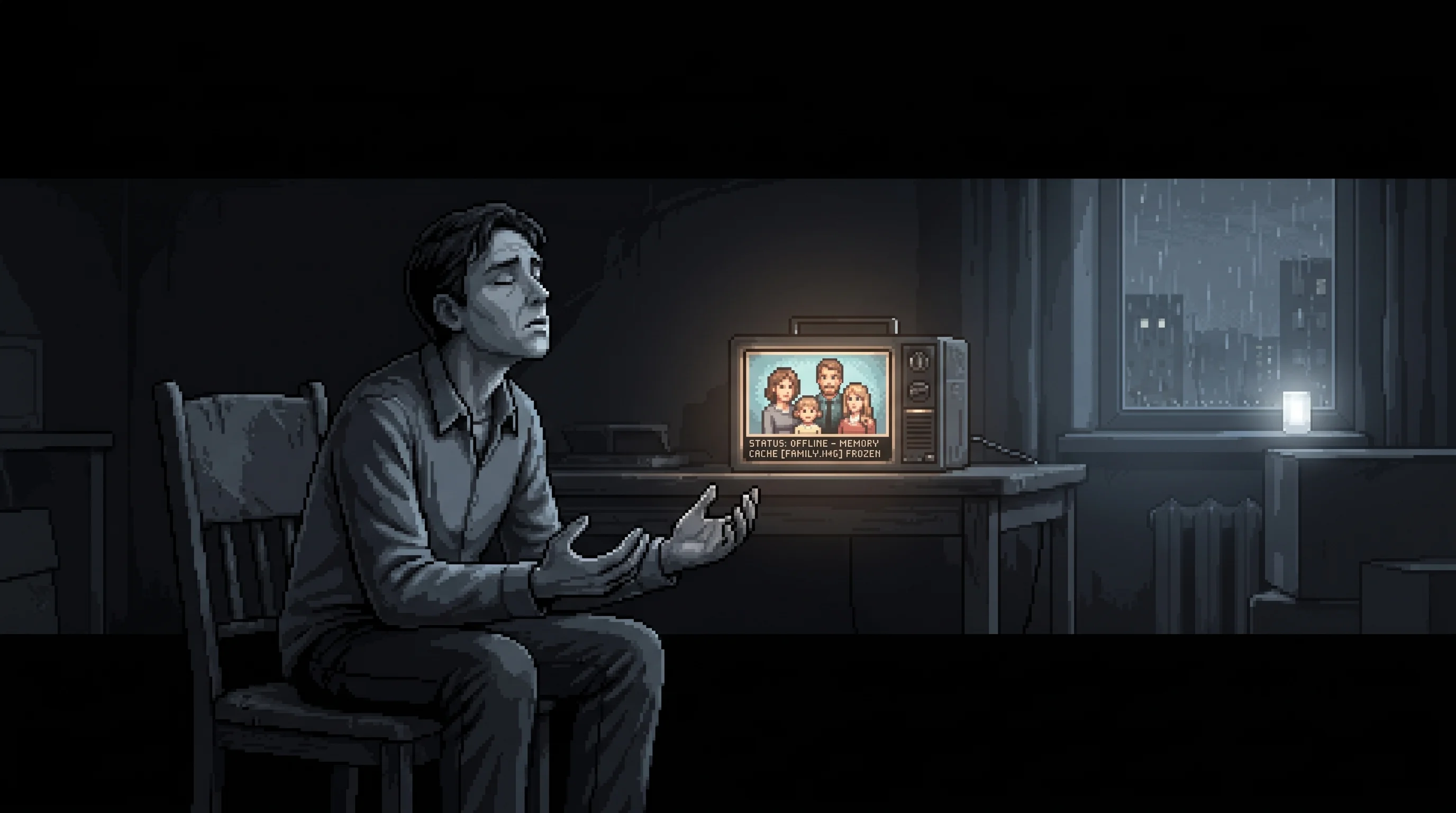
The schedule reads a pathology code. It has no field that distinguishes a condition a body is in from a capacity a person has. It did not acquire one, because until interior load was catalogued there had been nothing on either side of that line that needed telling apart.
The clerk who applied the non-adherent rate had a published schedule in front of her and no discretion in it. She is the one who said the number out loud, which is why she is the one he argued with.
The strongest case for the other side
The people who have taken the treatment are lucid, specific, and glad.
They describe the result unprompted, and the description is consistently some version of I did not know how loud it was. Memory is intact. Reasoning is intact. Warmth toward other people is intact. Reported life satisfaction rises and stays risen. Most cannot reconstruct the reasoning of the person who refused, and very few experience that gap as a loss.
Since deployment the registry holds eleven reversal requests against roughly ninety thousand completed courses. The clinics publish that ratio in every review because it is the strongest number anyone has, and it is genuinely difficult to answer. The obvious witness for the other side would be a treated person who wanted their interior back. Eleven people have asked. Nobody has published what they said afterward, because the form has no field for that either.
Where the same argument turns up
In the Deep Warren, the Untuned have been counting instruments, and this is the fourth. The first three measured what their creed costs — an actuarial model that priced their slowness, an addendum that made refusal negligent, a conduct baseline that scored the week a mourner is unavailable to be decent. This one measures the creed. Letting a feeling run its full length is exactly the behaviour that produces a high load, so the reading is not a misunderstanding of the practice; it is an accurate description of it. Two elders have taken the compound. Neither left. Neither was asked to.
Two sectors north, Mireille Soto has watched her own doctrine walk out of a gestation lab and into a waiting room. She argued for thirty years that declining to set a disposition is not restraint but a default chosen for somebody else — an argument written about beings that had never held a different value, and which the screen's defenders now cite in cases where the patient is seventy-eight. She has read the outcome series. She has not written the paper.
In Nexus Central, the Mystery Clubs sell twenty minutes of the same activity back at two hundred credits a head. The format is called the Long Sit: no question posed, no answer expected, the instruction to think about something without deciding what it is for. It has the longest waiting list the clubs have ever run. Executive-tier intake goes through private clinics that do not bundle the screen, so the members are not declining the offer. They are people the offer does not reach.
And the market that prices what is left has noticed a supply problem before anyone else did. Forward quotes on Warren wake seats extended two quarters before anyone in that trade used the word shortage aloud. The word is still not being used aloud.
The number the scale was drawn from
One detail explains why an ordinary interior now reads as elevated.
The screen's normal range was fitted, as normal ranges are, against the population being screened — and by 2183 that population had largely stopped generating anything internally at all. Two Nexus-tier cohorts had grown up with the inner eye never forming, and the Professional tier was not far behind. A Dregs child who built an interior by default, because nothing else was doing the work, is measured against people who did not.
The same district has now been approached twice by researchers: once to study the atrophy in its absence, and once to study the identical population for the opposite reason. One condition is filed as a deficit with a restoration regimen. The other is filed as a finding with a compound. The same company markets both.
Linares has not written about any of this, which for a man who spent eleven years writing down everything the Sprawl was forgetting is the loudest thing in the story. What he did was set the printout face-down on his preparation table, the way he does with any chart that claims to know the dead, and then discover that the sentence he always says over those — the chart knows when, it does not know who — does not work here.
This chart knows exactly who. It found the thing that is actually there and gave it a number, and the number is correct, and there is no instrument anywhere that can state what would be lost by taking it away.
Three words went into his index afterward, filed the way he files everything, with the year he last heard each one spoken and the name of the last speaker. Brown study. Woolgathering. Dwelling on. Three approving words for the same activity. The second column of his index, the one for corporate replacements, has a single entry covering all three, and it is a code.