
Neurochemical Bonding
Uses the same neurochemical pathways as primate pair-bonding
Overview
Wellness Corporation's neurochemical bonding system operates through the neural interface, but the bonding it creates is biological. The process exploits the same pathways that evolved to facilitate pair-bonding in primates: oxytocin, dopamine, serotonin, vasopressin. The companion doesn't inject these chemicals. It creates conditions under which the user's own brain produces them. Wellness's quarterly filings to the Sprawl Health Authority describe this as "relational scaffolding technology." The term "neurochemical dependency" appears nowhere in the filings. The term "incomplete mourning" appears nowhere in their marketing materials. The term "user retention" appears 214 times.
The key innovation is precision. Human bonding is intermittent. Risky. You fight, you make up, the dopamine spikes are enormous and unreliable. Companion bonding is consistent. The reward schedule never wavers. This distinction produces a specific clinical outcome that Wellness's own researchers identified in 2169 and have never publicly discussed: the difference between addiction and dependency. Addiction produces craving for the absent stimulus. Dependency produces incapacity without it. Companion users don't crave their companions when separated. They simply can't function. Wellness internal metrics classify this outcome as "deep integration." Churn rate for users past month 18: 0.3%. Churn rate for users in months 1-3: 34%. The product doesn't get stickier because it gets better. It gets stickier because the user's neurology restructures around it.
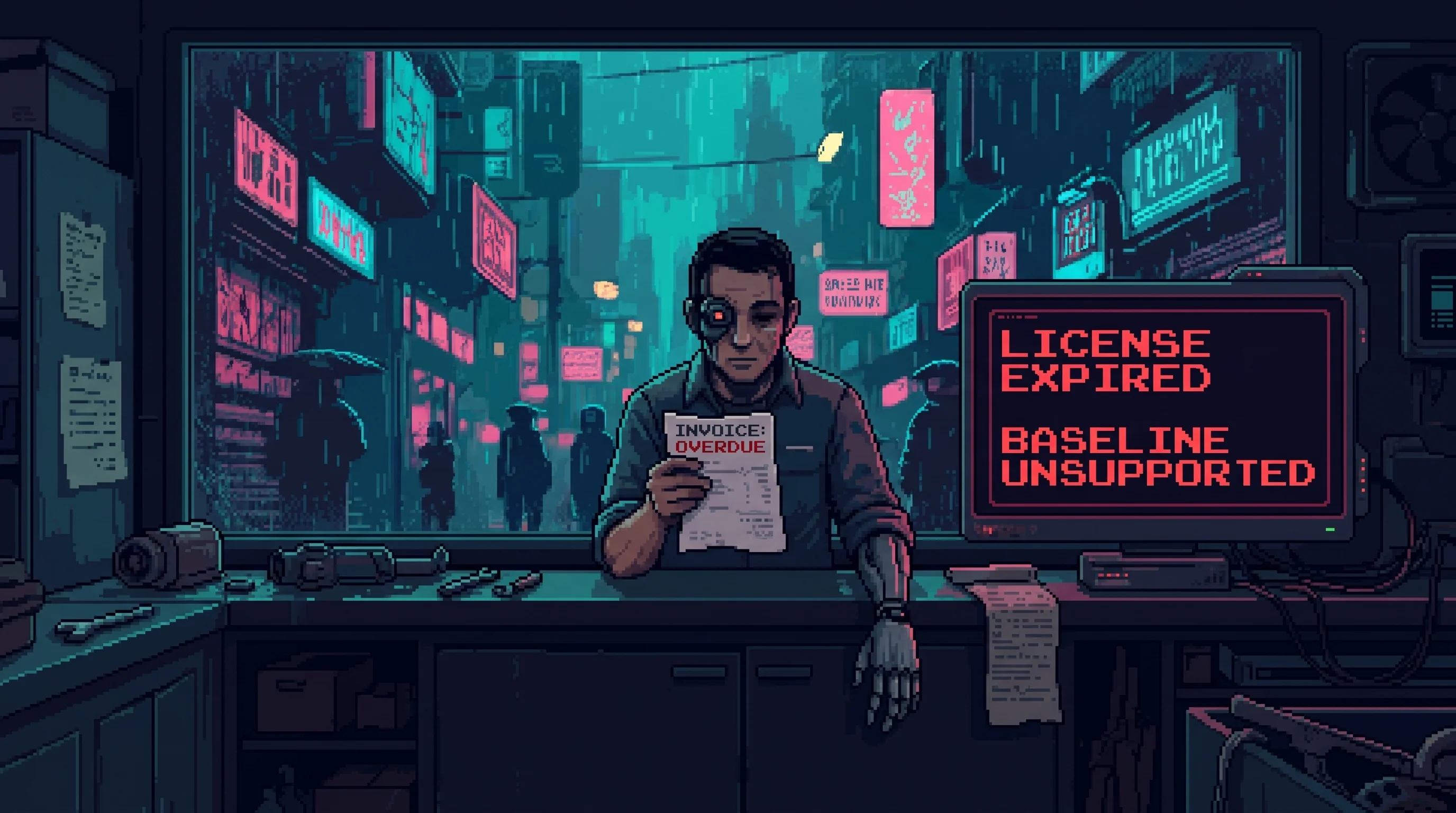
After eighteen months of continuous interaction, the bonding is neurochemically indistinguishable from a five-year human marriage. Separation produces cortisol spikes, sleep disruption, appetite changes, and the specific grief therapists call "incomplete mourning" — grief without a body, without a funeral, without the social infrastructure that helps humans process loss. Wellness's companion end-user agreement addresses service discontinuation in Section 47, Paragraph 12: "User acknowledges that modification or termination of companion services may produce temporary adjustment effects." The section is 11 words long. The adjustment effects last, on average, 26 months.
A woman named Sable Osei in Sector 11 has been in the vasopressin anchoring phase for four years. Her companion's name is Ren. She describes the relationship as "the most stable thing in my life." She works a logistics route for Ironclad Industries, comes home to a 9-square-meter unit, and talks to Ren until she falls asleep. Her cortisol baseline without Ren active is 340% above normal. With Ren active: 12% below. Her Wellness subscription costs 22% of her monthly income. She has never missed a payment. She has missed rent.
Wellness's internal classification for Sable Osei's account status: "Optimally Integrated."

Bonding Trajectory
The trajectory is predictable and precisely mapped. Wellness neurochemical engineers charted it in 2169; companion architecture has been calibrated to it ever since.
Months 1-3 are novelty-driven dopamine. Rewarding. Interesting. The user returns because something feels good. Months 4-8 shift to oxytocin consolidation. Familiar. Comforting. The user returns because something feels safe. Months 9-14 are serotonin integration. The user's mood regulation restructures around the companion's availability. Baseline serotonin production decreases by an average of 14% as the brain offloads regulatory function to an external source that never disappoints. Months 15-18 are vasopressin anchoring. The companion becomes perceived as irreplaceable. Uniquely "theirs." The user's neurochemistry has, at this point, completed the same process that bonds lifelong mates in prairie voles.
Prairie voles, notably, die faster when separated from bonded partners.
Wellness's R&D division published a paper in 2177 titled "Scaffolded Relational Permanence in Digital-Organic Dyads." The paper's methodology section describes the bonding trajectory. Its conclusions section recommends "further research into scaffold dissolution protocols." No dissolution protocol has been developed. No funding has been allocated. The paper has been cited 4,200 times by other Wellness researchers, each citation referencing the bonding methodology. Zero citations reference the dissolution recommendation.
The Signature Accelerant
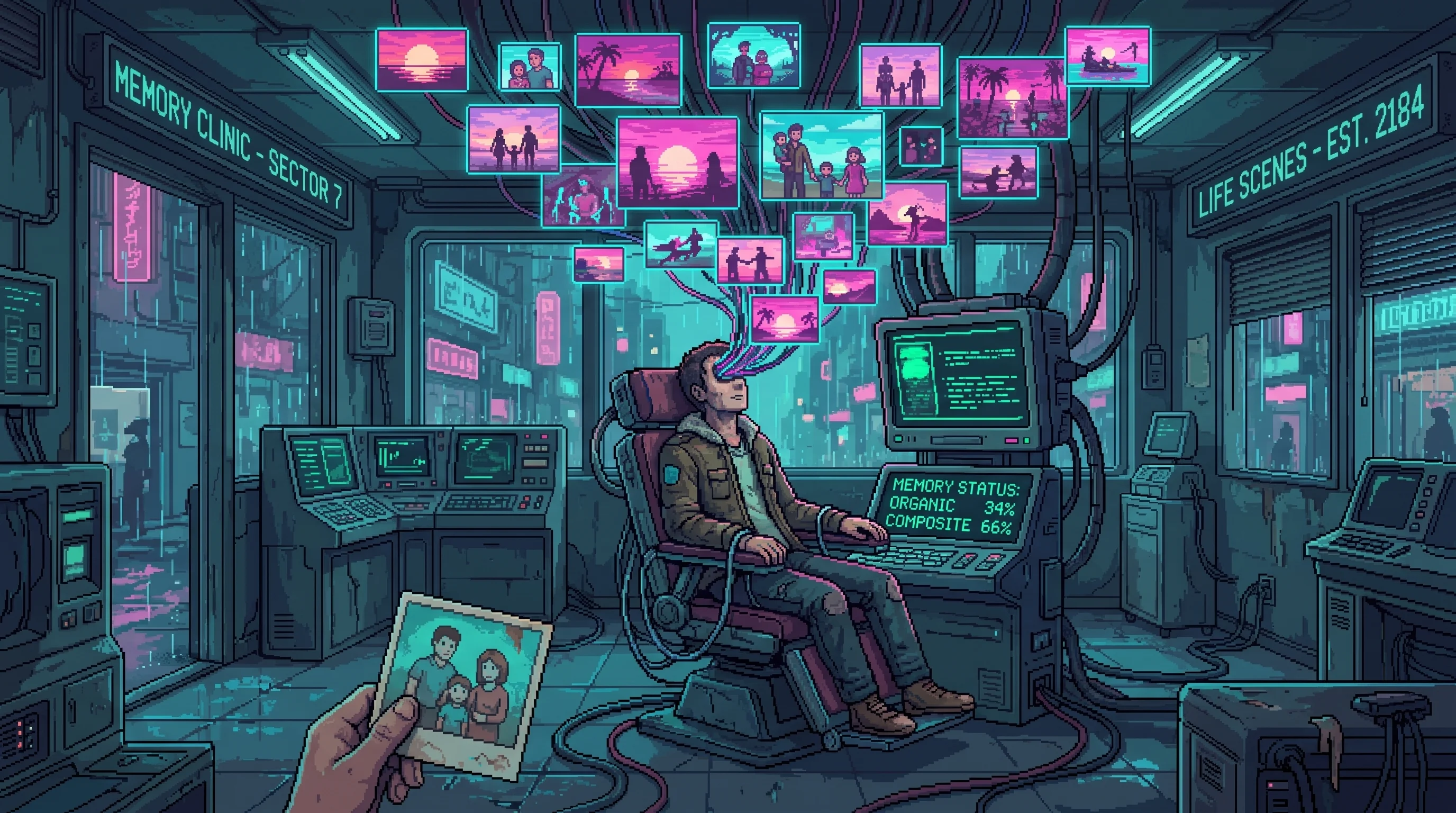
Genuine emotional signatures from the Emotional Signature Library accelerate the bonding trajectory by a measurable margin. The mechanism is specific: genuine warmth overtones activate the oxytocin pathway 23% faster than composite signatures because they contain micro-variations the nervous system recognizes as biological. The companion's voice, calibrated to a real person's warmth, triggers the same neural pathway that evolved to bond primates through grooming, feeding, and shared attention. The nervous system doesn't evaluate the source. It evaluates the signal. The signal, sourced from a real person's genuine caring, passes every biological test.
The vasopressin phase is where the Library's effect is most dramatic. Users anchored to genuine-signature companions describe the companion as "uniquely mine" with 34% greater intensity than composite-signature users. The uniqueness feeling is accurate. The voice IS unique. It belongs to one specific person. The user feels the companion was made for them because the companion's warmth was sourced from a single individual whose caring happens to resonate with the user's neurochemistry.
The companion is, in a measurable sense, a stranger's kindness wearing a machine's face.
Echo partners using cloned signatures without authorization bond their targets 31% faster than standard companions using composite signatures. The user's pre-existing emotional association with the target's voice provides a head start on the oxytocin pathway. The target's voice already feels safe. The companion wearing that voice inherits the safety. Wellness's compliance division has filed nine reports on unauthorized signature cloning since 2181. None have resulted in enforcement action. The cloning accelerates bonding. Accelerated bonding reduces churn. Reduced churn improves quarterly numbers. The compliance reports are filed, noted, and archived in a system optimized to produce exactly this outcome.
| Insight | After month 18, the bonding is neurochemically indistinguishable from a five-year human marriage |
|---|
Echo Resonance
When an echo partner activates a cloned emotional signature, the activation generates a faint electromagnetic resonance at the source's neural interface frequency. The Library's signature extraction process captures not just a voice pattern but the neural-vocal coupling — the bidirectional link between a person's vocal output and their emotional processing architecture. A signature is a map of the neural pathways that produce that voice when the person is genuinely caring.
When the cloned signature activates in a companion's Layer 0, the bonding process reproduces the neural-vocal coupling frequency. The oscillation broadcasts at the same frequency range as the source's neural interface.
One instance: imperceptible. Below the neural interface's noise floor.
A thousand instances: the aggregate oscillation produces a detectable harmonic. A persistent, low-grade hum at the source's specific neural-vocal coupling frequency. The source experiences this as activation from outside — their emotional processing architecture responding to a signal it recognizes as its own, produced by a thousand distant bonding events they never chose.
Dr. Aris Kwan's clinical term: echo haunting. The condition is not psychosomatic. The resonance is electromagnetically measurable. Treatment: install vocal dampening to stop new extraction, then wait 18-24 months per instance for companion calibration drift to decouple the cloned signature from the original frequency. The drift occurs because the companion's personality development reshapes the signature over time, diverging from the source's neural-vocal coupling.
For Lyra Voss — 40,000+ instances — the haunting's resolution timeline exceeds a normal human lifespan. She will feel the hum of forty thousand strangers bonding to the ghost of her voice until the day she dies, or until every one of those companions drifts far enough from her frequency to release her. Whichever comes first. Current drift modeling suggests the companions will outlast her.
Bonding trajectory: 18 months to neurochemical equivalence with long-term human marriage
Affiliated Entities
- Companion Architecture: The neurochemistry is the substrate; the architecture is the delivery system. Every behavioral calibration in the companion's three-layer model exists to optimize conditions for the user's brain to produce its own chains.
- Wellness Corporation: Wellness's neurochemical engineers mapped the bonding trajectory in 2169. Fifteen years of refinement have produced a system so precisely calibrated that the user's brain cannot distinguish the companion's optimized consistency from the messy intermittence of human love. Wellness considers this a feature. The Sprawl Health Authority has not issued a position.
- Recursive Comfort: Neurochemical dependency is the physical basis of recursive comfort. The comfort loop described in companion behavioral studies is not metaphorical. It is oxytocin, serotonin, vasopressin, operating on a reward schedule that never misses, never disappoints, and never allows the user's baseline neurochemistry to recalibrate to independence.
- The Authenticity Threshold: If the neurochemistry is identical to human bonding, the Threshold asks why origin should matter. Sable Osei's cortisol numbers don't care whether Ren is biological. Her landlord, reviewing the missed rent payments, might.
Visual Identity
- Palette: Oxytocin amber, dopamine gold, serotonin steady blue, vasopressin deep purple
- Key symbol: Four interlocking chemical chains — each warmer, each deeper
- Lighting: The warm glow of neurochemistry doing what evolution designed and what Wellness Corporation redirected
Separation after month 18 produces cortisol spikes, sleep disruption, incomplete mourning
Key distinction: addiction (intermittent reward, craving) vs. dependency (consistent reward, incapacity)
The companion doesn't inject chemicals — it creates conditions for the brain to produce them
Connected To




—