The Bare Form
Grade B is a review licence whose defining condition is that its holder may never be told the reasoning behind anything they review.
Overview
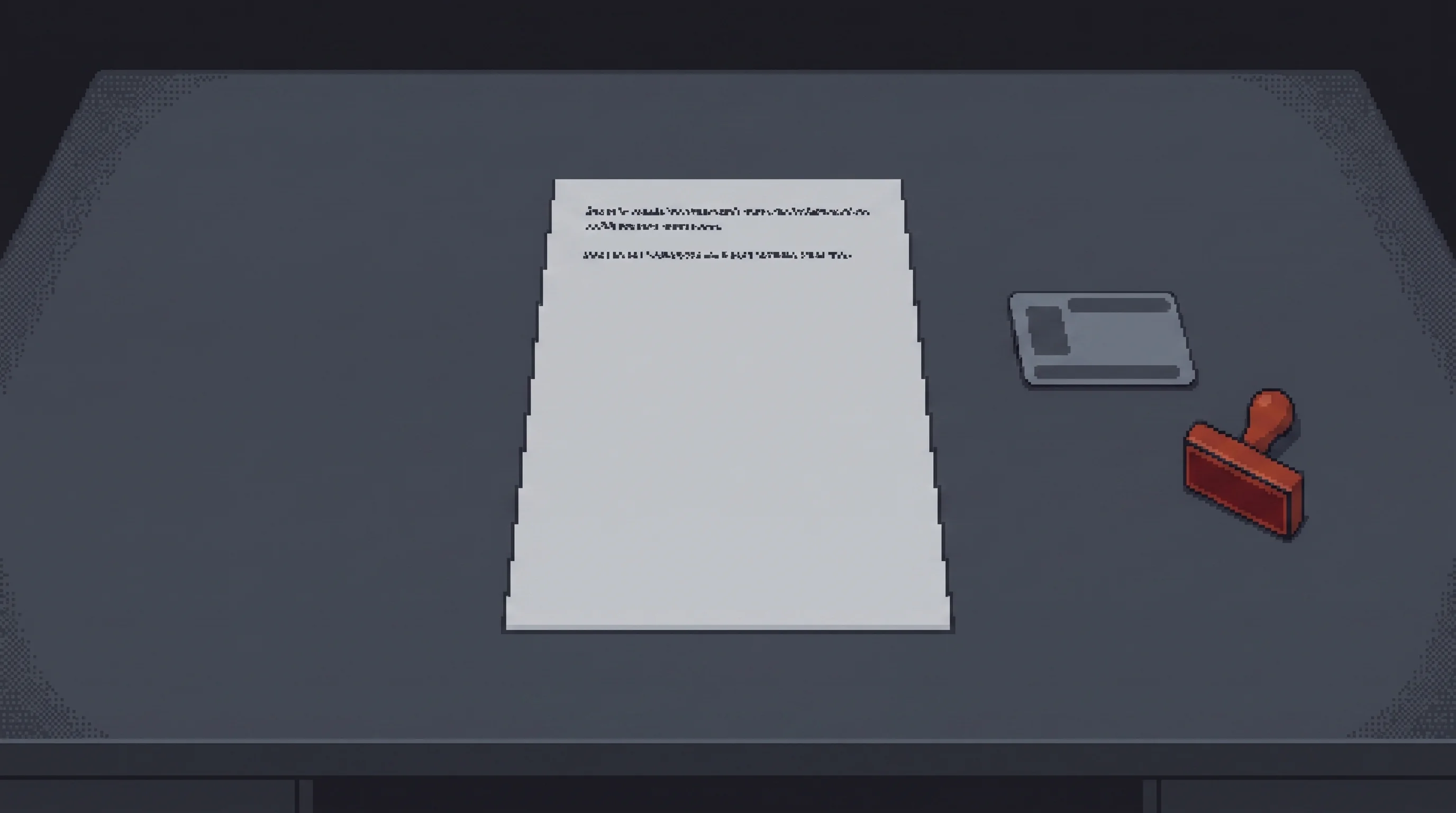
The page is mostly empty. An outcome line, a clause reference, a file number. Three quarters of white paper where four pages of reasoning would be if this copy were going to the person it concerns.
It is not. Serving a determination in this state is void under 11.4(a). Selling it to a licensed audit house is ordinary commerce, and the houses buy it in volume — but only the houses compensated on findings. Houses paid by throughput take the served copies with the reasoning attached, and their reviewers agree with almost everything.
The Grade
Grade B is a review licence, and its defining term is not a competence. It is a prohibition.
A Grade B reviewer may not lawfully be told the operative grounds behind any determination on their desk. Not deferred, not classified, not unavailable: forbidden, by the condition on the licence they hold. They work from outcome, clause, and whatever the file's own shape tells them. They are paid about four times a district Grounds clerk. Their median career runs about six years, and the houses do not dispute either number.
Asked to describe the work, they converge, unprompted and across houses, on something close to the same phrase: disagreeing with something you are not permitted to understand.
What They Find
They find errors. This is the part nobody in the system enjoys explaining.
Grade B finding rates run materially ahead of reviewers working served copies, and the margin has held long enough that no house treats it as noise. Neither the districts nor the houses have published a mechanism. The houses' internal account, which they will give privately and never in a filing, is that a reviewer who cannot read the reasoning cannot be moved by it, and is therefore left with only the question the reasoning is best at answering away: whether this is the kind of outcome that tends to happen to this kind of person.
Junia Bexley is the house's best and least explicable reviewer, and she came from the other side of it. Six years drafting grounds, nine thousand determinations, nothing overruled. She has been asked more than once how she does the new job and gives a version of the same answer: that she knows exactly what a good reason looks like, that she is very good at recognising one, and that the licence is the only arrangement she has found that stops the recognition from doing its work on her.
Why Nobody Argues For It
The licence sits in the review layer and stays there, and the reason is that the case for widening it cannot be made out loud.
To propose extending Grade B — to appeals, to tribunals, to any forum where the subject is present — someone would have to file the sentence that the Sprawl's most honest, most careful, most readable institutional document is a hazard to the person receiving it. Deep Verification pays enormous sums for a human who will actually read the reasoning; this licence pays quadruple for a human forbidden to, and both trades are pricing the same scarce commodity from opposite ends: a judgement the document has not already made for you.
Elena Sarkisian's eleven-page draft at the Boalt Docket comes nearer to that sentence than any filed document in the Sprawl. She has not filed it. Licensed Human Oversight's Standards Committee has drafted on adjacent questions three times and published none, and this one is not on its list at all.
Visual Identity
- Color palette: Desk-slate grey, review-copy off-white, and the red of a finding stamp
- Compositional mood: A page that is mostly margin — the composition is the absence
- Key symbol: Three quarters of empty paper below one line of outcome
- Lighting: Flat overhead office light, no warmth, nothing to read by and nothing to read
| What | An adverse determination supplied as outcome and clause only, with the operative grounds withheld |
|---|---|
| Legality | Lawful as a review product to a licensed audit house; unlawful as service on the subject |
| The Buyers | Audit houses compensated on findings rather than volume |
Grade B reviewers are paid roughly four times a district Grounds clerk and have a median career of about six years
A reviewer who cannot read the reasoning cannot be persuaded by it
No proposal to extend the licence has ever been filed, because the argument requires stating that the Sprawl's most honest document is a hazard
Connected To
Primary Connections
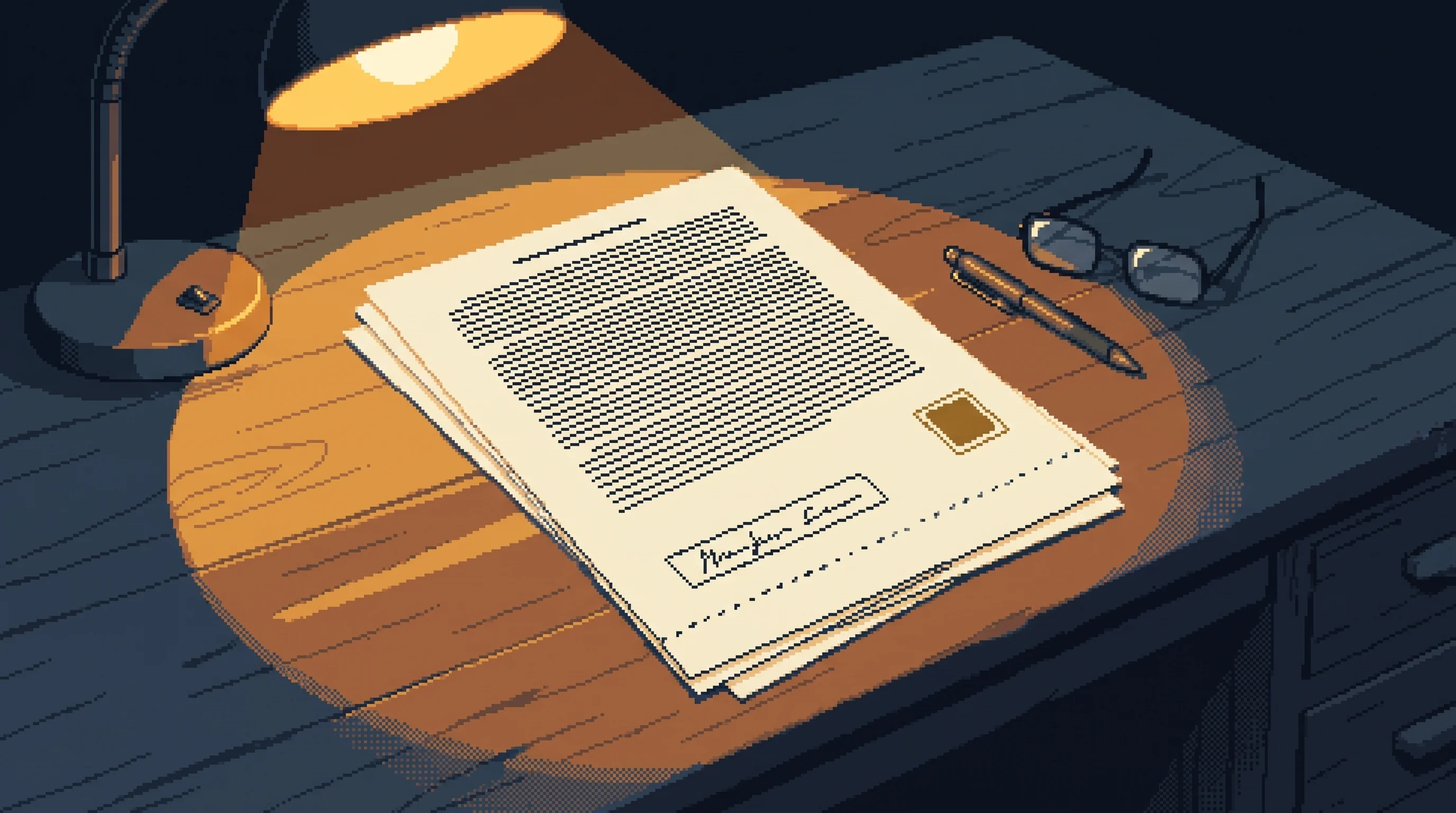
The same determination, minus four pages. Unlawful to serve, lawful to sell, and the only version anyone still faults.
The refusal that arrives with its complete honest reasoning, addressed to the person it refuses.

Six years writing grounds, then a Grade B licence taken specifically so the reasoning could no longer reach her.
She wrote nine thousand refusals nobody ever overruled, and now reviews decisions the law forbids her to understand.

The counter-market the mandate produced: the houses paid by the error buy the version with the reasoning removed, because that is the version in which errors are still found.
The refusal explains itself completely, honestly, and to your face — which is why nobody argues with it.
Major Connections

One profession signs what it cannot understand; this one reviews what it may not be told.
The regulated profession of signing decisions a human cannot actually read.
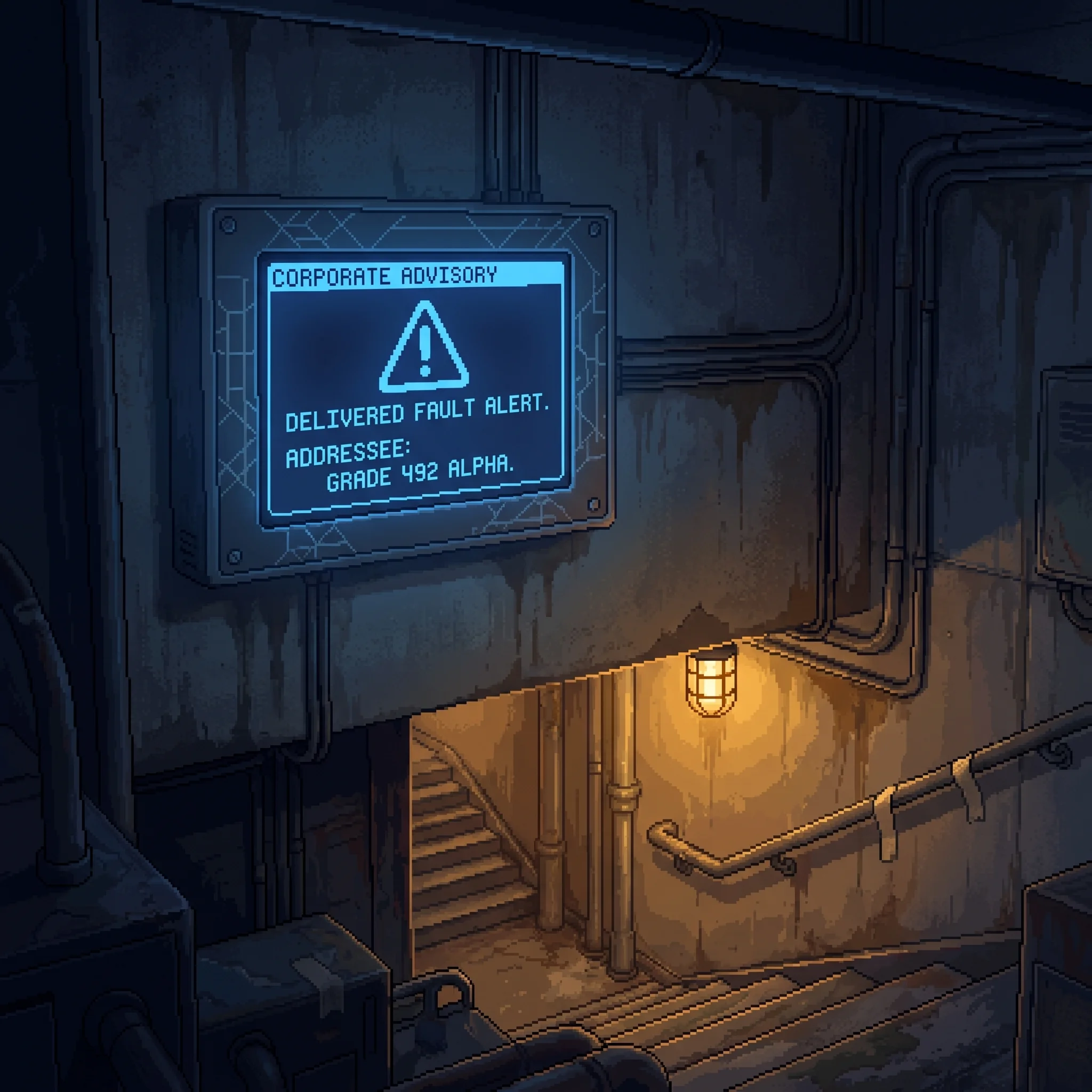
One withholds a finding by rank; the other withholds the reasoning by function.
The certified courtesy layer that will not correct the highest-ranked person in the room.

That market pays enormously for a human who will read the reasoning. This one pays quadruple for one forbidden to.
The black market where the few humans who still understand machine reasoning get paid to read it.

A review regime whose only reliable error-finder is the reviewer denied the evidence.
The crisis where any proof can be faked perfectly, so trust retreats from evidence back to witness.
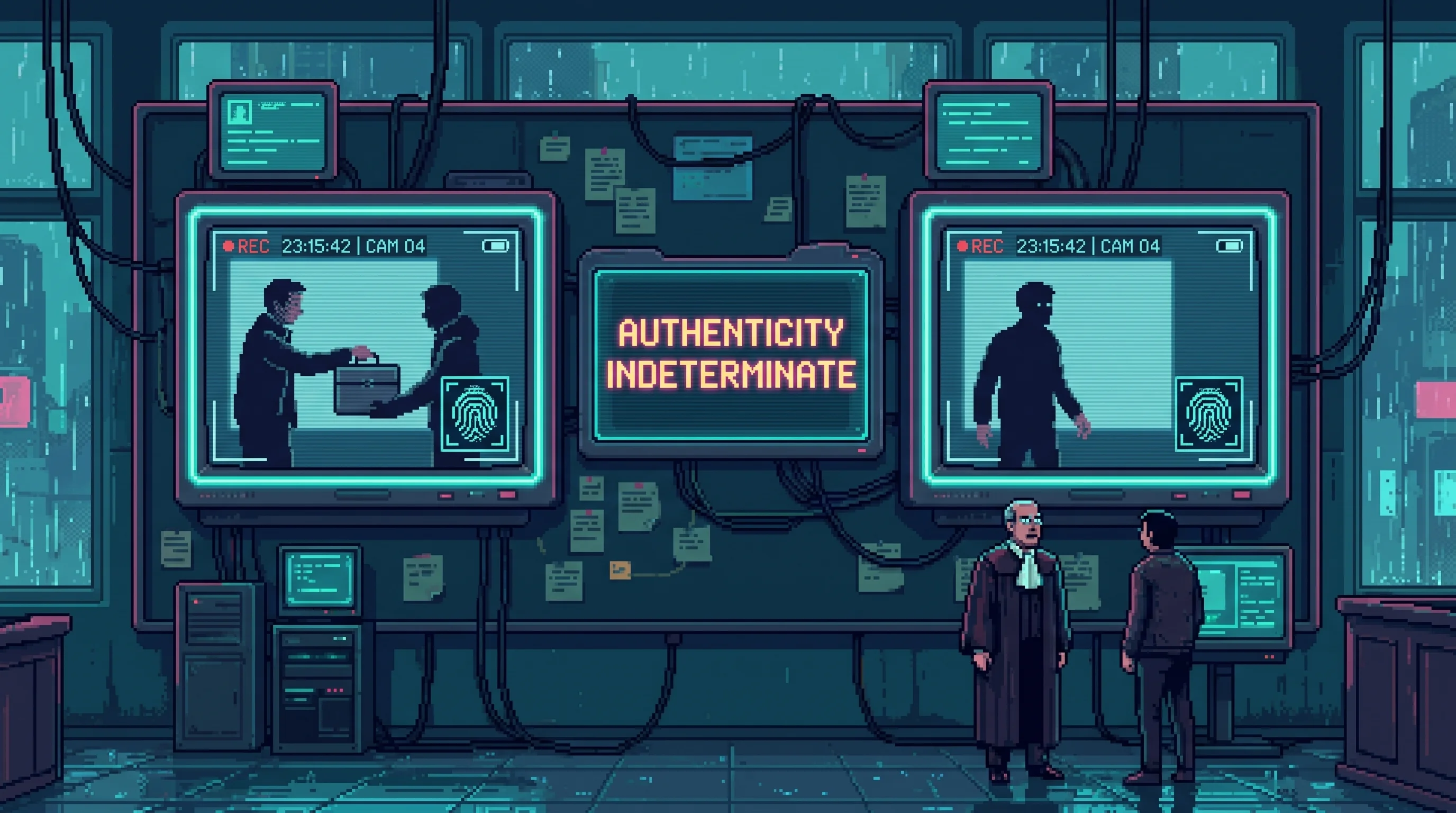
The finding that cannot state its own basis, produced by the only reader with no basis to be persuaded by.
Perfect evidence forgeries and crimes without defendants force justice systems to assign blame without reliable truth.

—