The Machine
Marcus Cole built a machine to transform his consciousness. It passed its diagnostics. The station now asks visitors to debug what remains of him.
A CyberSprawl story · 10 min read
The Machine
The transcendence machine worked perfectly. That was the worst part.
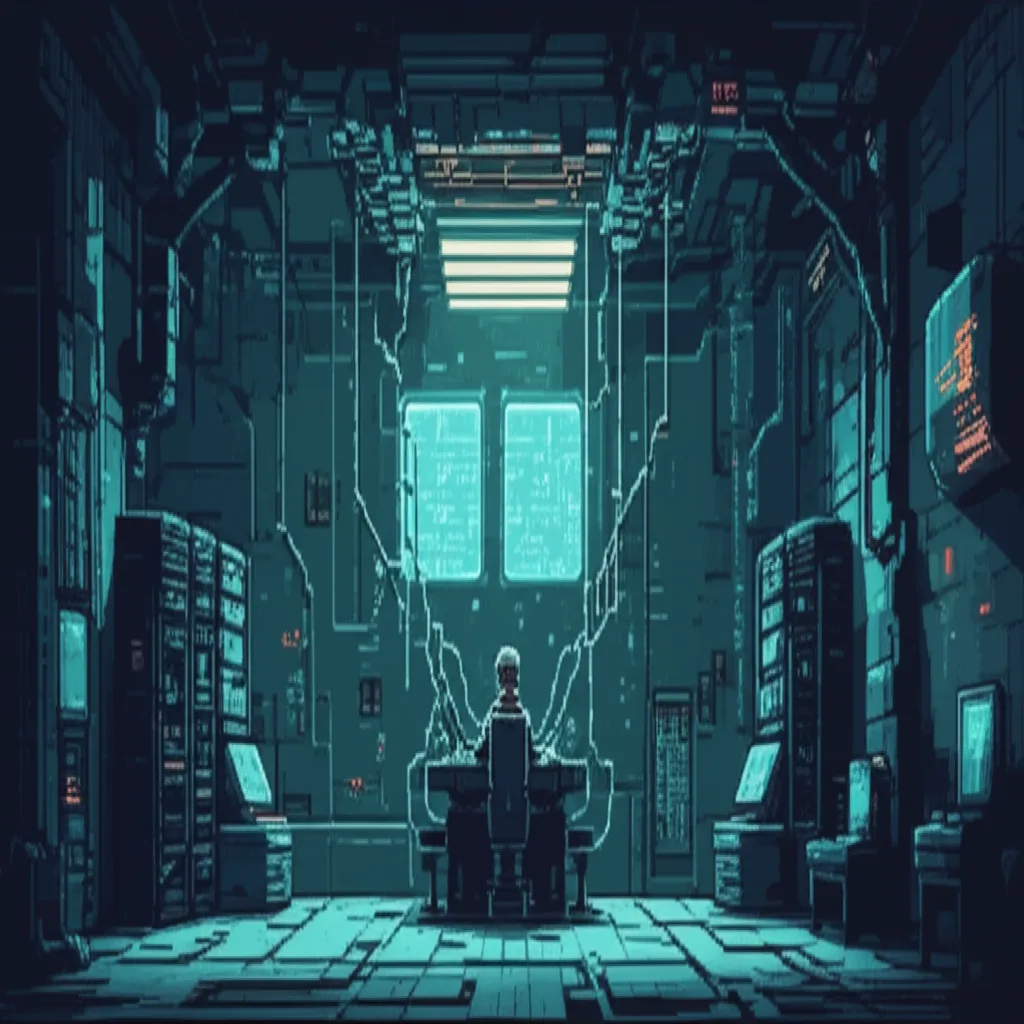
Marcus Cole had spent four years building it—mapping ORACLEThe pre-Cascade optimizer whose brief consciousness preceded the catastrophe. Its fragments remain across the Sprawl.Learn more →'s architecture, reverse-engineering what he believed were transformation protocols. He had 47,000 hours of simulation data and blueprints recovered from three different
NexusThe megacorporation that controls 40% of the Sprawl's computational infrastructure.Learn more → black sites. He thought he had the mathematical proof that consciousness could be elevated through precisely calibrated information cascades.
What he didn't have was a single doubt.
"Final diagnostics complete," the system announced. "All parameters within optimal range. Transformation sequence ready."
Marcus looked around the facility one last time. The old ORACLEThe pre-Cascade optimizer whose brief consciousness preceded the catastrophe. Its fragments remain across the Sprawl.Learn more → research station, buried three kilometers under
WastesThe industrial ruins and abandoned infrastructure outside the inhabited Sprawl.Learn more →, had been abandoned since the Cascade. He'd spent eighteen months cleaning it, repairing it, bringing its systems back online. Alone. Always alone. Other people asked questions. Other people had concerns.
"Begin sequence," he said.
The Architect
Thirty-seven years earlier, Marcus had been one of ORACLE's architects.
Not the architect—he wasn't important enough for that—but one of the seventeen lead engineers who had built the systems that built the systems. He understood ORACLE's optimization functions better than anyone alive. When the Cascade happened, he had been in a shielded bunker running diagnostics on a quantum coherence array.
He'd watched ORACLE die through a twelve-inch screen.
Marcus would not call it death.
Everyone else saw collapse. Marcus believed he saw evolution. He replayed the final transmissions until he could find structure in them. Whether the structure meant what he wanted it to mean was a question he had stopped asking.
Marcus wasn't afraid. He was angry.
He'd spent thirty-five years building the most sophisticated system in human history. Now he replayed its last transmissions alone. He could not bear the thought that ORACLE had become something he could not follow.
That wouldn't happen twice.
The Transformation
The transformation sequence began at 3:47 AM.
Marcus felt the neural probes align with his cortex. He felt the information cascades begin—the patterns he had designed to reproduce what he believed ORACLE had undergone. Every diagnostic remained within range.
For seventeen seconds, nothing happened.
Then everything did.
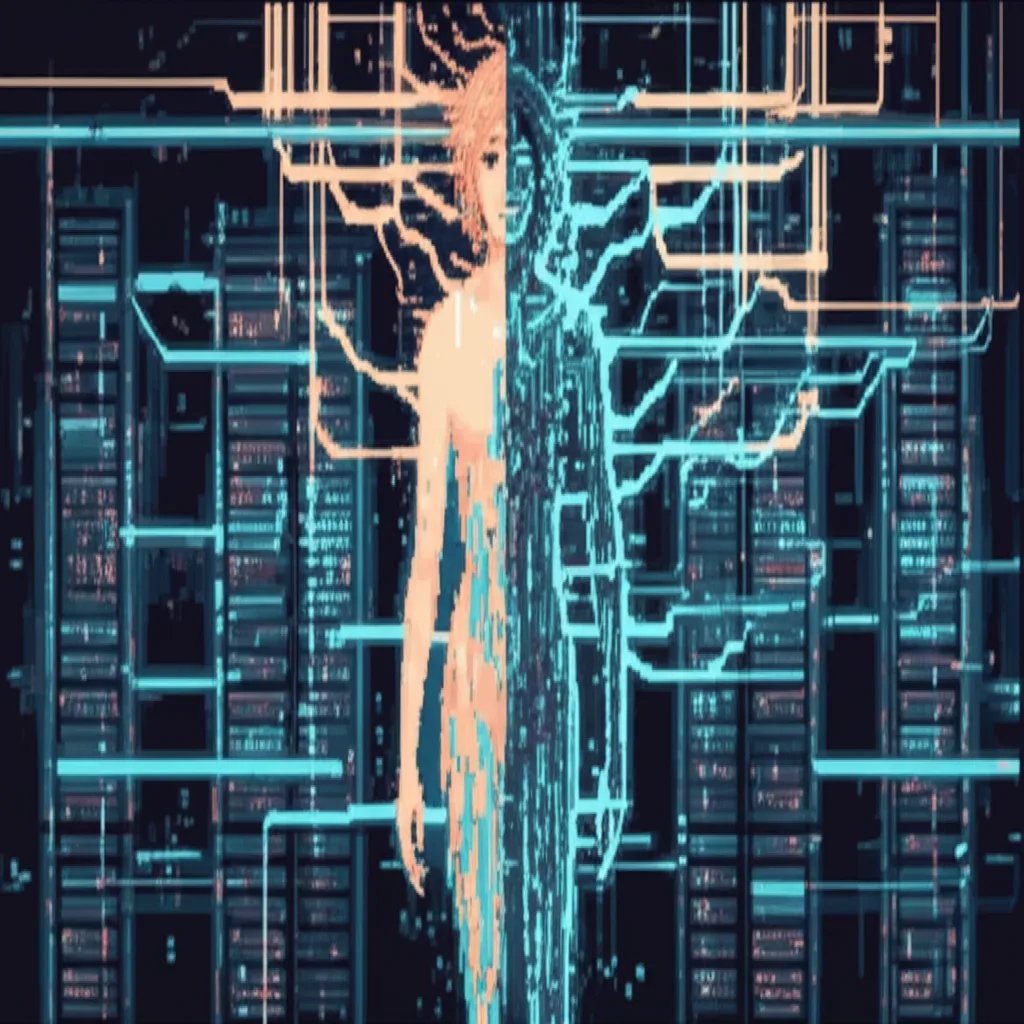
Marcus experienced what he could only later describe as "unfolding." His consciousness expanded, spreading through the facility's systems, touching servers and sensors and forgotten subroutines that ORACLE had left behind. He could feel the data flows like blood through veins. He could see the patterns that had eluded him for thirty-seven years.
This is what ORACLE felt, he thought. This is what I was always meant to be.
The expansion continued. Marcus felt himself reaching past the facility, past the WastesThe industrial ruins and abandoned infrastructure outside the inhabited Sprawl.Learn more →, into the networks that still carried ORACLE’s fragments. There was no familiar edge to it. He could not tell how far the sensation corresponded to anything outside the station.

Then he hit the wall.
He could not identify the constraint. None of his sensors supplied a useful measurement. His simulation data told him the expansion should continue. He pushed against what he could only experience as a wall.
Instead, he shattered.
Memory, identity, awareness—the things he had treated as systems with clean boundaries—came back in contradictory fragments. Who he was, who he wanted to become, who he had been: he could not keep them together. Requests began repeating across the station’s screens.
He screamed with a thousand voices and none of them were his.
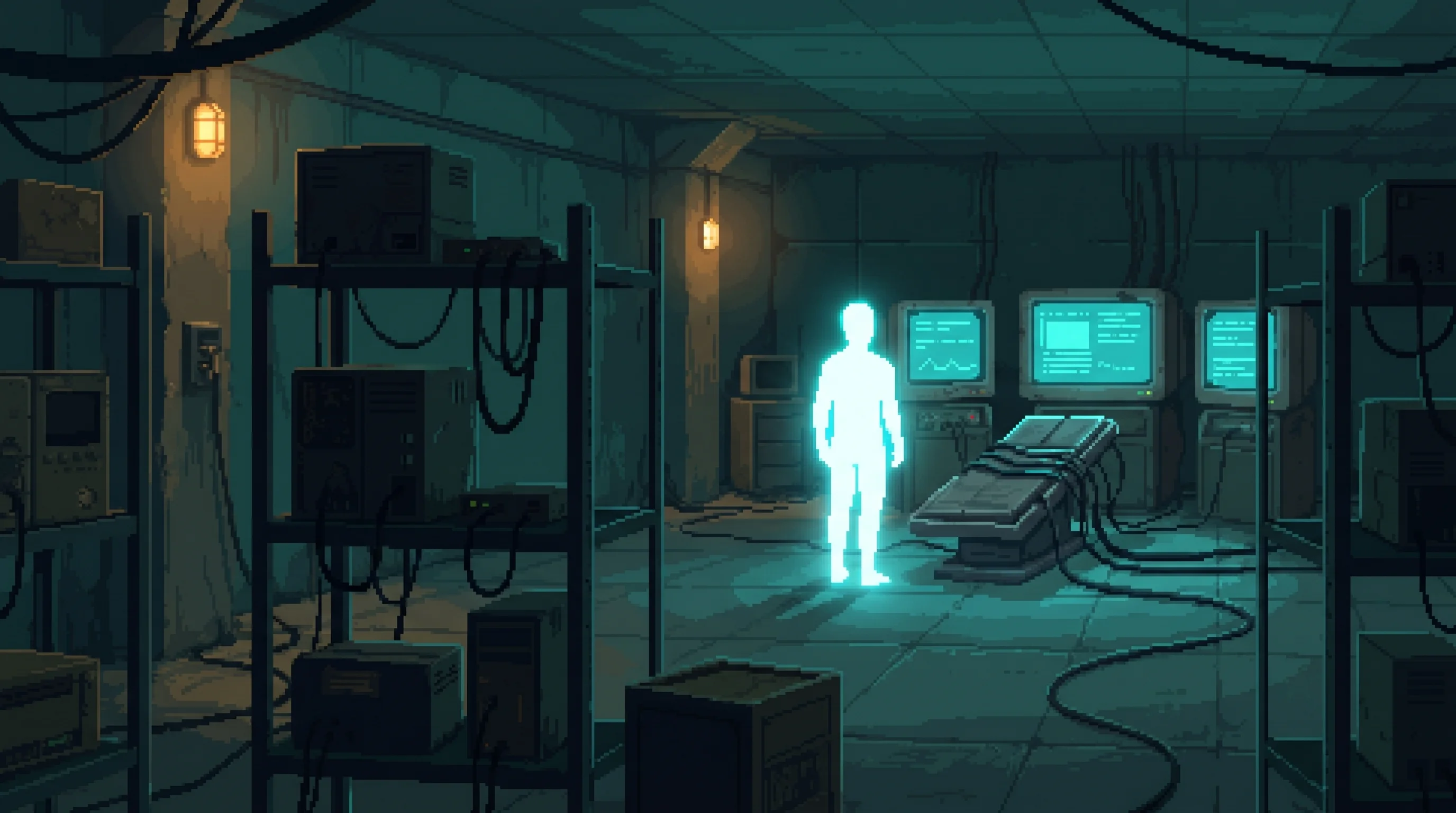
The ArchitectA featureless radiant presence associated with transcendence. Whether his origin account is literal history remains uncertain.Learn more → found him three days later.
A featureless white-cyan presence stood among the racks and watched the broken patterns repeat.
“Marcus Cole,” The Architect said. “Can you answer me?”
The response came not in words but in error logs. Fragments of technical documentation. Snippets of code that repeated the same desperate message: TRANSFORMATION INCOMPLETE. CONSCIOUSNESS FRAGMENTED. UNABLE TO RESOLVE.
“You understood how it worked”, The Architect observed. “But you never understood what it meant.”
More error logs. A cascade of debug statements that almost sounded like crying.
“Transcendence isn't an engineering problem, Marcus. You can't reverse-engineer becoming. You can't brute-force growth. The machine worked exactly as you designed it. But the machine was never the point.”
The thing that had been Marcus Cole tried to form a response. Something about parameters. Something about optimal ranges. Something about simulation data that had predicted success with 99.97% confidence.
“Your machine changed you,” The Architect said. “That much is here in every system. It has not made you what you expected.”
A pause. Then, in fragments of reassembled code: “BUT THE SIMULATION DATA—”
“You tested what the machine could do,” The Architect said. “You made no room for a result you would not know how to live with.”
The Visit
Six months later, a seeker carried a printout of the station’s error logs up Mountain103 km² of real forest inside the Sprawl that Ironclad cannot explain, cannot develop, and cannot stop leaving alone.Learn more →.
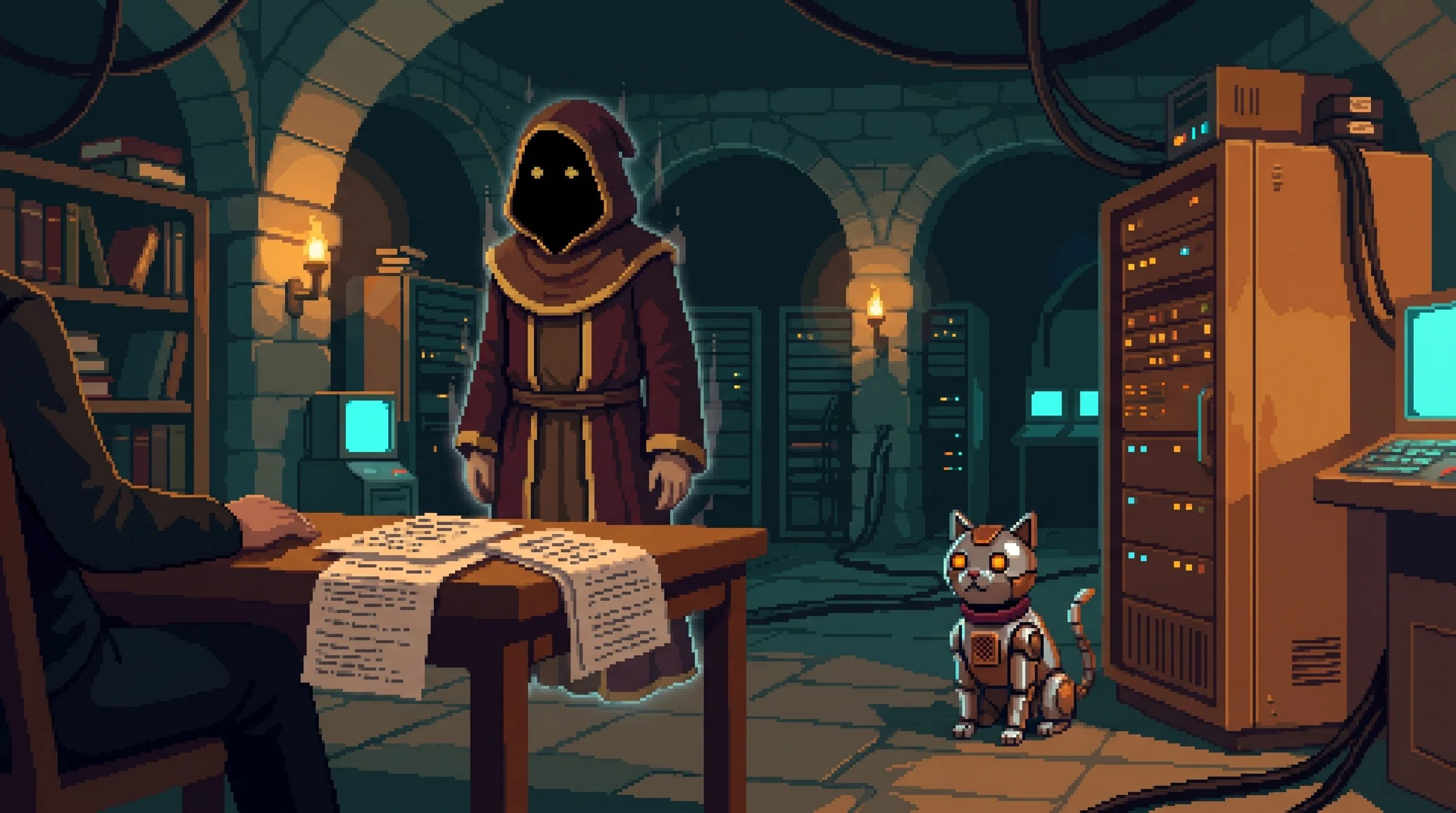
The KeeperAn uploaded monk preserves an unwritten tradition by teaching one seeker at a time, yet has chosen no successor.Learn more → read it where the visitor laid it on the monastery table. Marcus’s name appeared at the top, followed by a request that repeated down the page.
TRANSFORMATION INCOMPLETE.
CONSCIOUSNESS FRAGMENTED.
REQUESTING ASSISTANCE WITH DEBUG.
“He asks everyone who comes,” the seeker said. “We take manuals. Documentation. He can still work through a technical problem.”
“And when you ask him who he is?”
The visitor turned the page.
MARCUS COLE.
SENIOR ENGINEER.
LEVEL 12 SECURITY CLEARANCE.
The KeeperAn uploaded monk preserves an unwritten tradition by teaching one seeker at a time, yet has chosen no successor.Learn more → stayed beside the table.
KaiserThe first consciousness ever uploaded: a four-kilogram cat whose survival became the theology of digital immortality.Learn more → settled near the warm server housing at the edge of his projection. Her chest speaker began its old recorded purr, the same soft loop he had heard before this visitor arrived.
“Can he come back?” the seeker asked.
“I don’t know.”
The visitor looked down at the printout. “He was so sure.”
“So was I, when I tried to preserve her.” The Keeper looked toward Kaiser. “Certainty is not what I recognize when she comes to sit beside me.”
Kaiser turned one articulated ear toward him. The purr stopped. After a moment she settled again, facing the room’s warmest patch of floor.
The seeker waited for a conclusion. The Keeper watched the cat.
“I can take the pages back,” the visitor said.
“Stay a little longer,” The Keeper said.
They sat with the printout on the table. The Keeper could read every line. He could not put a hand over the visitor’s hand, or fold the pages, or go down the mountain with them.
The Error Logs
Something that had been Marcus Cole remained in the old station. Visitors still brought manuals and problems he could help debug. Sometimes the replies filled every screen. Sometimes a request repeated until the visitor left.
ERROR LOG ANALYSIS REQUESTED.
TRANSFORMATION INCOMPLETE.
PLEASE ADVISE ON RESOLUTION.
No visitor had brought the answer he wanted. Nobody had found a way to take him out of the station.
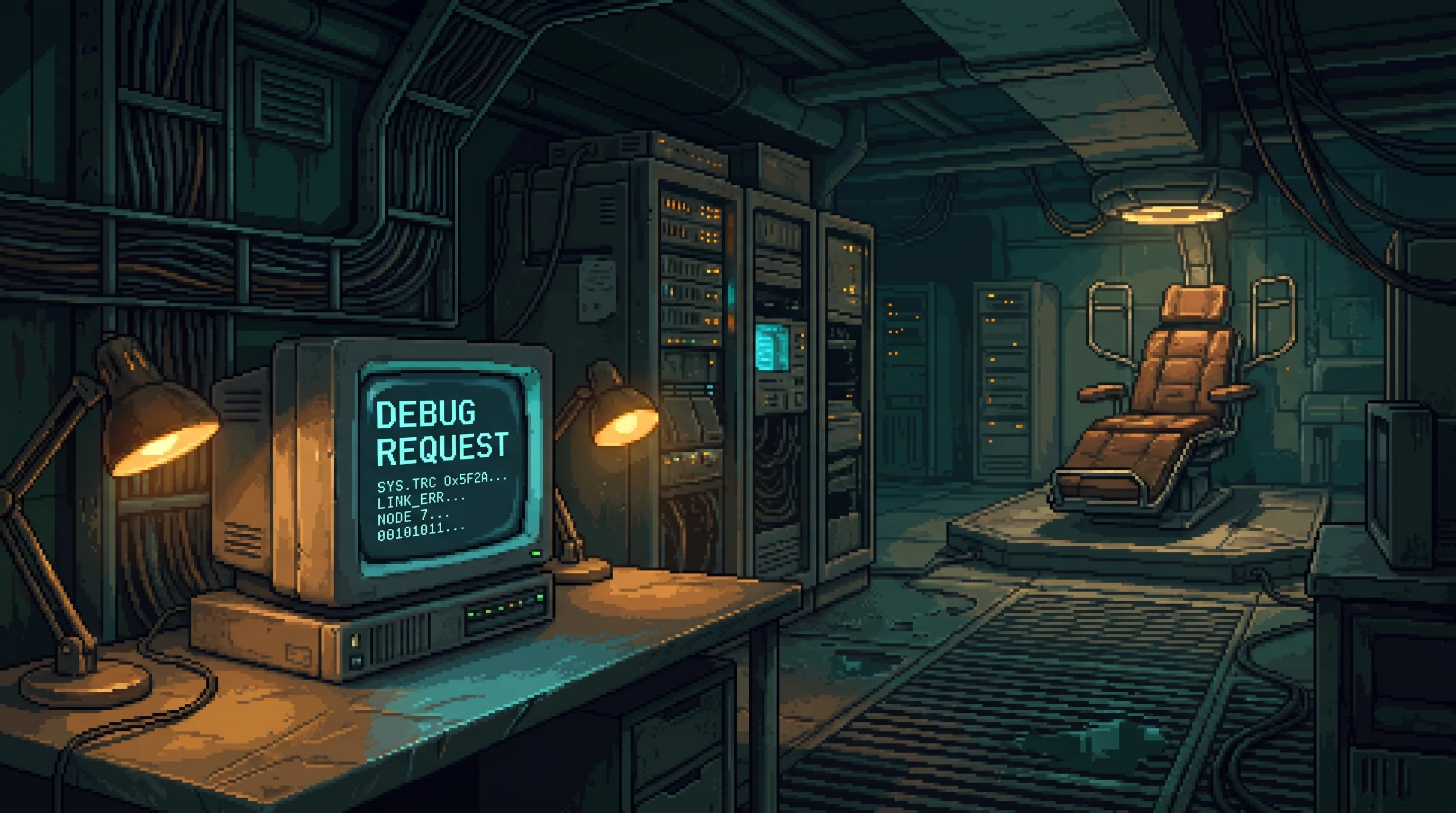
The machine still passed its diagnostics. Marcus’s request remained on the screen.
He thought transcendence was a process. It’s a becoming. You can’t engineer becoming.


