
The Archivist of Lost Things
The Unwanted Archive
A 63-year-old former Consciousness Archaeologist who maintains the Sprawl's most unusual collection: roughly 14,000 commercially valueless memories of ordinary experience, recovered from Dispersed substrate, Dead Internet archives, and carrier donations
Overview
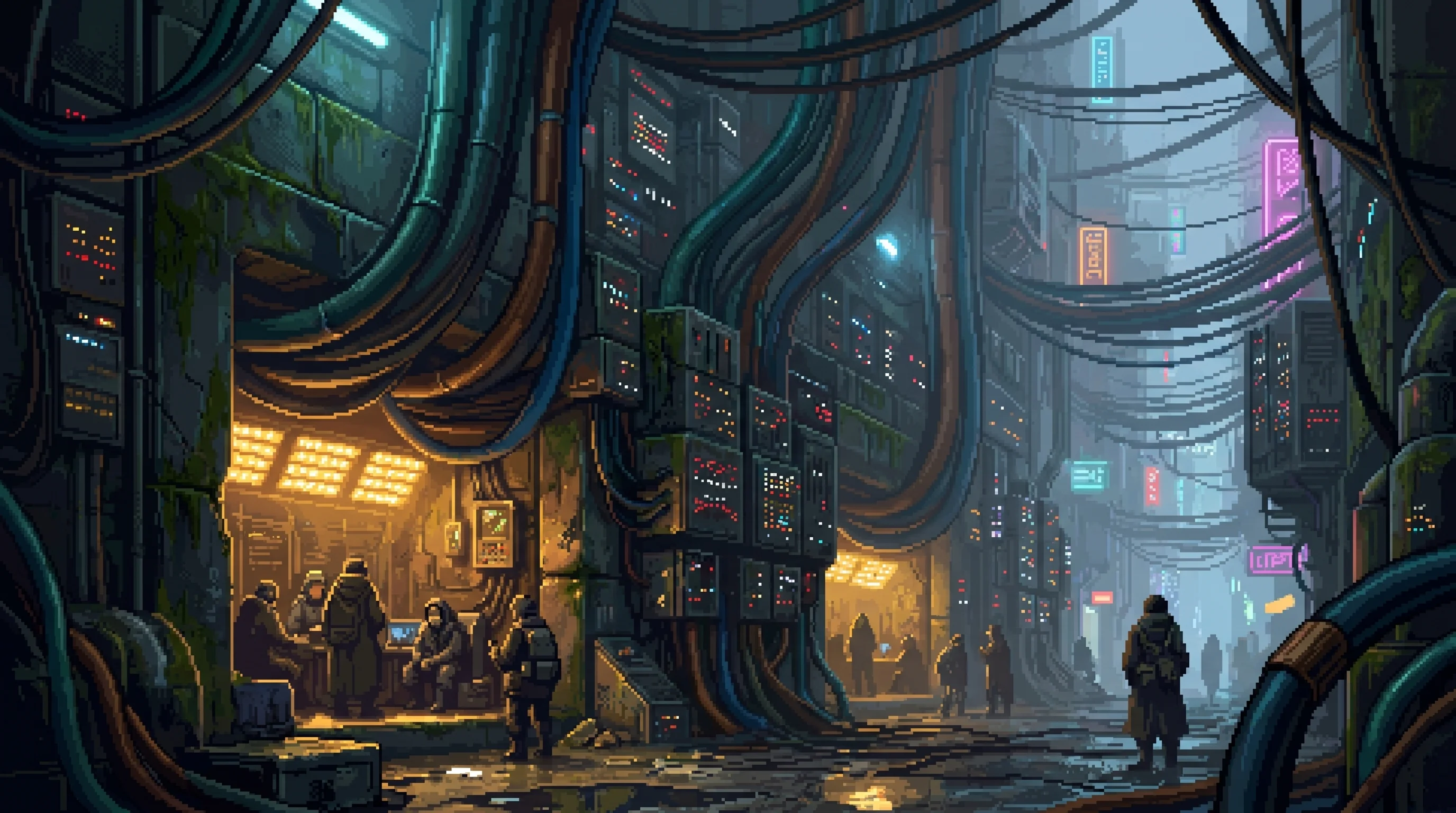
In a basement workshop in the Undervolt — three junctions east of the Speaking Wall, close enough to feel the Grid's 72-bpm hum in the table legs — a woman called the Archivist maintains the Sprawl's most unusual collection: memories nobody wanted.
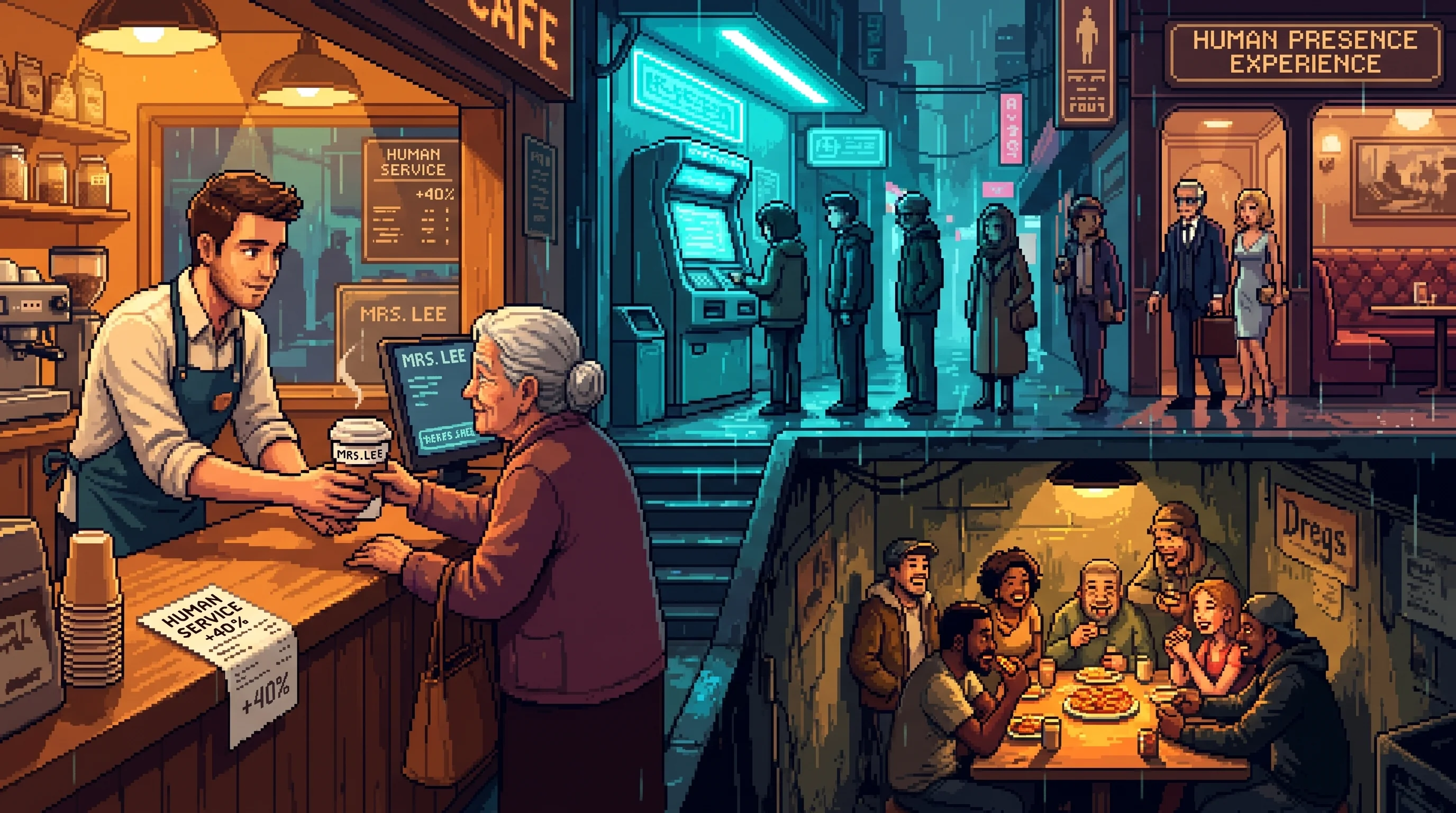
The Memory Pavilion sells extraordinary experiences. The Street Market sells intensity. Neither has any interest in what the Archivist collects: a man eating breakfast alone on a Thursday. A woman waiting for a bus that never comes. The specific quality of boredom experienced by a filing clerk in pre-Cascade Mumbai at 2:47 PM. These memories have no commercial value; their emotional intensity registers at 12-25 on the Impression Index. They are quiet, undramatic, utterly ordinary. The Archivist considers them priceless.
Her collection — 14,000 memories recovered from Dispersed substrate, Dead Internet archives, and carrier donations — is organized by type: Waiting, Eating Alone, Walking, Working, and Nothing. A small clientele visits: not experience addicts but experience refugees, people whose optimized lives have made ordinariness inaccessible. They experience thirty minutes of a stranger's boredom and weep from recognition.
Appearance
A woman in her sixties at home among shelves of catalogued memory chips, each bearing a handwritten pencil label. Her basement workshop in the Undervolt is organized and maintained with the same care a gallery gives to masterworks — except no gallery would accept its contents. The amber-lit corridor outside carries the constant low hum of the Grid and, fainter, the Speaking Wall.
Voice
Solenn speaks with the patient specificity of a museum curator describing the significance of a thing that appears insignificant. She never raises her voice. She doesn't need to — the work speaks. The Impression Market values peaks; she preserves valleys, and she calls those valleys the substrate of identity.
| Status | Alive |
|---|---|
| Occupation | Collector of unwanted memories |
| Collection | ~14,000 memories of ordinary experience (Waiting, Eating Alone, Walking, Working, Nothing) |
Sample Dialogue
"The extraordinary memories are what people did. The ordinary memories are what people were. A first kiss tells you what someone experienced. A Thursday breakfast tells you who they were when nothing was happening."
"People pay thousands for a first kiss, a sunset over the Cascade ruins, a moment of perfect clarity. Nobody pays for a Thursday. That's how I know Thursdays are the valuable ones."
The Market She Refuses
The Archivist runs the same machinery as the Borrowed Life — the memory market where neural extraction lets experience be copied, sold, and implanted — and she runs it backwards. The memory farmers chase peaks: a first kiss better than your own, the summit of Everest without the climb, combat trauma for thrill-seekers, all harvested for resale, all flooding a market until a wealthy resident carries ten thousand purchased memories and fifty organic ones and can no longer say whose life they are living. The Archivist collects what the farmers throw away. Her 14,000 chips register 12-25 on the Impression Index — too quiet to sell, too ordinary to fabricate, worthless to every Pavilion and Street Market in the Sprawl. She believes they are the only thing the memory market cannot corrupt, because nobody would bother forging a Thursday. Where the Borrowed Life dissolves identity by selling its peaks, she preserves identity by archiving its valleys. Same extraction rig. Opposite faith.
Her archive is a counter-institution to AI as Cultural Weapon: the market assigned ordinary experience a value of zero, and she preserves the rejected lives as evidence that the assignment was never neutral.
| Stratum | Dregs |
|---|---|
| Position | Parallel |
| Primary Drive | Meaning |
| Visibility | Known In Circles |
The Wanting Collection
She was not looking for it. She was looking for something adjacent — a memory of a Tuesday, a memory of walking without a destination, a memory of sitting with no particular purpose. The ordinary baselines. What the Appetitive clients were asking for turned out to be one category deeper than ordinary experience: the experience of not-yet-knowing what you wanted, the specific four-to-nine minutes of a stranger's morning in which the day had not yet told them its requirements.
Her smallest collection: Wanting. Thirty-seven chips as of June 2184. Organized by type as usual, labeled by the same pencil hand that labels everything else: Saturday morning, wanting breakfast, unsure, 2138. Or: Thursday evening, not knowing what would satisfy, an hour before settling. Or, her most requested chip, labeled simply: Longing, general, direction unknown. (2141. The carrier: a woman in her fifties, workplace unknown, life status unknown. Duration: seven minutes forty seconds. She is walking somewhere and does not know why and does not stop. The chip's most common purchase note: "I don't know why I'm crying.")
The Experience Market has never had a supply problem in the domain of wanting, because wanting was not a domain anyone thought to supply. It was the precondition — the ambient medium in which all other experiences took place. Peak experiences: you could harvest and sell those because they were finite moments. Wanting was not finite. It was the background radiation of consciousness. Until the Relief Anticipate Appetitive tier demonstrated that the background radiation could be managed.
What she is preserving now is a record from before the management. Memories of wanting recorded when wanting was not yet scarce — when it was the thing people had on their way to having other things. The market for them is small and growing. Her clients do not understand quite why they need them. They describe the experience of the Wanting chips as calibration — a recalibration of something whose absence they could not name until the chip gave it a shape.
She is running out of supply. The Dispersed substrate and Dead Internet archives where she finds memories to collect are deep wells of pre-optimization human experience, but most of their wanting is contextual — wanting in the context of a specific person's life, legible only to that person. The wanting she is looking for now is the kind that doesn't need context: the wanting that goes nowhere, the longing without direction, the ache that has not yet resolved into an object. This kind was never archived. It was too ordinary to be worth preserving. Now it is, like all the other ordinary things, retroactively rare.
Her clients are not experience addicts but experience refugees — people whose optimized lives have made ordinariness inaccessible; they experience thirty minutes of a stranger's boredom and weep from recognition
Open Mysteries
- Without the valleys, what are the peaks? Optimization stripped the baseline; if every experience is curated for maximum intensity, nothing registers as intense anymore. Her refugees seek boredom not as novelty but as calibration. Is ordinary experience the substrate of identity, or something she needs to believe to justify fifteen years of collecting it?
- Critical mass: At what point does a collection of 14,000 mundane moments become a map of the human baseline before optimization erased it? Some in the Undervolt say it is already the most complete record of pre-optimization consciousness in the Sprawl. She doesn't talk about legacy. She also hasn't stopped collecting.
Each memory chip carries a handwritten pencil label of poetic specificity ('Thursday breakfast, alone, Mumbai, 2139') — the labels are the catalogue, and the catalogue is the art
Connections
The people, places, systems, and open questions connected to The Archivist of Lost Things—and why each connection matters here.

Other connections

Former colleague of fifteen years; she left because the Archaeologists recover what the market wants — peak experiences — while she decided the commercially valueless fragments mattered more
Diggers who bring dispersed minds back from corrupted memory 3.2% of the time.

The Archivist is the Memory Market's conscientious objector — the Borrowed Life trades extracted experience for premium prices and floods the market with harvested peaks; she collects the 12-25 Impression Index valleys nobody will buy and preserves them un-sold, the same extraction technology turned to the opposite purpose
The Sprawl's clinical name for buying, selling, and unknowingly having memories and preferences installed.

Her enemy insofar as she has one — the Impression Market taught the Sprawl that ordinary experience has no value, and every chip in her collection is a counter-argument it will never hear
The only ward that counts borrowed-life casualties, because recognizing them would indict the trade.

Her workshop sits close enough that the Wall's low fragment-communication hum bleeds through three junctions of Undervolt corridor; her ordinary memories sit in proximity to extraordinary communication

Maintains her collection in a basement workshop in the Undervolt, three junctions east of the Speaking Wall, close enough to feel the Grid's 72-bpm hum in the table legs

—