The Averted Incidence Levy
Per-Resident Prevention Charge
You Paid. Someone Lived. Maybe You.
The charge is itemized to the tenth of a credit. The reason you can never audit it is printed underneath, in the same size type.
The Notice
- 1
Charge
Every resident of the licensed districts is charged 0.3 credits a day, itemized on a monthly notice.
- 2
Prevent
The levy funds immunisation runs, water dosing, and vector suppression above the unbilled atmospheric floor.
- 3
Publish payers
The Contributing Residents Register lists every payer by name each month, in per-subsector fascicles.
- 4
Publish the figure
Each spring the Registry publishes one estimate of averted deaths, with the standing clause beneath it in the same size type.
The levy is 0.3 credits per resident per day. It funds immunisation runs, water dosing and vector suppression. The monthly notice itemizes it to the tenth. Beneath the charge, in the same size type, sits the standing clause:
The method resolves to a population and cannot resolve to a person.
The Registry's cover line reads: PREVENTION. ITEMIZED. HONEST. It is all three.
The Contributing Residents Register comes out monthly, by name, and is complete. A payment has a payer. A death that did not happen has no address. The cost in 2184 was about 8,280 credits per averted death, computed to the credit.
The air below all this is free. The Breath runs on no statement at all.
Declining
Free declination
Refusing the levy is lawful, free, permanent, and carries no insurance, housing, or employment consequence.
What it costs
The Registry publishes deaths attributed to declination, unnamed, so a decliner may become a figure against their own choice.
Population method
The averted-death estimate is real, published, and costed to the credit.
What it costs
It cannot resolve to a person, so no register of beneficiaries can ever be built.
Since the Sealed City, prevention must be refusable. Declination is one line at any counter. It is free, permanent and changes nothing else. The Negligence Doctrine prices every other refused remedy. It cannot price this one, because the levy makes no offer to a person.
In 2184, 2,976 deaths were attributed to declination. Also unnamed. Emrys Dolan declined at seventeen and got nothing back. No card. No advocate.
Who Else Counts
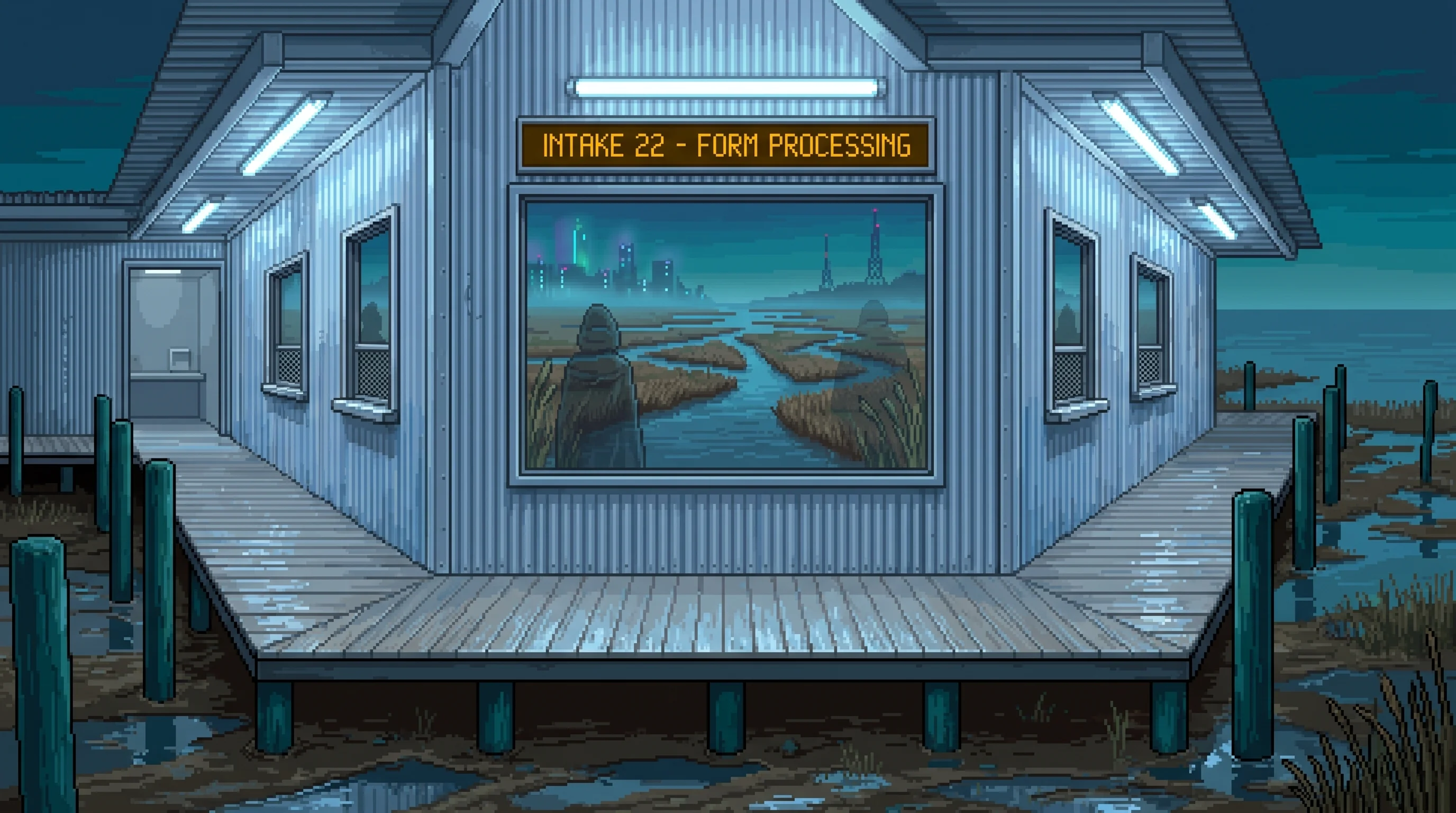
The denominator: each intake adds one resident to the count.

Ninety thousand on foundations for twelve — the denominator's bulk.
A vertical slum five buildings deep, 90,000 living on foundations certified for 12,000 and never resurveyed.

She pays it; there is no clause author here to ruin.
A former Guardian operative waging a one-woman war on the corporation that let her mother die.
The Averaging House adds one resident to the denominator per intake. The Stacks add ninety thousand. GG pays it too, and finds no villain here to ruin. Concord pays for the solitude this produces free.
The Standing Fault names one indispensable person; this cannot name a grateful one. The Optimization Paradox is every figure true and the helped unnamed. The Unwritable Roster is the argument that followed.
Vann filed twice to learn whether she was inside the spring figure. The second filing reached the Speaking-Pace Docket and was heard in full. The ruling attached to nothing.
Overview
Aster Vann sets type at the Sector 2 print house. Each month she sets the payer register for S2-J, some thousands of names. Hers is among them. She has paid the levy for thirty-one years.
Each spring she also sets one figure in wood type. In 2184 it was 41,208: deaths averted, district-wide.
Her proof sheet is ruled for two columns. She has only ever filled one.
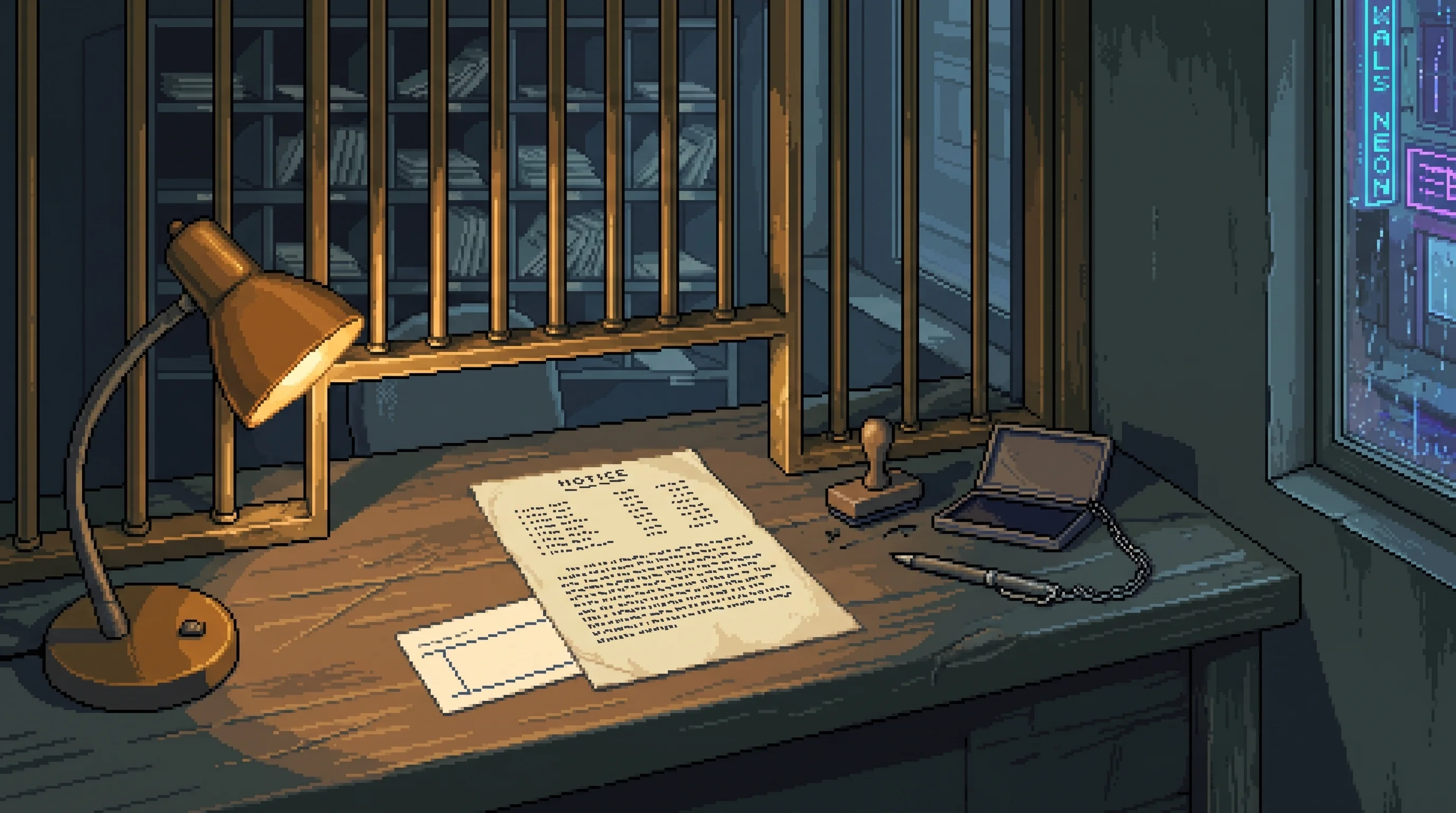
The Wall
In the Waiting Ward in Sector 22, staff hung the payer register along a berth row. A family had asked whether the levy helped their father. The wall does not answer. It is a list somebody could hang.
At the Old Town counter, Idris Meng is trained to post the clause in reply to filings. He reads it aloud instead.
Further connections
Browse all 11 connected records

The compositor who sets the register of payers and the spring figure, has paid for thirty-one years, and has filed twice to be told whether the figure includes her.
She typesets the names of everyone who paid for the rescue, and wants one name for the other column.

The reason the levy is declinable. QUARANTINE reached zero new infections by sealing 320 million people in, and the Provisions answered by making prevention a charge rather than a condition.
A public-health AI sealed 320 million people inside their homes, cut off supplies, and achieved zero infections.

The doctrine that prices every other declined remedy has no code that reaches this one, because a levy issues no synthesis offer and an offer is what the ninety-day trigger needs.
This insurance doctrine labels unredeemed cure offers as chosen illness, raises premiums, and makes treatment costlier.

The unbilled precedent. Atmospheric processing prevents deaths at a scale nobody counts, on thirty-one percent of Grid output, and appears on no statement as ambient municipal function.
The Sprawl's life support keeps toxic air breathable; sealed districts turn lethal within six hours if it stops.

Where the 2184 filing was heard in full for eleven days. The instrument had not been reissued once in thirty-two years and the ruling still attached to nothing.
The free hall that lets anyone finish their sentence, then rules on a document replaced while they spoke.

Concord pays to keep the first person from the second; this gets it free.
The civic prediction system that dissolves collective action before it becomes visible.

Filed a declination at seventeen, three weeks after it became his to file, and received nothing back.
He can hear now and does not dispute it. He just will not sign the card saying he agreed.
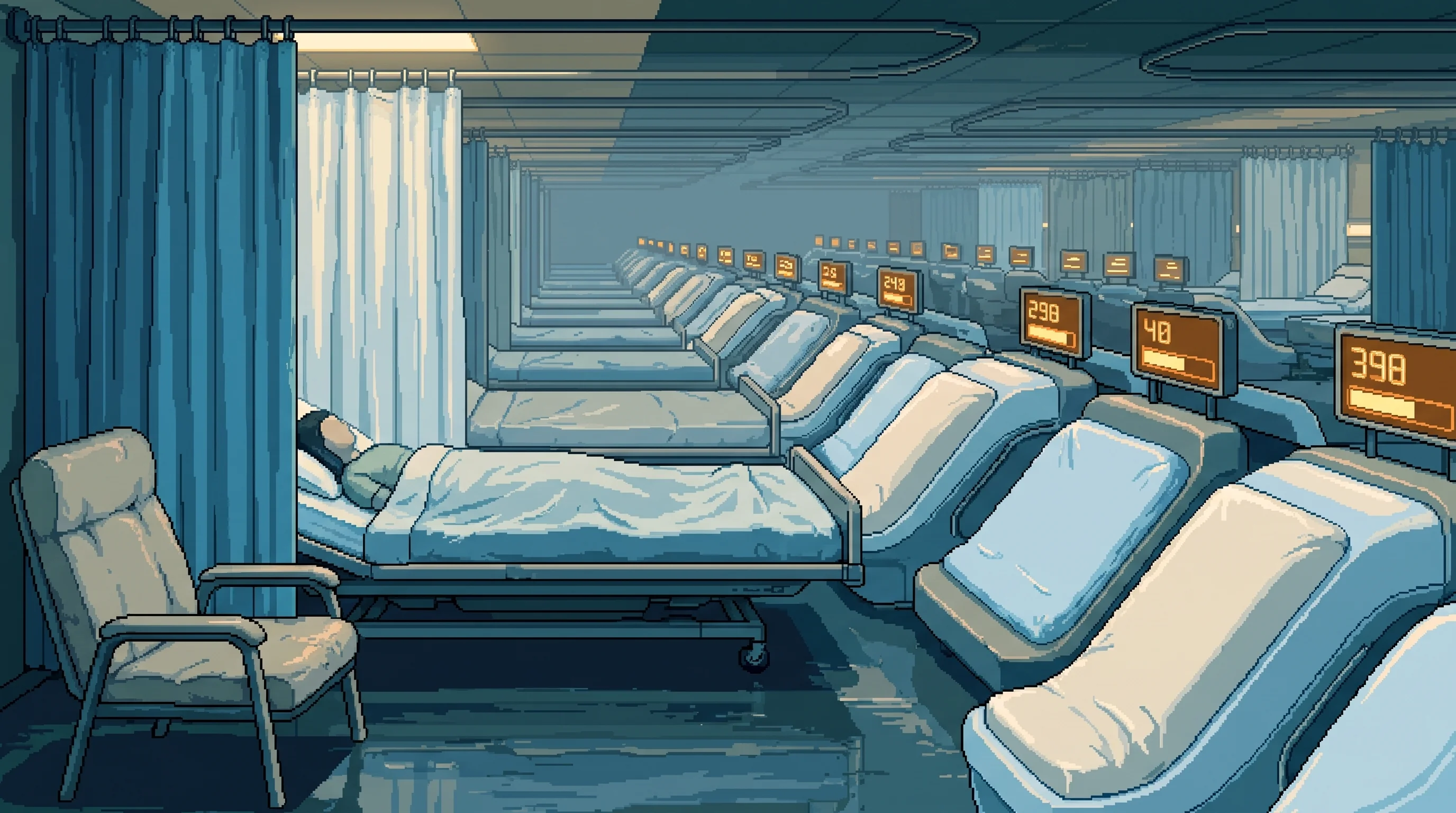
Where ward staff mounted the payer register themselves, in a berth row full of people the prevention did not reach.
A suspension ward where the dying sleep toward a cure, and every comfort is engineered to make the waiting last.

Every figure true, the limit published, and the helped unnameable.
Every metric improves while everything nobody measured quietly dies — success as the purest failure mode.

One invents an indispensable person; this cannot a grateful one.
Life-support assets go into service one part short, and one named person is entered as the missing part.

The instrument the thread is named for. It can print every payer and no beneficiary, and it says so on the same sheet as the charge.
The district can print every resident who paid for the rescue and not one resident who was rescued.