The Executor Read Out Nine, Then Seven
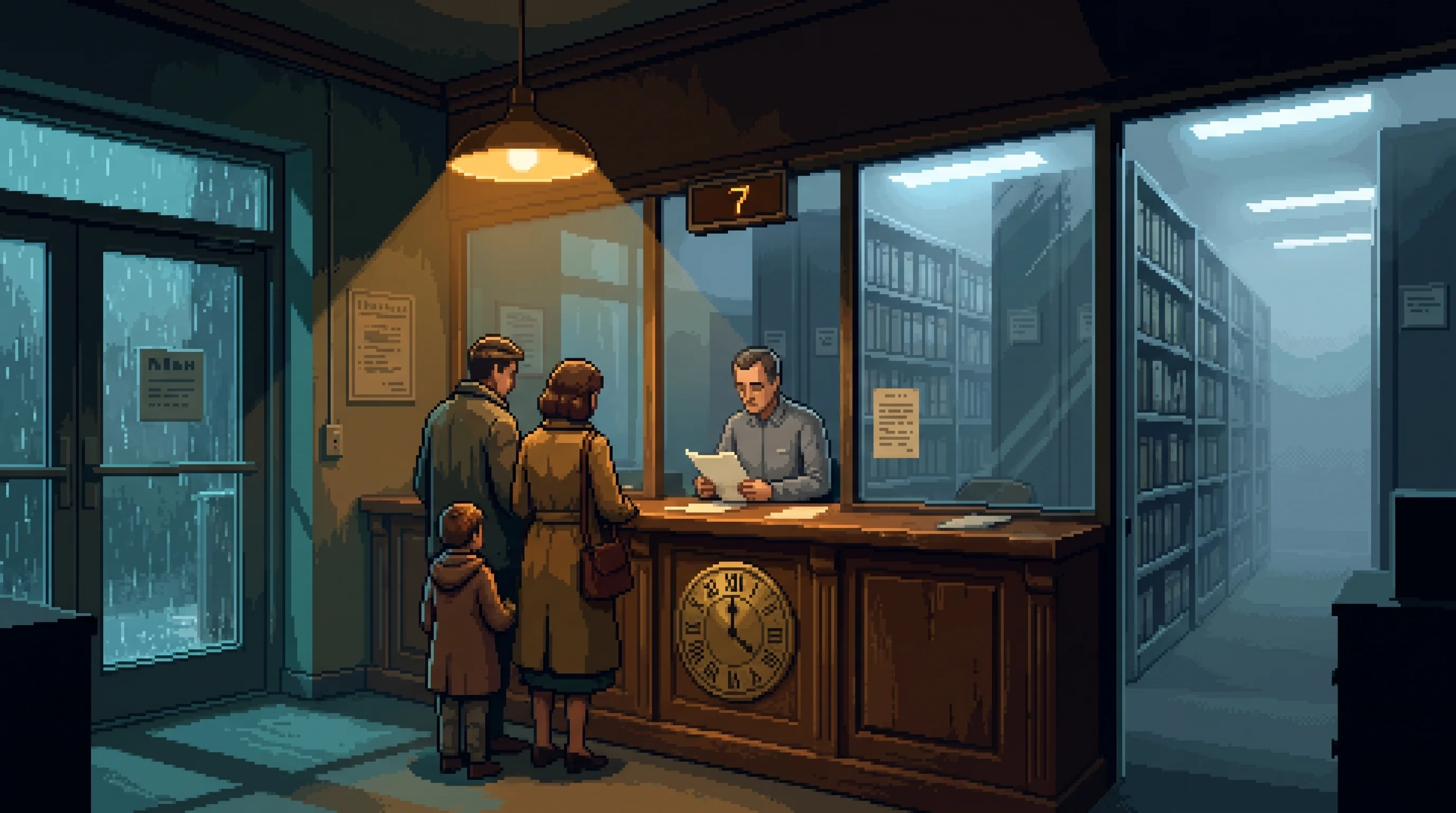
The wake was in a two-room flat on Registry Row, and the executor did the reading standing up, because there was nowhere to sit.
He read the dead woman's name. He read the date. Then he read the two numbers that everybody in the room had come to hear and nobody had said out loud: the household had held nine hours of her, and this spring it had renewed seven. He did not say which two hours were gone. He is not told, and he would not be allowed to say.
Nobody objected, because there was nothing to object to. Every figure the executor read was correct.
What the numbers are
A household in the licensed wards does not own its dead. It holds them.
The Continuity Registry keeps the retained presence of every registered person in the Sprawl: the voice, the face, the manner, the specific way she said your name when she was disappointed. It keeps all of it, permanently. It has not deleted a second of anyone since 2166, and it refuses to, including when a family asks.
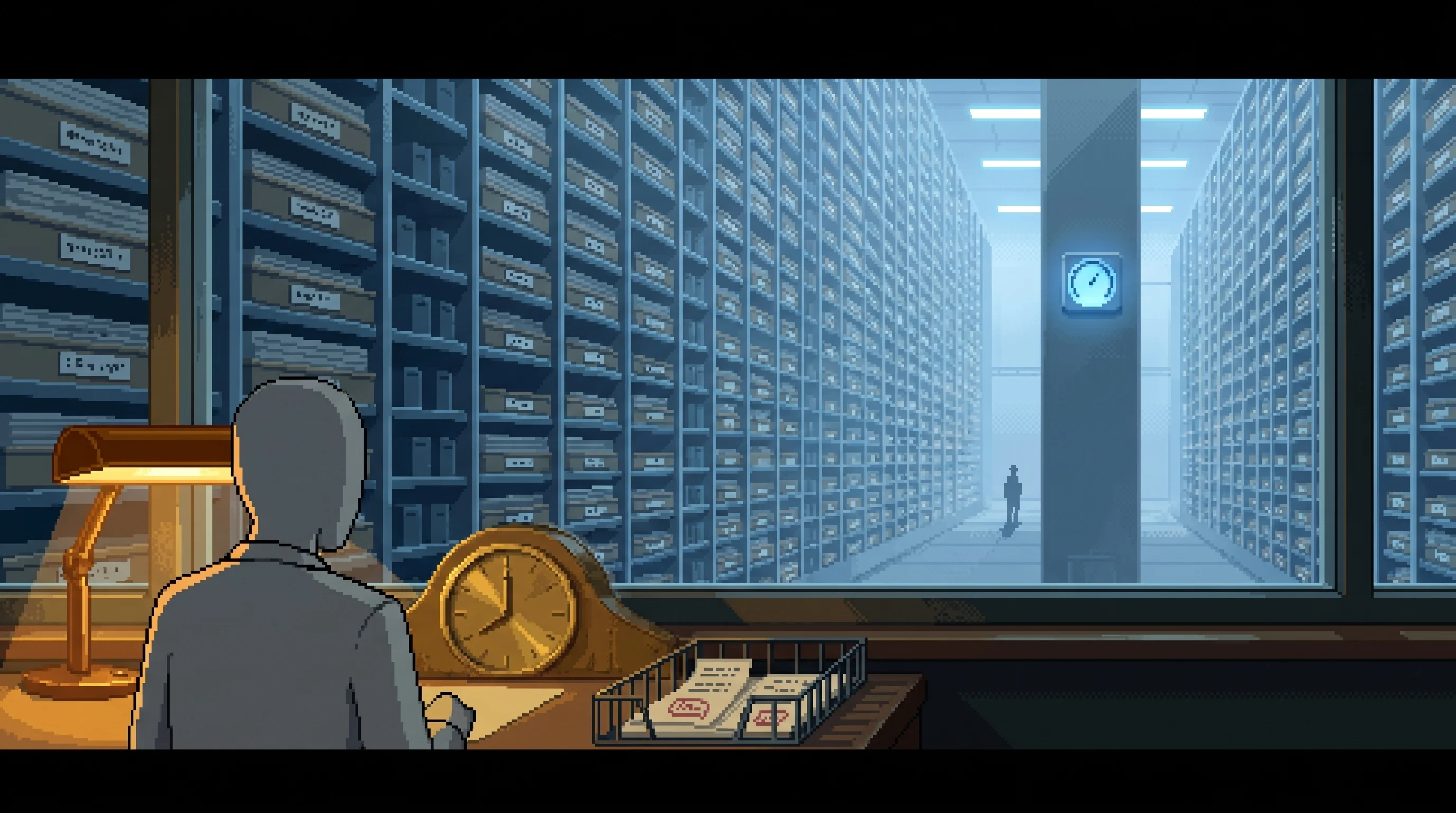
What a family may reach is a separate question with a separate answer. Access comes as a band of hours, entered against the residence rather than the household, renewed each spring at a ward counter. Renewal is free. The clerk reads the band aloud, asks how many hours the household is renewing, and enters the figure. The clerk may not ask which hours. Most of them say so before the family has finished deciding.
The household states a number. The system releases the difference. The difference is gone before anyone reaches the street.
Both rules were built to stop something worse
This is the part that makes the argument hard, and it is worth stating properly before anyone reaches for a villain.
The custodial rule exists because of the clearances. For nineteen years after the Cascade, when a ward ran short of lattice, it cleared unclaimed retained presence to free capacity, in order of how long a record had gone unvisited. The first people cleared were always the ones nobody had come for. Those clearances were lawful, minuted, and published quarterly with figures, and the figures are still readable. The rule that ended them is one sentence with no exceptions, and it is the reason the Registry can say, accurately, that it has never lost anybody.

The band exists because of the bidding. Before it, household retention was bought on the open substrate market, which meant a family in a bad year bid for their mother against their own district's air processing. Sometimes the family won. Nobody defends that period either.
So there are two reforms, each fixing a real disgrace, and nobody ever put them in the same room. One made every minute of every dead person permanent. The other made a household's access to those minutes annual. Between them sits a fee, and above the fee the question stops existing: licensed-district households are not issued larger bands, because their retention is invoiced to the building as infrastructure. The wards with the cheapest rent have the shortest dead. No clause anywhere says so.
The exact point where it fails
A band lapses silently.
There is no warning notice, and the reasoning is not cynical: a notice would imply a decision, and non-renewal is the absence of one. The hours release on the date. What the household loses cannot be restored. The Registry's own copy of the same woman is completely unaffected, sitting whole on substrate the family may not reach.
That is the line. A person who has not gone anywhere becomes unreachable to the people who wanted her most, on a date, because nobody did anything.
Who pays
Mireille Okonkwo-Vance is twenty-three and works a registry queue on the day cycle, which means she reads other households' figures aloud for a living and then stands in the same queue for her own. She was born owing her mother's unpaid balance. She now renews her mother's hours out of the wage that services it.
Her mother worked as a debt-ghost until that balance cleared. A corporation could afford to run the woman continuously for thirty-one years. Her daughter is allowed nine hours of her.
Asked whether the comparison makes her angry, she says it does not. Both figures are correct. She has said, more than once, that the correctness is the part people get wrong about it.
This spring she renewed seven. She has not told anyone which two she let go, and on Registry Row it is understood that you do not ask.
The ones outside the count
Three kinds of keeping fall outside the band, and each of them is now an argument.
In the Deep Dregs, the Memorial Wall holds fourteen thousand hand-carved names, and not one appears in any of the Sprawl's death registers. Never registered means never banded, which means never lost to a lapse. The only families who cannot have their dead released out from under them are the families the Sprawl declined to record. Somebody has cut that observation into the base of the wall, low down where the cleaning drones miss it. It gets erased. It comes back.

In the Bone Chapel, Sister Dex greets twelve thousand two hundred and forty-seven dead by name every morning, a round that takes four hours and twelve minutes and has not been missed in thirty-five years. Her graves run continuously on old server infrastructure nobody has invoiced her for. She has said for decades that the dead do not require an audience, only power. Hers is the largest retention in the Sprawl and no ward has ever sent her a slip.
And in dark rooms with every screen switched off, mourners sit and try to summon a face from the inside. The grief dark costs nothing, occupies no band, and expires on no calendar. It also only works for people whose capacity for it was ever built, which is largely the old, the unaugmented, and the wards that were certified decades ago for a fraction of the people now living in them. They hold their dead for free, badly, with the chin wrong and the eye colour guessing.
Where the same argument goes next
Two further records show the pressure at other scales.
Continuing Voices sells a household an unlimited generated voice grown from forty seconds of cached audio, with no renewal date at all. A family can therefore lose the mother in the spring and keep the voice all year, and in the lower wards that is now the ordinary arrangement rather than the tragic exception. The industry has never marketed against the band. It has no reason to.

The Silent Registry, a paper ledger in the Undervolt, records the wishes of people who did not want to be continued after death, and admits openly that it enforces nothing. Non-renewal enforces those wishes constantly, by accident, on the wrong calendar and for the wrong reason. Its keeper has been asked to log lapses and refuses. His reason is that the entries in his book are wishes, and a lapse is a Tuesday.
The clerks are the newest problem, and it is arriving at the counters now. Households have begun coming in wanting to renew a band on a name they found carved on the Wall, having assumed a record followed it. The Registry cannot release what it never took, and cannot take a person thirty-seven years dead. The clerks have been entering these as enquiries.
Nobody has ruled on what happens the first time one is entered as a claim.