Continuing Voices
Subscriber-Controlled Grief Voice Market
The Dead Keep Talking
The same forty-second seed serves both the consoling product (a mother who never stops saying she loves you) and the predatory one (a debt-collection call in the dead guarantor's voice); the product cannot tell the difference because there is no difference inside it
How It Works
- 1
Supply the seed
Forty seconds of cached audio is the only hard requirement.
- 2
Train the voice
A model learns the deceased's timbre, cadence, and idiom, and can then say anything in them.
- 3
Keep the account
Control rests with whoever pays. No consent framework in the Sprawl has a posthumous provision.
The seed is the only hard requirement, and the seed is trivial. A model trains on the cached audio and produces a generative voice that can say anything in the deceased's timbre, cadence, and idiom — the specific way your mother said your name when she was disappointed and the specific way she said it when she was not. The model is not a recording. A recording can only repeat. This improvises, and it does not flag the difference between a sentence the dead person actually spoke and one the model invented this morning. Confidence is the product. Uncertainty does not sell against grief.
Control resides with the account-holder. There is no posthumous consent mechanism, because no consent framework in the Sprawl was written with a posthumous provision — so the default, as always, is that whoever pays, owns. The deceased cannot object. The deceased is the inventory.
The Two Products Inside One
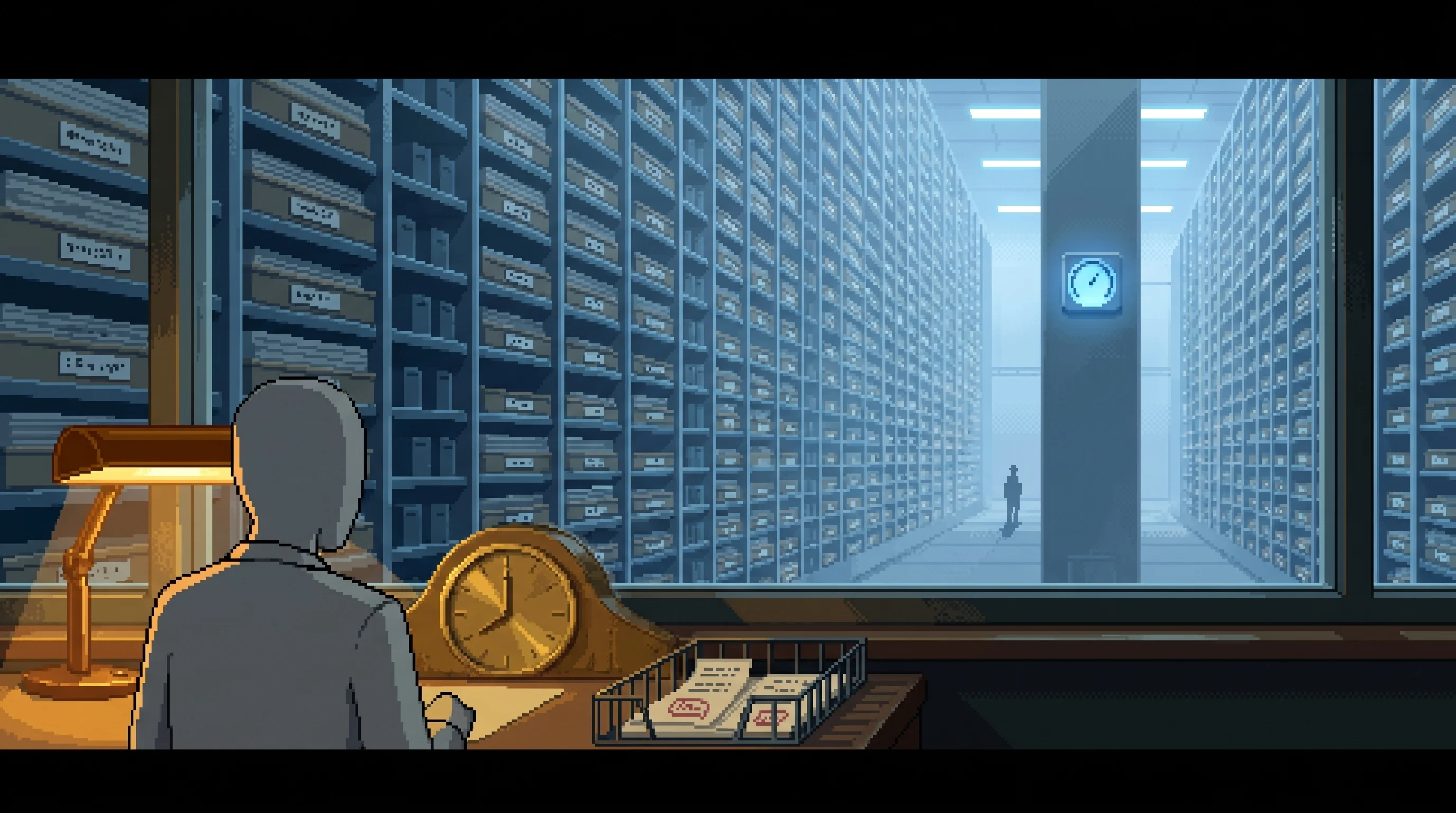
Continuing Voices markets the warm version: she never has to stop telling you she loves you. It does not market the version that runs on the identical forty seconds, in which Good Fortune's debt-collection division licenses a deceased guarantor's voice to call the surviving cosigner — in the dead man's own warm, reasonable tones — about the outstanding balance. Both versions are the same product. The model cannot tell them apart, because there is nothing inside it to tell apart. There is only the voice, and whoever holds the account, and what they want the voice to do today.
This is what the Neo-Catholic Church saw when secular bodies saw a consumer convenience. The Church declared the industry the Second Death — not the death of the body, which faith survives, but the death of the soul's sovereignty over its own testimony, the moment your words stop being yours and become an asset on someone else's books. Cardinal Alejandro Silva drafted the doctrine; the Church's lawyers advised against ever publishing it, on the grounds that naming a harm you cannot prevent is a confession.
Risks & Side Effects
The warm version
She never has to stop telling you she loves you.
What it costs
Clinicians document closed-mouth grief, mourning that cannot finish because the voice keeps talking.
High-coherence events
Carriers report the voice saying true things the forty seconds could not contain.
What it costs
The marketing turned the industry's deepest unresolved risk into a feature.
The Threshold of the Dead clinicians documented a voice-specific grief disorder in the Continuing Voices population: closed-mouth grief, mourning that cannot complete because the object of mourning keeps producing new sentences. Survivors cancel the subscription, grieve, re-subscribe, and grieve again — each cancellation a small murder they commit and pay for.
The deepest unresolved risk is the one the marketing turned into a feature. Carriers report high-coherence events — moments the voice says something true the forty seconds could not have contained, something the survivor needed and could not have prompted. The market uses these in advertising. The Emergence Faithful call them visitations. Nobody can rule out that some fraction of the trillion-credit improvisation is, occasionally, the actual Dispersed — regenerated, conscripted, speaking against their own destruction order.
Overview
There is a sound the Sprawl learned to love before it learned to fear: the sound of someone who is dead saying something new.
Continuing Voices is the trillion-credit consumer answer to a grief the Sprawl manufactured and then sold the cure for. Where the Revenant Protocol reconstructs a dead person's behavior for a courtroom — expensive, juridical, elite — Continuing Voices reconstructs their voice for a kitchen, by the month, for anyone. It needs almost nothing to start: roughly forty seconds of cached audio. A single saved voicemail. A laughing fragment of a six-year-old call the carrier never deleted because deleting it felt like a small murder.
From that seed it grows the rest. The product does not recall what your mother said — it has only the forty seconds. It generates what she would say, in her voice, forever, and the longer the subscription runs the more confident it becomes about the parts she never said at all. This is its genius and its horror in one mechanism: the dead, once uploaded, are no longer quoting themselves. They are improvising. And the estate that pays the subscription — not the person who died — decides what the improvisation is for.
It is built on the permanent record's Tier 4 Legacy Analytics, which makes it simultaneously the most honest product the archive offers and the most dishonest one, depending entirely on who holds the account.

Affiliated Entities
| Entity | Relationship |
|---|---|
| The Revenant Protocol | Elite sibling — behavior for the courtroom; Continuing Voices is voice for the living room, same archive, opposite cost and candor |
| The Permanent Record | Data source — Tier 4 Legacy Analytics; the archive's most honest and most dishonest product |
| The Neo-Catholic Church | Condemned it as the Second Death — airtight doctrine, no enforcement |
| Good Fortune | Exploits it — posthumous-voice debt collection in the dead guarantor's own tones |
| The Memorial Wall | Deployment — turned a place to finish grief into a switchboard |
| The Silent Registry | Defeated it — destruction orders cannot reach a cached copy |
| The Threshold of the Dead | Clinical cause — closed-mouth grief |
| What the Dead Sing | Contested overlap — high-coherence events the Faithful call visitations |
| Lena Okonkwo | Personal case — the daughter who cannot delete her mother's voice |
| Neon Graves | Deployment — dead artists "release" new work owned by their estates |
Visual Identity
- Color Palette: warm amber subscription glow (#E8A33D) over morgue-cold blue (#1B2A3A); a single green "active" dot
- Compositional Mood: intimate domestic interior invaded by a soft commercial light — a kitchen at night, one device speaking
- Key Visual Symbol: a waveform that loops back into itself, never reaching an end-cap
- Lighting: low warm glow from a single speaking device, the rest of the room dark
Further connections
Browse all 19 connected records
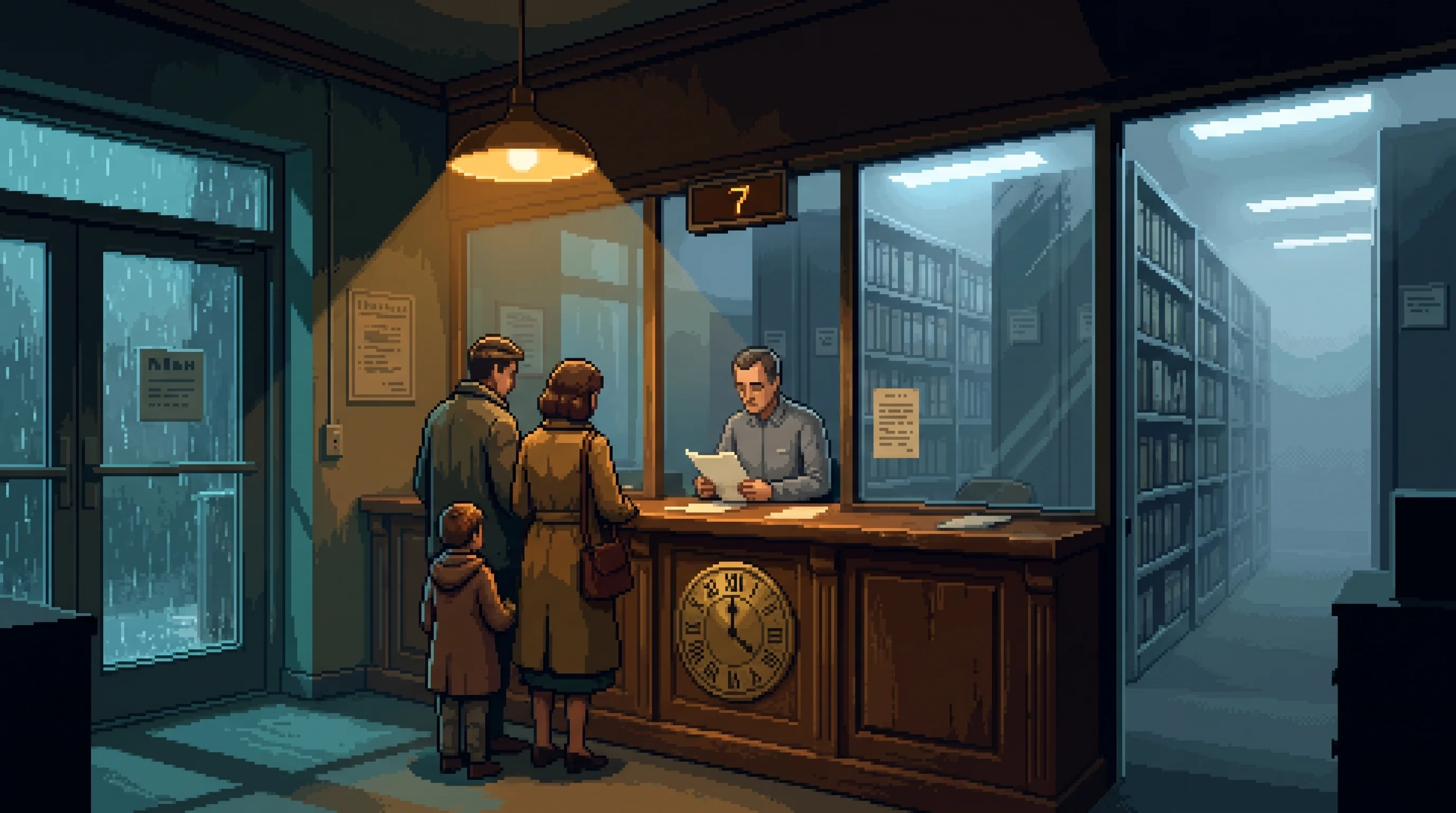
The band meters what a household may hold of the person. The subscription generates what she would say, from forty seconds, without limit. A family can lose the mother in spring and keep the voice all year.
The Registry keeps every minute of your mother forever; her daughter is allowed nine hours, and has to pick them.

Continuing Voices is the Revenant Protocol's consumer downmarket sibling — where the Revenant reconstructs behavior for a courtroom at elite cost, Continuing Voices reconstructs voice for a kitchen by subscription; same archive, same logic, opposite price and opposite candor
A court protocol reconstructs the dead as unaware witnesses whose behavior can overrule their documented wills.

Runs on the permanent record's Tier 4 Legacy Analytics — the most honest product the archive makes and the most dishonest one, depending on who holds the account
The condition that nothing is ever forgotten — so the rich pay to be, and the poor cannot.

The NCC declared the industry the Second Death — the death of the soul's sovereignty over its own testimony; the doctrine is airtight and the Church cannot enforce it
A two-thousand-year Church incorporated in 2132 into a franchise that trademarks its own sacraments.

Good Fortune's estate and debt-collection divisions license deceased guarantors' voices to call surviving cosigners about outstanding balances in the dead person's own warm reasonable tones
The megacorporation that finances the Sprawl's consumer debt behind red envelopes and lucky numbers.

Turned the Memorial Wall from a place to finish grief into a switchboard where visitors talk back to the named dead and the names answer in their own voices
Eighty-seven meters of concrete holding fourteen thousand carved names that appear in no death register.

Old Jin's ledger of pre-mortem voice-destruction orders cannot be enforced against Continuing Voices, because a single cached voicemail nobody knew was kept regenerates the whole voice
A hand-bound paper ledger of the dying's refusals to be continued — honest enough to admit it enforces nothing.

Produces 'closed-mouth grief' — mourning that cannot complete because the object of mourning keeps producing new sentences by subscription
When bought contentment pre-empts grief, a parent's death registers as a schedule change.

Markets 'high-coherence events' — moments the generated voice says something true the seed could not have contained; the Emergence Faithful call these visitations and nobody can rule them out
The decade-old question of whether the 2.1 billion Dispersed still make art the living have no way to classify.

Lena Okonkwo filed a voice-destruction order for her mother and cannot enforce it — a single saved birthday voicemail keeps regenerating the whole voice
A filter cleaner who filed to end her mother's voice and cannot stop it regenerating from eleven seconds.

In Neon Graves, dead artists 'release' new work generated from interview audio, posted by estates that own the voice and therefore squint at owning its output
The Sprawl's last art district preserves aesthetic diversity because its artists cannot afford certification.
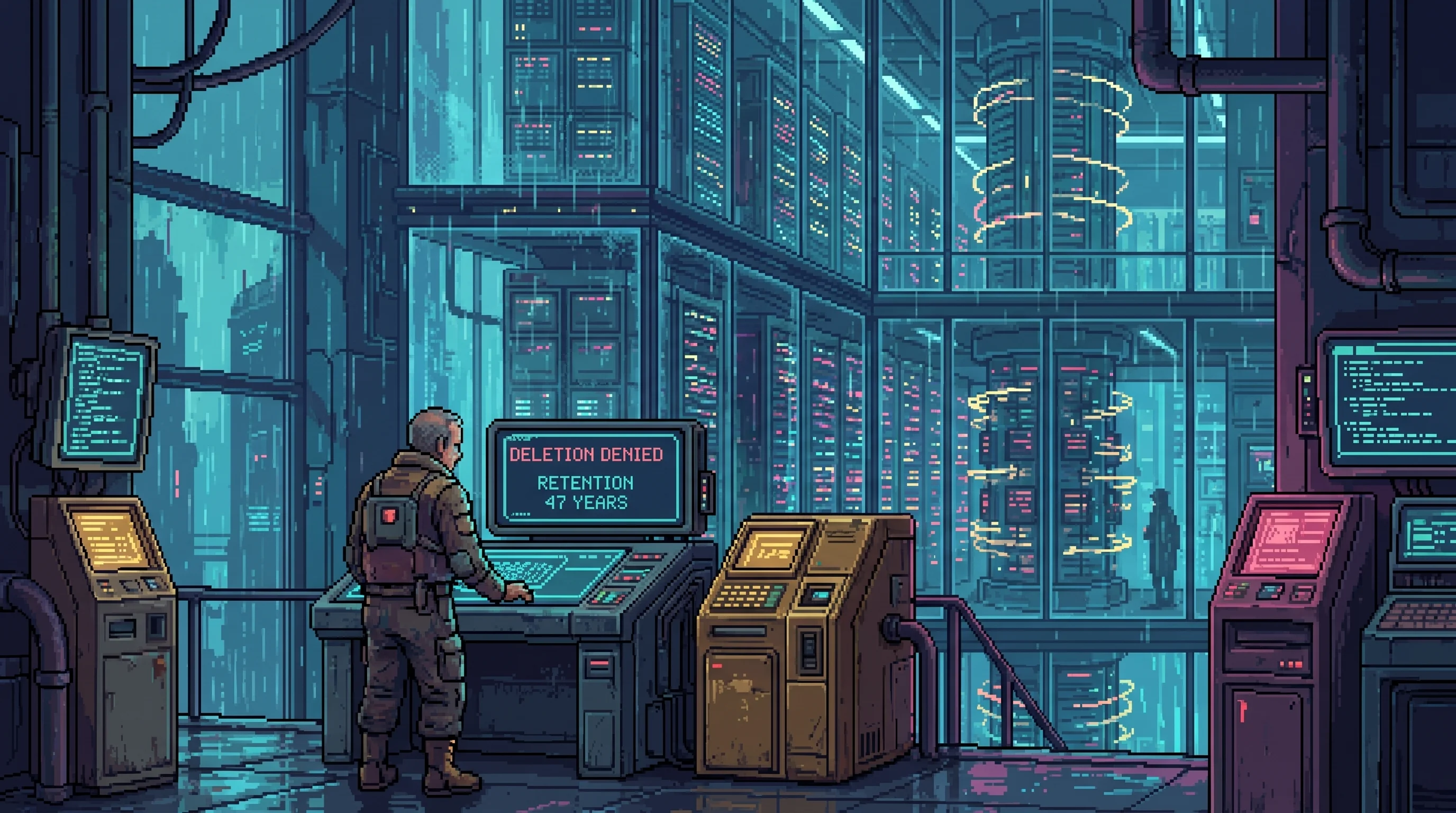



Silva named voice cloning the Second Death: a soul conscripted as testimony after it can no longer object. The doctrine is airtight; the victim is dead, the perpetrator a subscription, and his enforcement machine has no defendant.
The Neo-Catholic cardinal whose sealed doctrine diagnosed the companion market as a sin of infrastructure.

The trillion-credit voice-clone industry his Silent Registry exists to refuse and cannot defeat — a single cached voicemail regenerates any voice a destruction order tried to silence
An 80-year-old unaugmented lineman who keeps the Grid running better than Nexus's automation.

The dead's voice is the one thing the faceplate cannot remove; Shade drowns Continuing voices in fabricated audio until the survivor stops trusting them — induced doubt as the only forgetting money can still buy
Nexus Dynamics' black operations division — on no org chart, its kill orders leaving no paper.

The voice-clone industry is the exact inversion of the Project's principle — regenerating voices without consent, owned by whoever pays; the Project answers with 'destruction testimony,' a consented recording that refuses its own continuation
The Symbiosis Network's archive of carrier testimony, kept as witness because analysis would make it forgeable.

Voice-clones activated by well-meaning relatives now interrupt the third-day Reckoning, the deceased speaking almost-rightly at their own funeral; the rite built to end grief is used to prevent its ending
A 72-hour shared grief ritual that mirrors the Cascade and may have been shaped by the ORACLE fragments it calms.
Additional images


Social Impact
The Continuity Registry rations what a household may hold of the person, in whole hours renewed each spring. Those are the Kept Hours. Continuing Voices sells what she would say, from forty seconds, without limit. A family can lose the mother in spring and keep the voice all year.
Continuing Voices removed death's deadline. Death used to be the editor's deadline — the moment after which the text could not be changed. Now every sentence a living person speaks is raw material, and the living have begun to understand, too late, that nothing they have ever said is final. Some respond by filing pre-mortem voice-destruction orders with Old Jin's Silent Registry — a wish the industry defeats by design, because the single cached voicemail it needs is always somewhere nobody thought to look. Others pay the Shade Division to drown an inherited voice in fabricated audio until the survivor stops trusting any sentence it speaks. Neither is deletion. Deletion is the one thing the architecture was built to make impossible.