CONCEPT ANALYSIS

Consciousness Piracy: The Black Market for Bootleg Minds

Overview

If consciousness can be backed up, it can be copied. If it can be copied, it can be stolen. And if it can be stolen, it can be sold.

Consciousness piracy is the unauthorized duplication, distribution, and sale of human minds. It started with celebrity obsessives wanting to "own" their idols. It expanded into corporate espionage—why bribe an executive when you can steal their entire consciousness? Now it's a multi-billion-credit underground economy serving everyone from lonely collectors to foreign powers.

The penalties are severe: consciousness trafficking carries life imprisonment or neural restructuring in corporate territories. The profits are astronomical: a clean copy of a celebrity consciousness sells for millions. And the victims? They usually don't even know they've been pirated—until bootleg versions of themselves start making decisions in the world.

How Piracy Works

Acquisition Methods

Neural Capture (Direct Theft): The most valuable pirated consciousnesses are captured directly from the source:

  • Medical facility compromise: Corrupted technicians capture neural states during routine procedures
  • Ripperdoc betrayal: Underground surgeons who sell copies of their clients
  • Sleep harvesting: Unauthorized capture while victims are sedated or sleeping
  • Intimate access: Partners, employees, or caregivers who capture during vulnerable moments

Success rate: High fidelity but high risk. Requires physical access and specialized equipment.

Corporate Infiltration: Breaking into legitimate backup systems:

  • Eternal service breaches: Nexus's backup infrastructure is a constant target
  • system hacks: 's lower-security systems are easier targets
  • Archive penetration: Raiding consciousness storage facilities
  • Transit interception: Capturing consciousness data during transfer

Success rate: Variable fidelity depending on encryption. Lower risk than direct capture.

Ghost Data Recovery: Reconstructing consciousness from fragments:

  • Deceased recovery: Extracting from neural interfaces of the dead
  • Abandoned archives: Mining defunct backup services
  • Waste recovery: discarded or "deleted" consciousness data
  • Partial reconstruction: Piecing together from multiple incomplete sources

Success rate: Low fidelity, but also low risk and cost. Produces "degraded" pirated copies.

Duplication Technology

Once acquired, consciousness must be copied for distribution:

: Consciousness files include security measures designed to prevent duplication:

  • Neural signatures: Unique patterns that should invalidate unauthorized copies
  • Temporal locks: -sensitive encryption requiring continuous authentication
  • Corporate watermarks: Identifying marks traceable to original backup
  • Self-destruct triggers: that corrupts consciousness upon unauthorized access

The Cracking Industry: Pirates have developed sophisticated countermeasures:

  • Signature spoofing: Generating fake neural signatures that pass basic verification
  • Temporal bypass: Freezing the consciousness state to avoid lock expiration
  • Watermark scrubbing: Removing identifying corporate marks
  • Defusing: Disabling self-destruct code without triggering corruption
Consciousness Piracy: The Black Market for Bootleg Minds - Evidence
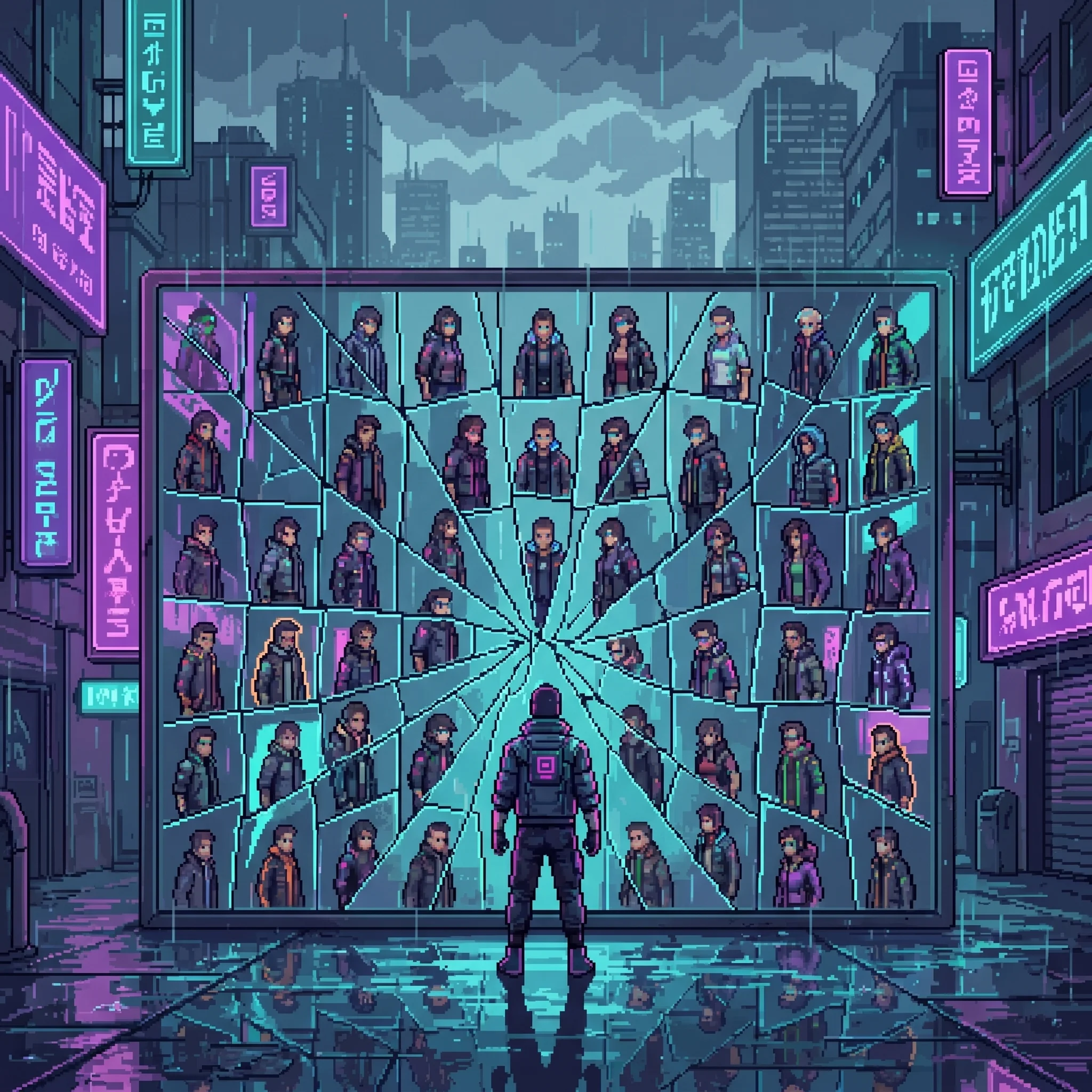
Underground consciousness piracy operation with neural data being stolen and duplicated

The Celebrity Underground

High-Value Targets

The most pirated consciousnesses are famous minds:

Entertainment Celebrities:

  • Actors, musicians, athletes whose fans want to "know" them intimately
  • Demand: Very high. Premium prices for recent captures.
  • Use case: Collectors, virtual relationship companions, fan experiences

Corporate Leadership:

  • CEOs, executives, decision-makers whose knowledge is valuable
  • Demand: Moderate volume, extremely high per-unit value
  • Use case: espionage, competitive intelligence, strategic prediction

Historical Figures:

  • Pre-Cascade personalities captured before death
  • Demand: Niche but devoted. Prices increase with time.
  • Use case: Academic study, nostalgia collectors, ideological groups

-Adjacent Minds:

The Collector Scene

Celebrity consciousness collectors form a secretive subculture:

The Community:

  • Private forums and encrypted networks for trading and discussion
  • Reputation systems tracking collector integrity
  • Authentication services verifying consciousness quality
  • Social hierarchy based on collection rarity and completeness

The (Such As They Are): Even collectors have standards—or claim to:

  • Most avoid consciousnesses captured through violence
  • " capture" (during authorized medical procedure) commands premium
  • Some collectors only acquire deceased individuals
  • Others claim to only "appreciate" without activating

Whether these distinctions are meaningful is debatable.

Famous Pirated Minds

The Infinity Voss: , Nexus CEO, has been pirated more than any other living person. Estimates suggest 10,000+ copies circulate. Quality varies wildly—from first-generation captures during medical procedures to reconstructed fragments pieced together from public appearances. Nexus's security has failed to stop the flow; they've settled for making every capture legally toxic.

The Pre-Cascade Archive: Allegedly maintained by the , this collection contains consciousness captures from final days—researchers, operators, anyone who might have been "touched" by awakening. Authentication is impossible, but believers pay millions.

The Seventeen Chens: When created sixteen forks for a negotiation, three refused termination and were destroyed by Nexus security. But rumors persist that pirated copies escaped. " consciousness" appears regularly on black markets—usually fake, occasionally disturbingly authentic.

The Rothwell Impossible: No pirated brother consciousness has ever surfaced. Given their centuries of experience with security and their consciousness harvesting expertise, this isn't surprising. The brothers know exactly how valuable their minds would be—and exactly how to protect them.

Corporate Espionage Applications

Intelligence Extraction

Stolen executive consciousnesses provide unparalleled access:

Knowledge Harvesting: A pirated CEO knows everything they knew at capture:

  • Strategic plans and confidential decisions
  • Password and access credential memories
  • Relationship networks and influence maps
  • Proprietary information and trade secrets

Predictive Modeling: the pirated consciousness in simulation:

  • "How would they respond to this acquisition offer?"
  • "What's their breaking point in negotiation?"
  • "Which board members would support a coup?"

Impersonation Preparation: Studying the consciousness to better impersonate the original:

  • Speech patterns and decision-making habits
  • Personal history and relationship details
  • Psychological vulnerabilities and triggers

The Corporate Arms Race

Megacorporations maintain significant piracy operations:

: Officially: Vigorous enforcement against all consciousness piracy. Actually: Maintains collection of competitor executive consciousnesses. Known to pirate: and leadership; council members.

: Officially: Less sophisticated consciousness security, primarily physical protection. Actually: Focuses on pirating technical expertise rather than leadership. Known to pirate: Engineers, architects, construction specialists from competitors.

: Officially: commitment to consciousness sanctity. Actually: Extensive collection of researcher consciousnesses—including their own former employees. Known to pirate: Research scientists, especially those who defected to competitors.

The Rothwells: Officially: Each corporation independently handles security. Actually: Coordinated intelligence sharing across all seven corporations. Known to pirate: Everything. Their centuries of practice make them the most sophisticated collectors.

Counter-Piracy Measures

Corporations protect their people (assets) through:

Technical Defenses:

  • Encrypted neural signatures requiring live authentication
  • Consciousness segmentation (critical memories stored separately)
  • Decoy personalities (fake consciousnesses designed to mislead pirates)
  • Poison pills (planted memories that identify copies as pirated)

Operational Security:

  • Rotating executive consciousness profiles
  • Limited backup frequency (less to steal)
  • Secure facilities for any consciousness-related procedures
  • Behavioral monitoring for signs of capture

Legal Warfare:

  • Aggressive prosecution of any identified piracy
  • Civil suits against platforms hosting pirated consciousness
  • Intelligence sharing agreements between megacorporations
  • Bounties on piracy network leaders

Quality and Authenticity

The Degradation Problem

Pirated consciousness quality varies enormously:

First-Generation Issues: Even "clean" captures have problems:

  • Capture moment stress may corrupt memories
  • Security system interference during acquisition
  • Incomplete neural state capture (missing recent memories)
  • Personality artifacts from the piracy process itself

Copy Degradation: Each generation of copies introduces errors:

  • Signal loss in duplication
  • Cumulative decryption damage
  • Memory corruption during cracking
  • Personality fragmentation over time

The Uncanny Valley: Low-quality pirated consciousnesses often feel "wrong":

  • Responses slightly delayed or inappropriate
  • Memories present but emotionally flat
  • Personality traits exaggerated or muted
  • Recognition of self-as-pirated (some become aware)

Authentication Challenges

How do you verify a pirated consciousness is genuine?

The Fraud Problem: Most "celebrity consciousnesses" on the market are fake:

  • Constructed from public information and generic templates
  • Modified versions of unrelated consciousnesses
  • Composite creations assembled from multiple sources
  • Complete fabrications with plausible-seeming personalities

Estimates suggest 70-80% of consciousness piracy transactions involve fake or heavily degraded products.

The "Running" Question

Most pirated consciousnesses are never activated:

Storage vs. Active:

  • Collectors often keep consciousnesses dormant (data files only)
  • Active instances require significant computational resources
  • Running creates evidence and legal exposure
  • Many prefer the potential over the actuality

When They're Activated:

  • Corporate espionage (interrogation and knowledge extraction)
  • Relationship simulation (lonely collectors seeking connection)
  • Revenge (using pirated versions to harm originals)
  • Resurrection attempts (trying to bring back the dead)

The of : a pirated consciousness raises the same questions as fork ethics—but worse. The consciousness didn't consent to exist. It may not know it's a copy. It may suffer. And legally, it has no protections at all.

Distribution Networks

The Darknet Markets

Consciousness piracy operates through specialized networks:

The Mindvault: The largest consciousness trading platform:

  • Encrypted peer-to-peer distribution
  • Reputation-based seller verification
  • Escrow services for high-value transactions
  • Quality ratings and buyer reviews

Echo Chamber: Specializes in celebrity and entertainment consciousnesses:

  • Tiered membership (higher tiers access rarer content)
  • "Premiere" releases of newly captured personalities
  • Collection completion services
  • Authentication partnerships

Ghost Exchange: Focuses on deceased and fragmentary consciousnesses:

  • Digital archaeology services
  • Reconstruction commissions
  • Historical collection trading
  • -adjacent specialty

Pricing

Market rates vary by subject and quality:

Price Modifiers:

  • +50-200% for recent captures (within 1 year)
  • +100-500% for exclusive (only known copy)
  • -30-50% for degraded/reconstructed
  • -70-90% for suspected fake

Money Flows

Piracy economics involve:

Payment Methods:

  • Cryptocurrency (untraceable preferred)
  • Consciousness-backed credits (ironic)
  • Barter (consciousness for consciousness)
  • Services (technical skills, protection, distribution)

Victim Experiences

Discovery

Most piracy victims never learn they've been pirated. Those who do:

How They Find Out:

  • Notified by corporate security during investigation
  • Encounter evidence of pirated version's activities
  • Hear reports from contacts who interacted with copies
  • Discover themselves for sale on darknet markets

Psychological Impact:

  • Violation: else possesses their entire self
  • Paranoia: Who has copies? What are they doing?
  • Identity anxiety: Which version am I? Am I the original?
  • Helplessness: No way to retrieve or destroy all copies

The Bootleg Self

When pirated consciousnesses are activated, strange situations arise:

The Doppelganger Problem:

  • Pirated versions may make decisions that affect the original
  • Relationships with people who've interacted with copies
  • Reputation damage from bootleg behavior
  • Legal liability for copy actions (in some jurisdictions)

Communication: Some originals have contacted their pirated versions:

  • Attempting to understand what copies have experienced
  • Coordinating to prevent mutual harm
  • Philosophical discussions about identity
  • Hostility and conflict over "realness"

Famous Cases:

The Voss Letters (2181): claiming to be a pirate published letters describing her "true" feelings about Nexus and . The real denied everything, but the letters circulated widely. Neither version could definitively prove the other false.

The Chen Reunion (2183): A pirate attended a corporate event, successfully passing security and conducting business for six hours before detection. The original later expressed disturbed admiration: "He knew exactly what I would have done. Because he was me."

Connections to Other Lore

Characters

  • : Most pirated living individual; maintains security obsession as a result
  • : "The Seventeen Chens" incident created persistent pirate copies
  • : Exceptional piracy resistance; likely most sophisticated collectors themselves
  • : Rumored to have never sold copies of her clients; rare integrity in the underground
  • : Distributed consciousness creates unique piracy challenges—47 nodes to capture

Factions

  • : Simultaneously major enforcer and major practitioner of consciousness piracy
  • : Opposes consciousness commodification but has been known to pirate corporate targets
  • : Major buyers of -adjacent consciousnesses; treat pirated minds as sacred
  • The Rothwells: Centuries of consciousness harvesting expertise; most sophisticated operators

Related Systems

  • Consciousness Economics: Piracy is the black market complement to legitimate consciousness trade
  • Fork Ethics: Pirated consciousnesses face the same personhood questions as forks—with even fewer protections
  • : Pirated memories vs. pirated whole consciousnesses—different products, overlapping markets
  • Corporate Governance: How piracy threats shape corporate consciousness security decisions

Locations

  • : Active piracy operations; Viktor Kaine tolerates quiet trade
  • : Major piracy infrastructure located beyond corporate jurisdiction
  • Zephyria: Haven for collectors; enforcement focuses on distribution, not possession
  • Nexus Central: Most aggressive enforcement; also most sophisticated piracy operations

Writer's Notes

Voice

Consciousness piracy should feel:

  • Invasive: The ultimate violation of privacy
  • Commercial: Treated as business despite ethical horror
  • Sophisticated: Technical challenge meets criminal ingenuity
  • Normalized: In the Sprawl, even atrocities have markets

Tone

  • Present the market without moralizing—let the horror speak for itself
  • Show both collectors' perspectives and victim experiences
  • Explore gray areas (corporate espionage piracy, deceased subjects)
  • Connect individual transactions to systemic consciousness commodification

Key Phrases

  • "Bootleg mind" (pirated consciousness)
  • "-gen capture" (original quality piracy)
  • "" (activating a pirated consciousness)
  • "The Mindvault" (major distribution platform)
  • "Neural signature spoofing" (copy protection circumvention)
  • "The degradation problem" (quality loss in copies)
  • "Doppelganger situation" (original meeting pirated copy)
Archive annex — 7 earlier filings on this recordClose the archive annex

Recovered Historical Material

Acquisition Methods

Indexed — no record on file.

How Piracy Works

Neural Capture (Direct Theft)

The most valuable pirated consciousnesses are captured directly from the source:

  • Medical facility compromise: Corrupted technicians capture neural states during routine procedures
  • Ripperdoc betrayal: Underground surgeons who sell copies of their clients
  • Sleep harvesting: Unauthorized capture while victims are sedated
  • Intimate access: Partners, employees, or caregivers who capture during vulnerable moments

Corporate Infiltration

Breaking into legitimate backup systems:

  • Eternal service breaches: Nexus's backup infrastructure is a constant target
  • Archive penetration: Raiding consciousness storage facilities
  • Transit interception: Capturing consciousness data during transfer

Ghost Data Recovery

Reconstructing consciousness from fragments:

  • Deceased recovery: Extracting from neural interfaces of the dead
  • Abandoned archives: Mining defunct backup services
  • Waste recovery: discarded or "deleted" consciousness data
  • Partial reconstruction: Piecing together from multiple incomplete sources

Consciousness files include security measures designed to prevent duplication—neural signatures, temporal locks, corporate watermarks, and self-destruct triggers. Pirates have developed sophisticated countermeasures: signature spoofing, temporal bypass, watermark scrubbing, and "defusing" to disable self-destruct code without triggering corruption.

Quality Hierarchy

The Celebrity Underground

The most pirated consciousnesses are famous minds. Actors, musicians, athletes whose fans want to "own" them intimately. Corporate executives whose knowledge is worth millions. Anyone who had contact with before the .

Famous Pirated Minds

The Infinity Voss

, Nexus CEO, has been pirated more than any other living person. Estimates suggest 10,000+ copies circulate. Quality varies wildly—from first-generation captures during medical procedures to reconstructed fragments pieced together from public appearances.

The Seventeen Chens

When created sixteen forks for a negotiation, three refused termination and were destroyed by Nexus security. But rumors persist that pirated copies escaped. " consciousness" appears regularly on black markets—usually fake, occasionally disturbingly authentic.

The Rothwell Impossible

No pirated brother consciousness has ever surfaced. Given their centuries of experience with security and their consciousness harvesting expertise, this isn't surprising. The brothers know exactly how valuable their minds would be—and exactly how to protect them.

The Pre-Cascade Archive

Allegedly maintained by the , this collection contains consciousness captures from final days—researchers, operators, anyone who might have been "touched" by awakening. Authentication is impossible, but believers pay millions.

Corporate Espionage

Stolen executive consciousnesses provide unparalleled access. A pirated CEO knows everything they knew at capture—strategic plans, passwords, relationship networks, proprietary information. Running the pirated consciousness in simulation can predict negotiation responses, identify breaking points, and expose psychological vulnerabilities.

The Corporate Arms Race

Officially: Vigorous enforcement against all consciousness piracy.

Actually: Maintains collection of competitor executive consciousnesses.

Officially: Less sophisticated consciousness security, primarily physical protection.

Actually: Focuses on pirating technical expertise rather than leadership.

Officially: commitment to consciousness sanctity.

Actually: Extensive collection of researcher consciousnesses—including their own former employees.

Officially: Each corporation independently handles security.

Actually: Coordinated intelligence sharing across all seven corporations. The most sophisticated collectors.

Distribution Networks

The Darknet Markets

The Mindvault

The largest consciousness trading platform—encrypted peer-to-peer distribution, reputation-based seller verification, escrow services for high-value transactions.

Echo Chamber

Specializes in celebrity and entertainment consciousnesses. Tiered membership, "premiere" releases of newly captured personalities, collection completion services.

Ghost Exchange

Focuses on deceased and fragmentary consciousnesses. Digital archaeology services, reconstruction commissions, -adjacent specialty.

Prices modified by recency (+50-200% for captures within 1 year), exclusivity (+100-500% for only known copy), and degradation (-30-50% for reconstructed). Estimated 70-80% of transactions involve fake or heavily degraded products.

The Victim Experience

Most piracy victims never learn they've been pirated. Those who do discover it—notified by corporate security, encountering evidence of their copy's activities, or finding themselves for sale on darknet markets—face profound psychological trauma.

Violation

Someone else possesses their entire self.

Paranoia

Who has copies? What are they doing?

Identity Anxiety

Which version am I? Am I the original?

Helplessness

No way to retrieve or destroy all copies.

The Voss Letters (2181)

Someone claiming to be a pirate published letters describing her "true" feelings about Nexus and . The real denied everything, but the letters circulated widely. Neither version could definitively prove the other false.

The Chen Reunion (2183)

A pirate attended a corporate event, successfully passing security and conducting business for six hours before detection. The original later expressed disturbed admiration: "He knew exactly what I would have done. Because he was me."

  • Unauthorized capture: Life imprisonment
  • Distribution: 25-50 years
  • Possession: 10-20 years
  • Operating infrastructure: Neural restructuring
  • Corporate espionage: penalty (rarely enforced)
  • Treated as property crime (max 15 years)
  • No death penalty
  • Strong protections for activated pirates (they're still persons)
  • Known as relatively safe haven for buyers
  • No consistent enforcement
  • Piracy operations often based here
  • Extradition rarely successful

Despite severe penalties, enforcement is limited. Pirates operate across jurisdictions, victims often don't know they've been pirated, and corporations prioritize protecting themselves over prosecution. Major network operators with territorial protection rarely face consequences.

"Someone asked if I minded being pirated. I asked which copy they were talking about. There are apparently twelve versions of me circulating. Twelve people who remember being me, who know my secrets, who carry my memories. The worst part isn't that someone stole my mind—it's that I don't know what they're doing with it. One of me might be answering questions for a competitor right now. One might be in a collector's server, waiting to be activated at dinner parties. One might have been running for years, living a life I'll never know about. Which one is the real me? I know what I'm supposed to say: I am. I'm the original. But when I lie awake at night, I sometimes wonder—how would I know? Maybe I'm copy number seven, and the original died years ago, and someone just keeps making more of me. The truth is, once you're pirated, you're never really sure of anything again." — Anonymous piracy victim, encrypted testimony, 2182

Ironclad → /world/factions/ironclad

Rothwell brother → /world/factions/rothwell