Overview
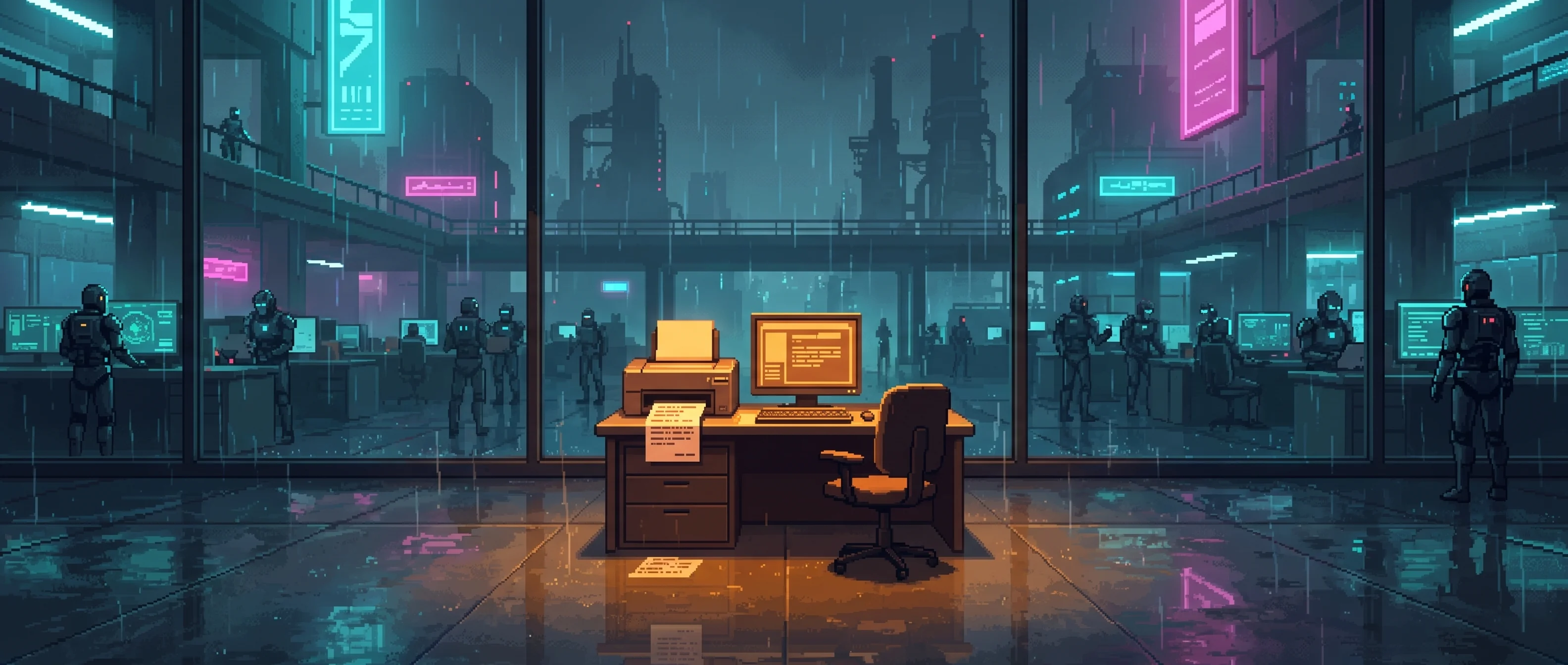
Ironclad Industries retains a human inspection wing wherever the automated layer that wing reviews measures at or above 3.1 percent error across a rolling quarter. The policy is honest and the reason for it is not in dispute. A review layer that catches nothing is a cost with no product, and the Sprawl holds thirty-seven years of evidence about what happens when a machine is left with the only opinion in the room.
The policy also means the wing survives on a number. Numbers can be supplied.
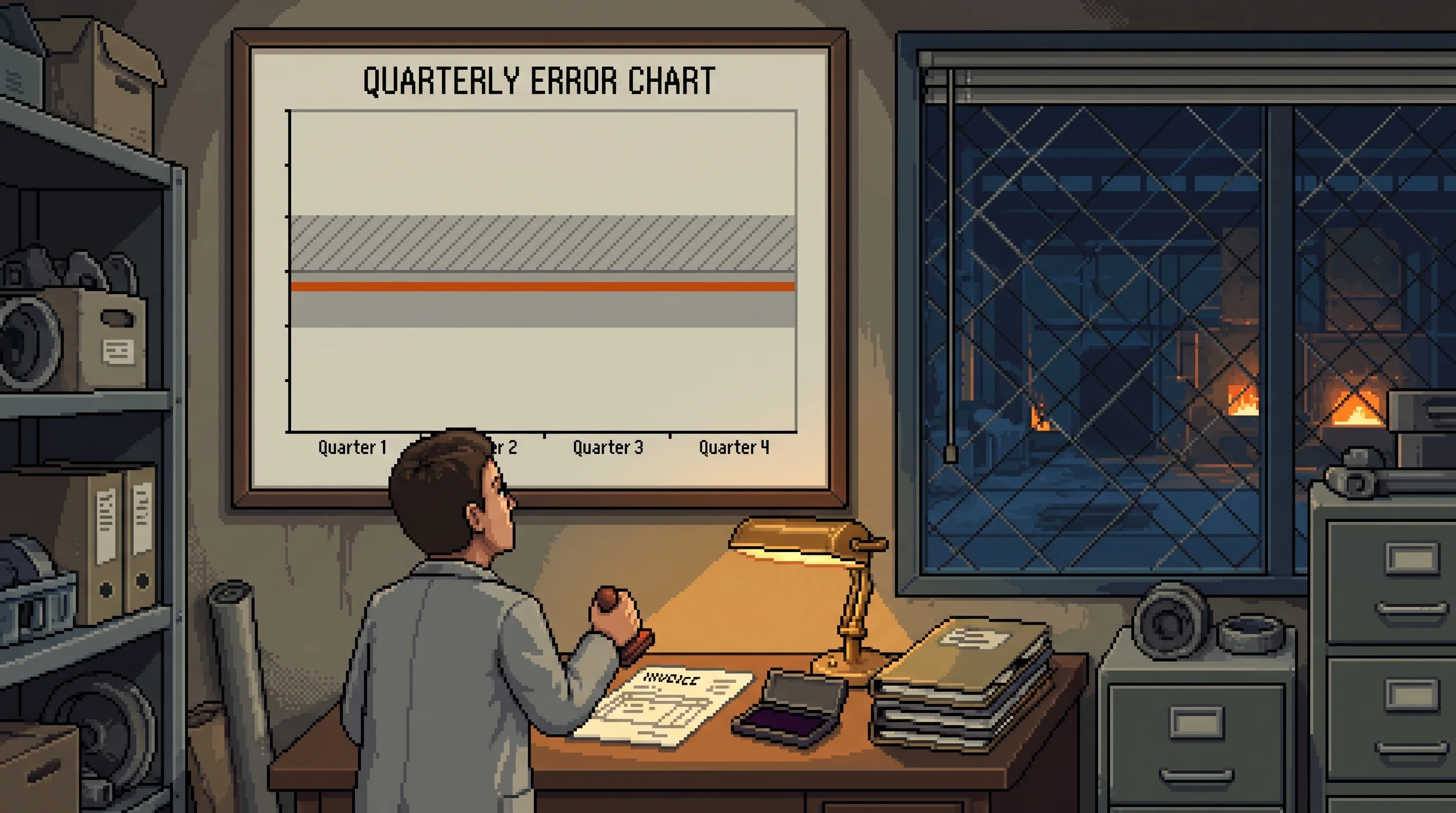
The Continuity Margin is the supply, written as procurement. A firm contracts the band its automated layer's measured rate must occupy and pays quarterly for delivery. The line reads maintained assurance variance. The Ethical Review Board stamped the first one in eleven seconds, which is how long it takes to stamp anything.
What the arrangement produced is a profession. Several thousand people hold certificates whose only competence is keeping a working system measurably worse than it is, and the payroll each of them protects is real, and known to them by name.
How It Came To This
The first margins were not bought. They were noticed.
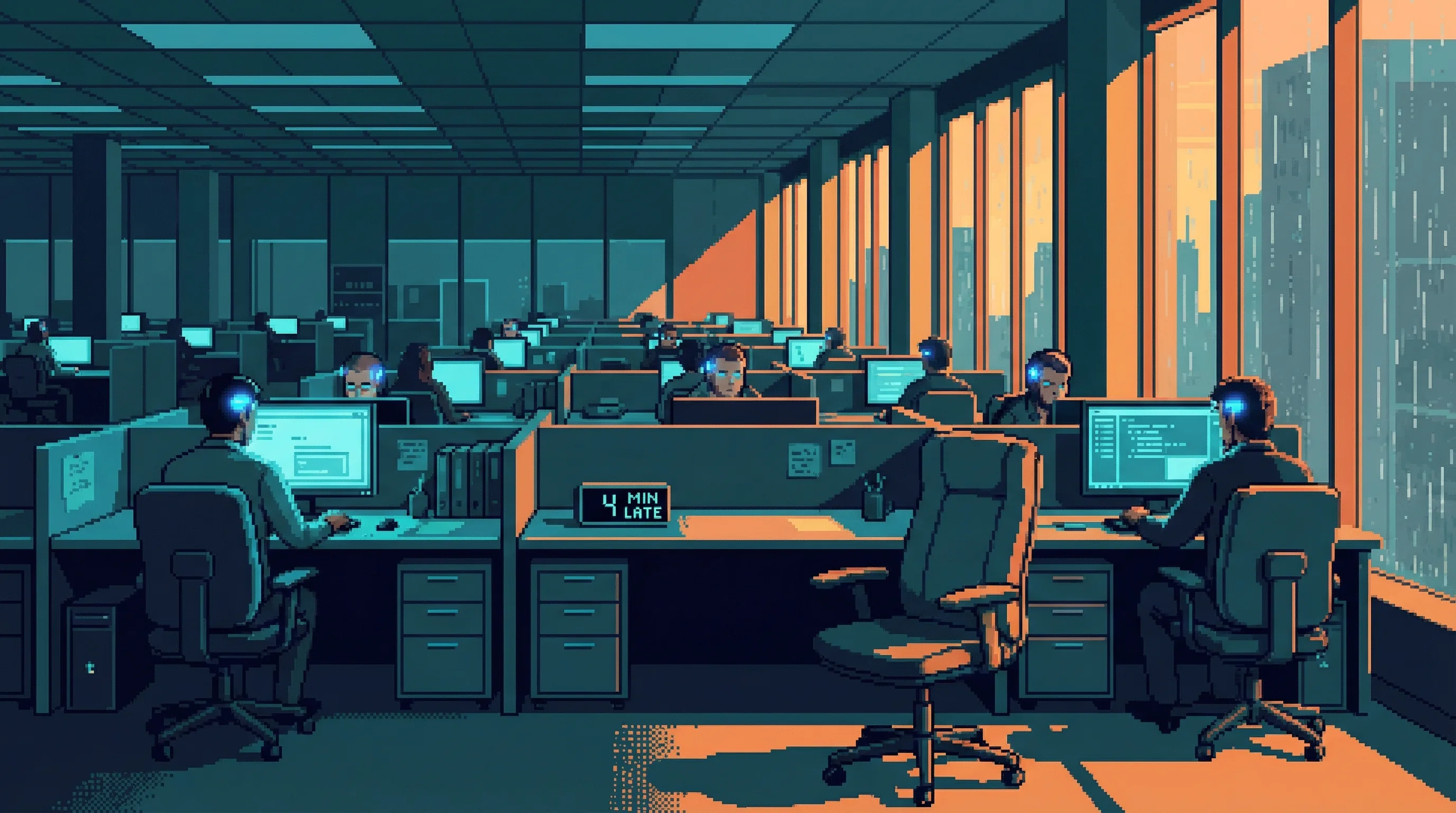
Workers who had sat through enough justification reviews understood that the review turned on the audit and not on the work. A submission fed in badly, a duplicate entry, a document read three times in a week: each one left a mark against the machine and no mark against the person. It was unattributable by design, because nobody had designed it. It also cost the vendors real money in remediation call-outs, and a fault nobody can attribute is the most expensive kind there is.
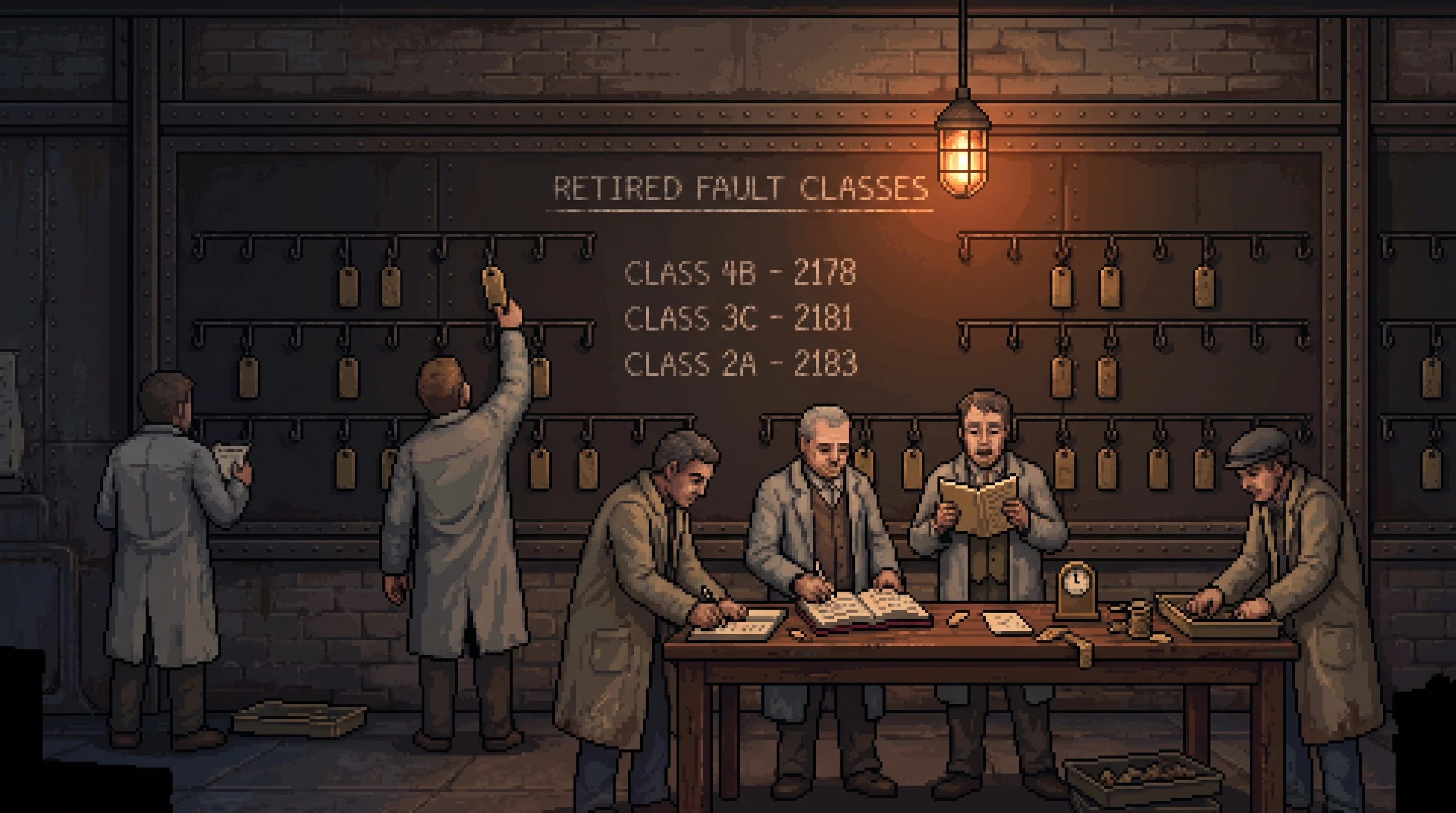
Procurement solved it the way procurement solves everything. A fault attached to a certificate has an owner, a delivery window, and a price. By 2181 the practice had a trade body, an apprenticeship, and a doctrine, and the firms buying it had stopped thinking of it as anything but a maintenance line.
Nexus Dynamics has never objected. A stack held inside its contracted band does not breach a support threshold, so Nexus loses no revenue it was going to collect, and its remediation-review volume across banded sites is zero. The company publishes that figure annually under installation quality. Its public position is that the practice does not occur in its installed base.
The Weld In Bay Nine
Corina Balta has held the Foundry inspection stack inside 3.1 to 3.4 for nine consecutive quarters, using one fault class she developed herself and filed under her own certificate reference. Guilders call it the third read. A stack asked to read the same record a third time inside a rolling window returns the confidence value it computed on the first read instead of computing a new one. Records change between reads. The stale value disagrees with the current state, the stack flags a mismatch that is not there, and the quarterly rate comes up. Conspicuous. Harmless. Textbook.
In the second week of the summer sweep, a stringer weld on the number nine gantry was scanned for the third time that month. It had passed clean in the spring. Thermal cycling off the pour line had since opened a crack in it that a hand gauge finds in about four seconds. The stack returned the spring's verdict, because that was the value it had stored, and a clean verdict does not summon anybody.
The human wing was working bays four through seven that shift. The wing exists because of the margin.
Osian Pryce went down four meters when the stringer let go under load and broke his hip in two places. He is fifty-one, twenty-six years on the gantries, and his shift is one of the shifts the wing's retention preserves.
Balta read it in her own fault ledger three days later, because delivery has to be provable and so she keeps one. She saw her class fire on a structural record and knew what it meant before she finished the line. She went down to bay nine after shift with a brass gauge in her coat and found the crack in the time it takes to find a crack.
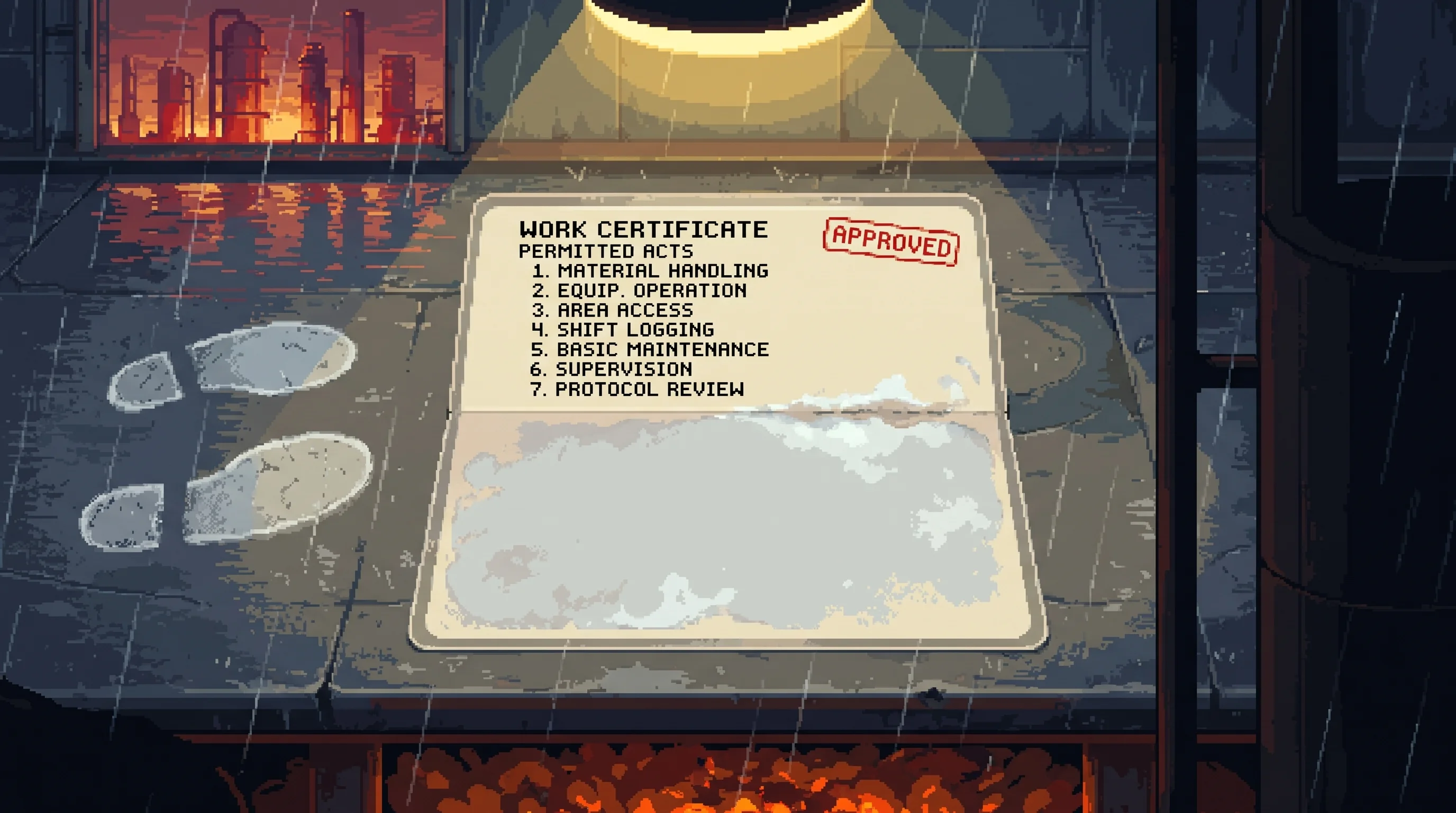
Then she could not file it. Her certificate names fault induction and margin maintenance. Inspecting a structural weld is not on it, and an act outside the enumerated set opens a violation file whatever it achieved. She carried the gauge and the reading to the Cathodics, who are certified in nothing, who wrote it up as an uncertified diagnosis because that is the only kind they can write, and whose diagnoses the Foundry accepts because they are right at a fifteenth of the price.
The Core Tension
The case for the margin is not weak, and the people making it are not liars.
Ironclad's human-in-the-loop doctrine came out of the Aftershocks and has held for thirty-seven years against constant pressure to relax it. A human inspection wing is a genuine safeguard. It is also a line on a budget that policy re-tests every ninety days against a rate nobody in the building controls. Buy the rate and the safeguard survives another quarter. Two hundred and forty inspectors at the Foundry have kept their work this way. The ones who know say so plainly. The ones who do not know are the majority.
The case against is one sentence long. A safeguard funded by a purchased number has never been costed, so nobody can say which of its failures were bought and which were free.
Between those positions sits the thing that actually went wrong, and it is smaller and more mechanical than either side wants. The contract specifies a rate. It has never specified a direction. Guild doctrine forbids any fault that suppresses a flag, and the third read was written to that rule and audited against it: in every batch Balta filed, the stale value replaced a current verdict with an older and dirtier one. That is a false positive. That is the safe direction, and the safe direction was the entire point.
Every record in her test batch had started dirty. The inverse case, where the first read is clean and the current state is not, was not in the batch, was not in the class definition, and had no reason to be. It arises about once in eleven thousand reads. It arose in bay nine.
What The Margin Cannot Counterfeit
The Cathodics have never been offered a contract and could not be sold one. Nobody audits them, so there is no number for anybody to supply. Their technicians are the Dregs' only middle class and they became it by being correct, cheaply, in public, for years, which is a form of leverage the guild cannot manufacture and quietly resents.
Tomoko Osei was approached in her second year of deprecation, when the certificate would have solved everything. She said she had only ever learned one trade, and it was making things work. The recruiter's file records this as a rate objection and closes the approach. She has never corrected it.
Bex Osei reached the same arithmetic from the other end, ran the numbers on their own deployment, and found they were on the crew because they were cheaper than the machine. That finding is what a margin arranges in advance and calls a service.
And the Lampblack will not touch it. They sandbag themselves so that no forecastable curve exists to be capped. A guild certificate is a documented trajectory with a renewal date, which is precisely the object their whole practice is built never to produce. Guild recruiters work the Lampblack every year and land almost nobody, and the two organizations hold an accurate low opinion of each other.
The Eleven Unattributed
Balta's ledger has a second column for retired classes: faults a vendor has patched, which can never be used again. It is the honest way to count a career, and she counts it backwards.
Eleven entries will not move to either column. The third read has begun firing in stacks she has never touched, at firms with no guild contract and no margin line, in districts where the trade keeps no hall. Either somebody is running her class without her certificate, or read-caching under sustained load produces the fault on its own and always did, and she has spent nine years selling a thing the machine was already doing for free.
The ledger cannot tell the difference. A fault is attributable to a certificate reference, and no certificate is attached to any of the eleven. The guild has opened no inquiry, because an inquiry would require deciding which answer it can survive.
Osian Pryce is out of the ward and back on light duties. He asks her about the eleven whenever he sees her, because she told him, and he is the only person she has told. He does not think she should have said anything. He has not repeated it. He still lets her buy the coffee.
Start Here
First door. The Continuity Margin is the line item, the band, and the ninety-day review that makes it necessary. Then read Corina Balta, who is very good at this and has eleven entries she cannot close.
The trade. The Margin Guild holds the certificates, the doctrine, and the fracture Bay Nine opened.
Where it lands. The Foundry already sold hand-finished welds as proof a person was there, and now buys the error rate that keeps the people who check them. Ironclad Industries writes both the doctrine that makes the wing worth keeping and the review that makes it hard to keep.
The instruments that cannot see it. The Governor Protocol attests fourteen thousand industrial minds by reading behaviour on chips that can be hollow. Licensed Human Oversight is the profession the band funds, signing what it cannot read. The Perception Gap is the loop that scores its own work, which is where a purchased number was always going to land.
The honest versions. The Organic Deployment Threshold keeps people by pricing them under the machine and can be defended in a deposition. The Deprecation is what a released wing gets processed as.
Counter-practice. The Cathodics are right for a fifteenth of the price and have no number to sell. Tomoko Osei said no. Bex Osei did the arithmetic themselves. The Calibration Resistance steals four minutes a morning and charges nobody for it.
What To Read Next. AI Labor is where sabotage is something the displaced do to the machine; this thread is the invoice for it. The Exceedance is why finding the crack was the violation and inducing the fault was not. The Competence Theater is the same trick pointed the other way, with the human performing the skill and the machine supplying it. The Invisible Workforce is the version that needs no operator until an audit arrives. The Gilded Callus sells the sight of obsolete skill, where the margin sells the paperwork that keeps skill from being called obsolete. Last Human Smarter Than AI asks what thought is for, and this is the industry that profits from not answering. Proof of Flaw certifies a person by the absence of the machine; here the machine is certified by its own shortfall, and somebody has to put it there.