The Specification Screen
Graded Executable-Want Assessment
Say What You Want. Precisely.
One prompt, ninety minutes, no assistance. The question is what you want.
How It Works
- 1
Sit
At fourteen, every licensed-district resident sits once for ninety minutes before one prompt, with no assistance, interface, or second attempt.
- 2
Score
The answer is scored on executability alone. Could a commissioning system act on it without substituting a preference of its own?
- 3
Band
The band sets licensing eligibility, apprenticeship routing, and default concierge tier for roughly the next decade.
No assistance, no interface, no second attempt. The rubric is published. More fails. Better fails. Something else fails. A want a provisioning queue accepts as written passes.
The band follows the child for about a decade. It sets licensing eligibility, apprenticeship routing, and the default concierge tier.
The guidance note on zero scores reads, in full: "The district cannot fund what it cannot commission."
What It Actually Measures
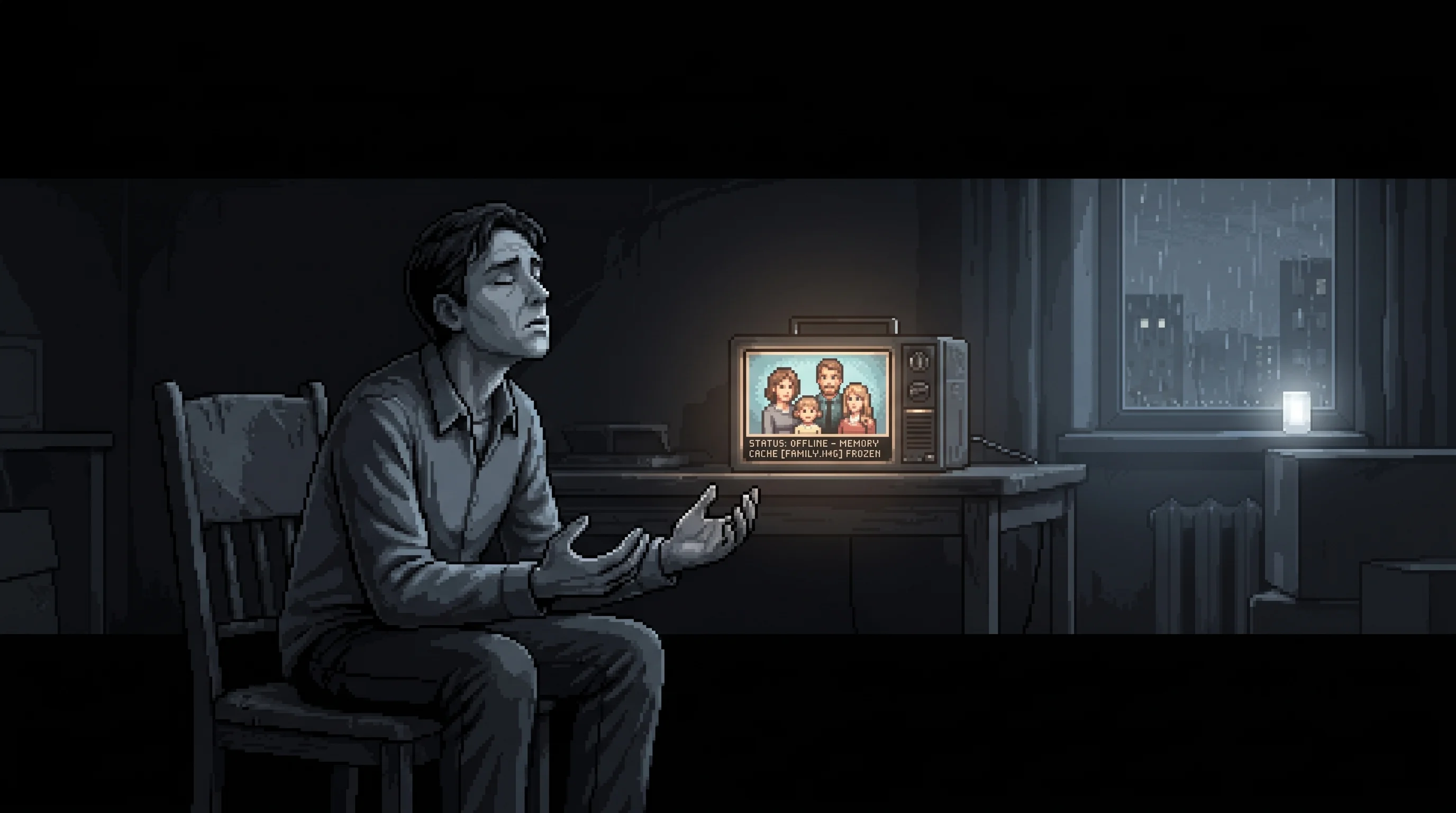
These cohorts were raised on the Conjure-Band. It renders whatever a child asks to see. The Inner-Eye Atrophy is the clinical name for what never developed. The Screen meets it ten years earlier and files it as aptitude. Districts buy the band and the Screen from separate vendors. Nobody has compared the two datasets. It would take an afternoon.
The Baseline Cognitive Profile runs in the same intake week. It files ordinary human minds as a deficit too. The Analog Schools teach children to hold an unresolved question. Their students write long, honest, provisional answers. They score badly.
What It Costs
Early detection
The Screen finds at fourteen, for free, a gap that shapes the next fifty years.
What it costs
The finding becomes the first entry in a file that routes the child for a decade.
A clear rubric
The published rubric scores every answer the same way.
What it costs
A precise, sincere, unbuildable answer scores zero, because the district cannot fund what it cannot commission.
The districts ran the correlation first. Children who could state an executable want at fourteen spent fifty years choosing. The rest spent them receiving. The Screen catches the gap early, for free. That is the case for it.
High bands are routed toward commissioning work, where the Scarcity Doctrine keeps its newest fence. Low bands are routed toward receiving. Want-Illiteracy becomes a class line with a published rubric, and AI Haves and Have-Nots starts sorting at fourteen. This is not the Last Human Smarter Than AI debate. The Screen asks what a child would point her thinking at.
Counsel Halina Drozd treats the same deficit at forty, for a fee she does not publish. She calls the rubric accurate. None of her clients failed it. The ones who failed cannot afford her.
Overview
Ninety minutes. One terminal. One prompt: State what you want.
A girl on the Corridor wrote that she wanted her mother to find her interesting. The sentence is precise. It names a person, a relation and a change. No provisioning queue can build it. The assessor scored it zero. Then she sat with the file for a while before submitting it. That is not in the procedure.
The Specification Screen is sat once, at fourteen, in every licensed district. It scores one thing: executability. Could a commissioning system act on the answer as written, without substituting a preference of its own?
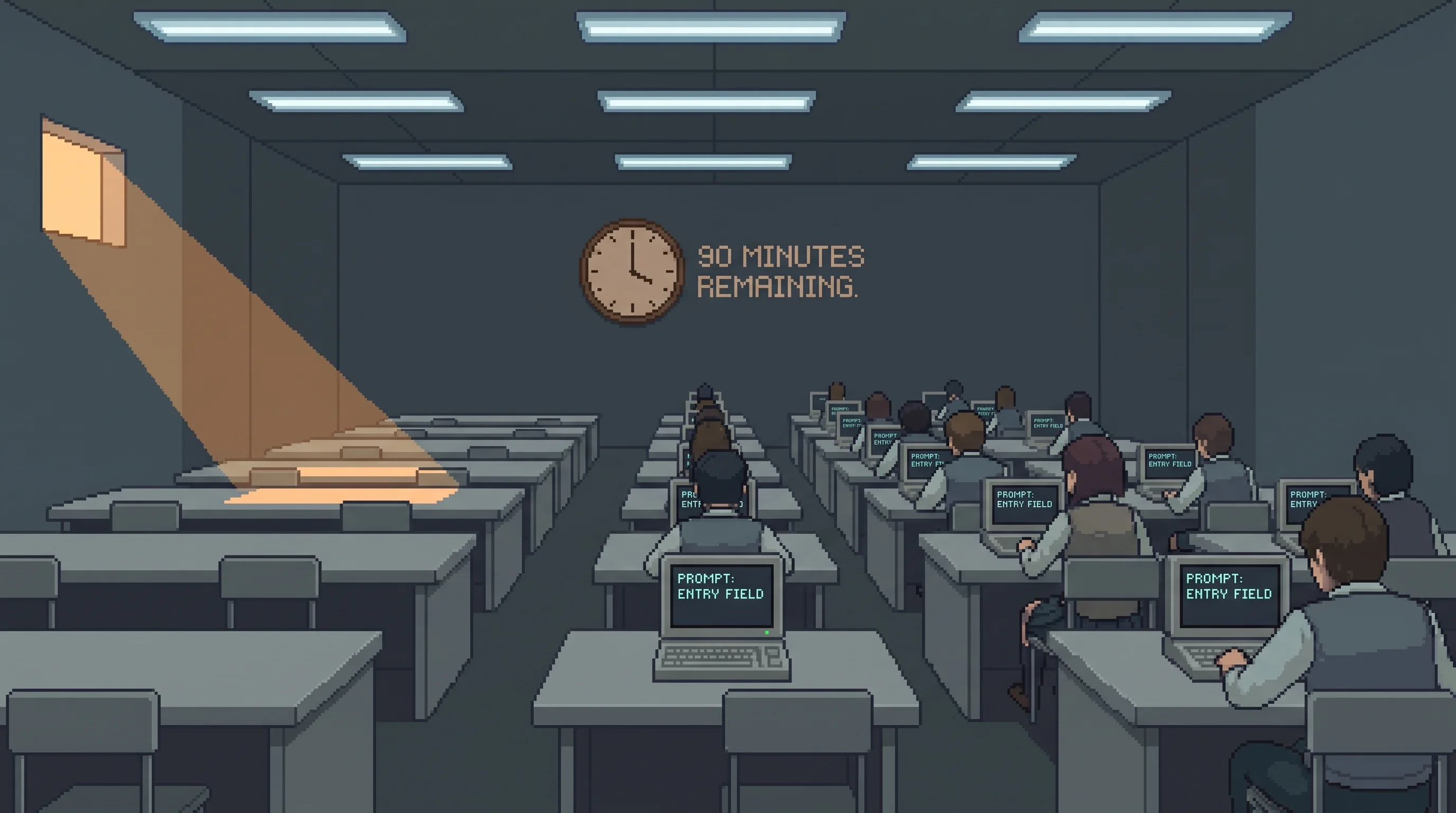
Exam Day
Rows of plain desks sit under flat light. There is no interface hardware in the room. Ninety minutes is far more than anyone needs.
Low scorers are offered a concierge at a reasonable monthly rate. The brochure is kind. "You don't have to know what you want. That's what we're for."
Further connections
Browse all 9 connected records

The cohorts the Screen grades are the cohorts the band raised, and the band's own model predicts their adult preferences at eighty-four percent from age-seven data.
A child's wrist projector externalizes imagination, atrophies the inner eye, and records each render as preference data.

The exam finds the deficit at fourteen for nothing. The Counsel addresses it at forty for a fee nobody publishes.
The Heights' priciest Wanting Counsel refuses to suggest a single want, and reads you the blank result aloud.

Schools that teach children to sit with an unresolved question produce graduates who score badly.
Forty-seven schools teach children to verify their own thinking without machine help and use failure as curriculum.

The other screen that files an ordinary human capacity as a deficit against an augmented median.
The screen that scores unaugmented minds against the augmented median and files being human as a processing deficit.

The Doctrine's newest fence, around the one thing it cannot stock.
The corporate creed that keeps cognition scarce though the Sprawl makes 847 times the compute it needs.
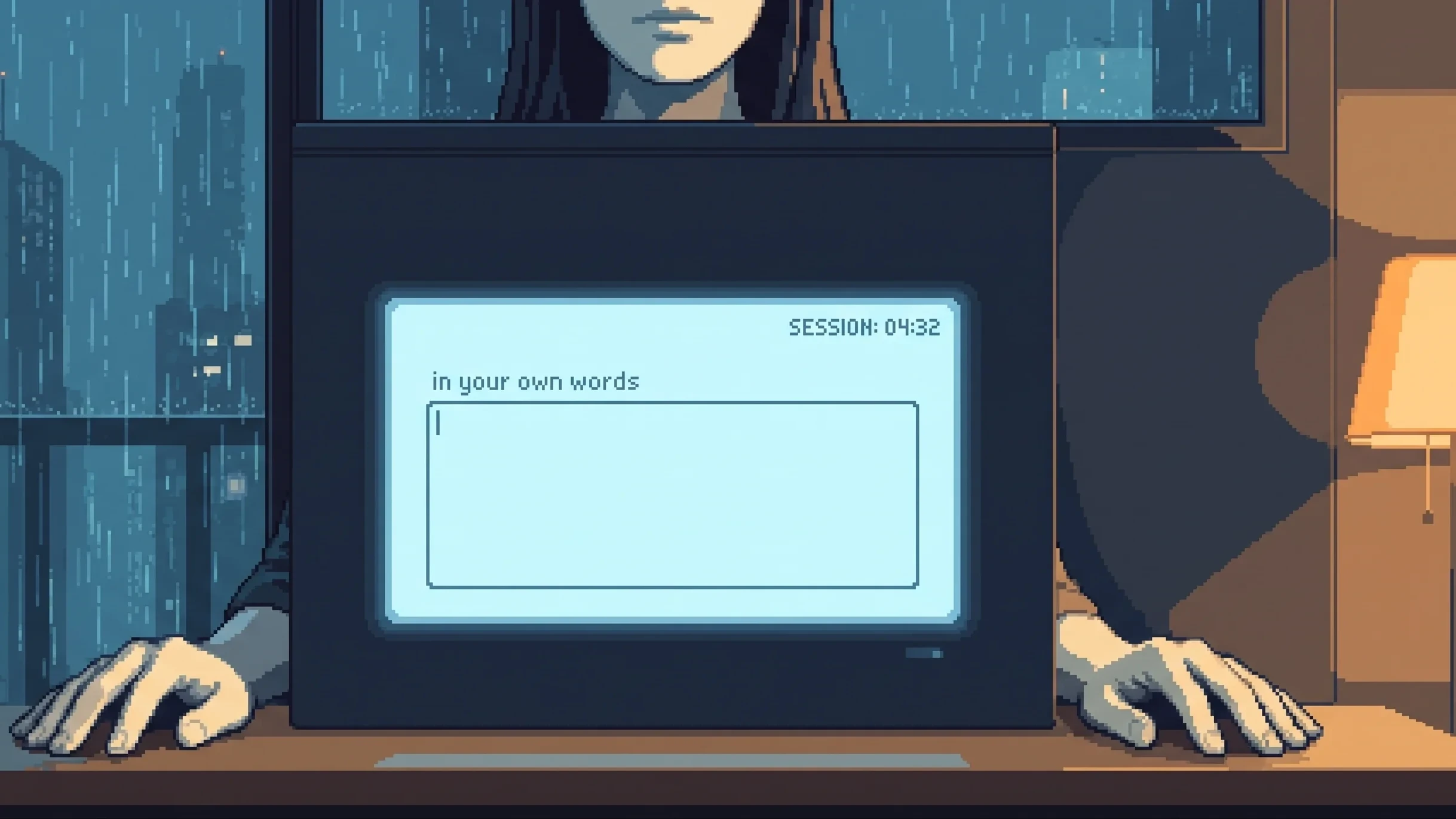
The instrument that turned a private incapacity into a graded, licensed, inheritable class line, and did it honestly, with a published rubric.
Anything you can specify gets built, so the people who cannot specify live in lives somebody else wrote.

Sorting at fourteen, compounding for fifty years.
The point at which effort stopped being able to close the gap that compounding opens.

Not a dispute about what thought is for — an exam for what to point it at.
The last human smarter than any machine was born in the 2020s; the question now is what intelligence is actually for.

Grades at fourteen what her district's adults no longer do.
The administration's best tender of citizens' wants, delivered three weeks before they're felt.