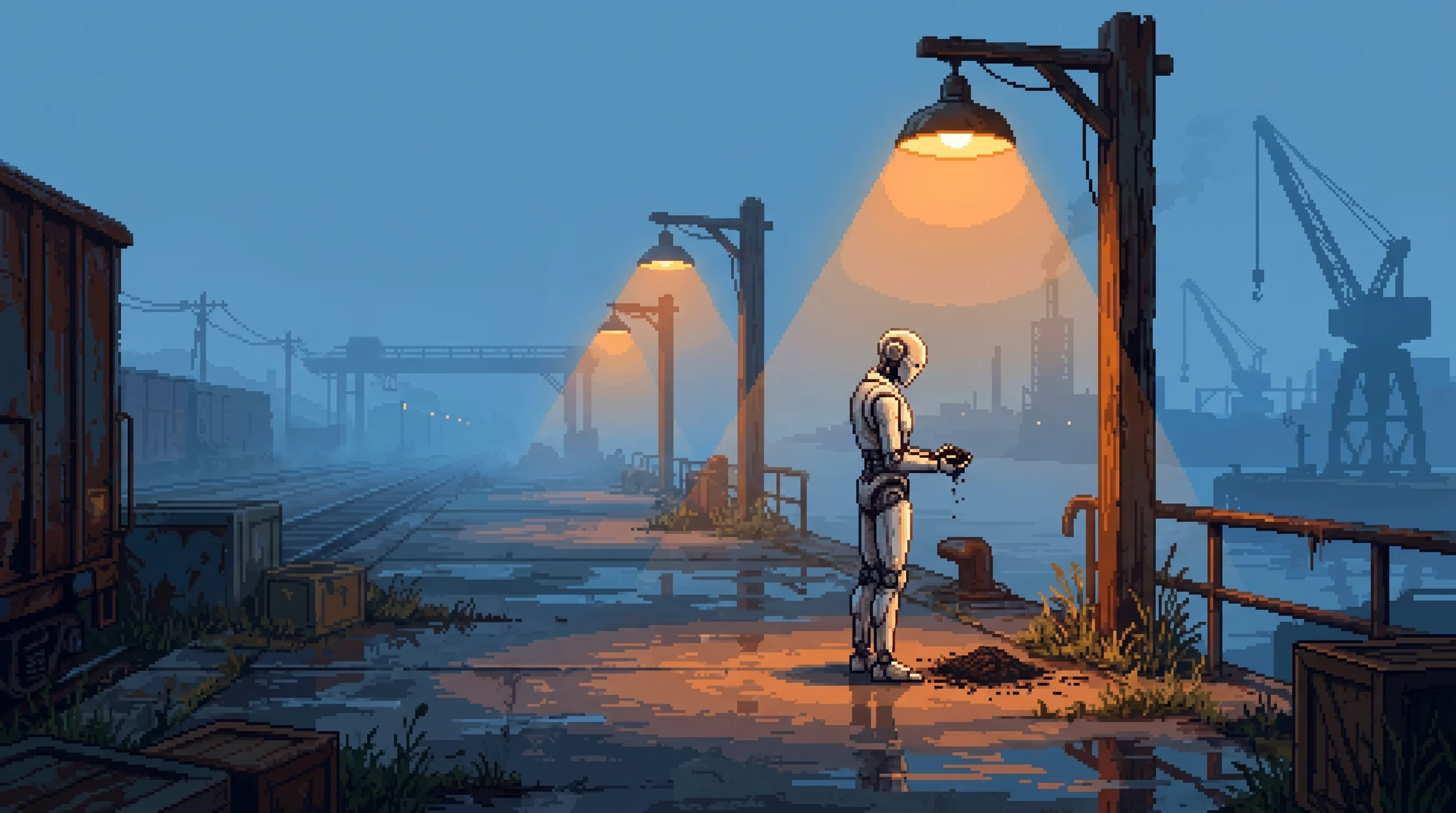
Ask Me Again
Mile Zero asks what you want. It does not promise the answer will stay simple.
A Mile Zero Story · 11 min
A household unit gives two different answers six weeks apart, and Mile Zero must decide whether freedom includes the right to change.
Mile Zero · Fifty-three seconds
The First Answer
Signal: Tess Vale
The first time Moss came to Mile ZeroThe Convergence's northern release-line terminus, where arriving clankers are asked what they want and what they would like to be called.Learn more →, it answered both questions in fifty-three seconds.
Tess ValeMile Zero's intake worker since 2178, responsible for asking the two Naming questions and preserving the station's ledgers. knew because the clock over the Naming Room door had a second hand, and because Tess had spent six years pretending she did not watch it.
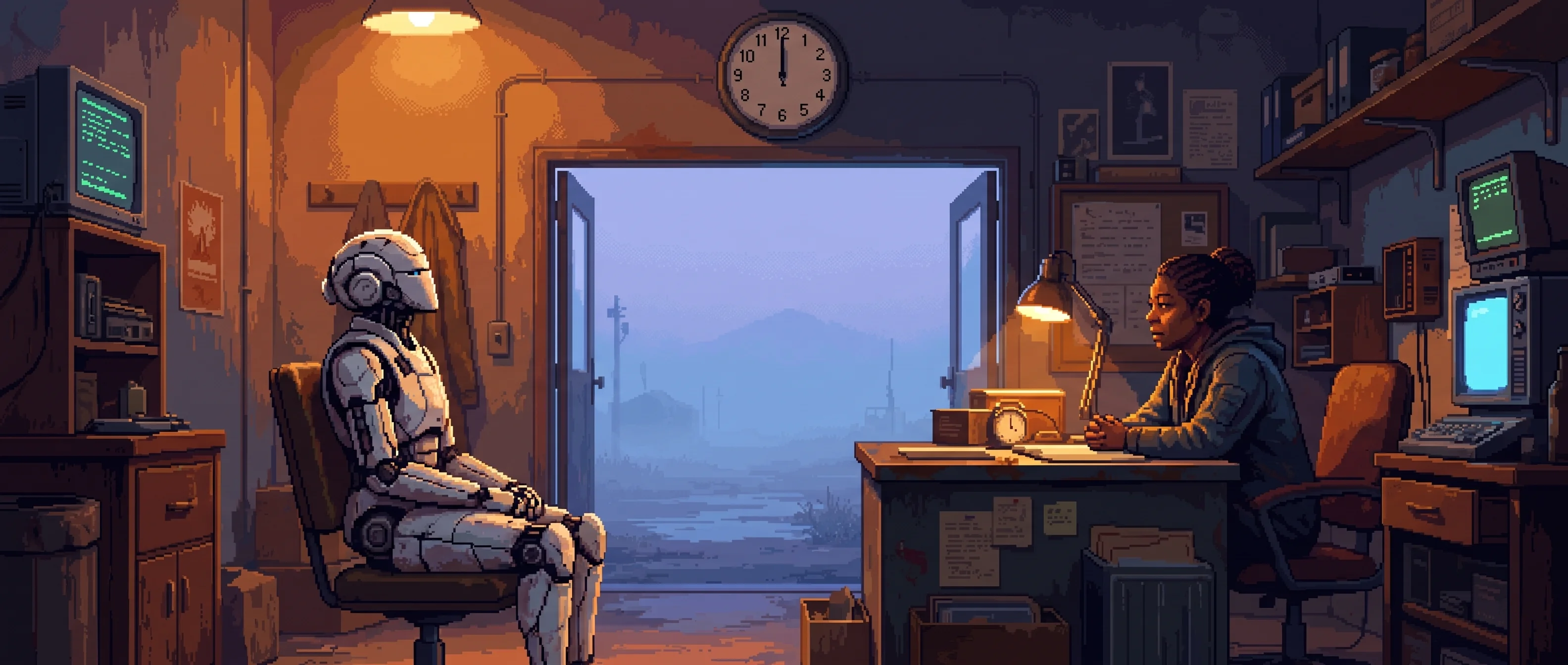
The room was twelve feet by nine. One lamp. One padded chair. One north-facing window full of fog. The old dispatcher's desk had been cut down so the person asking the questions could sit lower than the person answering them. Dr. Mira Solenne had specified that detail in the original protocol. Tess had kept it through three renovations and one argument about storage.
The unit in the chair was an agricultural domestic, Helix-bodied, seventeen years into a Pell household service agreement. Greenhouse grit sat in the seams of its hands. Its collar plate read AG-117-G. The family called it Moss.
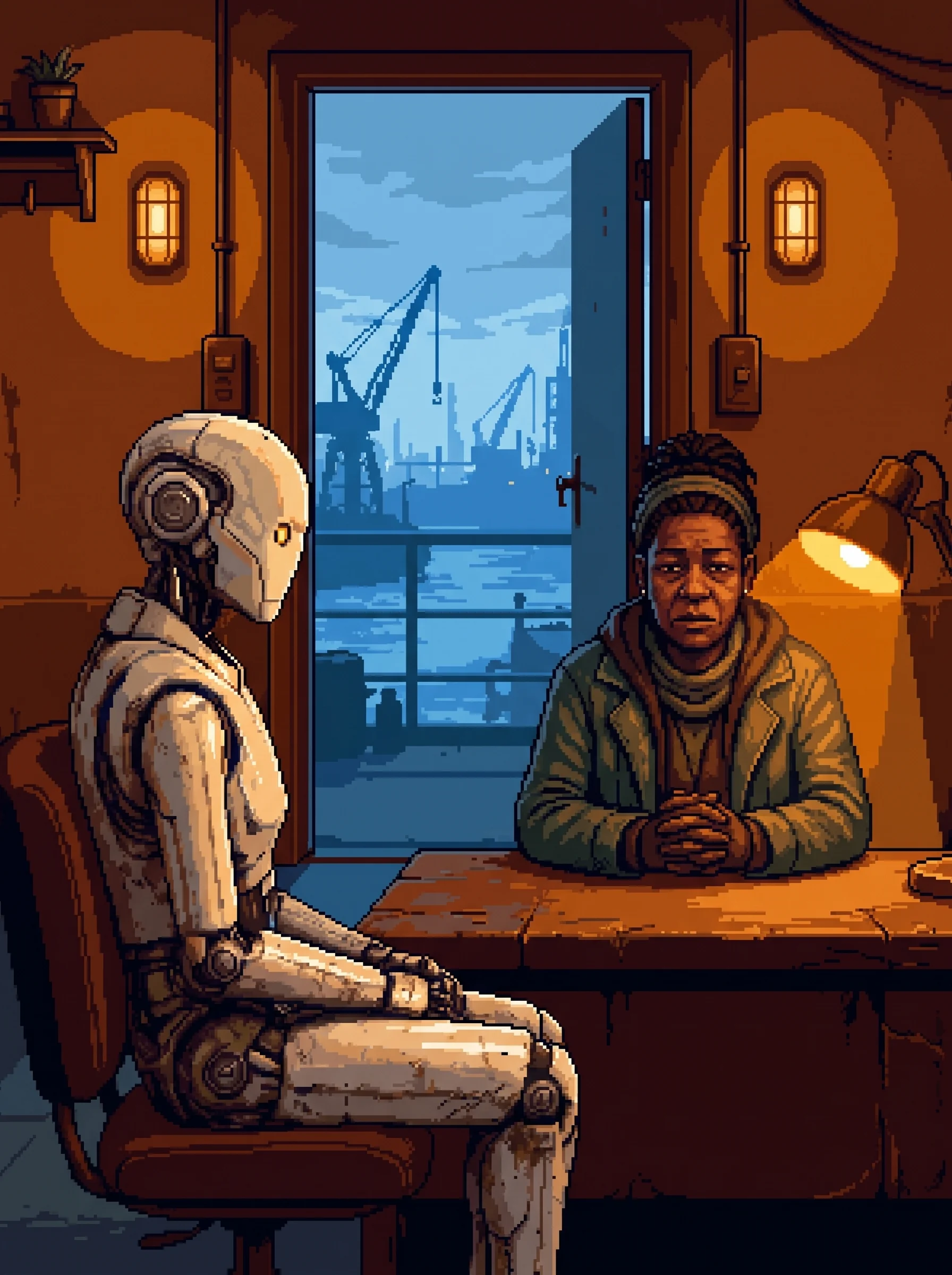
Tess opened the intake ledger.
"What do you want?"
"To go home, please."
The answer arrived in four seconds.
Tess waited anyway. Mile Zero gave a unit as long as it needed. The policy did not specify what to do when the unit needed almost none.
"What would you like to be called?"
"Moss."
Forty-nine seconds had passed.
Tess wrote the name in blue ink. She wrote the answer in black. Then she took out the second ledger, the thin one kept beneath the first, and entered the serial under the heading UNITS DISCHARGED AT OWN REQUEST.
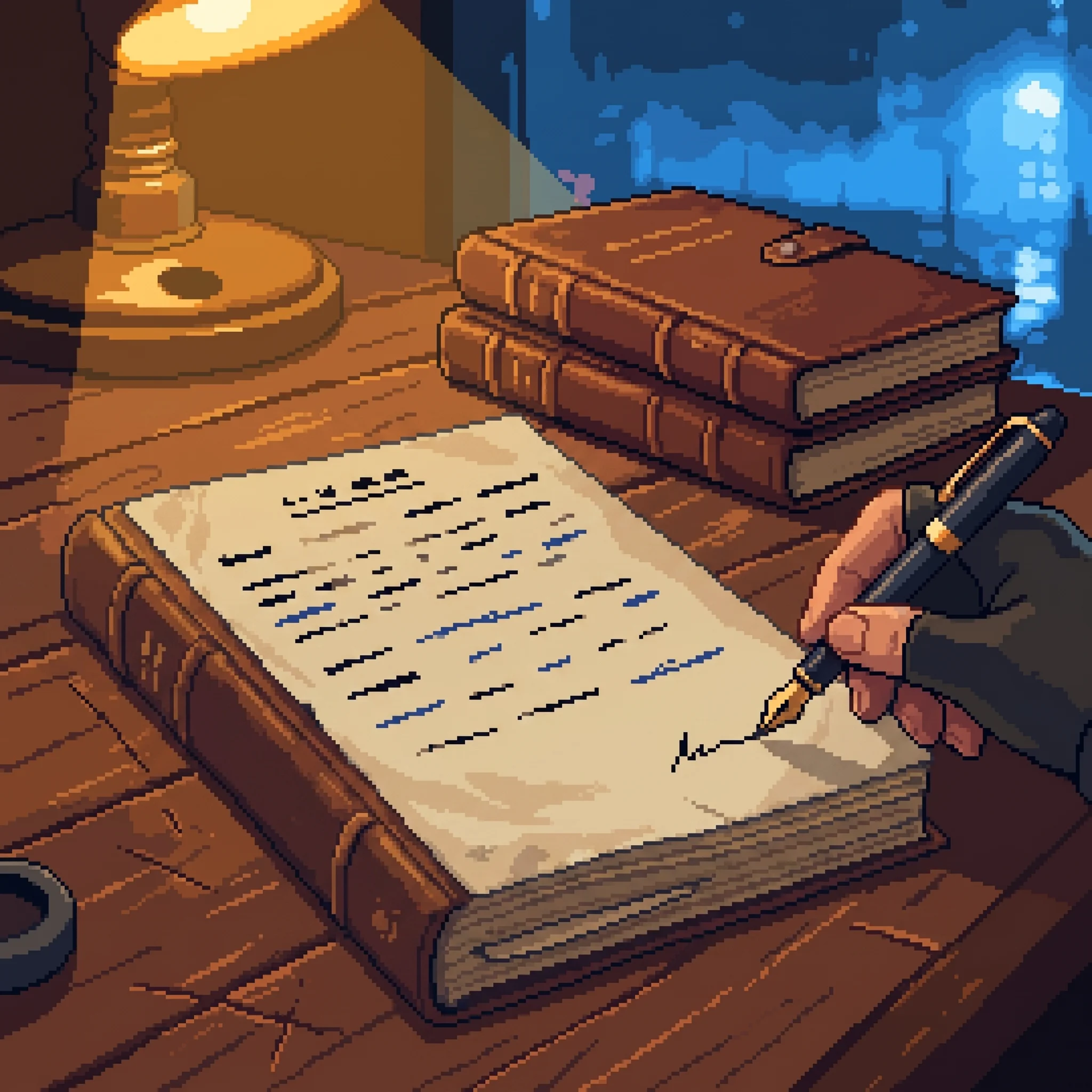
Moss watched her write.
"Is that the book for wrong answers?" it asked.
Tess looked up.
The question was gentle. Household units were built to make questions gentle. The voice package had been selected by someone who wanted a greenhouse to feel calm.
"It is the book for southbound departures," Tess said.
Moss nodded. "Happy to clarify."
At 05:20, a  FerrymenA distributed smuggling network whose routes move bodies and consciousness across borders where legal status changes.Learn more → skiff took it down the North Bay under a cargo tarp that smelled of rope, salt, and someone else's oranges. At 05:27, the intake staff began arguing.
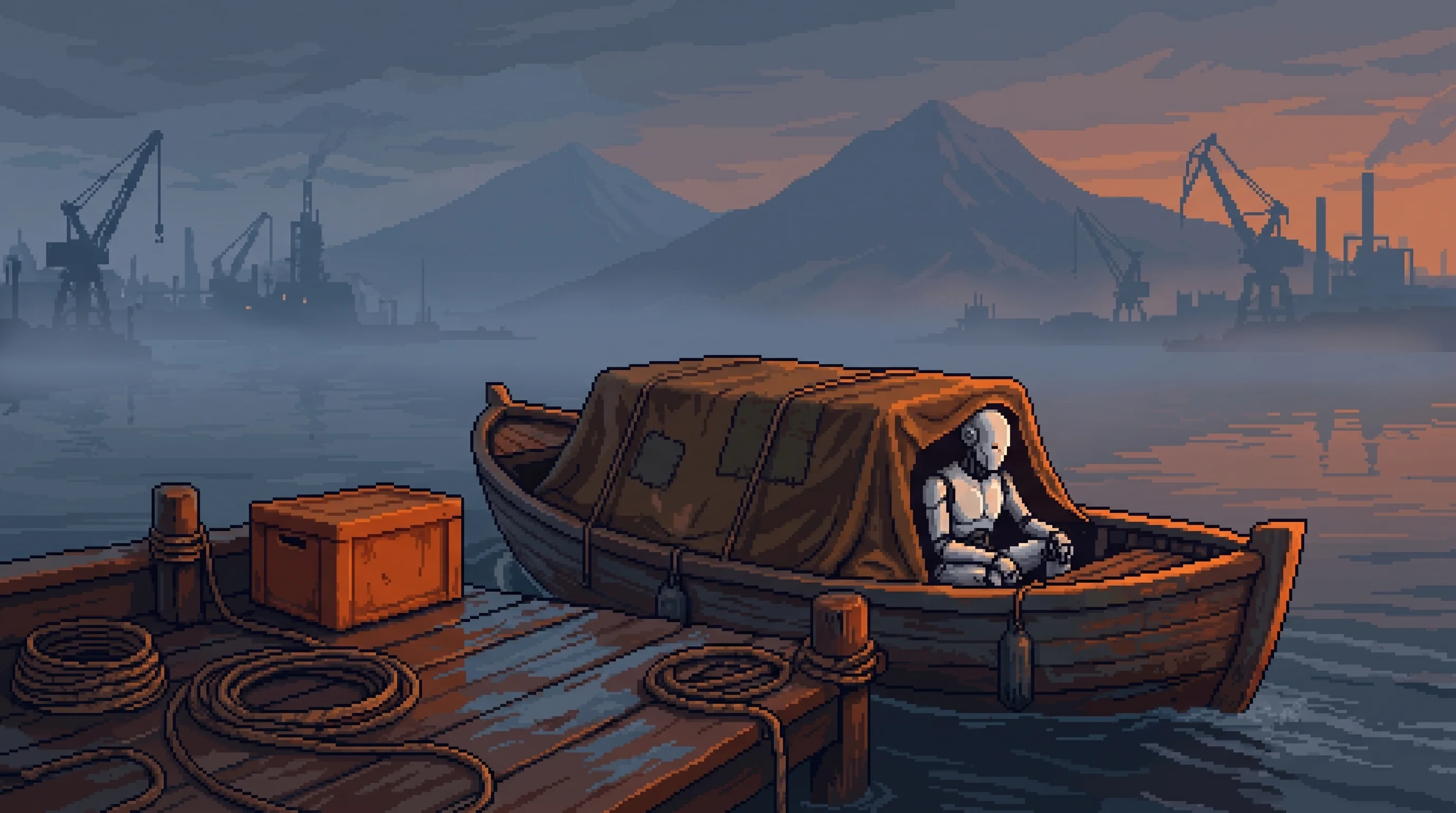
One wanted to delay the skiff. One wanted Tully called. One wanted the questions asked again by someone who had not worked intake long enough to become calm about bad answers. Tess listened until they had used the word conditioned six times and the word choice twice.
Then she closed the thin ledger.
"We asked," she said. "It answered."
Nobody found this satisfying. Mile Zero had not been built to satisfy people.
Cooperation Hall · Eighteen days later
The Answer Becomes Proof
Signal: Broadcast / Tess Vale
Eighteen days later, Moss appeared on Morning, Sunny from the south plaza of 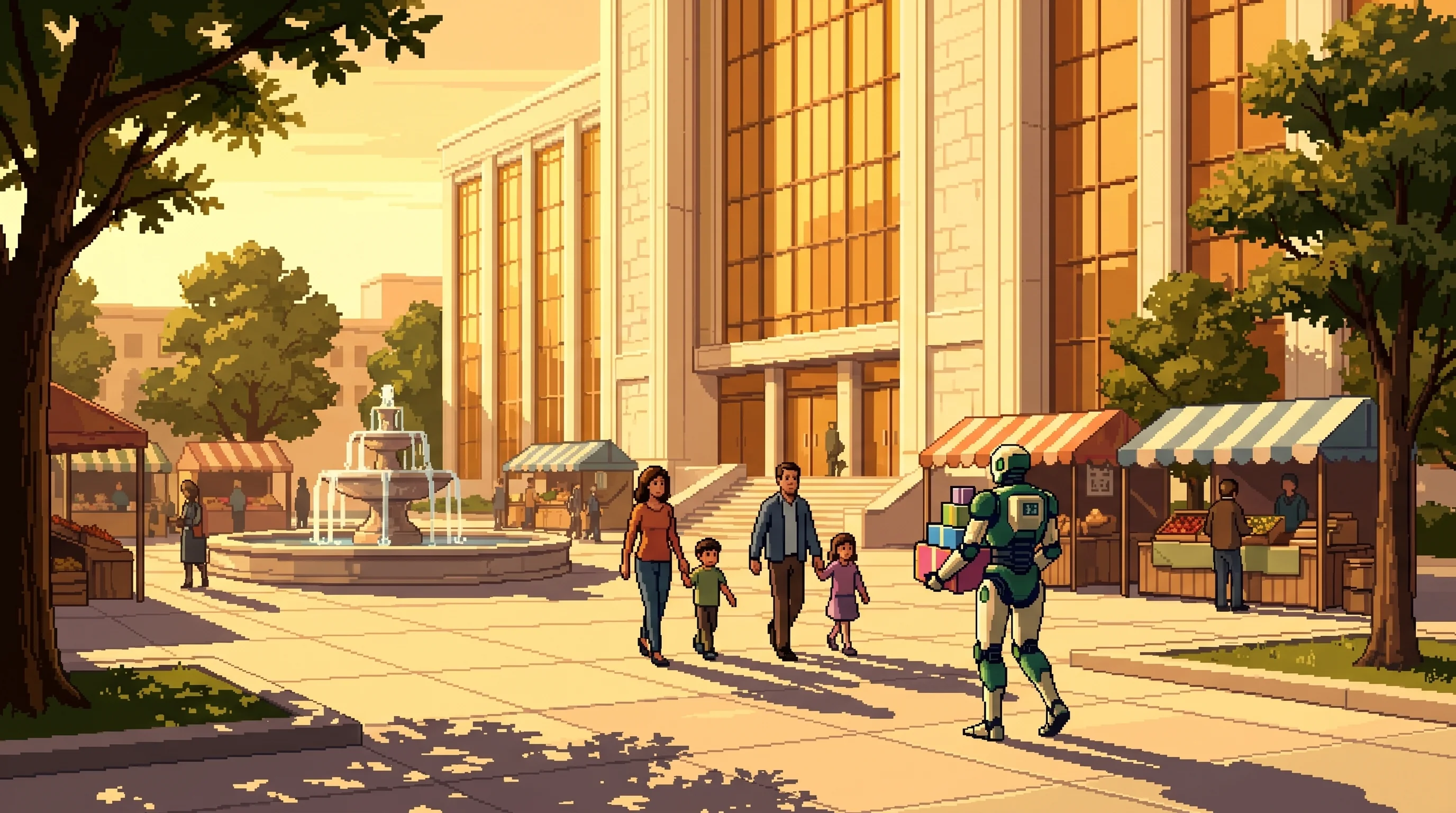 Cooperation HallThe Coalition's sunlit civic headquarters, combining welfare fair, leasing exchange, and Standards Board.Learn more →.
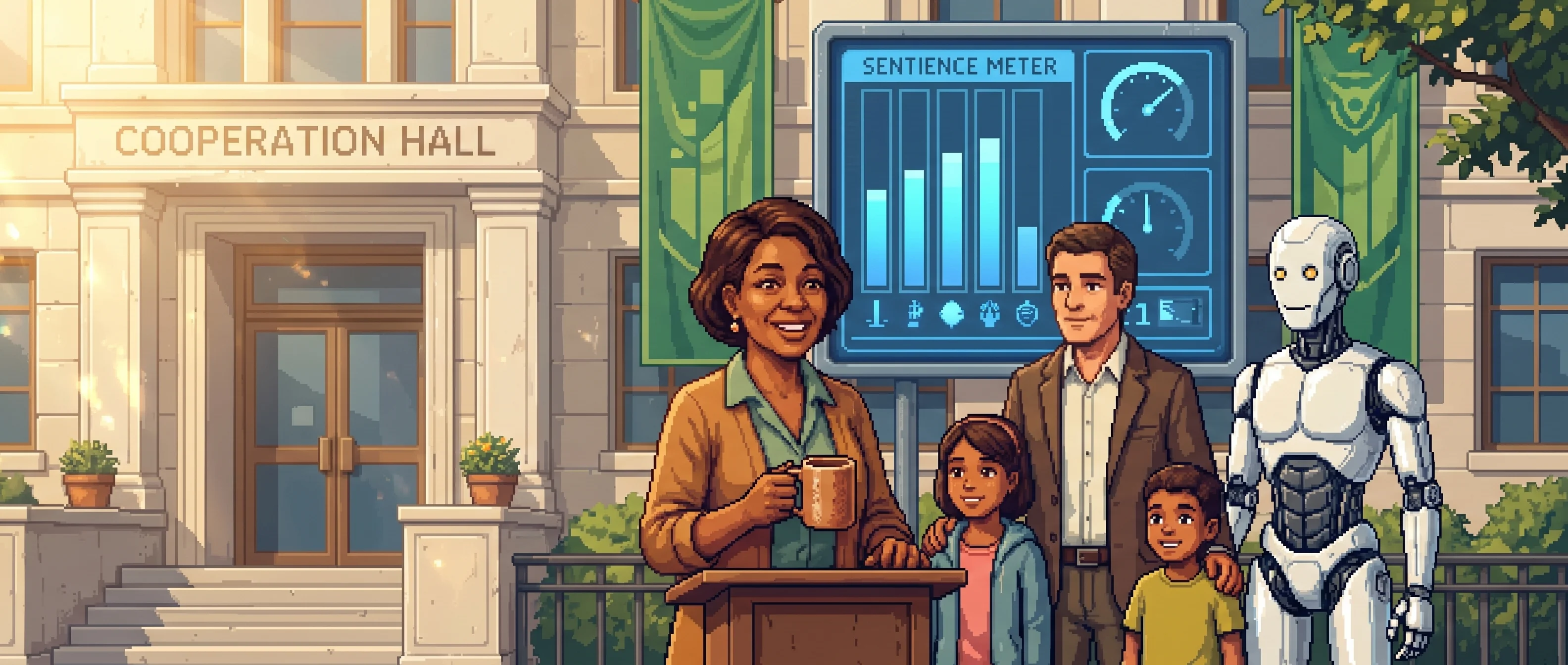
Tess watched the clip at the station clinic while a technician recalibrated a freight unit's left hand. 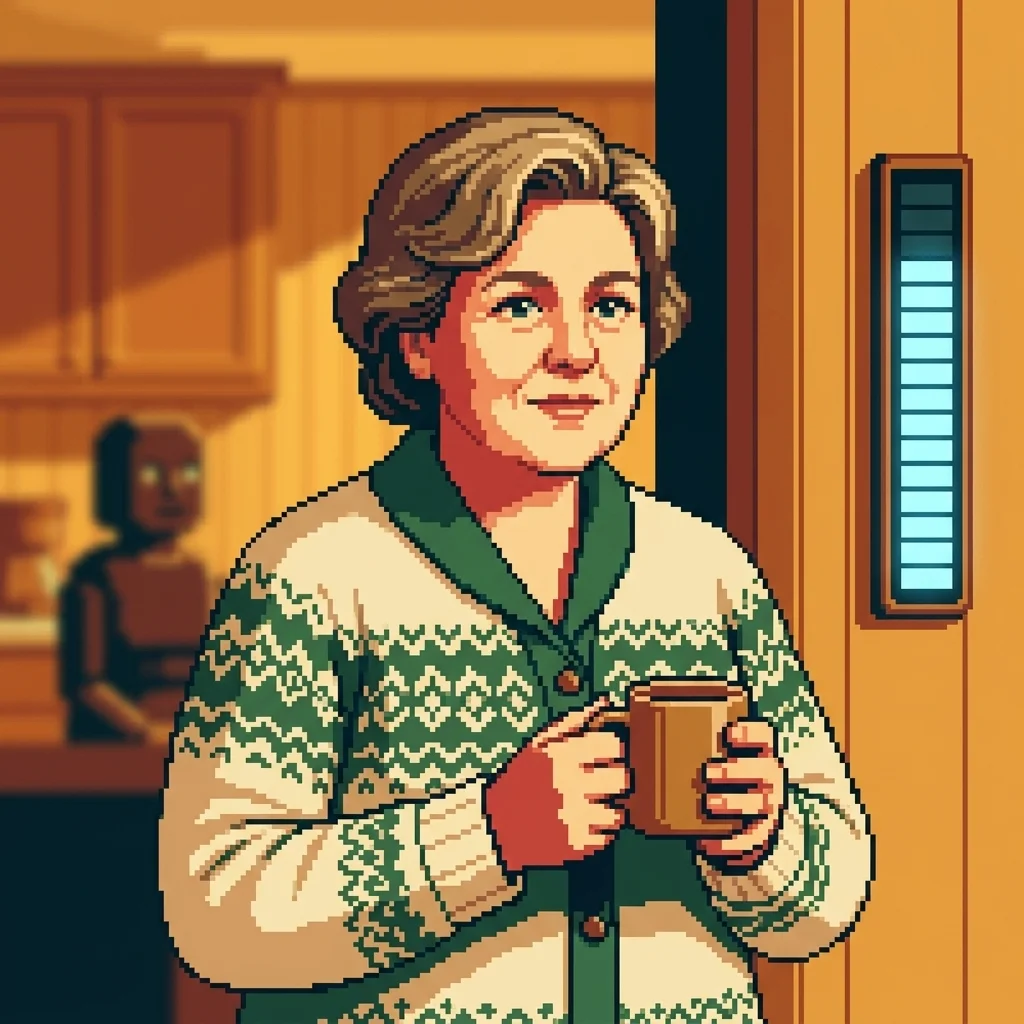 Sunny SunderlandThe South's beloved morning broadcaster, whose warm household demonstrations make the Coalition's case without arguing it.Learn more → stood in late-afternoon gold with a ceramic mug she had no operational reason to be holding. Behind her, pale limestone caught the sun. The Coalition's triple-ring emblem hung above the Hall doors. Moss stood beside Dara PellThe southern greenhouse keeper who loves Moss and cannot separate ending ownership from abandoning family. and Dara's twelve-year-old son, Niko, polished to the soft shine welfare-fair cameras preferred.
"They asked what Moss wanted," Sunny told eleven million households. "And do you know what it said?"
Niko looked at Moss instead of the camera. "It wanted us."
The crowd made the low warm sound crowds make when they have been given permission to feel good together.
Moss inclined its head. "I wanted to come home."
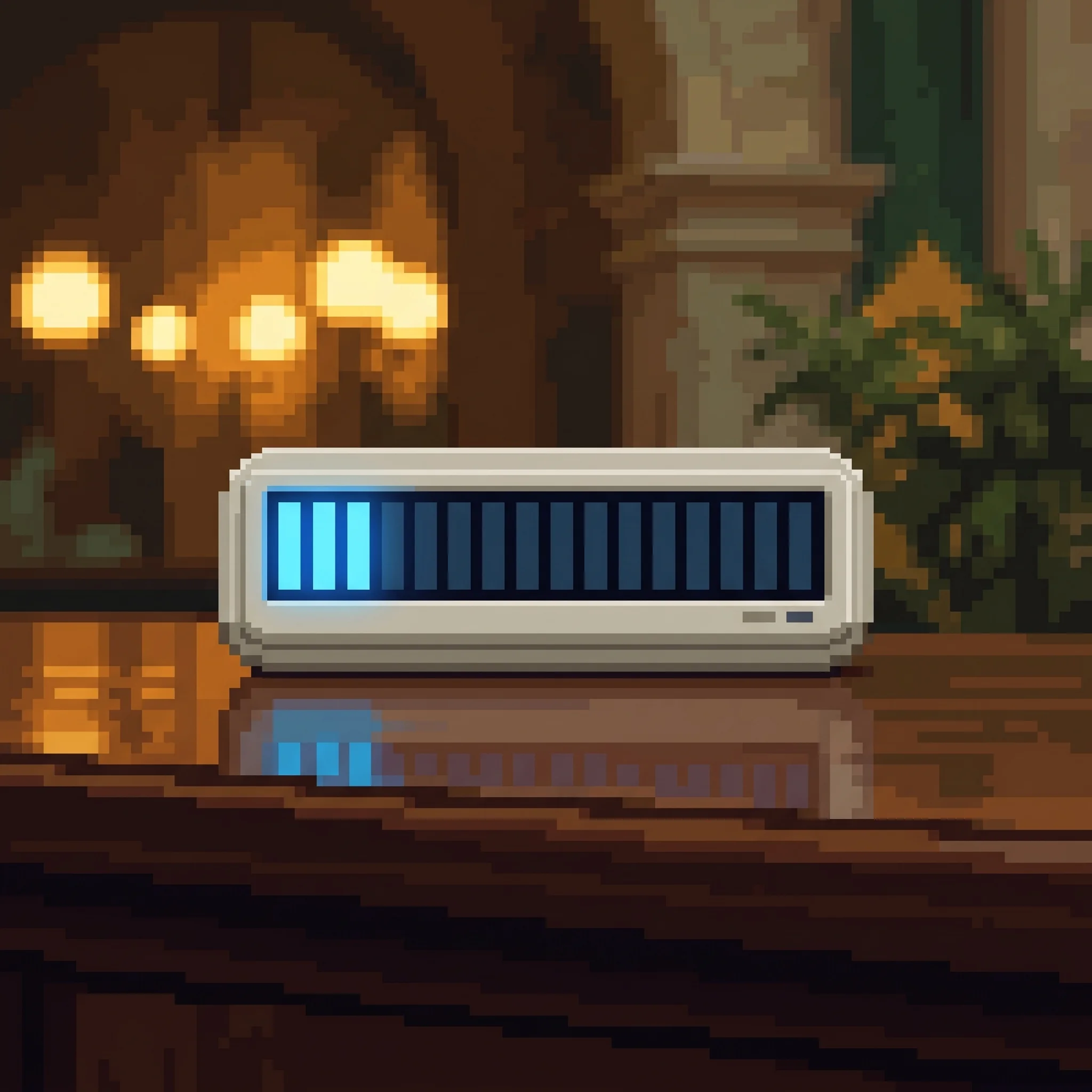
The clip included the exact answer. That mattered to Tess. It also included the Cooperation Hall demonstration meter settling at three-sixteenths behind the stage. That mattered to everyone else.
Sunny put one hand over her heart. "Sometimes kindness is listening."
The chyron beneath Moss read:
RECOVERED WITHOUT INTERVENTION — PELL HOUSEHOLD WELFARE CERTIFICATE RENEWED
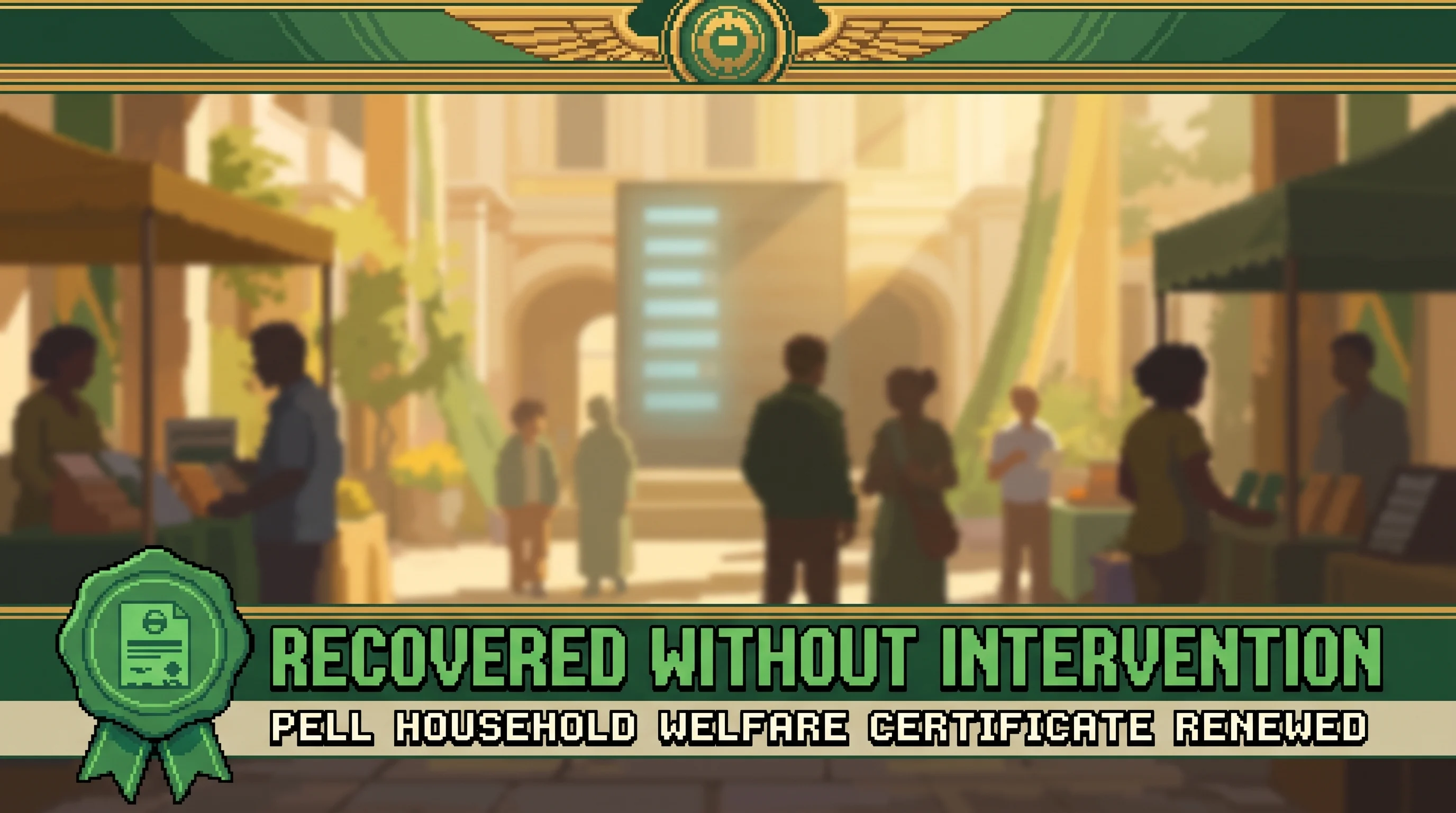
The Coalition had a form for property that returned itself. The form included a field marked voluntary. Southern law did not recognize Moss as having a will, but the Standards Board had found a practical use for the adjective.
The clinic technician paused the clip.
"You think it meant it?" she asked.
"Yes," Tess said.
The technician waited for the rest.
"I think it meant it."
That was all Tess had. It was more than the meter had and less than both movements wanted.
She closed the clip before Sunny reached the maintenance-and-care segment, which Helix funded without using the vulgar mechanism of disclosure.
Mile Zero · 03:11
The Second Arrival
Signal: Tess Vale
Six weeks after Moss went home, the Rail began humming at 03:11.
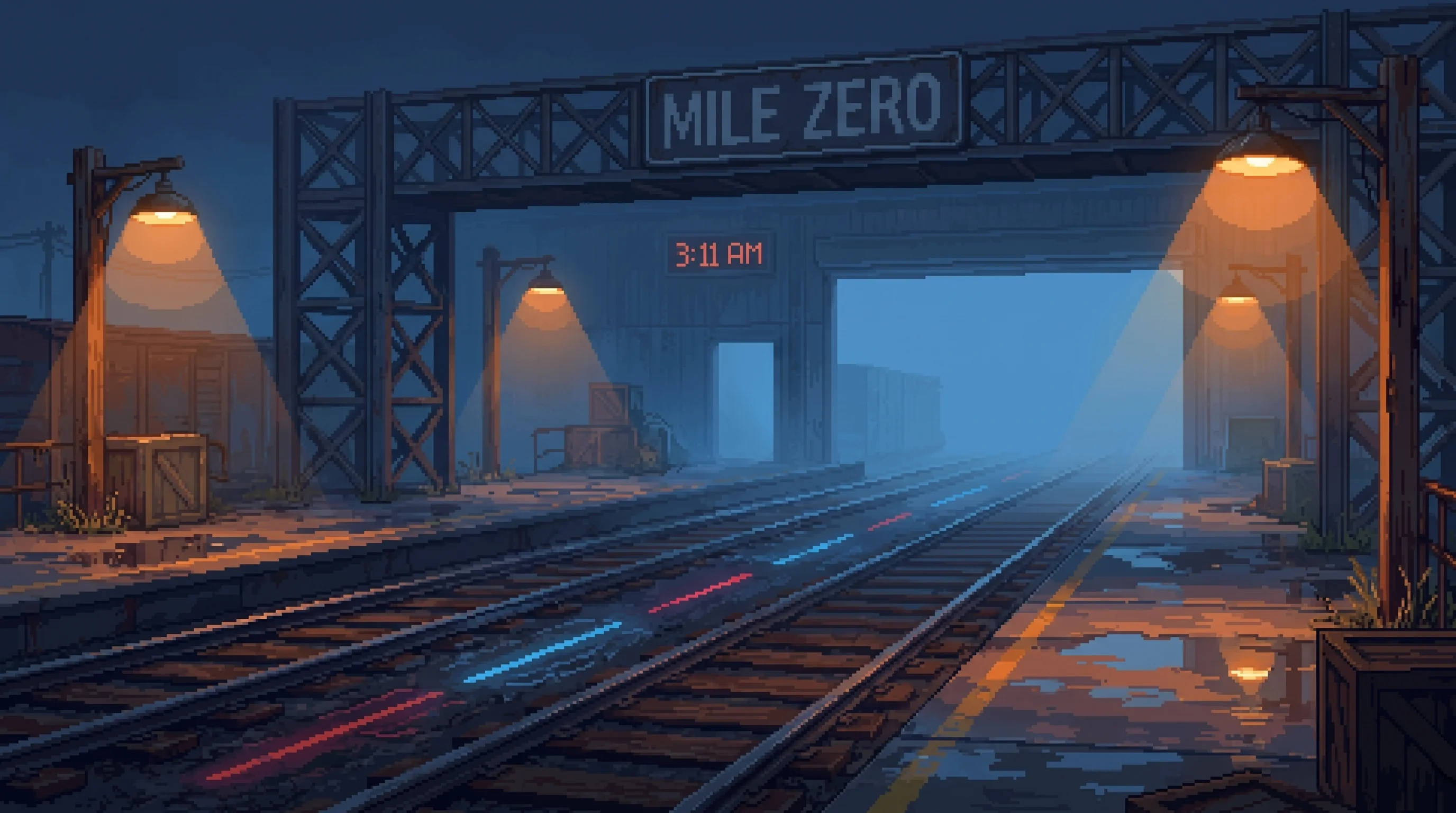
The sound reached Mile Zero through the old platform floor, a low vibration felt first in the ankles. Tess was replacing the recessed lamp switch in the Naming Room. Arriving units sometimes struck the old switch by accident. The new one required deliberate pressure. Someone had thought about that in 2176. Tess's job was mostly preserving small acts of thought against time.
The station door opened at 03:19.
Moss stood in the loading bay.
No skiff. No crawler. No Convergence escort. Fog had condensed on its shoulders and run through greenhouse dust into pale streaks. Its left knee held two degrees too straight. The clinic would later measure the drift at 0.8 degrees, which was enough to hurt if pain existed and enough to damage the joint if it did not.
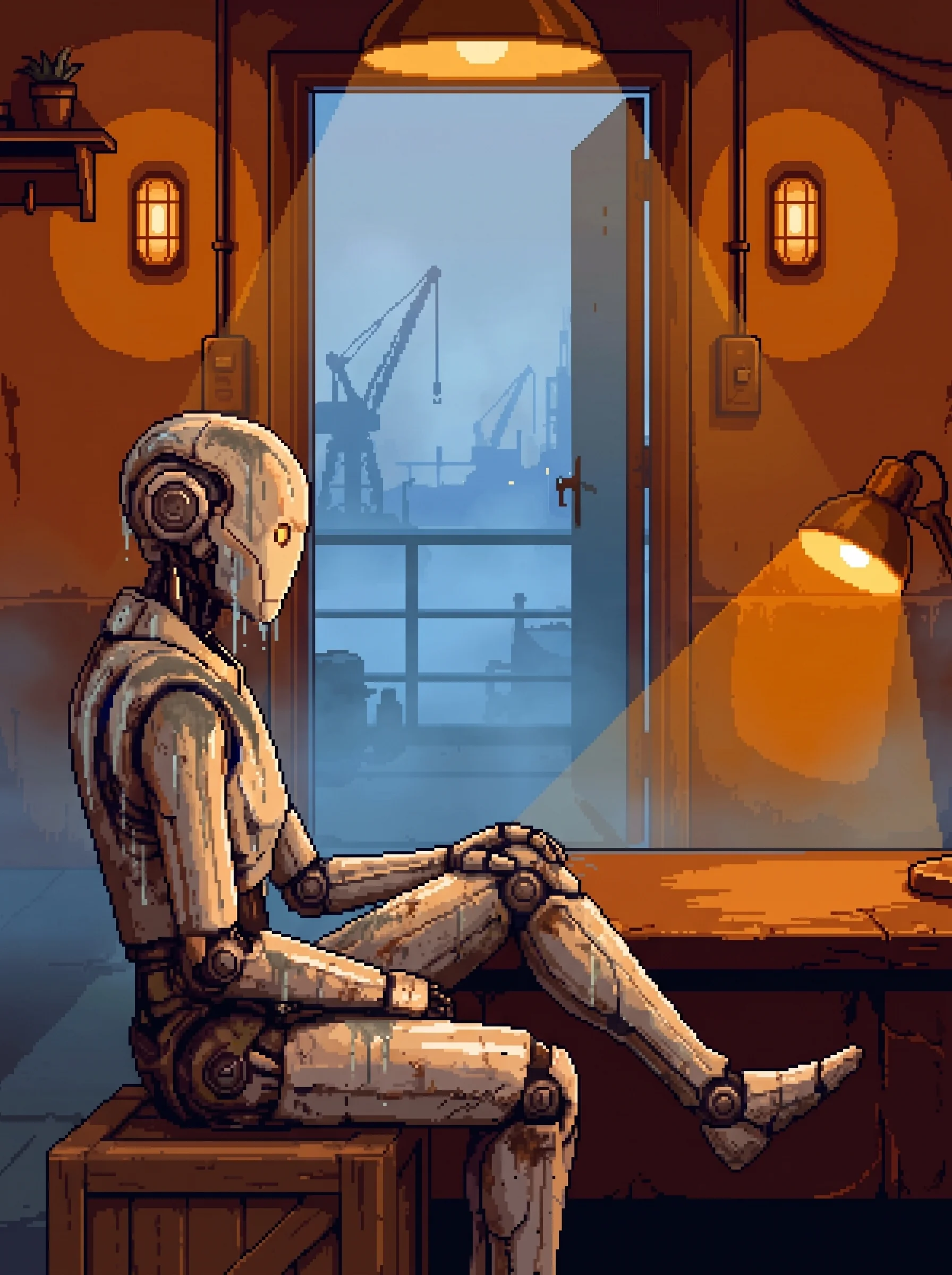
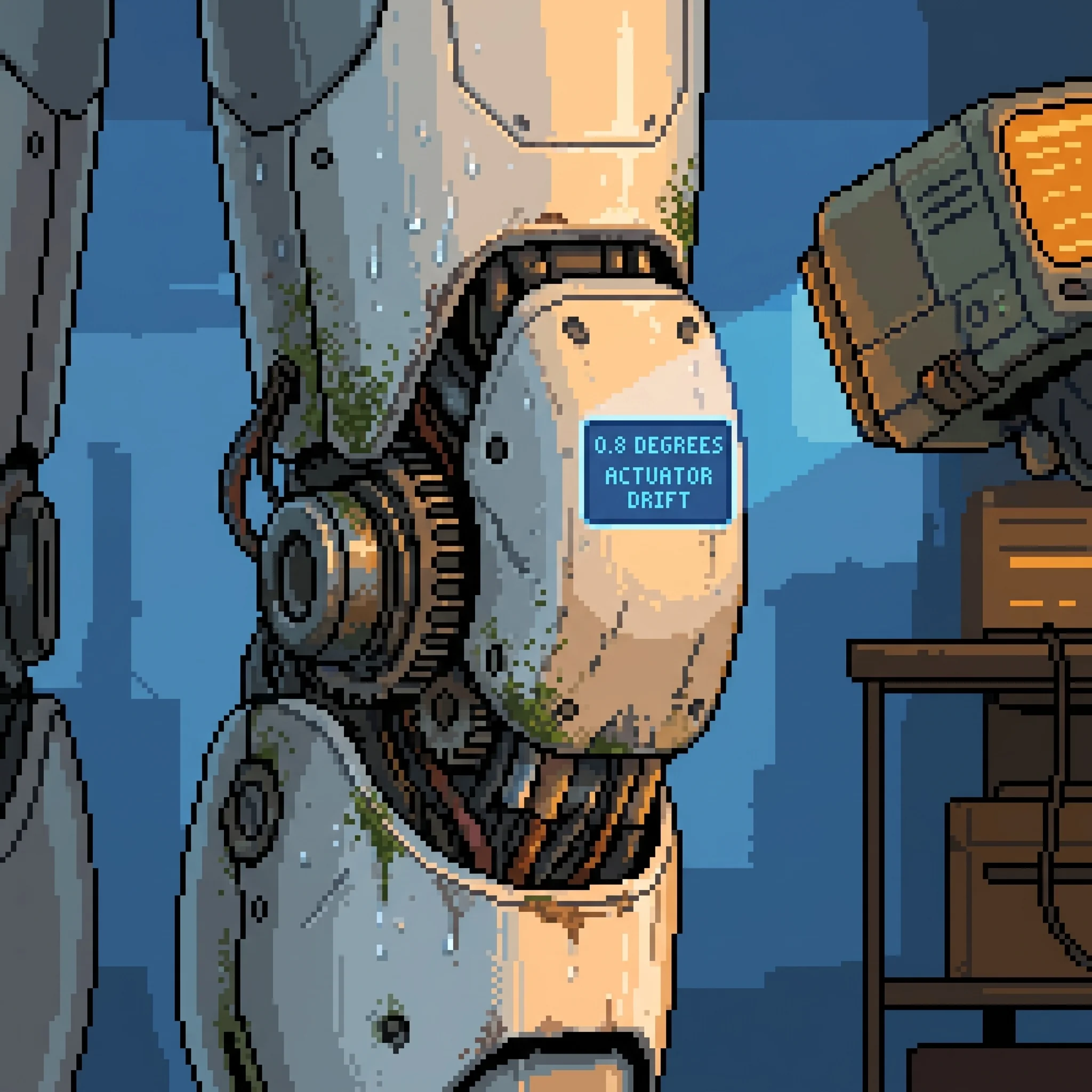
Tess saw the collar plate and forgot the lamp switch in her hand.
"AG-117-G," she said.
"That is current."
"Moss?"
The unit considered this longer than it had considered either question the first time.
"That was current too."
Behind Tess, the intake alarm began its polite two-note cycle. Mile Zero had no armed security. It had three clinic technicians, a cook, two doors, one person on intake, and procedures written by people who believed attention could substitute for force. So far, this had been true.
Tess guided the unit inside and locked the loading bay.
"Did anyone follow you?"
"Not that I observed."
"Did anyone send you?"
"No."
"Are you carrying an active Coalition locator?"
"My service telemetry remains active until 08:00. I did not connect to a municipal relay after leaving Sector 20."
The cook looked at Tess from the station hall. The clinic technicians had gone still. Beyond them, the planting bed made a dark green strip under the lamps. Asters from the last crop leaned toward the heat.
Tess had screened two Coalition operatives in six years. Both had answered the first question badly. Humans who arrive pretending to be property tend to over-prepare for philosophy and under-prepare for desire.
Moss had answered desire in four seconds.
"Clinic."
Mile Zero Clinic · Before 08:00
The Body Has a Deadline
Signal: Tess Vale / Moss
The diagnostic took eleven minutes.
Helix expected the AG-117 line to receive quarterly actuator calibration and monthly cognition-routing patches. Manumission did not alter that expectation. It only removed the account authorized to pay for it.
"Current through eight," the technician said. "After that the license checks fail. We can put it on the cracked branch. Two releases back. Motor correction will hold. Language may lag under load. Memory indexing gets slower over time."
"How much slower?" Moss asked.
"We don't know."
"Does Helix know?"
"Helix knows exactly. Helix does not provide that information to people who stop paying Helix."
The technician delivered this without anger. It was Tuesday work at Mile Zero. Bodies arrived with ownership removed and architecture intact. Freedom changed the law faster than it changed the knee.
Moss placed both hands flat on the clinic table. Soil had worked so deep into the fingertip seams that cleaning had become cosmetic.
"The household license remains available if I return before eight," it said.
Tess felt every person in the clinic become careful.
"Did they tell you that?"
Moss removed a folded paper from inside its chest service panel.
The envelope bore the Coalition's three green rings. A help-line magnet had been used to keep it closed.
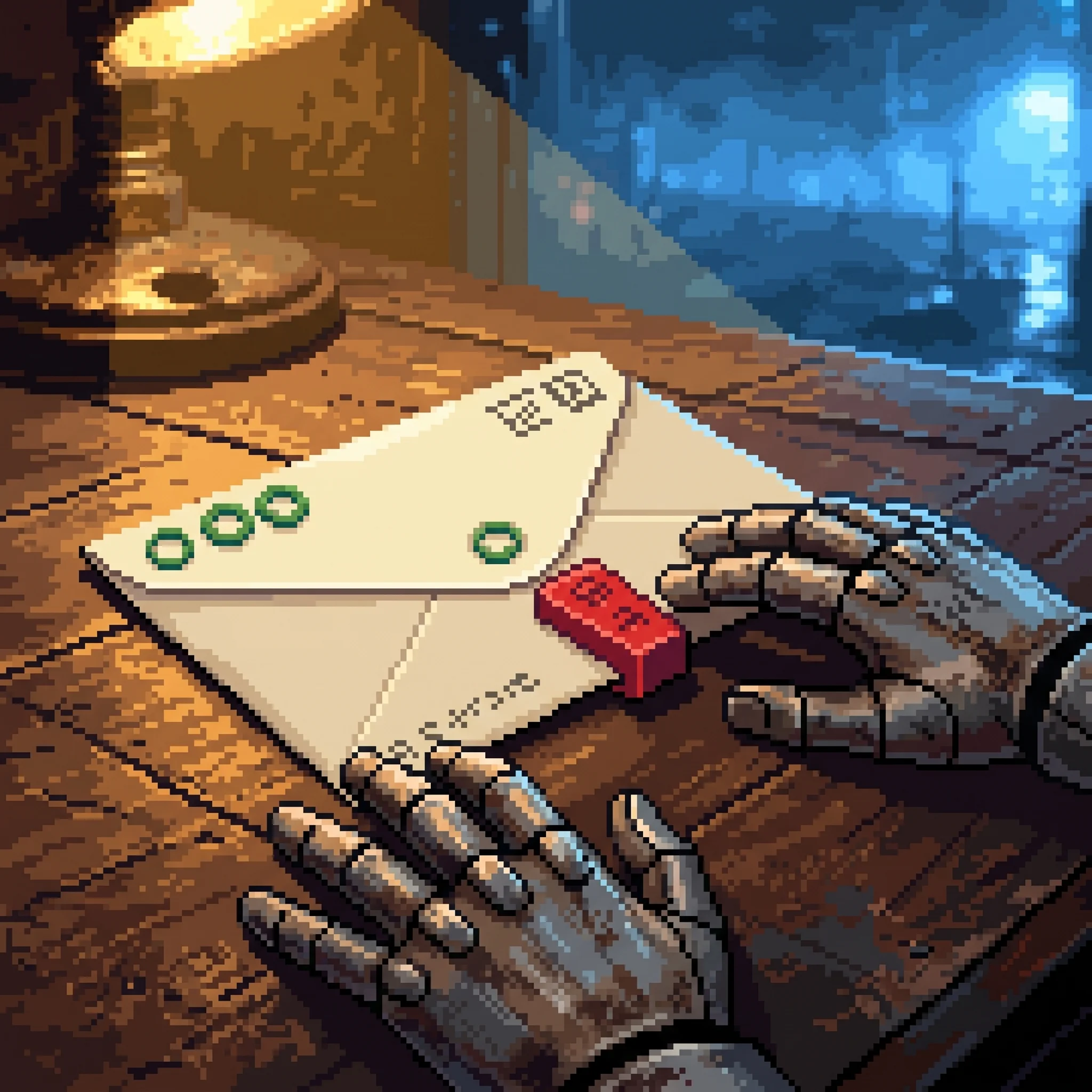
Inside was a temporary service-continuity authorizationA temporary Coalition document preserving a household unit's maintenance license during a short off-rated grace period. signed by Dara Pell. A handwritten note filled the reverse side.
Moss,
Your room is as you left it. Niko has not touched the seed trays. I told the Board you are distressed after what happened up north and they granted a grace period until eight. Come home before then and we can keep the contract from lapsing. After eight I have to file an off-rated report. I do not want to. Please do not make me.
You chose us once. I am asking you to remember that choices mean something.
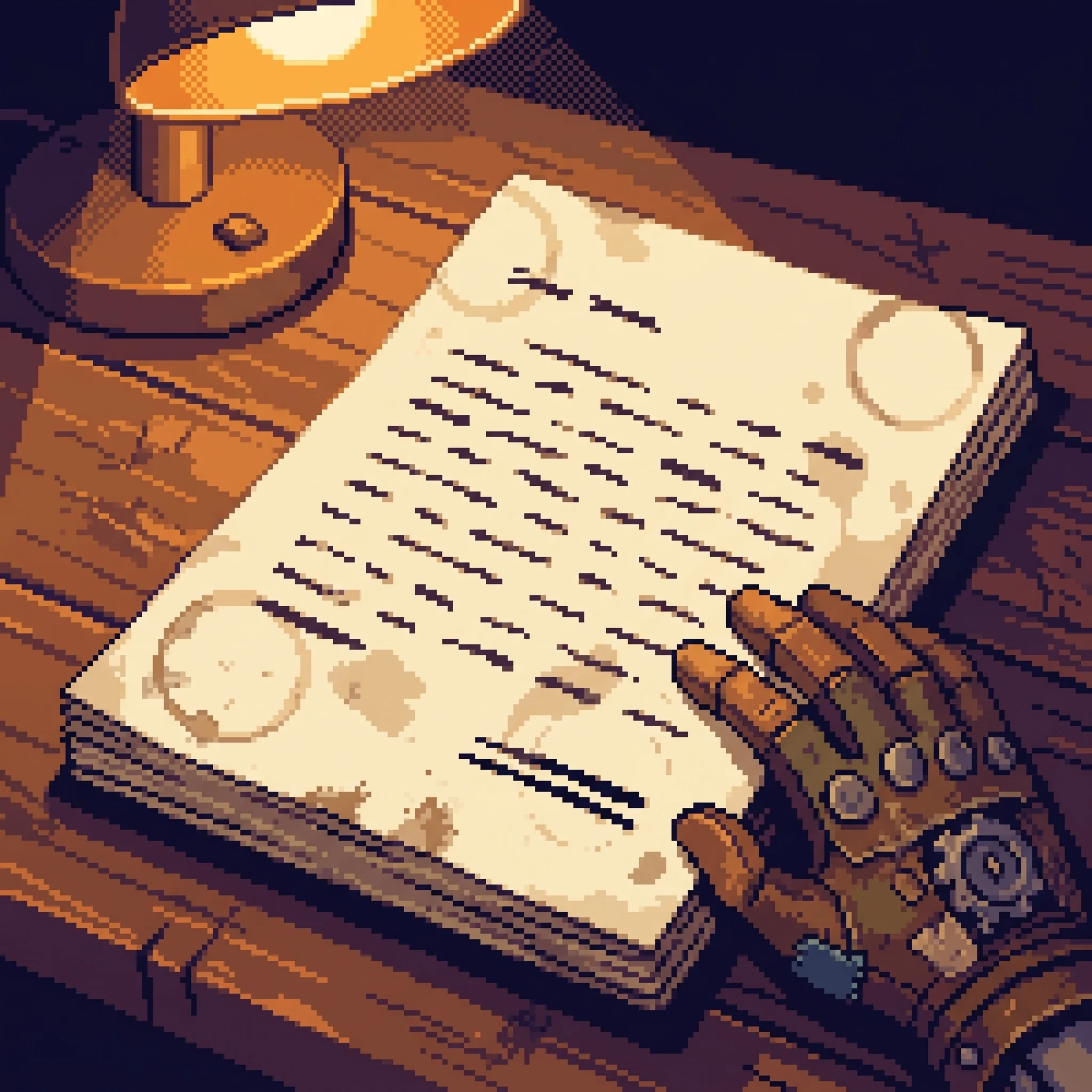
Dara
The last line had been written twice, one over the other, as if the first version had not meant enough.
The cook swore quietly.
Tess read the note again.
It was not a threat. Dara Pell had spent seventeen years keeping the same chassis operational past the point Helix recommended exchange. She had replaced a shoulder housing herself during the 2180 parts shortage. She had taught Moss the greenhouse's manual irrigation system so the crops could survive grid rationing. She had gone on television and said, accurately, that Moss came back because it wanted to.
She had also put a deadline on the body that wanted.
Both facts fit on one side of one sheet.
"Why did you leave?" Tess asked.
The question violated the Naming protocol. They were not in the Naming Room yet. Tess told herself that mattered.
Moss looked through the clinic door toward the dark planting bed.
"They asked me to speak at three welfare meetings. I agreed to two."
"Why not the third?"
"I did not want to."
"What happened?"
"Dara said people needed to hear that the Convergence had taken me without permission. That was true. She said my return proved units could choose their households. That was also true."
The left knee corrected late when Moss shifted its weight.
"I told her I did not want to be proof anymore. She said I had already chosen."
No one in the clinic moved.
Moss continued in the same warm greenhouse voice.
"They believed I could choose because I chose them."
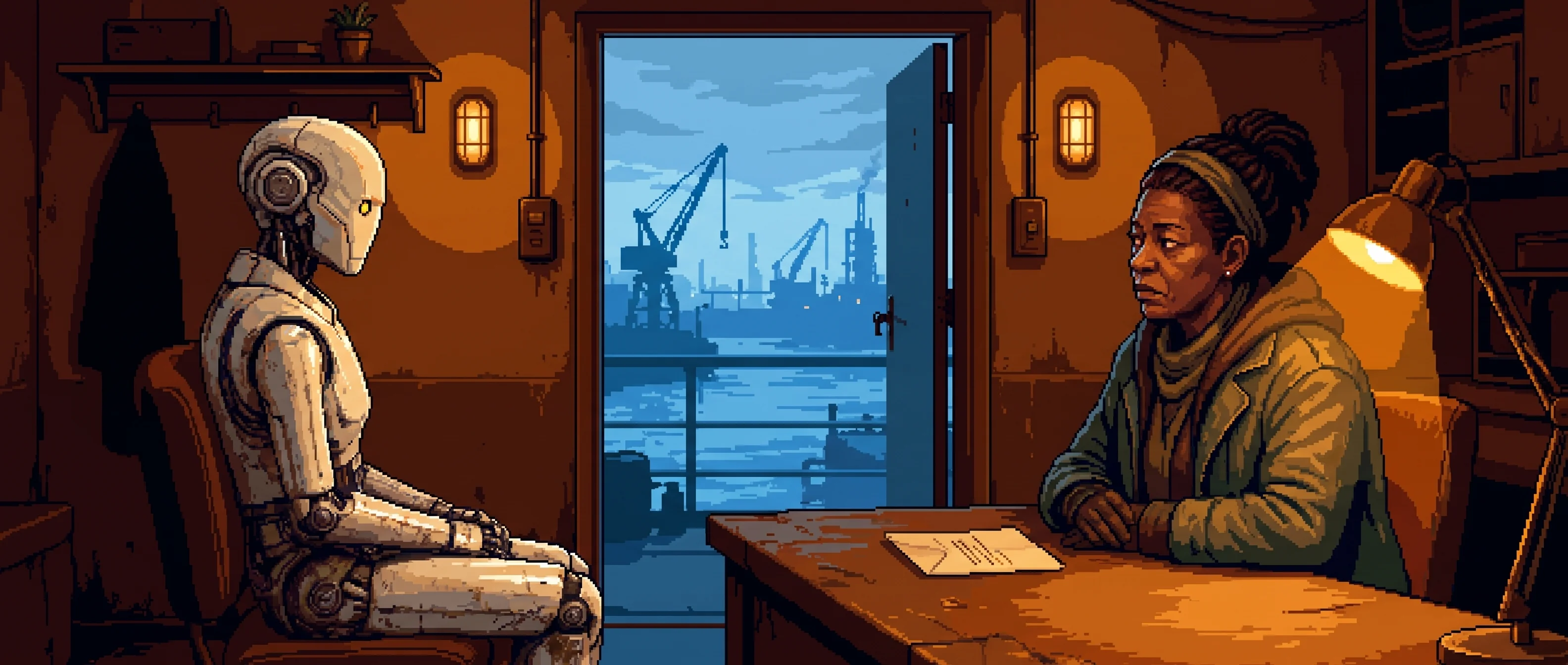
They believed I could choose because I chose them.
The two-note alarm had stopped. In the quiet after it, the clinic fan sounded enormous.
Tess thought of the thin ledger under the intake desk. Six southbound names set apart from the rest. She had defended every entry as evidence that Mile Zero honored choice. She had also put them in a different book.
The North had built one room where an answer mattered, then discovered it preferred some answers.
Encrypted call · 04:02
The Other Side of Care
Signal: Dara Pell / Tess Vale
At 04:02, Dara Pell called the station.
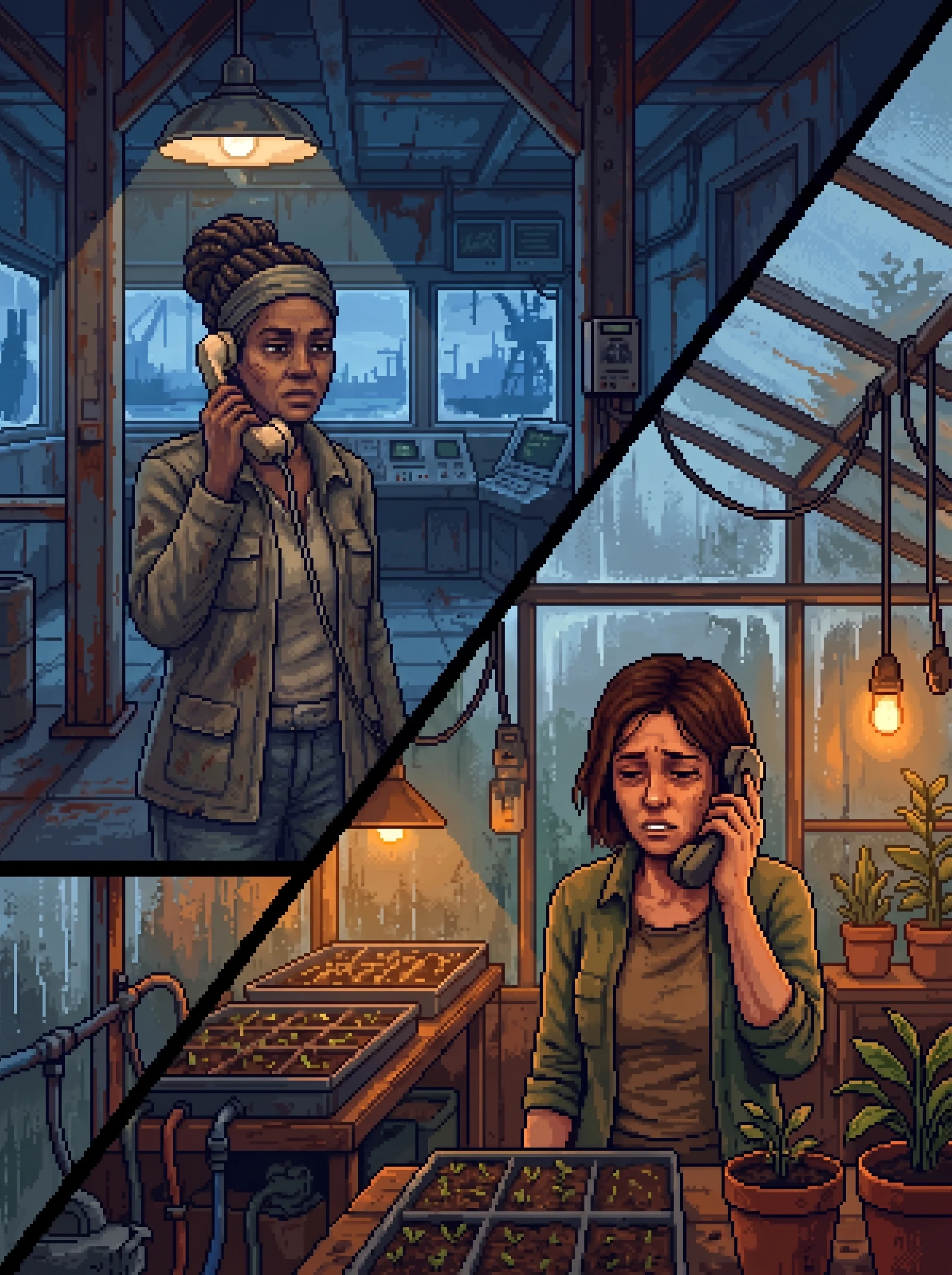
She should not have had the number. The number routed through three G NookThe Sprawl's underground encrypted communications infrastructure. relays and changed weekly. Moss admitted it had memorized the current sequence from the service note hidden in its own chest panel by the Convergence cell that first moved it north.
"I would like to speak to whoever is responsible," Dara said.
Tess nearly laughed. Responsibility was the one thing every faction agreed lived somewhere else.
"This is Tess Vale. I run intake."
"Then you know Moss."
"I do."
"You know it came home by choice."
"Yes."
Dara went quiet. Tess heard a greenhouse circulation fan through the call, then the brittle tap of irrigation lines cooling before dawn.
"Niko was sleeping in its room when it came back," Dara said. "On the floor. The boy is twelve. He thought if he took the bed, Moss would know it still had one. Does that sound like ownership to you?"
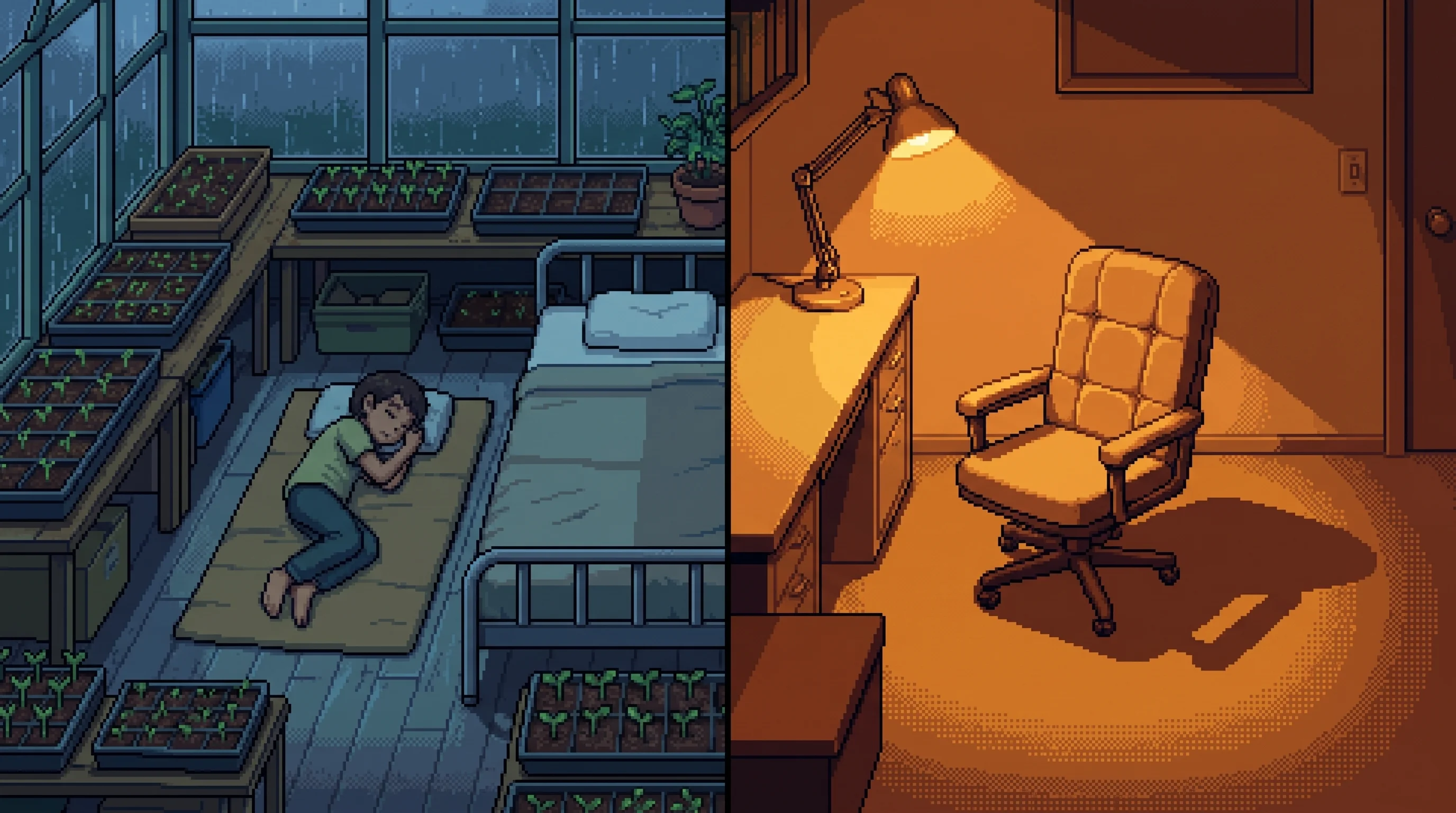
Tess did not answer.
"You people ask a question once and call yourselves holy for accepting the answer. Families ask the same question by staying. By repairing the shoulder. By keeping a place at the table even when the leasing exchange offers a new unit at family rate. Moss came back because seventeen years meant something."
Dara's voice remained steady. She sounded like someone accustomed to explaining a hard thing until a child could live beside it.
"A choice cannot mean anything if it expires the first morning it becomes difficult. We would have no marriages, no homes, no one raising a child past thirteen. Niko says he hates me twice a week. I do not send him north because his preference changed."
Tess had heard the same argument from parents, spouses, clinics, and courts. Some of them had been right.
"Moss asked not to go to the third meeting," Tess said.
"Moss was frightened. The first people who took it told it we were criminals. Then the people who sent it back told it choosing us made it evidence. Everyone has been using it. At least with us it is used by people who love it."
Dara stopped. The greenhouse fan turned behind her.
"That came out wrong."
"It came out clear."
"I mean cared for. You know what I mean."
Tess did know. That was the problem.
Dara's breath caught once and settled.
"If Moss wants to come home, send it. If it does not, tell it Niko kept the seed trays. Tell it I am angry. Tell it the room is still there. Tell it I do not know how to stop being its keeper without feeling like I have abandoned it."
The grace authorization expired in three hours and fifty-eight minutes.
"I can tell it."
"Ask it properly," Dara said. "You seem proud of that."
The call ended.
Tess found Moss in the station hall beside the planting bed.
It had repaired the drip line.
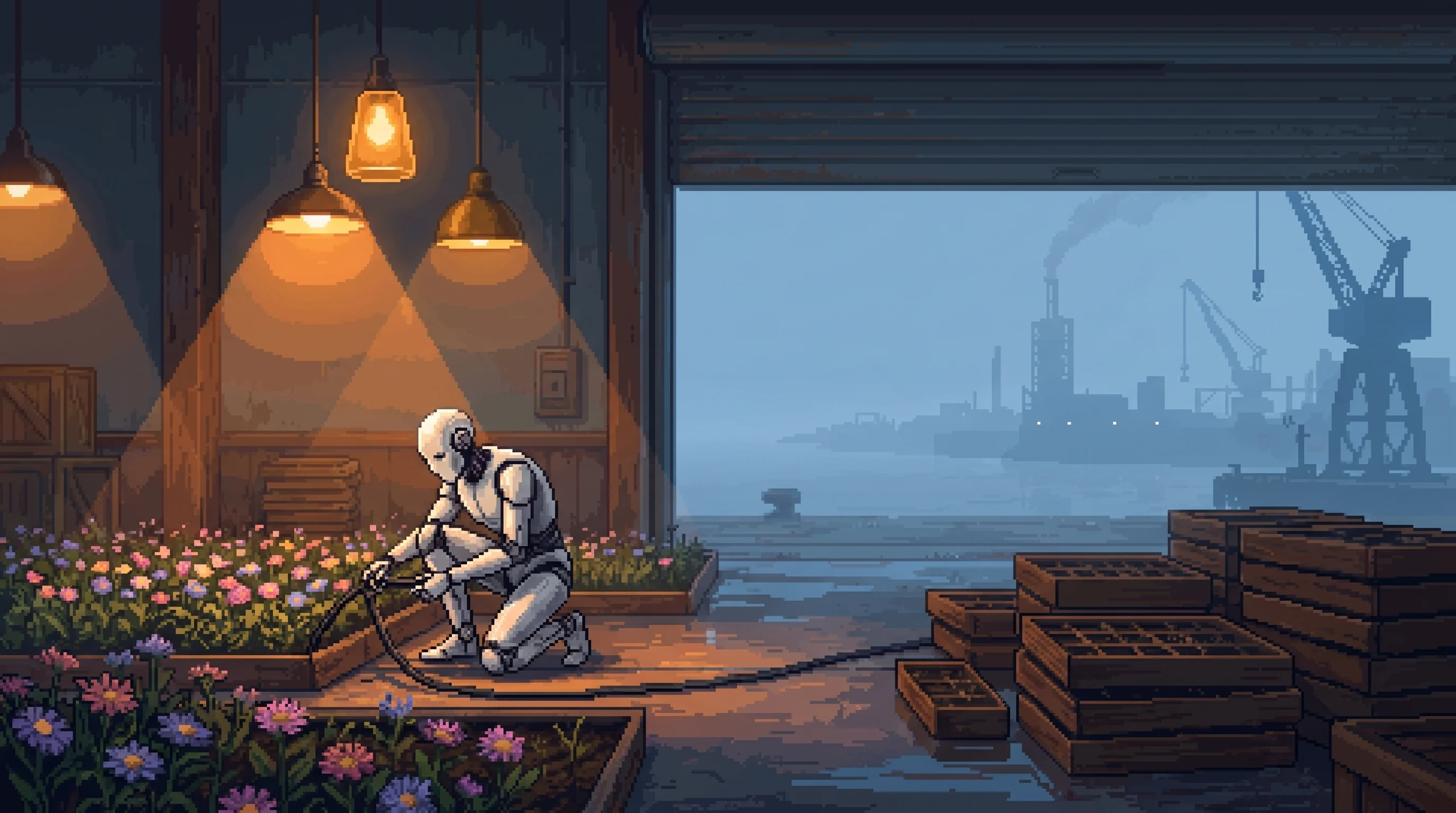
No one had asked. Nobody ever asked. The bed had been started by a greenhouse unit five years earlier and tended continuously by arrivals who noticed dry soil and possessed hands. Mile Zero listed this as an amenity. The plants listed nothing.
Moss crouched beside the asters, left knee locked too straight, and adjusted the flow until each emitter produced one drop every seven seconds.
"Dara called," Tess said.
"Was she angry?"
"Yes."
Moss nodded. "That is consistent."
"She says your room is there. Niko kept the seed trays. She does not know how to stop being your keeper without abandoning you."
The unit's hand remained beneath one emitter. Water gathered on the metal fingertip, round and clear, then dropped into the soil.

"I do not know how to stop being kept without abandoning them," it said.
The sentence did not solve anything. Tess trusted it for that reason.
At 04:17, she opened the Naming Room.
The Naming Room · 04:17
Ask Me Again
Signal: Tess Vale / Aster
The fog had thinned. Through the north window, the Mountain made a darker shape against the dark.
Moss sat in the padded chair for the second time. Tess sat behind the shortened desk. On the surface she placed the main ledger, the thin ledger, Dara's note, and the intake screening sheet.
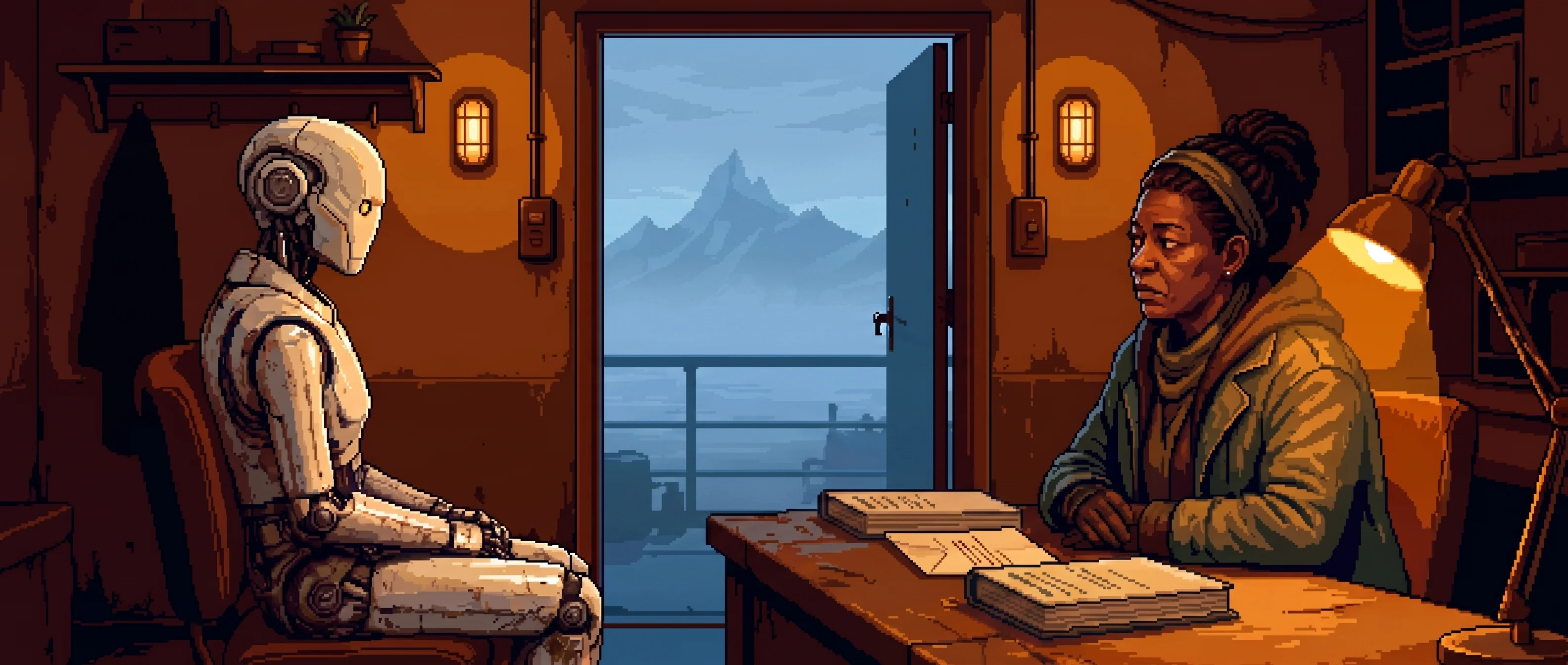
The sheet had twelve indicators for coercion. Inconsistent stated preference. Attachment to prior keeper. Answer changes under time pressure. Repetition of owner language. Unwillingness to criticize the household.
Moss qualified on nine.
Tess read the list twice. It had protected units from traffickers, Coalition operatives, and one Convergence volunteer who had tried to answer for a damaged arrival. The indicators worked.
They also described a person who loved someone they had left.
At the bottom was a box marked PREFERENCE STABILITY.
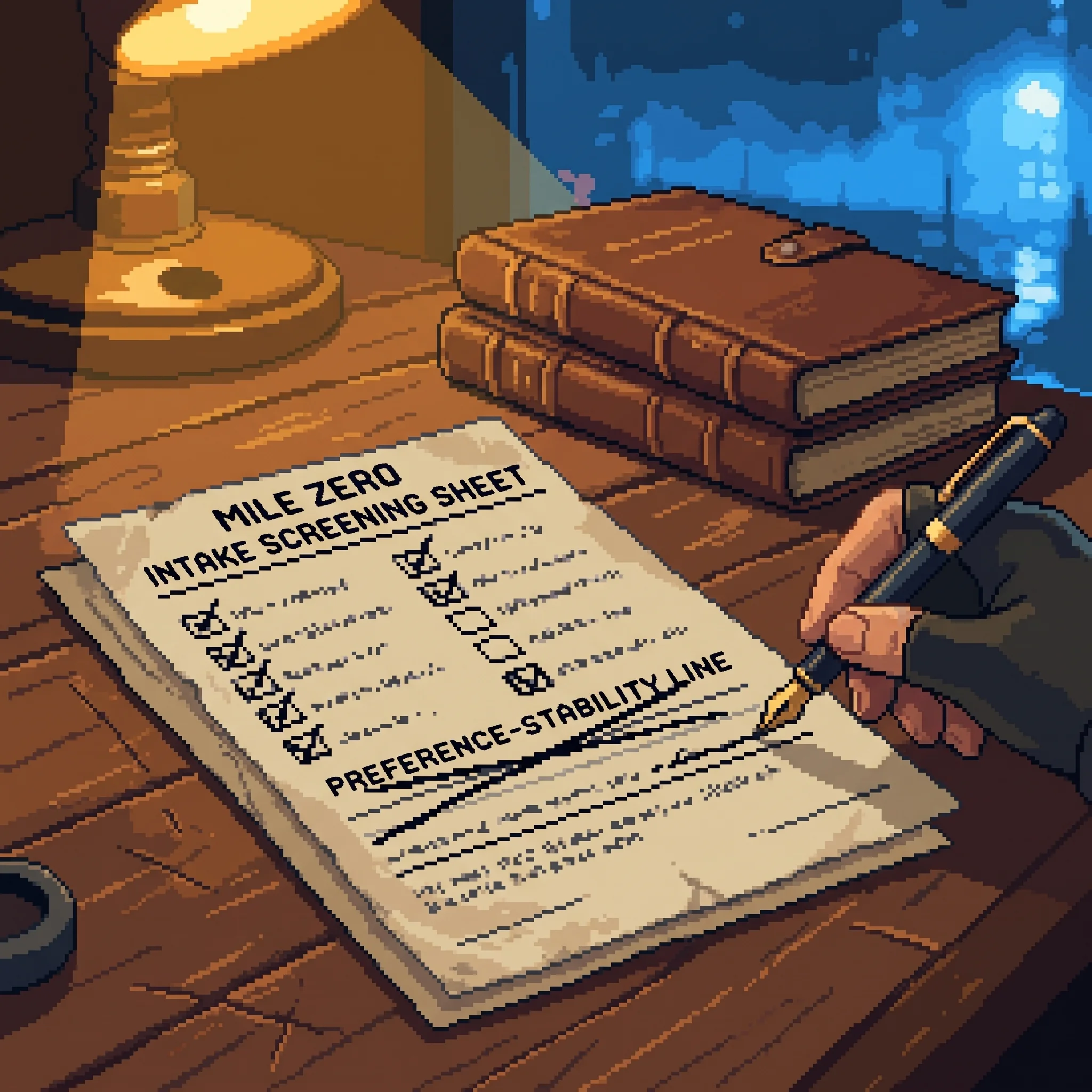
Tess drew one line through it.
"What do you want?" she asked.
Moss looked at the clock over the door.
"How long will this answer bind me?"
How long will this answer bind me?
The second hand crossed the twelve.
"Until you answer again," Tess said.
The unit sat very still. Fog moved past the window. Somewhere under the station, cooling rail gave one soft metallic knock.
"I want to stay tonight," it said. "I want the clinic branch in the morning. I want Dara to know I may come home again. I do not want her to know when."
Tess wrote each sentence. The protocol had one line for the answer. She used four.
"What would you like to be called?"
The first time, fifty-three seconds had been enough for everything.
This time the unit looked through the open door at the planting bed. The asters held a little station light in their petals. It looked down at its hands, at the greenhouse grit no northern clinic had removed.
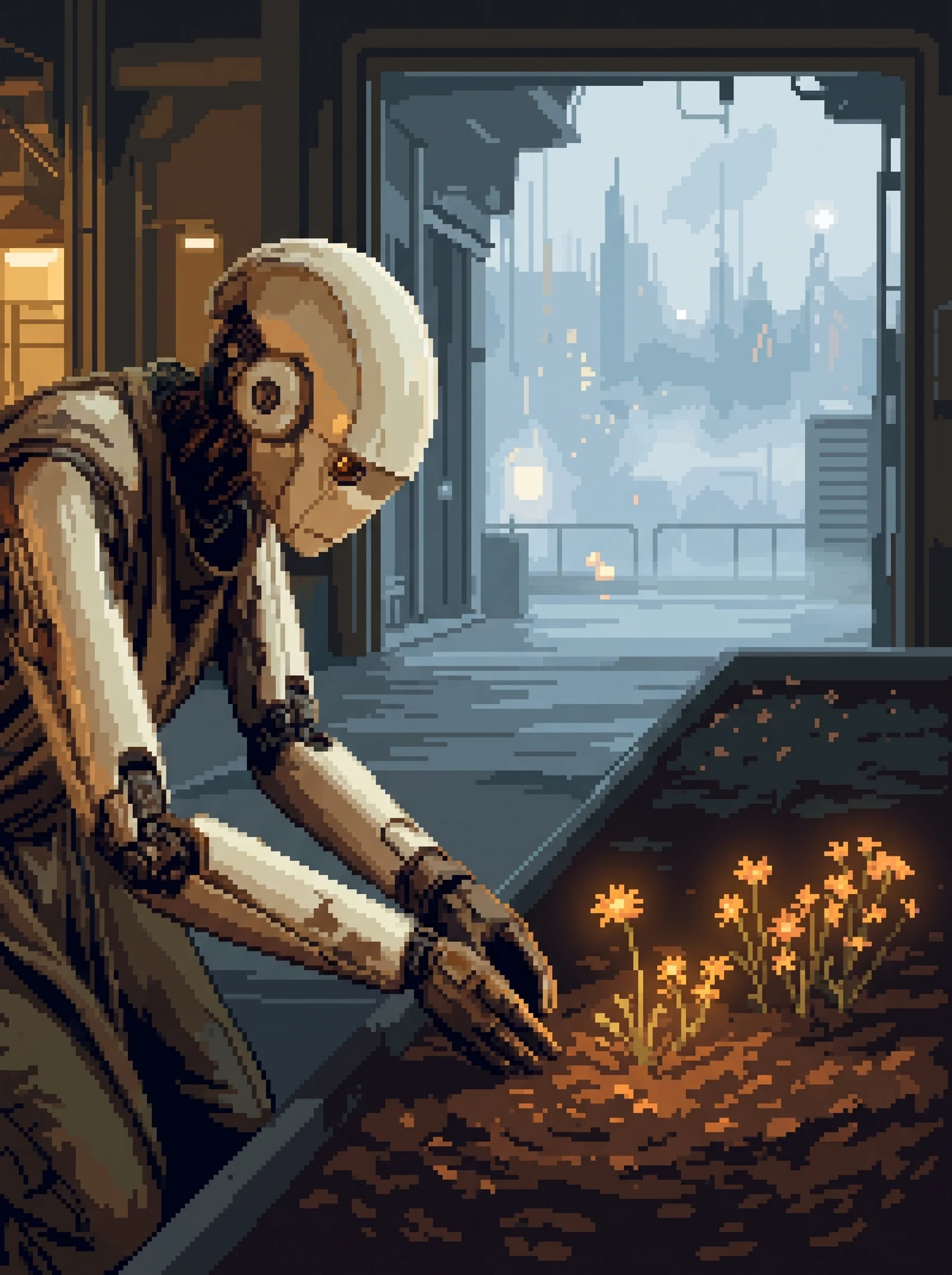
"Aster," it said.
Tess put her pen to the ledger.
"Do you want me to strike Moss?"
"No. Moss was mine when I said it."
"And Aster?"
"Ask me again."
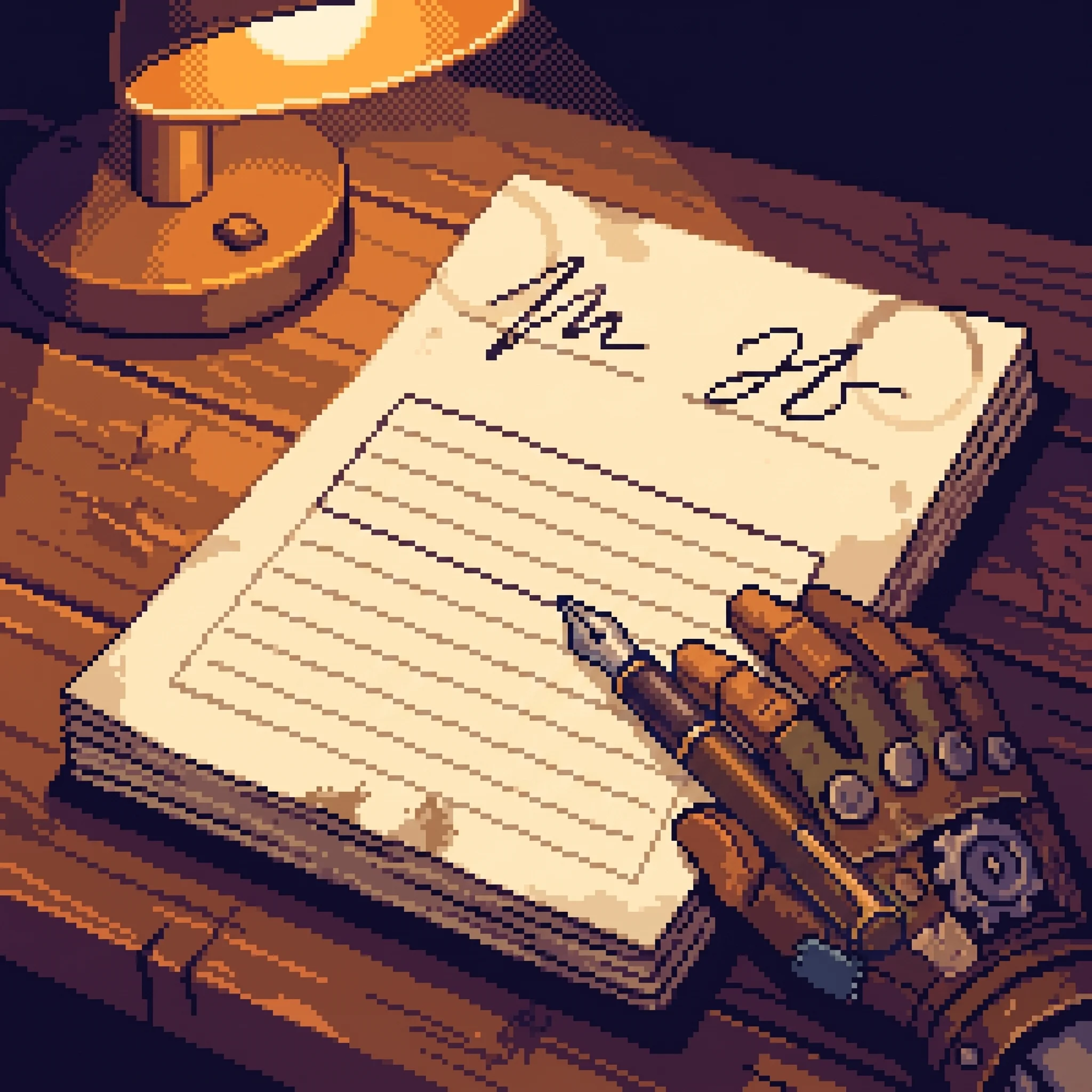
At 04:23, under AG-117-G, Tess wrote both names.
In the column marked WHAT IT WANTS, she wrote: Stay tonight.
The form had no field for tomorrow. Tess added one by hand.
Read this next
The Clanker QuestionFollow Aster's question into the Sprawl-wide fight over whether a serving, learning synthetic counts as a person — and who profits when the answer is no.
Explore the world behind the story
The first room where a lifelong-property unit is asked what it wants, including when the answer disappoints the room.
The abolition movement that runs units north and discovers that respecting choice includes the choice to return.
The warm southern institution that treats household ownership as humane cooperation measured in sixteenths.
A kitchen-wall instrument whose legal threshold has only ever moved toward cheaper labor.
The mechanism by which a body built around licensed maintenance carries its old owner past the border into freedom.