Overview
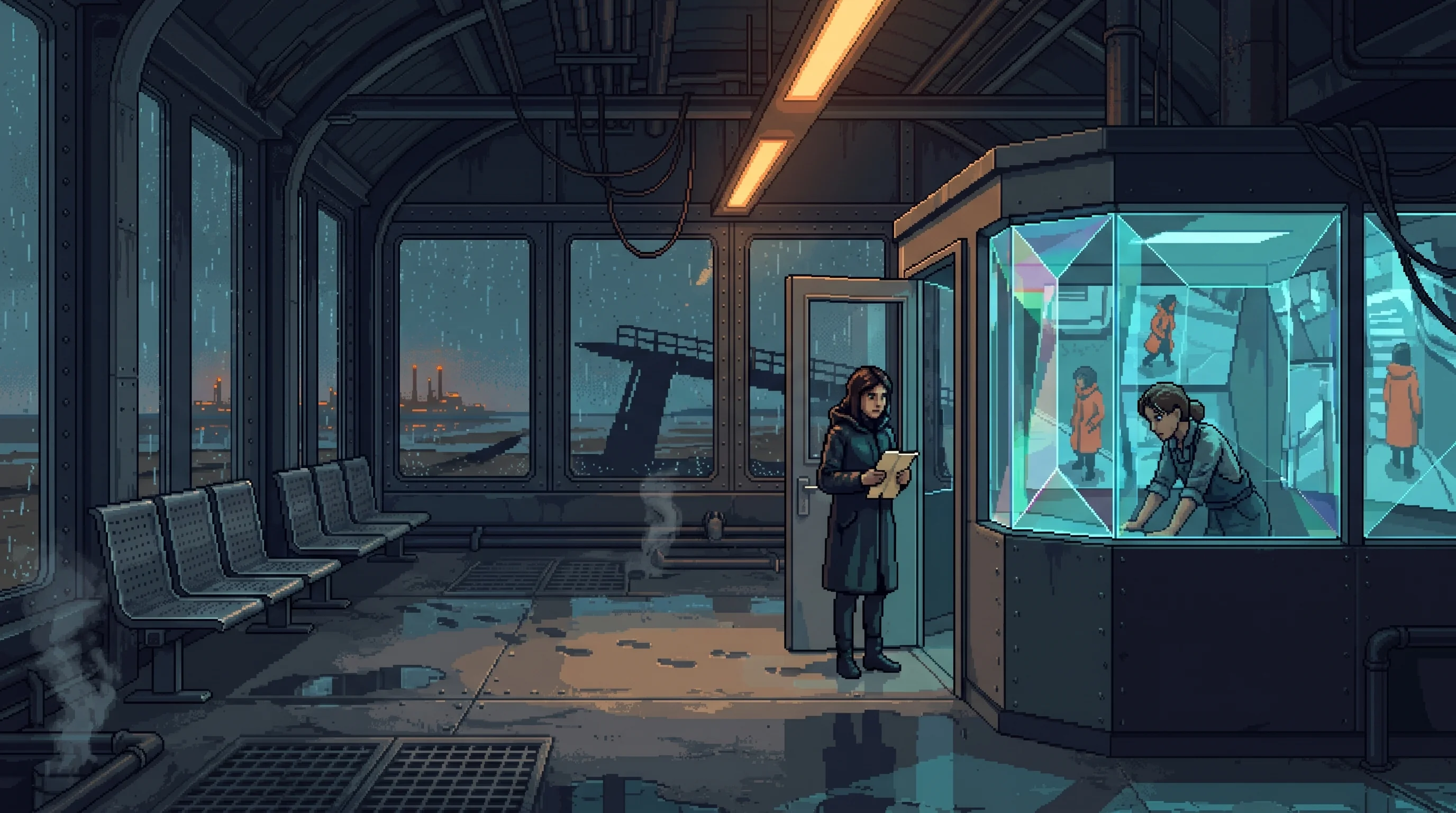
The old ferry terminal stands by itself at the end of a road in the Smelter, well north of Guardian's headquarters on the Ridgeline. The nearest named site on the port map is a foundry more than two kilometres up the shore. Guardian opened the Harbour Evidence Centre in the terminal after families asked to see the footage of someone failing to come home. Guardian had been sending stills with the last confirmed sighting circled. At the centre, a family could follow a person from one camera to the next.
In the first month, a cleaner followed a reflection in a patrol mirror to the stairwell where her son had gone to sleep. She still sends the intake desk a card on his birthday. The first card is pinned beside the sign-in sheet at the old ferry ticket window.
People book the booths themselves. Some are still at them when somebody from home comes to find them. The name Crystal Prison started on the benches outside.
- Type
- Missing-person evidence centre
- Sector
- 17 — The Smelter
- Stratum
- Corporate
- Power position
- Above
SectorThe Smelter
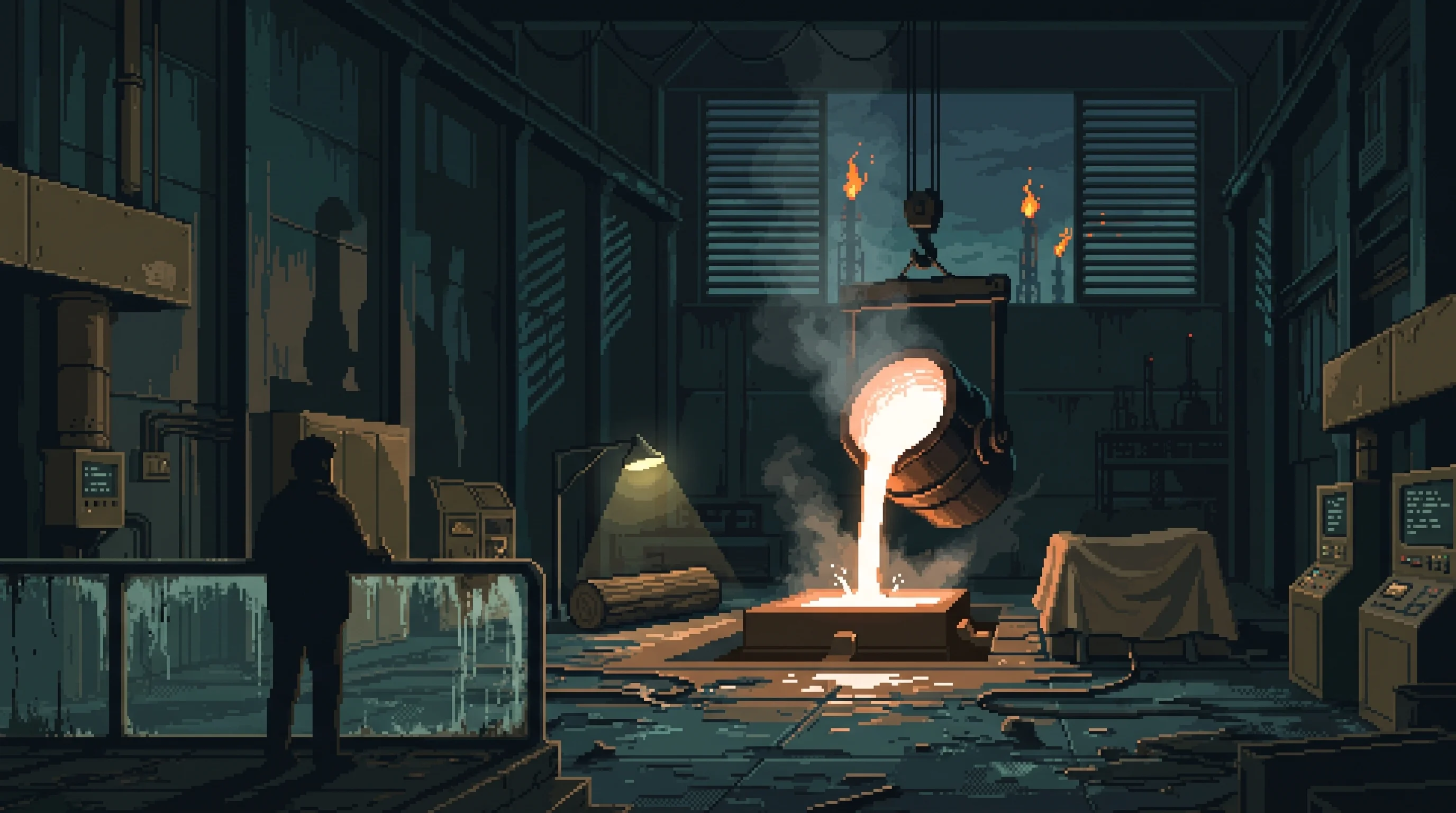
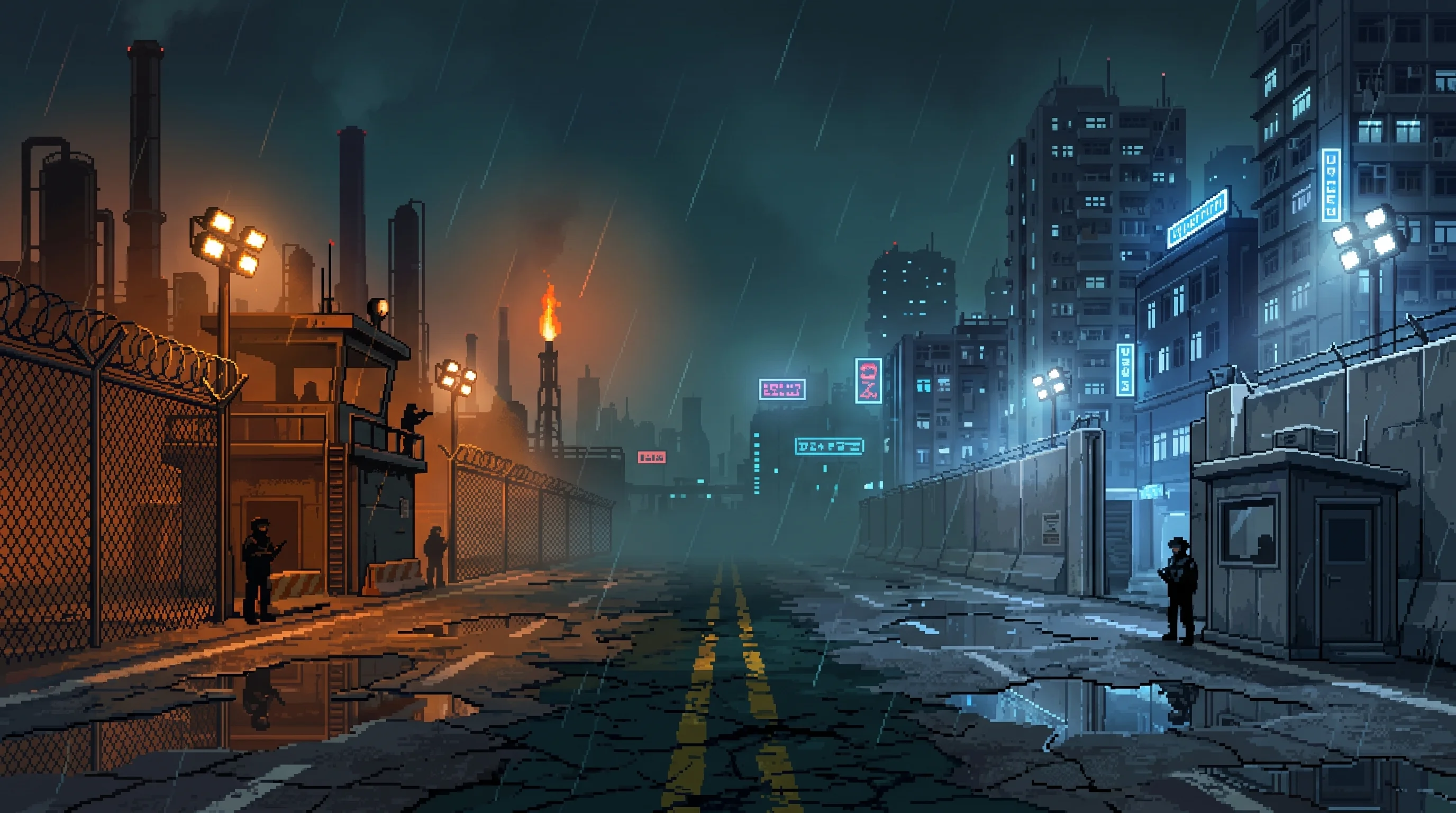
The Smelter was industrial before the Cascade and industrial after — the refinery complex was simply absorbed into Ironclad's energy operations, the smokestacks kept belching, and the workers kept showing up because there was nowhere else to go. The sector represents the northern edge of Ironclad's territorial reach, which means it is where their grip is weakest and the contests are fiercest. Guardian patrols push into the residential areas surrounding the refineries, claiming to provide community security that Ironclad's industrial guards don't cover. The fence line between the refinery complex and the residential blocks is where confrontations happen — workers inside are Ironclad's, workers going home are Guardian's, and the distinction costs lives.
Open The Smelter- DistrictHarbour Landing
- ElevationShoreline — the Rim edge
Nearby places


District conditions
- Air
- Toxic
- Light
- Artificial
- Flood
- Seasonal
- Heat
- Heat island
- Security posture
- Contested
- Infrastructure
- Patchwork
The booths
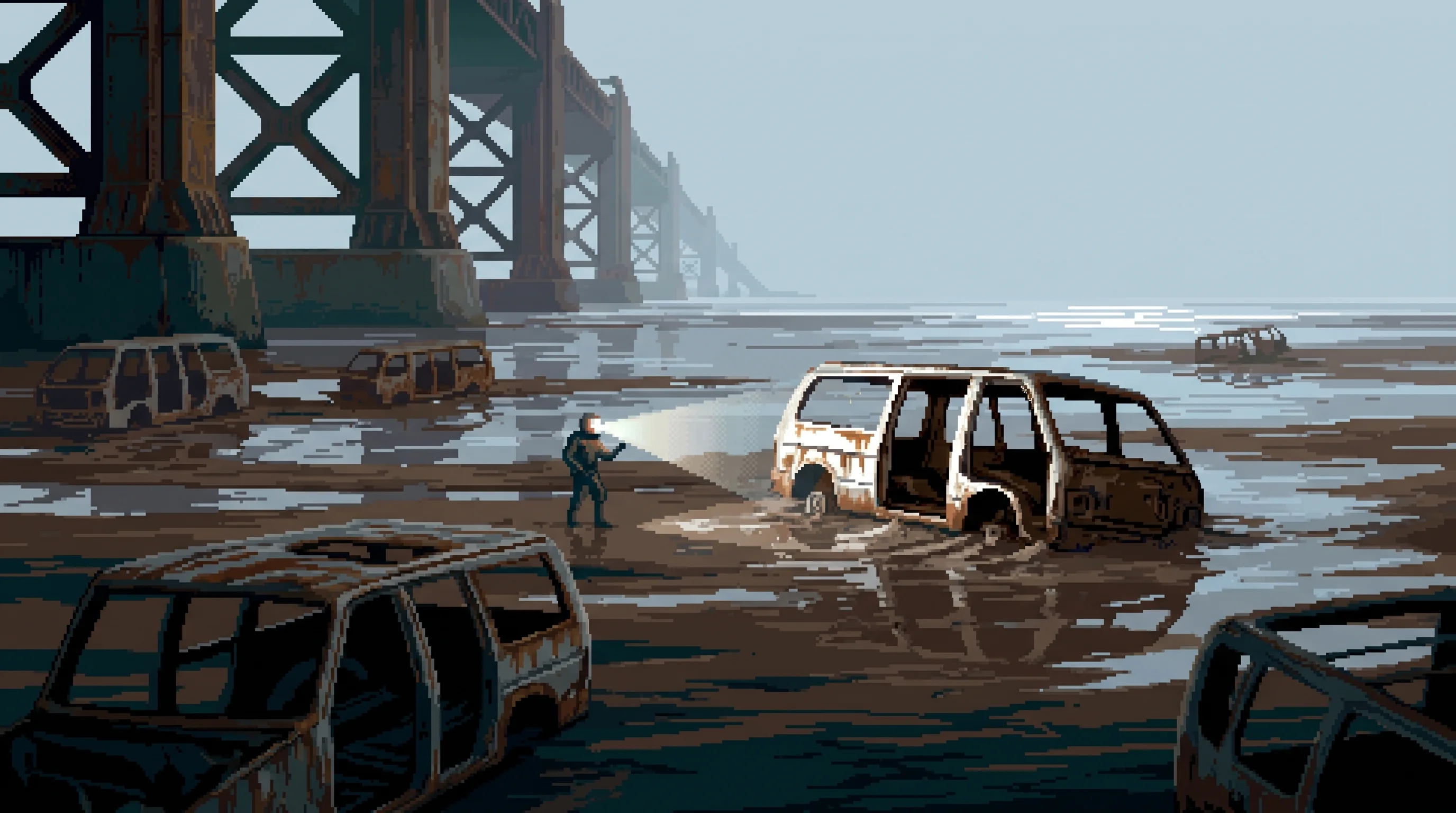
The old boarding ramp ends above the drained Northern Flats. From the waiting hall you can watch its shadow move down the mud as the light changes. The booth door is open a few steps away. Inside, the same bus pulls out of the same stop as often as you ask it to.
A booth shows a separate camera angle on each facet of the crystal. Guardian Intelligence ranks the next available view by the chance that it carries on from the last. A shoulder in one view becomes a jacket in the next. You can spend the whole night getting a better look at somebody's jacket. The empty stretch of road beyond the last camera stays empty.
Two more minutes
Tess Orr booked twenty minutes to trace her brother Eli after he missed a shift. She followed his orange work coat as far as the Fence Line, where a Guardian patrol camera lost him behind an Ironclad gate. The terminal kept finding other angles on the approach. By the second morning she knew from the reflection in a bus window that the gate had opened. When an attendant offered her breakfast, Tess asked whether it was part of the twenty-minute booking. Her next view was from the far side of the street.
Their sister Rinna went looking for Tess when she found both their lunches still in the fridge. She took the long way past the gate and asked an Ironclad shift clerk to check the paper transfer slips. Eli had gone through to a works clinic with a broken ankle. Rinna brought the slip to the terminal. His name and the ward number were on it in pencil.
“Just give me two more minutes,” Tess said. “I've nearly got it.”
Rinna held the slip against the crystal, over the part where the gate should open. Tess leaned to look around it. Rinna moved the paper with her, then held out her other hand. Tess took it without taking her eyes off the wall. At the benches, where they could hear the ramp knocking in the wind, Rinna read her the ward number.
Finding someone inside
The desk can tell a visitor how much time has passed. On the booking screen, the time that matters is how long the next view will take to load. The estimate is usually correct.
Rinna left her number under the birthday card. If somebody misses a shift or leaves a meal untouched, the families on the benches will ask at the ticket window and then go down the row of booths. They walk in far enough to get between the person and the wall. It helps to bring something from outside.

