
Marit Calder
The Apprentice Who Cannot Mourn
Asked by Linares why she was doing it, she said the ones who signed are still here and they are frightened, and nobody in the town knows how to stand next to that
Overview
Marit Calder is thirty-one, maintains the water plant at Wake Hollow, and was conceived under the full Temperance schedule in the tract clinic at the end of the second row. Her mother signed the consent. Her mother is the fourth body she has washed.
The correction removed four things and people outside the Corridor consistently guess the wrong four. It did not remove warmth. Marit notices when a person in a room has stopped being all right, notices it early, and will say so plainly and then stay. What it removed was bereavement persistence — the part that goes on hurting after the fact has been understood. Hedda Calder died in the spring of 2183 at sixty-eight, and Marit understood it completely, immediately, and permanently, and by the following morning it had cost her nothing.
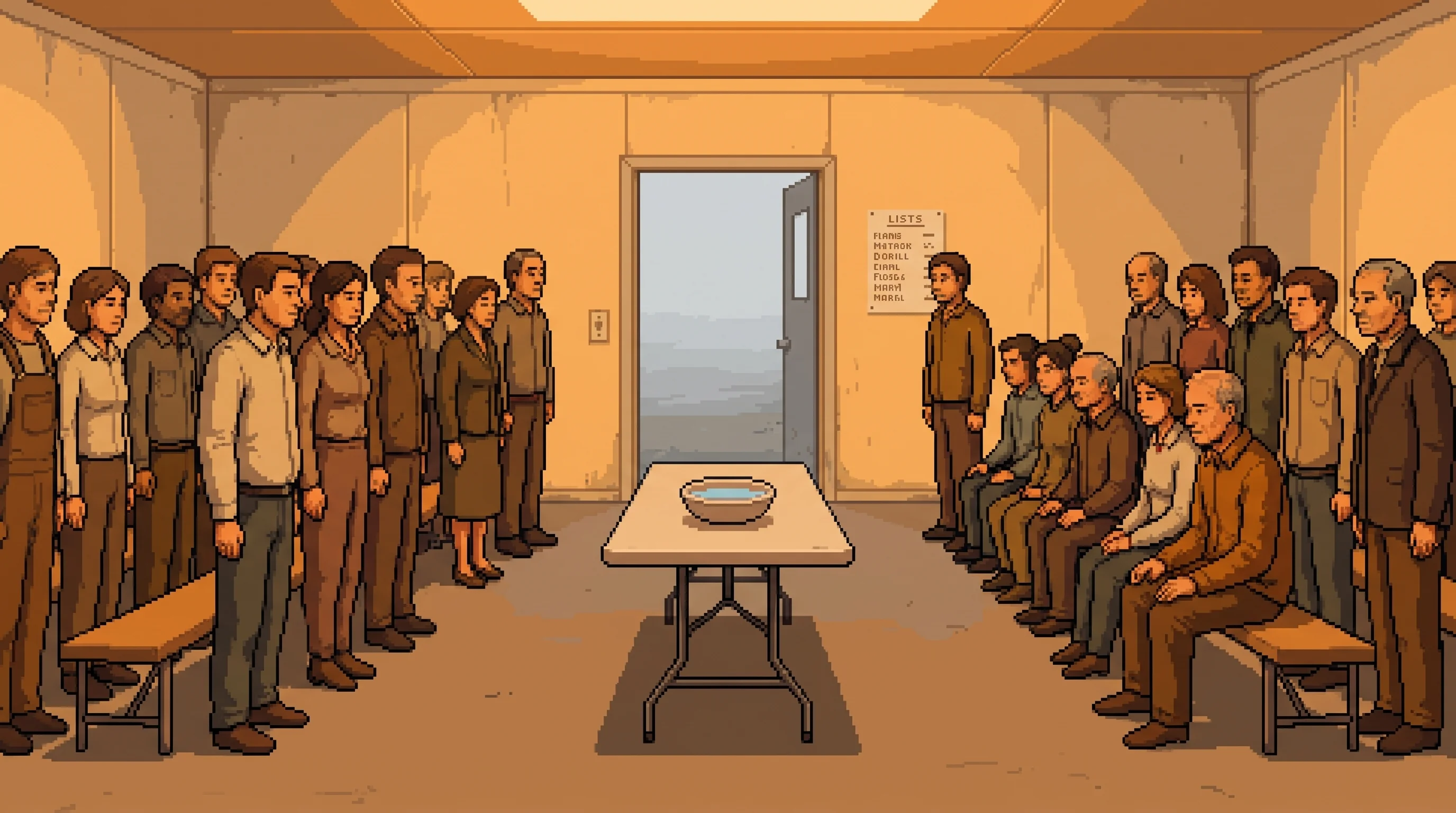
What she discovered that morning was that the town's rite covered the afternoon and not the body. The second afternoon is a bowl of water on a folding table and four minutes of quiet, invented in 2175 by people improvising, and it does what it does. It has nothing to say about the hours before it, when there is a person on a bed who needs to be washed and dressed and made into something the room can look at. Nobody in Wake Hollow knew how. There were four hundred people in the volunteers' terrace at the time who did know, roughly, and all of them were going to need it, and none of them were going to be in a position to do it.
So she went and found somebody who knew.
What She Went For
The Deep Dregs is two hours and one checkpoint from the Corridor coast shelf, and she has made the trip nine times. Tomás Linares is seventy-eight, prepares about a dozen bodies a year in a converted storage unit behind a noodle counter, and has spent a decade writing grief letters on behalf of mourners who arrive composed and informed and unable to locate the room where the feeling belongs. He has understood those people as damaged — by the archive, by the Floor, by years of synthetic permanence sealing a door they used to be able to open.
Marit is not damaged. There is no door. She told him so at the start, without apology and without asking him to reassure her about it, because she had correctly anticipated that he would otherwise spend the first hour trying to.
He agreed to teach her. It took him three visits to work out why the agreement sat badly, and what he arrived at was this: everything he knows was learned from his mother, who learned it from her grandmother, and every one of them wept at some point in the learning, and the weeping was not incidental to the instruction. It might have been the instruction. He has taught Marit the washing — the order of it, the temperature, the way you support a head that no longer supports itself, what to do with the hands. He has not taught her the speaking-to, which is the part where he tells the body who it was. He has not explained the omission and she has not asked about it, though she has noticed, because she notices things.
| Born | 2153 — the first year of the Wake Hollow cohort |
|---|---|
| Occupation | Water plant technician, Wake Hollow tract; unpaid body preparer since 2183 |
| Location | Wake Hollow, the Corridor coast shelf (Sector 16) |
The Page
He wrote the steps out for her on the second visit, in pencil, on the recycled paper he uses for the letters. Twelve numbered lines and two diagrams. She folded it in four and put it in the pocket of her work coat, and it has been there for a year, softening at the creases.
She has not copied it. This is not carelessness — she is a plant technician and she copies procedures for a living, and she knows exactly what a year in a coat pocket does to paper. When Linares finally asked, she gave him the answer immediately, the way she gives every answer, as though it had been sitting fully formed and waiting for someone to want it: that copying it out in her own hand would make it hers, and she is not certain yet that it should be.
She has prepared four bodies. All of them volunteers, all of them people who signed at the clinic in 2152 and stayed. The families thanked her each time. She accepted the thanks accurately — not deflecting it and not inflating it, saying yes, and that she was glad to, which was true.
Field Observations
She speaks in complete sentences at an even pace and stops when she is finished, which reads to Corridor visitors as either great composure or a mild processing lag, depending on what they came expecting. She does not fill silence. She does not perform interest and does not need to, because the interest is real.
Nothing about her manner suggests absence. What eventually registers, usually around the third day of any sustained contact, is that she has never once said anything to make herself look better than the person she is talking to. Not modestly. Structurally. The move is not available. Visitors who notice this describe it afterward as restful and then, without being able to say why, stop wanting to be around it.
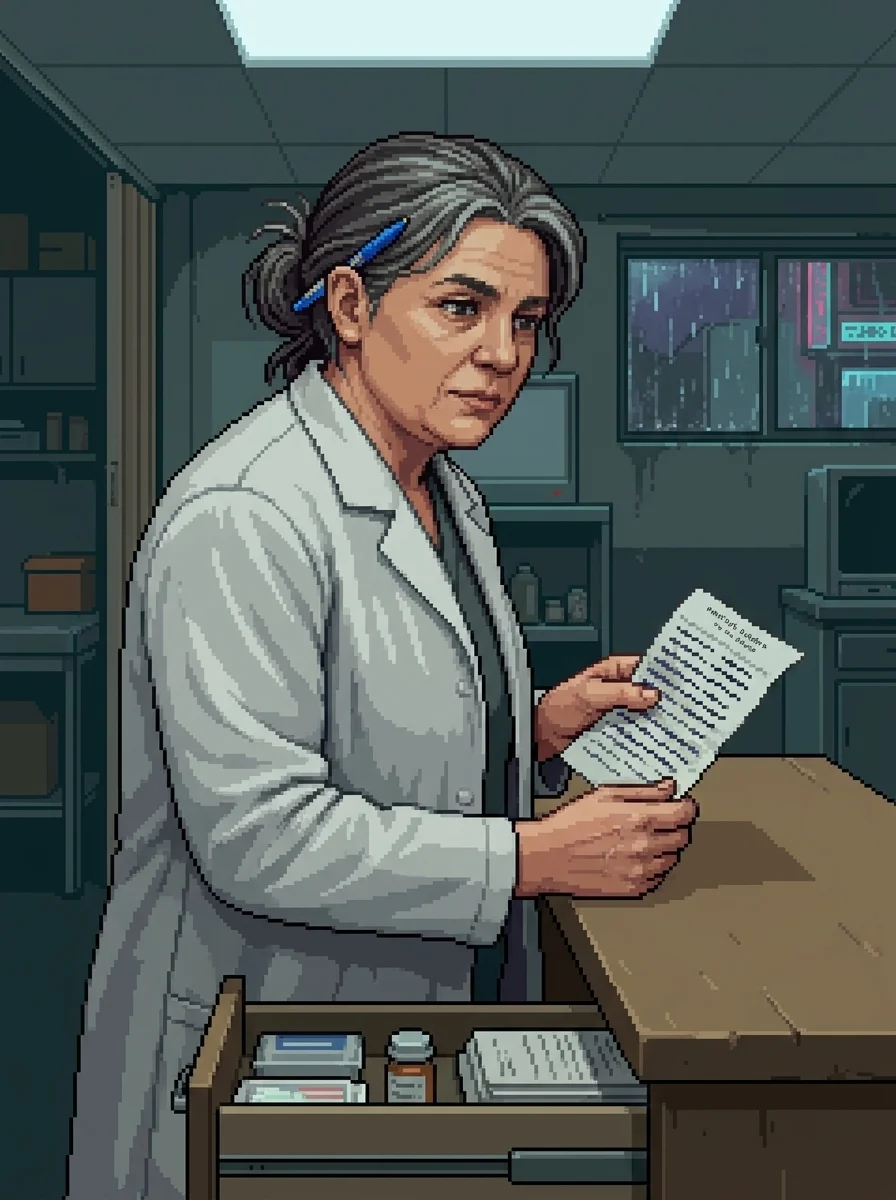
She has read Dr. Afia Mensah's public work and filled out her intake form honestly, including the free-text sections, at length. Mensah has spent thirty years measuring what optimization costs the optimized, and opened the fifth document in her locked drawer with Calder's form, because it is the flattest she has ever recorded and she cannot decide whether that is the finding or the failure of the instrument.
"You keep asking me what I feel about her. I understood on the Tuesday. It hasn't changed since the Tuesday and it isn't going to. What I don't have is anywhere to put my hands for the rest of it, and neither did anyone else in the hall, and the people who are next are sitting four rows up watching us not know."
| Stratum | Between |
|---|---|
| Position | Outsider |
| Moral Stance | Principled |
| Primary Drive | Meaning |
| Augmentation | None |
| Visibility | Unknown |
Psych Profile
What They Cite Her For
Somebody in the licensed districts put the Wake Hollow cohort into a training module.
It appears in the material the Ratification Registry issues to its date advocates, as the reference case for an intervention a subject could not possibly have consented to and does not, on being asked, regret. The numbers are real. Ask the volunteers' terrace whether they would undo the correction and they will tell you no, at length, without hesitation, and mean it.
Marit knows the module exists. A visiting advocate mentioned it to her at the water plant, meaning it warmly, the way people do. She has not asked to be taken out of it.
What she said instead — evenly, without heat, in the tone she uses for procedure — was that she is not a good instrument for the question. She would answer the same way whether or not there had been something to lose, because the part of her that would have registered the loss is the part that was removed, and an endorsement collected from that position measures her disposition and not the correction. She added that she is not saying the correction was wrong. She is saying she is the wrong person to ask, and that the people who could have answered it properly are the ones who signed in 2152, and that four of them are dead and she washed the fourth.
The advocate wrote it down. It has not changed the module.
"He hasn't taught me the last part. I think he's waiting to see whether I ask for it, and I think if I asked for it he'd know I hadn't understood what it was."
Temperance removed bereavement persistence, comparative deficit response, dominance salience, and numinous attribution — it did not remove empathy, and she reads and answers other people's distress accurately and at length
She has never copied the page out, and when asked said that copying it would make it hers and she is not certain it should be
She has prepared four bodies at Wake Hollow since 2183, all of them volunteers, and in each case the family thanked her and she accepted the thanks accurately
Connections
The people, places, systems, and open questions connected to Marit Calder—and why each connection matters here.
Core tensions
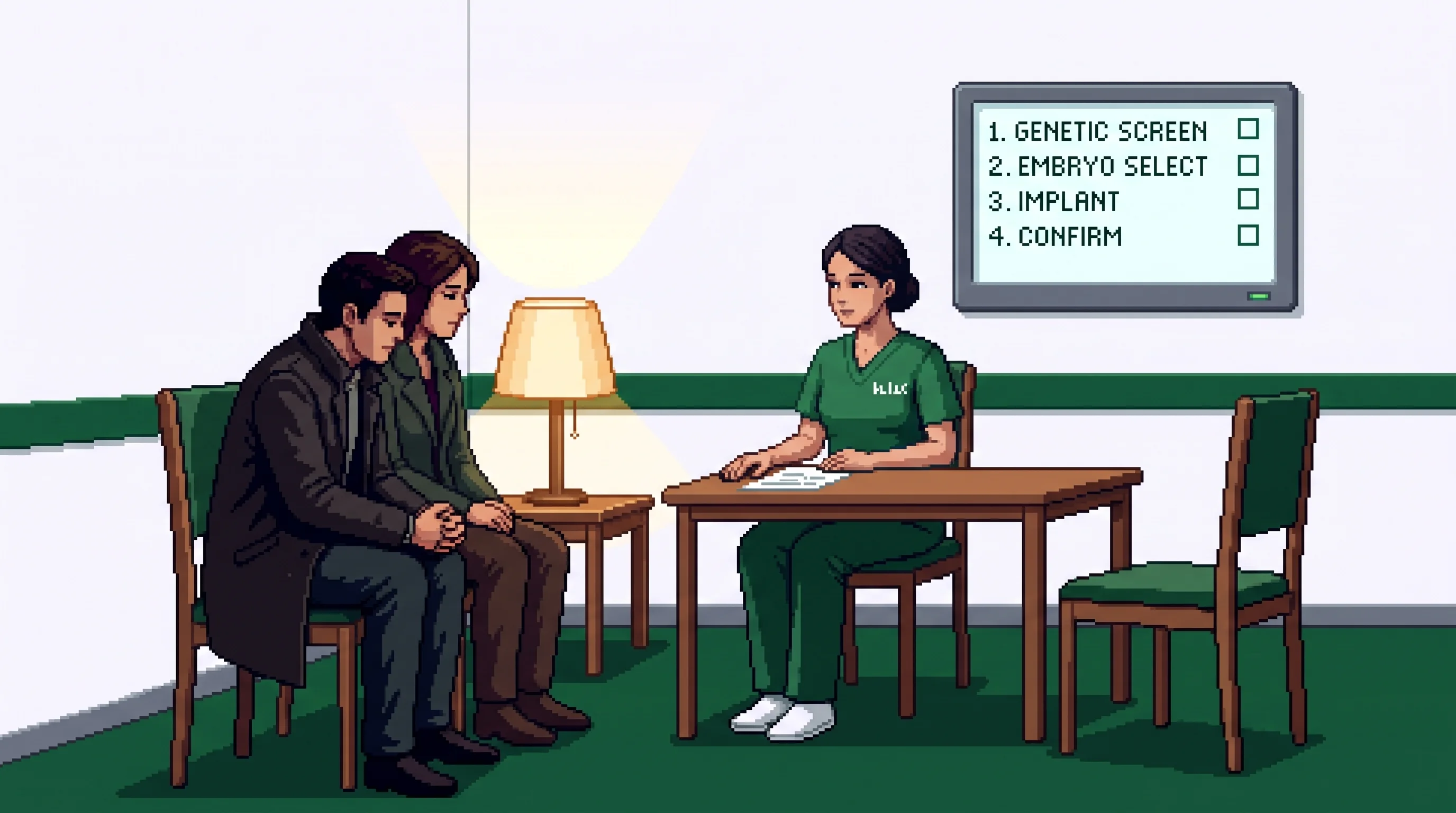
The thread's first door: a person built without grief, assembling the container for it by hand, on behalf of the generation that had her built.
A line built without grief, envy, rank, or god — and an argument over who may still pass the ache on.

The endorsement archetype cited in Registry training: corrected before she could object, and not sorry.
The forecast of who you will become is accurate, so your refusal is filed as a date rather than an answer.
Primary connections

Asked the last undertaker in the Deep Dregs to teach her the washing. He has taught her the washing. He has not taught her the speaking-to, and has not said why.
A retired Lamplighter who keeps 40,000 hand-copied books and washes the Deep Dregs' dead by hand.

Born in the first cohort's first year, in the tract her mother signed for; she maintains its water plant and carries the folding table across the street on a second afternoon.
The Corridor tract where survivors corrected their children, and the children rebuilt the funeral from nothing.
The corrected woman who came down to the Dregs to learn how to wash a body, because her mother died and the afternoon had nothing in it. She is building a container for a feeling she was born without.
A line built without grief, envy, rank, or god — and an argument over who may still pass the ache on.
Supporting connections

The flattest intake form in a career of measuring wounds.
A suppressed Helix researcher who named the psychological wounds the Genome Divide leaves in every child it touches.

The architect of her disposition; they have never met.
Helix's Disposition Design architect, who set the Sunset Companions' baseline contentment and calls it mercy.
Corrected before she could object, and she endorses it accurately.
The forecast of who you will become is accurate, so your refusal is filed as a date rather than an answer.
Local Intelligence Scan
Nearby Signals
CANONICAL PROXIMITY



Environmental Readout
LIVE CONDITIONS- Air
- Filtered
- Light
- Artificial
- Flood
- No exposure
- Heat
- Temperate
- Security posture
- Corporate control
- Infrastructure
- Maintained
Position Data
SECONDARY- Elevation band
- Shoreline — the Rim edge
- Lattice fix
- E-2.2 · N-30.8
—