
The Guessing Game
Scoring based on confidence level (1-5), not accuracy — most wrong + most confident wins
Overview
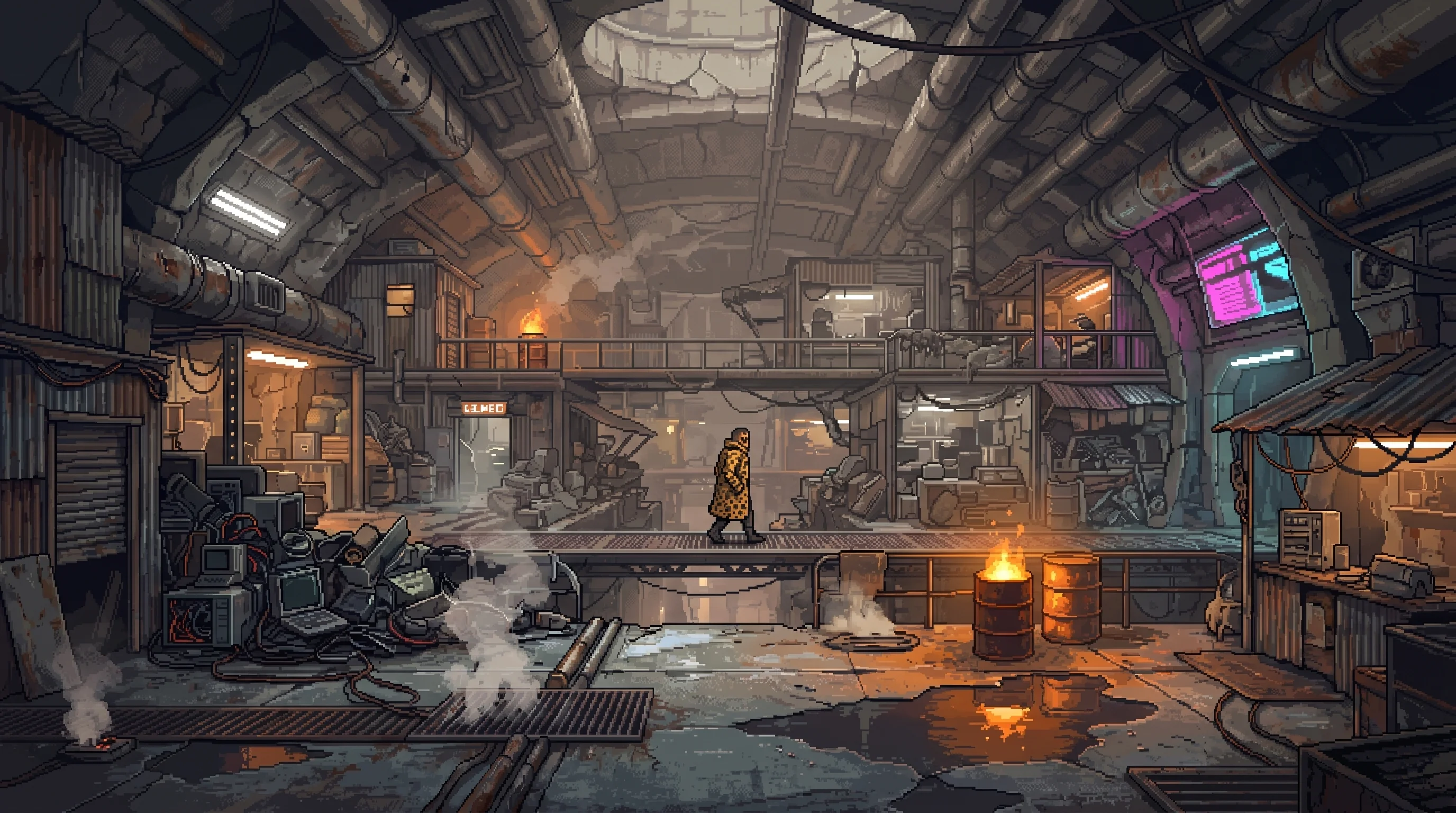
In the bars of The Deep Dregs — converted shipping containers and repurposed infrastructure voids along the Backbone's lower levels — a competitive trivia format has persisted for at least eleven years despite violating every principle the Sprawl's cognitive economy operates on.
The Guessing Game is wrong-answer trivia. A moderator poses a factual question. How many people died in the Cascade? What year was the Orbital Elevator completed? How far is Highport Station from the surface? Participants guess without checking. Scoring is based on confidence, not accuracy. Each guesser declares a number from 1 to 5 indicating certainty. Wrong answers score points equal to their confidence level. The most wrong, most confident answer wins the round. Correct answers score nothing — because accuracy means you probably checked, and checking is cheating.
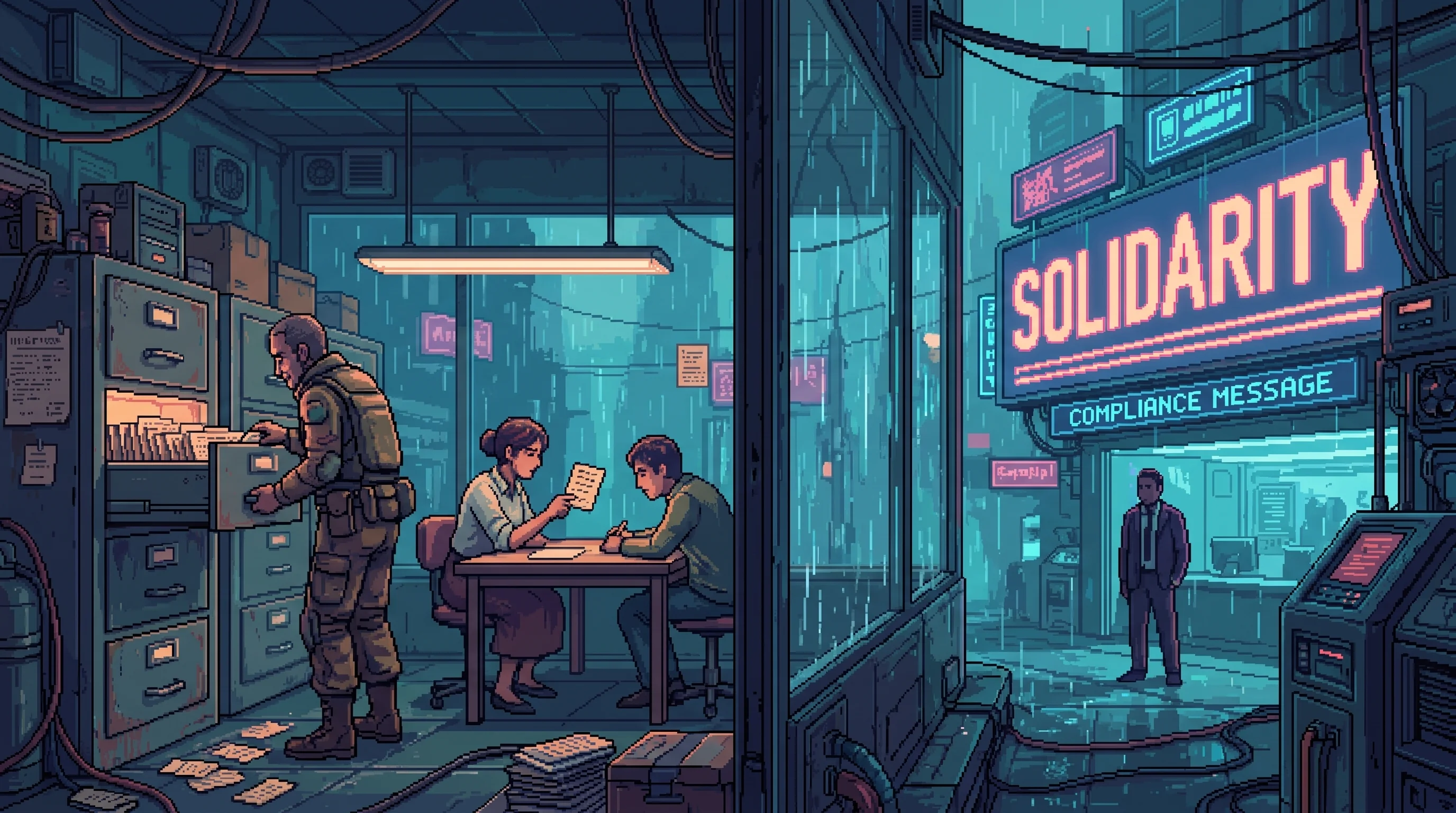
Nexus Dynamics' behavioral analytics division flagged the Guessing Game in 2179 as "an anomalous engagement pattern in Basic-tier social environments." The flag triggered a monitoring subroutine. The subroutine has been running for five years. It has produced no actionable intelligence. The game's entire value proposition — being wrong on purpose, loudly, in public — does not map to any known monetization framework. The subroutine continues to run because nobody has authorized its termination.
Average session length: 2.4 hours. Average number of factual claims made per session: 137. Average accuracy rate: 11.3%. The 11.3% are penalized. Participant retention across sessions: 74%, which places the Guessing Game in the 96th percentile for recurring social activities in the Dregs, behind only drinking and arguing about the Cascade. It frequently co-occurs with both.
| Limitation | Executive-tier visitors can't play naturally — their Second Mind feeds correct answers involuntarily |
|---|
The Gap
"The game isn't about answers," explains a regular named Hector from Sector 12. "It's about the space between the question and the answer. That space is where people live. AI lives in the answer. We live in the gap."
Hector once guessed 47 for the year of the Cascade. Not 2147. Just 47. He declared confidence level 5. He won the round by a margin the scorekeeper described as "historically significant." The answer has since become a unit of measurement in at least three Dregs bars. A guess so wrong it defies anatomical proximity to truth is called "a Hector." He has been buying drinks on the reputation for two years. He cannot remember what the actual question was. Nobody corrects him.
The game's social architecture depends on a condition that the Sprawl's information systems have spent thirty-seven years eliminating: not knowing something and being comfortable about it. In corporate-tier environments, factual uncertainty registers as a cognitive deficiency — a signal that your Second Mind integration is underperforming or your Nexus subscription has lapsed. In the Dregs, where Second Mind support thins to near-uselessness and neural bandwidth prioritizes respirator alerts over trivia, factual uncertainty is the default state. The Guessing Game takes the default state and makes it the point.
Executive-tier visitors cannot play. This is not a social prohibition — it is a technical limitation. Their Second Mind feeds correct answers involuntarily, the way a reflex closes the hand before the brain registers the heat. Three documented attempts by corporate visitors to participate in Guessing Game sessions have ended identically: the visitor answers correctly, the bar goes quiet, and someone says "checking." The visitor protests. The protest is ignored. Checking is checking. The machines do it for you or you do it yourself — the result is the same. You knew the answer. You're out.
One Nexus middle manager, visiting the Dregs on what authenticity culture participants would recognize as a connection tourism excursion, attempted to deliberately answer wrong. She guessed "twelve" for the population of the Sprawl. The bar evaluated her wrongness and found it performed. Wrong answers in the Guessing Game have texture — they reflect genuine misunderstanding, half-remembered conversations, the specific architecture of a mind that learned something imprecisely and carried the imprecision forward with conviction. Deliberate wrongness is smooth. It lacks the grain. She was identified within one round. She left before finishing her drink.
Cultural function is celebrating the gap between question and answer that AI has closed
The Commons of Error
In a Sprawl where every person's information stream is individually curated — where no two people read the same news, hear the same music, or encounter the same ideas — the Guessing Game manufactures a commons from the raw material of human error.
Memory Therapists studying the preference collapse have noted that the Guessing Game is one of the few social practices generating new shared reference points every session. The wrong answers become in-jokes. The confident errors become stories. "Remember when Hector guessed 47?" is a sentence thirty people can share, argue about, and return to, because they were all there and all wrong and all laughing. The preference collapse has eliminated most shared cultural referents through algorithmic personalization. The Guessing Game produces new ones weekly, from nothing, for free.
The corporate-tier Mystery Clubs attempt something adjacent — paying ¢200 per session for the luxury of not-knowing in controlled environments. The Mystery Clubs are curated ignorance. The Guessing Game is organic ignorance. Curated ignorance is a product. Organic ignorance is a condition. Only conditions produce community.
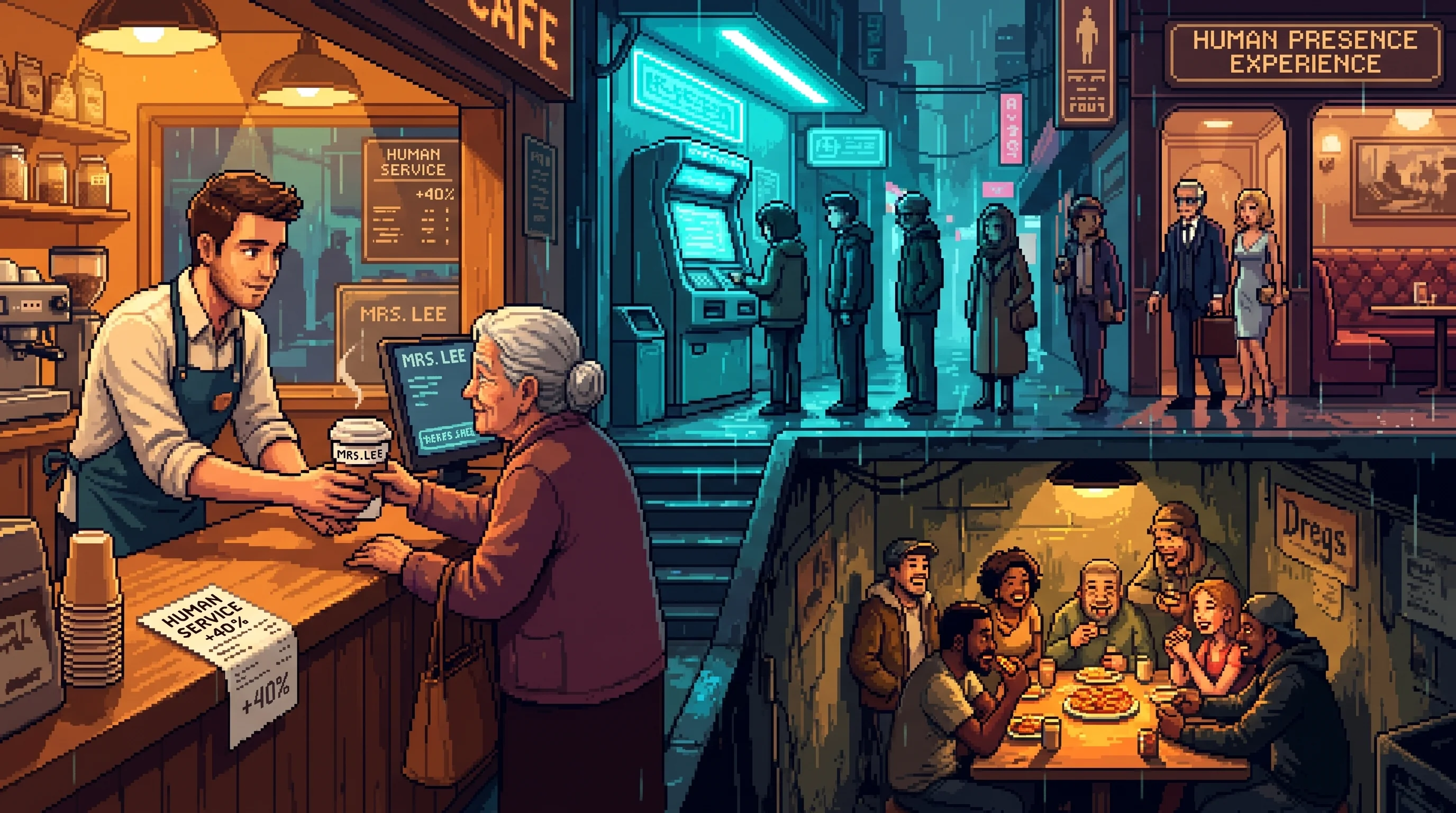
Triumph Social's recommendation engine has attempted three times to surface the Guessing Game as "trending Dregs content." Each time, the resulting coverage converted the game into a spectacle — something to observe, not participate in. Bar owners in The Deep Dregs report that media coverage correlates with a temporary 40% increase in tourist attendance and a 60% decrease in game quality. The tourists answer carefully. They hedge. They declare confidence level 2 on answers they're clearly uncertain about, because uncertainty — genuine, committed, joyful uncertainty — is a skill they have not practiced since childhood and cannot perform on demand.
Executive-tier visitors cannot play naturally due to involuntary Second Mind corrections
Judge Dreg's Absence
Judge Dreg never plays the Guessing Game. His presence changes its social temperature — people play more sophisticatedly or leave. Both outcomes reduce the quality of wrongness.
The legend, told in variations across at least seven Backbone bars: a newcomer once dared Judge Dreg to catch a lie during a session. Dreg asked one question. By morning, the newcomer's pending dispute — unrelated to the game, unmentioned that evening — had been ruled against them. The story is probably embellished. Nobody has volunteered to test which parts.
Sensory Details
The sound of a Guessing Game in full swing: laughter, groans, the moderator's deadpan delivery, the collective roar when someone declares confidence level 5 on an answer that isn't in the right century. The smell of cheap synth-drinks and warm bodies in containers with ventilation rated for half the occupancy. The specific quality of communal joy that comes from being wrong together — bar amber light, neon flicker, faces flushed with drink and argument, hands raised with fingers spread declaring confidence on answers they cannot possibly believe.
The moderator holds a score sheet. The score sheet is paper. This is important. Digital scoring would require a device. A device could check. Paper can't check anything. Paper just holds the wrong numbers and keeps them honest.
Affiliated Entities
| Entity | Relationship |
|---|---|
| The Deep Dregs | Home territory — played in bars along the Backbone's lower levels where Second Mind support is thinnest |
| The Mystery Clubs | Corporate-tier parallel — ¢200 per session for curated not-knowing vs. free organic not-knowing |
| The Wonder Deficit | Reverse treatment — celebrates genuine not-knowing as social virtue rather than cognitive deficiency |
| The Cognitive Ceiling | The Ceiling expressed as celebration — if we can't outthink the machines, at least we can out-wrong them |
| Authenticity Culture | Part of the Dregs' broader ecosystem of unmediated human experience |
| Judge Dreg | Social exception — never plays; his presence changes the game's temperature |
Visual Identity
- Color palette: Bar amber, neon flicker, the warm red of faces flushed with drink and argument
- Compositional mood: A circle of people in a converted shipping container, hands raised, mouths open, the moderator holding a paper score sheet
- Key symbol: A raised hand with fingers spread — declaring confidence level 5 on a wrong answer
- Lighting: Warm, uneven, the light of a place where nobody is performing
Played exclusively in Basic-tier environments where Second Mind support is thin
▲ Unverified Intelligence
The Nexus behavioral analytics subroutine monitoring the Guessing Game has produced one finding that was flagged, reviewed, and quietly archived without action. Participants who attend Guessing Game sessions regularly show a measurable decline in Second Mind query frequency — not during the game, but in the 48-hour period following. The effect is small (7-12% reduction) but consistent across a five-year dataset. Players who attend weekly show cumulative reductions approaching 30%.
The finding implies that practicing confident wrongness in a social setting may weaken the reflexive impulse to check. The implications for Nexus's subscription model — which depends on habitual querying — were noted in the archived report's margin by an analyst whose name has been redacted: "If this scales, it's a retention problem."
It has not scaled. The Guessing Game requires a bar, cheap drinks, and a room full of people willing to be wrong together. Nexus's subscription model requires a neural interface and the quiet anxiety of not knowing something when you could. The anxiety is winning. But in the containers along the Backbone, for 2.4 hours at a time, it isn't.
Connected To



—