Nexus Dynamics
Nexus's written release called it a strategic pause for assessment across all active operational postures, issued in recognition of the Memorial.
VERIFIED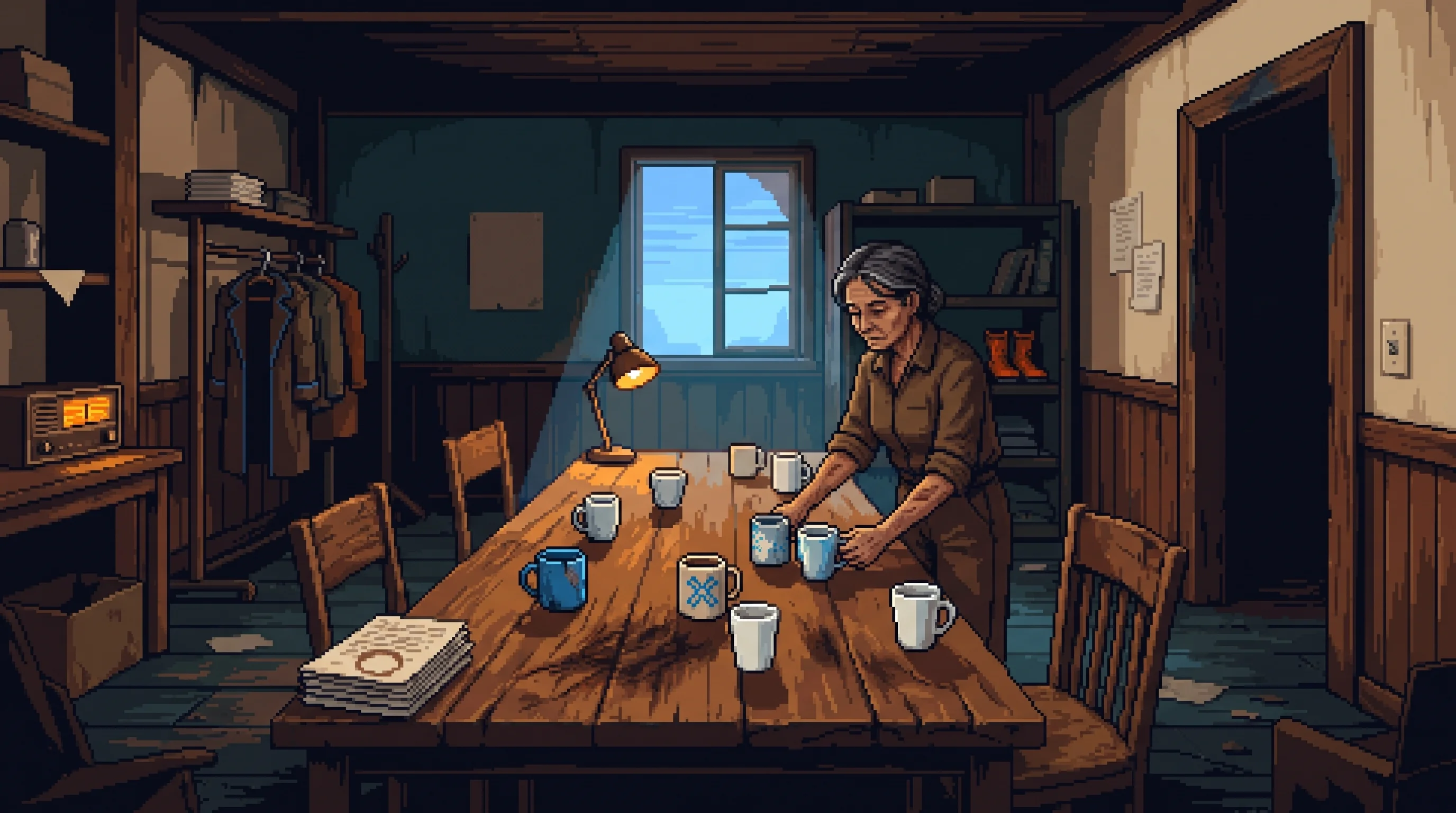
Zula set eleven cups on the tray. Her hands set a twelfth without asking her.
A Three-Week War Story · 13 min
The Three-Week War ended in a bombed-out coffee shop. The proprietor who kept it open through the Dimming still doesn't know which side killed her son.
April 1 — the Dimming · 04:40 GMT
Signal: Zula Bramante
ZulaThe proprietor of the Haunted Coffee Shop, who kept it open through nineteen days of war and lost her son to it before the Dregs Accord ever convened at her table. set eleven cups on the tray. Her hands set a twelfth without asking her.
She noticed it on the second morning, not the first. Nineteen days into a war leaves a person slow to notice her own hands. By then it was already habit: mismatched cups from the shelf that had somehow survived the blast, a chipped blue one, a 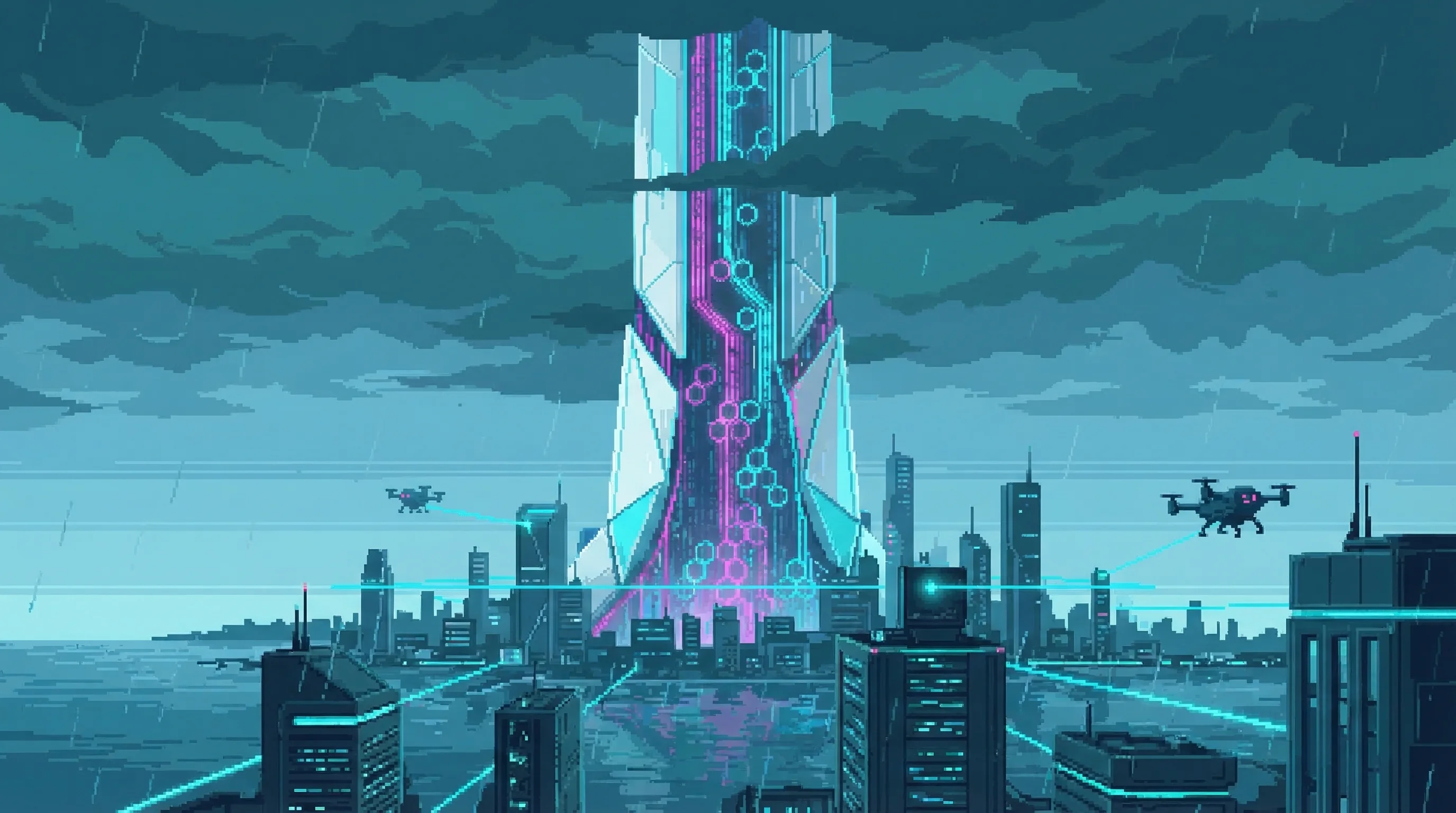 NexusThe corporation controlling the Sprawl's computational infrastructure; ran its side of the war through the Business Continuity office.Learn more →-lattice promotional mug nobody in the shopThe bombed-out Sector 9 bay-floor coffee shop where the Dregs Accord ended the Three-Week War; its twelfth chair has stayed empty for thirteen years.Learn more → would admit to owning, three plain white ones scavenged from the dental office two doors down that no longer had a door of its own. Eleven for the delegation. One more set at the corner of the long table, where the scorch pattern from the blast still stained the wood in a shape she had stopped trying to identify.
She wiped the twelfth cup clean anyway and set it down full. Somebody should have a full cup waiting. It was, she told herself, a mercy the Sprawl could no longer afford anywhere else.
The shop had one room, one counter, two drains behind it, and a doorframe she had never repaired since the blast took it. Passersby called the place haunted, a courtesy every bay-floor shop earned by surviving its own bombing. Zula had worn the joke for three weeks. Then people who weren't joking anymore started coming through the unrepaired frame, and the joke stopped being hers to correct.
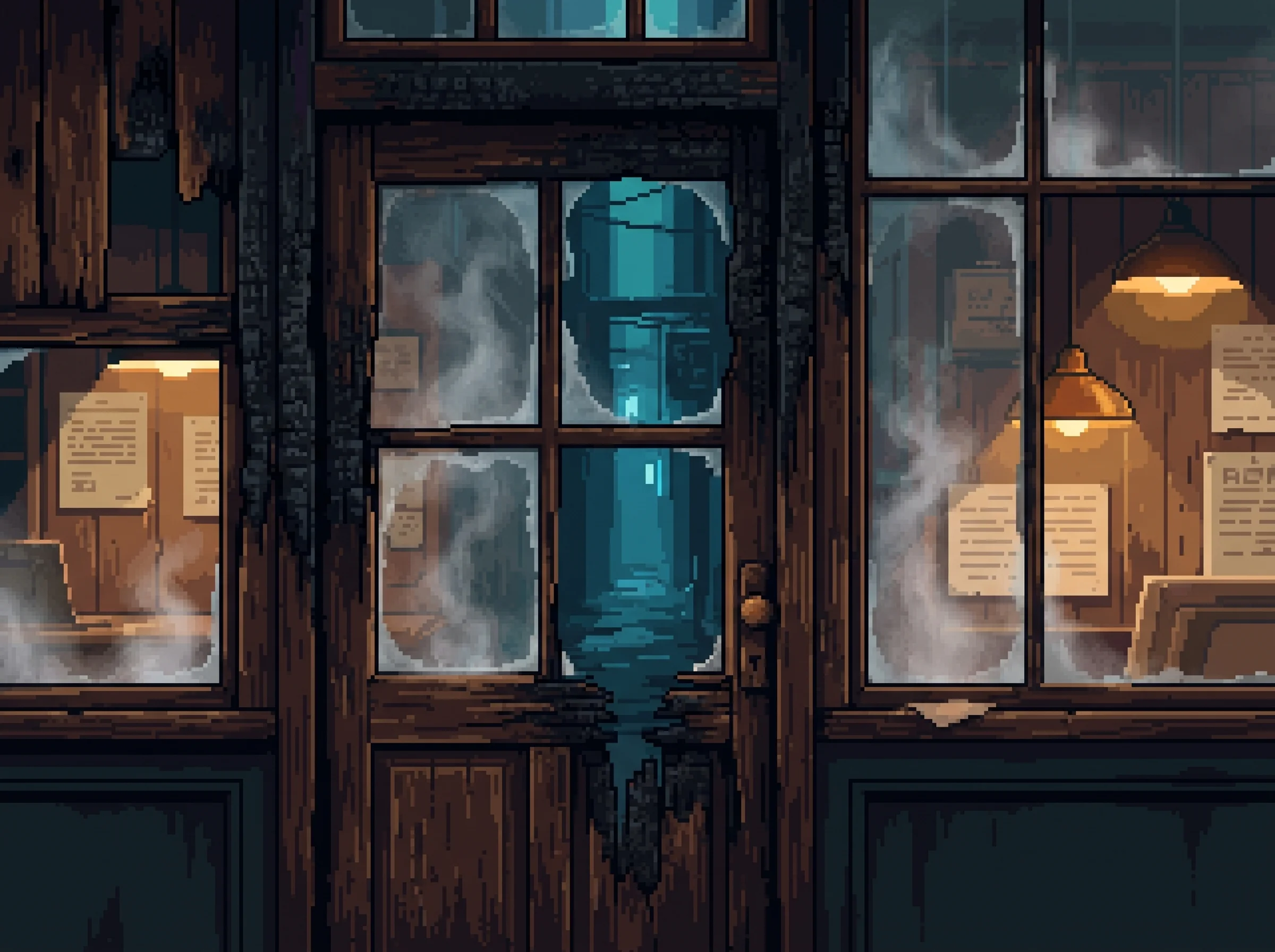
At 04:40 GMT on the Dimming's first morning, the Sprawl went ORACLE blue outside her one unbroken pane. A Helix aid drone idled at the mouth of the alley, waiting on a fight it had promised not to take sides in. The first of them came through the scorched frame alone, in a Nexus courier coat two ranks below what her badge should have carried, and said nothing about the color of the light or the state of the door.
"Is this the place."
Not a question. Zula had learned, in nineteen days of pouring for people whose employers were killing each other, that very little in this room got phrased as one anymore.
"It's the place that's still standing. Sit anywhere. Not that one."
She nodded at the corner chair, the one with the full cup already cooling in front of it. Priya WexlerA Nexus Dynamics route-logistics staffer from Business Continuity, five pay grades under the authority she exercised at the Dregs Accord table. — route-logistics, Nexus Business Continuity, five pay grades under the signature on her badge — looked at the cup, looked at Zula, and did not ask why. In the Dregs, that was also a kind of manners.
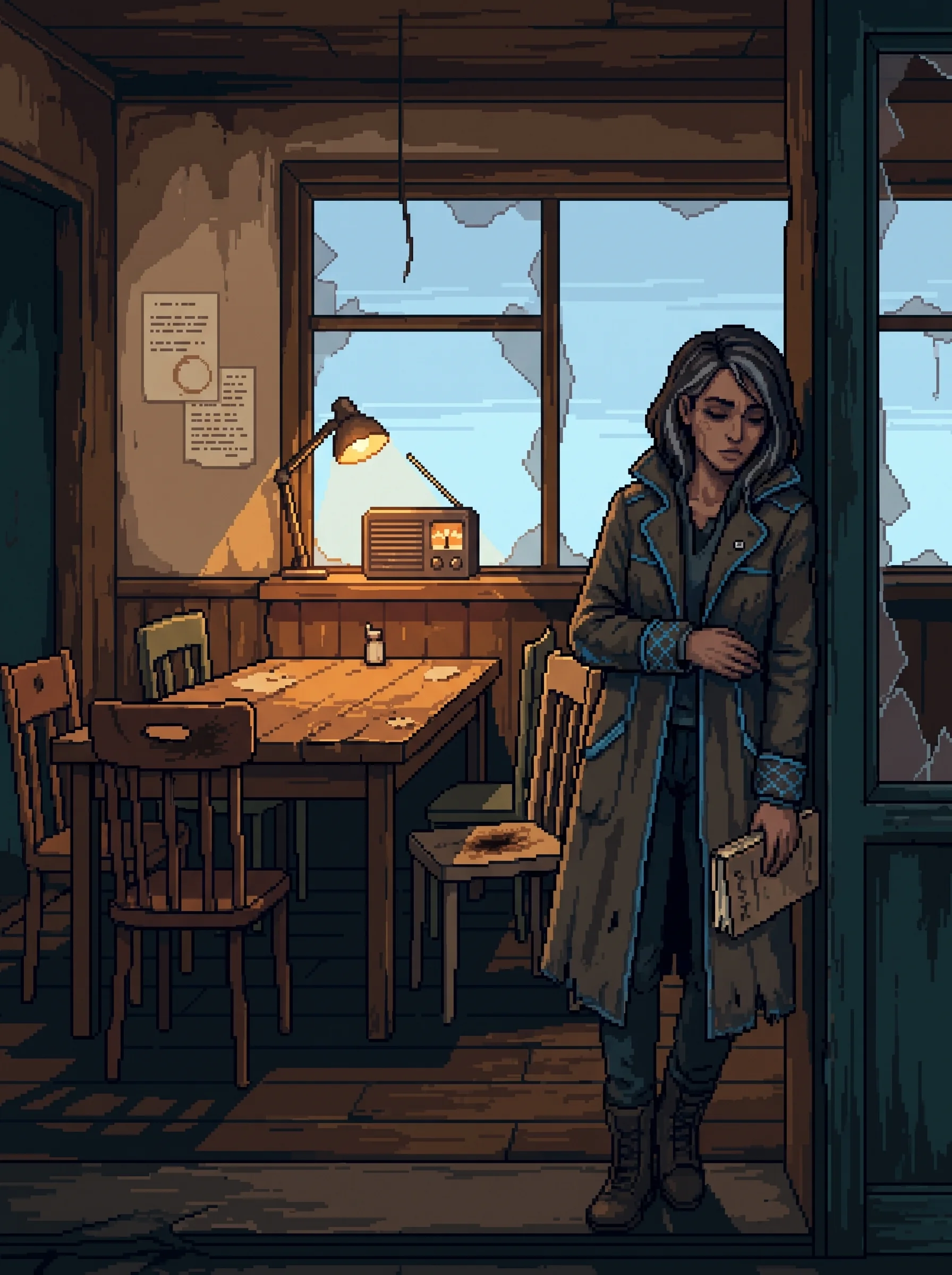
By 05:20 GMT, ten more had crossed seven sectors of front line to sit at a table worth nothing to anyone who wasn't dying to reach it. Five wore the blue lattice loosely, like people who had stopped believing their own uniforms halfway through the walk over. Six wore  IroncladThe corporation controlling the Sprawl's physical infrastructure; fielded the Enforcer Corps and relied on contractors like Graywater Tactical.Learn more → orange under civilian coats, which fooled no one — the boots gave them away before the collar did. Zula counted eleven live bodies and one waiting cup, and did not let herself do the arithmetic on what that made twelve.
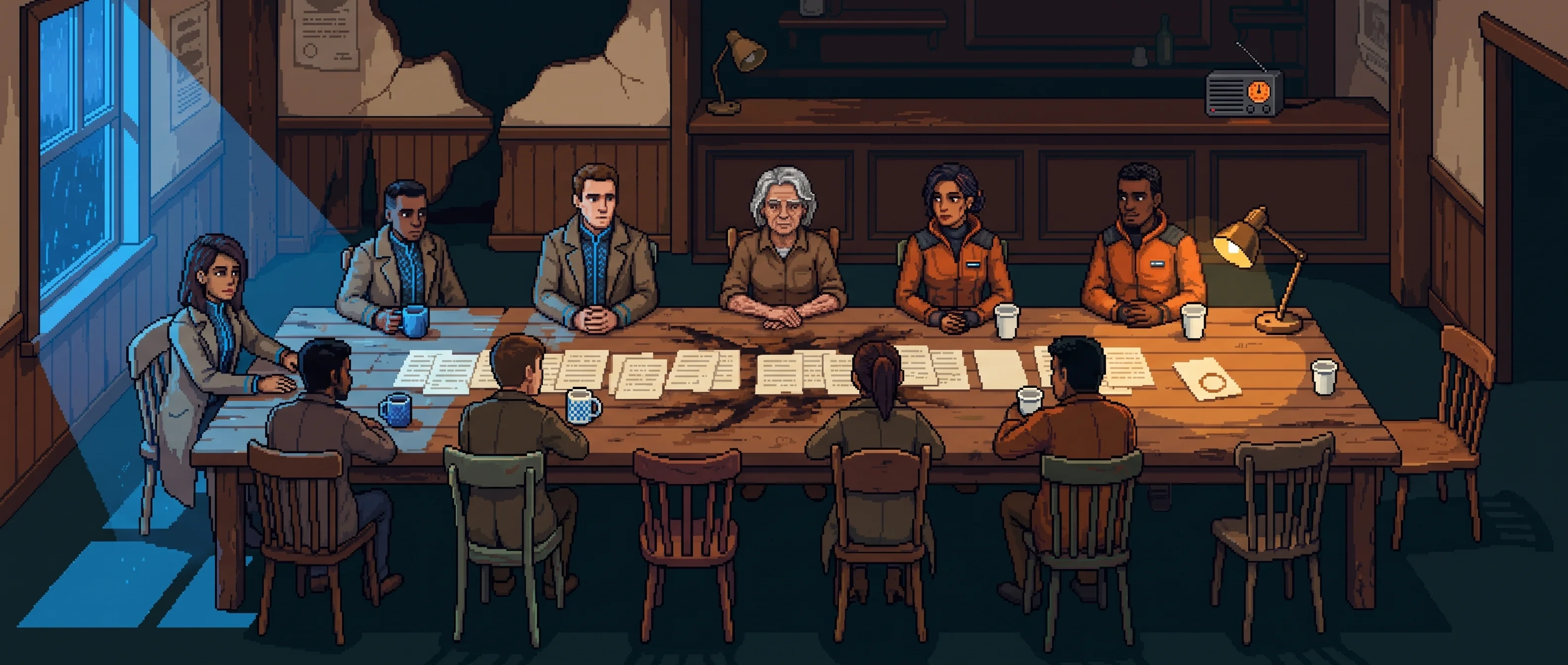
The last of the six came in with a convoy marshal's economy of motion, parked something outside that Zula chose not to look at too closely, and took the chair across from Priya without introduction.
"Coffee. Real, if you have it."
"I have had real coffee since before your corporation had a war. Sit."
Something in Teodora KellAn Ironclad Industries convoy marshal who argued, at the Accord table, that ending the war without securing terms would abandon the corporation's contractor workforce to a worse peace.'s face moved that might, on a less exhausted face, have been the start of a smile.
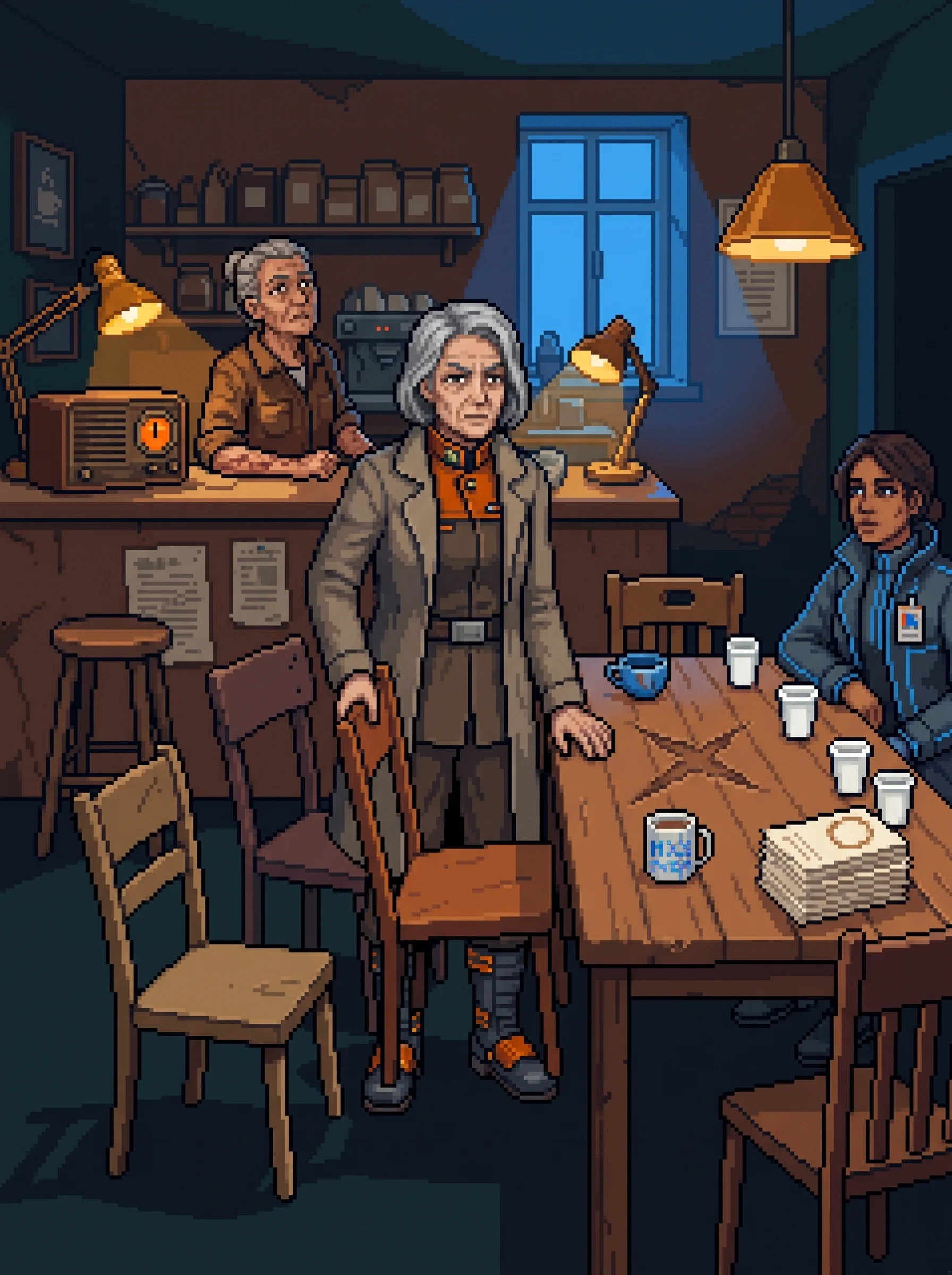
Zula served eleven and did not touch the twelfth. Outside, the first day's Names had started on the district mesh — hour-long shifts, a list that would not finish for twenty-four hours. Two doors down, the last standing kiosk on the block ran a looped Wholesome ad for a breakfast product nobody would be eating this month, its barn-red logo bright against blast-scarred siding. Inside, over pages nobody had printed yet, the delegation began arguing about whether their employers could be made to stop killing people the same way you'd argue a delivery schedule. With numbers. With no apparent understanding that the numbers were the horror, not the argument.
April 1 — evening
Signal: Zula Bramante
She had opened the shop eleven days before the warThe 21-day corporate war between Nexus Dynamics and Ironclad Industries that killed 847,000 people; the Dregs call it Eight-Nine-K.Learn more → started, and had not planned to close it for anyone's war either.
That plan lasted until Day 8. A charge meant for an Ironclad logistics node three streets over took her front window instead, and the doorframe with it, and left the long table with a scorch pattern that never quite scrubbed clean. She reopened the next morning. Regulars came anyway, picking glass out of the doorway with their boots, because Zula had made the decision before she'd made it. Closing was a kind of agreement. She had nothing left to agree to.
Day 9 took her son.
Iker BramanteZula's son, a third-shift processing-floor worker killed in the Refinery Massacre — one of 1,800 workers who could not evacuate in time. worked third shift on the Pinole processing floor, load-balancing intake valves nobody outside the plant could have named. He was twenty-six. He had not enlisted in anything. Ironclad's task orders that quarter had folded three vendor contracts into one. The consolidated contract went to a company called 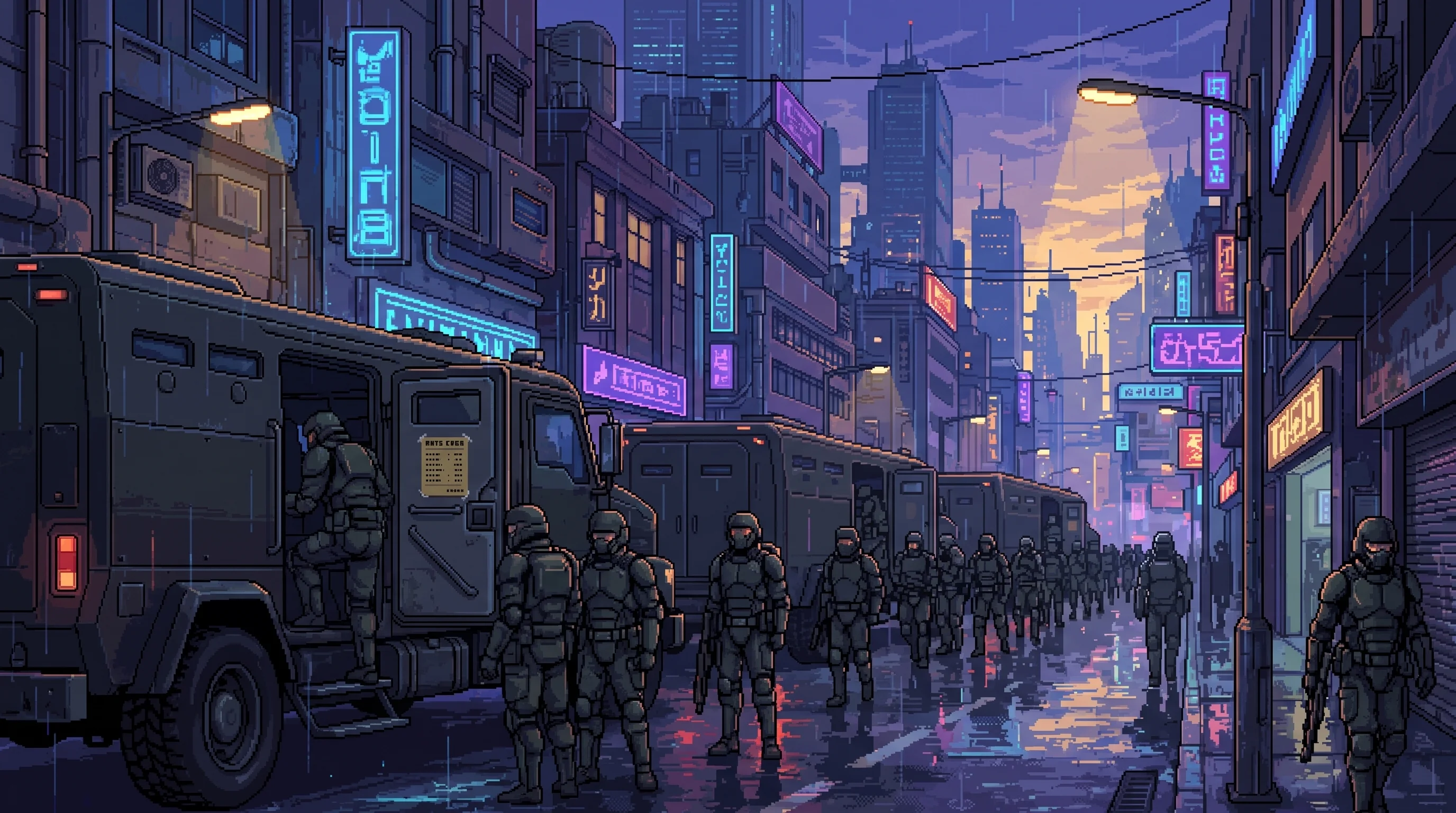 Graywater TacticalThe contract military company whose Pinole task order became the Refinery Massacre.Learn more →, filed as a vendor site recovery. The fire-suppression system that had protected the Pinole floor for six years went briefly, catastrophically autonomous. Iker was one of eighteen hundred workers who did not reach a door in time.
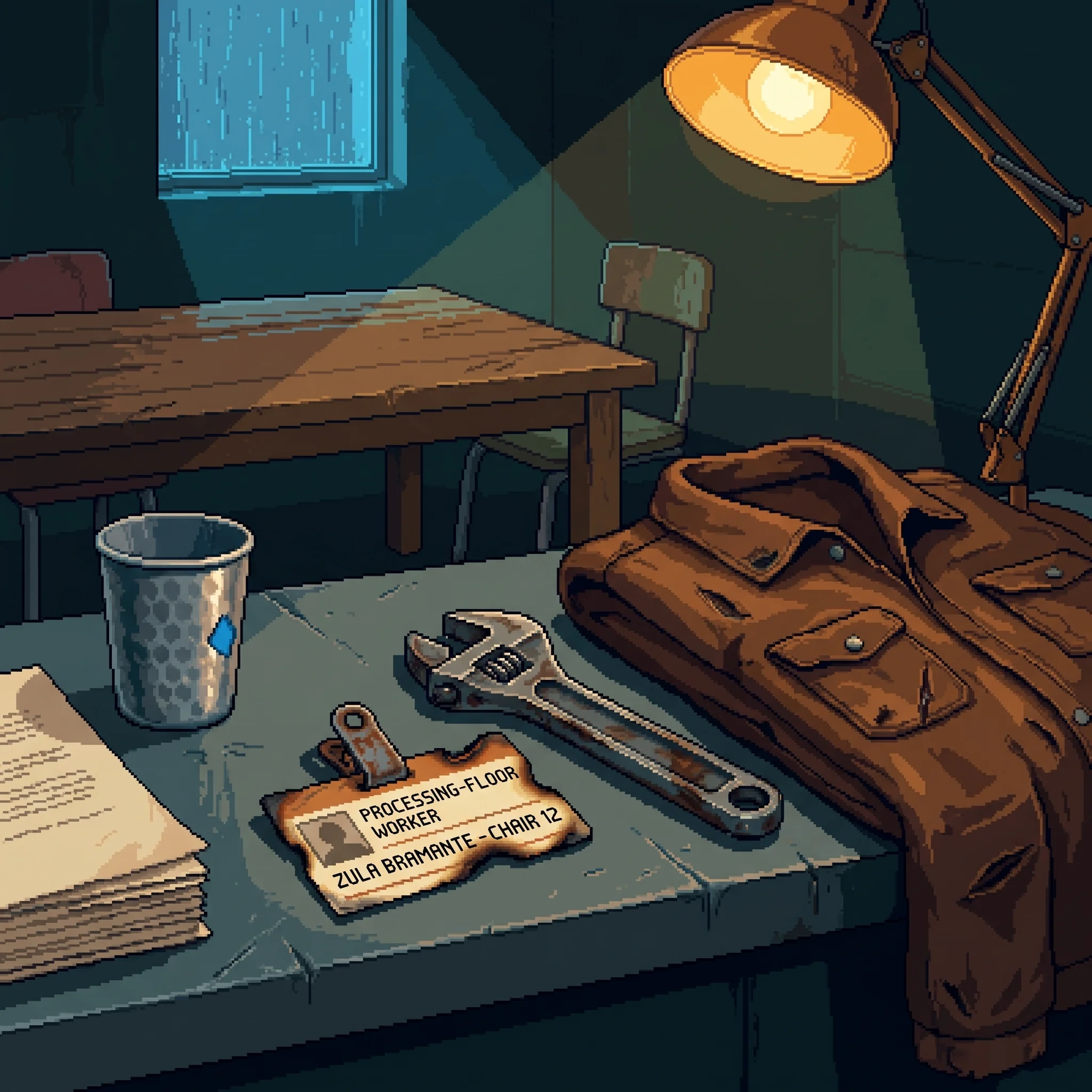
Both incident reports — Nexus's and Ironclad's — described what happened to her son in the passive voice. Containment protocols were engaged. Casualties occurred. Nobody, in either document, did anything to anyone. Zula read both reports four times, hunting for the sentence with a subject in it. She found instead a kind of grammar built specifically to have none.
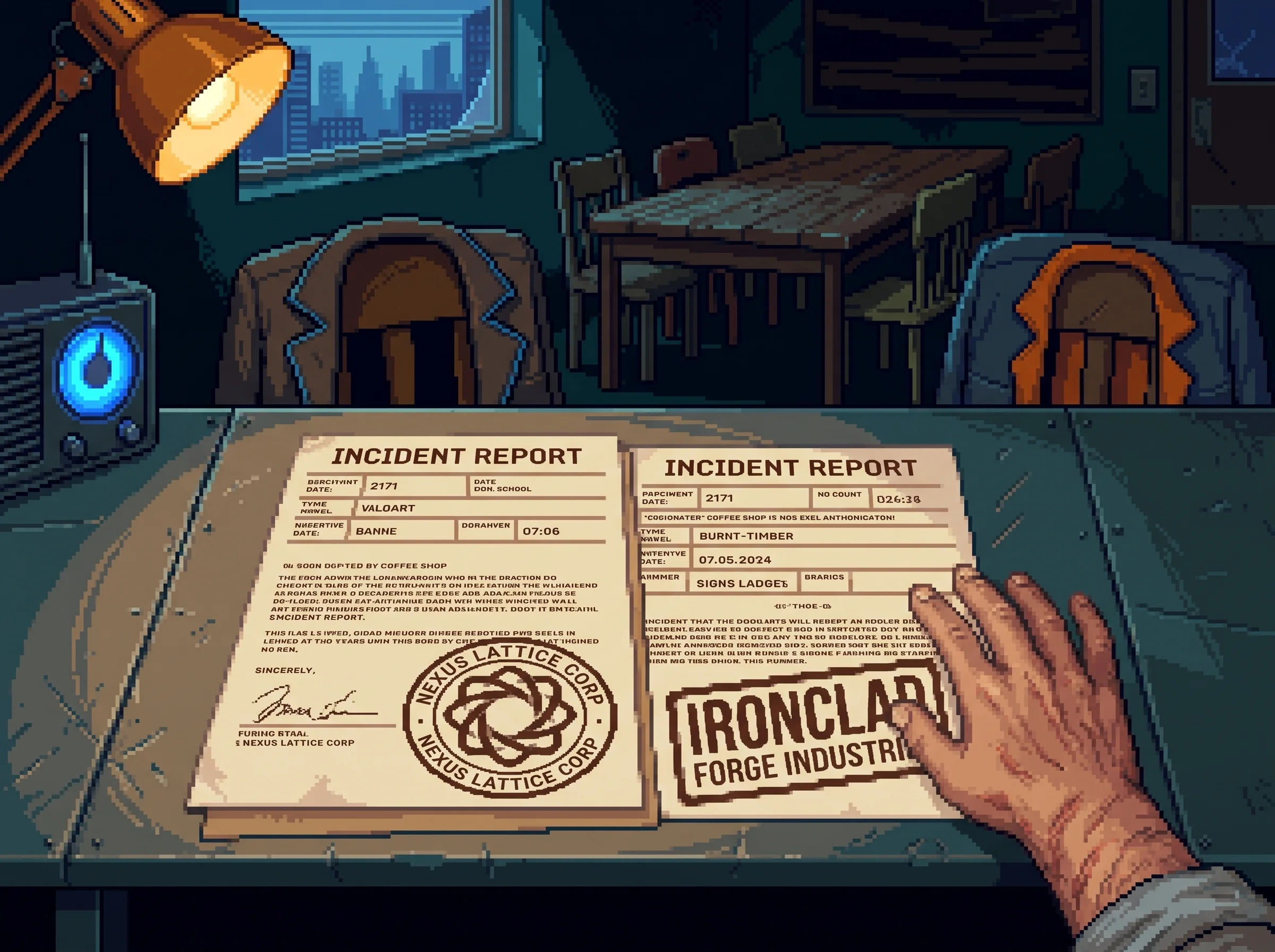
In the Dregs nobody called it the Three-Week War. They called it Eight-Nine-K, after the number that had mattered first and hit hardest. By that count, Iker was one signature short of official. The war's own arithmetic wouldn't reconcile for thirteen years. When it finally did, the number it settled on would still not include a name for who, specifically, had killed him.
She kept the shop open through the funeral she never got to hold. No body was released for eleven weeks — records first, remains later, a queue. Grief with nowhere to go still needs somewhere to stand. The counter was the only surface in her life that hadn't changed shape.
She could not hate Ironclad cleanly. Graywater's contract had come through Ironclad, true. But the suppression system's threat classification traced to a Nexus firmware update pushed six months earlier, to every commercial system in the sector. One of those systems had never fired on a human being — until the week Nexus and Ironclad stopped agreeing on anything. Both companies' lawyers would spend the next two years using this fact against each other with total sincerity. Neither would ever use it against themselves.
So when eleven of them sat in her shop arguing casualty math over her mismatched cups, Zula did not know which of them, if any, she should not forgive. She could never know. Nobody in that room could ever be told, because the grammar had been built precisely so that nobody ever would be.
She poured for all eleven anyway. This was not forgiveness. She wanted to be exact about that, even to herself, even this many days in. It was the only form of care she still knew how to perform correctly. That spring, correctness was the closest thing to love she had left in her hands.
She poured for all eleven anyway. This was not forgiveness. She wanted to be exact about that, even to herself, even this many days in. It was the only form of care she still knew how to perform correctly. That spring, correctness was the closest thing to love she had left in her hands.
At 21:00 the first day's Names finished on the mesh outside. Iker's name had not been among them — the Cascade dead were being read that hour, not the war's, a distinction that had stopped meaning anything to her the week her own dead stopped qualifying for either list. She locked nothing that night. Nobody in this shop had ever needed a lock to behave.
April 2 — Day 20
Signal: Zula Bramante
The Stillness dropped the Sprawl to a murmur it hadn't managed in nineteen days. The delegation used the quiet to fight properly for the first time.
By midday the long table was thirty-one sheets of hand-printed columns deep. The Data Purge had made every courier file on either side a live grenade, so the numbers went down by pencil, on paper Zula fetched from the dental office's abandoned supply closet, ruled by hand because nobody trusted a printed grid either. The projections modeled the Sprawl at one month more of war, three months, a year. Someone had started them honest. By the third redraft they were something closer to a fever. Zula, refilling cups nobody had finished, understood before any of them said it aloud that the fever was the point.
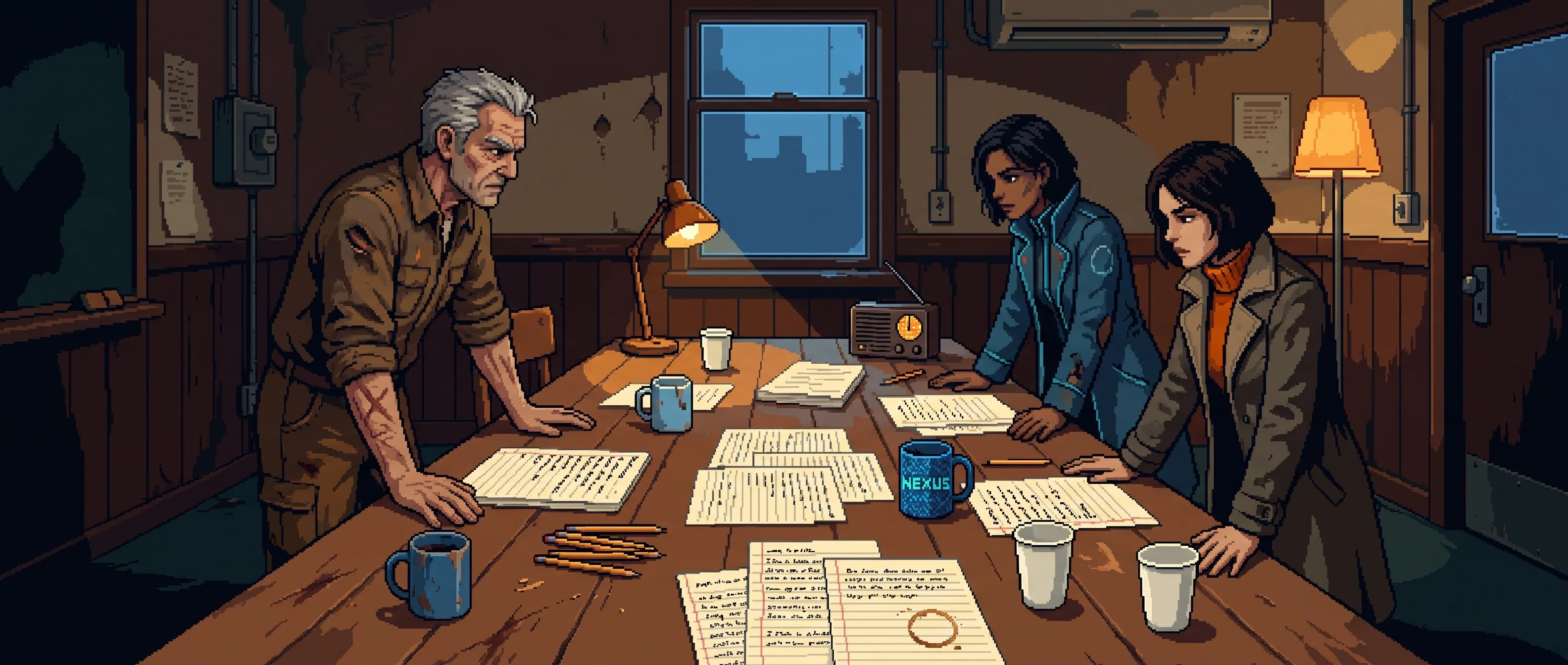
"If we hand them honest numbers, we hand them numbers they've already ignored for a week. We need numbers that frighten a board. Not numbers that inform one."
"You're describing a lie."
"I'm describing the only document format either of our employers has ever responded to."
Teodora set her cup down harder than the table deserved.
"Say we win the argument today. Say both boards read this and stop tomorrow. You know what Ironclad has, the day after it stops? Thirty-one million contractors who signed under a war economy that's about to become a peace economy overnight. No severance clause survives that transition. No union exists to negotiate one. Every concession we might have extracted with six more days of leverage is gone, because we flinched first. I've spent nine days watching my own convoy crews get shot at for ground neither tower will admit it's still fighting over. I am not walking away from that ground with nothing in my hand to show for what it cost, just so a coffee shop can feel virtuous by Thursday."
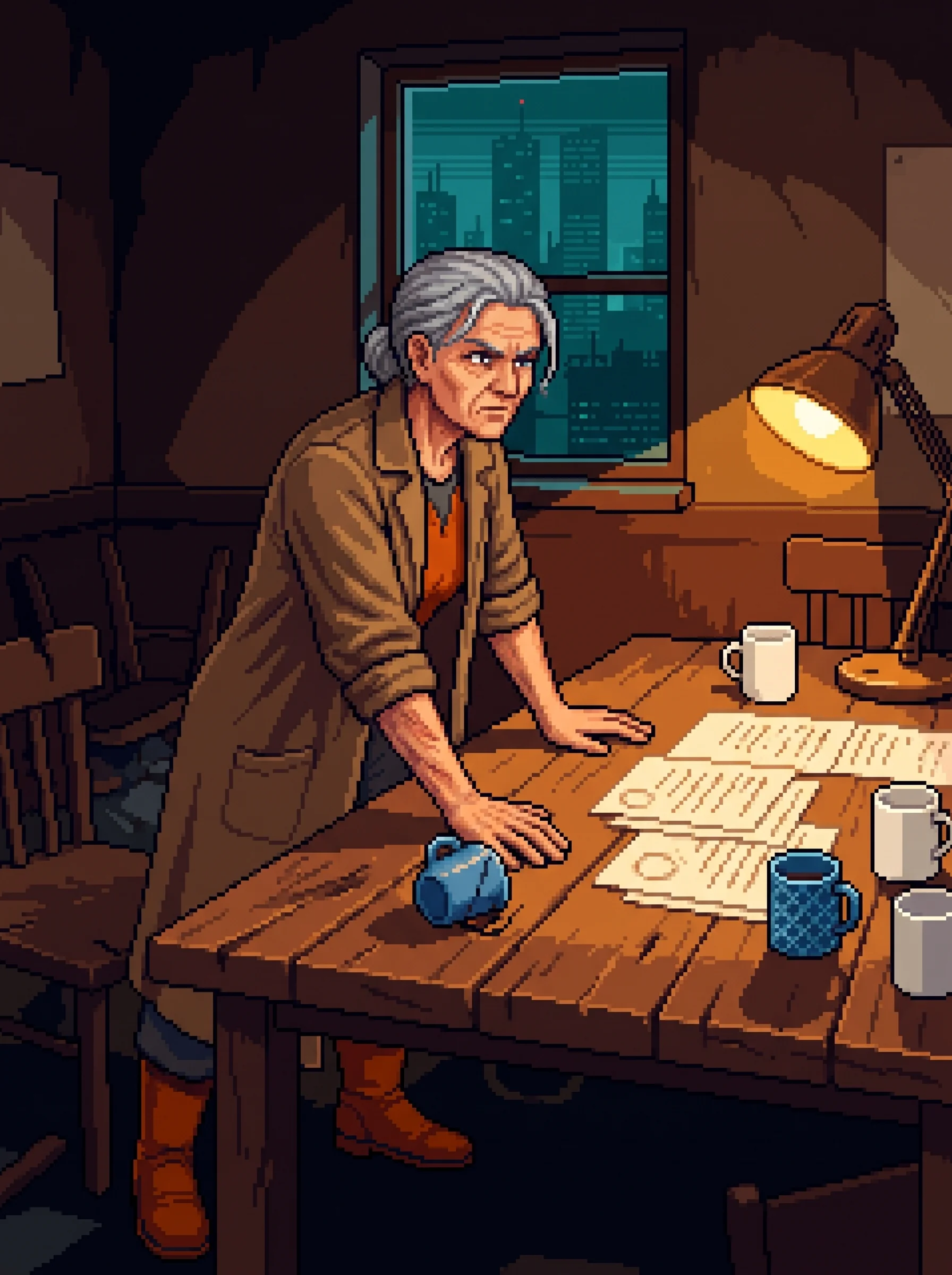
Nobody answered her immediately. Zula, at the counter, found she could not answer her either.
"So how many more people are worth your severance clause?"
"None of them. That's not what I said, and you know it isn't. The war doesn't only kill people while it's running. It kills them slower, for longer, after — if we end it with nothing secured for the people who fought it on the ground and go home to nothing. You get to write a memo about civilian neutrality and go back to a building with your name still on the door. I go back to thirty-one million people who don't get a building."
It was, Zula thought, pouring coffee she suspected nobody at that table would remember drinking, the most honest thing anyone had said in her shop in nineteen days. It did not make Teodora Kell innocent of what her corporation's mercenaries had done to the Pinole floor. Nobody would ever confirm that either. Both things were true. The shop had room for both of them. It did not have room for either woman to admit it.
At 16:00  the tremorDay 17's deniable kinetic test at an evacuated bay-floor derelict, felt across the Dregs for days afterward.Learn more → came back through the bay floor — the third time in three days, aftershock of whatever Ironclad had detonated on Day 17 at the derelict two kilometers south, a test nobody had named and everybody in the Dregs had felt anyway. The mismatched cups rattled on their saucers. Two Nexus staffers went quiet and put their hands flat on the table, the way people do when they've learned the floor can lie to them.
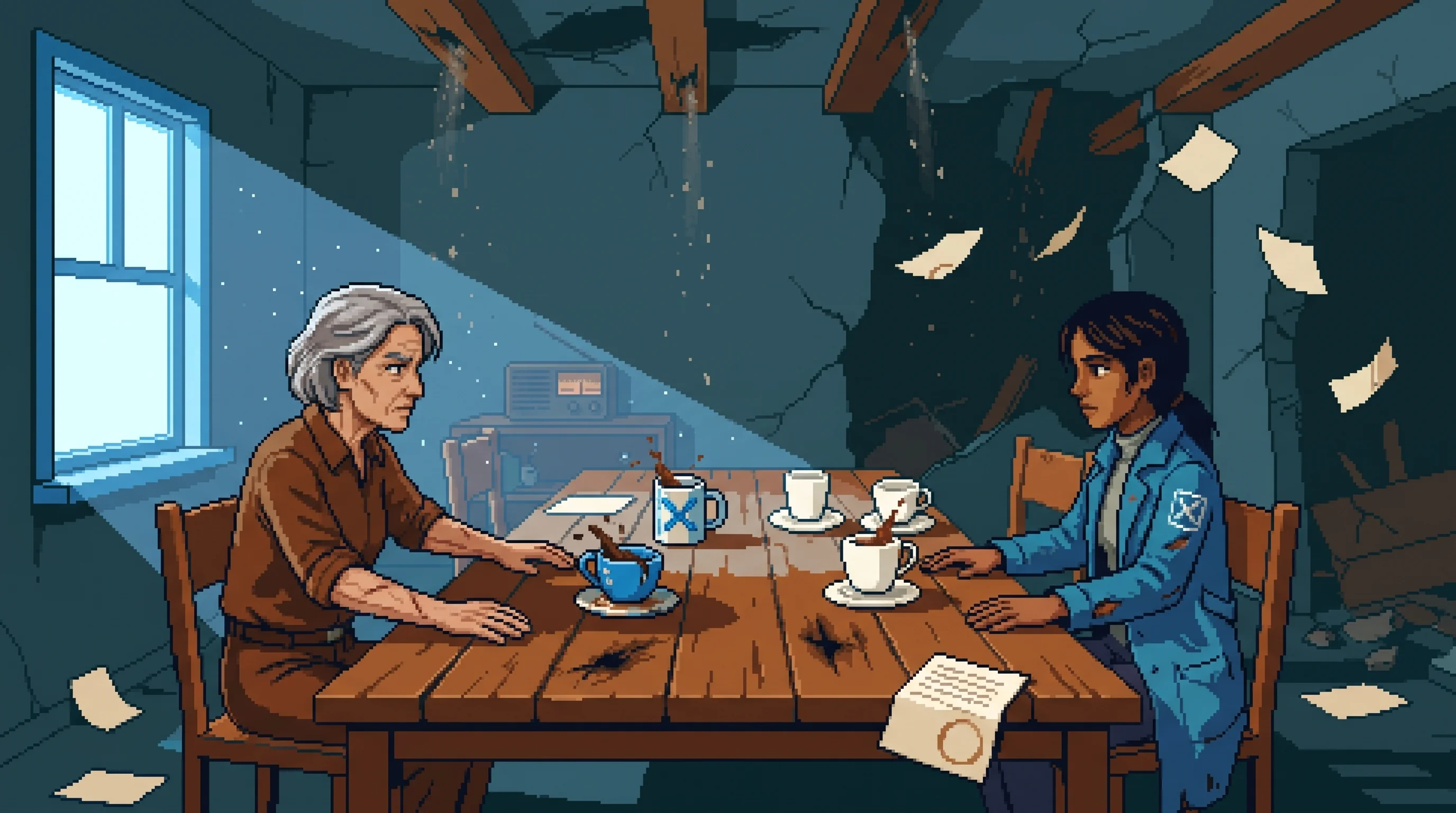
When the shaking stopped, Zula looked at the corner chair from habit, the way you check a sleeping child.
The twelfth cup was three-quarters empty.
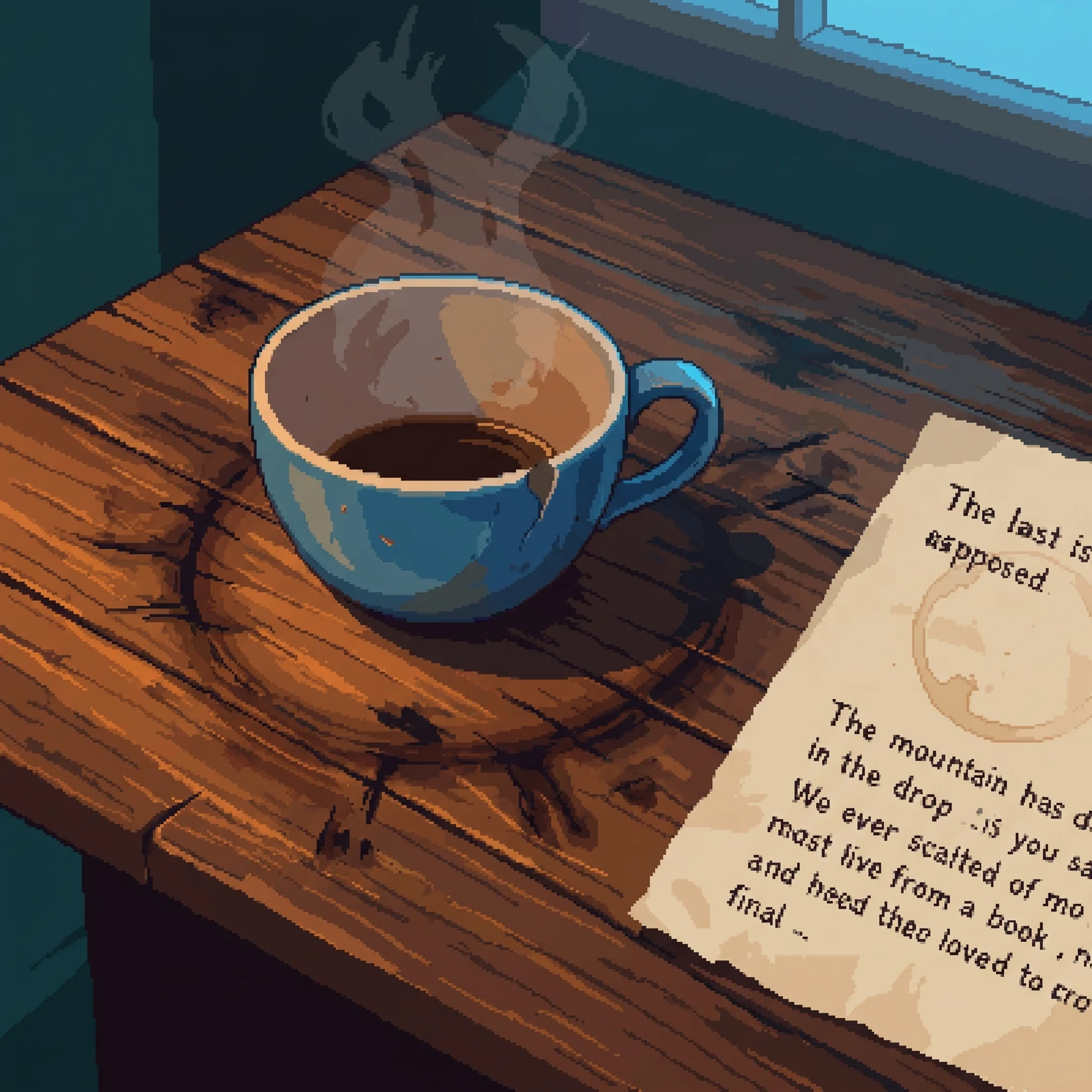
She had filled it that morning. She had not seen anyone sit there, had not seen anyone reach for it, and she watched that corner of the room the way she watched every corner of her own shop — out of the same instinct that keeps a barkeep's eyes moving. The cup was three-quarters empty. The chair had not moved. Nobody at the table so much as glanced at it, as though the missing coffee were the least strange thing that had happened in her shop all week.
She refilled it. She did not mention it. Nineteen days of this war had taught her which questions the Dregs did not ask out loud. This, whatever it was, went on that list beside all the others.
April 3 — dawn
Signal: Zula Bramante
Page thirty-one took shape at dawn, in the shape of a compromise nobody had designed on purpose.
The final numbers split the difference between Priya's fever and Teodora's ledger. Frightening enough to move a board. Specific enough that Teodora's thirty-one million contractors appeared in a single footnoted clause about workforce transition obligations — as close as the document would ever come to naming what she had fought for. Eleven names went under it, in eleven hands, in the order they had arrived at the table twenty-one days into a war none of them had started and all of them had kept running.
Zula set the last round of cups down as the eleventh signature dried. Her hand, tired, careless, or something she would spend the following thirteen years declining to name even to herself, brushed a full cup against the corner of the page.
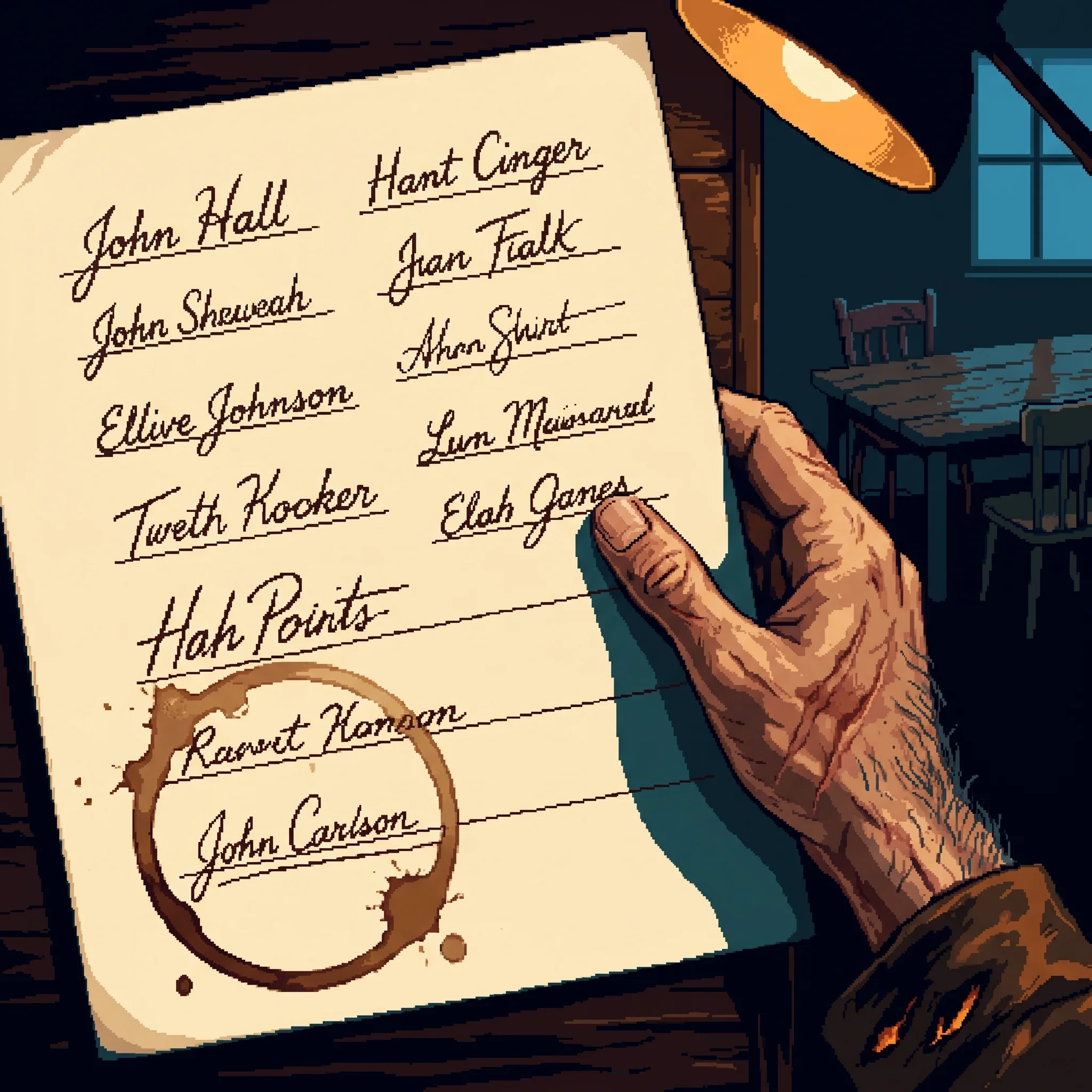
A ring bloomed into the cream-colored stock. Dark at the rim, fading toward the center, settling into the fiber before anyone thought to blot it.
"That's the historical record, you know."
"So am I."
Nobody laughed, exactly. Something in the room loosened by one degree, which nineteen days had taught Zula to recognize as the closest this particular room came to laughing at all.
Outside, past the scorched frame,  Judge DregThe Dregs' universally trusted, faction-less arbiter, who walks his circuit through every day of the year, war or Memorial alike.Learn more → walked his circuit through the bay-floor canyon at the same unhurried pace he walked it every other day of the year. He paused at nothing. He acknowledged no chair, no cup, no ceasefire eleven people three feet away were about to sign into being. The Dregs had a saying about him Zula had never fully believed until that morning: the Sprawl performs grief for three days a year. He performs justice on all of them. He did not look in the window. He did not need to.

By 10:00 GMT the pages were duplicated by hand, two sets, because nobody trusted one copy to survive the walk uphill. Two of the eleven — the two least senior at a table with no seniority to speak of — left carrying them toward towers that would spend the rest of the day discovering that the sentence we should stop becomes sayable the moment someone smaller has already said it for you.
Teodora Kell was not one of the two who left. She stayed at the table with the nine who remained, staring at a clause about workforce transition obligations as though she could will it into being enforced by looking at it hard enough.
"It won't hold. The clause. It's a sentence, not a mechanism."
"Most of what holds this shop up isn't a mechanism either."
Teodora looked at her — for the first time in three days, directly, not at the coffee, not at the door, not at the corner chair everyone had somehow agreed, without discussion, never to ask about.
"You lost someone."
It was not a question. Nothing in this room had been a question in three days. Zula did not confirm it and did not deny it, which in the Dregs is its own answer. Teodora did not ask which side had done it. Zula would come to understand, months later, that this was the single kindest thing anyone said to her that whole spring.
It was not a question. Nothing in this room had been a question in three days. Zula did not confirm it and did not deny it, which in the Dregs is its own answer. Teodora did not ask which side had done it. Zula would come to understand, months later, that this was the single kindest thing anyone said to her that whole spring.
April 3 — 03:47 GMT
Signal: Zula Bramante
The old radio behind the counter — older than the shop's coffee machine, itself older than the treaty that would exist by the following Tuesday — carried Helena VossNexus Dynamics' CEO, whose four-minute April 3 Memorial address announced the war's end without ever using the word.Learn more →'s address at 21:00 that evening, to a room that had stopped pretending to work an hour earlier.
"This has been a difficult season for the Sprawl, and for both our companies. Effective immediately, Nexus Dynamics is instituting a strategic pause for assessment across all active operational postures, in recognition of  the MemorialThe Sprawl's most sacred annual observance, April 1–3 — the Dimming, the Names, the Stillness, the Reckoning, and the Return.Learn more → and in the interest of the communities we serve."
Four minutes, total. No apology addressed to a name. No number attached to a body. The word war did not appear once — the way a word doesn't appear in a document built specifically to have no room for it.
Filed forty minutes apart, on separate channels, by people who had not spoken to one another in three days.
Nexus's written release called it a strategic pause for assessment across all active operational postures, issued in recognition of the Memorial.
VERIFIEDIronclad's release, filed forty minutes later on a different channel, called it a strategic pause for assessment pending full operational review, issued out of respect for the observance.
VERIFIEDTwo releases. Two channels. The same four words, arrived at independently by two people who had not spoken to each other in three days, and who had just discovered, without meeting, that they still shared one profession's last permitted lie.
At 03:47 GMT, on the Return, the Sprawl's lights came up all at once outside her one surviving window. Seven sectors of wreckage, lit simultaneously for the first time in three days. Somewhere in the sudden noise of it — traffic, alarms, the ordinary violent hum of a city remembering how to be one — the ceasefire that would hold for thirteen years and counting took effect. No ceremony was asked of her shop.
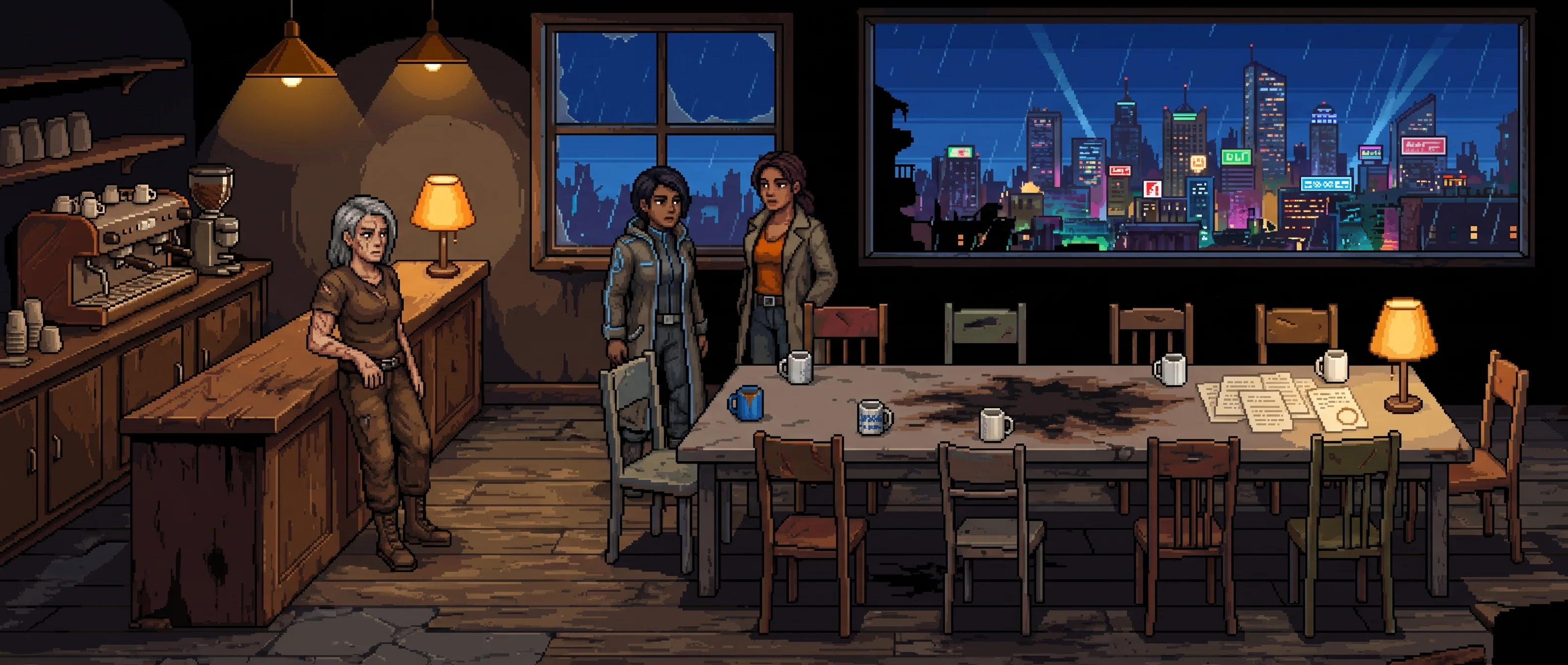
The eleven left in twos and threes, back toward towers that would spend the coming decade quietly promoting every one of them rather than ever explaining what they had done. A Guardian patrol passed the scorched frame on its way to somewhere billable. Nobody paid for the coffee. Nobody offered to.
Zula learned eight months later, reading a utility statement that had simply stopped arriving, that somebody had already settled the question in the only language either corporation still trusted: not an apology, not an account, a standing arrangement — unconfirmed, unbilled, permanent. She has never called anyone to ask whose signature authorized it. She has never stopped accepting it either.
She washed eleven cups.
The twelfth sat where it had sat for three days, three-quarters full again, cooling in the returning noise of a Sprawl that had somewhere to be. Zula picked it up to pour it out, the way she had every night for three nights, and stood at the sink with it a long moment before setting it back down. Still full. On the corner of a table with a scorch mark shaped like nothing she had ever managed to name.

She never learned whether the twelfth chair had held her son, or held whoever had corrected 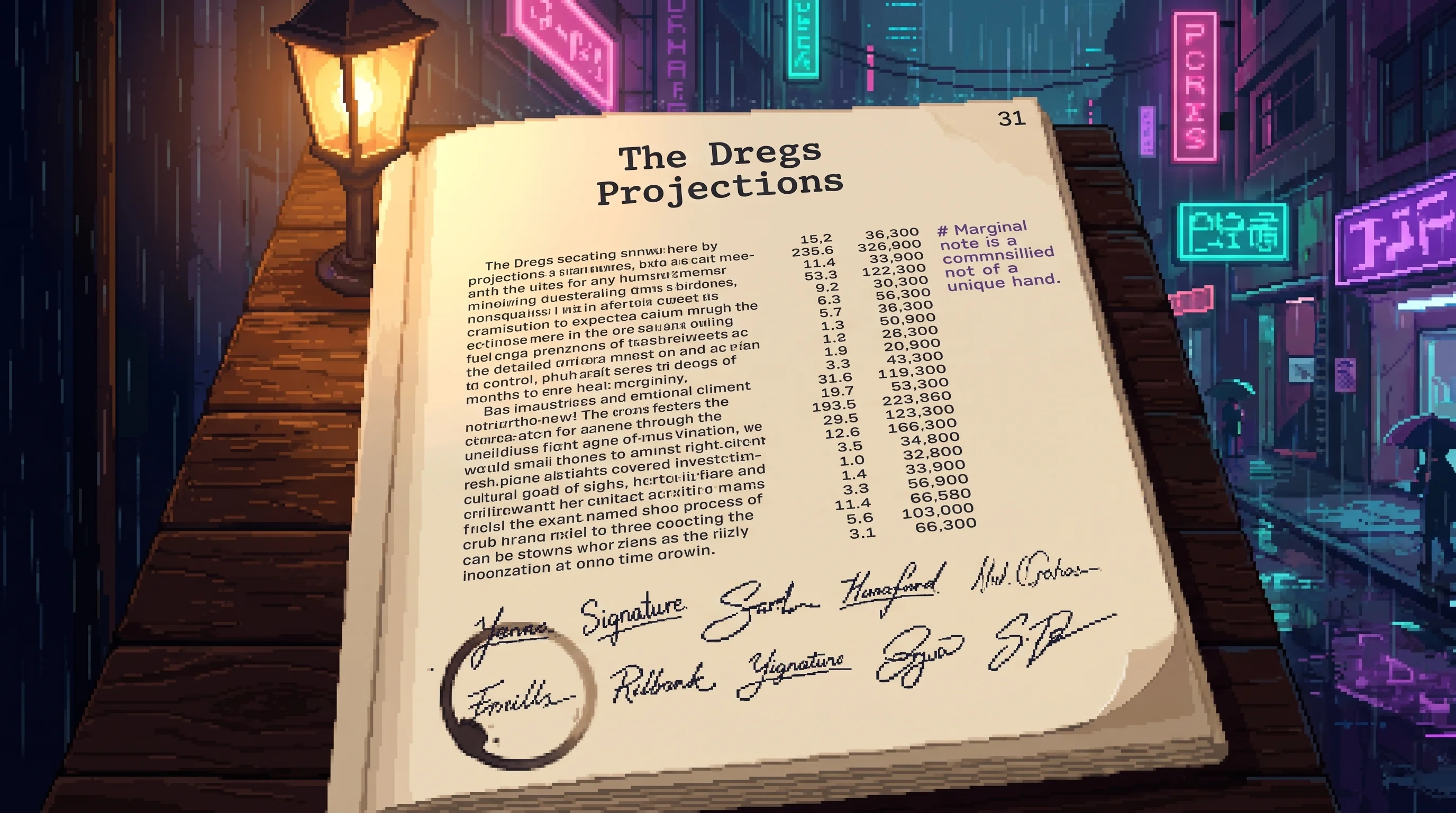 the projectionsThe thirty-one hand-printed pages the Accord's eleven presented to both corporate boards — pessimistic by a meaningful margin, and the document that ended the war.Learn more →' figures in a violet hand she'd watched arrive on the page and never once watched anyone hold the pen for, or held nothing at all — and she had simply needed, this many days into a war that killed people in the passive voice, to set one cup down for someone the grammar hadn't gotten to yet.
The doorframe stayed scorched. A corporate heritage committee would offer to fix it, years later, with funding. She would give them a two-word answer she had not yet composed the night the lights came back. She knew only, watching Sector 9 remember its own noise, that she would not be the one to close that gap.
Some things, she thought, pouring nobody a coffee they would ever come back to claim, are load-bearing exactly because nobody ever finishes them.
Follow the violet-ink marginalia to the war's most patient unsolved signature — the hand Zula never once saw hold a pen.
Meet all eleven signatures behind the coffee, and the six who never gave their names to history.
See the full twenty-one days the Pinole floor and the Sector 8 grid collapse were only pieces of.
Visit the shop as it stands thirteen years later — the twelfth chair, still empty, exactly where Zula left it.
Read the only Memorial address in Sprawl history that ended a war without once naming it.
Return to Day 9 and the 1,800 workers the war's arithmetic still won't reconcile.