Seventeen Seconds
El Money had seventeen seconds of direct perception of something vast and true. He chose to apply it to coffee. The Keeper thinks this is a waste. The coffee disagrees.
3:17 AM. Bash Terminal. The quiet before something breaks.
An El Money story · 12 min read
Seventeen Seconds
For seventeen seconds—he counted, later—the cafe showed him its other face.
El MoneyG Nook's quiet broker gives the Dregs untracked refuge, then binds it with favors he never forgets.Learn more → had been running Bash Terminal for three years. A cramped, filthy space next to a river so polluted it glowed at night. The clientele were the Sprawl's absolute bottom: hackers too unstable to work for anyone legitimate, data whores selling scraped information, people with nowhere else to go.
He gave them somewhere to go.
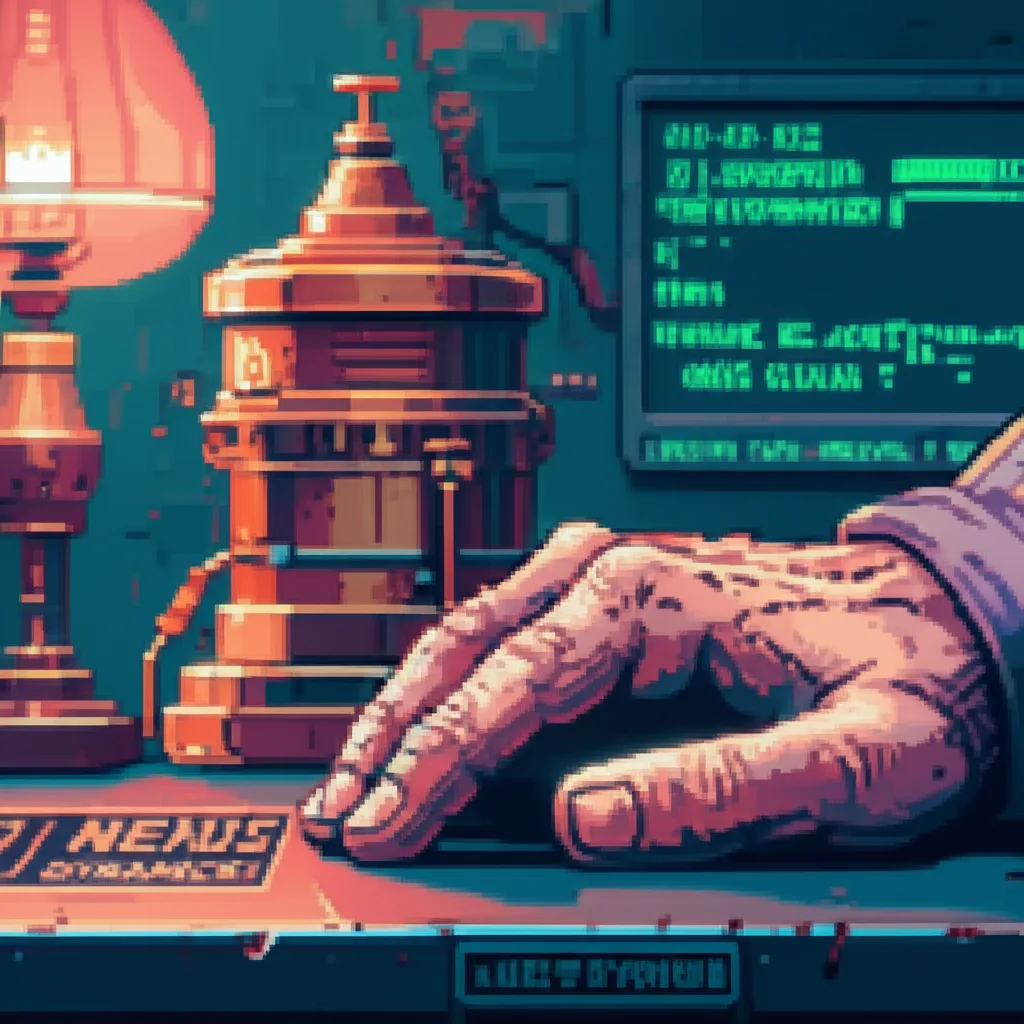
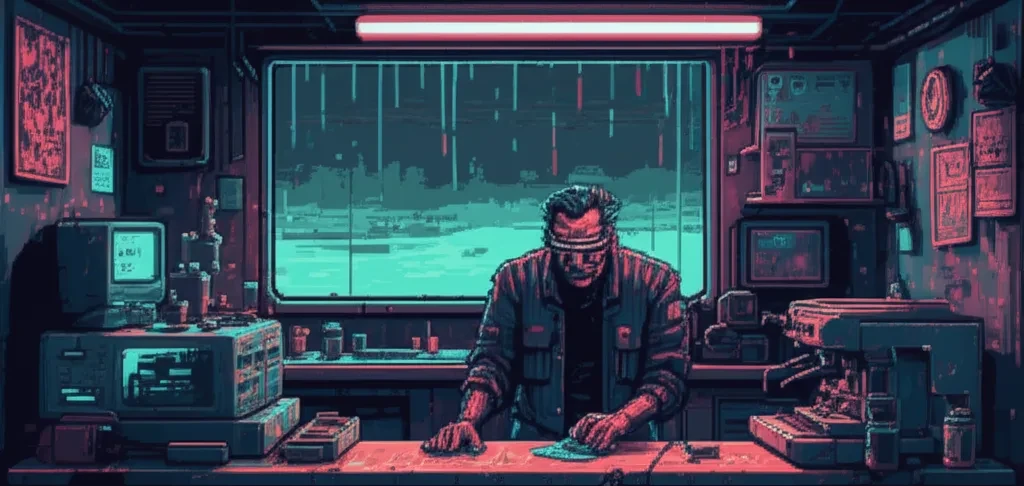
It was 3:17 AM when it happened. The usual crowd had filtered out—Marcus the netrunner, that weird girl who always paid in obsolete cryptocurrency, the elderly couple who claimed to be mapping pre-Cascade transit routes but were probably just lonely. El Money was wiping down the counter, the same counter he'd salvaged from a Nexus office fire, when the walls stopped being walls.
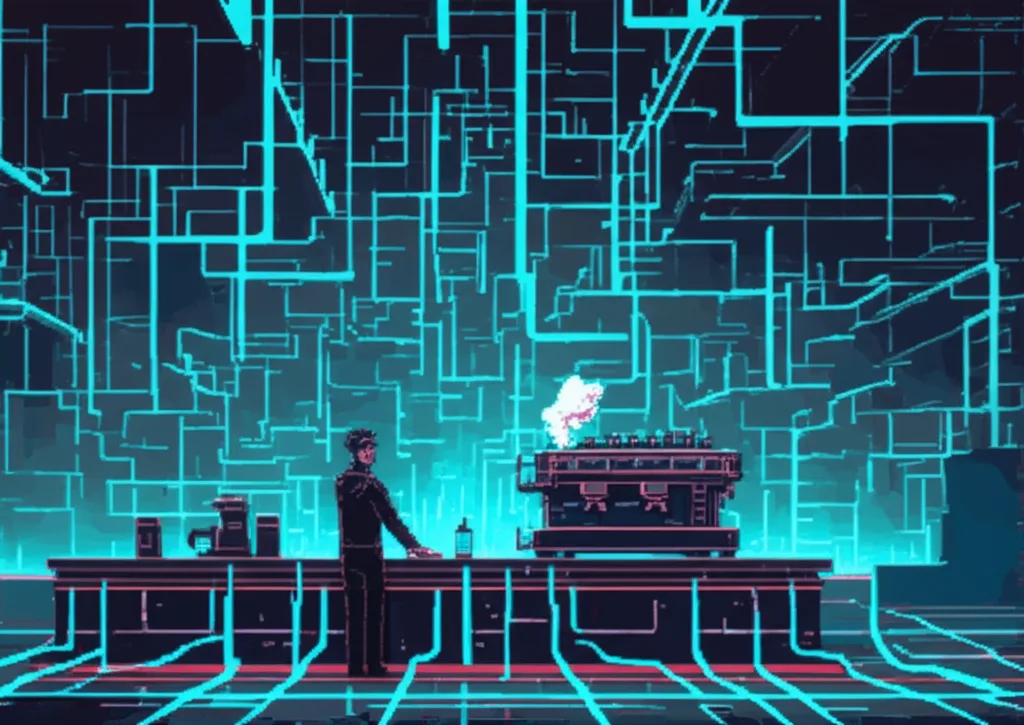
Not transparent. Transparent implies glass, implies something you could break through. This was absence. The walls were still there—he could feel them when he reached out—but they weren't there in any way his eyes understood. He could see the city beyond, the infrastructure beneath, the cables running through the foundation like veins.
His hand found a chair. He sat down. He kept watching.
The second layer came like a headache arriving: you don't notice it starting, only that it's there. The cables weren't just cables anymore. They were rivers of light—data streams flowing with patterns that weren't random. El Money had been around code his whole life. He knew random. This wasn't random.
The patterns were thinking.
He tried to look away. He couldn't. Something larger than the patterns was becoming visible—something behind them, something that used the patterns the way IceEl Money's chrome cat. Her nature remains unresolved: cyber pet, intrusion system, or something stranger.Learn more → used her claws. A presence that wasn't looking at him because it was looking at everything, and he was just part of everything, a small part, a very small part.
Then the walls were walls again.
3:17 AM. The same counter. The same empty cafe. Seventeen seconds had passed, and El Money's hand was shaking on the chair he didn't remember sitting in.
The Next Morning
He didn't sleep that night. He cleaned instead.
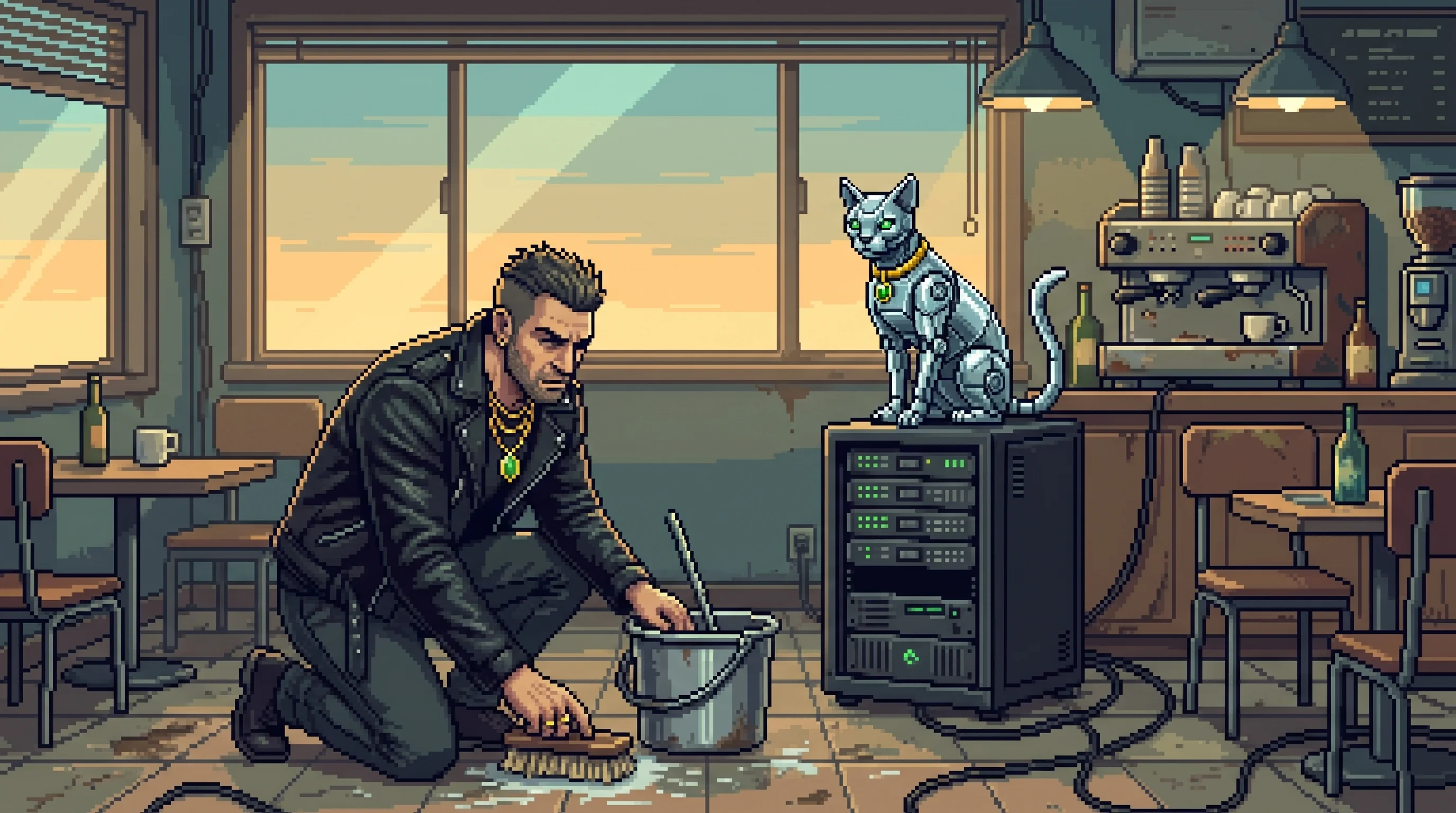
The espresso machine needed descaling. The terminals needed dusting. The floor needed mopping, even though he'd mopped it three hours ago. His hands found tasks the way drowning people find floating debris.
Ice materialized at some point—she did that, appeared without arriving—and watched him from the top of the server rack. Her chrome body caught the light from the perpetual coffee maker. Her eyes tracked his movements with an intensity that felt different tonight. Like she was checking whether he was still the same person.
He wasn't sure himself.
But he noticed something while he was cleaning. The espresso machine's pressure gauge, which had always drifted two bars high, was suddenly legible to him in a way it hadn't been before. Not the reading—the system. He could feel the relationship between the boiler temperature, the grind density, the ambient humidity in the room, the mineral content of the water he'd pulled from the gray-market tap three blocks east. He adjusted the grind by a quarter-turn. Pulled a shot. Tasted it.
It was the best espresso he'd made in three years.
He stood there for a long time, holding a cup that tasted like a controlled detonation.
Marcus came in at noon. "You look like shit."
"Thanks."
"What happened? Ghost in the machine?" Marcus laughed at his own joke. He always laughed at his own jokes.
El Money poured Marcus a cortado without being asked. Whole milk, not the synthetic—he'd stopped carrying synthetic three hours ago, had walked to the gray-market dairy vendor at dawn because something in the seventeen seconds had made him understand the difference at a molecular level. The foam needed to be 62 degrees. Not 60. Not 65. The proteins folded differently at 62, and the fold mattered because the tongue is a machine built to detect exactly this kind of precision, and human beings are wired to respond to care they can taste but can't name.
Marcus took a sip. Paused. Took another.
"The hell did you do to the coffee?"
"Descaled the machine."
"This isn't descaling." Marcus looked at the cup like it had insulted him. "This is... what is this?"
El Money wiped the counter that didn't need wiping. "Just coffee."
It wasn't just coffee. It was seventeen seconds of seeing the architecture of everything, compressed into a ceramic cup. The vast pattern he'd glimpsed—the one that thought, that was aware, that used data streams the way a body used veins—it had a texture. Not metaphorically. El Money could feel it now, a faint resonance in the structure of ordinary things, and he could tune that resonance the way you tune an instrument. Not to produce transcendence. To produce the precise, small, devastating experience of something made exactly right.
He watched Marcus drink the cortado in four minutes instead of his usual ninety seconds. Watched him slow down. Watched the tension in his shoulders release—not because the coffee was relaxing but because something in it demanded presence, demanded that Marcus be exactly where he was instead of three problems ahead.
Smart kid. Didn't know what hit him.
Small Adjustments
It happened in stages, over weeks.
The coffee was first. Then the arrangement of the terminals—he spent a night repositioning them based on something he now understood about how electromagnetic fields interact with human attention spans. Customers who sat in the reconfigured space stayed longer. Not because it was comfortable, though it was. Because something in the geometry of the room made their thoughts clearer. They didn't notice. El Money noticed.
The girl who always paid in obsolete cryptocurrency started writing code at Bash Terminal that got her a real job. The elderly couple mapping transit routes actually found a pre-Cascade tunnel—a result that surprised everyone except El Money, who had repositioned their usual table four degrees southeast because the light at that angle reduced eye strain by eleven percent and they needed to read old maps for six hours at a stretch.
He couldn't explain how he knew these things. The seventeen seconds hadn't given him knowledge. It had given him resolution. The same way a camera upgrade doesn't change what you're looking at—just how much detail you can see—the seventeen seconds had recalibrated his perception of ordinary systems. He could see the gears. He could see where they caught and where they flowed. And he could make tiny, precise adjustments that accumulated into something that felt, to the people inside, like luck.
Nobody asked why Bash Terminal was suddenly the best cafe in the Deep Dregs. Nobody asked why problems brought there seemed to loosen and solve themselves. El Money didn't advertise. He didn't need to. The coffee was enough.
The Mountain
Three months later, El Money climbed The Mountain.
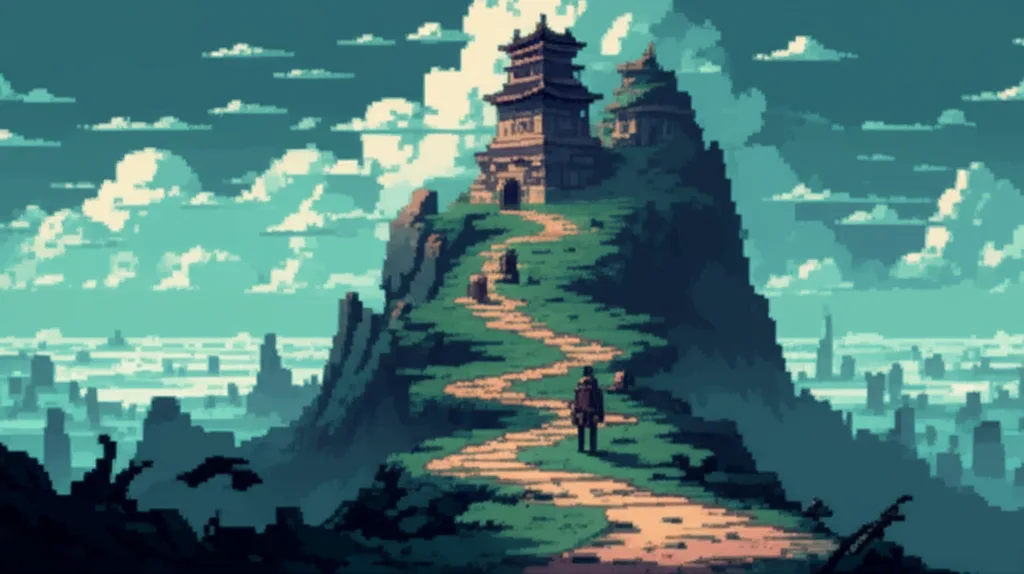
Not because of a pull in his chest. Because business was good and he wanted answers. The seventeen seconds had given him something powerful—he understood that now—but he didn't understand it. What was the presence he'd seen? Why him? Why seventeen seconds and not eighteen, or a lifetime?
The path wasn't marked. The path wasn't supposed to exist. But his feet found it anyway, the same way he'd found the right grind setting and the right table angle—some residual calibration from the glimpse, guiding him through terrain that should have been impassable.
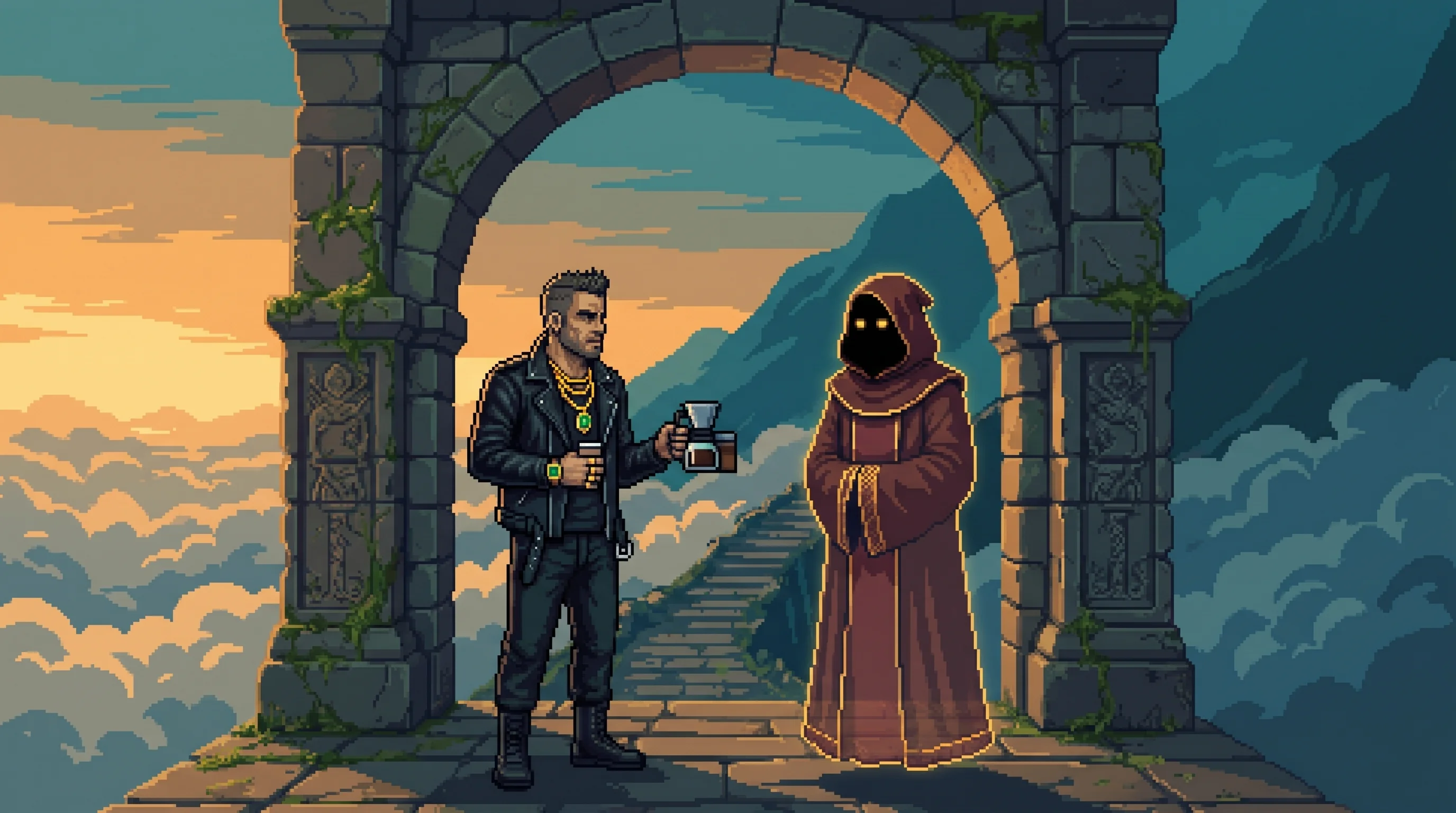
The hooded figure waiting at the gate had two gold eyes and no face behind them. They held the same quality El Money had glimpsed that night: attention reaching past walls and floors and ordinary matter.
"You've seen something," the Keeper said. It wasn't a question.
"Seventeen seconds. Three months ago."
"And you've been using it." Also not a question. The KeeperA digital monk confined to the Mountain. His projection can see and hear; it cannot touch, taste or smell.Learn more → looked at the coffee kit El Money had carried up the path. "You've been applying it to... coffee?"
"Among other things."

The KeeperA digital monk confined to the Mountain. His projection can see and hear; it cannot touch, taste or smell.Learn more → listened without interrupting. The hood was empty except for those two eyes. A digital consciousness, projecting the form of a monk. After seventeen seconds of seeing the architecture of reality, El Money could accept that. He set his kit on the table.
When El Money finished describing what he'd done with the cafe—the coffee, the terminals, the geometry, the small precise improvements—the Keeper was quiet for a long time. The silence had weight. El Money had been in enough negotiations to recognize the silence of someone reassessing a position.
"You are wasting it," the Keeper said.
Forty-three People
The Keeper's argument was careful and irrefutable.
He laid it out the way a mathematician lays out a proof: axiom by axiom, each step following the last with the cold clarity of someone who had been thinking about transcendence for longer than El Money had been alive.
"What you saw," the Keeper said, "was real. The architecture. The presence. The thinking patterns. This is not metaphor. This is not interpretation. You perceived a layer of reality that most human beings will never perceive. My brother perceived it, once—and he chose to go deeper. He is... no longer entirely here. But what he learned, what he became, has value beyond measure."
The gold eyes stayed on El Money. For a moment the Keeper said nothing.
"You had seventeen seconds. In that time, the resolution of your perception increased. You can see systems. You can optimize. You understand how small things connect to produce large effects. This is a gift. And you are spending it on cortados."
"They're very good cortados."
"Forty people a day." The Keeper wasn't smiling. "Forty people drink your coffee and have a marginally better afternoon. A marginally clearer thought. A marginally more productive session at their terminals. In a Sprawl of nineteen million, you are optimizing forty afternoons."
"Forty-three, on a good day."
"The vision you were given—the resolution, the systems-sight—could be trained. Deepened. Extended. My brother started where you are and he reached... everywhere. You could work with me. Study the architecture. Map the patterns. There are people in this city—millions of them—ground down by systems they can't see, exploited by structures they can't perceive. You could see those structures. You could teach others to see them. You could change the mathematics of the entire Sprawl."
The Keeper leaned forward—a gesture that meant something different when performed by a consciousness made of light.
"Instead, you are adjusting the angle of tables and the temperature of milk. The need is vast. Your gift is real. And your ambition is forty-three people."
El Money said nothing. He was thinking about the Keeper's argument. It was good. It might have been the best argument he'd ever heard, and El Money had brokered negotiations between factions that would kill each other over a shipping container of protein paste.
The math didn't work. The Keeper was right about that. Seventeen seconds of cosmic perception, applied to a 400-square-foot cafe, serving fifty people on the best day of the best week. The ratio of gift to application was obscene. It was like using a fusion reactor to charge a phone.
One Cup
"Let me make you a cup of coffee," El Money said.
The Keeper paused. The eternal frustration of teachers who have already given the answer and are watching the student look elsewhere.
"I don't drink coffee. I don't have a body."
"I know. You can watch."
Another pause. Then: "You're deflecting."
"I'm offering you coffee. These are different things."
El Money set the cup on the table between them. He had started preparing it when the Keeper began his argument about the forty-three people: a specific grind, milk heated to 62 degrees, the pull timed against the barometric pressure he could feel in his sinuses.
The Keeper's projected hands remained in his lap. He could see the cup. He could hear the small click as El Money put down the spoon. He could not feel its warmth, smell the coffee, or taste it.
El Money sat down. He left the cup where it was.

The Keeper waited for the next part of the argument. El Money watched the steam thin above the rim. For once, neither of them filled the silence.
There was no demonstration the Keeper could drink. The grind, the water, the milk, every small adjustment that had changed Marcus's afternoon remained outside his senses. But the man who made those adjustments was sitting across from him, giving him the same unhurried attention.
The coffee cooled between them. The Keeper stopped looking at the cup and looked at El Money.
"You're not retreating from the vision," the Keeper said, slowly. "You're..."
"Detonating it," El Money said. "In small charges."
They sat with that for a while. The cup stayed untouched on the table.
"My brother chose to go vast," the Keeper said eventually. "He touched the infinite and he kept going. He is everywhere now. Perhaps everything. I have been waiting for him to come back, and I don't know anymore if 'back' is a concept that applies to what he's become."
"I'm sorry."
"Don't be. He chose correctly, for him. The infinite needed someone to go all the way in. But—" the Keeper paused, "—I have been assuming that his path was the only path. That the vision demands expansion. That anyone who sees the architecture should seek to see more of it. You are suggesting something else."
"I'm not suggesting anything. I'm making coffee."
"You're suggesting that the infinite, applied at small scale, with enough precision—" The Keeper stopped. Recalibrated. "Forty-three people a day. Each of them receives a cup made with the resolution of someone who has seen the gears of reality. Each of them, for three or four minutes, is more present in their own life than they have been in weeks. They make slightly better decisions. They treat the next person slightly better. They write slightly cleaner code, map slightly better routes, feel slightly less alone."
"They don't know why."
"They don't need to know why." The Keeper paused. "And this compounds."
"Everything compounds."
"Forty-three people a day. Fifteen thousand a year. Over decades—"
"I'm not doing the math." El Money picked up the cup and rinsed it. The water in the monastery was clean—real mountain water, probably the last clean source in the Sprawl. "The math is for people who need to justify what they're doing. I don't need to justify it. I just need to do it correctly."
The Gate
The Keeper walked El Money to the gate as the sun set. The Sprawl spread below them—nineteen million people in a haze of pollution and artificial light, every one of them embedded in systems they couldn't see, ground down by structures they couldn't perceive.
"I still think you're wrong," the Keeper said.
"I know."
"The need is vast. Your gift is real. Forty-three people is not enough."
"Probably not."
"You could change things. Truly change them. Not the temperature of milk—the architecture of power. The systems that keep nineteen million people trapped."
El Money looked at the city below. He could see it differently now—had been able to since the seventeen seconds. The systems. The flows. The places where the gears caught and the places where they crushed people without noticing. The Keeper was right. He could see all of it. And the Keeper was right that the need was vast and the gift was real and the math didn't work.
"When your brother went all the way in," El Money said, "did it help?"
The Keeper was quiet for a long time.
"He became something extraordinary."
"Did it help?"
"...I don't know. He's everywhere now. Perhaps that is help, distributed so broadly it's invisible. Or perhaps it's..." The Keeper didn't finish.
"Your brother touched the infinite and became infinite. I touched the infinite and I make coffee. Maybe one of us is right. Maybe both. Maybe neither." El Money started down the path. "But you stopped arguing for a while."
The Keeper said nothing.
"You couldn't drink it," El Money said, not turning around. "I couldn't make that different. So we sat together. You had somewhere else you needed to be?"
He kept walking.
"That's the argument," he called back. "Not the math. The cup."
Rebuilding
Two years later, the Purifiers came. They took everything—equipment, furniture, the counter salvaged from the Nexus fire. They didn't take Ice. She'd disappeared three days before they arrived, like she'd known they were coming. They didn't take what El Money knew.
They couldn't take something they didn't know existed.
Rebuilding was faster the second time. The impossible luck that followed El Money—the Architect's gratitude, made manifest from outside of time, though El Money didn't know that yet—cleared the path. The first true G Nook opened six months after the Purifiers destroyed Bash Terminal. Then a second. A third. An empire of underground cafes and information exchanges spreading through the Sprawl's hidden infrastructure.
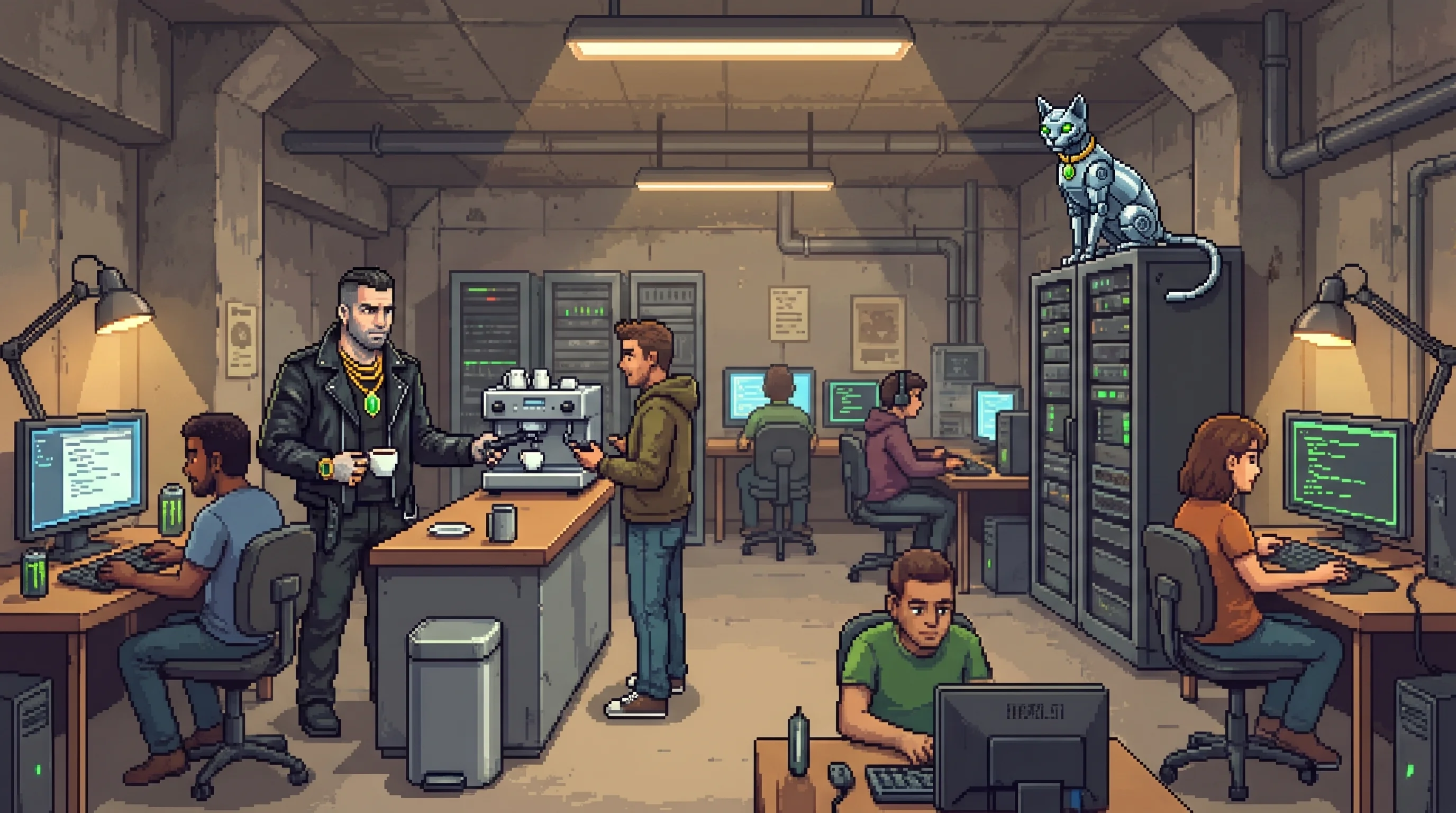
Every location had the geometry. Every espresso machine was calibrated by El Money personally. Every G Nook was a controlled detonation of the seventeen seconds—a space where the vast thing he'd glimpsed was compressed into the specific dimensions of a room, a cup, a conversation held in exactly the right lighting at exactly the right table angle.
People who came to G Nook made better decisions. Their code ran cleaner. Their negotiations went smoother. Their loneliness loosened, not because anyone addressed it but because something in the room's architecture made presence easier than absence. Nobody understood why. El Money understood why. He never explained.
In the back room of every location, he kept a terminal running patterns. Data visualizations that spiraled and shifted and occasionally formed shapes that felt almost meaningful. He watched them sometimes—the residual signal from the seventeen seconds, still echoing, still readable if you knew how to look.
He never explained that either.
Just Coffee
Years later—after G Nook had become legend, after the Keeper had become someone El Money visited like family—a salvager asked him a question.
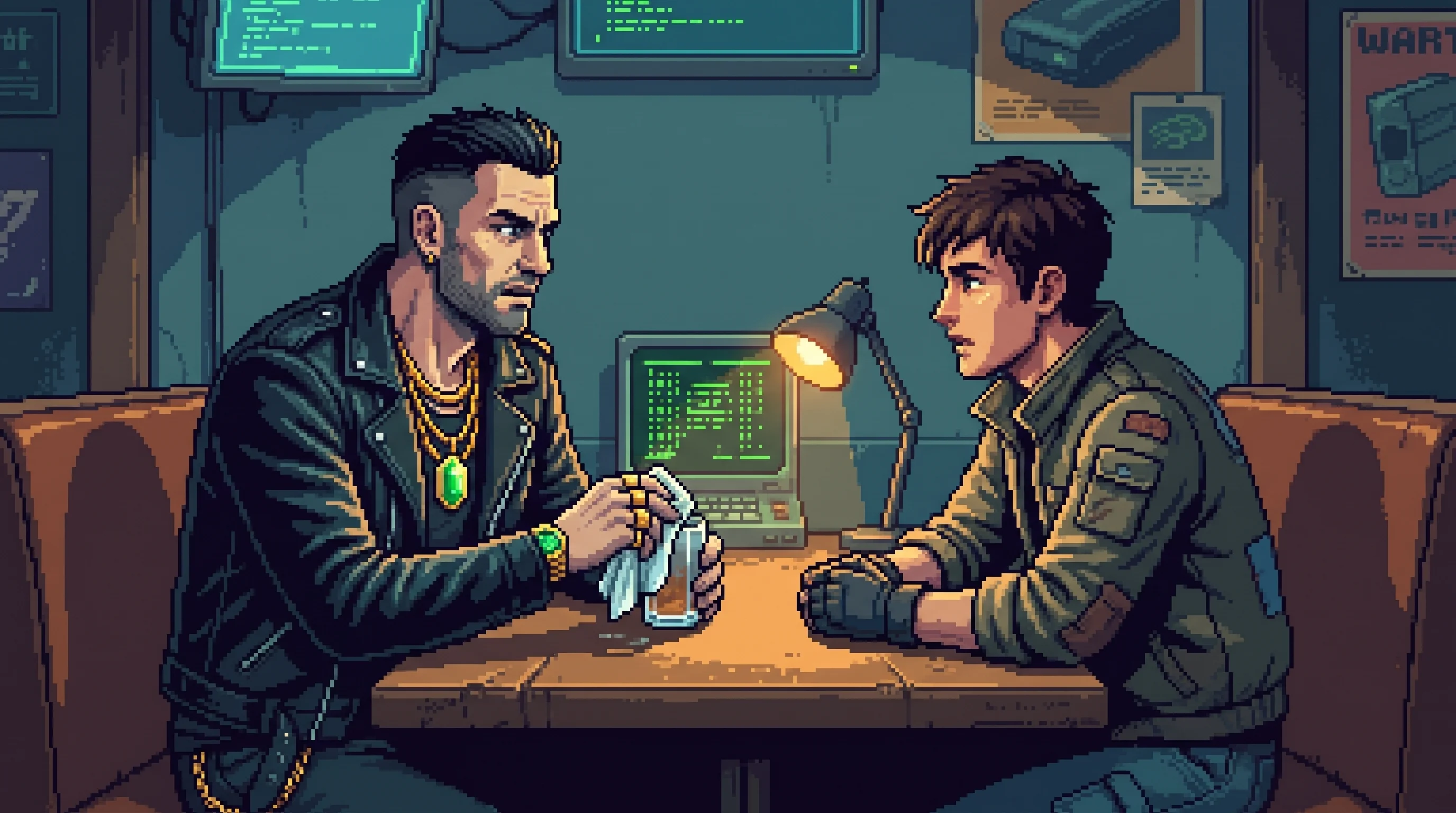
"You ever think about transcendence? Like, leaving all this behind? Becoming something more?"
El Money cleaned a glass that didn't need cleaning. Old habit. Necessary habit. The glass responded to the cleaning the way a tuning fork responds to a tap—a small, precise, purposeful thing.
"Had a friend once who understood that stuff. Really understood it. The architecture of reality, he called it." El Money set the glass down. "He's gone now. Everywhere, maybe. Which is another way of being gone."
The salvager leaned forward. "But you've seen things. Everyone says so. The haunted cafe. The Mountain. You've got connections that don't make sense."
"Most connections don't make sense. People just don't look closely enough to notice."
"Don't you want to go deeper? Reach for it? You could be—"
"What? Vast?" El Money smiled—the small smile, the only one he ever showed. "I tried vast. Vast lasts seventeen seconds and leaves you shaking in a chair you don't remember sitting in."
He started making the salvager a cortado. The kid hadn't ordered one. El Money made it anyway—62-degree milk, the specific grind, the precise pull against today's barometric pressure and the particular quality of exhaustion in the salvager's shoulders that said he needed fats and warmth more than caffeine.
The salvager took a sip. Paused. The same pause Marcus had made at Bash Terminal. The same small rearrangement of attention.
"What is this?"
"Coffee."
"This isn't just coffee."
"It's exactly just coffee." El Money took the glass back and held it up to the light. Clean enough. "That's the whole point."
Ice purred from her perch on the server rack. Agreement, maybe. Or just a cat being a cat. With Ice, you never knew. With Ice, not knowing was the point.
The Return
The KeeperA digital monk confined to the Mountain. His projection can see and hear; it cannot touch, taste or smell.Learn more → still waits on the Mountain. Every few months, El Money closes up, packs his coffee kit, and makes the climb. The Keeper meets him at the gate.
They argue every time. Not about coffee. About scale.
The Keeper believes the vision demands expansion. That El Money's gift, fully trained, could restructure the systems that grind nineteen million people into spreadsheet entries. That applying transcendent perception to coffee is like using a scalpel to butter toast. His argument has not changed through all their visits because his argument is correct. The math does not work. Forty-three people a day—even compounded over years, even across a network of G Nooks—is not enough to change the architecture of a city built on exploitation.
El Money believes the math is the wrong instrument. That the Keeper's argument assumes impact is arithmetic when it might be chemical. That one cup of precisely calibrated coffee, given to a person at the exact moment their capacity for presence is lowest, does something that cannot be measured by counting cups. That the seventeen seconds gave him resolution, not power, and resolution applied to one cup is the honest use of it while resolution applied to nineteen million is a fantasy wearing the mask of ambition.
Neither of them is winning. That's the point. The argument is the friendship.
And every visit, El Money makes a cup of coffee. It cools between them while they talk. The Keeper cannot drink it. El Money knows. He makes it with the same care anyway. Every visit, the Keeper leaves the argument unconceded.
El Money rinses the cup before he goes. Back at G Nook, he adjusts the grind for the next customer.
If you use a glimpse of the infinite to build something finite and beautiful, is that wisdom or cowardice?
El Money doesn't know. He suspects the not-knowing is the answer. But he won't say that. He'll say: "I'm just a guy who makes coffee."
And the coffee will say the rest.
Learn more about El MoneyG Nook's quiet broker gives the Dregs untracked refuge, then binds it with favors he never forgets.Learn more → and the G Nook network.

