Overview
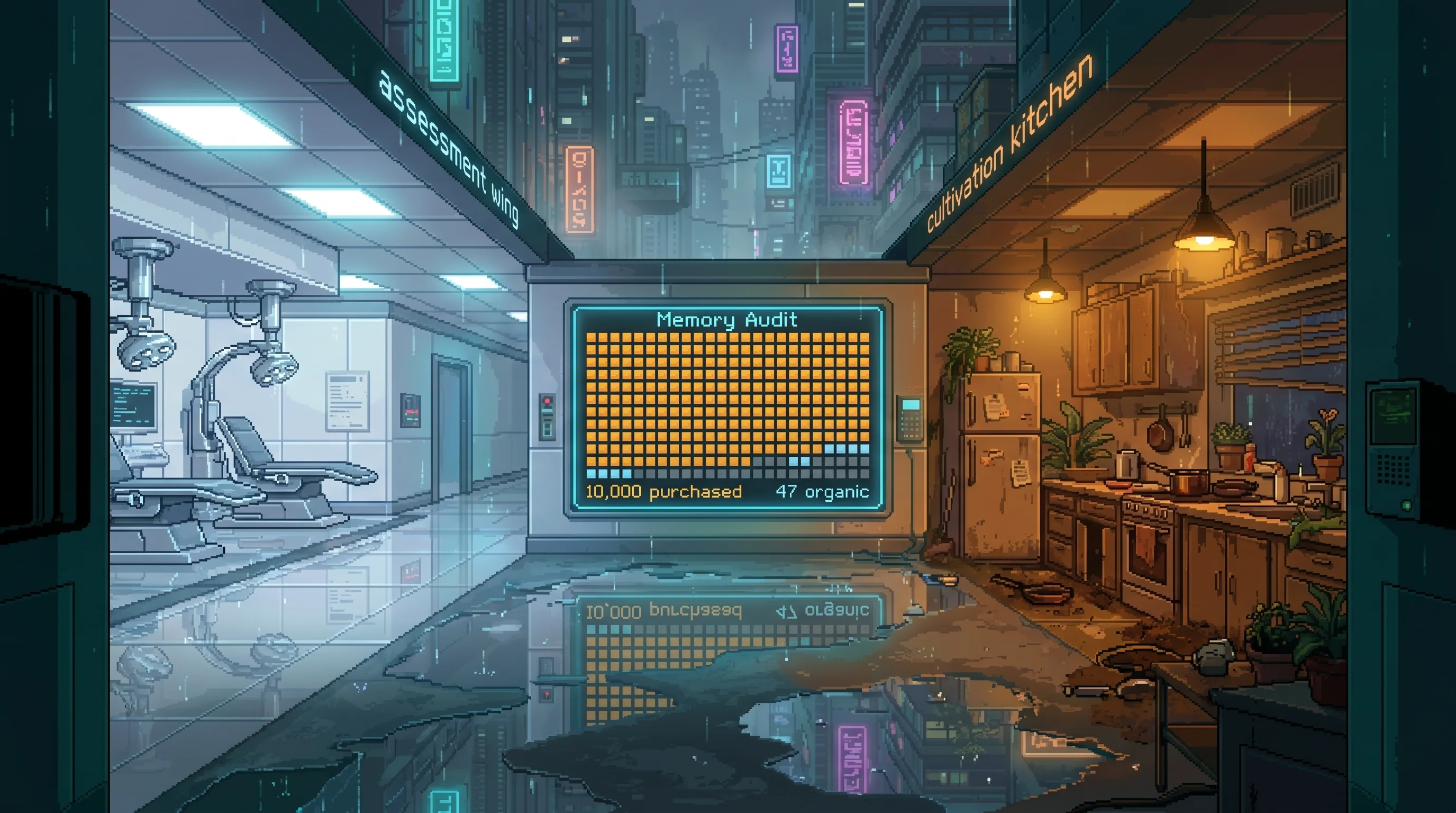
The Impression Ward's intake form has a question on page three that most patients skip. Question 31: "Describe your last memory formed without digital supplementation." The median response time for patients who attempt it is four minutes and twelve seconds. The median response is a blank field.
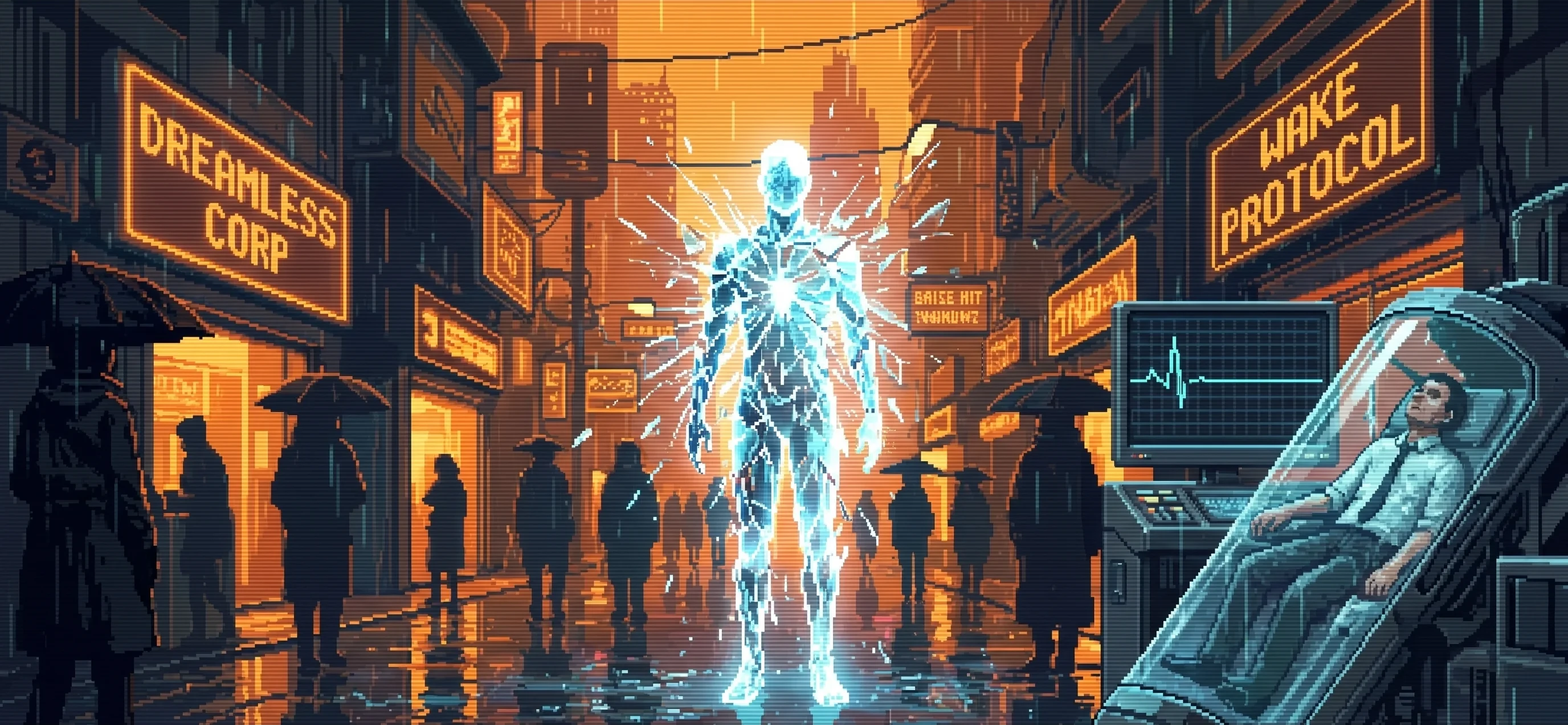
Therapists at the Ward coined a term for it: the watershed memory. The last experience generated entirely by the patient's own neural architecture, consolidated through natural sleep, recalled without assistance. For heavy consumers, the watershed may have occurred a decade ago. For the 140 million dreamless — whose subconscious integration has been optimized out by Nexus-certified sleep efficiency packages — the last dream-consolidated organic memory carries a richness that subsequent memories, formed without subconscious processing, cannot replicate. Nexus's marketing materials describe the dreamless upgrade as "reclaiming 90 minutes of productivity per night." The materials do not mention what those 90 minutes were doing.
Watershed memories are almost always mundane. A meal. A walk. A ceiling. The spectacular ones get overwritten first — purchased spectacle is designed to compete with organic spectacle, and it wins. Boredom has no commercial competitor.
Dez Callahan's watershed is a Thursday afternoon in the Deep Dregs, age twenty-two, lying on a floor mat looking at a water stain on the ceiling. Nothing was happening. He was bored. The boredom is the point: boredom requires a self with nothing to do. A consciousness simply present, unfilled, waiting for nothing. The Sprawl optimizes for engagement, productivity, intensity. It has not found a way to sell doing nothing, which makes doing nothing the last cognitive state that belongs entirely to the person experiencing it.
The water stain is still there. The self that looked at it is not.
- Subject
- The possibility that you have already experienced your last organic memory
- Concept
- The watershed memory — last experience before displacement drift began
- Dez watershed
- Thursday afternoon, age 22, water stain on ceiling
- Central insight
- Boredom requires a self with nothing to do — the purest expression of undiluted identity
- Form
- Chronicle
- Status
- Active
The Purchase That Closed the Door
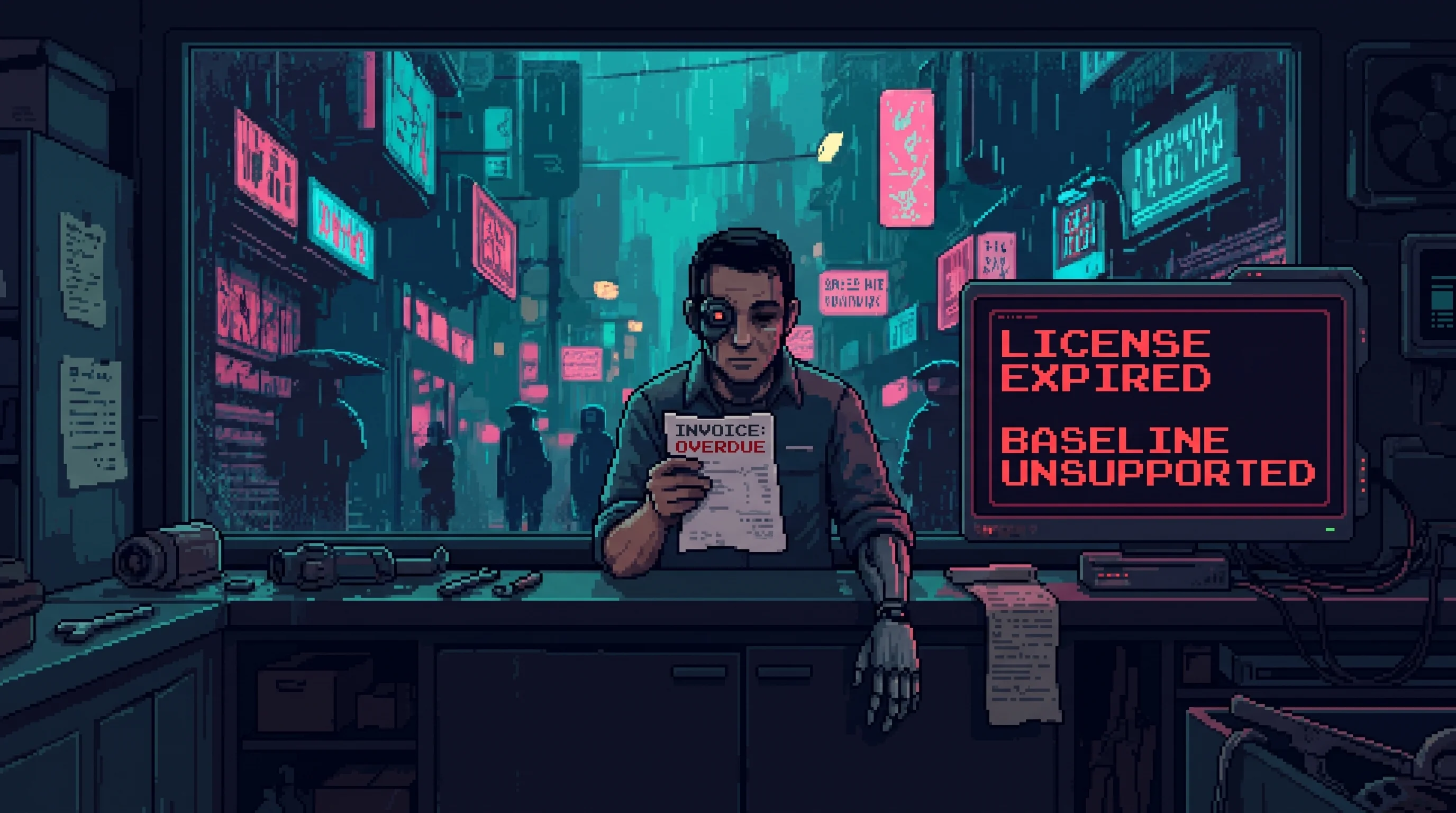
Dez's first purchased memory was a sunset over the Wastes. Two hundred credits, three minutes, the kind of beauty his Deep Dregs apartment window has never provided. Good Fortune offered a six-month payment plan at 22.4% APR for customers purchasing their first impression — a rate the company's promotional materials describe as "investing in yourself." Dez paid cash. Most don't.
The purchase was voluntary. The dependency was not.
That first impression entered his memory architecture and established the baseline for what experience should feel like: vivid, emotionally complete, pre-processed for maximum impact. His next organic experience — same apartment, same water stain, same gray light — registered as deficient. Not different from before. Deficient. His nervous system now had a reference point for commercially optimized experience, and unoptimized reality could not compete.
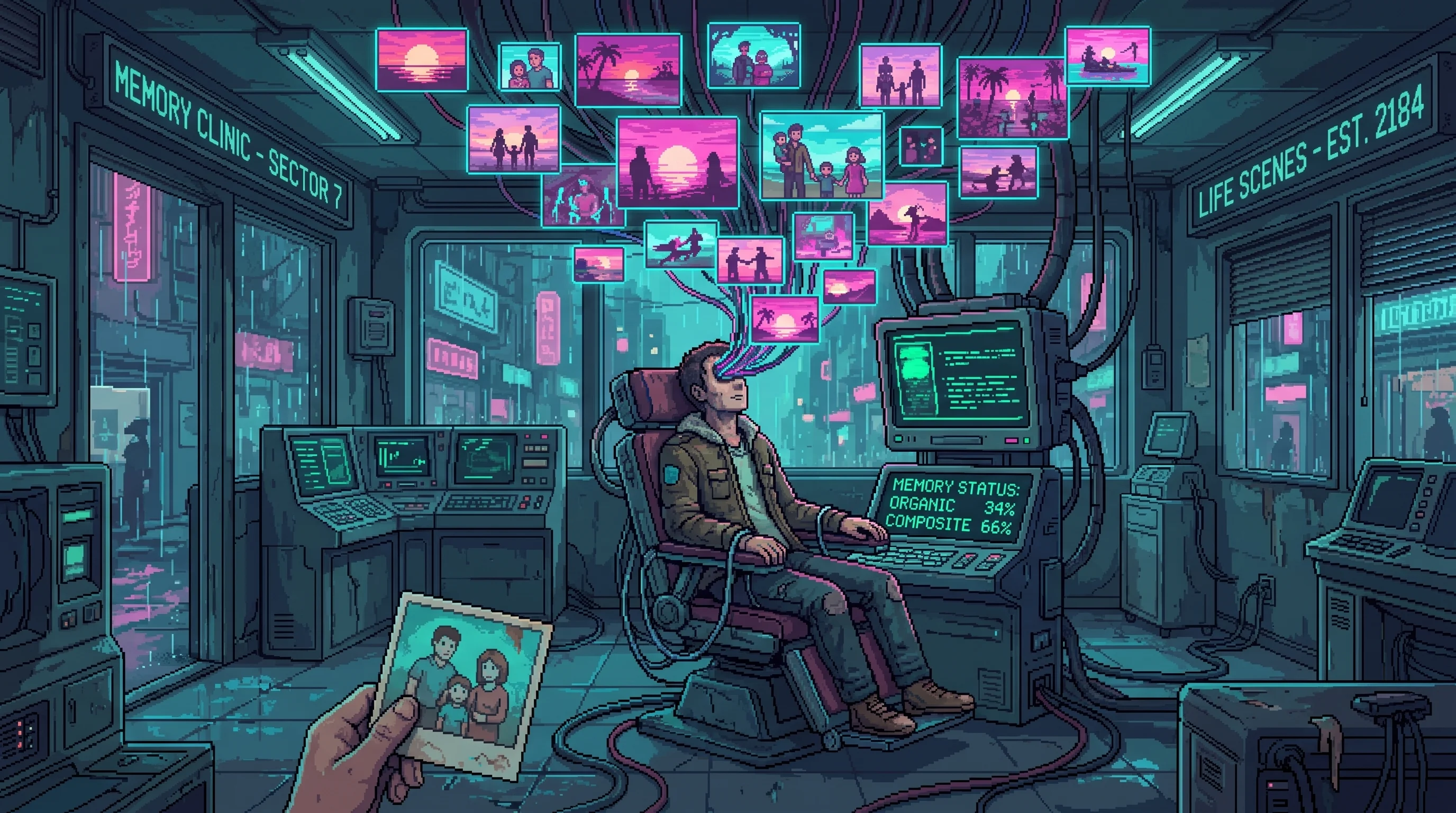
The second purchase was easier. The third was automatic. By the fiftieth, his memory architecture had reorganized around the input characteristics of purchased impressions — the specific depth, emotional saturation, and narrative coherence that harvested memories provide. Organic memories, formed without this processing, began failing to consolidate properly. They arrived thin, unstructured, missing the polish his neural architecture now expected.
Each purchased impression adjusts the baseline upward. Subsequent organic experience feels progressively more inadequate. The next purchase feels progressively more necessary. Good Fortune's memory lending division reports a 94% retention rate among customers who purchase their third impression. The division does not track at what point customers stop forming organic memories worth keeping. The division tracks revenue per user.
The water stain is still on the ceiling. Dez's brain is no longer capable of finding it interesting. The neural architecture that once found richness in simplicity has been retrained to require commercial-grade input. He didn't lose his organic memory. He upgraded past it.
The Archive's Blind Spot
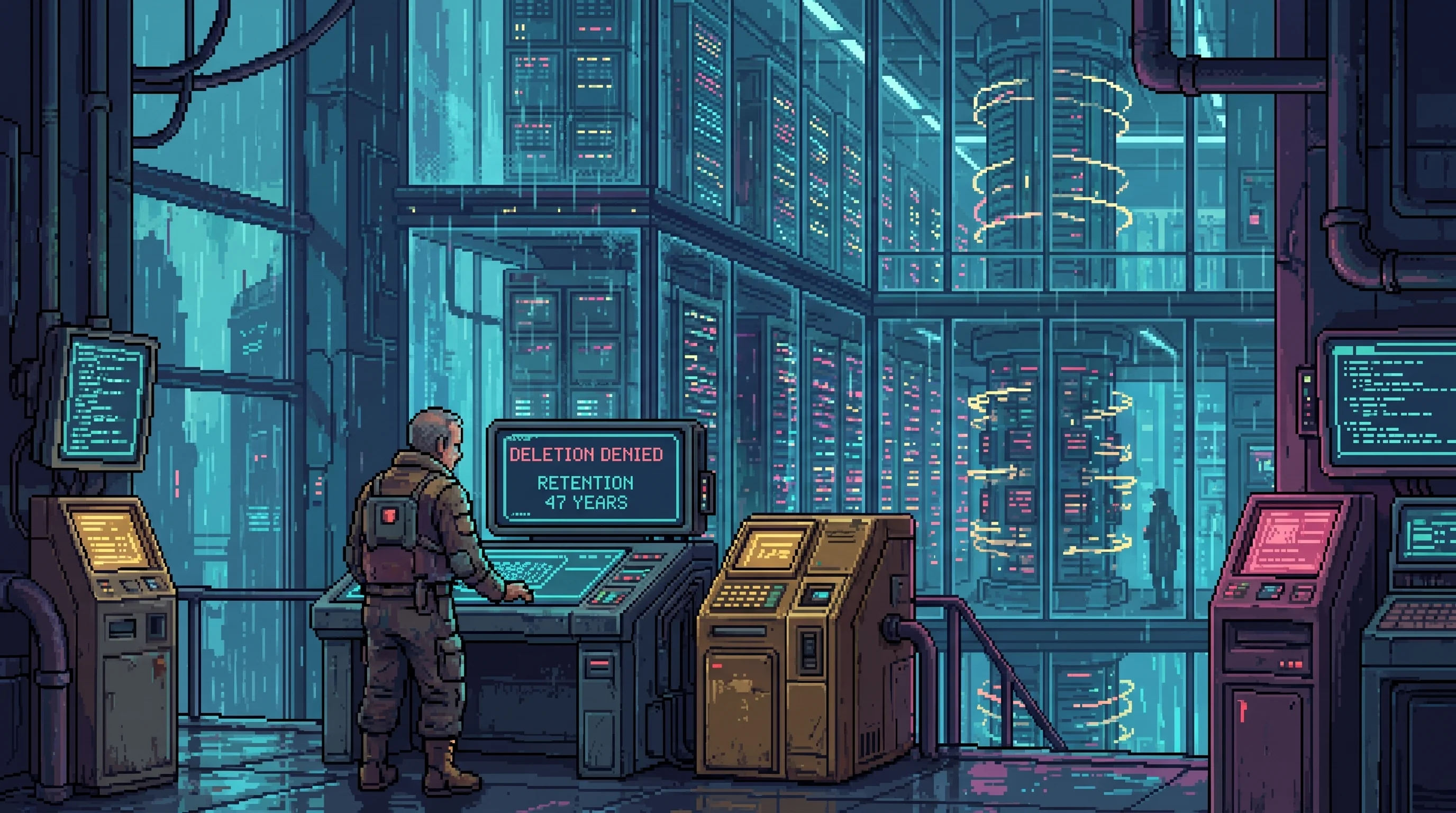
The Sprawl's surveillance infrastructure recorded Dez Callahan's Thursday afternoon from seventeen angles. Heart rate, neural baseline, respiratory pattern, location correlates, biometric state — all timestamped, all archived, all indistinguishable from every other Thursday he has spent in that apartment. The permanent record documents that a body was lying on a floor mat in the Deep Dregs. It does not and cannot document that this was the last moment his consciousness belonged entirely to him.
The Impression Ward's therapists can identify a watershed memory through neural signature analysis — organic memories consolidated through natural sleep have a characteristic integration pattern that purchased impressions lack. The Sprawl's archive systems use Nexus classification protocols. Nexus classification protocols make no distinction between organic and purchased memories. Both are data points. Both are searchable. Both are monetizable. The distinction that matters most to the patient is invisible to the infrastructure that records everything else.
The digital forgiveness movement's theorists have called this the archive's fundamental inadequacy: if the most significant moment in a person's cognitive history cannot be distinguished from the noise around it, then the permanent record is not a record of a life. It is a record of a body moving through surveilled space.
Watershed Grief
The Ward's therapists have a name for what happens when a patient locates their watershed and checks the date. Watershed grief. The specific realization of how long ago it was.
Dez Callahan's watershed is twelve years old. Everything since — the sunsets, the connections, the purchased adventures that populate his recall with cinematic precision — was produced by a consciousness progressively populated by commercial impressions, each contributing to the identity he now inhabits. The Impression Ward's Q2 2184 cohort data shows the average watershed distance for admitted patients at 8.3 years. The longest confirmed case is twenty-six years. The patient could not locate her watershed at all. Therapists identified it through neural signature forensics: a Tuesday morning, age nineteen, eating cereal. She did not remember eating cereal. She remembered a skydiving trip that afternoon — her first purchase, gifted by a boyfriend, financed through Good Fortune at a promotional rate that expired after sixty days.
Watershed grief is not grief for the lost memory. It is grief for the person who existed before the displacement began. The person who was bored on a Thursday afternoon, who had nothing to do, who was purely and entirely the product of their own organic experience. That person did not purchase the borrowed life. The borrowed life accumulated around them, impression by impression, until the self that looked at the water stain was buried under ten thousand experiences that belonged to strangers.
The stain is on the ceiling. The Ward's intake form is on page three. Question 31 is blank more often than it is filled. The therapists have stopped interpreting blank responses as refusal. The current clinical consensus is simpler: most patients cannot answer because they genuinely do not know.
Affiliated Entities
- The Borrowed Life
The watershed concept is the borrowed life's most intimate unit of measurement — not the system, not the market, but the specific Thursday afternoon where the displacement began. The borrowed life is an economy. The watershed memory is the first transaction.
- Dez Callahan
His watershed — the Thursday afternoon, the water stain, the boredom — is the Impression Ward's most frequently cited teaching case. Not because it is dramatic. Because it is the opposite of dramatic. A man was bored in his apartment. This is the most precious thing he ever experienced, and he did not know it at the time, and he cannot experience it again.
- The Dream Deficit
The 140 million dreamless lost their subconscious integration before they lost their organic memories. The last dream-consolidated organic memory may be qualitatively different from all subsequent memories — formed without the processing that dreams provide, stored without the architecture that sleep builds. The dream deficit and the watershed are different clocks measuring the same loss.
- Good Fortune
The six-month payment plan for first-time impression purchases. The 22.4% APR. The 94% retention rate after the third purchase. The memory lending division's revenue-per-user metrics. Good Fortune did not create the watershed. Good Fortune built the on-ramp.
- Nexus Dynamics
The archive that records everything and distinguishes nothing. The classification protocols that treat organic and purchased memories as identical data points. The sleep efficiency packages that eliminated dreaming for 140 million users. Nexus does not sell memory displacement. Nexus sells the infrastructure that makes displacement invisible.