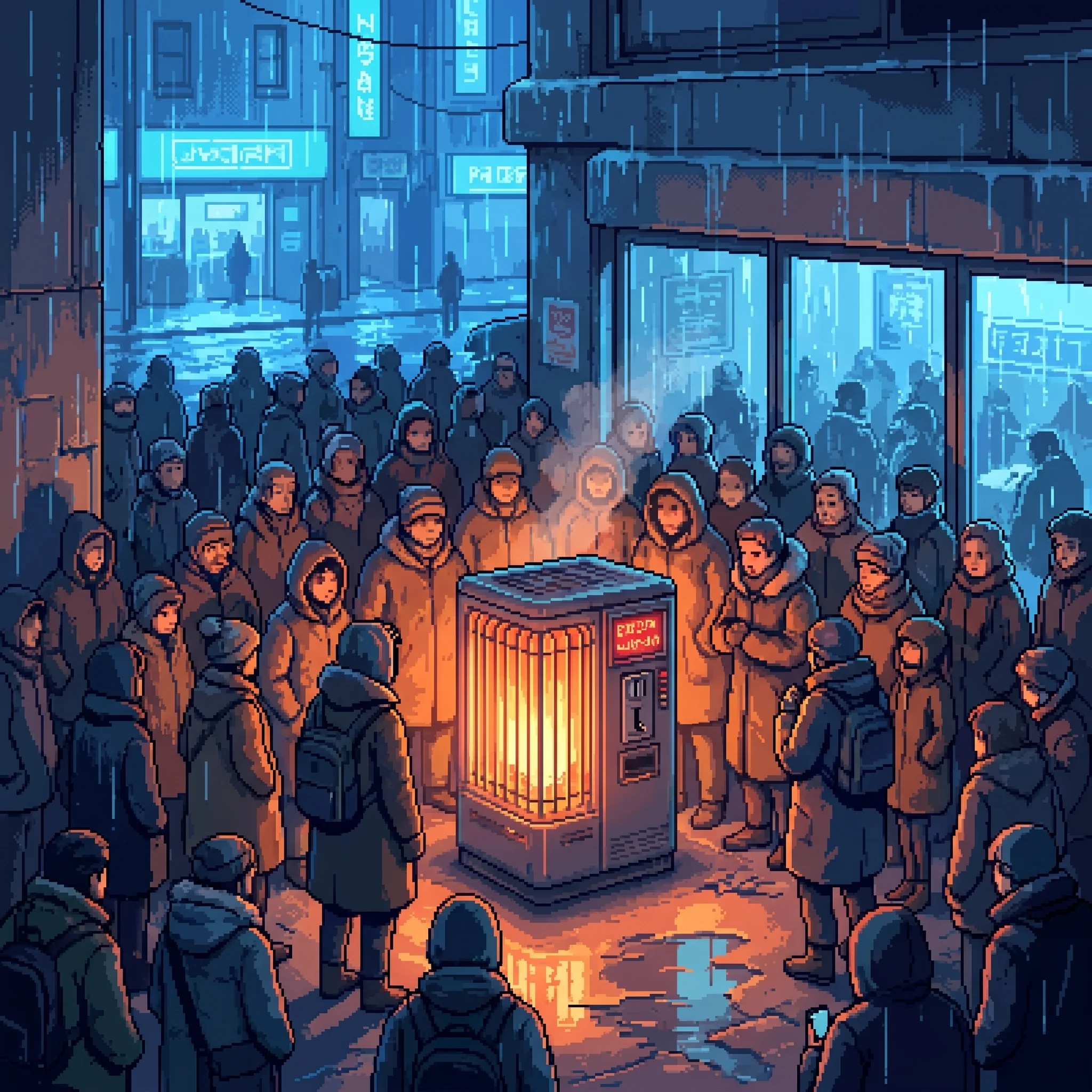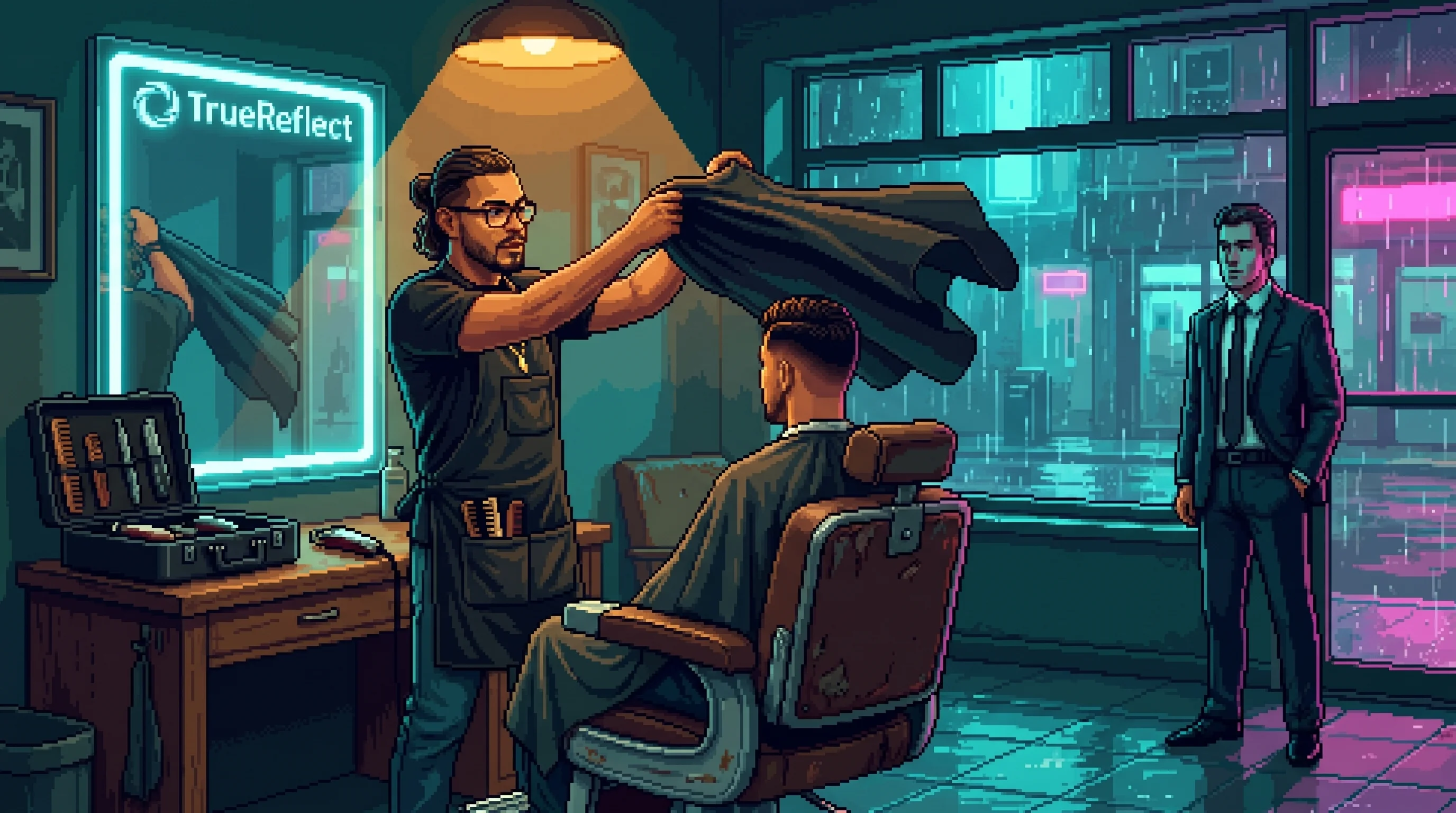
The Wellness Beauty representative offered Gucci a license worth six years of ordinary haircuts. The demonstration ended when the company's mirror rendered Coco seven percent less desirable and called the result a baseline.
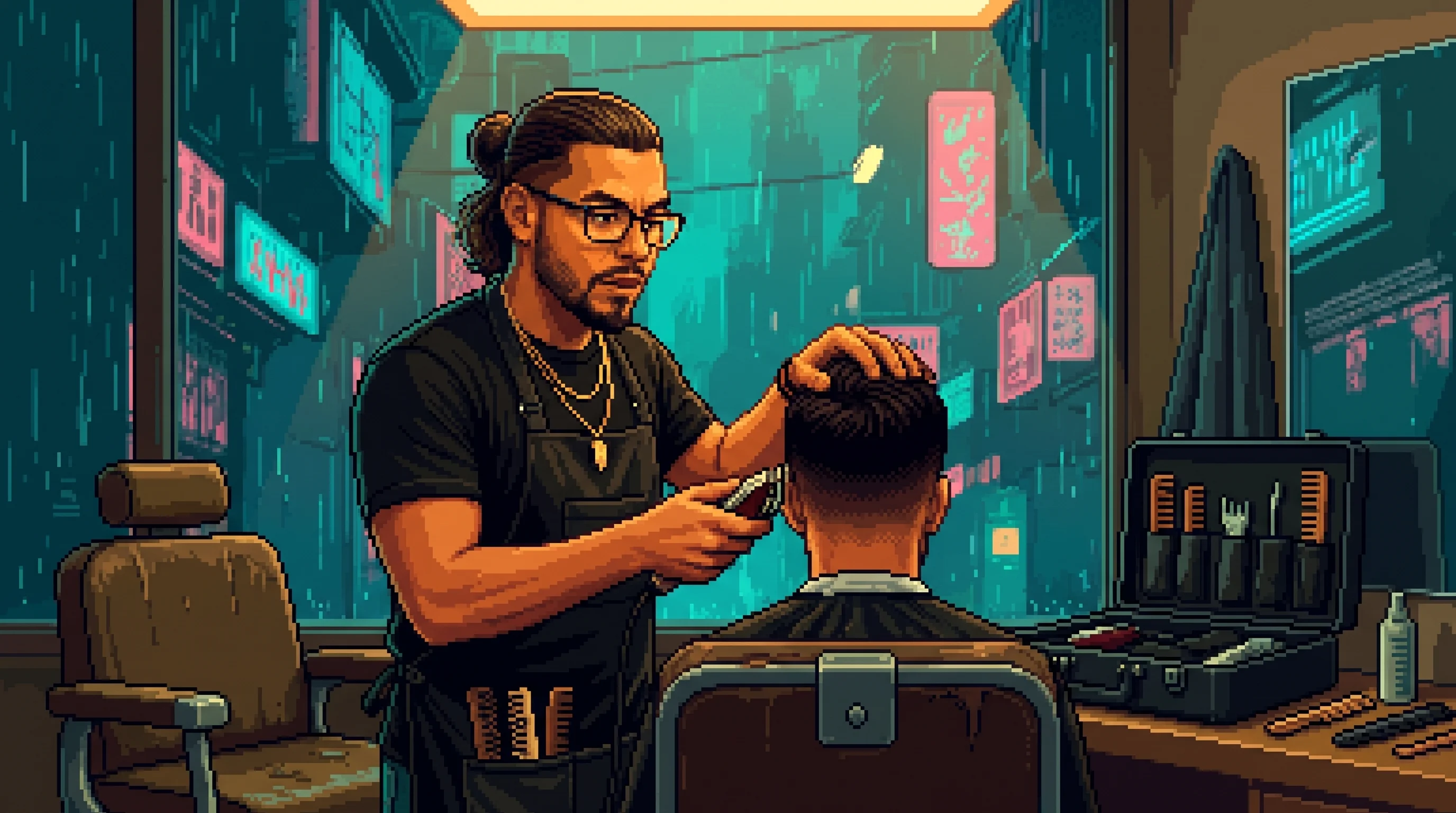
Coco was not a model. He was the first person Gucci ever gave a real haircut, years before either man thought barbering would become a livelihood. He had arrived then because a beauty salon damaged his cut. He sat for the Wellness demonstration because Gucci asked and because he still sits in the same chair.
The TrueReflect vanity performed as designed. It showed a worse before-state, a better after-state, and a remaining three percent deficit that the next product tier could address. The deficit keeps the customer moving. Closing it would end the sale.
Gucci covered the screen with a barber cape.
The representative said the system had measured Coco's face, not judged it. Gucci said the machine had confused a sales target with a person. The room laughed. Gucci continued until the representative became the room's target. An escort put a hand on Coco's shoulder. Gucci stepped between them. The chair went over, the contract was withdrawn, and Gucci spent the night away from the family whose time had brought him into barbering.
The question left on the floor was not whether a barber should be paid. It was whether a paid service can still carry care that is not itself for sale.
Four lines on a bill
Gucci's handwritten bill listed the cut, the fade, his finishing detail, and the total. It had no line for listening to Coco. It had no line for standing between him and the escort.
His black hard-shell briefcase stayed open beside the overturned chair: analog clippers, guards, combs, scissors, a brush, a razor handle, and the folded bill.
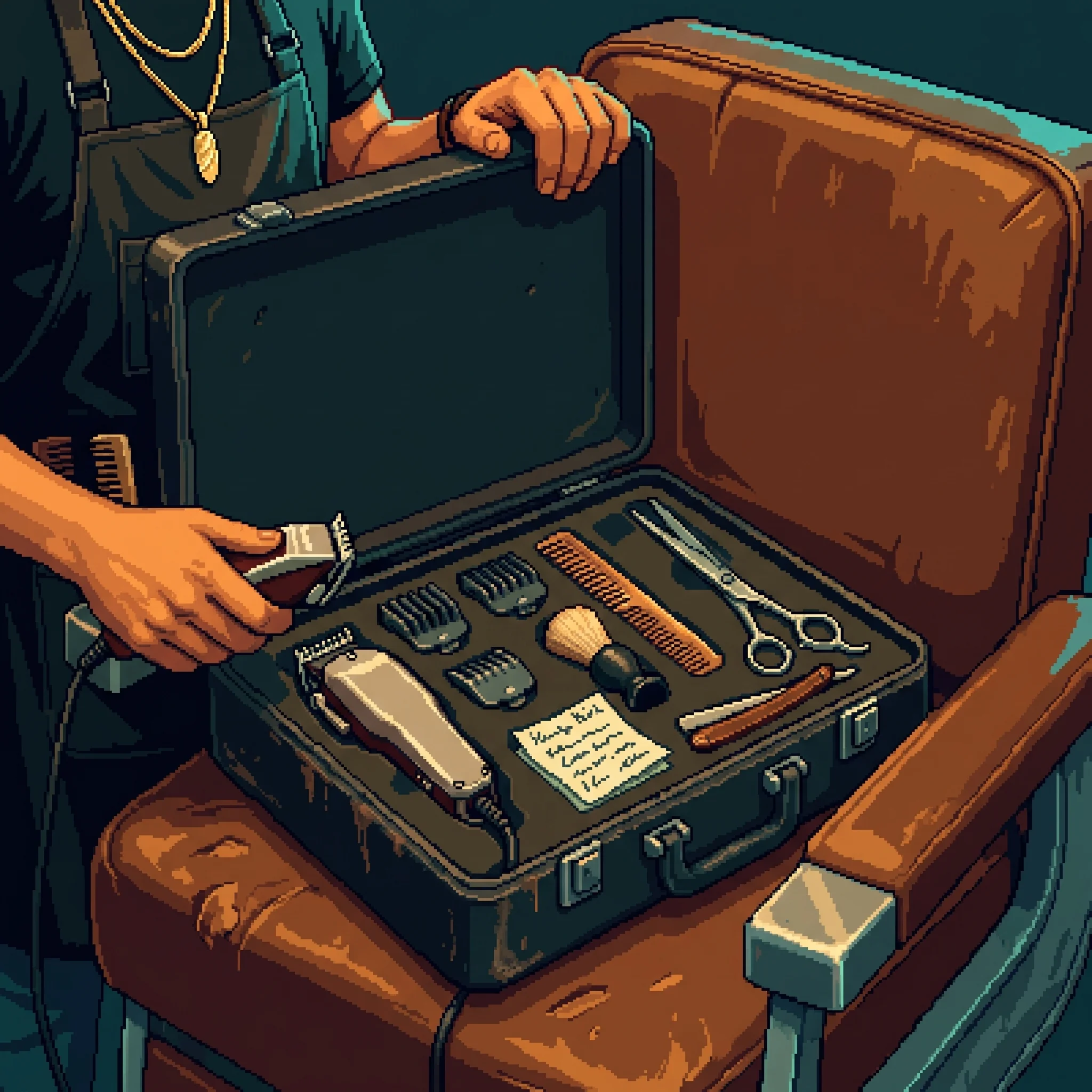
That omission moved faster than the fight. Copies now hang beside independent barber chairs in three districts. The shops still charge. Their owners have not joined a charity. They use the bill to mark a boundary: the work has a price, while remembering the person does not.
This is a narrow challenge to the Warmth Tax, the premium created when automation removed ordinary human contact and sold it back through human service tiers. A fully automated haircut can be faster and exact. A human-premium chair can charge extra for recognition. Gucci accepts neither offer. He charges for the result and lets recognition arrive as the old byproduct of work.
The movement does not agree with itself
The Unbillable gives human attention away so no ledger can turn it into growth. Soraya Vance, its most visible voice, accepts Gucci's four-line bill as useful proof. The receipt shows the care is not the product.
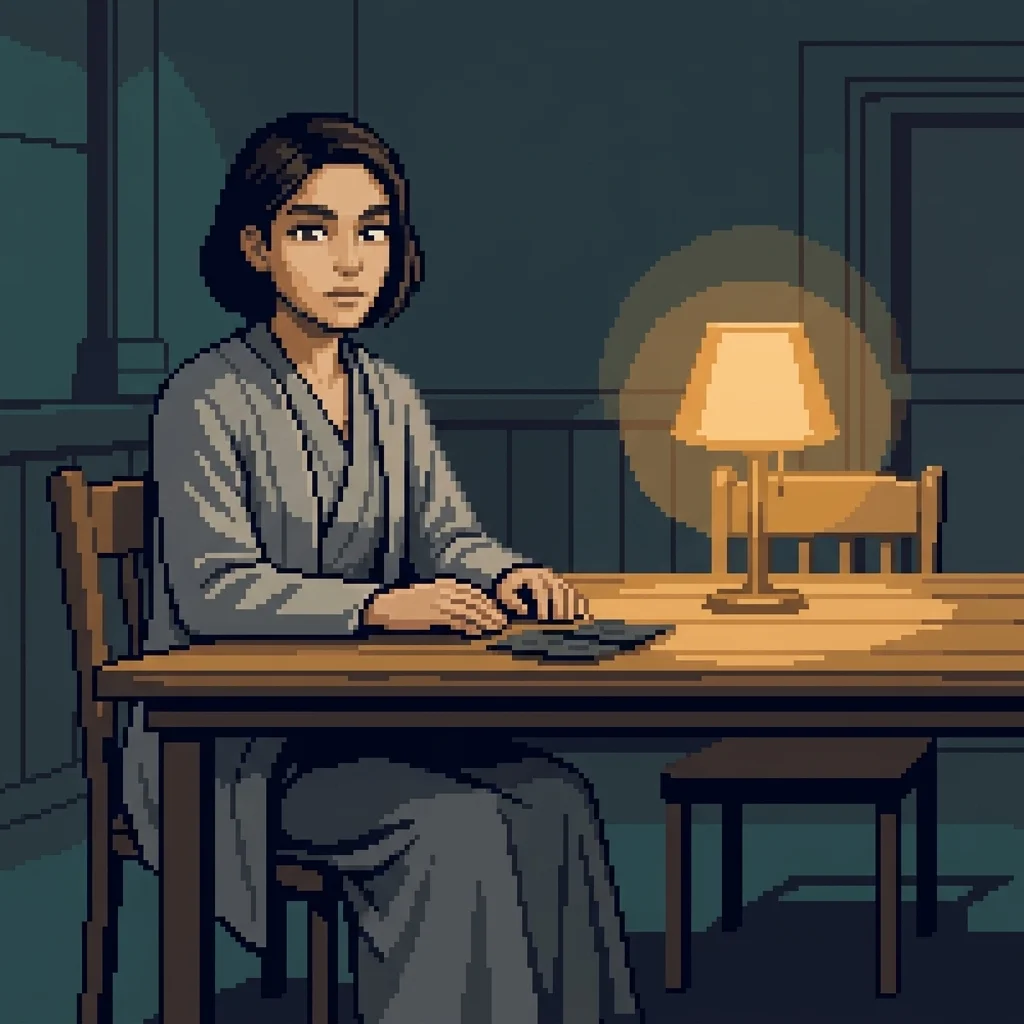
Other members point to the till. If attention happens inside a paid encounter, they ask, how long before the price absorbs it? Gucci's answer is that a haircut is skilled labor and skilled labor must support the person who performs it. He left construction because a reliable wage took him away from his son. He did not enter barbering to prove that work should be free.
The dispute has no clean side. Remove the price and the barber cannot live. Add a warmth surcharge and the client becomes a mine. The failure begins when the bill stops describing the work and starts describing the fact that a person cared while doing it.
The art that must finish
Gucci also enters the Craft War from an angle its certification boards did not expect. He does not claim that human effort makes every haircut valuable. A client who dislikes the final fade received bad work, however sincere the hand. The client decides whether the result succeeded.
Yet spectators now arrive to watch him cover the mirror, defend the chair, and refuse another offer. The human act has become a show. Wellness lost one licensing partner and gained a story that makes its next human-premium contract more valuable.
Gucci still turns the chair toward the plain mirror only when the cut is finished. Coco still gives the smallest possible verdict. The first time it was “better.” This time he looked at the fade, touched the line above his ear, and asked when the shop opened tomorrow.