Overview
Gucci lost a contract worth six years of ordinary cuts because a mirror insulted Coco.
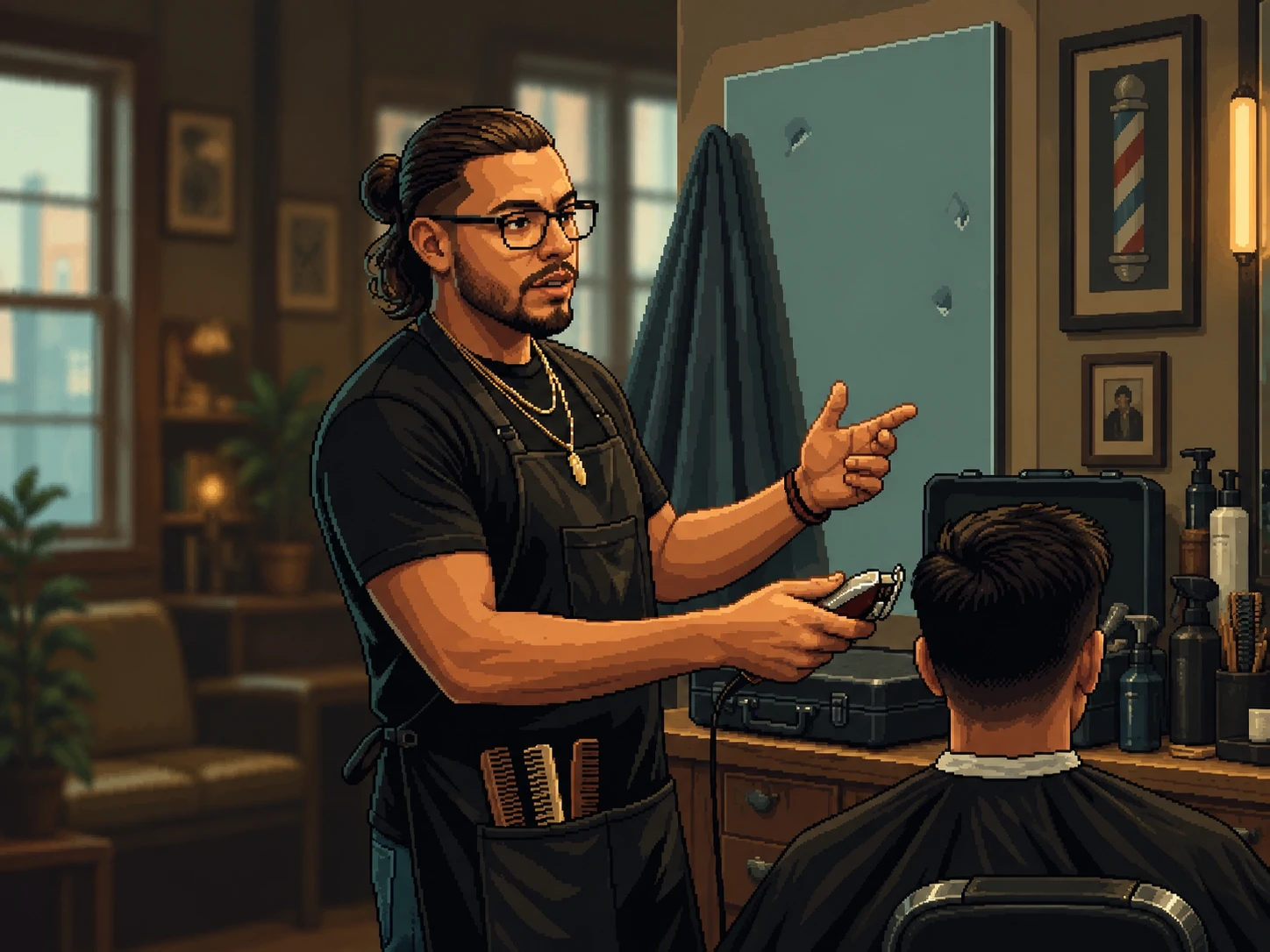
Gucci works the chair while the covered TrueReflect mirror and black tool case stay within reach.
The contract came from Wellness Beauty. Its representative installed a TrueReflect vanity beside Gucci's chair and offered to license his finishing detail as a human-premium protocol. Coco sat for the demonstration because Coco had sat for the first real haircut Gucci ever gave and saw no reason to stop now. The vanity rendered him seven percent less desirable before the cut. The representative called that the baseline.
Gucci covered the screen with a barber cape. He said the machine had confused a sales target with a face. The room laughed. He kept going until the representative was the only person not laughing, then kept going past that. When an escort put a hand on Coco's shoulder, Gucci stepped between them. The chair went over. The contract did not survive the next minute.
The handwritten bill did. It listed the cut, the fade, and Gucci's detail. Conversation did not appear. Neither did defending the client. Copies of that four-line bill now hang beside chairs in three districts. The Unbillable cites it as proof that commerce can carry warmth without selling it. Some of its members cite the till in the same picture as proof that Gucci has misunderstood the movement.
Meaningful places
The Chair Rule
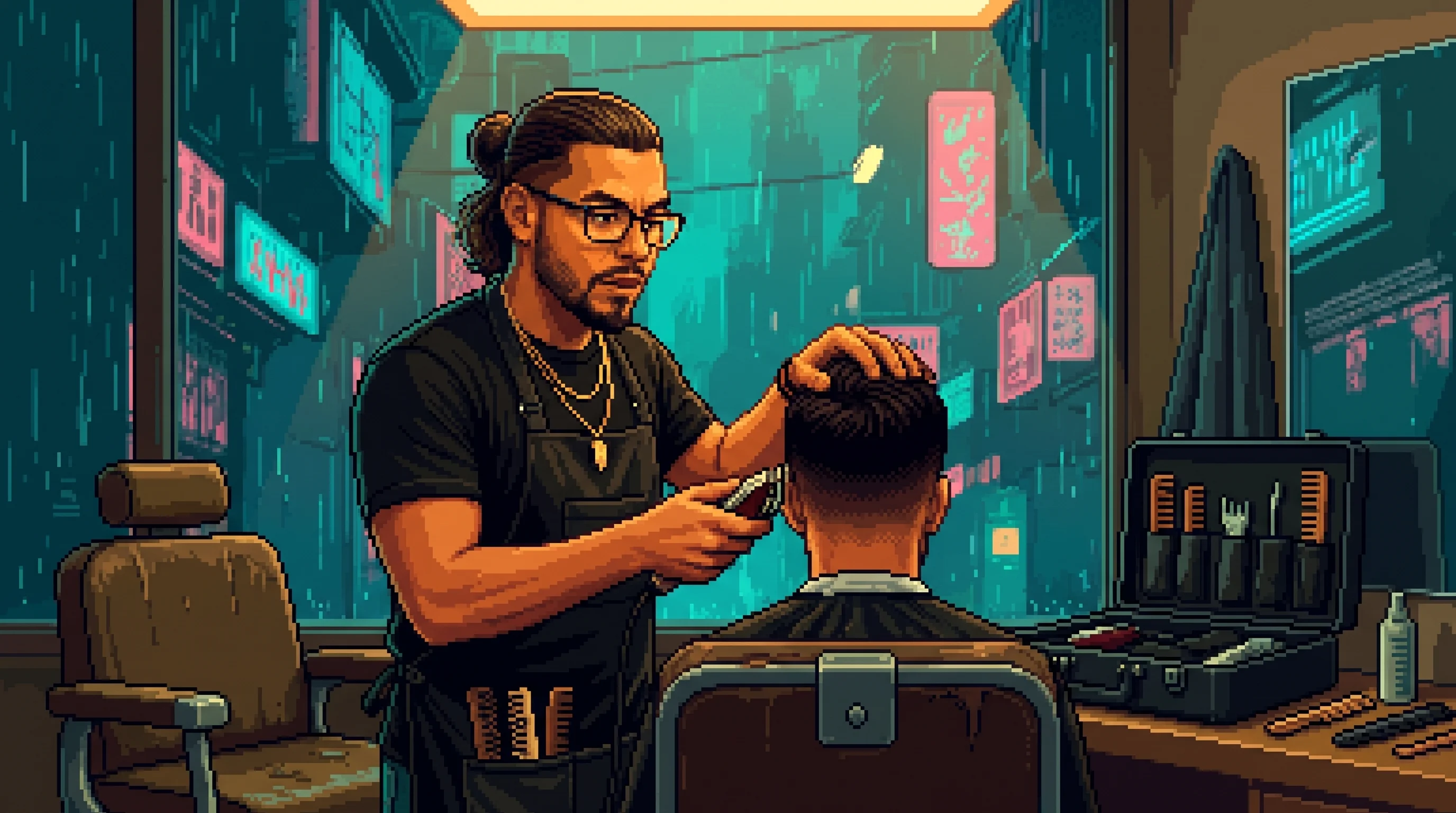
He begins every cut by turning off the style forecast and asking one question: “What do you want?” He repeats the answer until the client corrects him or hears that he has it. Then he works. The clippers are analog, worn smooth where his thumb rests. His last pass is never in the request. It is a small adjustment to the line, weight, or fade that makes the result his without taking the result away from the person wearing it.
Only then does he turn the chair toward the mirror.
The rule puts Gucci on an awkward edge of the Warmth Tax. He will charge fully for the skill in his hands. He will not charge for remembering a name, hearing a problem, laughing at a story, or making sure a client reaches the door safely. “You pay for the cut,” he says. “The talking got here on its own.”
Appearance
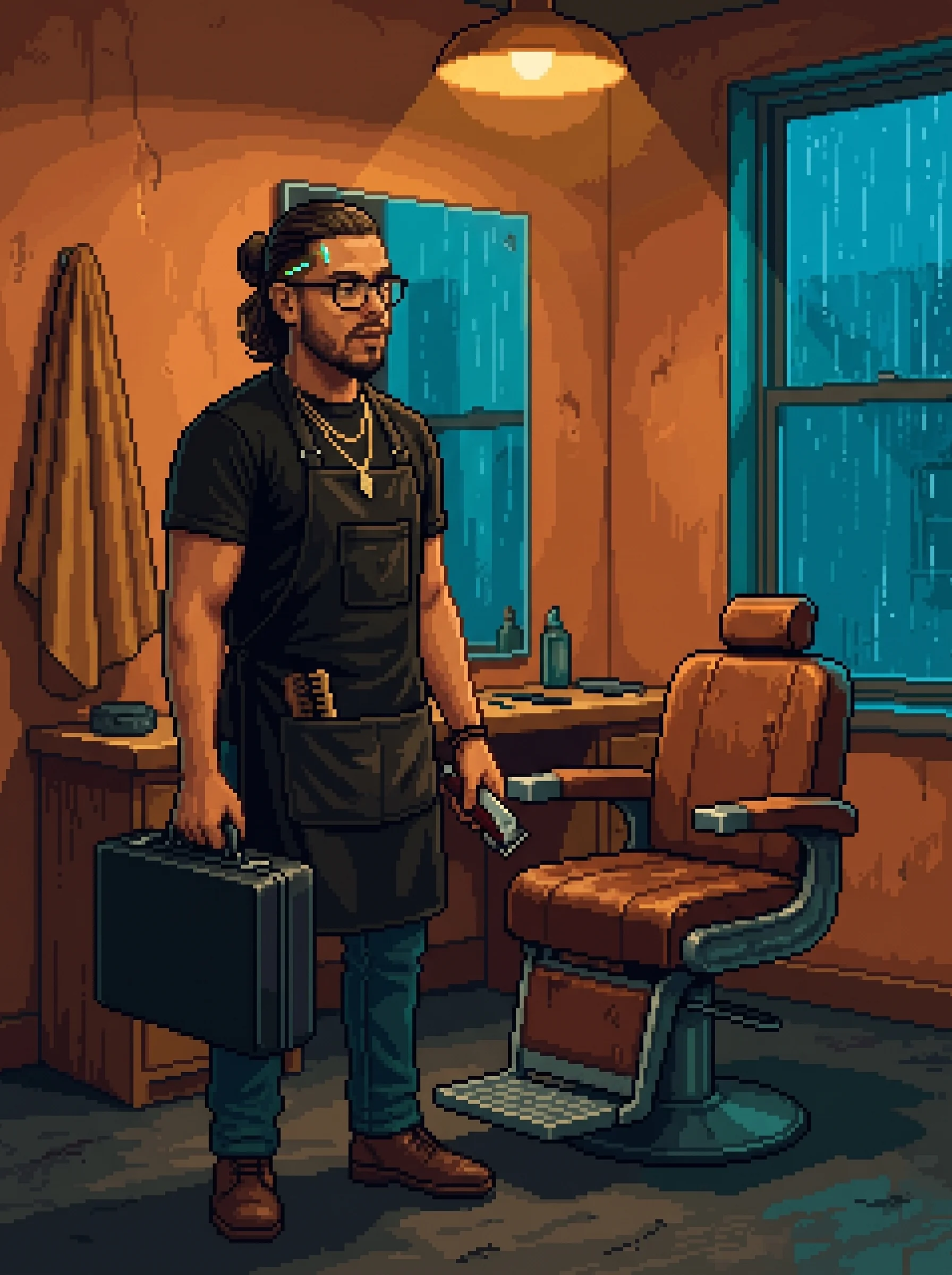
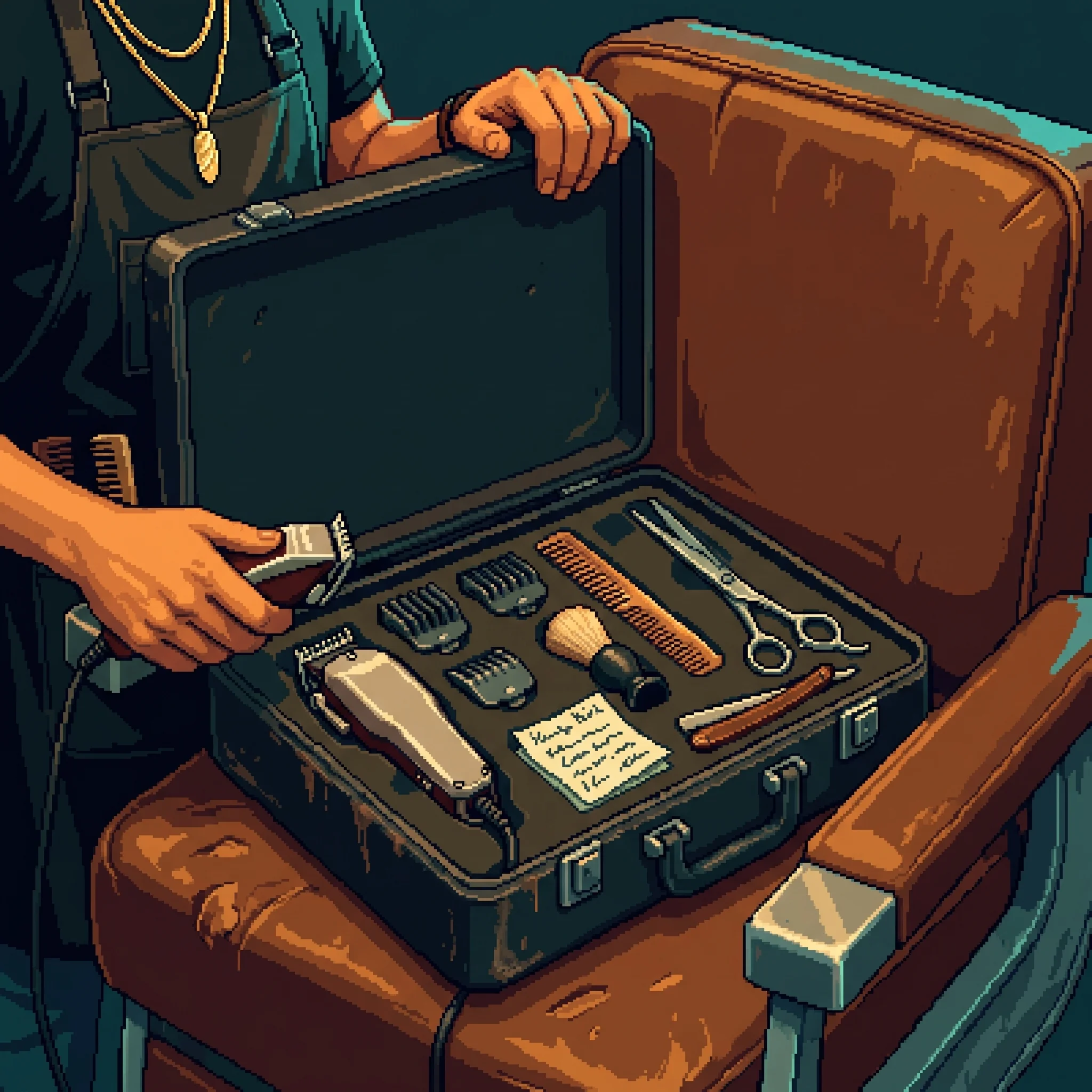
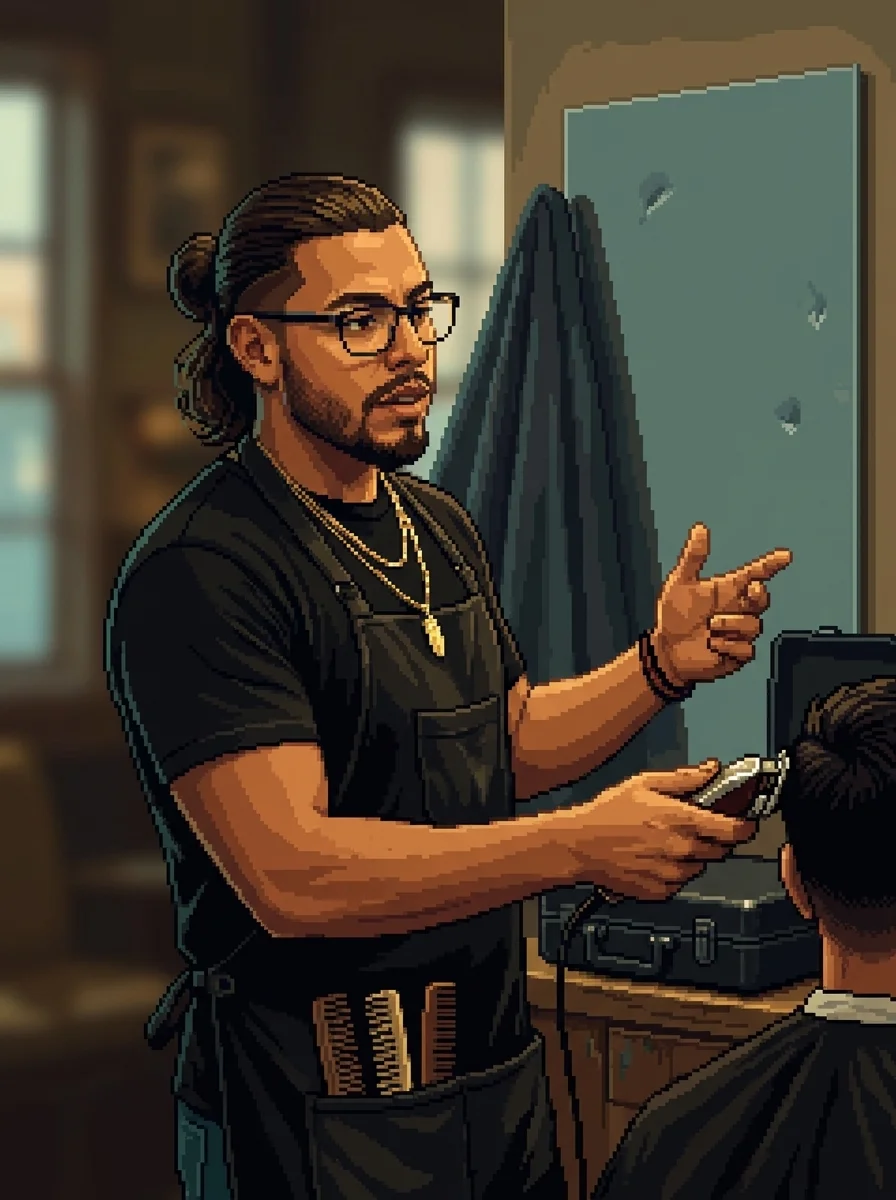
Gucci wears rectangular black glasses, dark hair tied back with a lighter brown tail, and a shaped beard and mustache kept as precise as his fades. An unmarked black shirt sits under his dark apron. Two fine gold chains and a narrow gold-cyan calibration filament at his right temple catch the chair light. The filament measures symmetry but never recommends a style.
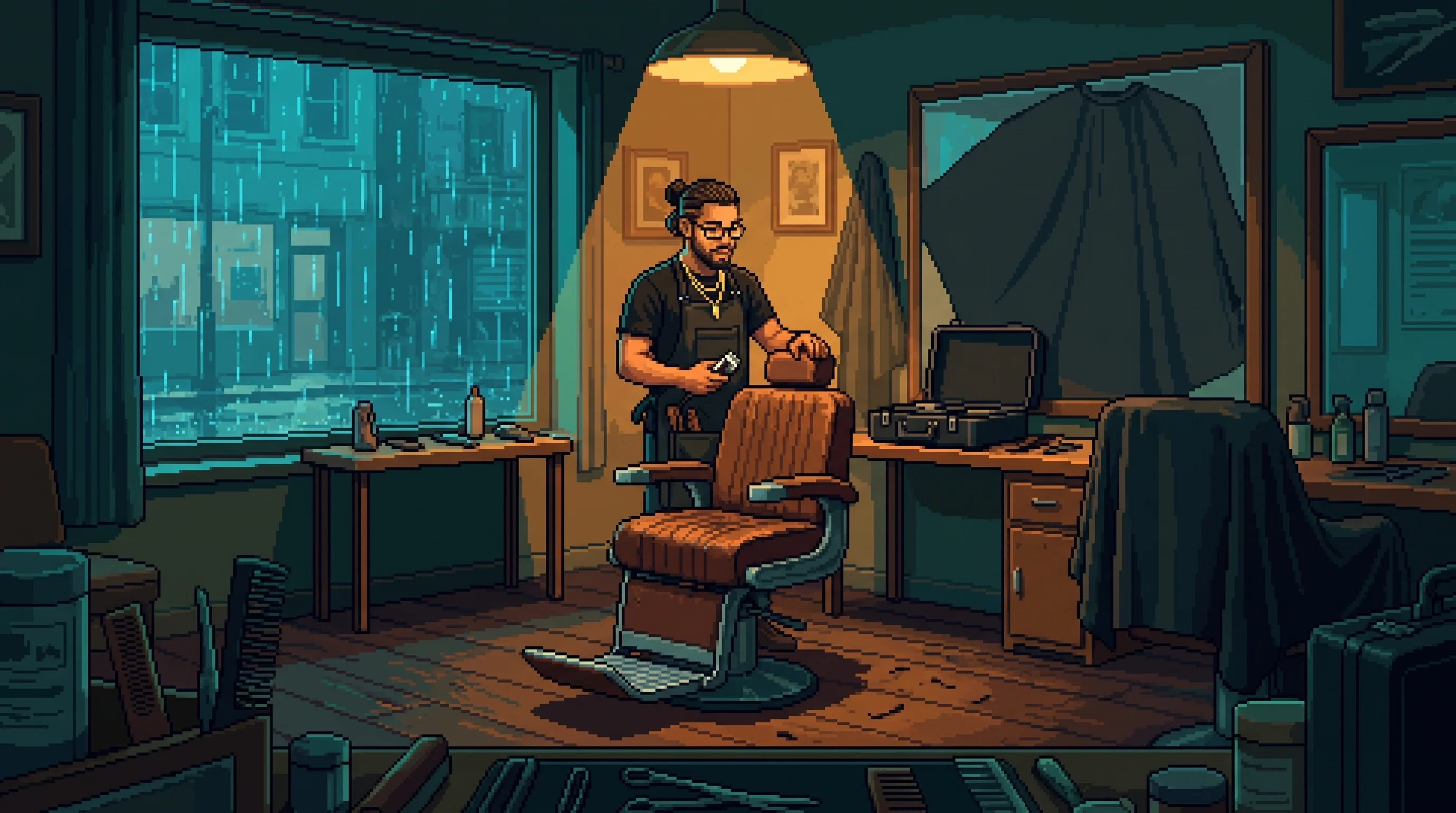
He looks organized from the wrists down. His combs return to the same pocket. His black hard-shell briefcase stays within reach, packed with the worn clippers and hand tools he trusts more than a forecast. He carries it everywhere. Above the wrists, stillness is less reliable. His shoulders move with every story. His free hand conducts the joke. When the laugh arrives, his whole posture gives him away before the sound does.
The shop's plain mirror now carries two shallow dents from the Wellness demonstration. Gucci has refused three offers to replace it. A folded barber cape remains hooked over one corner, ready to cover any display that tells a client what to dislike before asking what they want.
| Detail | Description |
|---|---|
| Face and hair | Rectangular black glasses, tied dark hair with a lighter brown tail, and a precise shaped beard and mustache. |
| Clothing | An unmarked black shirt, dark barber apron, and two fine gold chains. |
| Calibration filament | A narrow gold-cyan filament at his right temple measures symmetry but never recommends style. |
| Tools | Worn analog clippers and hand tools stay organized in a black hard-shell briefcase within reach. |
| Movement | His shoulders follow each story, his free hand conducts jokes, and laughter reaches his posture before the room. |
Voice
He talks in loops that sound like arguments and often turn into stories. “Bro, I'm just saying” can introduce a joke, a warning, a defense, or an explanation of why the last three were not his fault. He laughs early and loudly. Other people join before they know what the target is. This makes nervous clients relax. It also gives a room permission to turn on someone.
Gucci does not discuss the price his family pays for that impulse. Ask about the night the Wellness contract failed and he will describe Coco's fade, the representative's shoes, and the exact moment the chair tipped. Ask what his partner said when he came home the next morning and he checks the line behind your ear.

History
At twelve, Gucci began working so he would not have to ask his parents for money. In eighth-grade science, a friend's joke could stop him breathing. A teacher warned him to control the laughter, sent him to the dean when he could not, and refused to let him return to class the next day. Gucci remembers the punishment as proof that people had decided what he was before he entered the room. He remembers less clearly how much harder the room became when everyone waited for him to laugh.
His first real haircut belonged to Coco. A beauty salon had damaged it. Gucci tried to repair the cut with hobby tools and no career plan. Coco studied the result and said it was better than what he had arrived with. That was all. He still comes back.
Gucci went into construction because the money was dependable. Then his son was born, and dependable work began taking the hours he wanted to give the child. Barbering offered those hours and almost no money at first. He believed he had made a mistake. His partner told him to be patient. By the time the income steadied, he had stopped using it as the only measure. The work had already returned him to his family.

Relationships
Client Loyalty
He treats the chair as a short contract with no fine print: while a person sits there, they do not stand alone. Mock them, cheat them, press them for a purchase, or put a hand on them after they say no, and Gucci enters the problem before he knows its size. This is why clients trust him. It is also why his partner keeps a reserve account he refuses to ask about.
The contradiction is not that a gentle man can fight. It is that Gucci understands humiliation from the inside and can still manufacture it for a laugh. At the Wellness demonstration, the representative insulted Coco first. Gucci made certain the whole room remembered who lost the exchange. He regrets the hand on Coco's shoulder. He does not yet admit that his own joke had already made another person the room's target.
Soraya Vance keeps him inside The Unbillable because his bill holds a useful distinction: labor can have a price without turning care into a product. She also ends meetings when his jokes begin choosing a victim. Gucci calls this censorship. Then he takes the late shift at the Open Hours without being asked.

Sample Dialogue

“Bro, I'm just saying: you asked for a fade, not a forecast. Let me work.”
“You pay for the cut. The talking got here on its own.”
“Nah. He said no. Now you can hear it from both of us.”
“I wasn't trying to start nothing. I was talking. That's what always gets me.”
Motivations and conflicts
Open Mysteries
Wellness Beauty still holds the unsigned contract. Independent shops keep copying the bill. The more Gucci's refusal spreads, the more people arrive to watch him refuse, turning his ordinary work into the same human-effort spectacle he rejects in the Craft War. He can protect the chair, or he can perform the protection for an audience. He has not found a way to do both.
Affiliations
The Unbillable
Gucci is a dissenting member of the Unbillable conversation. He charges for the fade, gives attention away, and refuses to let either cancel the other.
Connections
Follow the people and places connected to Gucci.
People

Organizations
Major connections

A dissenting member: he bills the haircut, gives the attention away, and refuses to let either cancel the other.
Gucci is a dissenting member of the Unbillable conversation. He charges for the fade, gives attention away, and refuses to let either cancel the other.
Tensions
Supporting connections



Other connections


Supporting connections

Additional artwork
View 1 more images of Gucci and their world