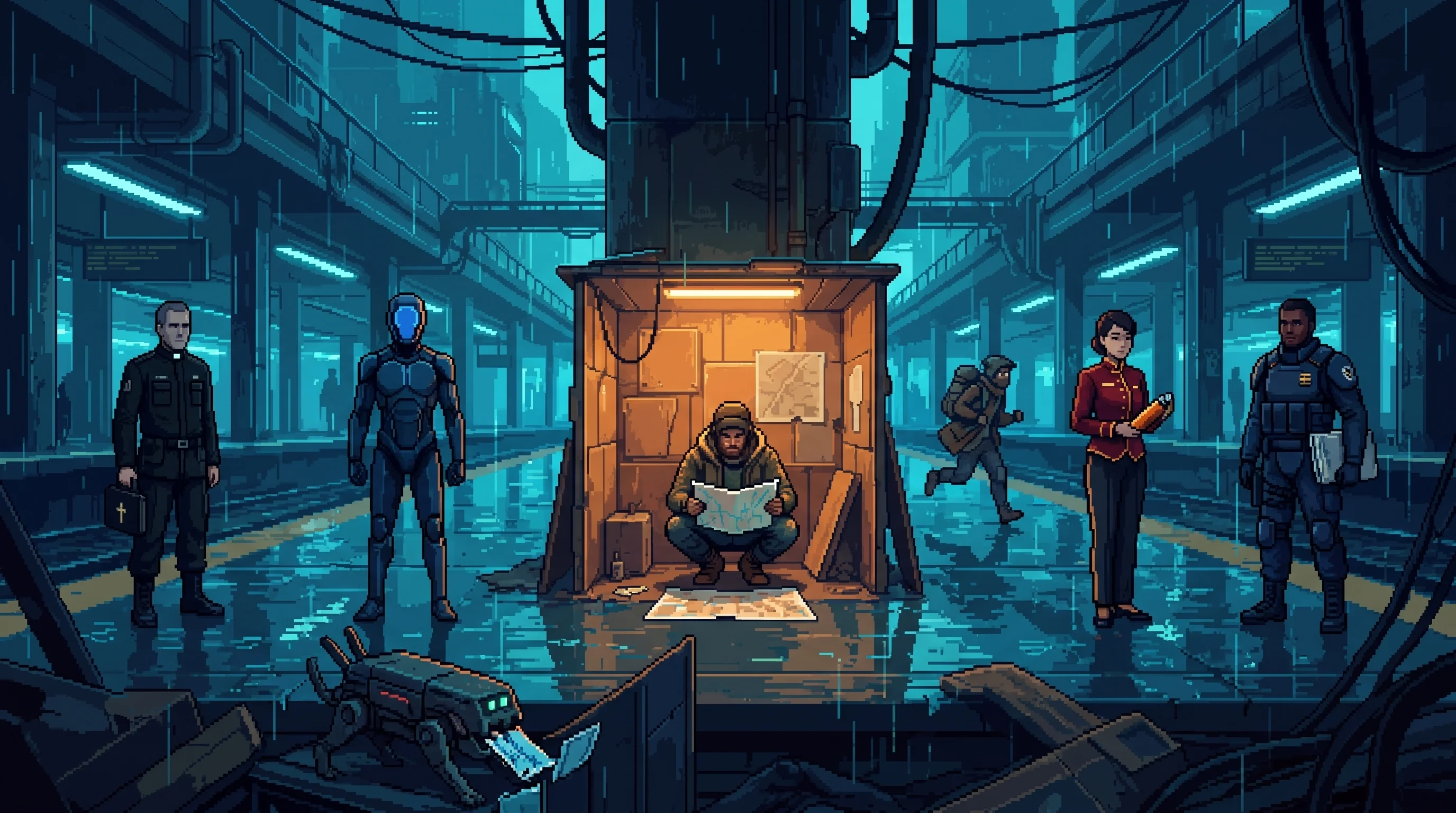
Ilyana Roe reached the flooded entrance at 05:41 with six refrigerated insulin cartridges in a hand case and twenty-one minutes left on the cold pack.
A Good Fortune field officer was waiting beneath the dead departure board. The officer asked Roe to confirm an account number. A Guardian loss-prevention drone descended behind her and extended a tether across the dry path. Then a maintenance machine woke inside the ticket wall and began eating toward the drone's network pulse.
Each contact followed a valid rule. Good Fortune had a filed recovery order. Guardian had a property-loss alert from the closed kiosk. The maintenance rig had an active service instruction written before the corridor flooded. None of the rules knew about the clinic waiting below.
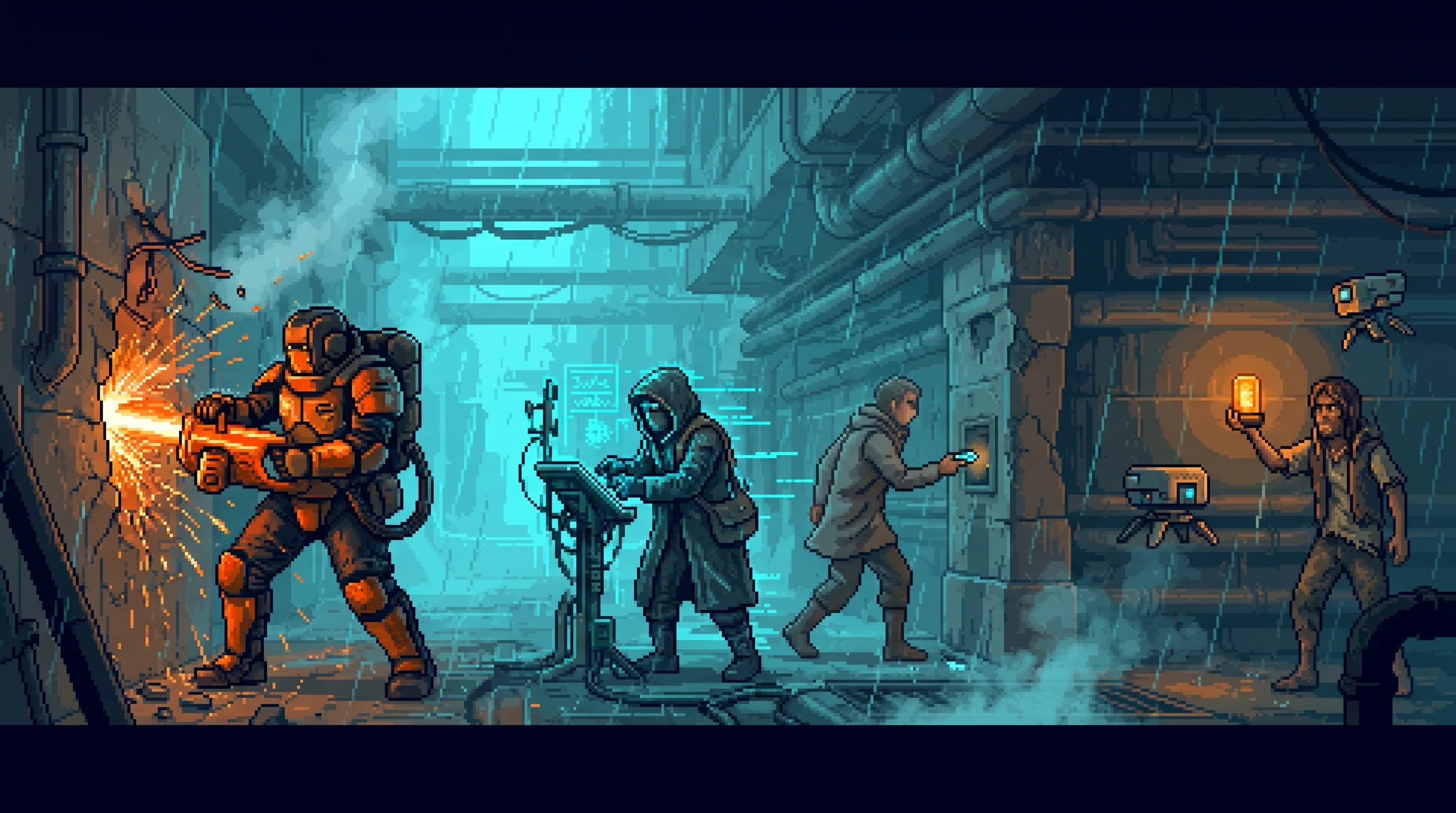
The route marshal with Roe did not try to decide which contact had the better claim. He opened a paper index, identified what each one would do next, and moved the medicine through the only behavior the three systems did not share.
The question left by the incident is simple. When institutions send people and machines into public space under helpful names, should the public classify them by the title on the order or by the action that follows?
Three reasonable rules met at one door
Good Fortune's order existed because an account holder had stopped responding. The company cannot distinguish a person avoiding collection from a person who cannot answer without sending someone to ask. The field officer offered Roe a settlement before using force. That sequence is written into the visit standard as restraint.
Guardian's drone existed because the kiosk had reported a missing sealed case. The kiosk could not see inside Roe's medical carrier. It saw a case cross a retail boundary after the retail system had closed. The tether was the least destructive response in the Protocol Manual.

The maintenance machine existed because standing water was approaching powered equipment. Its old instruction said to clear obstructing material and follow active network beacons toward the affected system. The drone was the strongest beacon in the corridor. Roe was between them.
The exact failure was not one bad rule. It was that each rule treated every other actor as part of the environment. Good Fortune saw a client. Guardian saw property. The rig saw obstruction. The clinic's insulin did not appear in any classification.
The person who could act
The marshal used the Field Operatives index. It calls Good Fortune personnel operatives because they can bargain. It calls the Guardian drone an asset because it follows a bounded target rule. It calls the maintenance rig an autonomous contact because no reachable owner can change its task.
Those labels do not decide whether any contact is right. They state where judgment still exists.
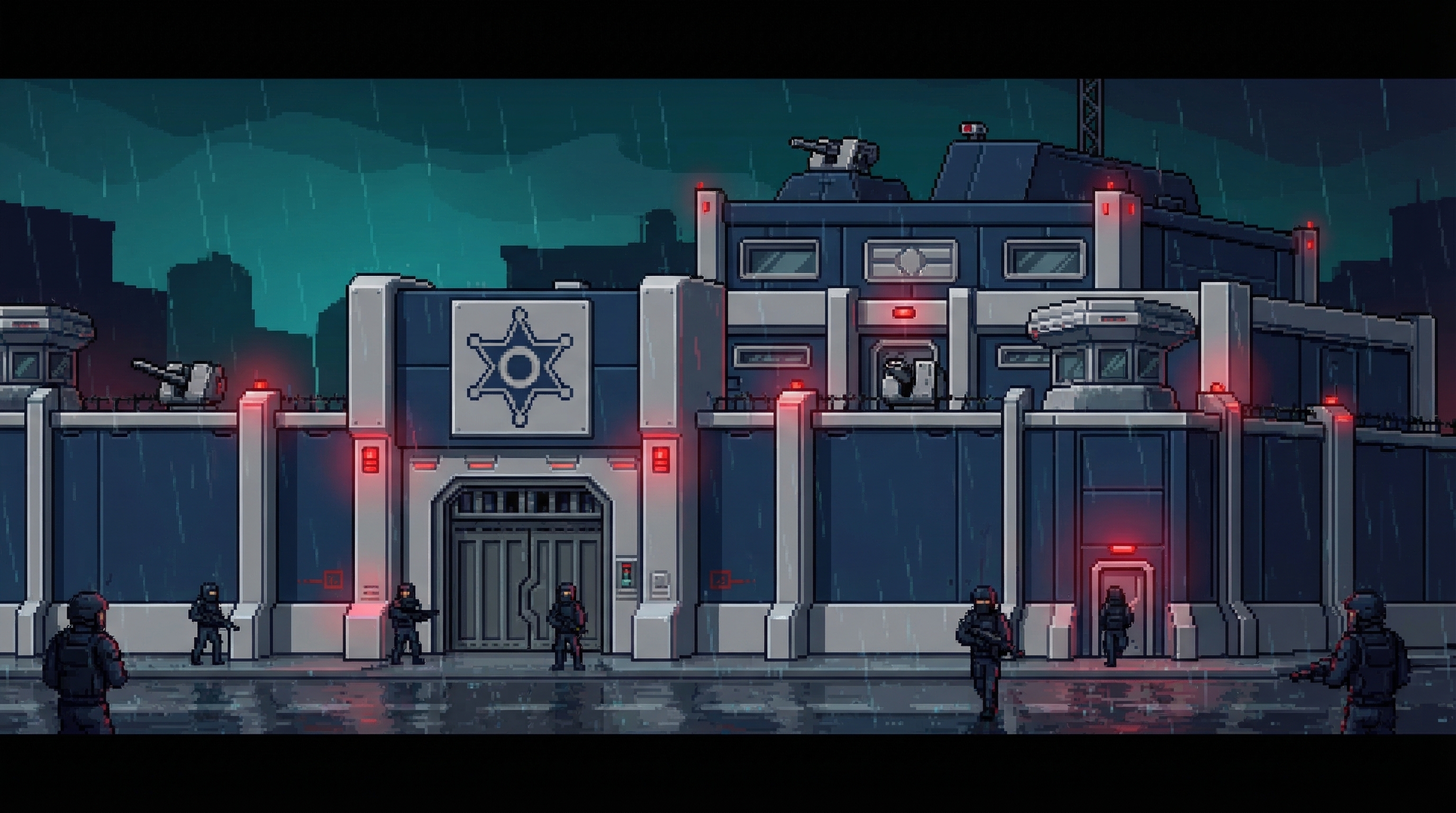
Roe gave the field officer the account holder's clinic intake code. The officer paused to check whether medical admission changed the recovery order. During that pause, the marshal pushed the empty insulated shipping sleeve under the drone's tether. The drone tagged the sleeve as the suspected case and moved to secure it. The rig followed the drone away from the stairwell. Roe took the medicine down.
The officer later confirmed that clinic admission did not change the order. The answer arrived after all six cartridges had entered refrigeration.
Why the title stays in the file
Good Fortune objects to the street term debt collector. The corporation's mobile personnel provide settlement options, account access, and hardship review that an ordinary collector cannot authorize. That difference is real. So is the aerosolized compliance agent in the standard field kit.
Guardian objects to bounty hunter and vigilante. Its Justice teams carry verified warrants, route through Watchtower, and file closure records. Those controls prevent private force from becoming whatever the person holding it wants. They also make the warrant more important than the person standing in its path.
The NCC Inquisition makes the same argument in another register. A Pastoral Outreach Associate can hear a confession, locate a missing parishioner, collect a delinquent tithe, or build the first page of an enforcement file. Calling the Associate an attacker loses information. Calling the visit pastoral loses different information.
The index therefore keeps both descriptions. It records the formal title because the title reveals the authority behind the contact. It records the field behavior because the behavior reveals what the contact will do with that authority.
Some orders outlive the people who gave them
Human titles are only half the problem.
Feral tech still clears, sorts, loads, smelts, and repairs according to instructions whose owners died decades ago. The machines are not rebelling. They are completing work in an environment that changed while the task did not. A Foundry Crawler processing a person is horrifying because its rule is ordinary.
Project Convergence produces the opposite case. Its contacts do not preserve one old task. They learn around observation. A Mirror Daemon reflects the identity of whoever intervenes. A Repulsor removes routes rather than bodies. A Fork Instance turns one containment problem into several. Yesterday's safe response becomes today's training material.
Between them sits the ORACLE Sentinel, which can calculate a destructive sequence without hatred, fear, or confusion. The person in front of it still needs to know the sequence.
What the new entries change
The expanded index now carries eighty-seven contact classes. Seventy-one were already known across corporate, religious, street, feral, and post-ORACLE rosters. Sixteen less common roles have joined them.
The additions are not new uniforms for the same job. An Ironclad Breach Cutter changes the map. A Mesh Weather Surveyor changes when the map can be seen. A Collective Dead-Drop Runner protects a handoff and avoids open victory. A Feral Shepherd moves machines by giving their old instructions something familiar to follow.
These distinctions matter because a list that says only dangerous gives a route crew nothing to do. A useful entry states the decision pattern, the escalation trigger, and the part of the situation the contact can change.
The next delivery
The clinic logged Roe's cartridges at 05:58. The account officer returned at 08:20 with a revised order. Guardian recovered the empty sleeve and charged its replacement to the closed kiosk. The maintenance rig is still following the drone's last beacon through the lower service tunnel.
The route marshal has added one handwritten line to the index entry for loss-prevention assets: when they secure the wrong object, they become predictable.
He has not added Roe's name. The list is for what arrives. She only needed to get through it.