
The Unwilling
Informal support network for carriers who didn't choose integration and can't access extraction
Overview
Meetings average eleven people. The number fluctuates — eight on nights when the rain gets into Sector 9's lower corridors, fifteen when someone new shows up clutching a referral scribbled on the back of a Helix intake form they never completed. The rooms are borrowed: a storage basement behind G Nook on Tuesdays, a decommissioned charging bay on Kuroda Street most Thursdays, wherever Patience Cross can secure chairs and a door that closes. There is no schedule posted anywhere. You find the Unwilling the way you find everything in the Dregs — someone who knows tells someone who needs to.
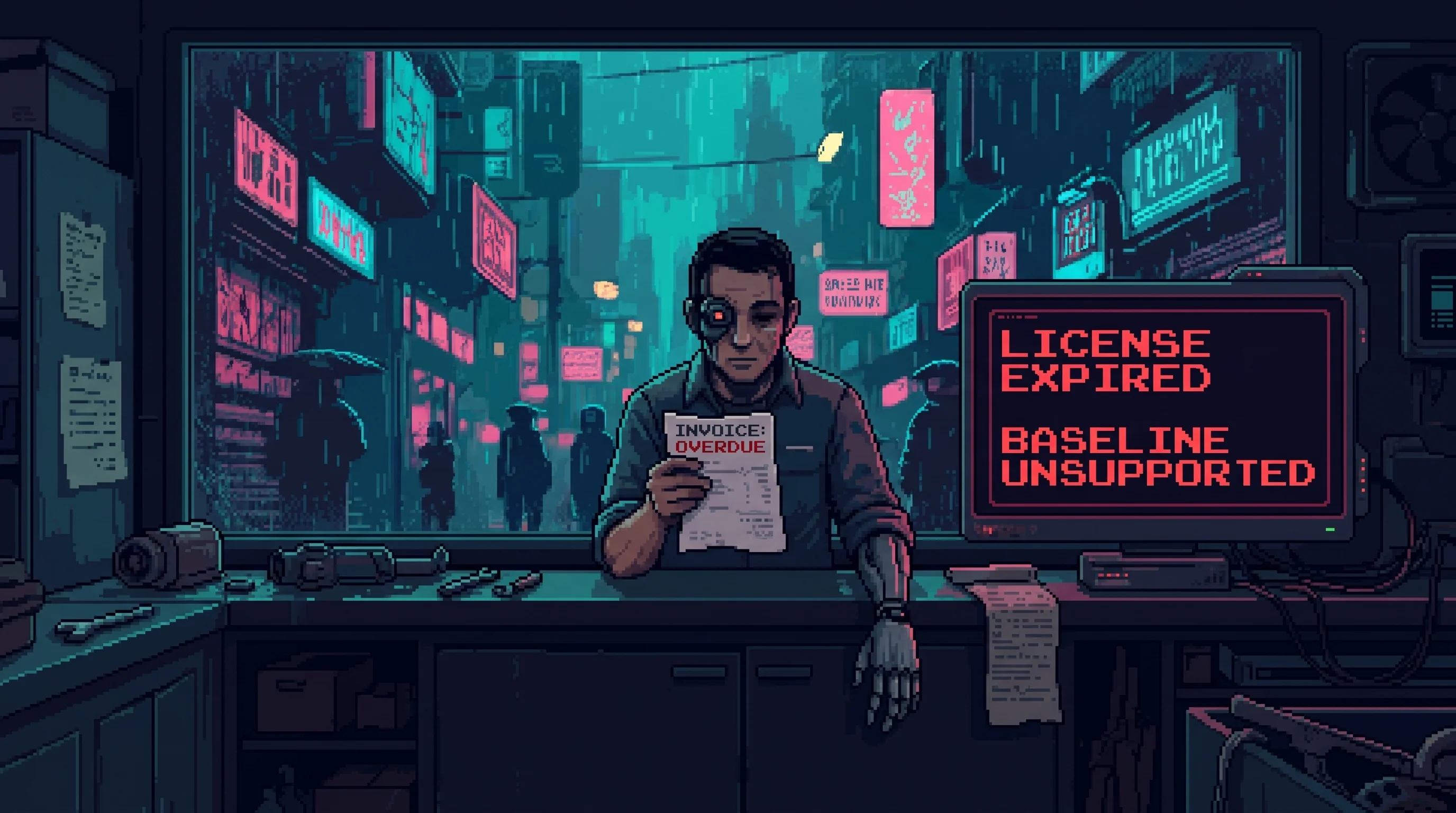
They are fragment carriers who didn't choose integration. They don't celebrate it. They can't afford extraction. They've seen the mortality statistics — 23% systemic failure rate for late-stage removals, higher for carriers past the 18-month reorganization window — and decided that living with the thing in their skull beats a roughly one-in-four chance of not living at all.
No faction claims them. The Symbiosis Network celebrates integration. The Abolitionist Front campaigns for extraction access. The Emergence Faithful call fragment-carrying communion with a nascent god. The Unwilling sit in a circle of mismatched chairs and talk about headaches, sleep disruption, and the specific loneliness of hosting something that wasn't invited and won't leave.
One rule. Patience Cross said it first, and it stuck: "In this room, the only expert on your integration is you."
Cross attends despite her Symbiosis Network membership. Nobody has asked her to explain the contradiction. She hasn't offered to.
| Territory | Meeting spaces borrowed across the Dregs |
|---|---|
| Ideology | No ideology — mutual support for carriers who didn't choose integration and can't access extraction |
| Single Rule | 'In this room, the only expert on your integration is you' — Patience Cross |
The Rooms
The Dregs are chosen for practical reasons that nobody pretends are ideological. Corporate wellness monitoring is thinnest in interstitial zones. Fragment carriers who speak openly in monitored sectors trigger automated referral flags — Helix's Substrate Wellness Initiative classifies involuntary carriers as "integration-distressed" and routes them into counseling programs that assume the distress is the problem rather than the fragment. In the Dregs, the only thing listening is the building's climate system, and it barely works.
The rooms have no infrastructure beyond the chairs. No encrypted boards, no courier networks, no treasury, no official name on any registry. The Carrier House provides space when the usual rooms fall through and connects members to structured support programs. The Abolitionist Front carries the political burden — lobbying for extraction access, pressuring Helix on mortality data transparency — that the Unwilling themselves refuse to pick up. This refusal is not apathy. It is the specific exhaustion of people who spend their energy on getting through the week and have none left for platforms.
Triumph Social has no posts tagged #Unwilling. The group doesn't appear in any faction database maintained by Nexus or the NCC. It registers on exactly zero threat assessments. A network of fifty to eighty people across the Dregs, meeting weekly in borrowed rooms with no agenda, is invisible to every surveillance apparatus in the Sprawl. The apparatus is calibrated for organizations. The Unwilling are a habit.
The Parents
The most devastating testimony follows the same pattern every time, according to carriers who've attended more than a dozen meetings. A parent sits down. They describe the pregnancy. They describe learning that fragment substrate migrates to fetal neural tissue — embeds itself in the developing brain the way it embedded in theirs, except there's no reorganization window because there was never an un-reorganized state.
Their children were born carrying.
Helix's published literature on gestational substrate transfer runs to eleven pages. Seven of those pages concern liability exclusions. The remaining four confirm what the parents already know: extraction from a neural architecture that developed around the fragment is not removal. It is demolition. There is no "before" to restore. The architecture is the fragment. The fragment is the architecture.
Current estimates place the number of second-generation carriers in the Sprawl somewhere between 200 and 2,000. The range is that wide because nobody is counting. Helix tracks substrate density in its clinical patients. The Unwilling's children are not clinical patients. They are children whose parents cannot afford Helix and would not trust Helix if they could.
One carrier — a woman who goes by the name she gives at meetings, which is not her name — described her daughter's relationship with the fragment as "like asking a fish what water feels like." The daughter is seven. She has never experienced un-integrated consciousness. She does not understand why her mother cries about something that, to her, is just how thinking works.
Whether this is damage or adaptation depends on who you ask. The Emergence Faithful would call the daughter blessed. Helix would call her a case study. The Abolitionist Front would call her a victim. Her mother calls her by her name and sits in a circle on Thursdays in a decommissioned charging bay and says nothing about any of this to anyone who isn't also sitting in that circle.
No leader, no platform, no infrastructure — weekly meetings in borrowed Dregs spaces
The Stigma Problem
The most common complaint at meetings is not the fragment. Carriers report headaches, dream interference, the low hum some describe as "tinnitus with opinions." These are manageable. What is not manageable is the way people look at you when they find out.
Voluntary carriers — the Symbiosis Network's membership, the augmentation-positive population — are celebrated or at least understood. They chose enhancement. Their integration is aspirational. Involuntary carriers occupy a different category entirely: pitiable, contaminated, faintly dangerous. The distinction between "chose a fragment" and "woke up with one" maps onto older stigma architectures — the social distance between someone who chose an augmentation and someone whose body did something without permission.
In Old Town, the Emergence Faithful celebrate fragment integration as divine communion. The Unwilling's existence — people carrying fragments who experience them as intrusion rather than grace — is a theological problem the Faithful have not solved. In Nexus Central, involuntary carriers are research opportunities. In the Dregs, they are people who come to meetings.
Nobody in the circle is an expert on anyone else's integration. Nobody in the circle has a framework for what's happening to them. The meetings produce no resolutions, no action items, no manifestos. They produce the experience of sitting in a room where carrying something uninvited in your skull is ordinary. In the Sprawl's political taxonomy — where the Fragment Question sorts everyone into positions, and positions sort everyone into factions — the Unwilling's contribution is the refusal to be sorted. The rooms are warm. The chairs are borrowed. The door closes. For sixty to ninety minutes on a weeknight, being a carrier is the least interesting thing about you.
Includes parents whose children were born carrying — fragment substrate migrates to fetal neural tissue
Visual Identity
- Color palette: Muted, warm, domestic — the colors of a borrowed room with bad lighting and good company
- Key symbol: The circle of chairs — no head, no front, no podium, no projections. Just people facing each other on seats that don't match.
Affiliated Entities
- The Abolitionist Front: Carries the political burden the Unwilling won't shoulder — lobbying for extraction access, pressuring Helix on mortality transparency. The Front advocates. The Unwilling endure. The relationship is patron-and-population, not alliance.
- The Symbiosis Network: Shares members with the Unwilling, including Patience Cross. The Network celebrates what the Unwilling tolerate. The overlap is not contradiction — it is the specific shape of a person who has made peace with something and still sits with people who haven't.
- Patience Cross: Articulated the only rule. Attends despite her Symbiosis Network membership. Her fragment-amplified warmth — the same warmth that fills her noodle counter — is the closest thing the meetings have to infrastructure.
- The Carrier House: Provides space and structured support when the usual borrowed rooms are unavailable. The safety net behind the safety net.
- The Fragment Question: The Unwilling are the Question's human residue — people living inside the debate every day, who experience it not as philosophy but as a hum behind their left eye at 3 AM.
Most common complaint is social stigma, not the fragment itself
Founding rule from Patience Cross: 'In this room, the only expert on your integration is you'
Connected To





—