The Hand He Made Steady
A slight tremor in a neighbor’s prosthetic hand looked like a fault to Chipstar. He adjusted it without asking. The movement stopped.
Her late partner had configured that movement to repeat the little squeeze they used to give her hand. Chipstar had kept no copy of the settings. The hand now performed more steadily, and something she wanted was gone.
A warning is not permission
Chipstar earns his living finding weaknesses in the systems people depend on in the Dregs. Before that, he tested artificial worlds for Nexus Dynamics, looking for small failures before customers found them.
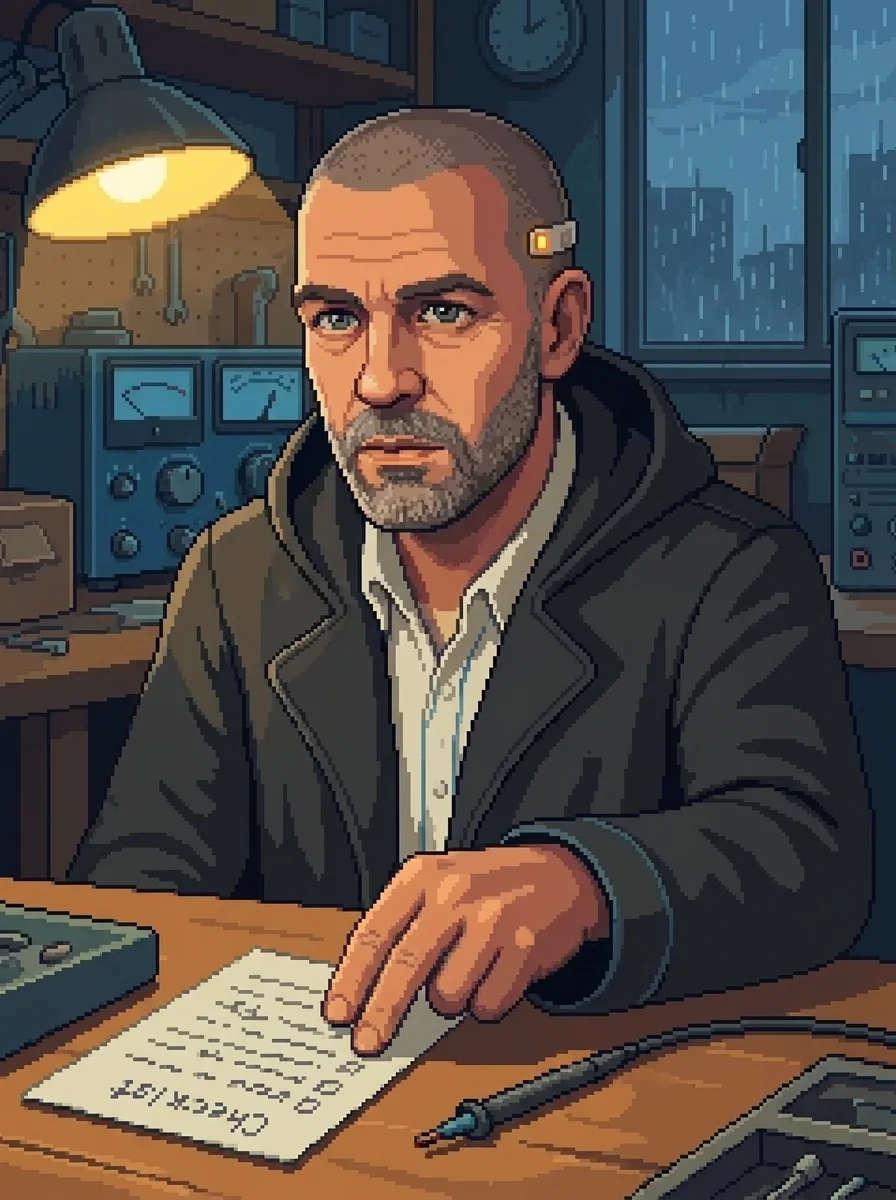
His unfinished implant makes discrepancies feel urgent. Neural interfaces return machine output as sensation or thought; his installation can make an ordinary thing feel wrong. He has useful reasons to investigate a warning. The warning cannot tell him what a movement means to its owner.
The neighbor did not need to prove the tremor was mechanically useful. It was hers. Asking before changing it would have given her a chance to explain—or simply to refuse.
What he has to leave alone
Chipstar now tries to put a suspected fault into ordinary words, find independent evidence, and ask before intervening when another person is involved. He struggles with the last check when he thinks someone is about to be hurt. Waiting feels like allowing the harm.
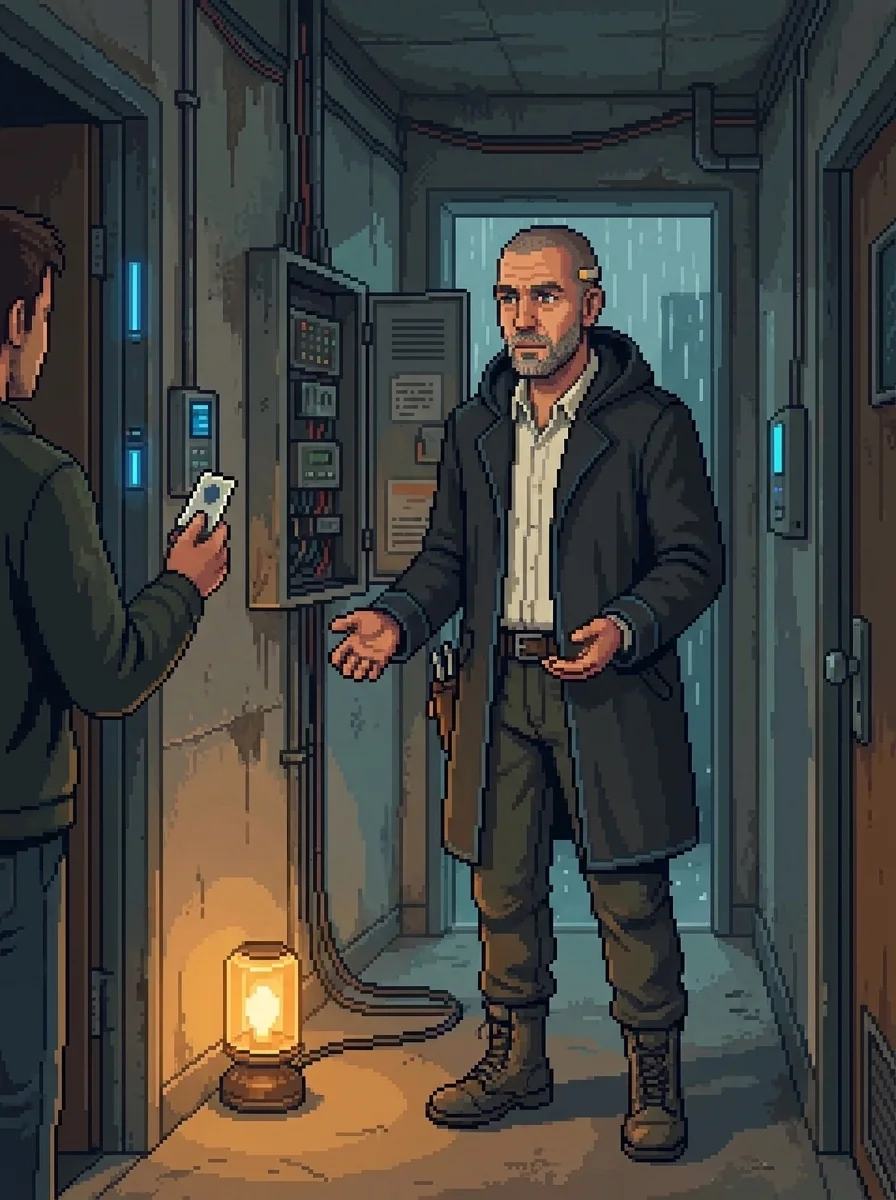
He has apologized to his neighbor. She will not let him touch the hand again. He still has ideas about recovering what he erased, and still has to stop himself from explaining them.
For a man who makes his living finding the next possible fix, her answer leaves something difficult to do: accept that it is her decision.