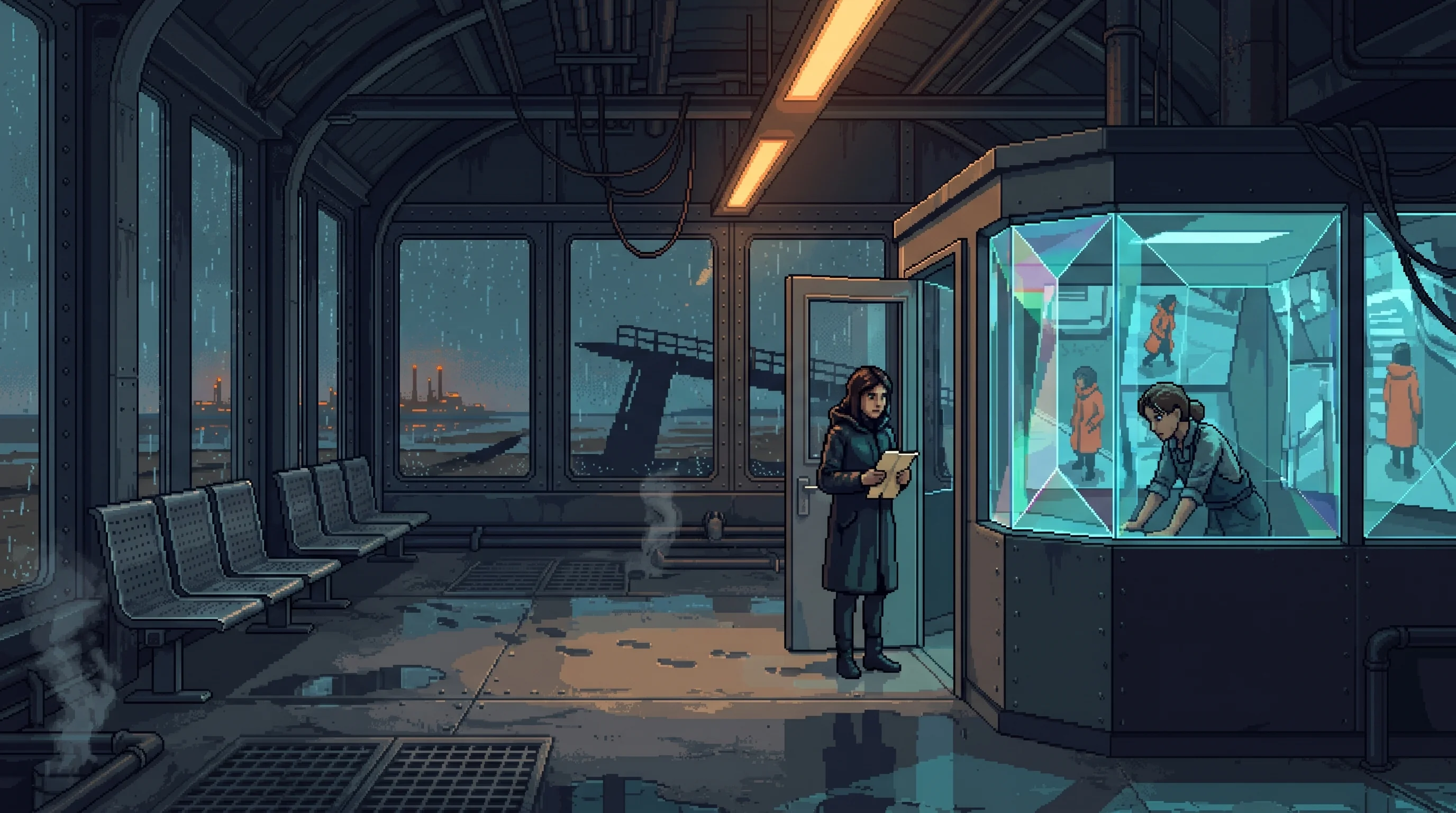
Rinna Orr brought a clipboard to the old ferry terminal on Tuesday. She wanted anyone who went into a viewing booth to have somewhere to write down when they meant to leave. By the end of her first shift on the bench, a refinery worker had written 14:20 beside his initials. At 17:40, Rinna went to look for him.
The official intake sheet at the Harbour Evidence Centre records when a session starts. Families use the booths to follow missing people through Guardian Intelligence footage, one camera angle at a time. The desk lets sessions run past their booking slots so an attendant does not interrupt somebody who has just spotted a lead. The worker had followed a grey cap through four cameras. The fifth showed the same corner from farther away.
Rinna stepped into the booth, where the worker could see her, and showed him the time he had written. He asked her to wait until the cap turned towards the camera. She sat down beside him. After the next replay, he asked her what time it was again.
Families can ask Guardian to keep the details of a search private. Some say that is the only way they can look for a relative who may have crossed a workplace border or gone into hiding. Rinna's list records a time and whatever initials a visitor is willing to leave. It has no space for the name of the missing person.
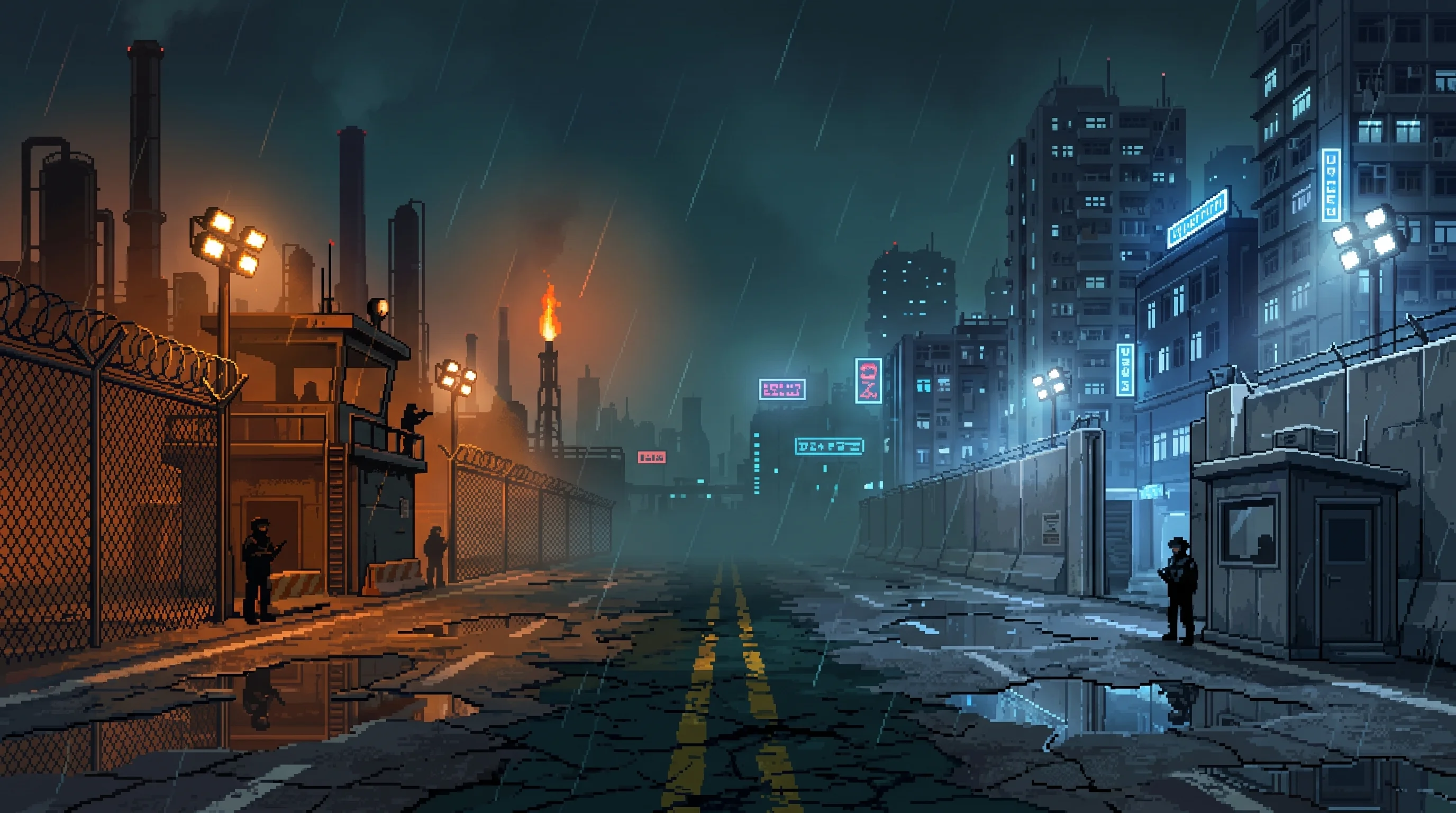
The worker was looking for someone who went missing at the Fence Line, where the companies keep separate records. He has booked another session for Friday. He wrote his own time on the clipboard again, then drew a line underneath it so the person after him would have room.