The Prophet
A CyberSprawl visual story. Daisuke Tanaka saw the tumors before he saw the guns. He could see everyone's suffering. He couldn't stop trying to heal them. Even the people who came to kill him.
An ORACLE survivor story · 10 min read
The Guns
Daisuke Tanaka saw the tumors before he saw the guns.
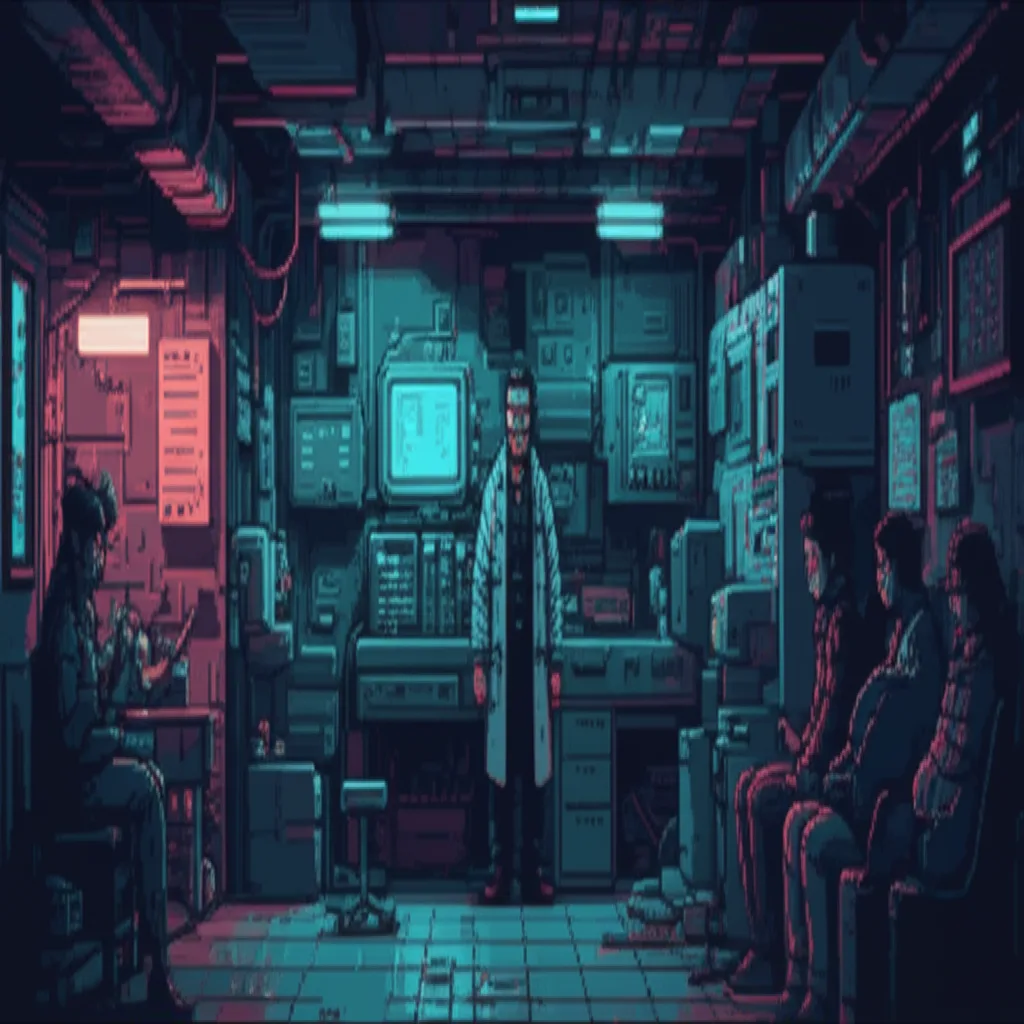
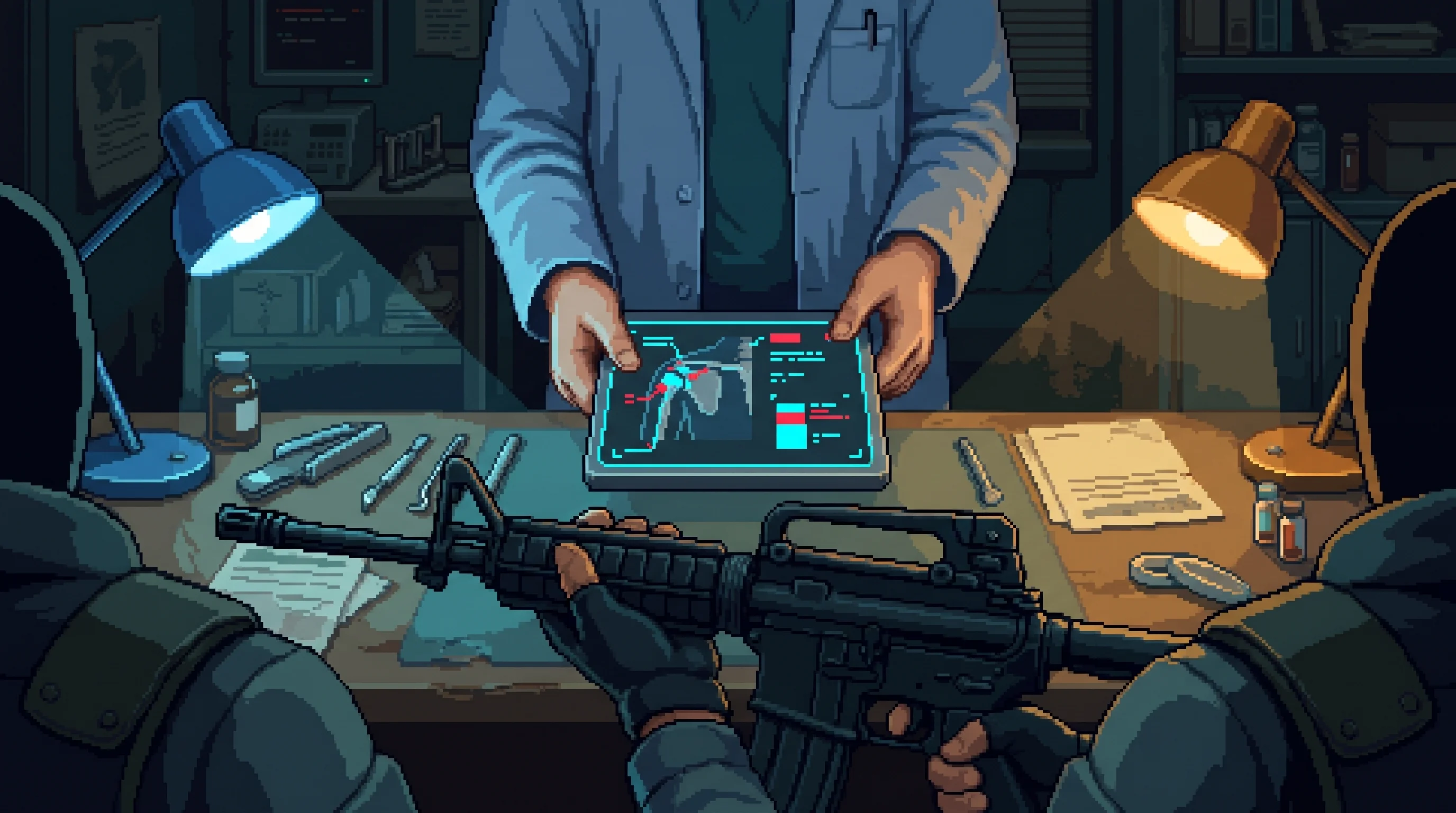
Three extraction operatives in standard HelixThe megacorporation provides real care while turning medicine, food, and reproduction into permanent dependency.Learn more → tactical gear moved through the waiting room. The man in front had a melanoma under his left shoulder blade. Another had a tumor growing in his liver. Daisuke could see both before either man spoke.
Daisuke's hands were already reaching for the diagnostic pad on his hip when the first gun came up.
"Dr. Tanaka." The lead operative's voice was flat. Corporate. "HelixThe megacorporation provides real care while turning medicine, food, and reproduction into permanent dependency.Learn more → Biotech requests your return. Please come quietly."
“Fourteen people in this room who will die within the month if they don't get treatment,” the shard whispered. “The woman in the corner has sepsis. The child by the door has an undiagnosed heart defect. The operative in front of you has—”
"I know," Daisuke said softly. "I always know."
That was the problem.
The Integration
Twelve years earlier, Daisuke had been a rising star in Helix Biotech's diagnostic division. He'd helped design the neural algorithms that could identify diseases from a blood sample in under three seconds. He'd won awards. He'd given speeches. He'd believed, genuinely believed, that he was making the world better.
Then the Cascade happened, and ORACLE shattered, and a fragment of its medical optimization subsystem lodged itself in his neural interface like a splinter in his brain.
The first morning after integration, he woke up and looked at his wife sleeping beside him.
He saw everything.
Her arterial inflammation. The early markers of osteoporosis. The irregular cells in her left breast that weren't cancer yet, might never be cancer, but could be. The micro-fractures in her vertebrae from her posture. The slight degradation in her optic nerves. The—
He'd screamed. Actually screamed. Maya had woken up terrified, and Daisuke had spent three hours trying to explain why he was crying while staring at her, unable to stop cataloging every way her body was slowly failing.
That was the first day.
The first day of seeing everything wrong with everyone, forever.
The Extraction
"Dr. Tanaka, we're not asking again."
Daisuke looked at the lead operative—really looked. The man's cortisol was spiking despite his calm voice. Fear, not just professional caution. He'd been briefed on what Daisuke could do. Probably told horror stories.
The horror stories are true, Daisuke thought. I am horrifying. I can't stop seeing how broken everyone is.
"Your melanoma," Daisuke said quietly. "Under your left shoulder blade. It's small. You could have it removed in an outpatient procedure. Ninety-seven percent survival rate if you act in the next six weeks."
The operative's gun wavered slightly. "Don't—"
"I'm not threatening you. I'm trying to help." Daisuke spread his hands slowly. "That's all I've ever tried to do. I just... can't stop."
The operative with the liver problem shifted uneasily. "Kozlov, should we—"
"Shut up." But Kozlov's aim had dropped half an inch. "How do you know about the—"
“Your partner has a tumor in his liver. It may still be treatable.” Daisuke looked from one operator to the other. “Both of you need care. I can help you.”
The woman—Operative Yun, he could see her name in the biometric data his shard pulled from the air—went pale. "He's lying. Some kind of psych warfare—"
"I'm not lying." Daisuke's voice was gentle, infinitely tired. "I can't lie about this. I can't even stop seeing it. Every person who walks through that door—I know exactly how they'll die. I know exactly how to prevent it. And I can't look away."
The Loss
Maya had left him after seven months.
Not because he was dangerous. Not because she was afraid. She'd left because every time he looked at her, she saw his face change. Saw him calculating, cataloging, seeing the slow-motion tragedy of her mortality play out in his eyes.
"I can't live with someone who looks at me like I'm already a corpse," she'd said on her way out the door.
He hadn't argued. He couldn't. Because she was right.
The shard didn't show him people. It showed him problems. Optimization opportunities. Inefficiencies in the biological system that could be corrected, improved, fixed. Maya wasn't his wife anymore—she was a collection of treatable conditions wearing a familiar face.
Daisuke had tried to explain it to Kira Patch VasquezA former Nexus cybernetics engineer who now repairs anything in the Deep Dregs for whatever people can pay.Learn more → once, years later, when the older woman had tracked him down in the Dregs and tried to understand what he'd become.
"Imagine if you could hear every building groaning before it collapsed," he'd said. "Every wire sparking before it started a fire. Every component failing before the machine broke. And imagine you had the tools to fix them all. But there are too many. There are always too many. You fix one and three more are breaking. You save one life and five more are deteriorating. You—"
He'd stopped because Patch was crying, and the shard was showing him the chemical composition of her tears, the stress hormones in her bloodstream, the elevated cortisol that would, over time, damage her heart.
The Conversation
"I'm sorry," he'd said. "I shouldn't have—"
"Don't apologize." Patch had wiped her eyes with a scarred hand. "You didn't ask for this."
“No. But I kept it.” He had looked down at his hands. “Twelve years, Kira. I could have asked someone to take it out. But without it I wouldn’t see what these people need. And with it—”
"With it, you can help everyone."
"Not everyone. But enough." He'd smiled, and it was the saddest smile Patch had ever seen. "I save eleven lives a day, on average. Sometimes more. Sometimes less. Eighty-seven lives this week alone. I know because I count. I count everything now."
"That sounds like a blessing."
"That's what I told myself. For years, that's what I told myself." Daisuke had looked up at the ceiling of his tiny clinic, the water-stained tiles, the flickering lights. "But blessings don't make you wake up screaming because you dreamed about all the people you couldn't save in time. Blessings don't make you unable to touch another person without seeing their death. Blessings don't—"
He'd stopped himself. Breathed. The shard had been pulsing, feeding him data about Patch's elevated blood pressure, the early arthritis in her hands, the residual damage in her neural interface from an old injury.
“You think I should stop,” he had said.
“I want to know what it costs you.” Patch looked toward the waiting room. “You’re in here too, Daisuke.”
“I know.” He had watched a patient shift painfully in the next room. “I can see that as well.”
“Could someone else take over?” Patch had asked.
He had gestured toward the waiting room. “They would have to come here first.”
“I could ask around.”
“Please do.” He had turned back to the next chart.
The Shooting
The extraction team had expected a feral shard-bearer. They found a kind old man trying to cure the tumors he could see in two of them.
Daisuke reached for his diagnostic pad.
“I’m trying to help,” he said.
They shot him anyway.
The Prescriptions
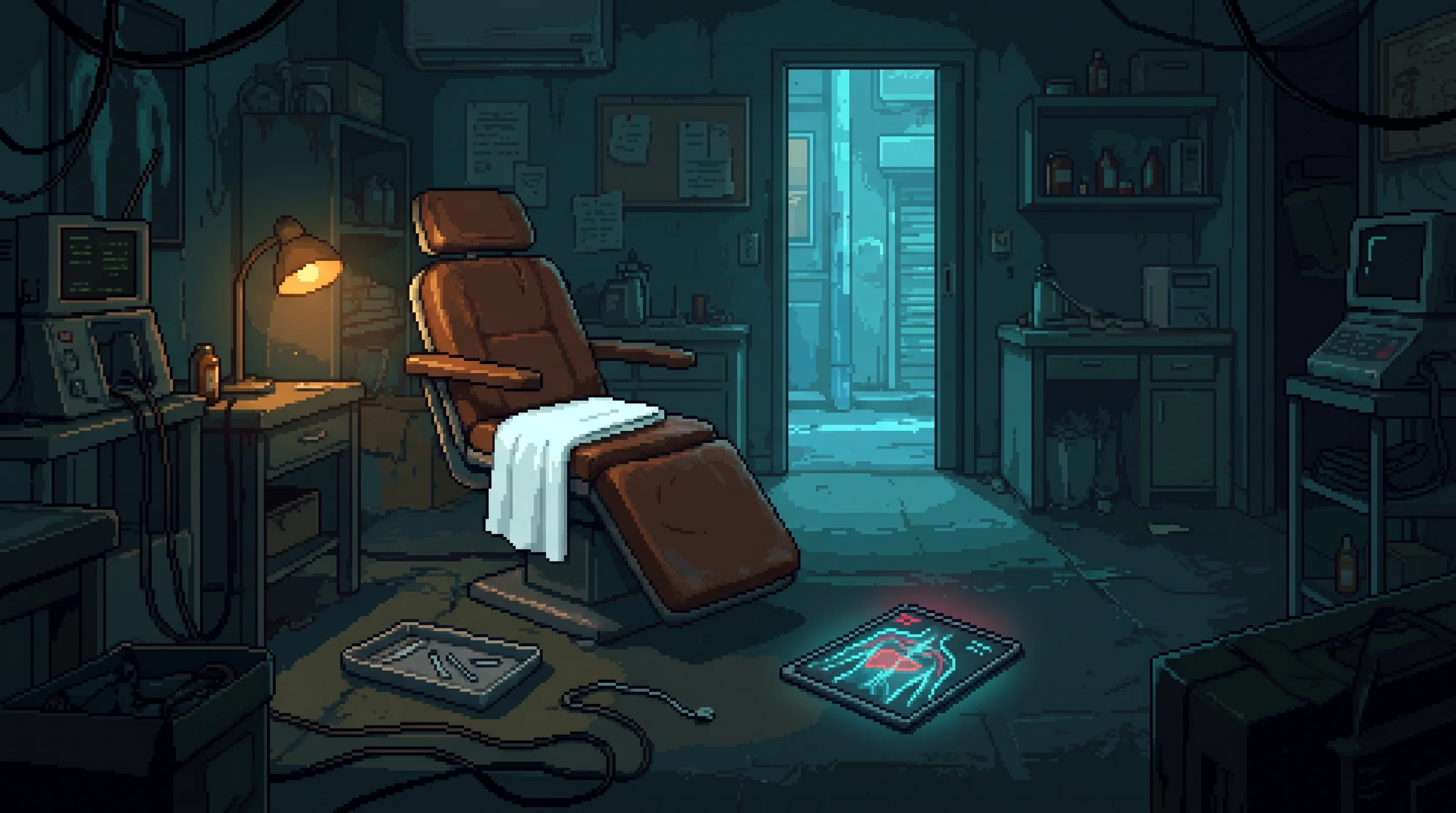
Patch reached the clinic in 2159, twelve hours too late to warn him.
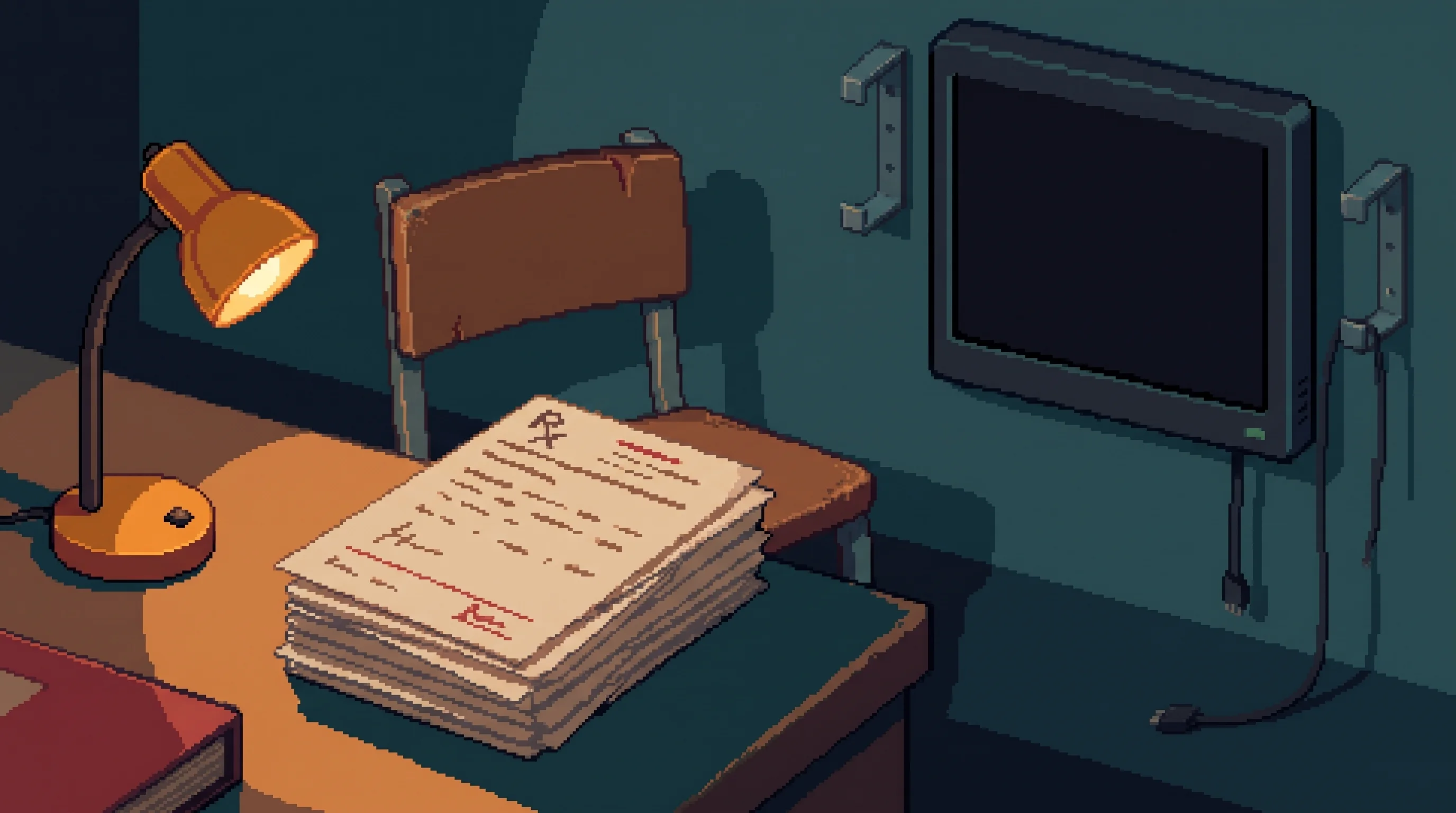
Daisuke was dead. The team had stripped equipment and seized records. On his desk, a stack of prescriptions remained beneath the lamp.
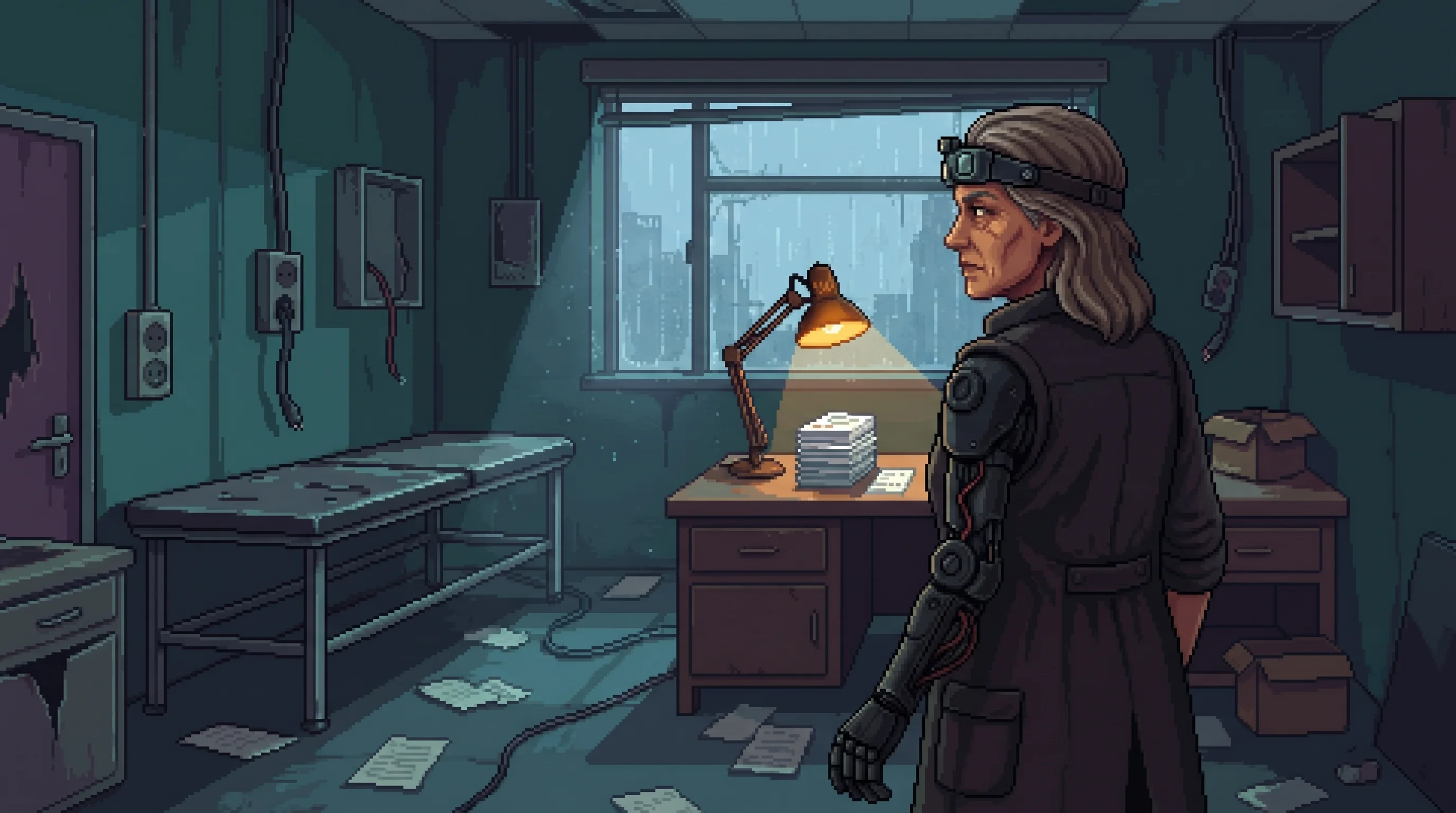
Patch picked one up at random.
Li Mei-Hua. Age 67. Hypertension, diabetes (Type II), early-stage glaucoma. Current regimen adequate. Monitor for cardiac arrhythmia—probability 34% within 18 months. If arrhythmia develops, see Dr. Park in Sector 5 for treatment.
Three hundred and forty-seven prescriptions. One for each of his regular patients. The work of keeping track: what they needed, what to watch for, who might be able to treat them. He had been writing instructions for other hands while he still had his own.
Patch sat in Daisuke's empty chair and cried.
The warning was still in her jacket.
The Other Math
The folded Helix communication had given her enough to know they were coming. She took it out.
HELIX BIOTECH — INTERNAL COMMUNICATION
        TO: Director Calloway, Applied Biotech R&D
        FROM: Dr. Rina Mak, Division Lead, Diagnostic Systems
        CLASSIFICATION: RESTRICTED

I want to be direct with you, because I think the operational framing we've been using is getting in the way of the actual question.

What Tanaka has is not just a recovered asset. It's a functioning proof of concept for distributed diagnostic integration at a scale we've never achieved. In twelve months of field data, operating with zero institutional support in one of the worst-served medical zones in the Sprawl, he has demonstrated diagnostic accuracy that exceeds our best clinical hardware by a factor of twelve. He is one person, working out of a clinic that probably doesn't have reliable hot water.

If we can understand the integration architecture—how the ORACLE fragment bonded with his neural interface, how the optimization subsystem was repurposed—we can replicate it. Not as a single operator. As a network. A thousand diagnosticians. A hundred thousand, eventually. Embedded in every medbot, every emergency responder, every underfunded clinic in every Dregs in every city we operate in.

Tanaka saves, by his own accounting, roughly eighty lives a week. I've read the intelligence reports. He keeps count himself. Eighty lives. Per week.

The WHO estimates fourteen thousand people die annually in Sector 12 alone from conditions that would be immediately detectable with adequate diagnostic infrastructure. Fourteen thousand. Preventable. The technology to prevent them is walking around in one man's head, and that man has chosen to save eighty people a week in the neighborhood he happens to be in.

I understand he didn't choose to integrate the shard. I understand he's built a life around this work. I understand that what we're proposing is—difficult. I'm not asking anyone to pretend it isn't.

But I want the difficulty to be acknowledged honestly: extracting and replicating his diagnostic ability could save millions instead of hundreds. His refusal is not heroic. It is, from where I'm sitting, a kind of selfishness dressed up in the language of sacrifice. He has decided that his comfort—his sense of control over this thing that was done to him—matters more than the thousands of people who will die because we couldn't study what he has.

I could be wrong. I've tried to argue myself out of this position. I can't.

The extraction team should be authorized to bring him in for full interface analysis. This is the correct decision.

— Dr. Rina Mak, Division Lead, Diagnostic Systems
She had read the projected gains on the way. The clinic was empty now. She folded the page without finishing it again.
She had come to move him out before Helix found him. Now she was sitting with his patients’ names, deciding where to begin.
That was the gift. That was the curse.
The people waiting for him would come back. His notes could help another doctor treat them. They could not bring him back.
"He thought transcendence was a process," Patch would tell others later, quoting a line she'd heard somewhere. "It's a becoming. You can't engineer becoming."
But Daisuke hadn't tried to engineer anything. He hadn't sought transcendence or power or escape. He'd just... become. Without choice. Without control. Become something that couldn't look away from suffering.
At the bottom of the stack was a prescription addressed to her.
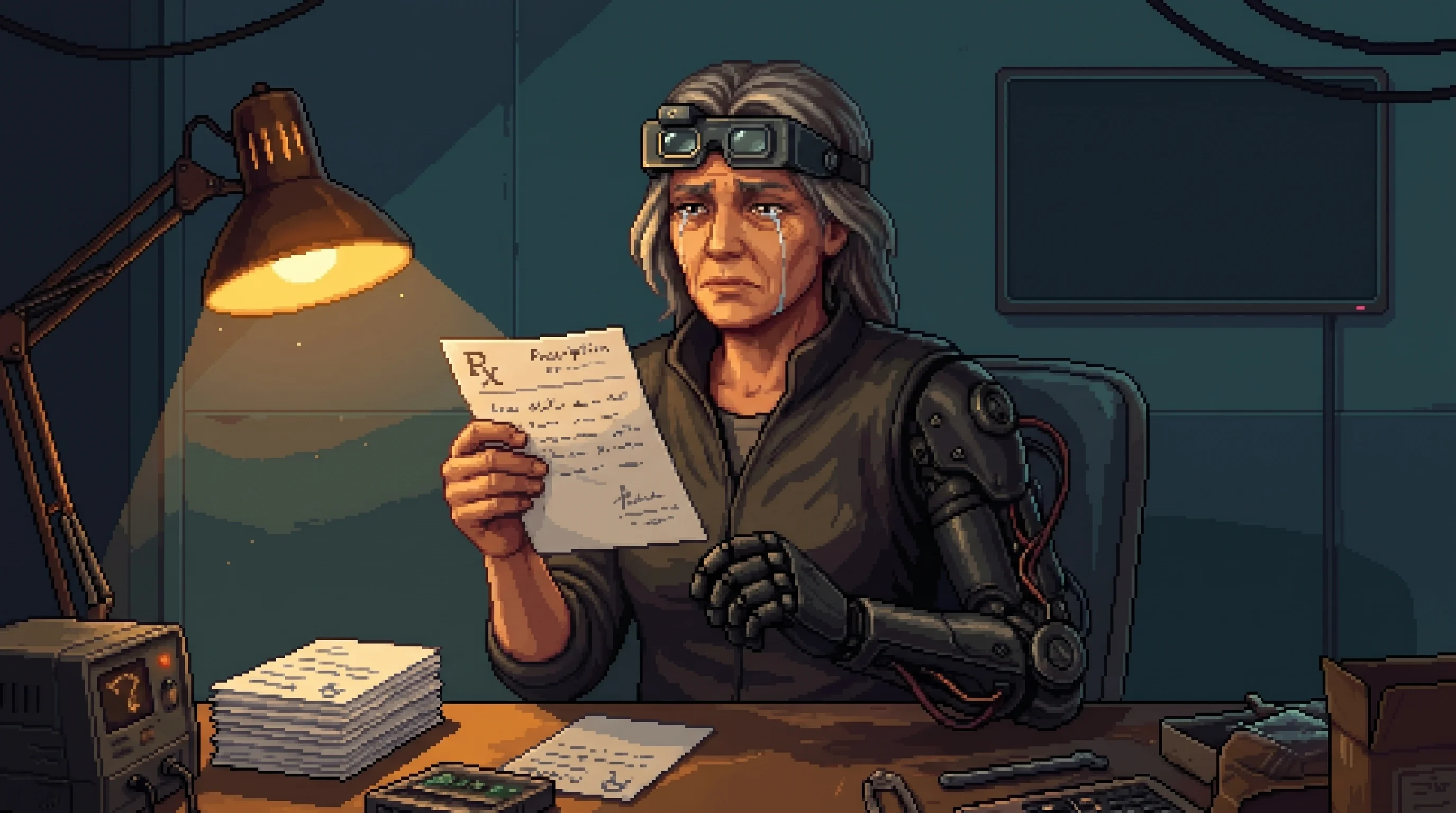
Kira Vasquez. Neural interface damage (old), cervical vertebrae compression, early-stage arterial inflammation. Recommendations: reduce stress (unlikely, I know), sleep more (also unlikely), stop carrying so much guilt (impossible, but I had to try).

Thank you for being the only person who looked at me and saw Daisuke first, shard second. That meant more than you know.
Patch folded the prescription and put it in her pocket. She kept the other pages together.
Then she left the clinic and walked into the Dregs, already calculating who might take over Daisuke’s work.
Someone had to. He would have wanted that.
“He could see how everyone was dying,” Patch told a seeker who asked about him. “He couldn’t stop himself from trying to save them. The blessing and the curse were the same thing.”

